Mutation
Prof. Harshraj. S. Shinde
K. K. Wagh College of Agril. Biotech, Nashik. India
Introduction
• Sudden heritable change in genetic material or character of an organism is
known as mutation
• Individuals showing these changes are known as mutants
• An individual showing an altered phenotype due to mutation are known as
variant
• Factor or agents causing mutation are known as mutagens
• Mutation which causes changes in base sequence of a gene are known as
gene mutation or point mutation
History
• English farmer Seth Wright recorded case of mutation first time in 1791 in
male lamb with unusual short legs
• The term mutation is coined by Hugo de Vries in 1900 by his observation
in Oenothera
• Systematic study of mutation was started in 1910 when Morgan
genetically analyzed white eye mutant of Drosophila
• H. J. Muller induced mutation in Drosophila by using X- rays in 1927 ; he
was awarded with Nobel prize in 1946
Characteristics of Mutation
• Generally mutant alleles are recessive to their wild type or normal alleles
• Most mutations have harmful effect, but some mutations are beneficial
• Spontaneous mutations occurs at very low rate
• Some genes shows high rate of mutation such genes are called as mutable
gene
• Highly mutable sites within a gene are known as hot spots.
• Mutation can occur in any tissue/cell (somatic or germinal) of an organism
Classification of mutation
• Based on the survival of an individual
1. Lethal mutation – when mutation causes death of all individuals undergoing
mutation are known as lethal
2. Sub lethal mutation - causes death of 90% individuals
3. Sub vital mutation– such mutation kills less than 90% individuals
4. Vital mutation -when mutation don’t affect the survival of an individual are
known as vital
5. Supervital mutation – This kind of mutation enhances the survival of
individual
• Based on causes of mutation
1. Spontaneous mutation-
Spontaneous mutation occurs naturally without any cause. The rate of
spontaneous mutation is very slow eg- Methylation followed by deamination of
cytosine.
Rate of spontaneous mutation is higher in eukaryotes than prokaryotes.
Eg. UV light of sunlight causing mutation in bacteria
2. Induced Mutation-
Mutations produced due to treatment with either a chemical or physical
agent are called induced mutation .
The agents capable of inducing such mutations are known as mutagen.
use of induced mutation for crop improvement program is known as mutation
breeding.
Eg. X- rays causing mutation in cereals
• Based on tissue of origin
1. Somatic mutation-
A mutation occurring in somatic cell is called somatic mutation.
In asexually reproducing species somatic mutations transmits from one
progeny to the next progeny
2. Germinal Mutation-
When mutation occur in gametic cells or reproductive cells are known as
germinal mutation.
In sexually reproductive species only germinal mutation are transmitted to the
next generation
• Based on direction of mutation
1. Forward mutation- When mutation occurs from the
normal/wild type allele to mutant allele are known as forward
mutation
2. Reverse mutation- When mutation occurs in reverse
direction that is from mutant allele to the normal/wild type allele
are known as reverse mutation
• Type of trait affected
1. Visible mutation- Those mutation which affects on
phenotypic character and can be detected by normal
observation are known as visible mutation
2. Biochemical mutation- mutation which affect the
production of biochemicals and which does not not show any
phenotypic character are known as biochemical mutation
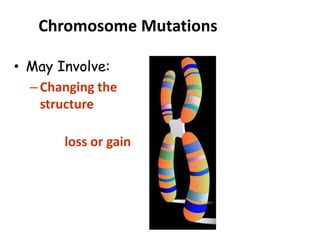
Chromosome Mutations
• May Involve:
–Changing the
structure of a
chromosome
–The loss or gain
of part of a
chromosome
Chromosome Mutations
• Five types exist:
–Deletion
–Inversion
–Translocation
–Nondisjunction
–Duplication
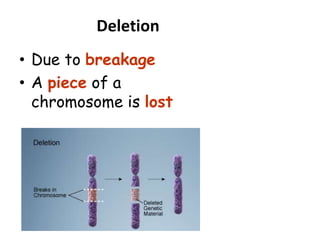
Deletion
• Due to breakage
• A piece of a
chromosome is lost
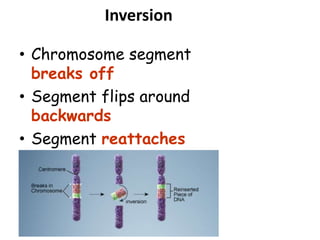
Inversion
• Chromosome segment
breaks off
• Segment flips around
backwards
• Segment reattaches
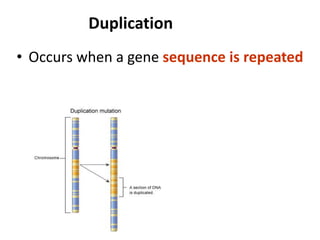
Duplication
• Occurs when a gene sequence is repeated
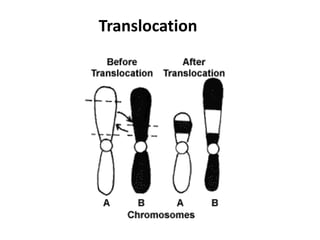
Translocation
• Involves two chromosomes that aren’t
homologous
• Part of one chromosome is transferred to
another chromosomes
Translocation
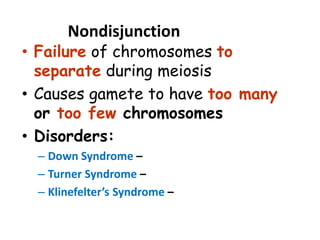
Nondisjunction
• Failure of chromosomes to
separate during meiosis
• Causes gamete to have too many
or too few chromosomes
• Disorders:
– Down Syndrome – three 21st chromosomes
– Turner Syndrome – single X chromosome
– Klinefelter’s Syndrome – XXY chromosomes
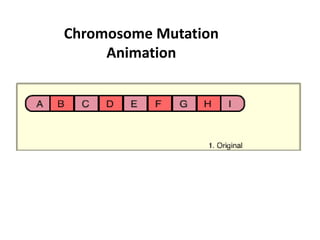
Chromosome Mutation
Animation
Types of Gene Mutations
• Include:
–Point Mutations
–Substitutions
–Insertions
–Deletions
–Frameshift
Point Mutation
• Change of a single
nucleotide
• Includes the deletion,
insertion, or substitution
of ONE nucleotide in a
gene
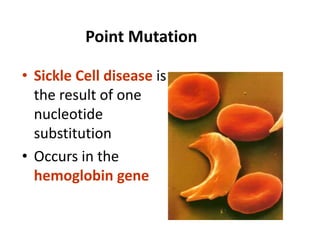
Point Mutation
• Sickle Cell disease is
the result of one
nucleotide
substitution
• Occurs in the
hemoglobin gene
Frameshift Mutation
• Inserting or deleting one or more
nucleotides
• Changes the “reading frame” like
changing a sentence
• Proteins built incorrectly
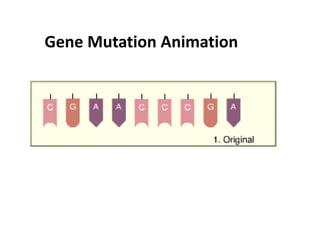
Gene Mutation Animation
Reference Book
Genetics
By
B. D. Singh
(Kalyani Publications)

Mutation

  • 1.
    Mutation Prof. Harshraj. S.Shinde K. K. Wagh College of Agril. Biotech, Nashik. India
  • 2.
    Introduction • Sudden heritablechange in genetic material or character of an organism is known as mutation • Individuals showing these changes are known as mutants • An individual showing an altered phenotype due to mutation are known as variant • Factor or agents causing mutation are known as mutagens • Mutation which causes changes in base sequence of a gene are known as gene mutation or point mutation
  • 3.
    History • English farmerSeth Wright recorded case of mutation first time in 1791 in male lamb with unusual short legs • The term mutation is coined by Hugo de Vries in 1900 by his observation in Oenothera • Systematic study of mutation was started in 1910 when Morgan genetically analyzed white eye mutant of Drosophila • H. J. Muller induced mutation in Drosophila by using X- rays in 1927 ; he was awarded with Nobel prize in 1946
  • 4.
    Characteristics of Mutation •Generally mutant alleles are recessive to their wild type or normal alleles • Most mutations have harmful effect, but some mutations are beneficial • Spontaneous mutations occurs at very low rate • Some genes shows high rate of mutation such genes are called as mutable gene • Highly mutable sites within a gene are known as hot spots. • Mutation can occur in any tissue/cell (somatic or germinal) of an organism
  • 5.
    Classification of mutation •Based on the survival of an individual 1. Lethal mutation – when mutation causes death of all individuals undergoing mutation are known as lethal 2. Sub lethal mutation - causes death of 90% individuals 3. Sub vital mutation– such mutation kills less than 90% individuals 4. Vital mutation -when mutation don’t affect the survival of an individual are known as vital 5. Supervital mutation – This kind of mutation enhances the survival of individual
  • 6.
    • Based oncauses of mutation 1. Spontaneous mutation- Spontaneous mutation occurs naturally without any cause. The rate of spontaneous mutation is very slow eg- Methylation followed by deamination of cytosine. Rate of spontaneous mutation is higher in eukaryotes than prokaryotes. Eg. UV light of sunlight causing mutation in bacteria 2. Induced Mutation- Mutations produced due to treatment with either a chemical or physical agent are called induced mutation . The agents capable of inducing such mutations are known as mutagen. use of induced mutation for crop improvement program is known as mutation breeding. Eg. X- rays causing mutation in cereals
  • 7.
    • Based ontissue of origin 1. Somatic mutation- A mutation occurring in somatic cell is called somatic mutation. In asexually reproducing species somatic mutations transmits from one progeny to the next progeny 2. Germinal Mutation- When mutation occur in gametic cells or reproductive cells are known as germinal mutation. In sexually reproductive species only germinal mutation are transmitted to the next generation
  • 8.
    • Based ondirection of mutation 1. Forward mutation- When mutation occurs from the normal/wild type allele to mutant allele are known as forward mutation 2. Reverse mutation- When mutation occurs in reverse direction that is from mutant allele to the normal/wild type allele are known as reverse mutation
  • 9.
    • Type oftrait affected 1. Visible mutation- Those mutation which affects on phenotypic character and can be detected by normal observation are known as visible mutation 2. Biochemical mutation- mutation which affect the production of biochemicals and which does not not show any phenotypic character are known as biochemical mutation
  • 10.
    Chromosome Mutations • MayInvolve: –Changing the structure of a chromosome –The loss or gain of part of a chromosome
  • 11.
    Chromosome Mutations • Fivetypes exist: –Deletion –Inversion –Translocation –Nondisjunction –Duplication
  • 12.
    Deletion • Due tobreakage • A piece of a chromosome is lost
  • 13.
    Inversion • Chromosome segment breaksoff • Segment flips around backwards • Segment reattaches
  • 14.
    Duplication • Occurs whena gene sequence is repeated
  • 15.
    Translocation • Involves twochromosomes that aren’t homologous • Part of one chromosome is transferred to another chromosomes
  • 16.
  • 17.
    Nondisjunction • Failure ofchromosomes to separate during meiosis • Causes gamete to have too many or too few chromosomes • Disorders: – Down Syndrome – three 21st chromosomes – Turner Syndrome – single X chromosome – Klinefelter’s Syndrome – XXY chromosomes
  • 18.
  • 19.
    Types of GeneMutations • Include: –Point Mutations –Substitutions –Insertions –Deletions –Frameshift
  • 20.
    Point Mutation • Changeof a single nucleotide • Includes the deletion, insertion, or substitution of ONE nucleotide in a gene
  • 21.
    Point Mutation • SickleCell disease is the result of one nucleotide substitution • Occurs in the hemoglobin gene
  • 22.
    Frameshift Mutation • Insertingor deleting one or more nucleotides • Changes the “reading frame” like changing a sentence • Proteins built incorrectly
  • 23.
  • 24.
    Reference Book Genetics By B. D.Singh (Kalyani Publications)