Downloaded 64 times



















This document discusses multiple processor systems including multiprocessors, multicomputers, and distributed systems. It covers topics such as multiprocessor hardware architectures, operating systems, scheduling, synchronization, and communication in these systems. It also discusses distributed system middleware including document-based systems like the web, file system-based systems like AFS, shared object systems like CORBA and Globe, and coordination-based systems like Linda and Jini.
Introduction to multiprocessor systems, their definitions, and hardware models supporting shared memory and message passing.
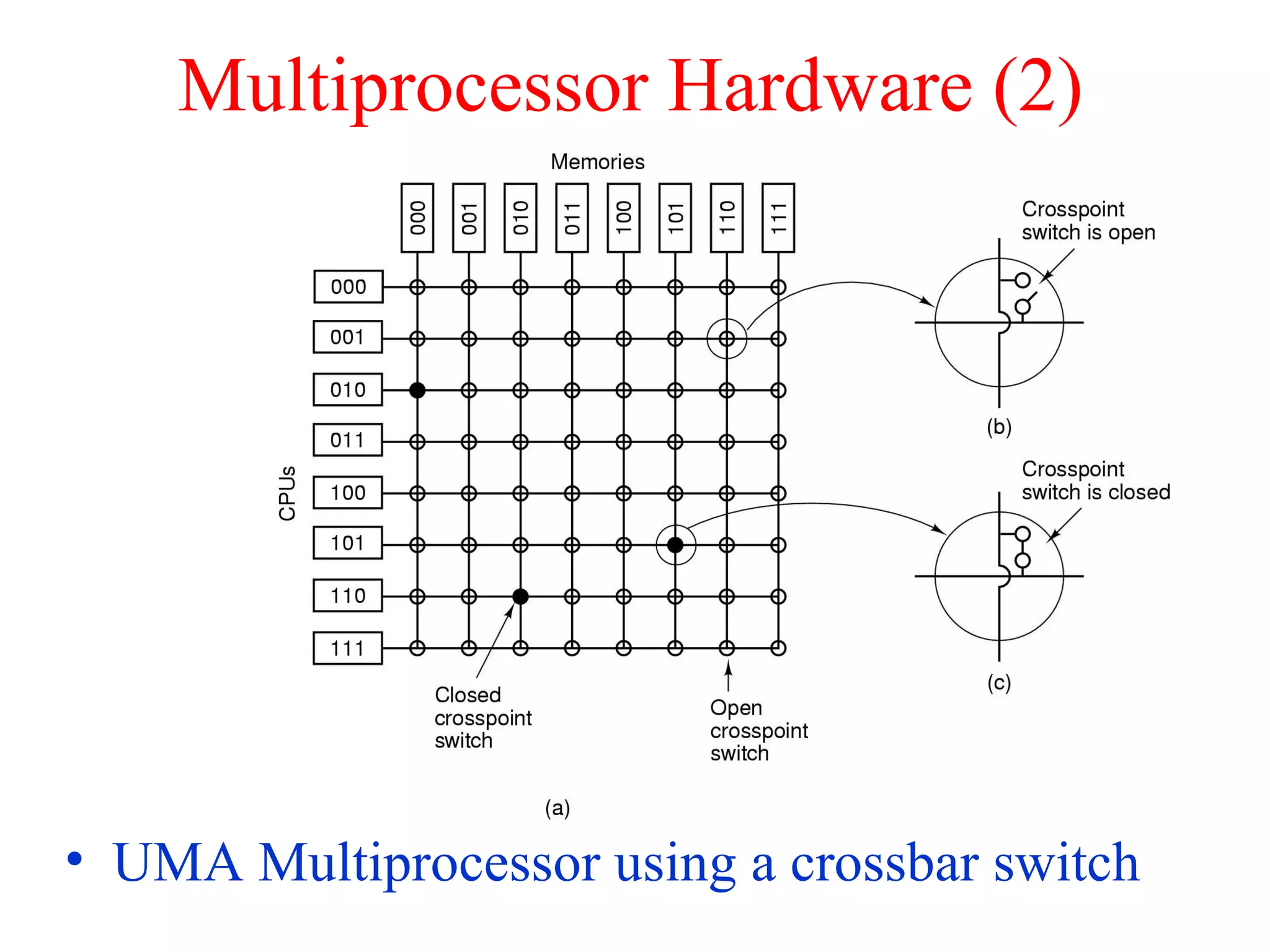
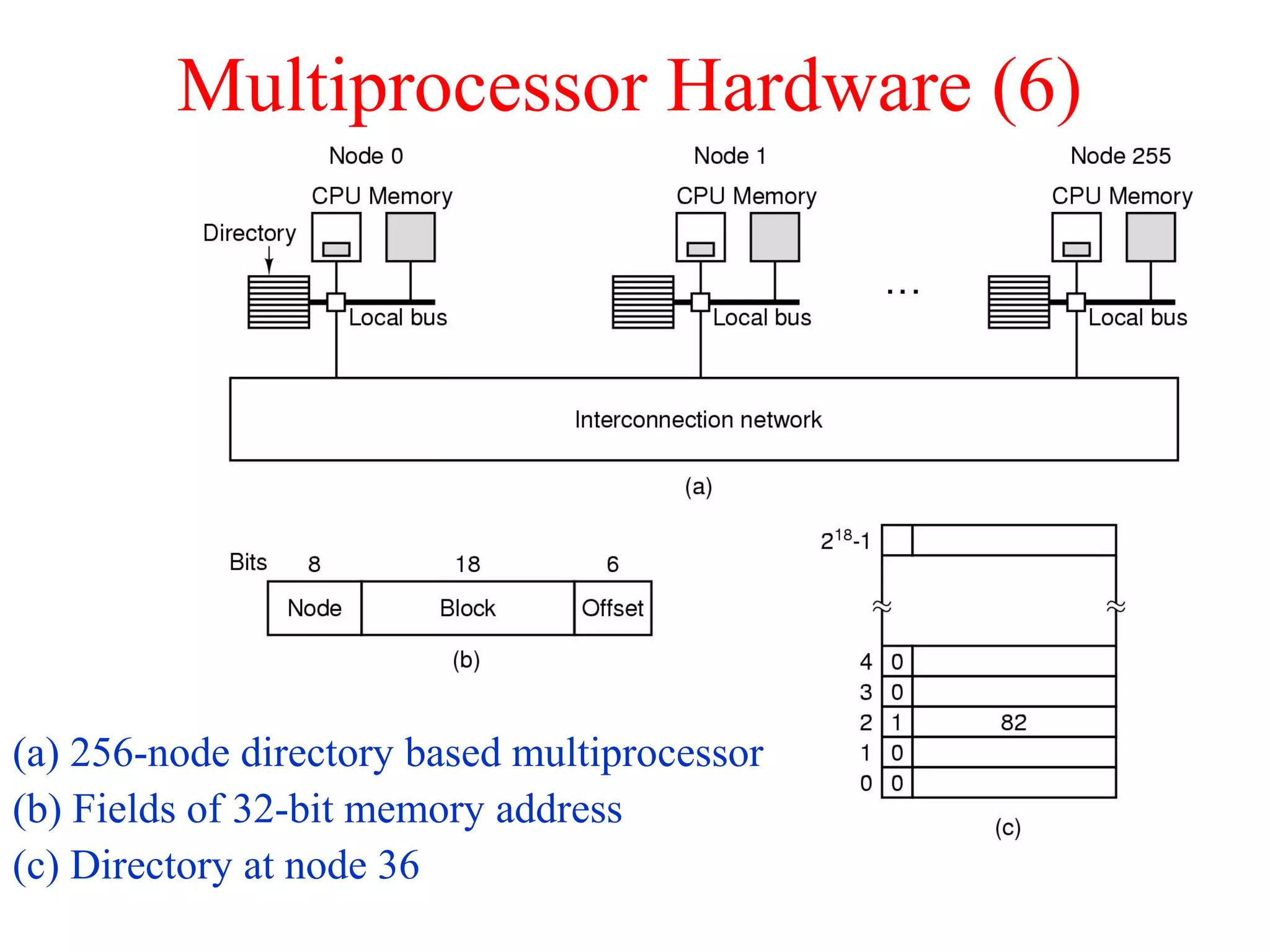
Discussion on various multiprocessor hardware architectures, including Bus-based, UMA, and NUMA systems.
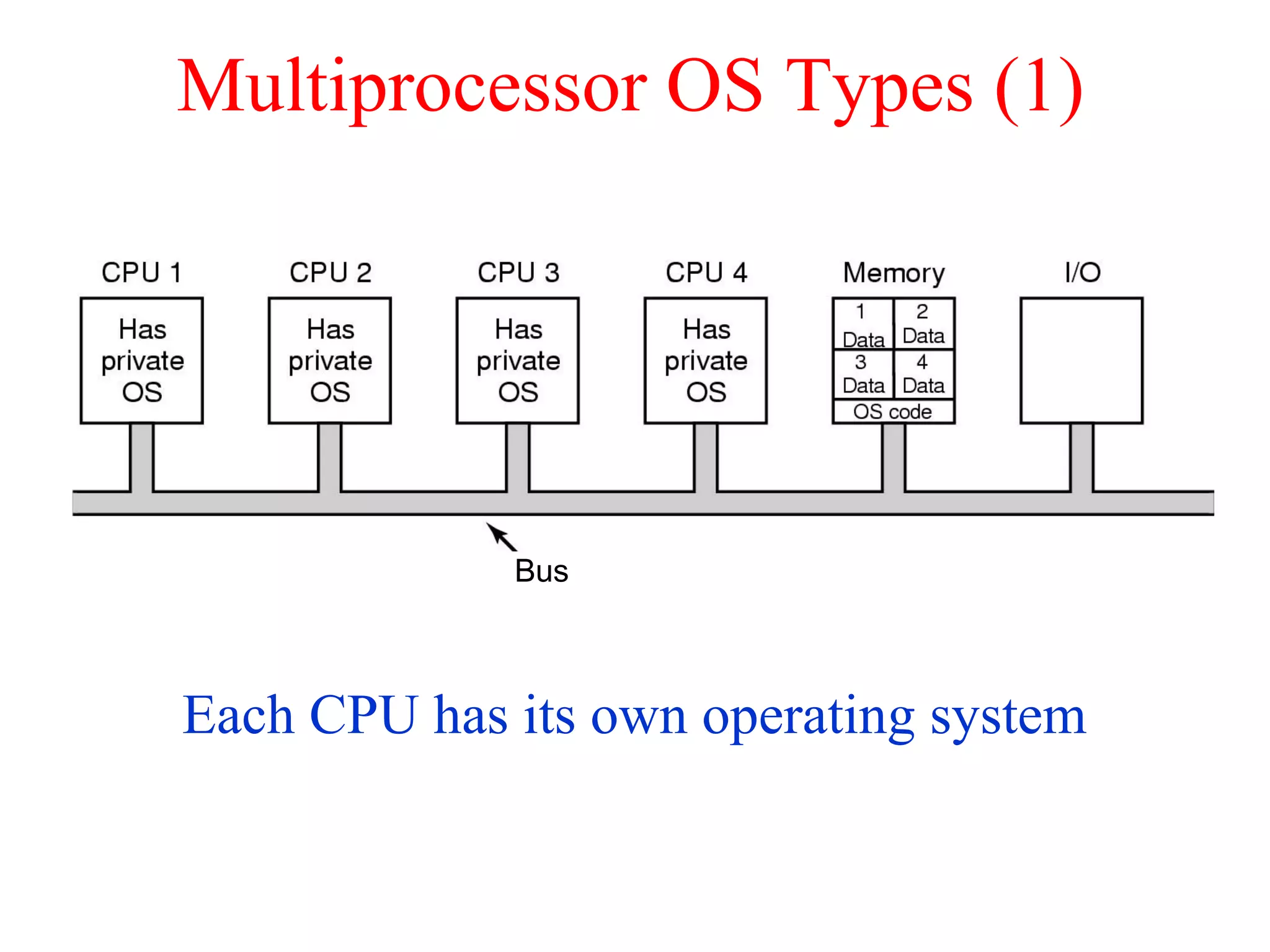
Descriptions of different operating system types used in multiprocessor systems: Bus, Master-Slave, and Symmetric Multiprocessors.
Mechanisms for synchronization in multiprocessor systems, focusing on TSL instructions, lock usage, and strategies for spinning versus switching.
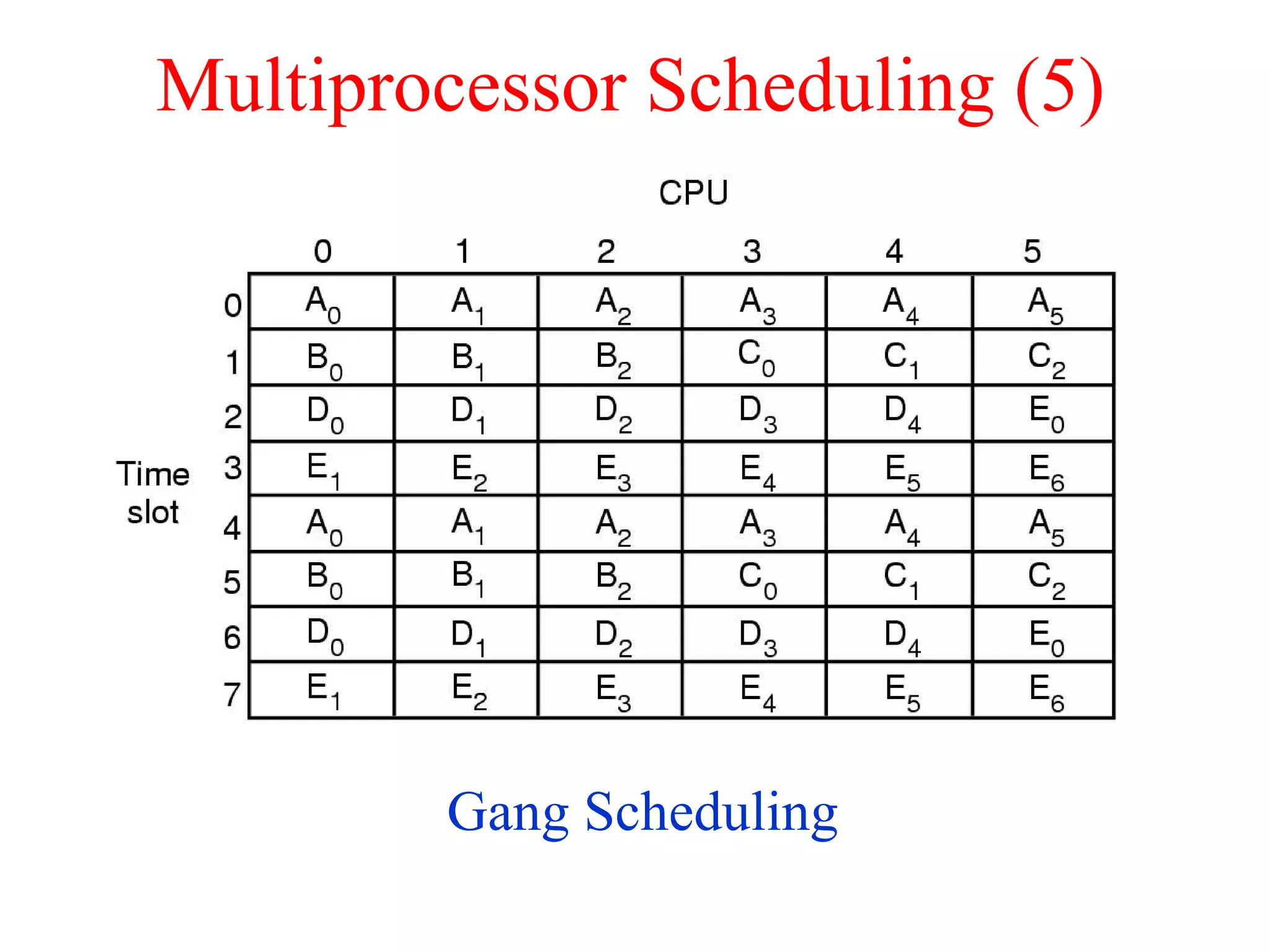
Techniques for scheduling in multiprocessor systems including timesharing, space sharing, communication issues, and gang scheduling approaches.
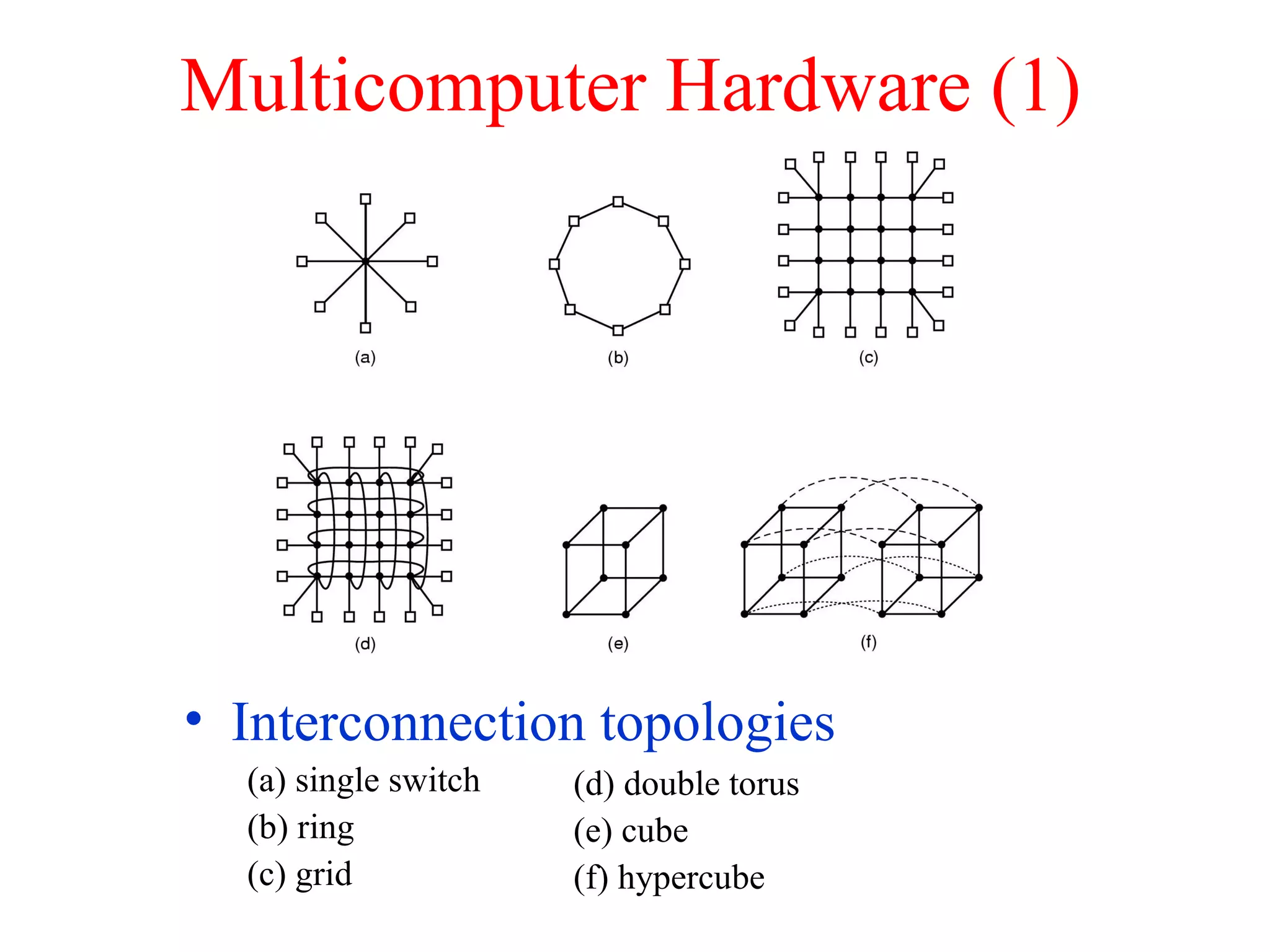
Definition and characteristics of multicomputers, including interconnection topologies and switching schemes for communication.
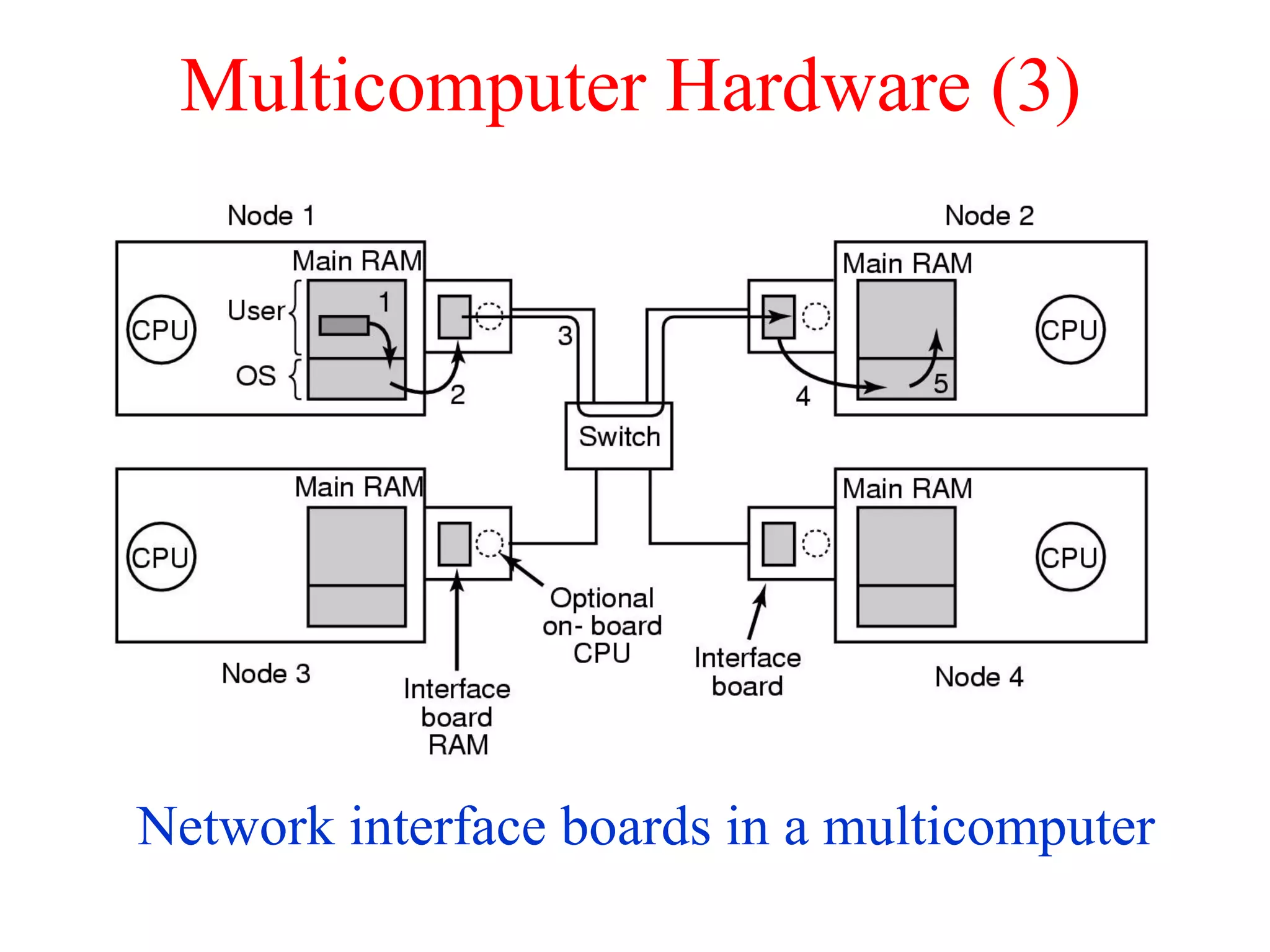
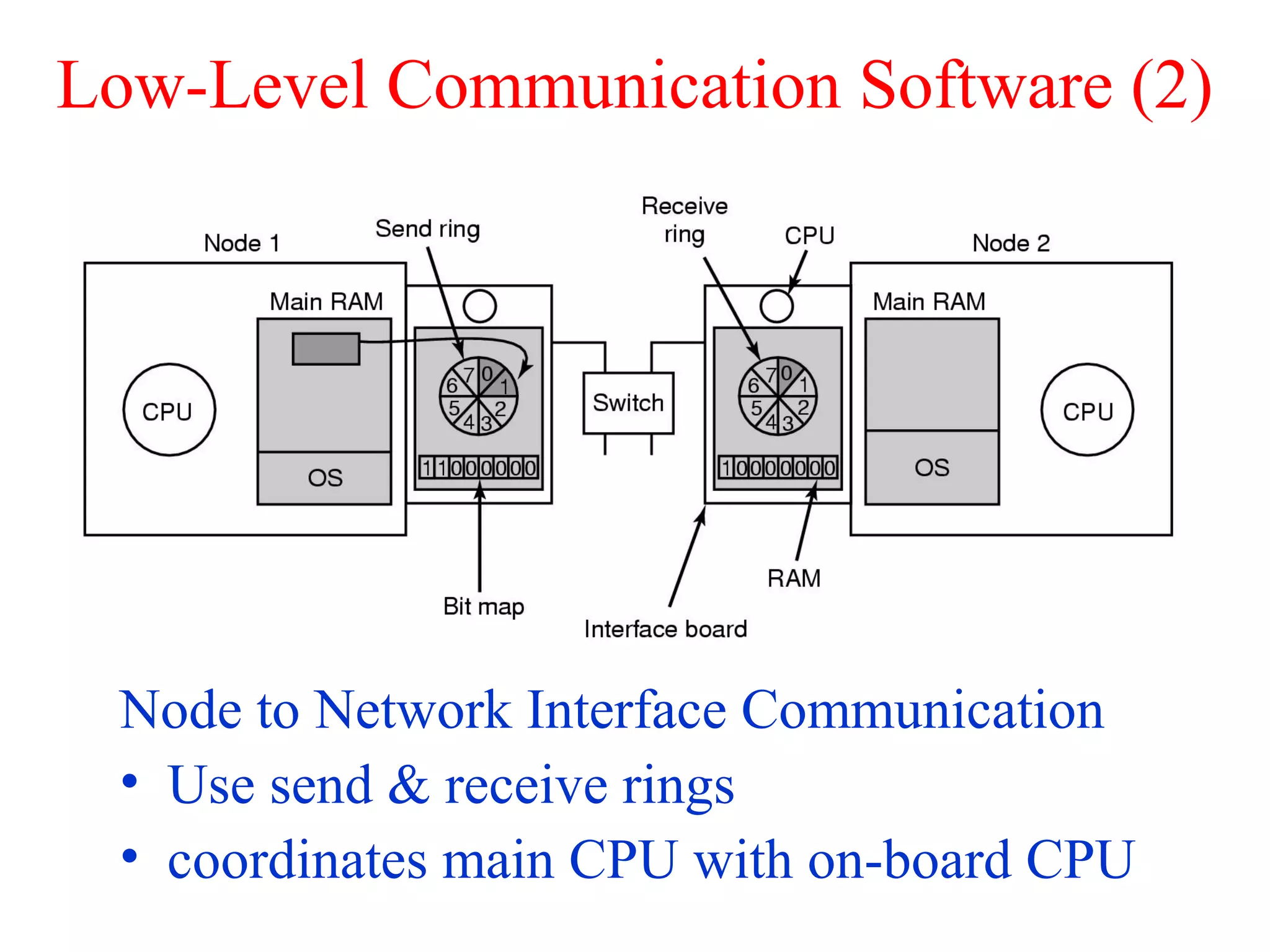
Techniques for low-level communication including node to network interface communications and network access methods.
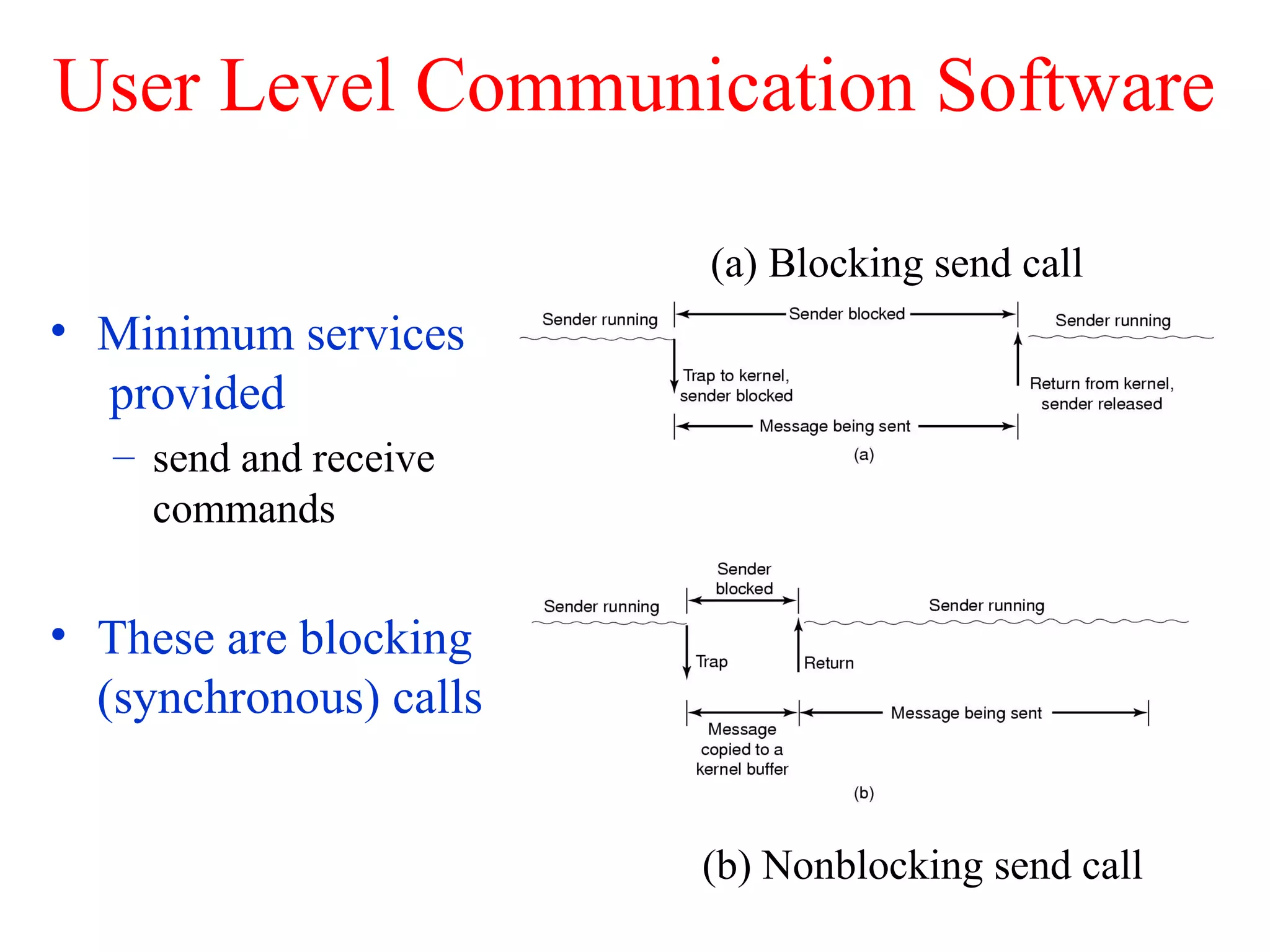
Overview of user-level communication software which provides basic services for sending and receiving commands.
Overview of the remote procedure call (RPC) process and implementation challenges, such as pointer passing and parameter type determination.
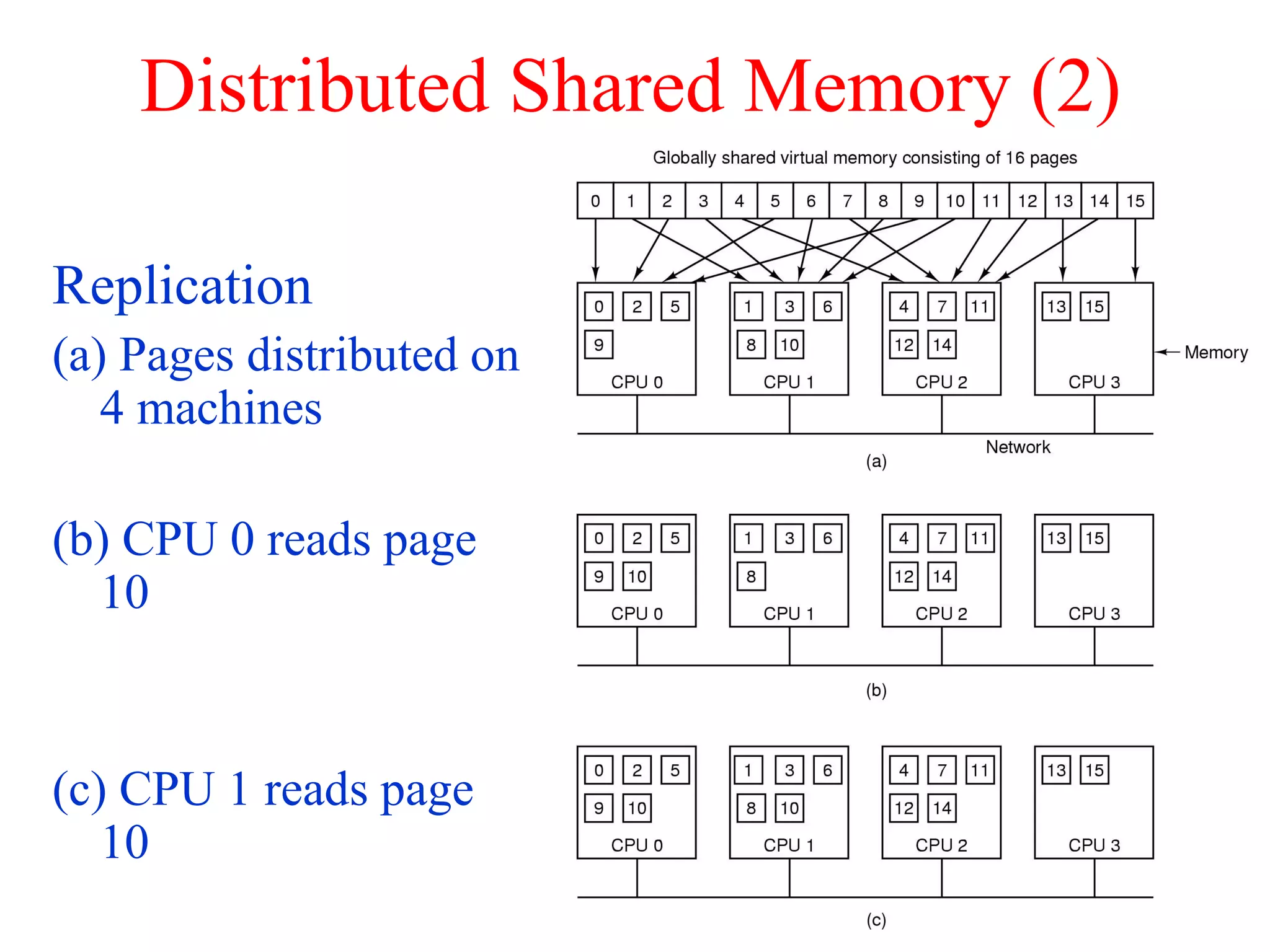
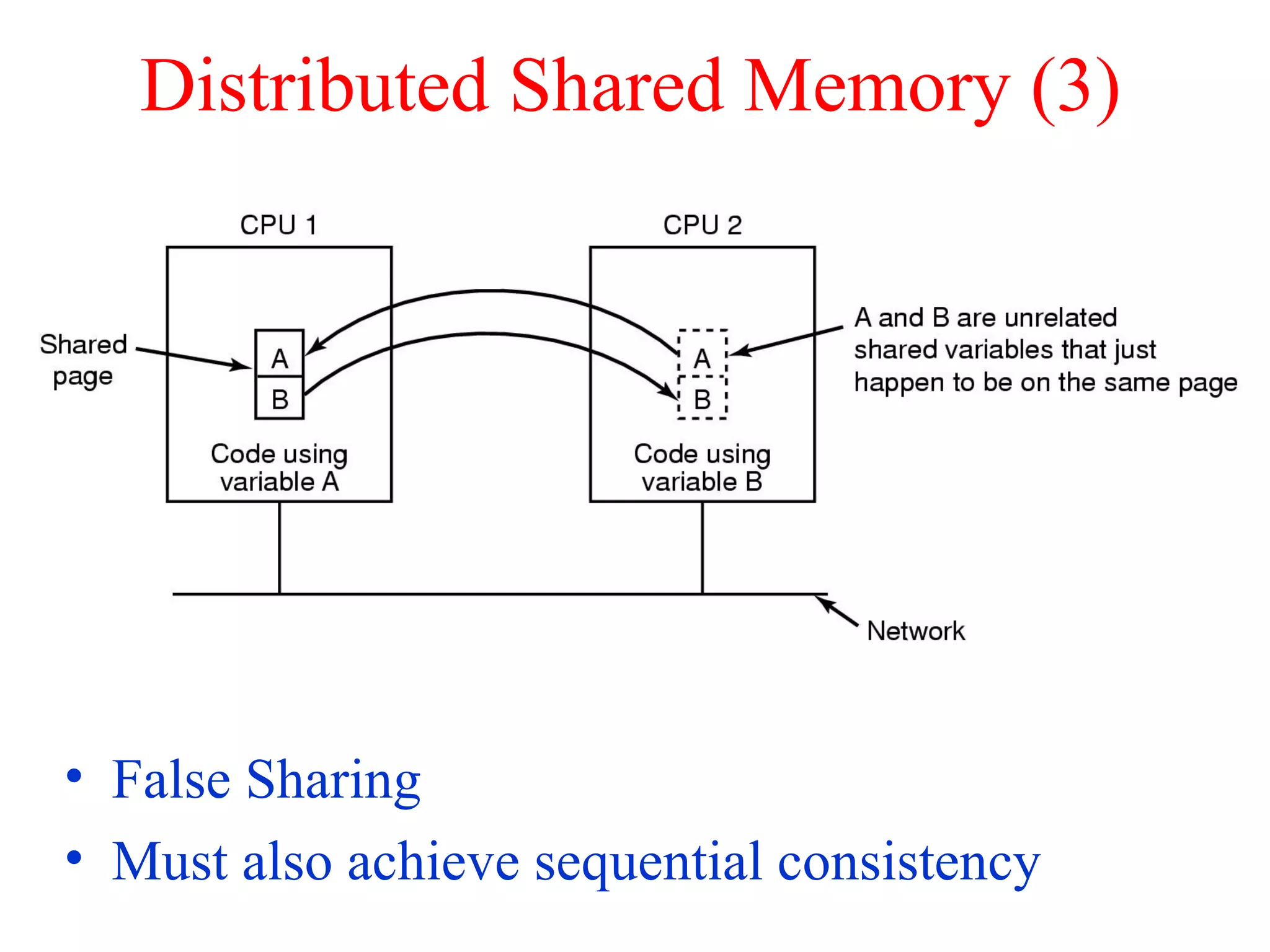
Discusses distributed shared memory layers, replication, and challenges such as false sharing and consistency.
Strategies for load balancing in distributed systems through deterministic and heuristic algorithms for managing resource allocation.
Analysis and comparison of three types of CPU systems encapsulating their features and operational differences.
Role of middleware in achieving uniformity and compatibility across distributed systems.
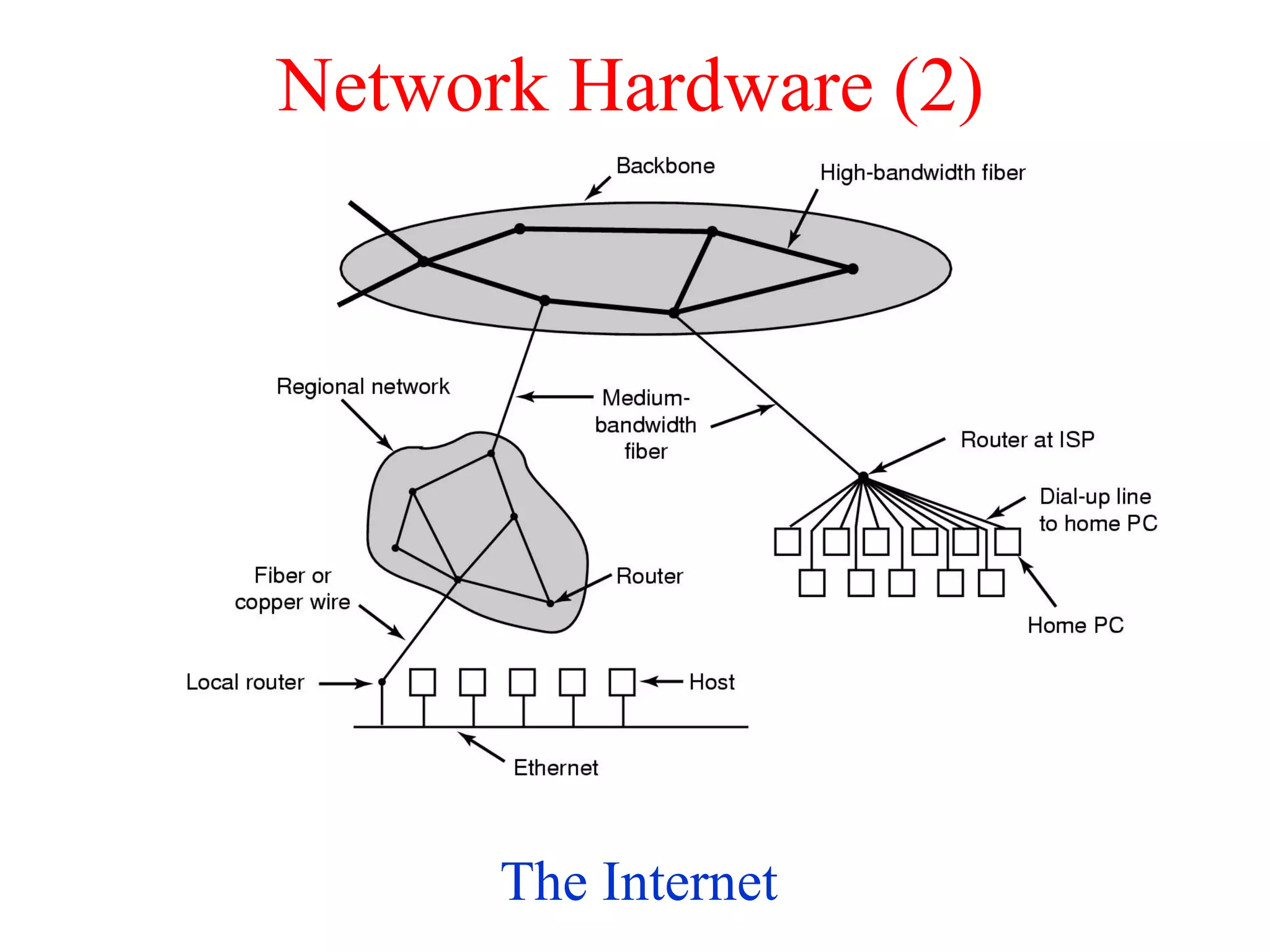
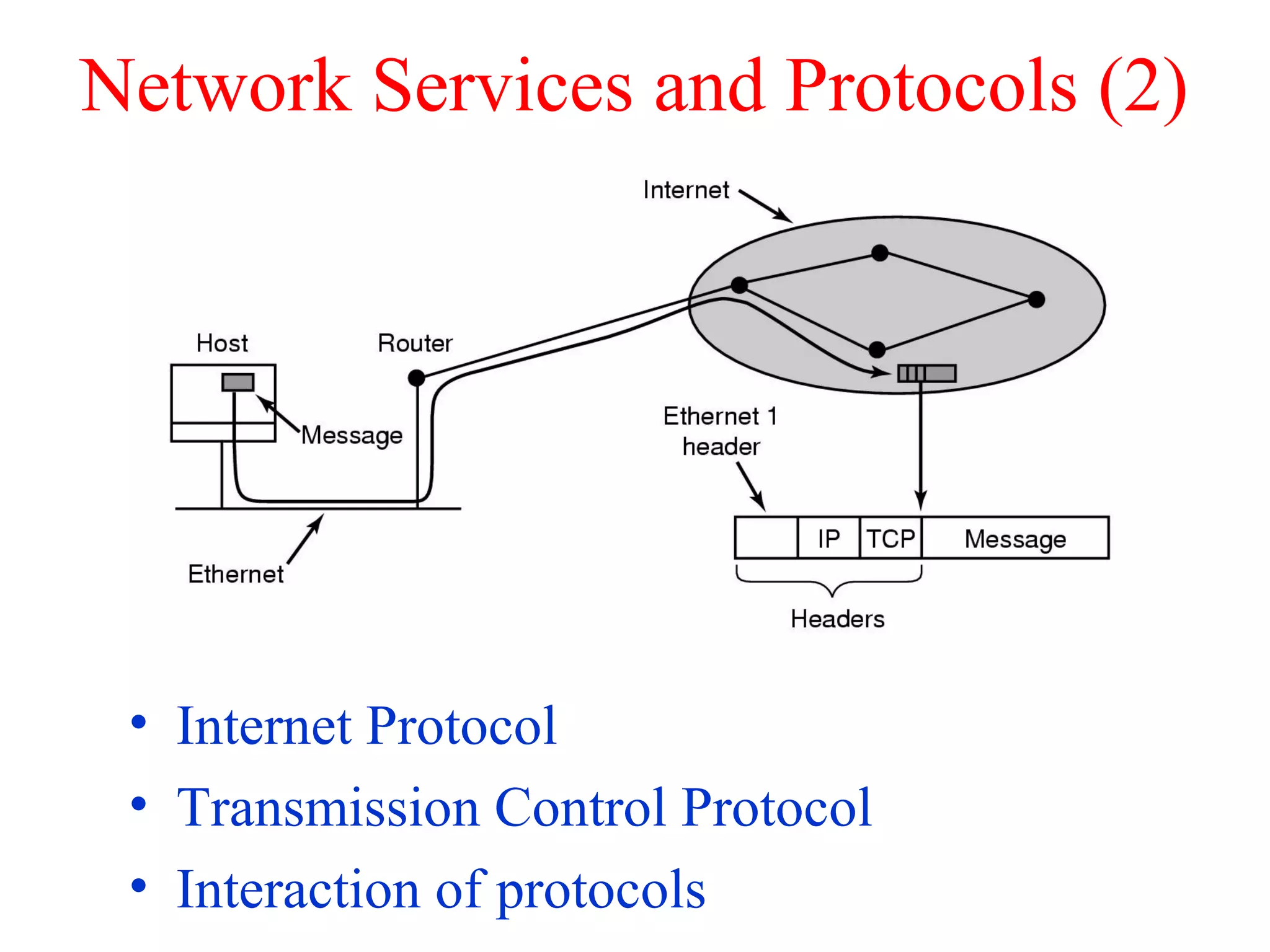
Introduction to network hardware focusing on Ethernet types and the general structure of the internet.
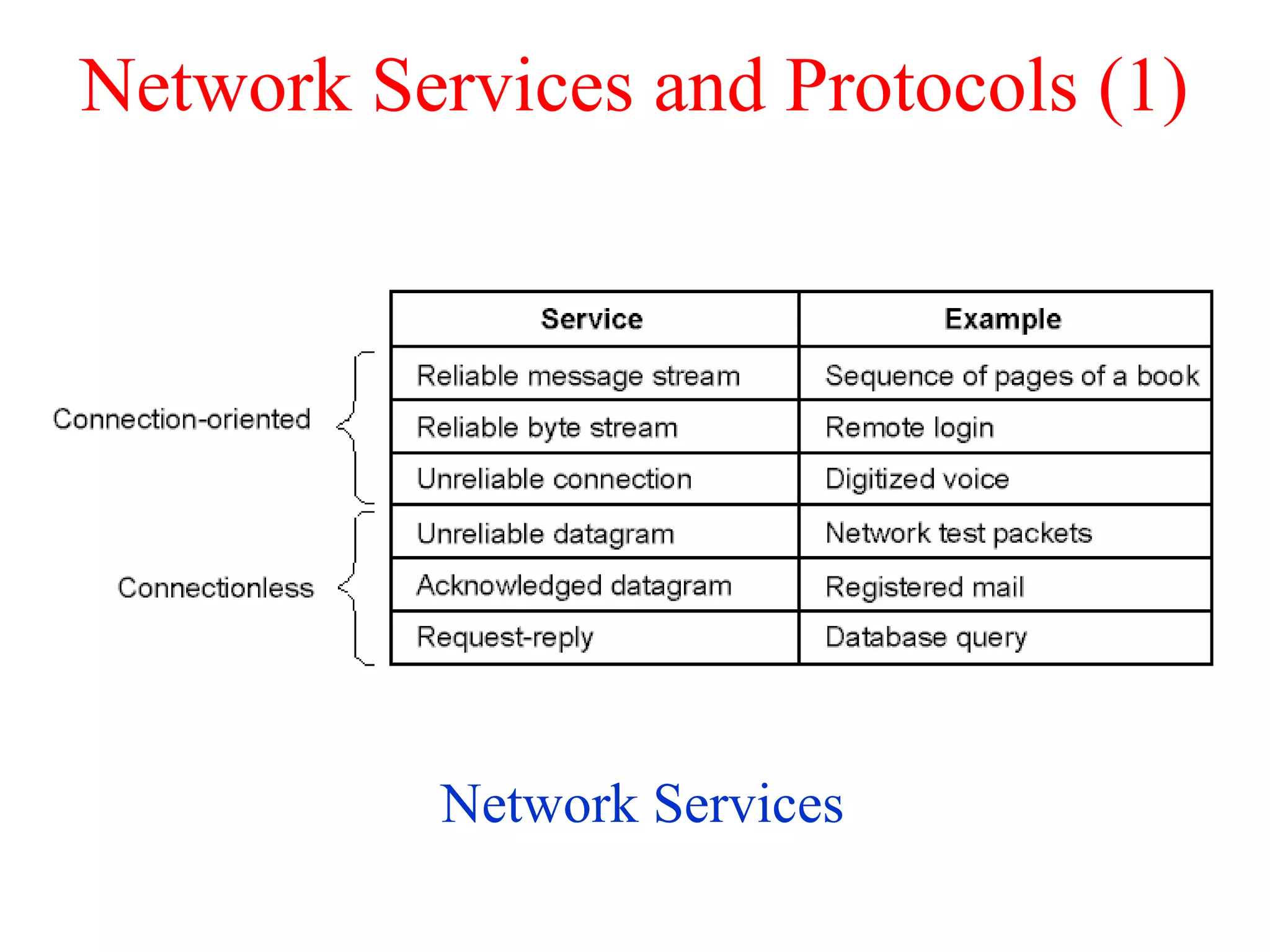
Examination of various network services and protocols essential for communication in distributed networks.
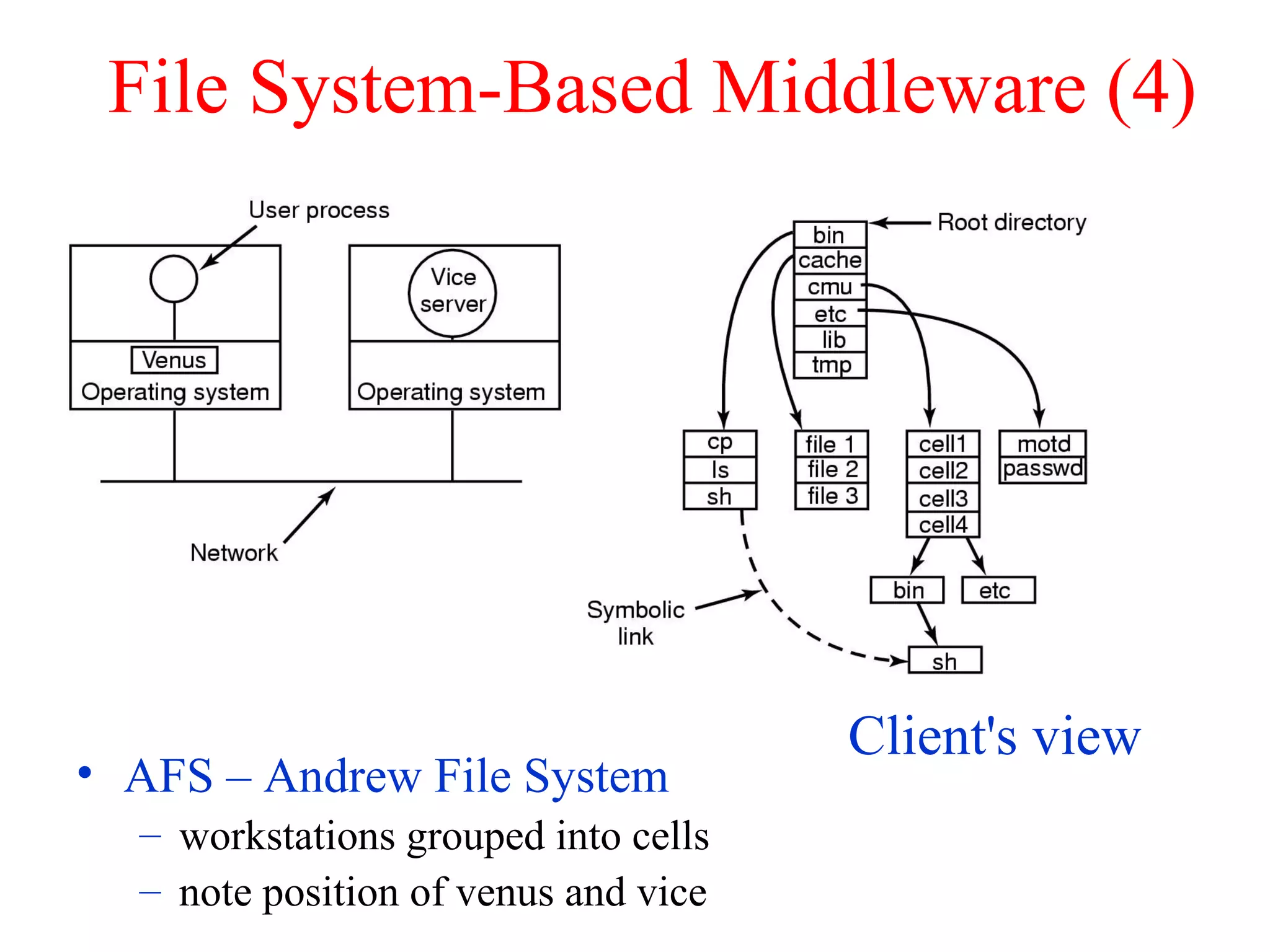
Exploration of file system-based middleware including transfer models, naming transparency, and semantics of file sharing.
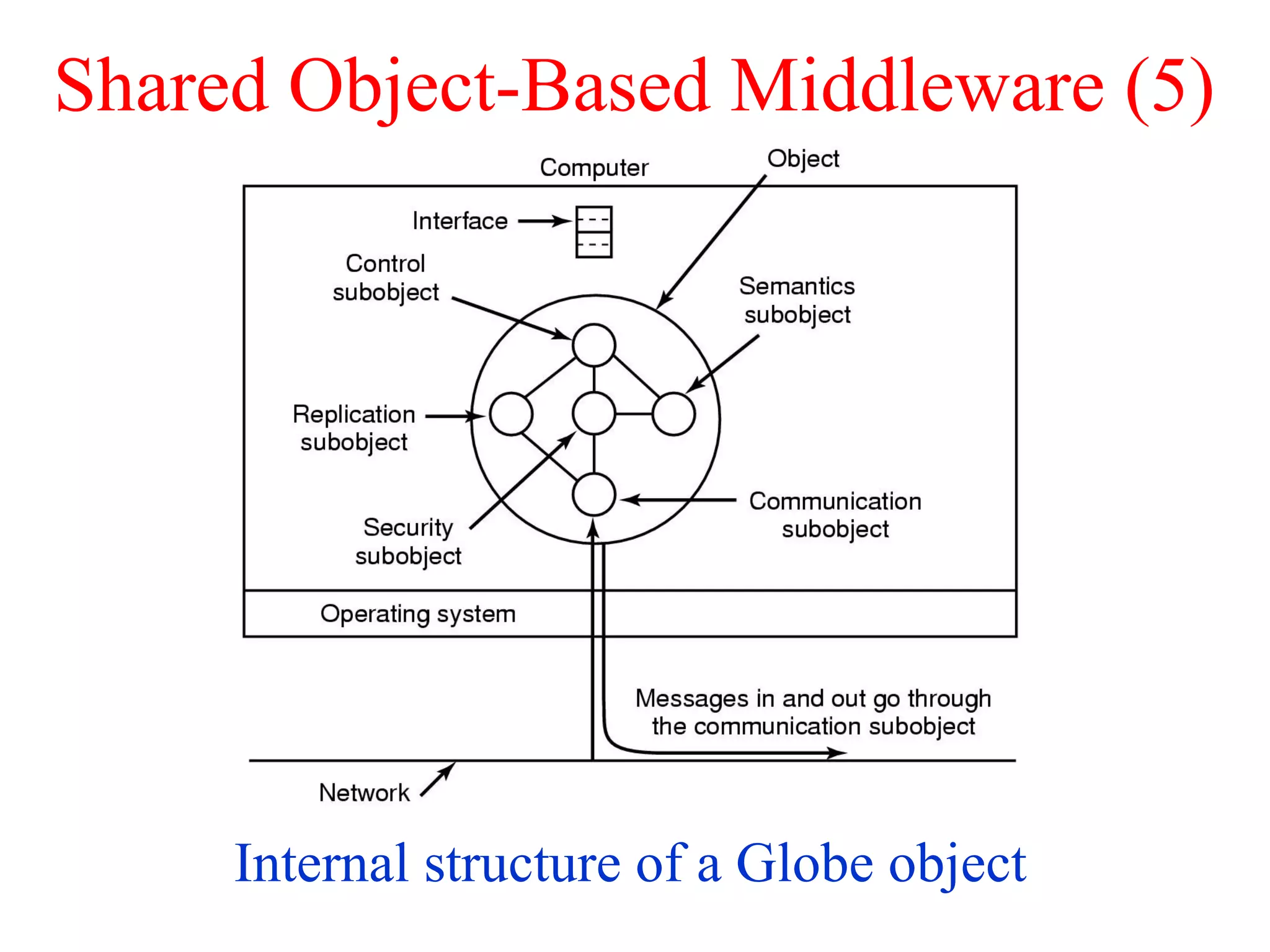
Details on shared object-based middleware, highlighting CORBA, scalability, and the internal structure of distributed objects.
In-depth look at coordination-based middleware including Linda and Jini models, emphasizing tuple spaces and communication methods.


