By iTutor.com
 T- 1-855-694-8886
Email- info@iTutor.com
Motion
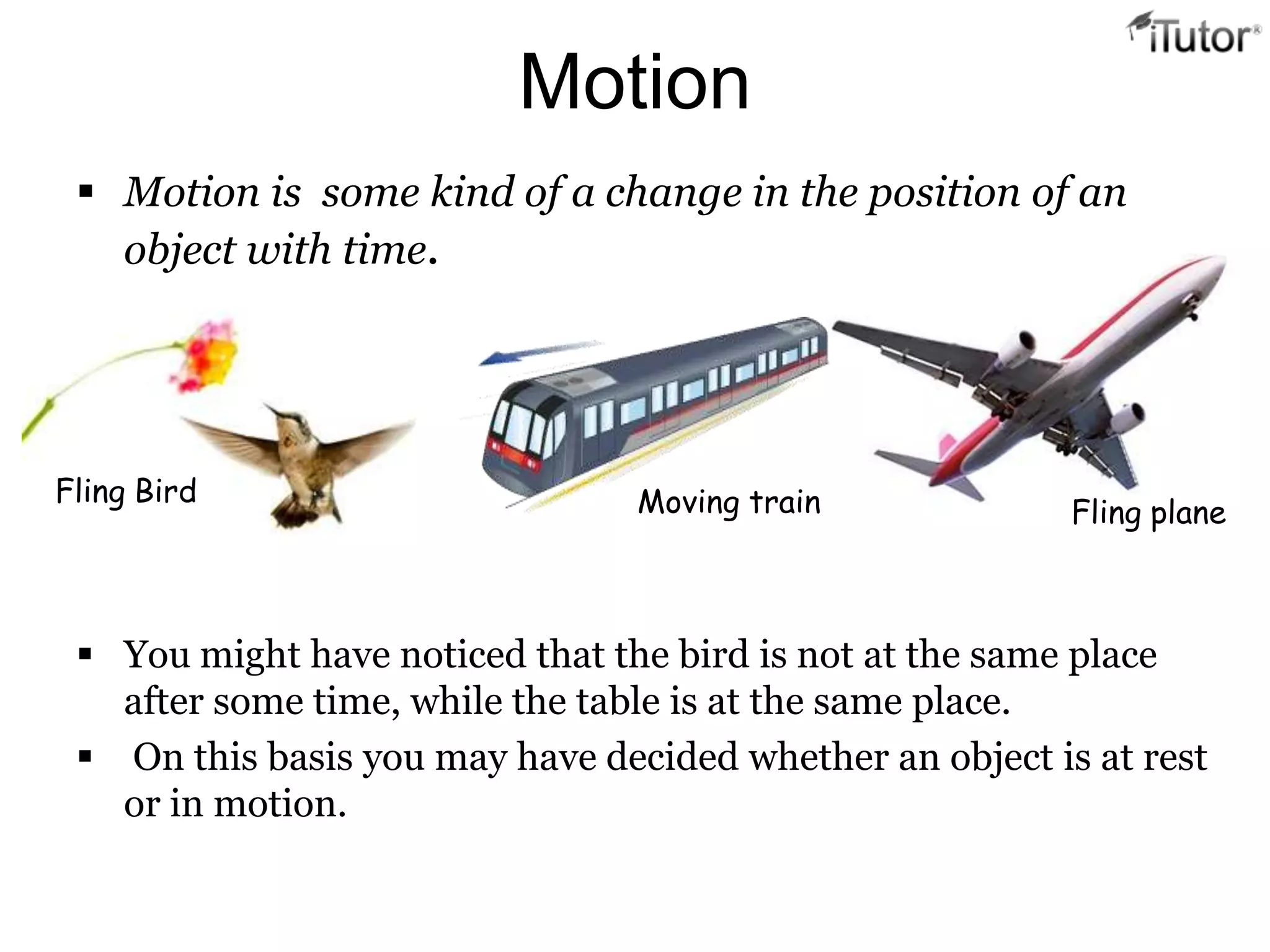
  Motion is some kind of a change in the position of an
   object with time.


Fling Bird                       Moving train             Fling plane


  You might have noticed that the bird is not at the same place
   after some time, while the table is at the same place.
  On this basis you may have decided whether an object is at rest
   or in motion.
The position variable
   Motion is about knowing where things are and how
    they move.
   To understand where things are, we need to
    understand position.
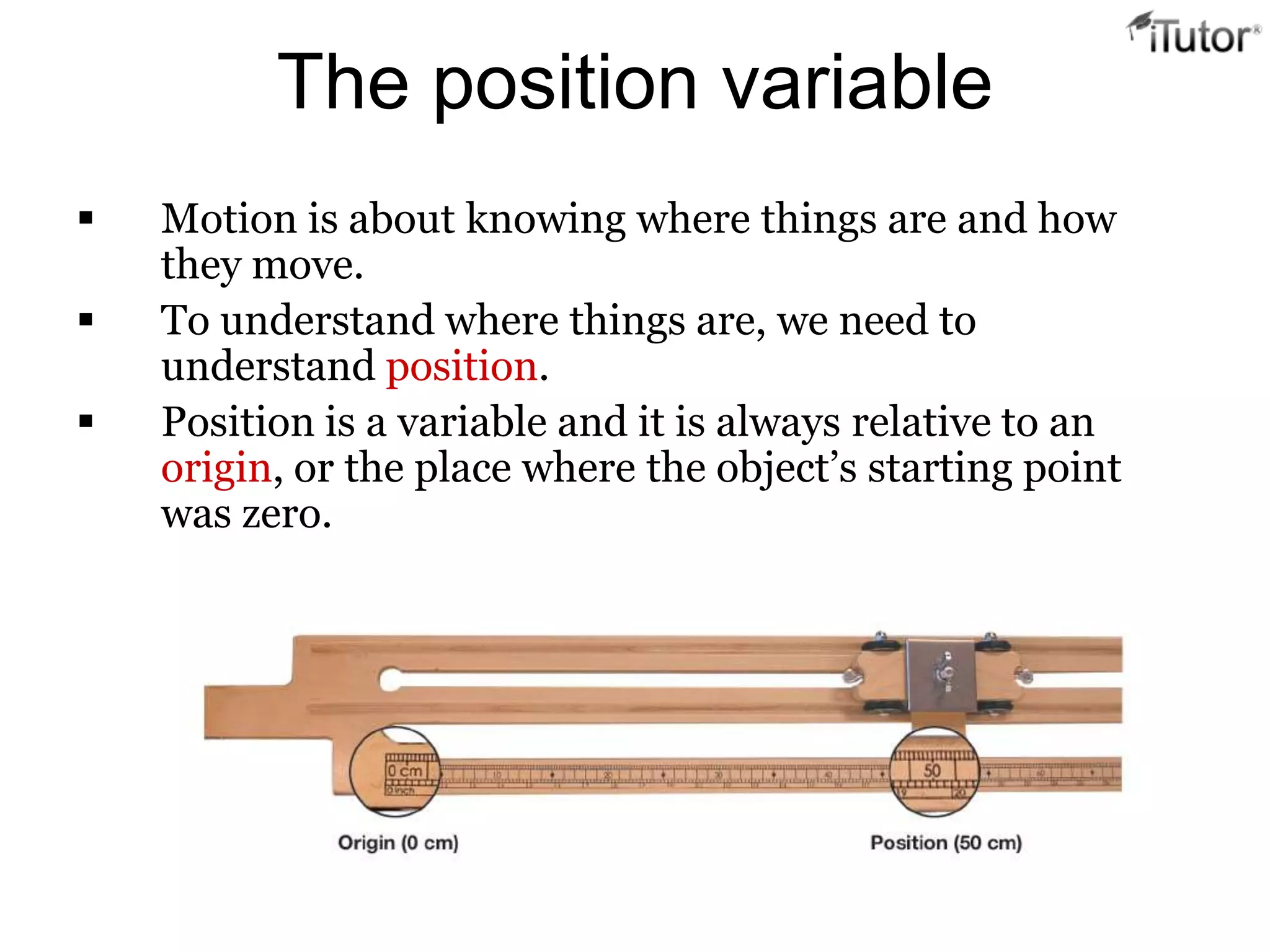
   Position is a variable and it is always relative to an
    origin, or the place where the object’s starting point
    was zero.
Forward and backward
   Position and distance are similar but not
    the same. Both use units of length.
   Distance can have only positive values.
   Position uses positive and negative
    numbers.

   Positive numbers are for positions to the right (in front) of
    the origin.
   Negative numbers are for positions to the left (or behind) the
    origin.
Forward and backward
   Many variables can be positive or negative.
   These include position, speed, and force.
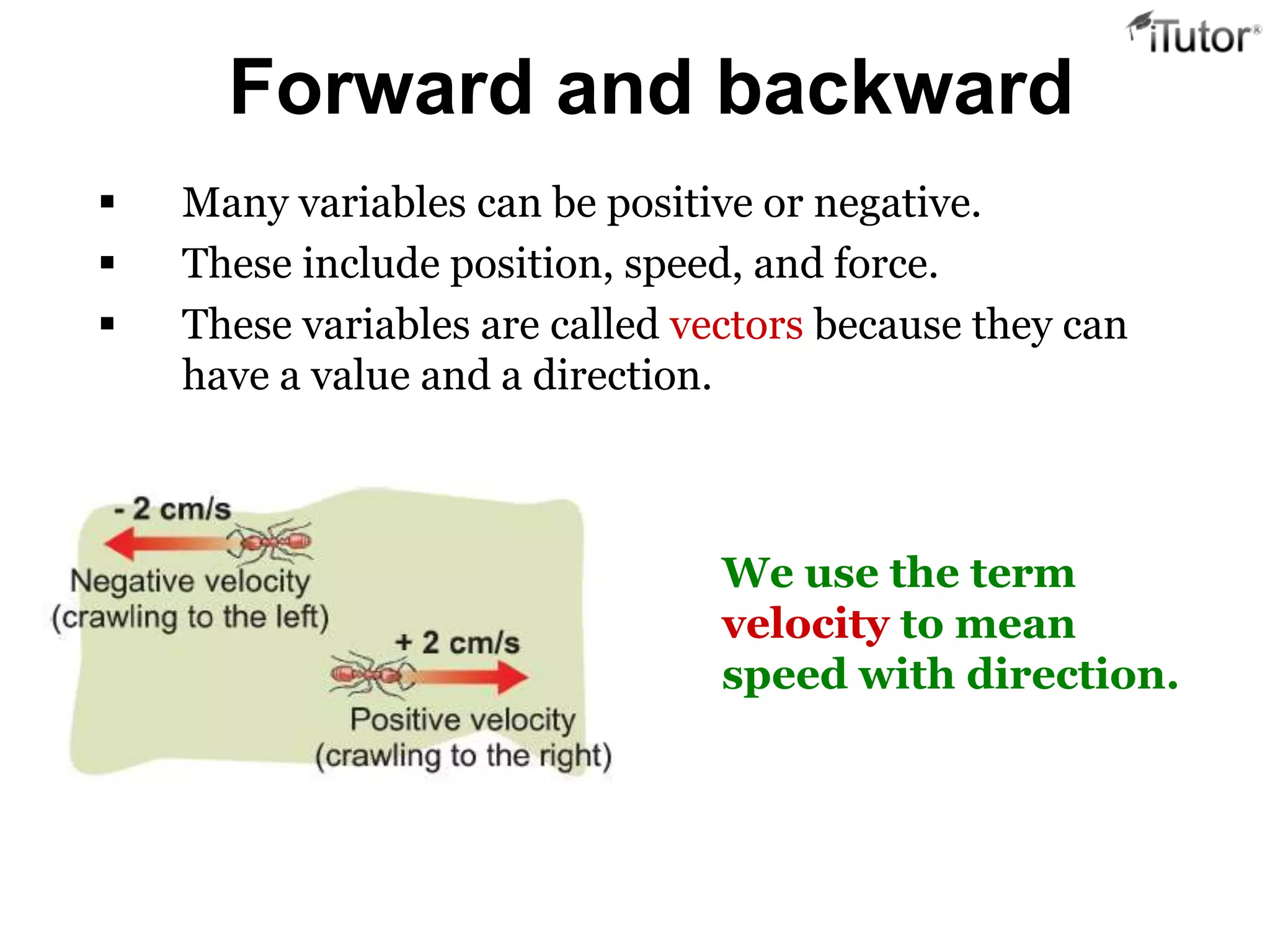
   These variables are called vectors because they can
    have a value and a direction.


                                 We use the term
                                 velocity to mean
                                 speed with direction.
Types of Motion
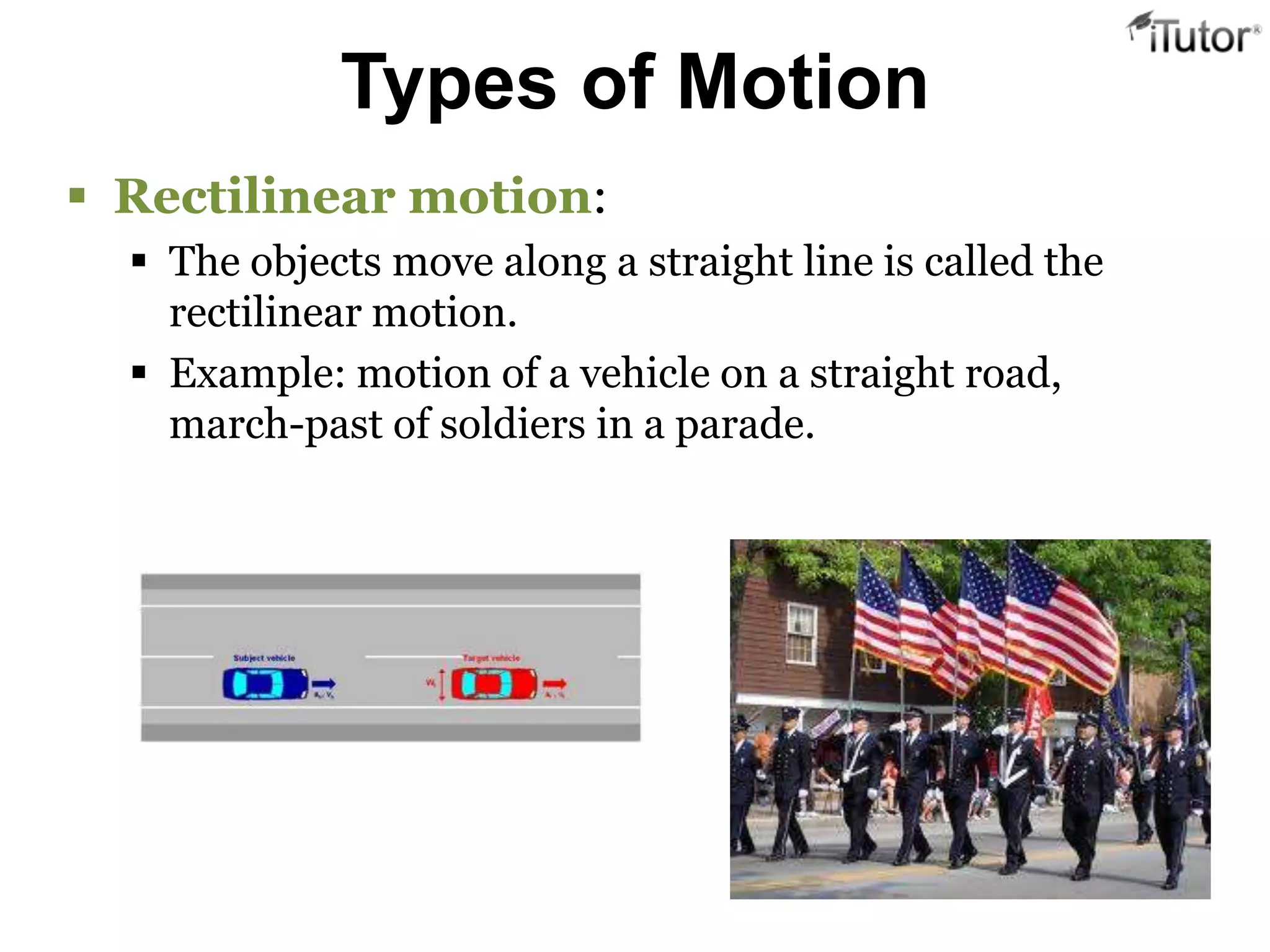
 Rectilinear motion:
   The objects move along a straight line is called the
    rectilinear motion.
   Example: motion of a vehicle on a straight road,
    march-past of soldiers in a parade.
 Circular motion is a movement of an object along
             the circumference of a circle or rotation along a circular
             path or a circular orbit.


                     Example : The motion of a point marked on the blade of
                      an electric fan or the hands of a clock are examples of
                      circular motion.


Copyright reserved.    2012 The E Tutor
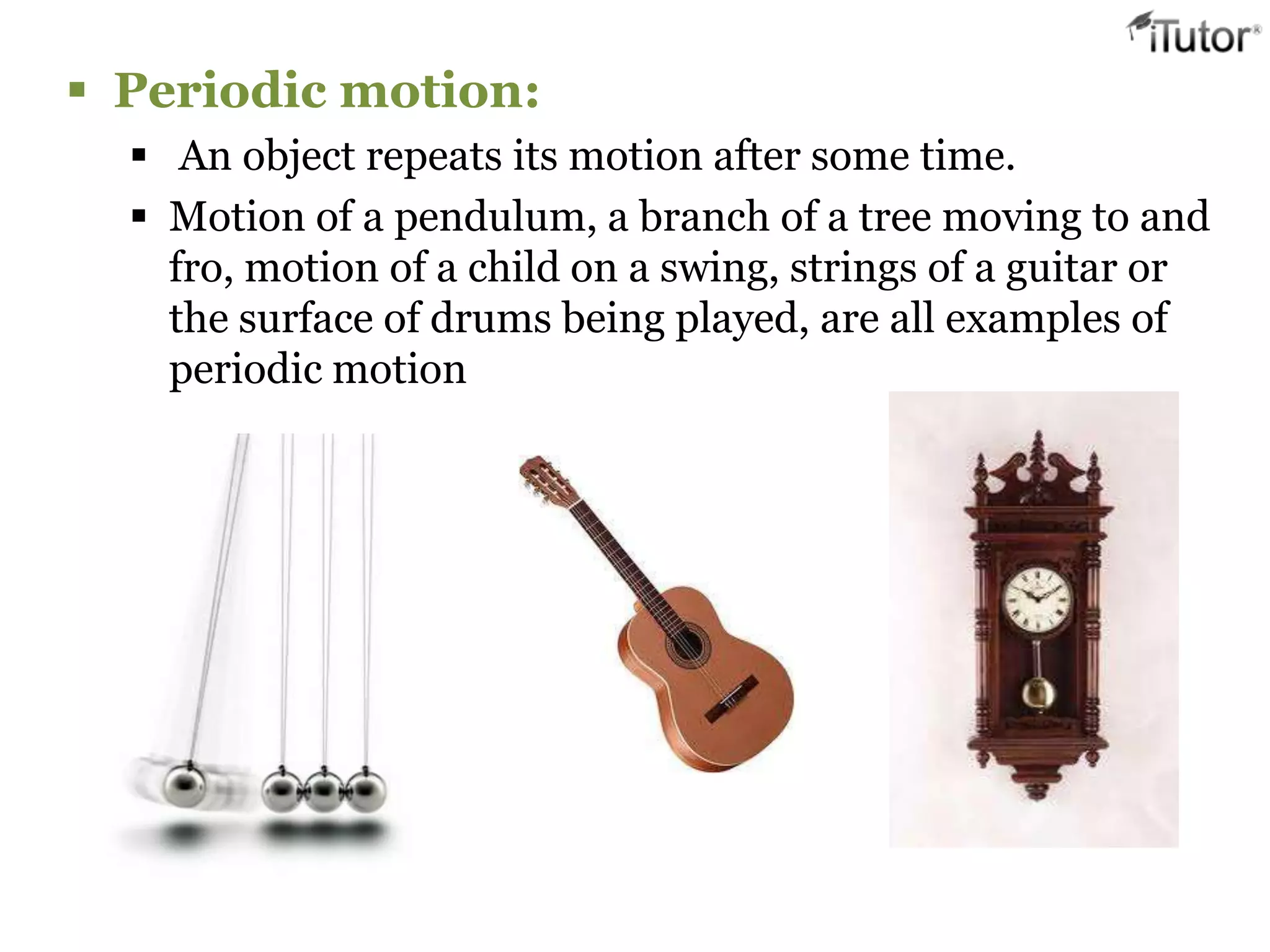
 Periodic motion:
   An object repeats its motion after some time.
   Motion of a pendulum, a branch of a tree moving to and
    fro, motion of a child on a swing, strings of a guitar or
    the surface of drums being played, are all examples of
    periodic motion
Velocity
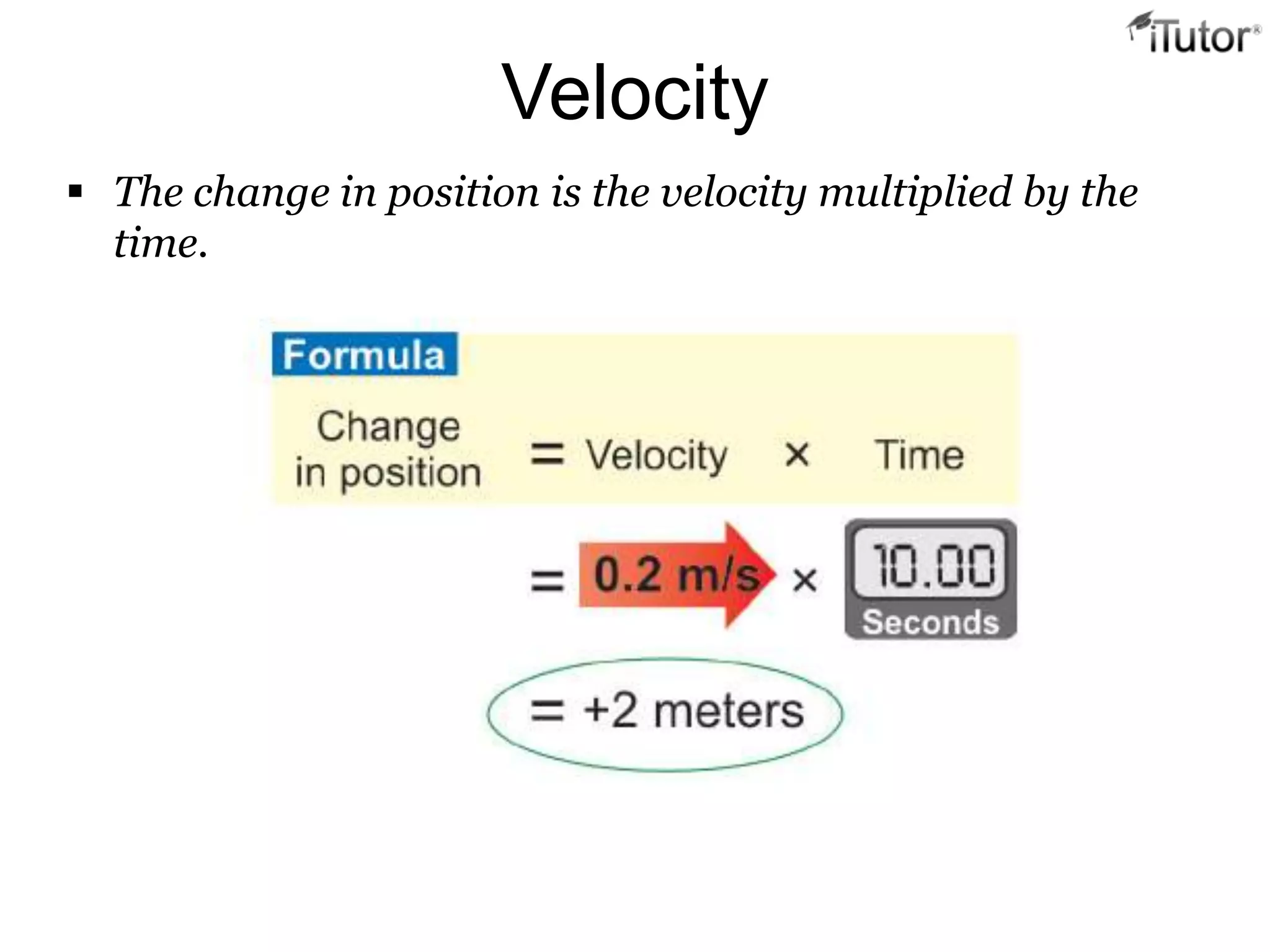
 The change in position is the velocity multiplied by the
  time.
Call us for more
  information:


1-855-694-8886


      www.iTutor.com


                       The End

Motion(position and velocity)

  • 1.
    By iTutor.com T-1-855-694-8886 Email- info@iTutor.com
  • 2.
    Motion  Motionis some kind of a change in the position of an object with time. Fling Bird Moving train Fling plane  You might have noticed that the bird is not at the same place after some time, while the table is at the same place.  On this basis you may have decided whether an object is at rest or in motion.
  • 3.
    The position variable  Motion is about knowing where things are and how they move.  To understand where things are, we need to understand position.  Position is a variable and it is always relative to an origin, or the place where the object’s starting point was zero.
  • 4.
    Forward and backward  Position and distance are similar but not the same. Both use units of length.  Distance can have only positive values.  Position uses positive and negative numbers.  Positive numbers are for positions to the right (in front) of the origin.  Negative numbers are for positions to the left (or behind) the origin.
  • 5.
    Forward and backward  Many variables can be positive or negative.  These include position, speed, and force.  These variables are called vectors because they can have a value and a direction. We use the term velocity to mean speed with direction.
  • 6.
    Types of Motion Rectilinear motion:  The objects move along a straight line is called the rectilinear motion.  Example: motion of a vehicle on a straight road, march-past of soldiers in a parade.
  • 7.
     Circular motionis a movement of an object along the circumference of a circle or rotation along a circular path or a circular orbit.  Example : The motion of a point marked on the blade of an electric fan or the hands of a clock are examples of circular motion. Copyright reserved. 2012 The E Tutor
  • 8.
     Periodic motion:  An object repeats its motion after some time.  Motion of a pendulum, a branch of a tree moving to and fro, motion of a child on a swing, strings of a guitar or the surface of drums being played, are all examples of periodic motion
  • 9.
    Velocity  The changein position is the velocity multiplied by the time.
  • 10.
    Call us formore information: 1-855-694-8886 www.iTutor.com The End