Ecosystems
T- 1-855-694-8886
Email- info@iTutor.com
By iTutor.com
What is an ecosystem?
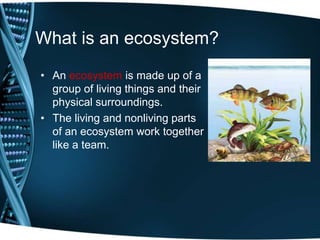
• An ecosystem is made up of a
group of living things and their
physical surroundings.
• The living and nonliving parts
of an ecosystem work together
like a team.
Photosynthesis and energy
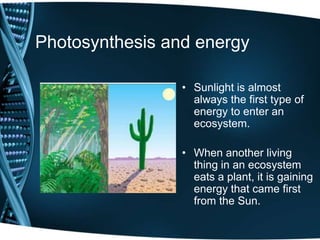
• Sunlight is almost
always the first type of
energy to enter an
ecosystem.
• When another living
thing in an ecosystem
eats a plant, it is gaining
energy that came first
from the Sun.
Photosynthesis and energy
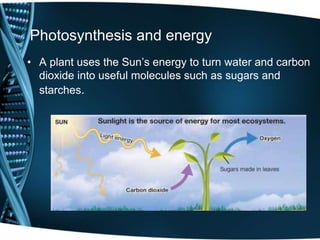
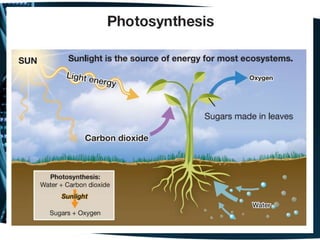
• A plant uses the Sun’s energy to turn water and carbon
dioxide into useful molecules such as sugars and
starches.
Producers, consumers, and decomposers
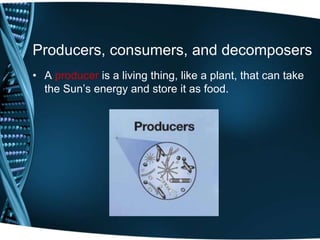
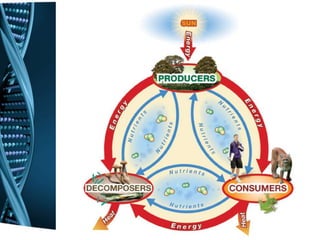
• A producer is a living thing, like a plant, that can take
the Sun’s energy and store it as food.
Producers, consumers, and decomposers
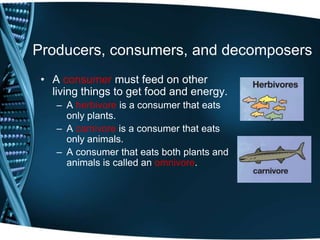
• A consumer must feed on other
living things to get food and energy.
– A herbivore is a consumer that eats
only plants.
– A carnivore is a consumer that eats
only animals.
– A consumer that eats both plants and
animals is called an omnivore.
Producers, consumers, and decomposers
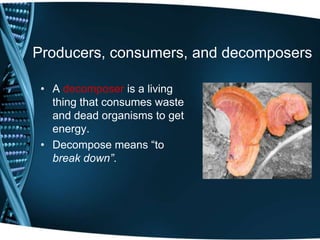
• A decomposer is a living
thing that consumes waste
and dead organisms to get
energy.
• Decompose means “to
break down”.
The water and carbon-oxygen cycles
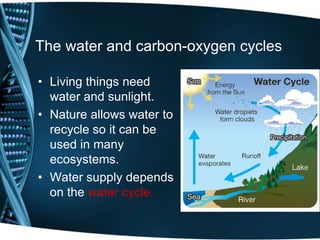
• Living things need
water and sunlight.
• Nature allows water to
recycle so it can be
used in many
ecosystems.
• Water supply depends
on the water cycle.
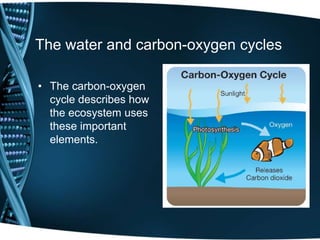
• The carbon-oxygen
cycle describes how
the ecosystem uses
these important
elements.
The water and carbon-oxygen cycles
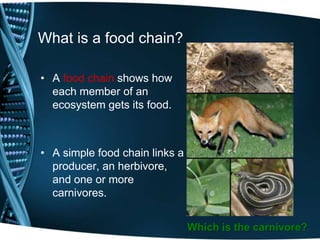
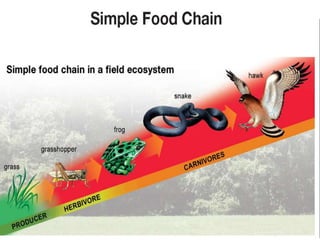
What is a food chain?
• A food chain shows how
each member of an
ecosystem gets its food.
• A simple food chain links a
producer, an herbivore,
and one or more
carnivores.
Which is the carnivore?
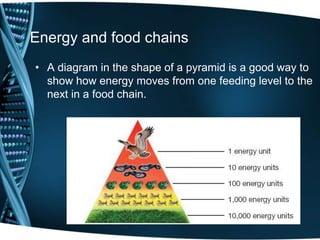
Energy and food chains
• A diagram in the shape of a pyramid is a good way to
show how energy moves from one feeding level to the
next in a food chain.
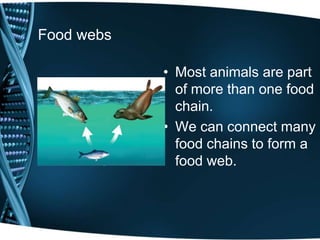
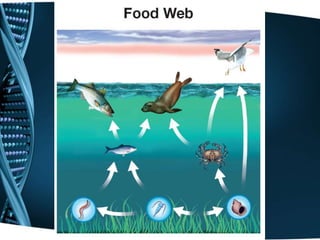
Food webs
• Most animals are part
of more than one food
chain.
• We can connect many
food chains to form a
food web.
The End
Call us for more
Information:
www.iTutor.com
Visit
1-855-694-8886

Ecosystems

  • 1.
  • 2.
    What is anecosystem? • An ecosystem is made up of a group of living things and their physical surroundings. • The living and nonliving parts of an ecosystem work together like a team.
  • 3.
    Photosynthesis and energy •Sunlight is almost always the first type of energy to enter an ecosystem. • When another living thing in an ecosystem eats a plant, it is gaining energy that came first from the Sun.
  • 4.
    Photosynthesis and energy •A plant uses the Sun’s energy to turn water and carbon dioxide into useful molecules such as sugars and starches.
  • 6.
    Producers, consumers, anddecomposers • A producer is a living thing, like a plant, that can take the Sun’s energy and store it as food.
  • 7.
    Producers, consumers, anddecomposers • A consumer must feed on other living things to get food and energy. – A herbivore is a consumer that eats only plants. – A carnivore is a consumer that eats only animals. – A consumer that eats both plants and animals is called an omnivore.
  • 8.
    Producers, consumers, anddecomposers • A decomposer is a living thing that consumes waste and dead organisms to get energy. • Decompose means “to break down”.
  • 10.
    The water andcarbon-oxygen cycles • Living things need water and sunlight. • Nature allows water to recycle so it can be used in many ecosystems. • Water supply depends on the water cycle.
  • 11.
    • The carbon-oxygen cycledescribes how the ecosystem uses these important elements. The water and carbon-oxygen cycles
  • 12.
    What is afood chain? • A food chain shows how each member of an ecosystem gets its food. • A simple food chain links a producer, an herbivore, and one or more carnivores. Which is the carnivore?
  • 14.
    Energy and foodchains • A diagram in the shape of a pyramid is a good way to show how energy moves from one feeding level to the next in a food chain.
  • 15.
    Food webs • Mostanimals are part of more than one food chain. • We can connect many food chains to form a food web.
  • 17.
    The End Call usfor more Information: www.iTutor.com Visit 1-855-694-8886