Motion Class 9
Rehet
Motion
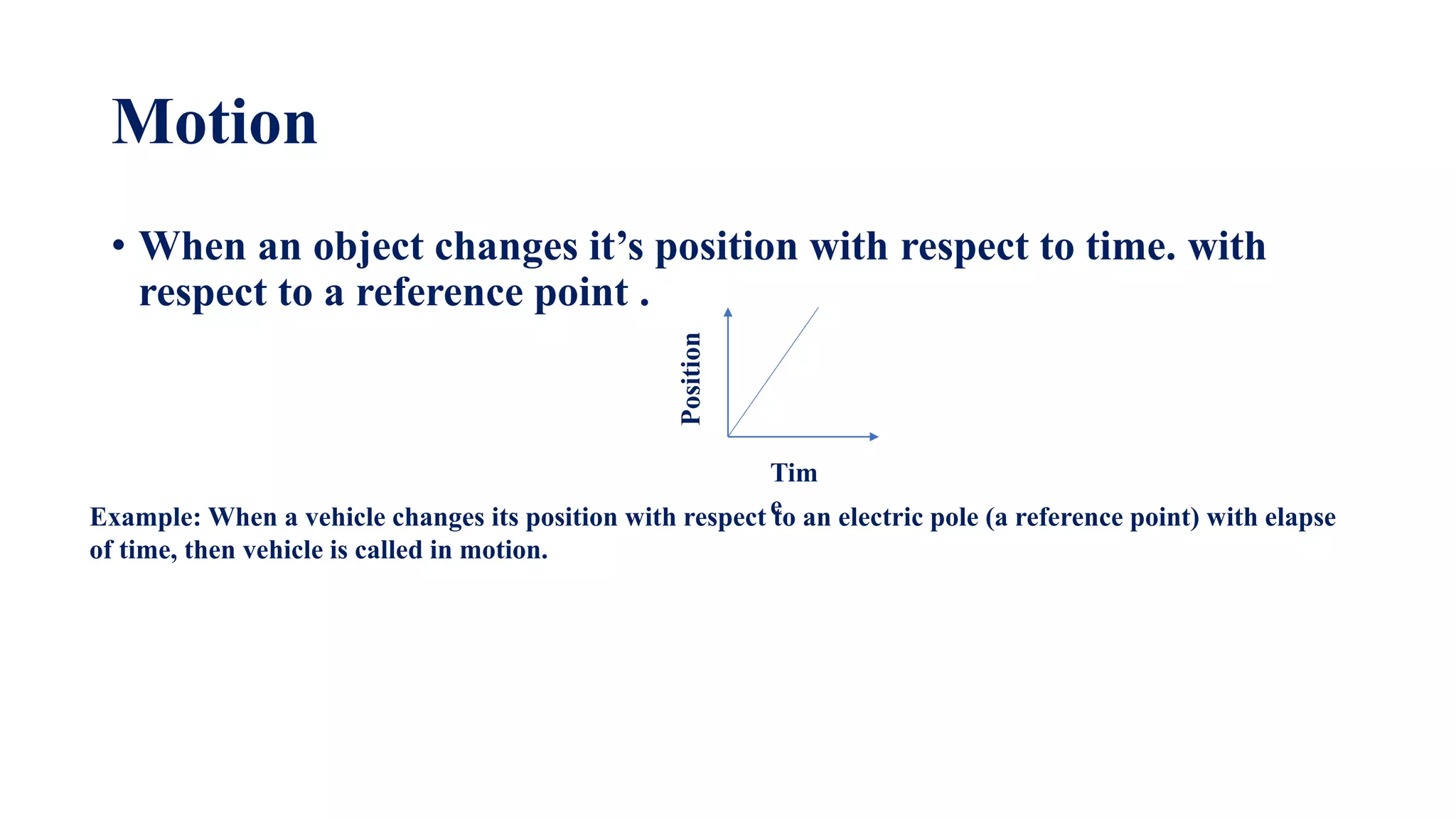
• When an object changes it’s position with respect to time. with
respect to a reference point .
Position
Tim
e
Example: When a vehicle changes its position with respect to an electric pole (a reference point) with elapse
of time, then vehicle is called in motion.
Rest
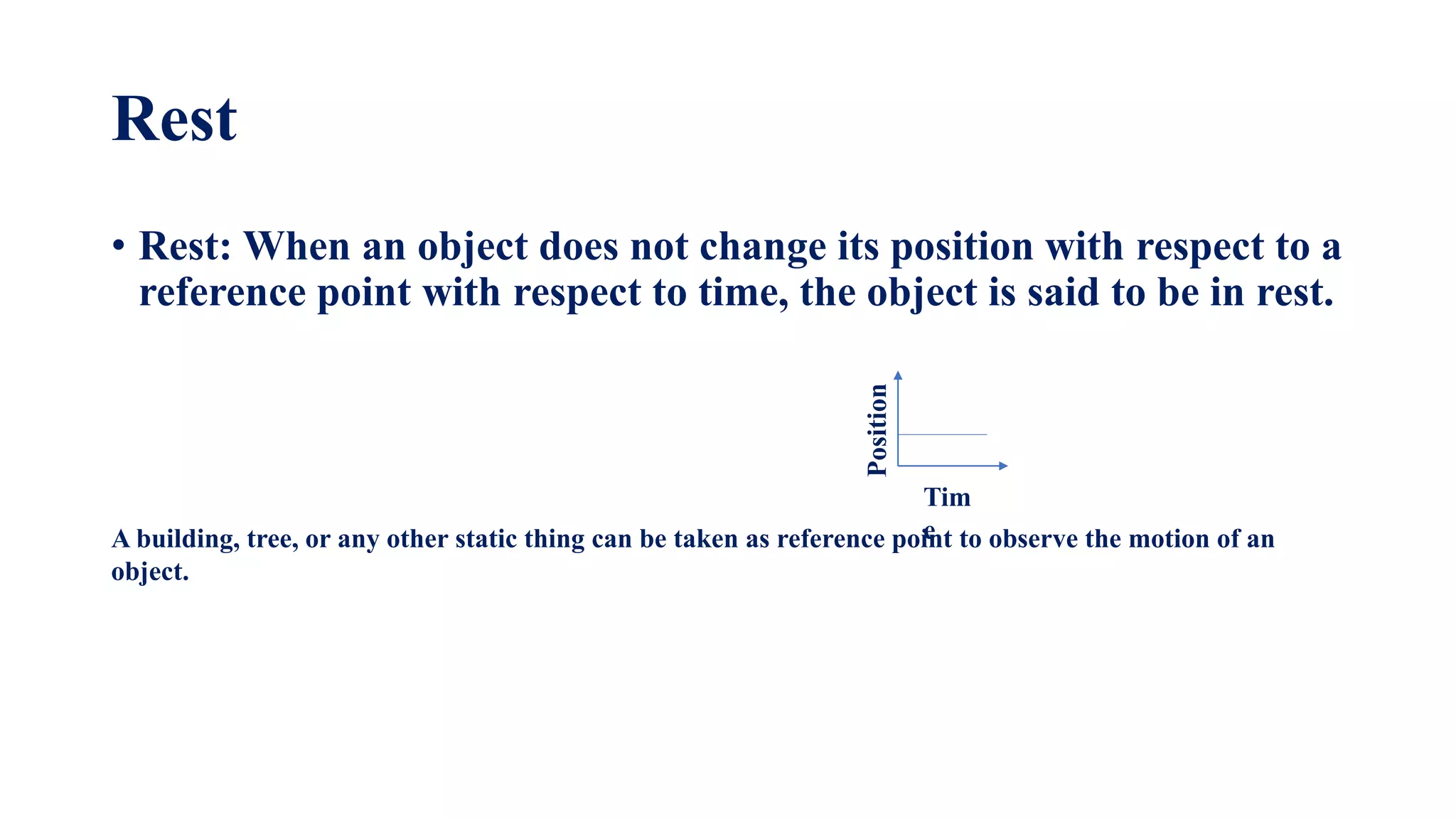
• Rest: When an object does not change its position with respect to a
reference point with respect to time, the object is said to be in rest.
A building, tree, or any other static thing can be taken as reference point to observe the motion of an
object.
Tim
e
Position
Factors describing motion
Thus to observe the motion of any object; two things are necessary
– a reference point and time.
Refence point -: A fixed point with respect to which a body changes
its position is called reference point or origin.
Physical quantity
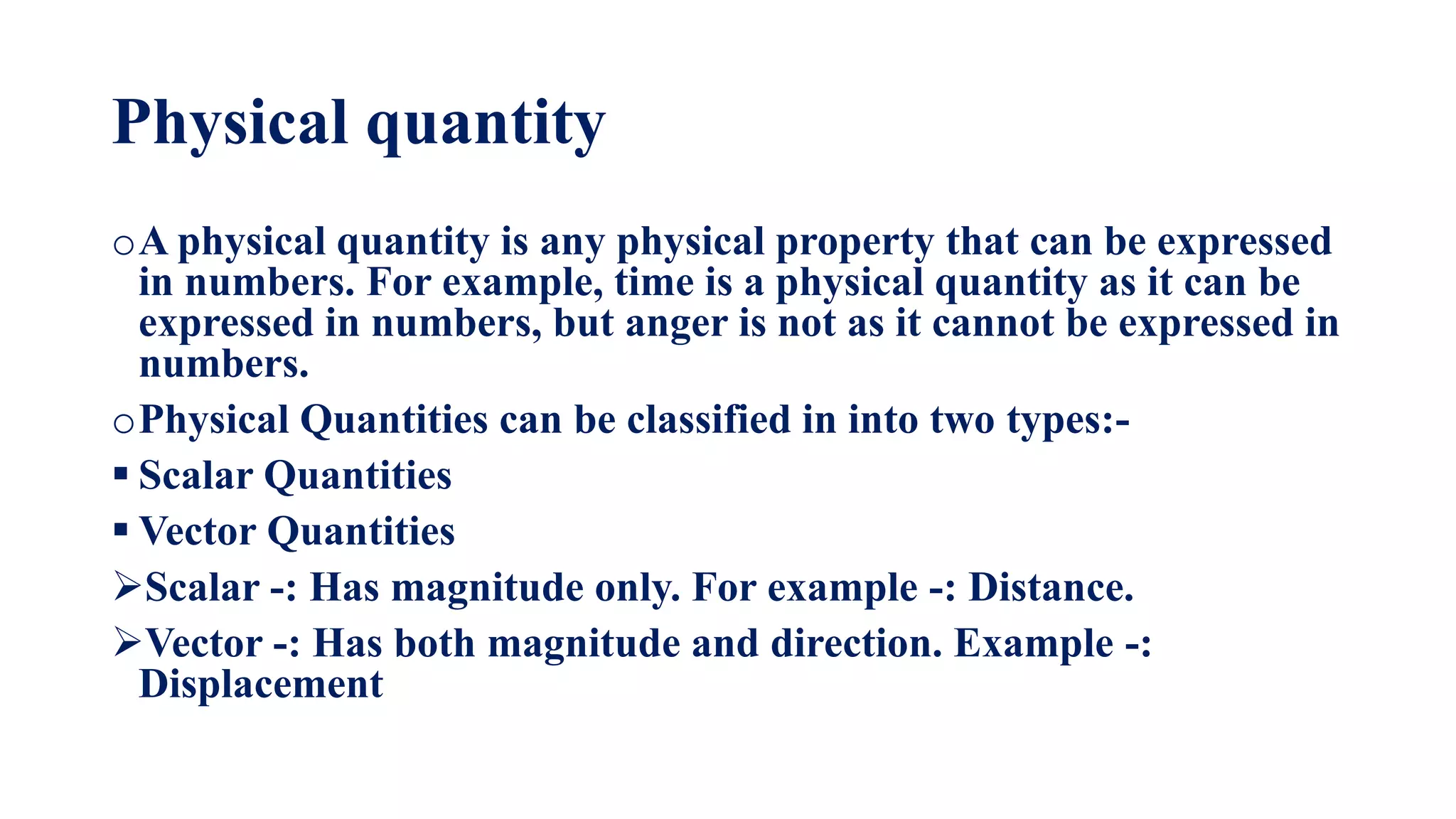
oA physical quantity is any physical property that can be expressed
in numbers. For example, time is a physical quantity as it can be
expressed in numbers, but anger is not as it cannot be expressed in
numbers.
oPhysical Quantities can be classified in into two types:-
 Scalar Quantities
 Vector Quantities
Scalar -: Has magnitude only. For example -: Distance.
Vector -: Has both magnitude and direction. Example -:
Displacement
Distance and Displacement
Δx = xf ​− x0
Where,
xf = Final position on the object
x0 = Initial position of the object
Distance – The distance covered by an object is described as the total path length covered by an
object between two endpoints.
Distance is a numerical quantity. We do not mention the direction in which an object is travelling
while mentioning about the distance covered by that object.
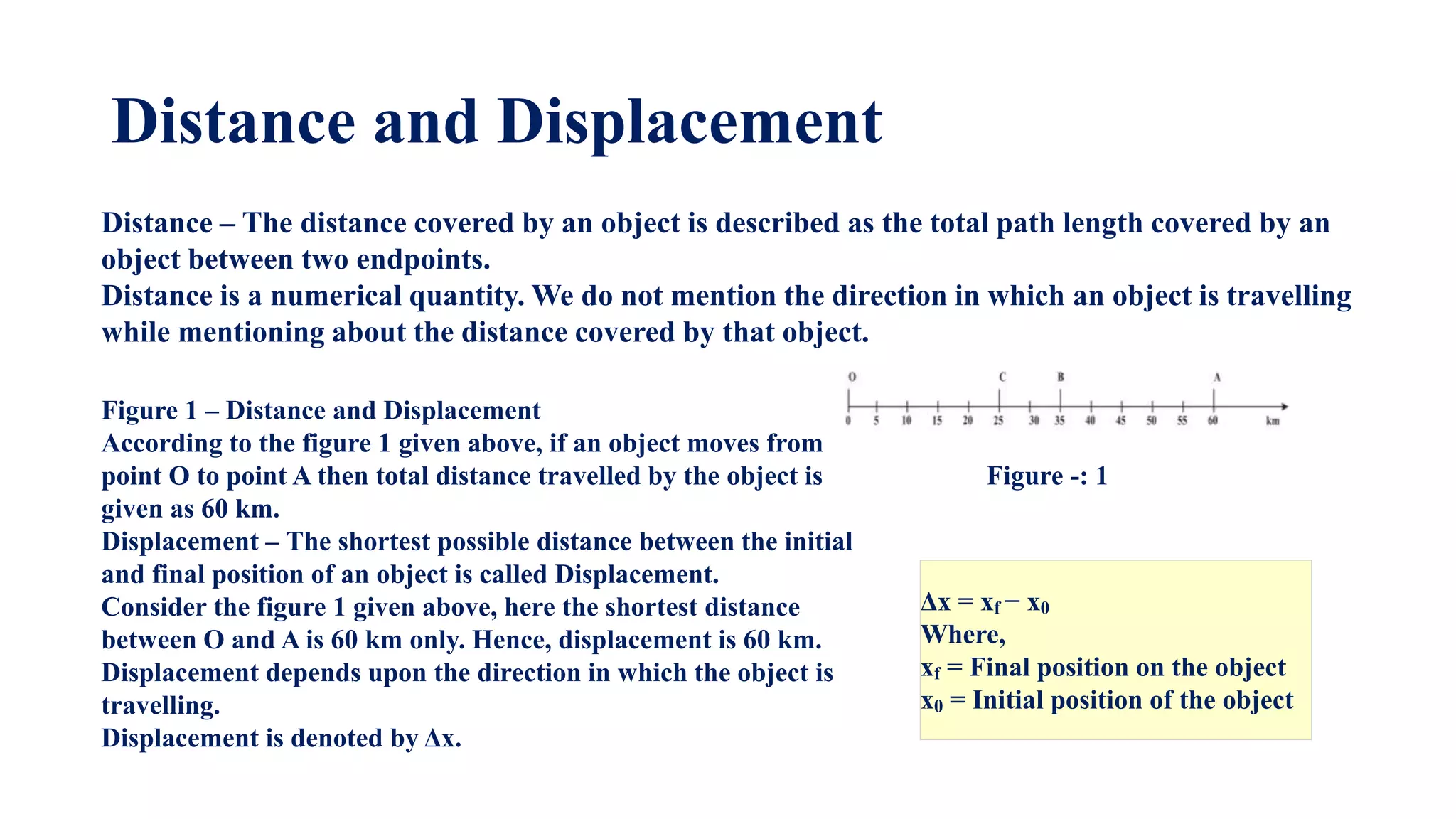
Figure 1 – Distance and Displacement
According to the figure 1 given above, if an object moves from
point O to point A then total distance travelled by the object is
given as 60 km.
Displacement – The shortest possible distance between the initial
and final position of an object is called Displacement.
Consider the figure 1 given above, here the shortest distance
between O and A is 60 km only. Hence, displacement is 60 km.
Displacement depends upon the direction in which the object is
travelling.
Displacement is denoted by Δx.
Figure -: 1
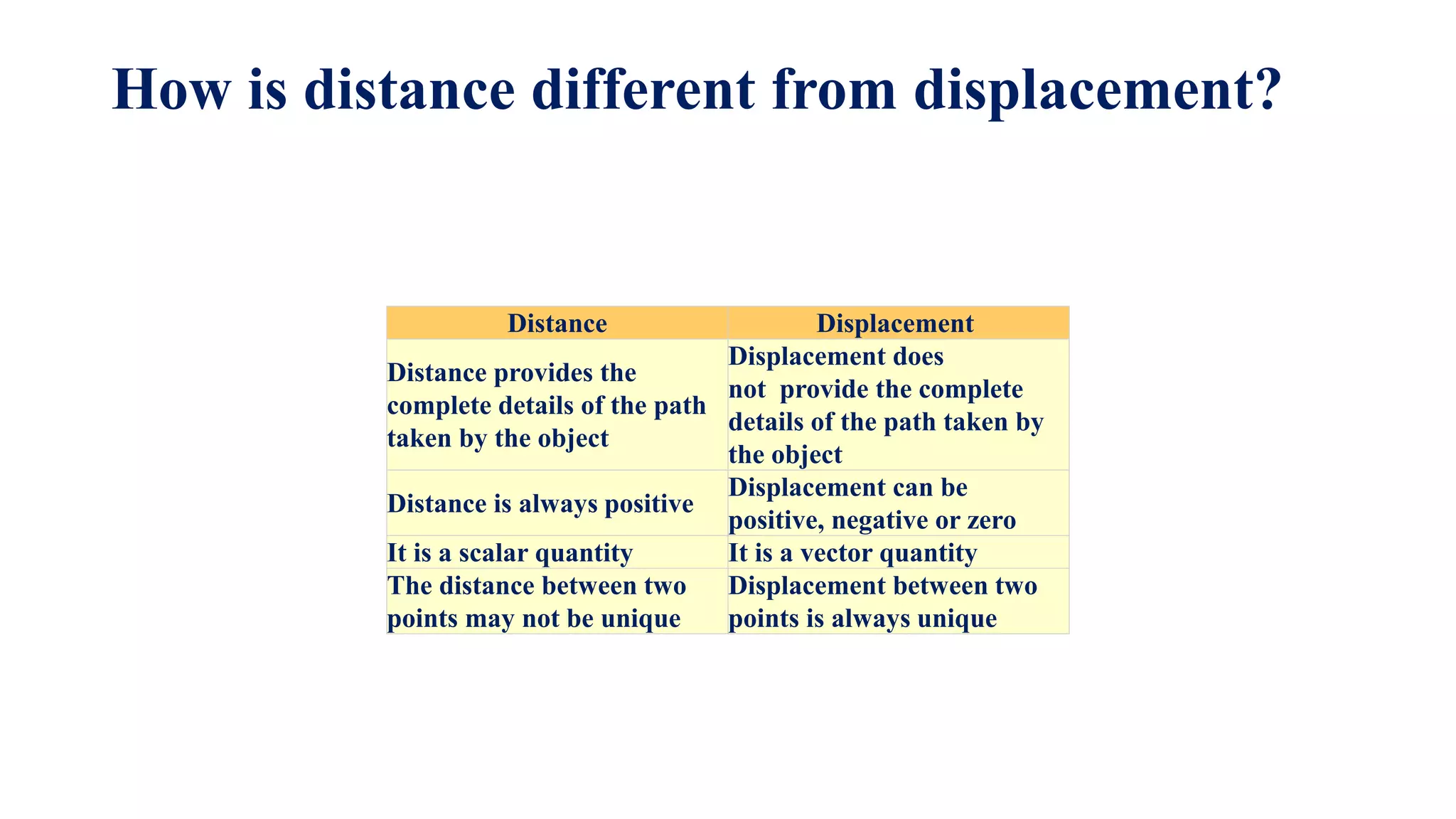
How is distance different from displacement?
Distance Displacement
Distance provides the
complete details of the path
taken by the object
Displacement does
not provide the complete
details of the path taken by
the object
Distance is always positive
Displacement can be
positive, negative or zero
It is a scalar quantity It is a vector quantity
The distance between two
points may not be unique
Displacement between two
points is always unique
Uniform and non uniform motion
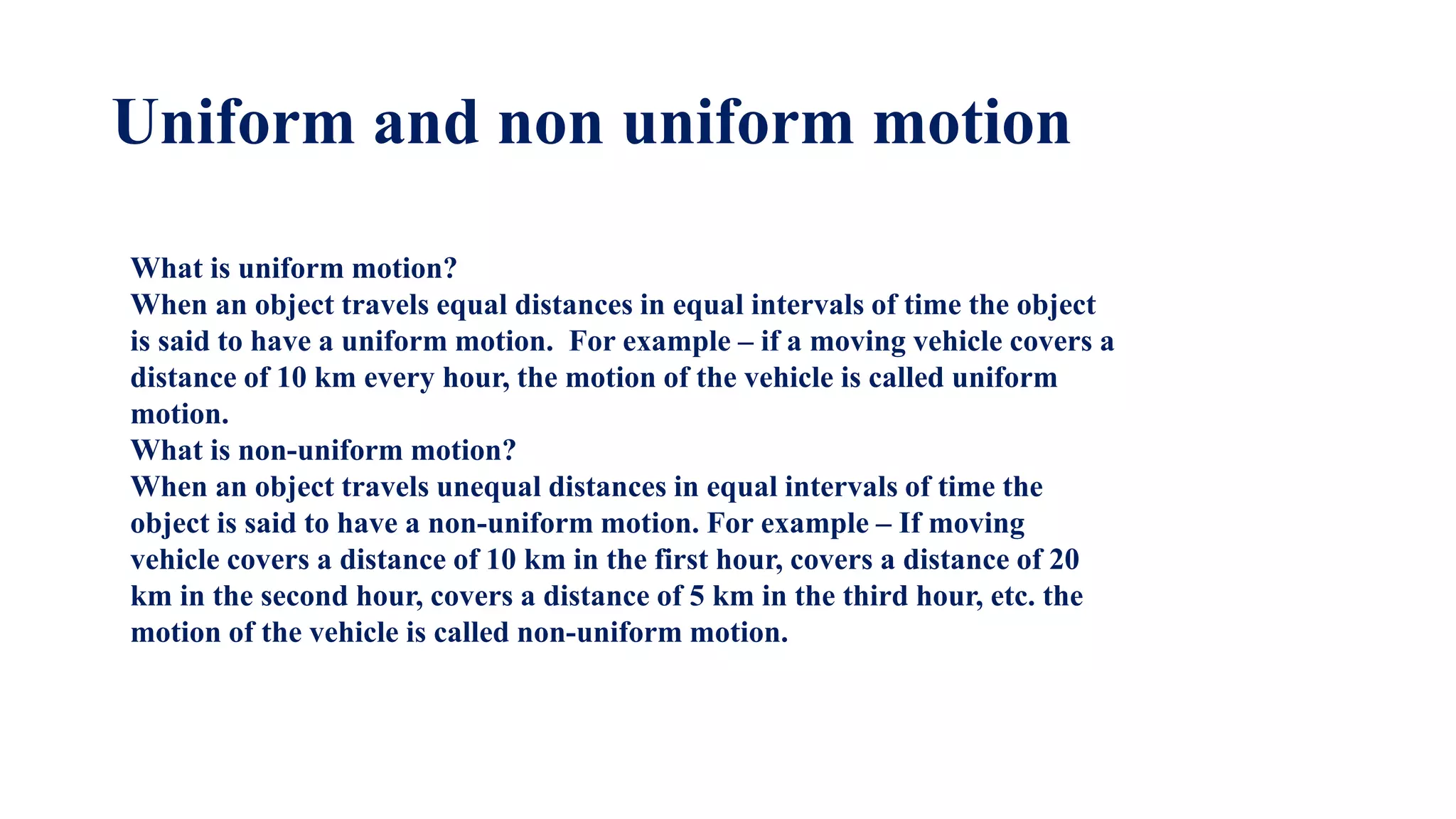
What is uniform motion?
When an object travels equal distances in equal intervals of time the object
is said to have a uniform motion. For example – if a moving vehicle covers a
distance of 10 km every hour, the motion of the vehicle is called uniform
motion.
What is non-uniform motion?
When an object travels unequal distances in equal intervals of time the
object is said to have a non-uniform motion. For example – If moving
vehicle covers a distance of 10 km in the first hour, covers a distance of 20
km in the second hour, covers a distance of 5 km in the third hour, etc. the
motion of the vehicle is called non-uniform motion.
Speed
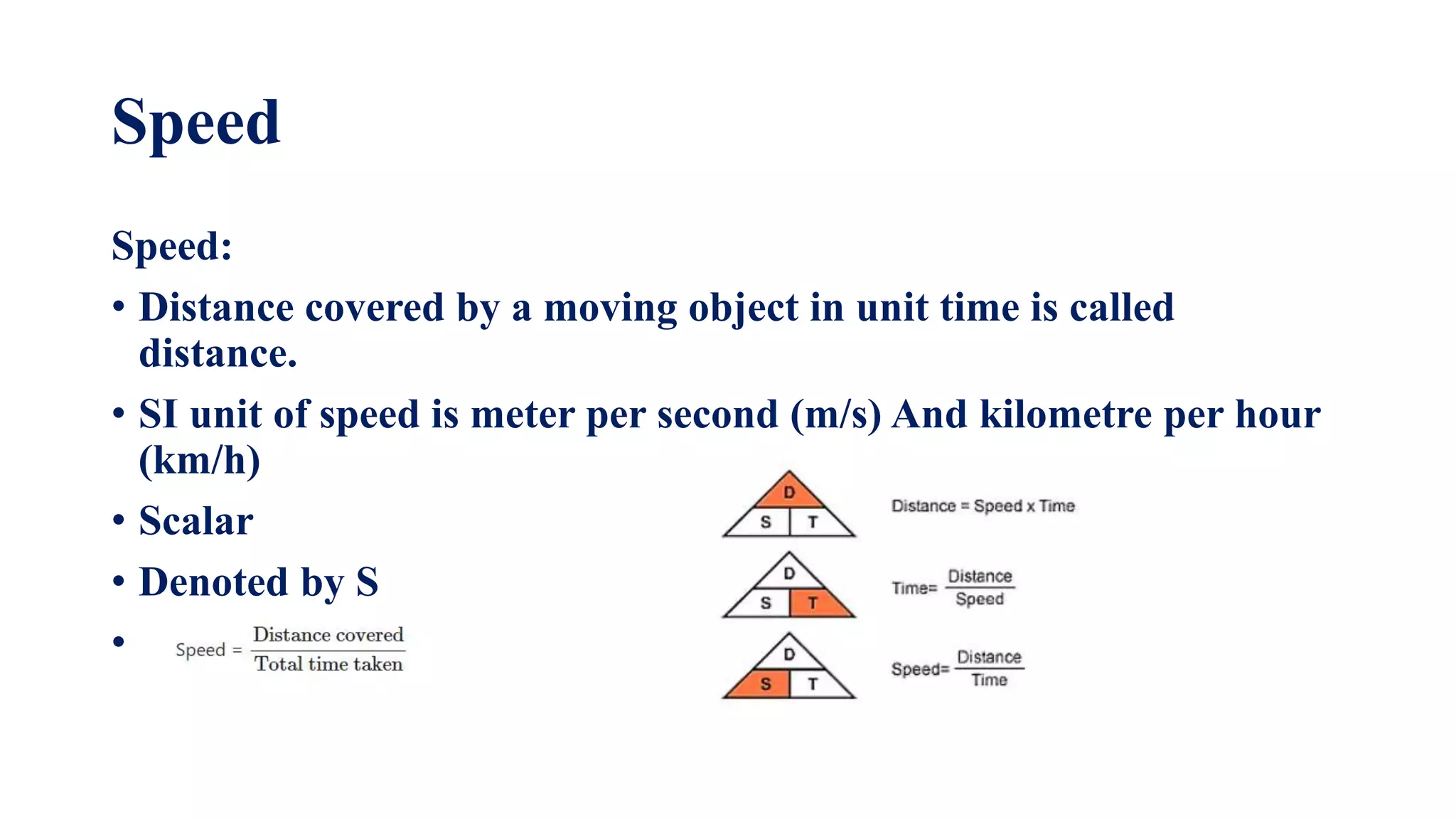
Speed:
• Distance covered by a moving object in unit time is called
distance.
• SI unit of speed is meter per second (m/s) And kilometre per hour
(km/h)
• Scalar
• Denoted by S
•
Average Speed
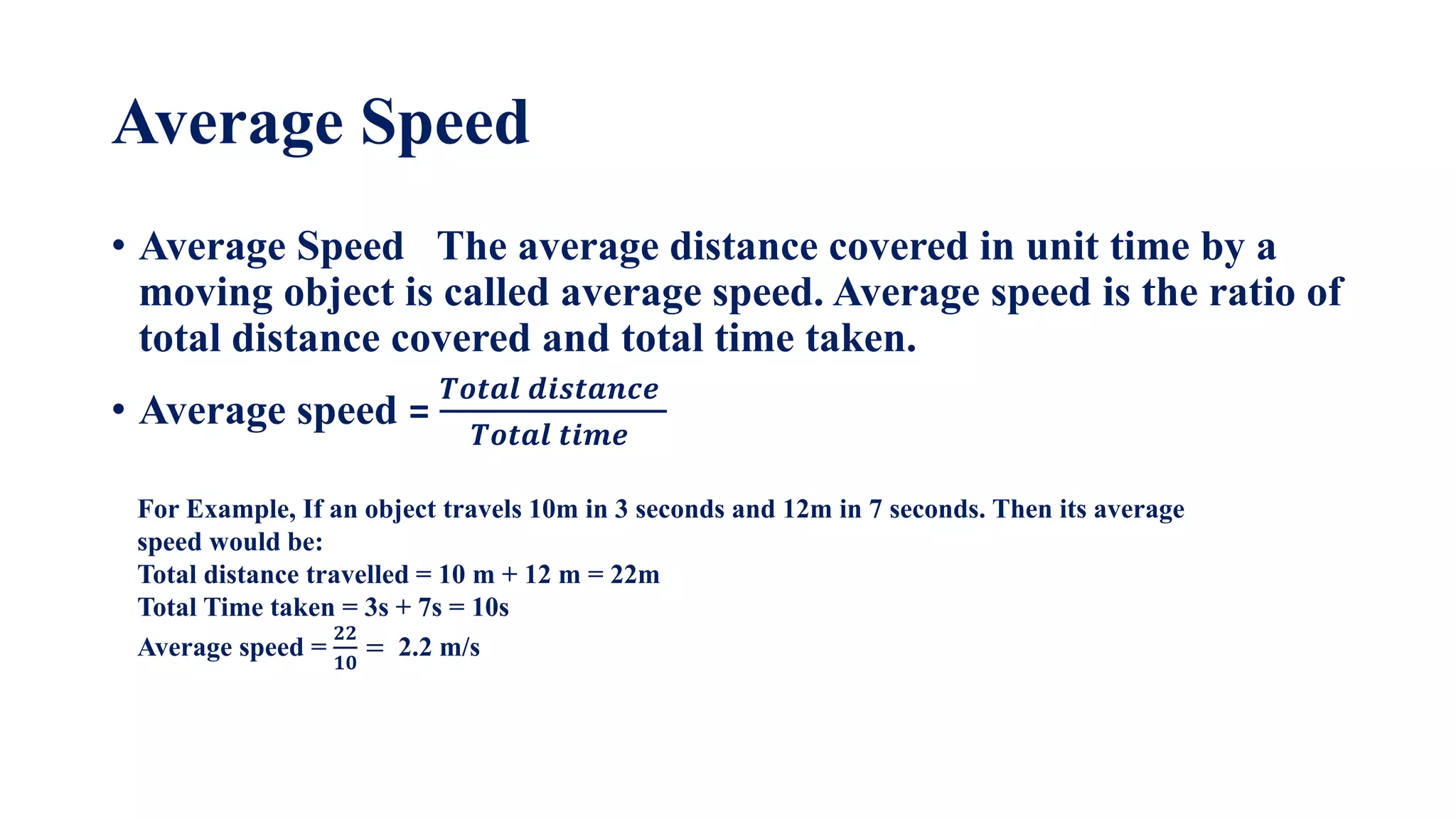
• Average Speed The average distance covered in unit time by a
moving object is called average speed. Average speed is the ratio of
total distance covered and total time taken.
• Average speed =
𝑻𝒐𝒕𝒂𝒍 𝒅𝒊𝒔𝒕𝒂𝒏𝒄𝒆
𝑻𝒐𝒕𝒂𝒍 𝒕𝒊𝒎𝒆
For Example, If an object travels 10m in 3 seconds and 12m in 7 seconds. Then its average
speed would be:
Total distance travelled = 10 m + 12 m = 22m
Total Time taken = 3s + 7s = 10s
Average speed =
𝟐𝟐
𝟏𝟎
= 2.2 m/s
Velocity
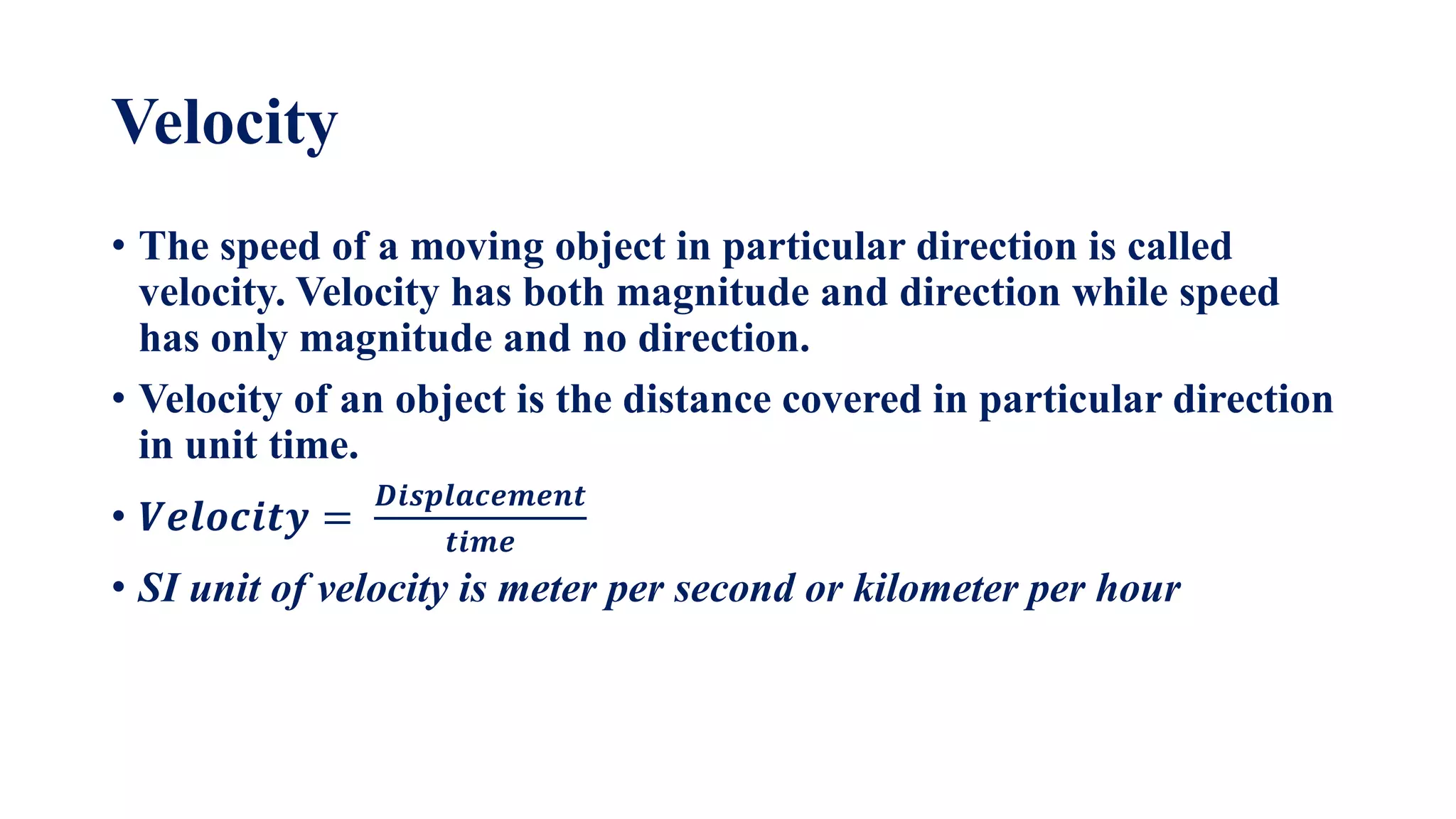
• The speed of a moving object in particular direction is called
velocity. Velocity has both magnitude and direction while speed
has only magnitude and no direction.
• Velocity of an object is the distance covered in particular direction
in unit time.
• 𝑽𝒆𝒍𝒐𝒄𝒊𝒕𝒚 =
𝑫𝒊𝒔𝒑𝒍𝒂𝒄𝒆𝒎𝒆𝒏𝒕
𝒕𝒊𝒎𝒆
• SI unit of velocity is meter per second or kilometer per hour
Average 𝐕𝐞𝐥𝐨𝐜𝐢𝐭𝐲
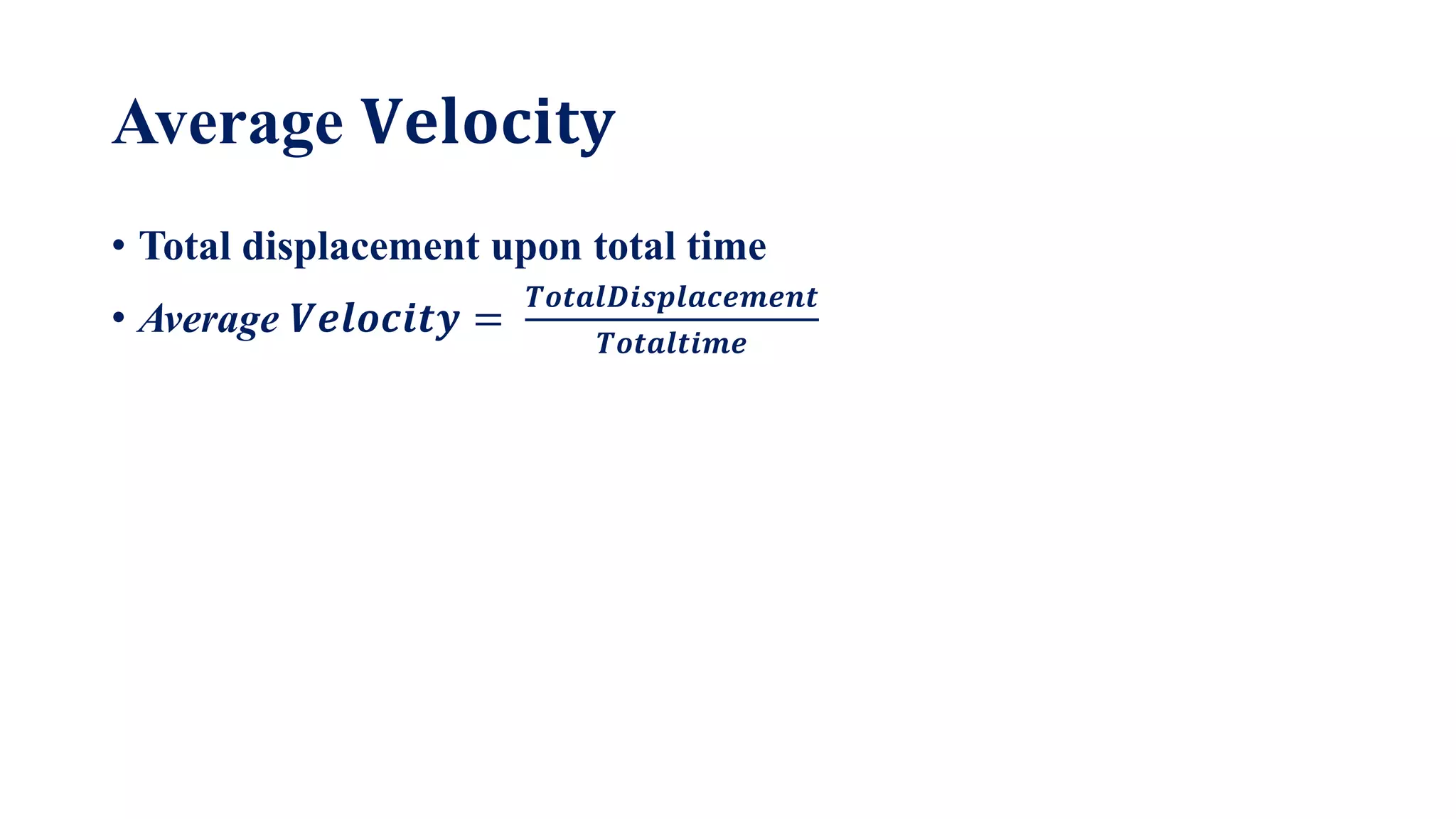
• Total displacement upon total time
• Average 𝑽𝒆𝒍𝒐𝒄𝒊𝒕𝒚 =
𝑻𝒐𝒕𝒂𝒍𝑫𝒊𝒔𝒑𝒍𝒂𝒄𝒆𝒎𝒆𝒏𝒕
𝑻𝒐𝒕𝒂𝒍𝒕𝒊𝒎𝒆
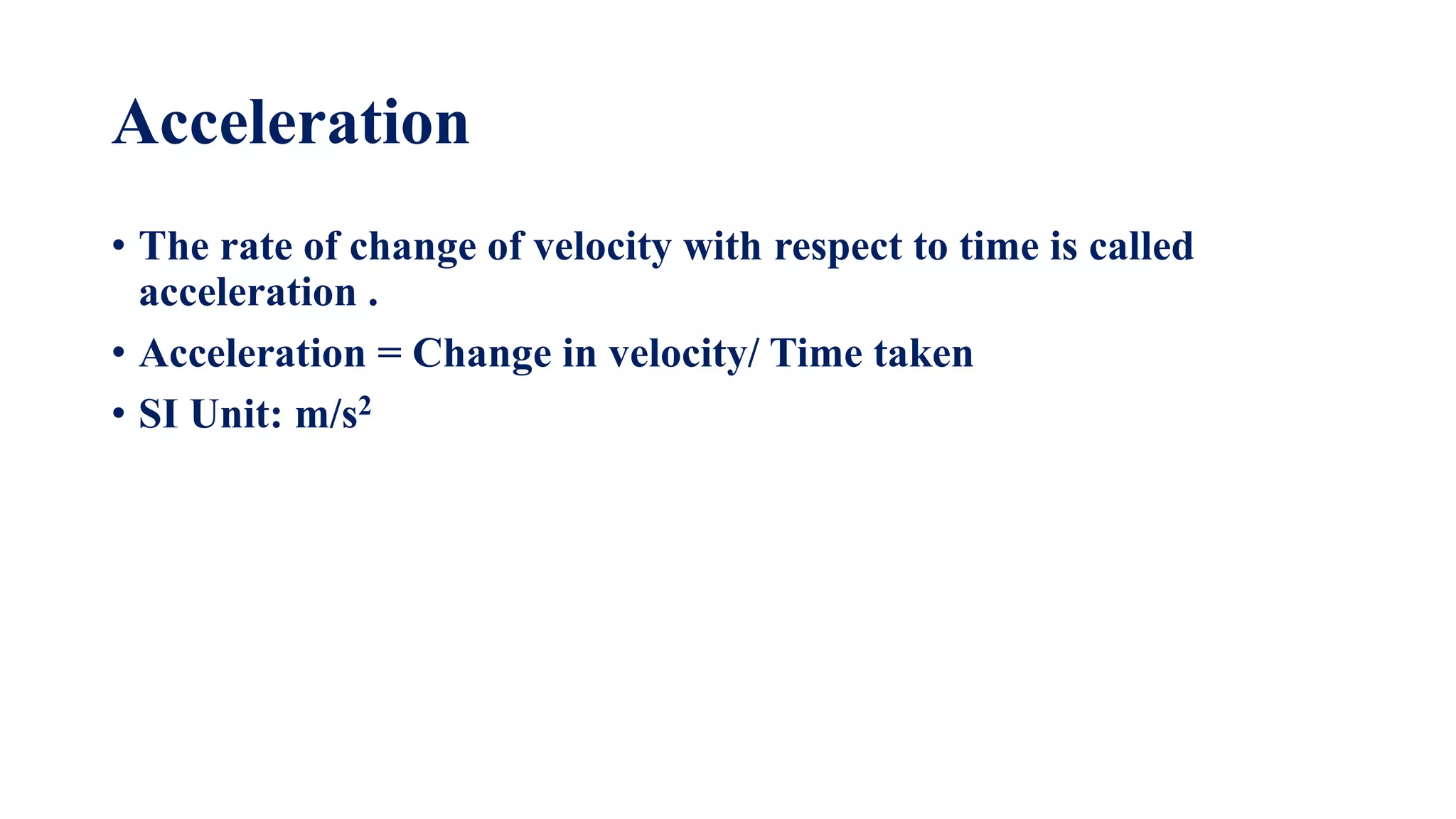
Acceleration
• The rate of change of velocity with respect to time is called
acceleration .
• Acceleration = Change in velocity/ Time taken
• SI Unit: m/s2
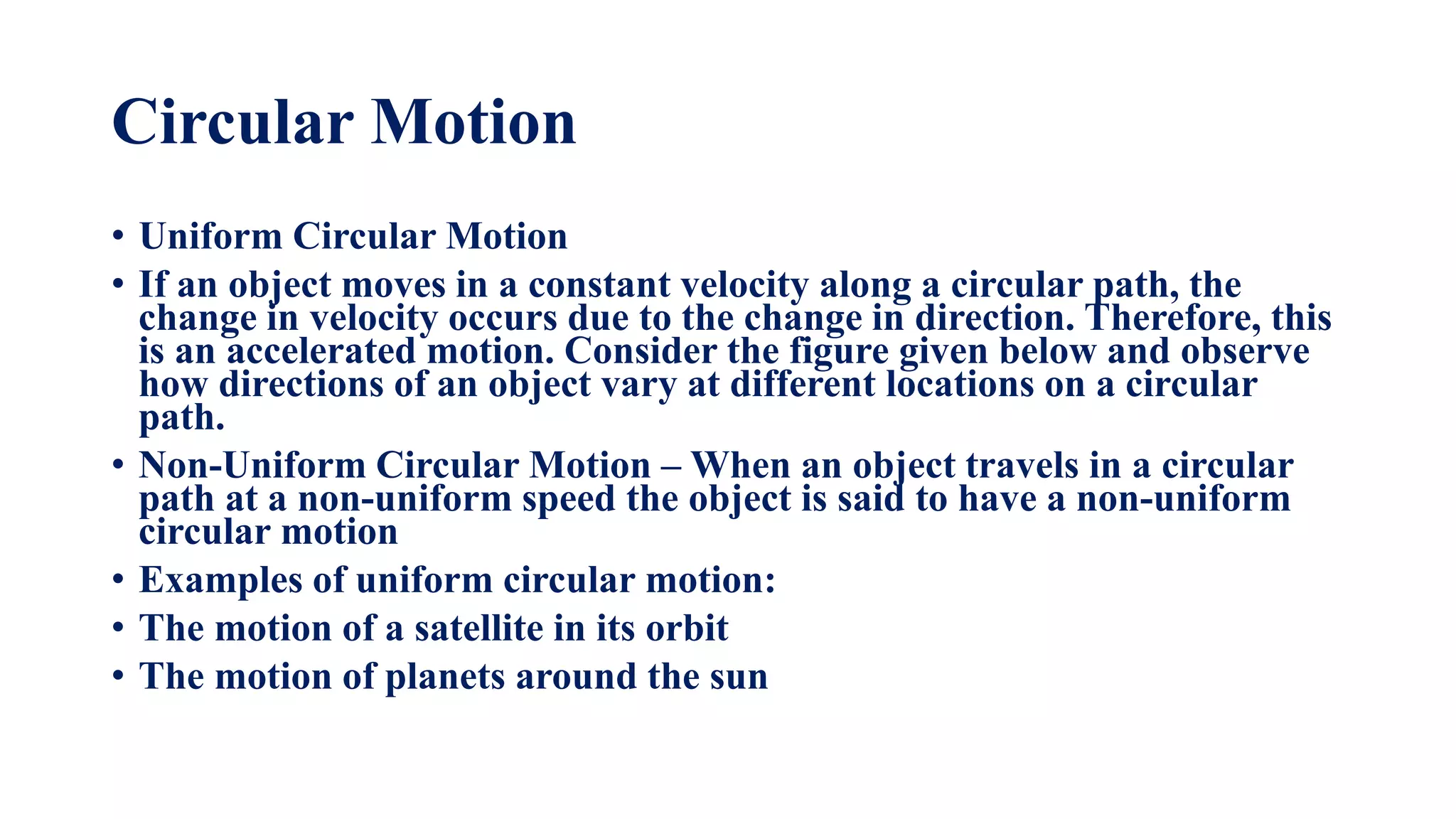
Circular Motion
• Uniform Circular Motion
• If an object moves in a constant velocity along a circular path, the
change in velocity occurs due to the change in direction. Therefore, this
is an accelerated motion. Consider the figure given below and observe
how directions of an object vary at different locations on a circular
path.
• Non-Uniform Circular Motion – When an object travels in a circular
path at a non-uniform speed the object is said to have a non-uniform
circular motion
• Examples of uniform circular motion:
• The motion of a satellite in its orbit
• The motion of planets around the sun
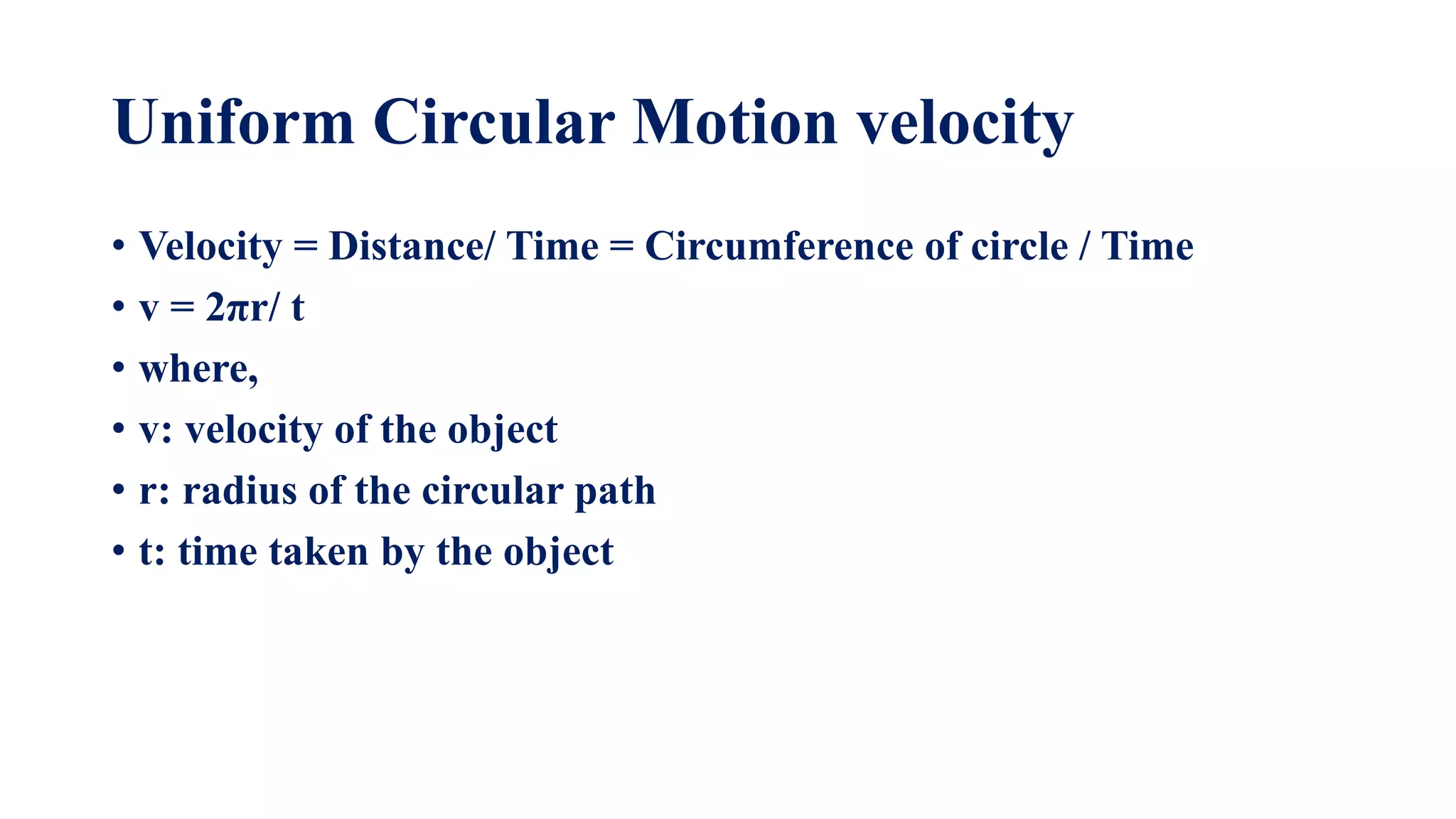
Uniform Circular Motion velocity
• Velocity = Distance/ Time = Circumference of circle / Time
• v = 2πr/ t
• where,
• v: velocity of the object
• r: radius of the circular path
• t: time taken by the object

Motion class 9

  • 1.
  • 2.
    Motion • When anobject changes it’s position with respect to time. with respect to a reference point . Position Tim e Example: When a vehicle changes its position with respect to an electric pole (a reference point) with elapse of time, then vehicle is called in motion.
  • 3.
    Rest • Rest: Whenan object does not change its position with respect to a reference point with respect to time, the object is said to be in rest. A building, tree, or any other static thing can be taken as reference point to observe the motion of an object. Tim e Position
  • 4.
    Factors describing motion Thusto observe the motion of any object; two things are necessary – a reference point and time. Refence point -: A fixed point with respect to which a body changes its position is called reference point or origin.
  • 5.
    Physical quantity oA physicalquantity is any physical property that can be expressed in numbers. For example, time is a physical quantity as it can be expressed in numbers, but anger is not as it cannot be expressed in numbers. oPhysical Quantities can be classified in into two types:-  Scalar Quantities  Vector Quantities Scalar -: Has magnitude only. For example -: Distance. Vector -: Has both magnitude and direction. Example -: Displacement
  • 6.
    Distance and Displacement Δx= xf ​− x0 Where, xf = Final position on the object x0 = Initial position of the object Distance – The distance covered by an object is described as the total path length covered by an object between two endpoints. Distance is a numerical quantity. We do not mention the direction in which an object is travelling while mentioning about the distance covered by that object. Figure 1 – Distance and Displacement According to the figure 1 given above, if an object moves from point O to point A then total distance travelled by the object is given as 60 km. Displacement – The shortest possible distance between the initial and final position of an object is called Displacement. Consider the figure 1 given above, here the shortest distance between O and A is 60 km only. Hence, displacement is 60 km. Displacement depends upon the direction in which the object is travelling. Displacement is denoted by Δx. Figure -: 1
  • 7.
    How is distancedifferent from displacement? Distance Displacement Distance provides the complete details of the path taken by the object Displacement does not provide the complete details of the path taken by the object Distance is always positive Displacement can be positive, negative or zero It is a scalar quantity It is a vector quantity The distance between two points may not be unique Displacement between two points is always unique
  • 8.
    Uniform and nonuniform motion What is uniform motion? When an object travels equal distances in equal intervals of time the object is said to have a uniform motion. For example – if a moving vehicle covers a distance of 10 km every hour, the motion of the vehicle is called uniform motion. What is non-uniform motion? When an object travels unequal distances in equal intervals of time the object is said to have a non-uniform motion. For example – If moving vehicle covers a distance of 10 km in the first hour, covers a distance of 20 km in the second hour, covers a distance of 5 km in the third hour, etc. the motion of the vehicle is called non-uniform motion.
  • 9.
    Speed Speed: • Distance coveredby a moving object in unit time is called distance. • SI unit of speed is meter per second (m/s) And kilometre per hour (km/h) • Scalar • Denoted by S •
  • 10.
    Average Speed • AverageSpeed The average distance covered in unit time by a moving object is called average speed. Average speed is the ratio of total distance covered and total time taken. • Average speed = 𝑻𝒐𝒕𝒂𝒍 𝒅𝒊𝒔𝒕𝒂𝒏𝒄𝒆 𝑻𝒐𝒕𝒂𝒍 𝒕𝒊𝒎𝒆 For Example, If an object travels 10m in 3 seconds and 12m in 7 seconds. Then its average speed would be: Total distance travelled = 10 m + 12 m = 22m Total Time taken = 3s + 7s = 10s Average speed = 𝟐𝟐 𝟏𝟎 = 2.2 m/s
  • 11.
    Velocity • The speedof a moving object in particular direction is called velocity. Velocity has both magnitude and direction while speed has only magnitude and no direction. • Velocity of an object is the distance covered in particular direction in unit time. • 𝑽𝒆𝒍𝒐𝒄𝒊𝒕𝒚 = 𝑫𝒊𝒔𝒑𝒍𝒂𝒄𝒆𝒎𝒆𝒏𝒕 𝒕𝒊𝒎𝒆 • SI unit of velocity is meter per second or kilometer per hour
  • 12.
    Average 𝐕𝐞𝐥𝐨𝐜𝐢𝐭𝐲 • Totaldisplacement upon total time • Average 𝑽𝒆𝒍𝒐𝒄𝒊𝒕𝒚 = 𝑻𝒐𝒕𝒂𝒍𝑫𝒊𝒔𝒑𝒍𝒂𝒄𝒆𝒎𝒆𝒏𝒕 𝑻𝒐𝒕𝒂𝒍𝒕𝒊𝒎𝒆
  • 13.
    Acceleration • The rateof change of velocity with respect to time is called acceleration . • Acceleration = Change in velocity/ Time taken • SI Unit: m/s2
  • 14.
    Circular Motion • UniformCircular Motion • If an object moves in a constant velocity along a circular path, the change in velocity occurs due to the change in direction. Therefore, this is an accelerated motion. Consider the figure given below and observe how directions of an object vary at different locations on a circular path. • Non-Uniform Circular Motion – When an object travels in a circular path at a non-uniform speed the object is said to have a non-uniform circular motion • Examples of uniform circular motion: • The motion of a satellite in its orbit • The motion of planets around the sun
  • 15.
    Uniform Circular Motionvelocity • Velocity = Distance/ Time = Circumference of circle / Time • v = 2πr/ t • where, • v: velocity of the object • r: radius of the circular path • t: time taken by the object