Mitral valve score for assessment of valve
anatomy and suitability for Percutaneous
Balloon Mitral Valvuloplasty (PBMV)
Dr Amit Kumar
Senior Resident, Department of Cardiology
R.N.T. Medical College
Udaipur,India
• Percutaneous balloon mitral valvuloplasty
(BMV) was introduced in 1984 by Inoue et al,
for treatment of selected patients with mitral
stenosis. (J Thorac Cardiovasc Surg 1984;87:394-402)
• BMV – treatment of choice for majority of
patients with moderate or severe rheumatic
mitral stenosis (ACC/AHA guidelines)
• Success of BMV depends on appropriate
patient selection.
• Several echocardiographic scores have been
proposed to optimize patient selection and to
predict outcome.
• Wilkins score (MGH score/Boston score/Abascal
score). (Br Heart J.1988;60:299-308)
• Commissural calcium score. ( J Am Coll Cardiol 1997;29:175-80)
• Cormier score ( Echocardiographic gouping/ Iung-
cormier score) (Circulation.1996;94:2124-30)
• Real-time 3D echocardiography score (RT 3DE score/
Anwar score) (J Am Soc Echocardiogr.2010;23:13-22)
• Chen et al score (J Am Coll Cardiol 1989;14(7):1651–8)
• Reid score (Circulation. 1989;80 (3):515–24)
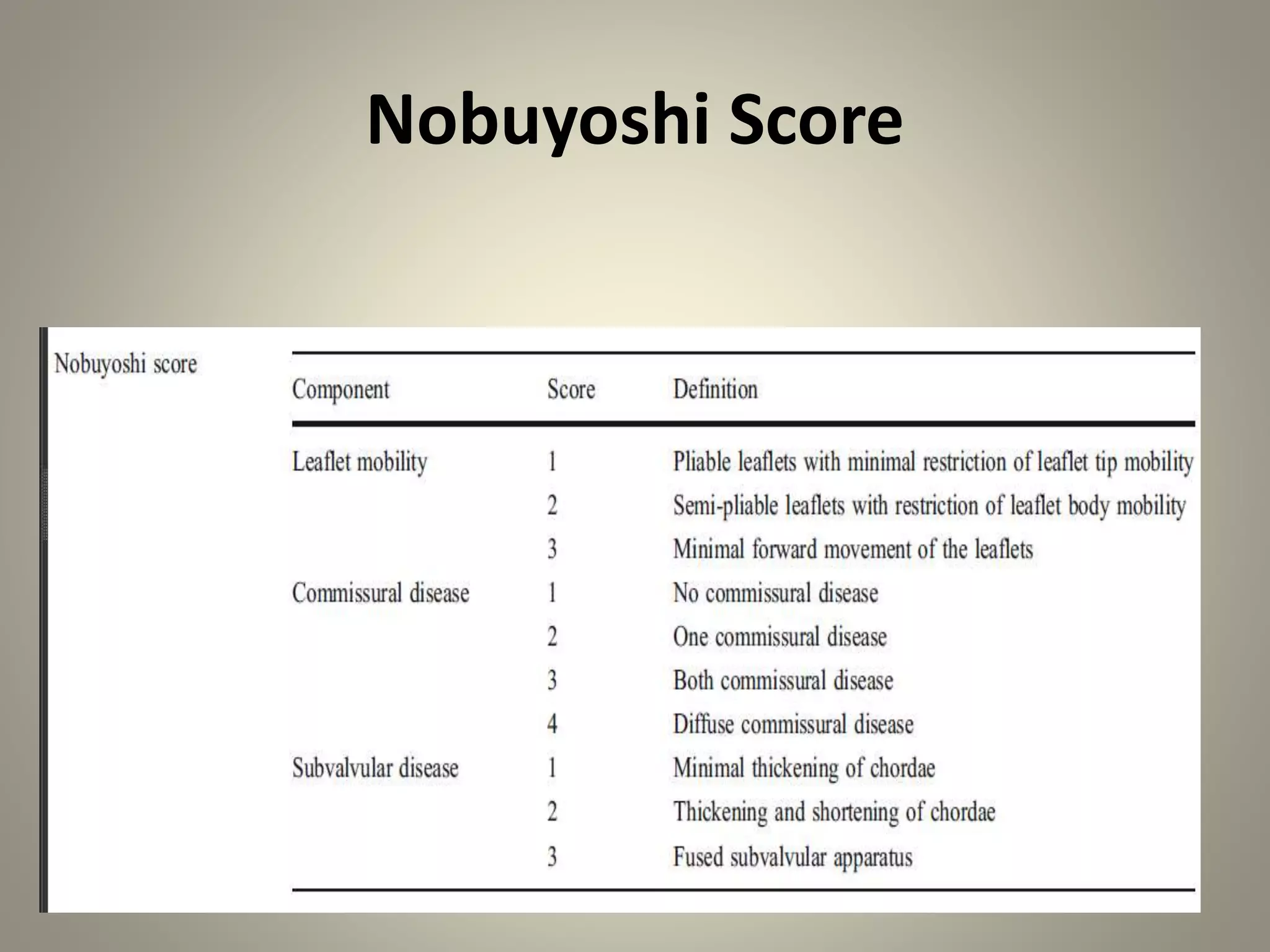
• Nobuyoshi score (Circulation. 1989;80 (4):782–92)
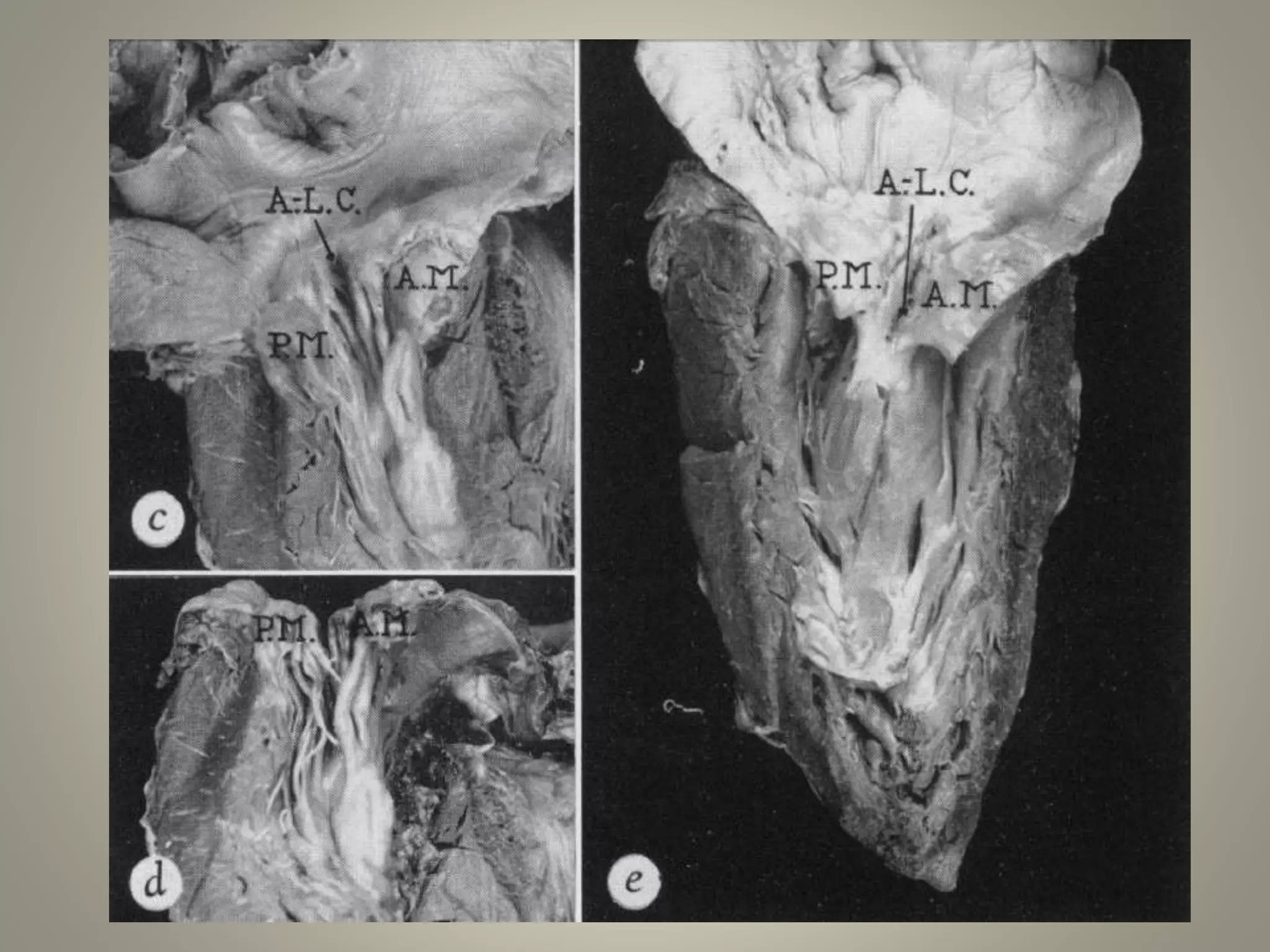
• Commissural fusion is the requisite
lesion for BMV to be effective
because commissural splitting is the
dominant mechanism by which MV
stenosis is relieved in this technique.
• Pathological process of RF causes progressive
leaflet thickening, calcification, commissural and/or
chordal fusion- thus resulting in narrowing of MV
orifice. (Ann Intern Med 1972;77:939-75)
• Accordingly, four types of MS have been
described (Circulation. 1956; 14:398-406)
1) Commissural – 31%
2) Cuspal – 15.5%
3) Chordal – 8.5%
4) Combined – 45%
• Despite the expertise in percutaneous mitral
commissurotomy (PTMC), mitral regurgitation
remains a major complication. ( U.A. Kaul et al. “Mitral
regurgitation following PTMC: a single center experience,” Journal of Heart Valve
Disease, vol.9,no.2,pp262-268,2000)
• Incidence of severe MR after PTMC in the
literature varies b/w 1.4% and 7.5% ( Hernandez et al.
American Journal of Cardiology,vol.70,no.13,pp.1169-1174,1992) ; ( Padial et al.
JACC,vol.27,no.5,pp.1225-1231,1996)
• Mild MR after PTMC occurs in 40% pt. –
usually d/t commissural splitting
(Circulation1991;84:1669-79)
• Severe MR after PTMC is typically caused by
leaflet rupture and less frequently by
subvalvular apparatus damage (Am J Cardiol
1988;62:264-9)
• Studies of surgically excised mitral valves of pt. who developed sev.MR
after PTMC have consistently shown three anatomic characterstics 
1) Heterogeneously thickened MV with thick areas coexisting with thin or almost normal
zones,
2) Severe fusion, thickening and shortening of subvalvular apparatus,
3) Calcium in one or both commissures
Kaplan JD, Isner JM, Karas RH, et al. In vitro analysis of mechanisms of balloonvalvuloplasty of stenotic mitral valves. Am J
Cardio11987;59:318-23; . Sadee AS, Becket AE. In vitro dilatation of mitral valve stenosis: the importance of subvalvular involvement as
a cause of mitral valve insulfficiency. Br. Heart J 1991;65:277-9
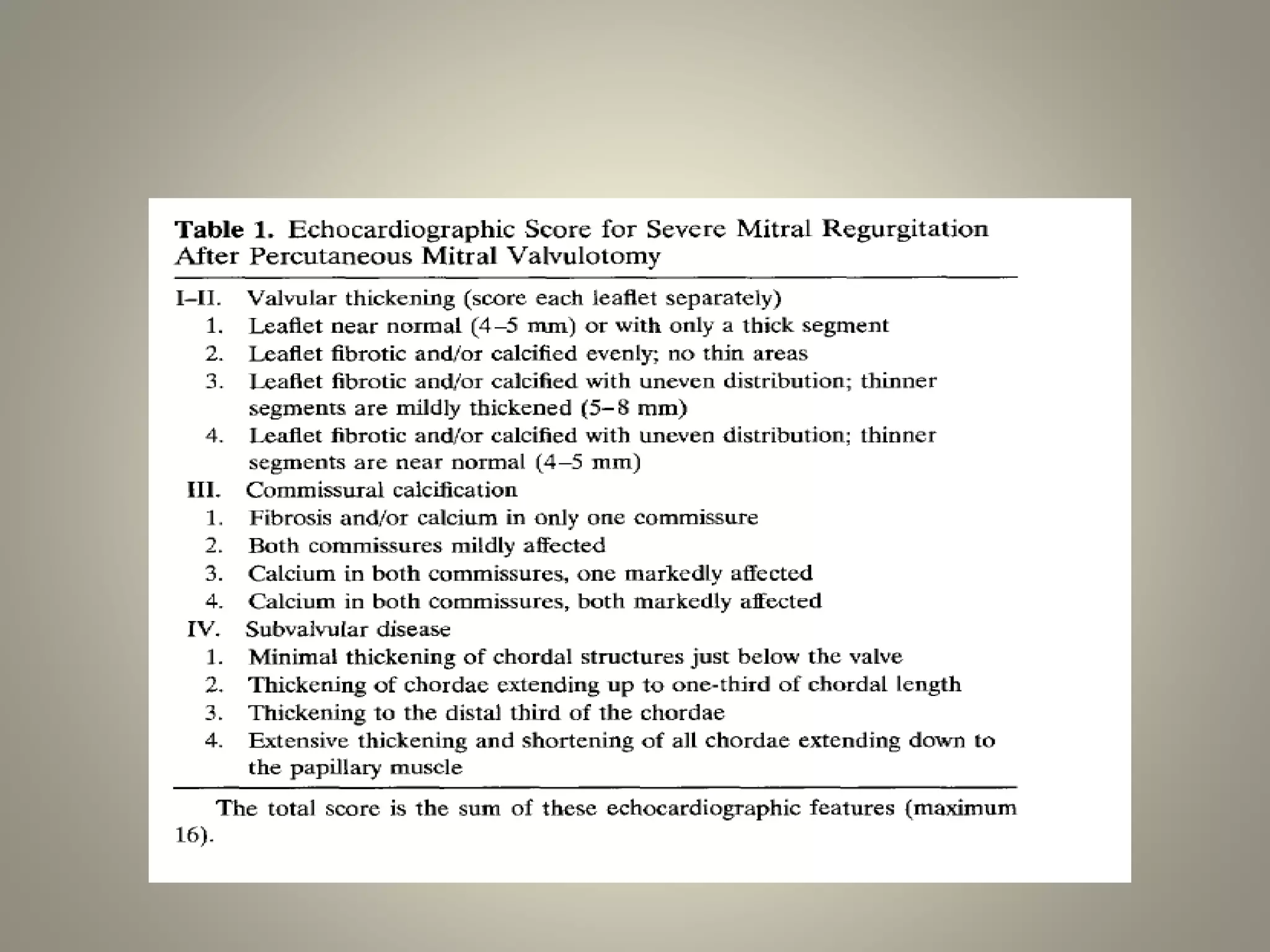
• MR-Echo Score –
Predictor of developing significant MR following
PTMC
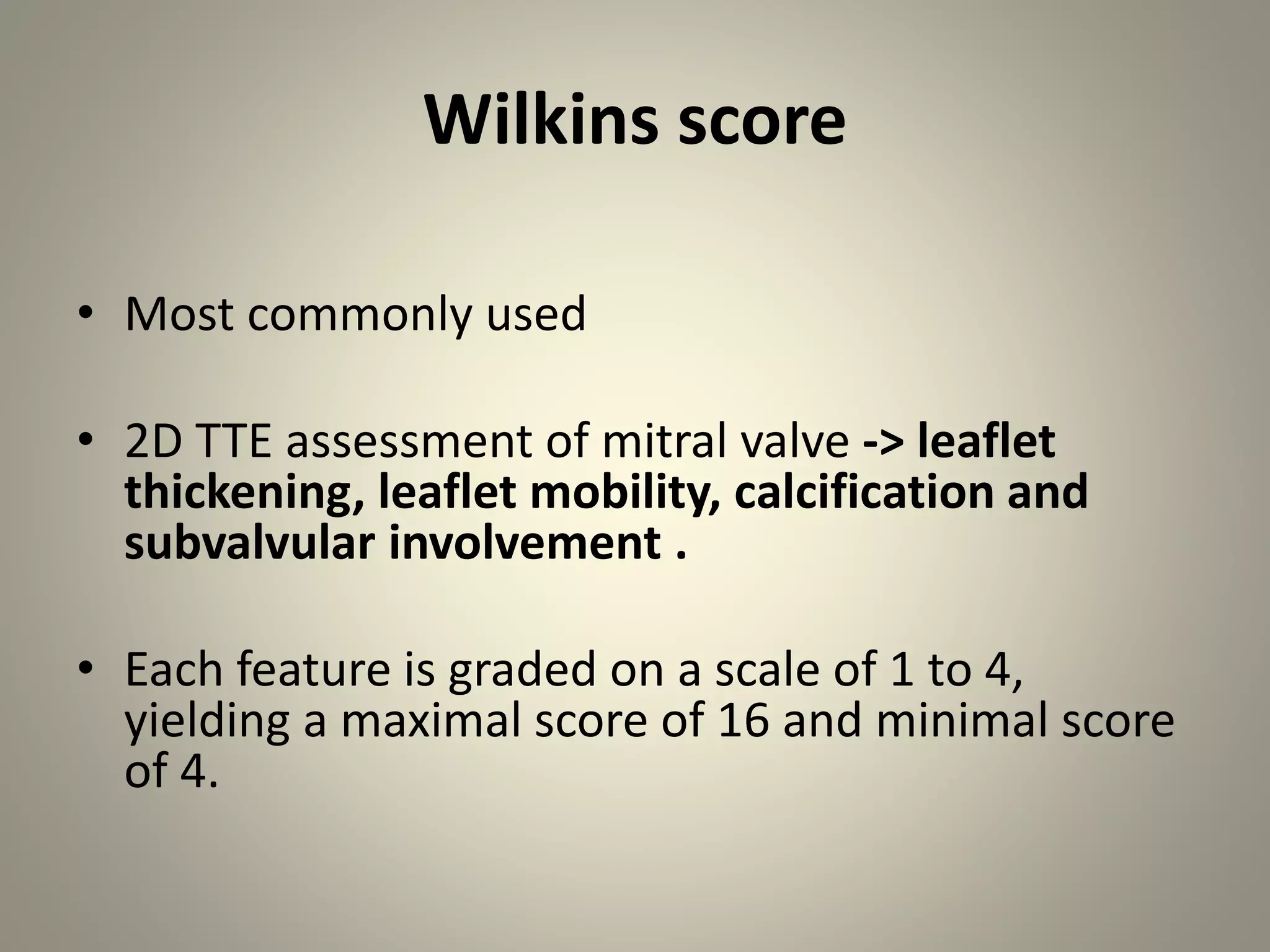
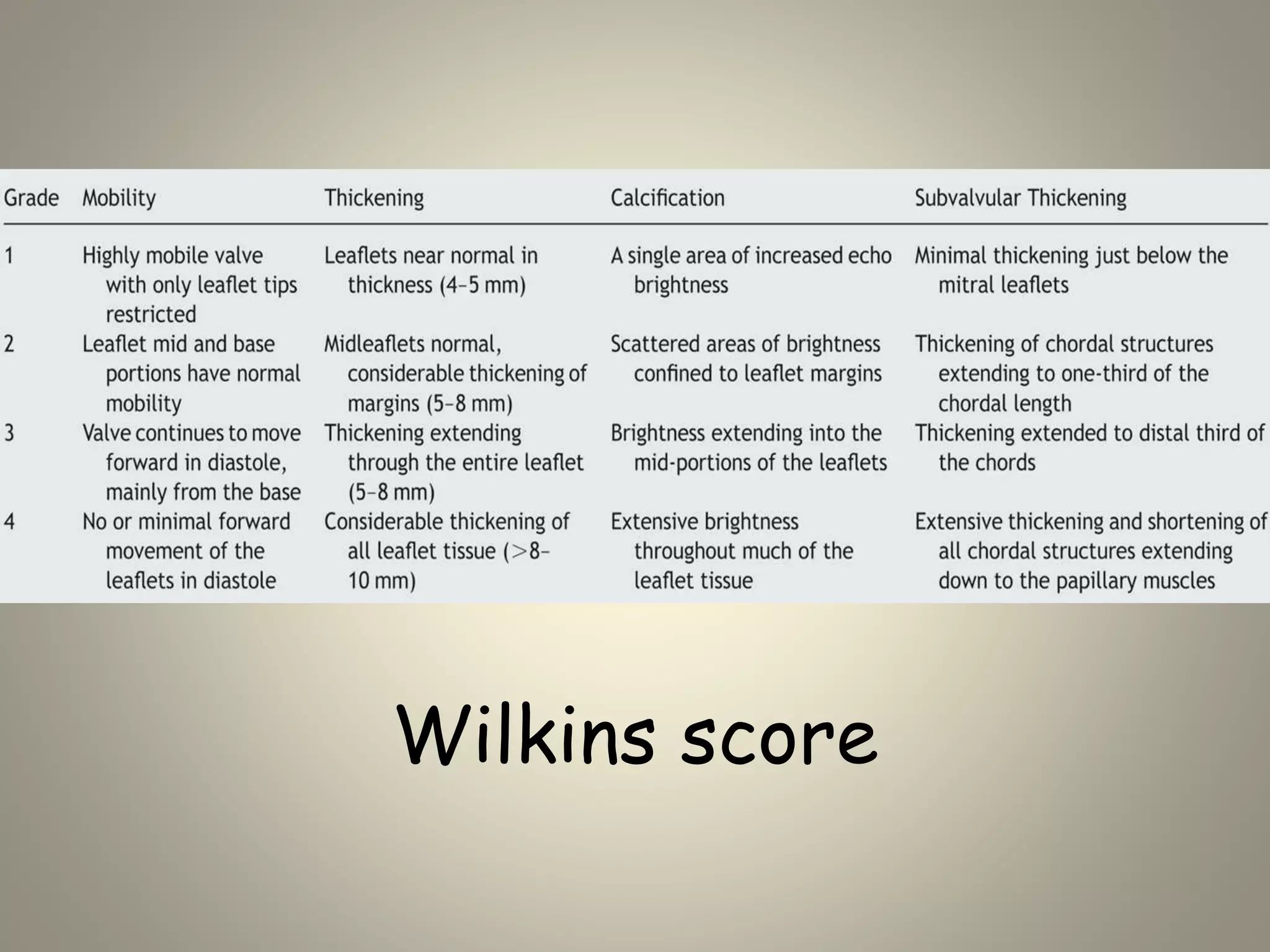
Wilkins score
• Most commonly used
• 2D TTE assessment of mitral valve -> leaflet
thickening, leaflet mobility, calcification and
subvalvular involvement .
• Each feature is graded on a scale of 1 to 4,
yielding a maximal score of 16 and minimal score
of 4.
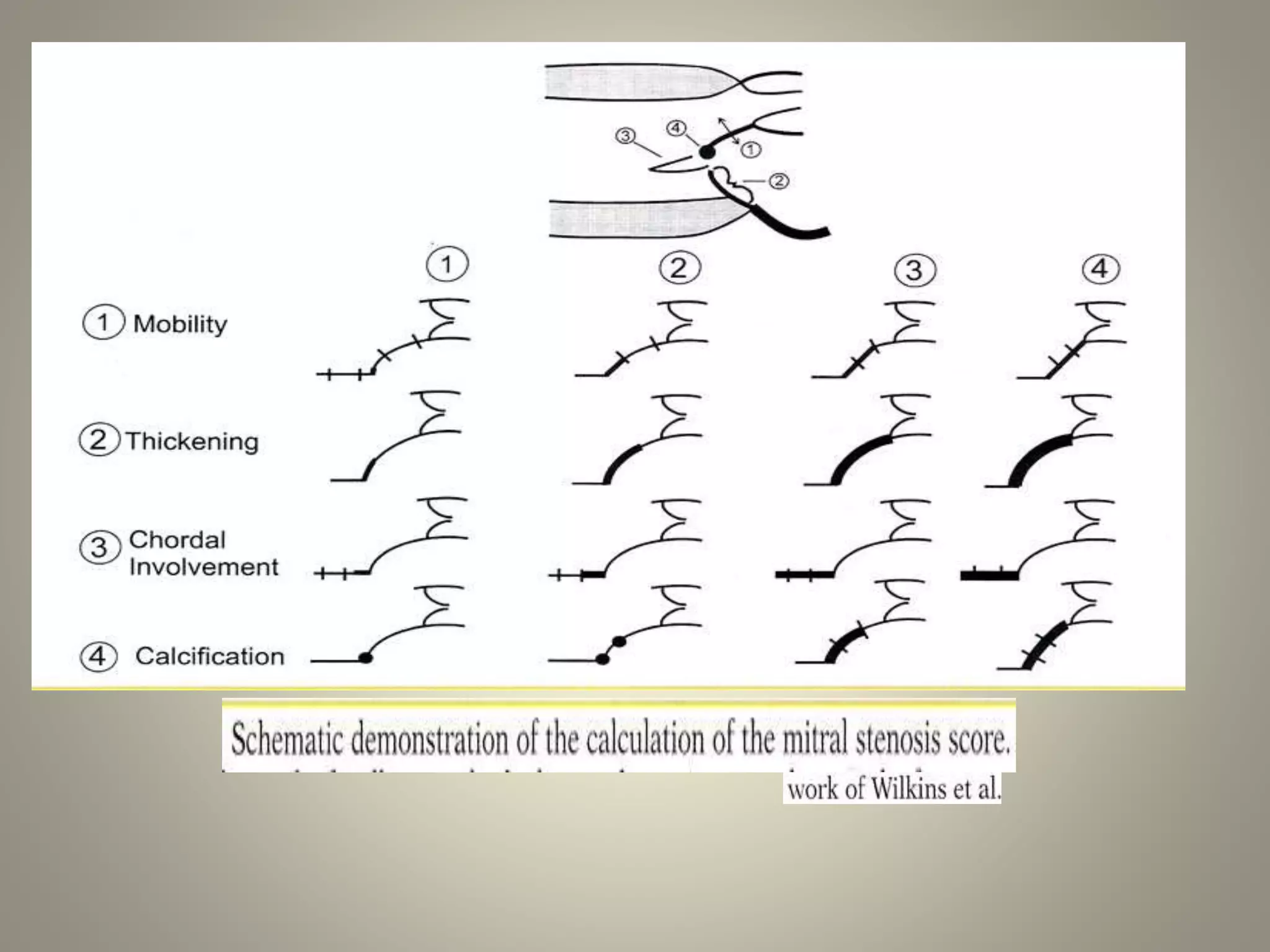
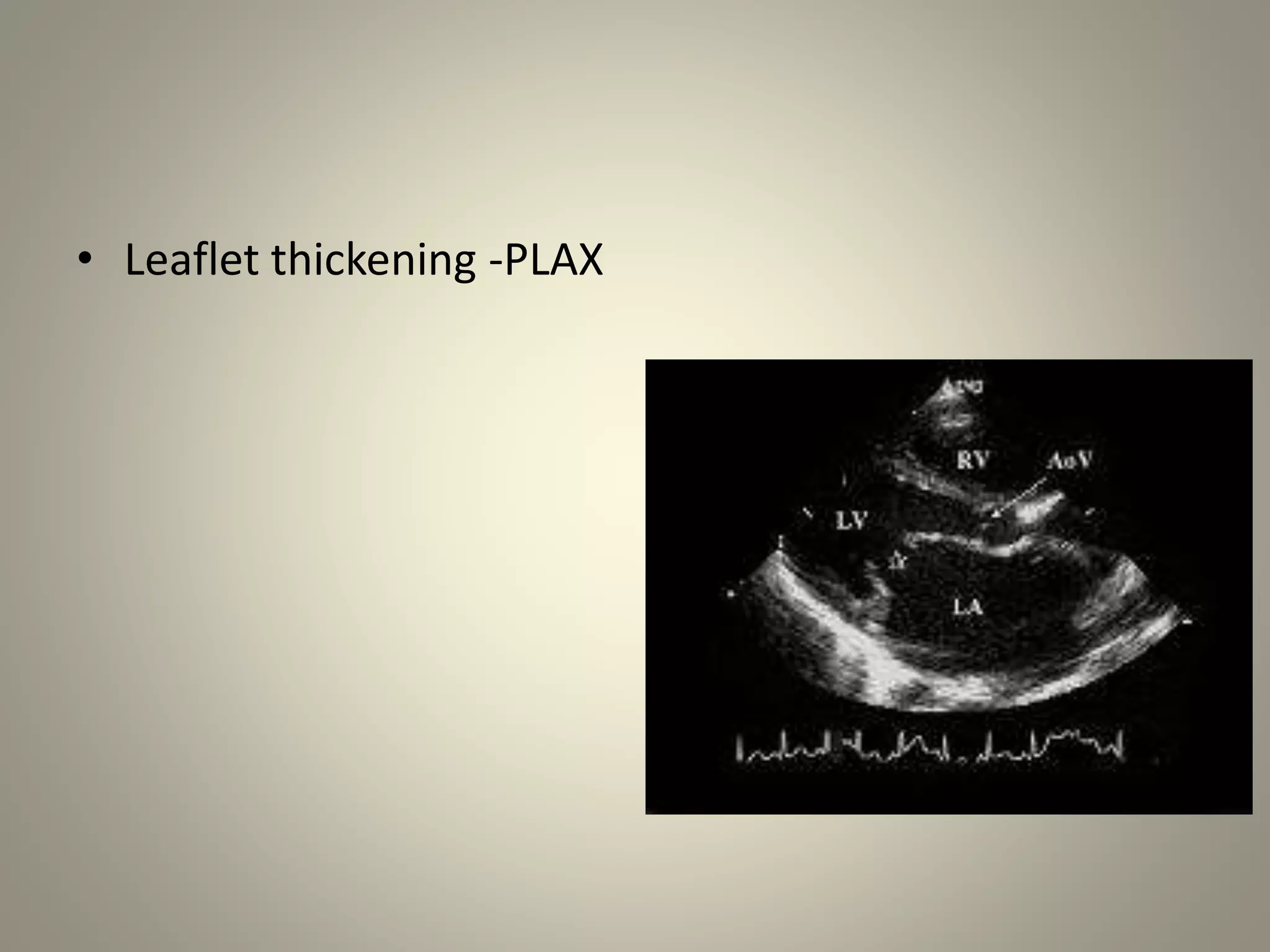
• Leaflet thickening -PLAX
• Restricted mobility –
PLAX
• Chordal thickening,
shortening and fusion –
PLAX and A4C
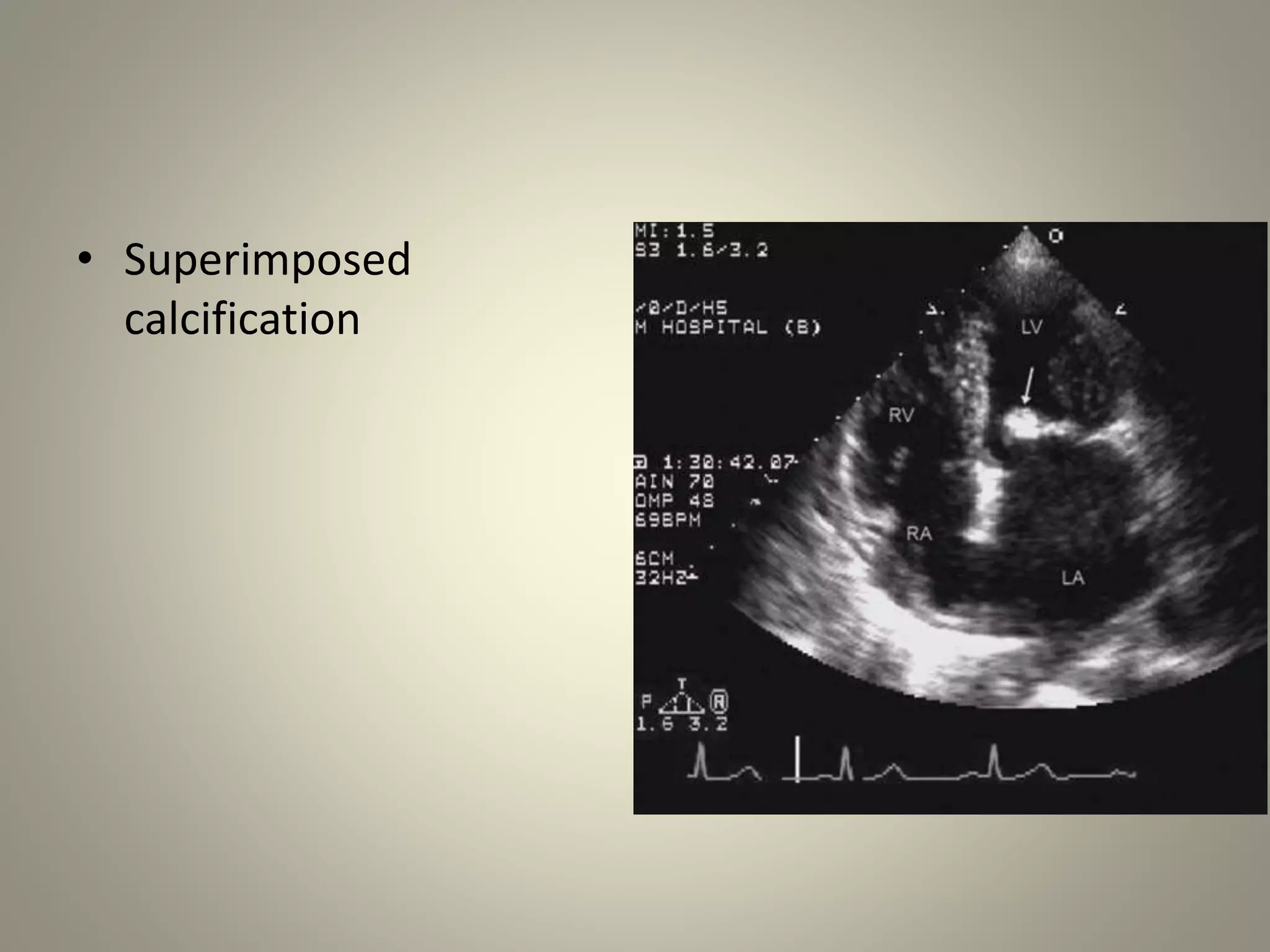
• Superimposed
calcification
Wilkins score
• In 1988, Wilkins and coworkers found that total MV
echocardiographic score was the best predictor of
immediate outcome after BMV. (Br Heart J.1988;60:299-308)
• High score (advanced leaflet deformity) was associated
with a suboptimal outcome while a low score (a mobile
valve with limited thickening) was associated with an
optimal outcome. (Br Heart J.1988;60:299-308)
• All patients with score < 9 had optimal results and
those with score >11 had suboptimal results. Score
failed to predict outcome in those with scores of 9 to
11. (Br Heart J.1988;60:299-308)
• MV morphology is considered favorable for
BMV if total score <=8.
• A score >8 does not preclude BMV, but is
associated with less optimal results
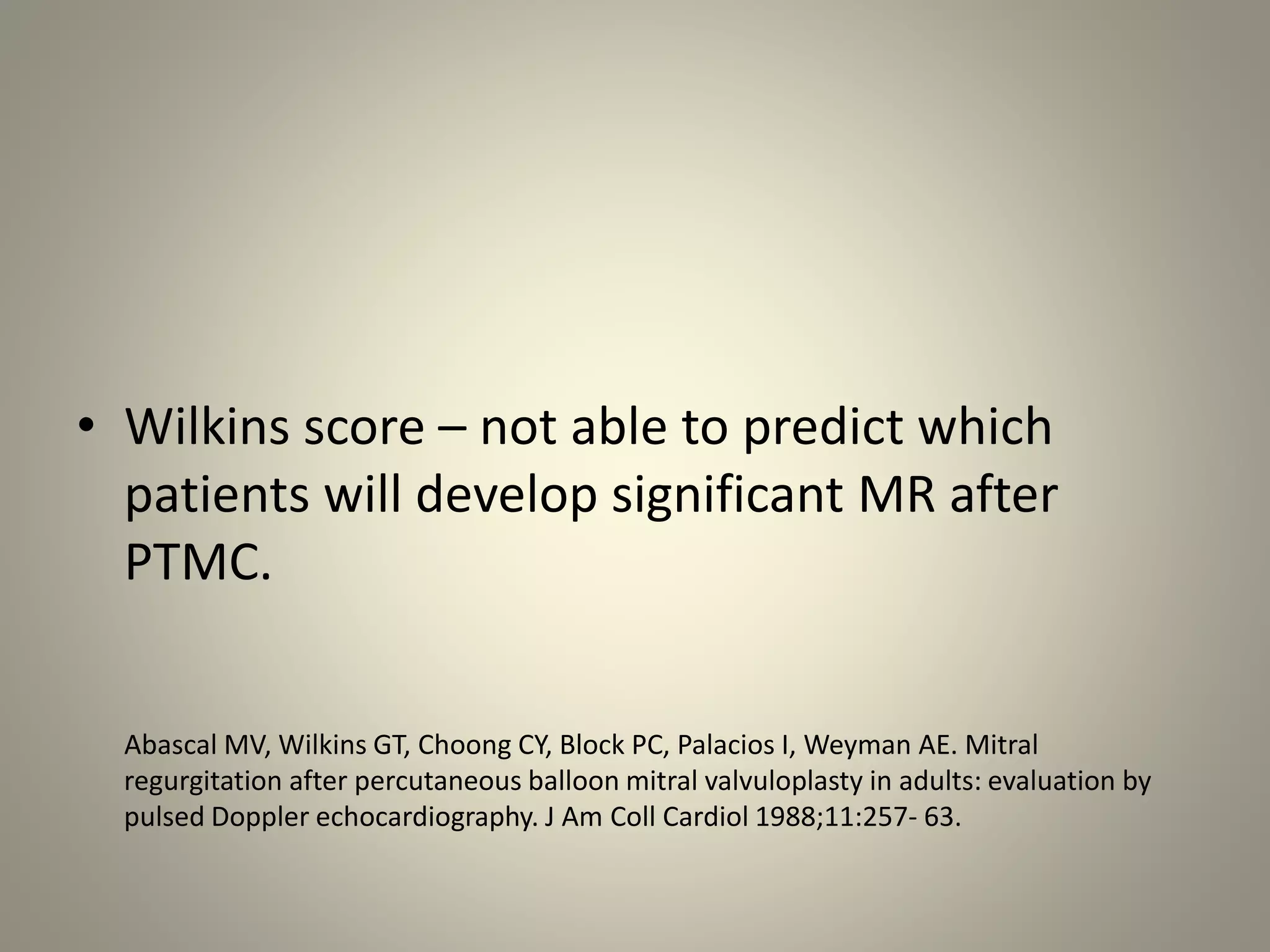
• Wilkins score – not able to predict which
patients will develop significant MR after
PTMC.
Abascal MV, Wilkins GT, Choong CY, Block PC, Palacios I, Weyman AE. Mitral
regurgitation after percutaneous balloon mitral valvuloplasty in adults: evaluation by
pulsed Doppler echocardiography. J Am Coll Cardiol 1988;11:257- 63.
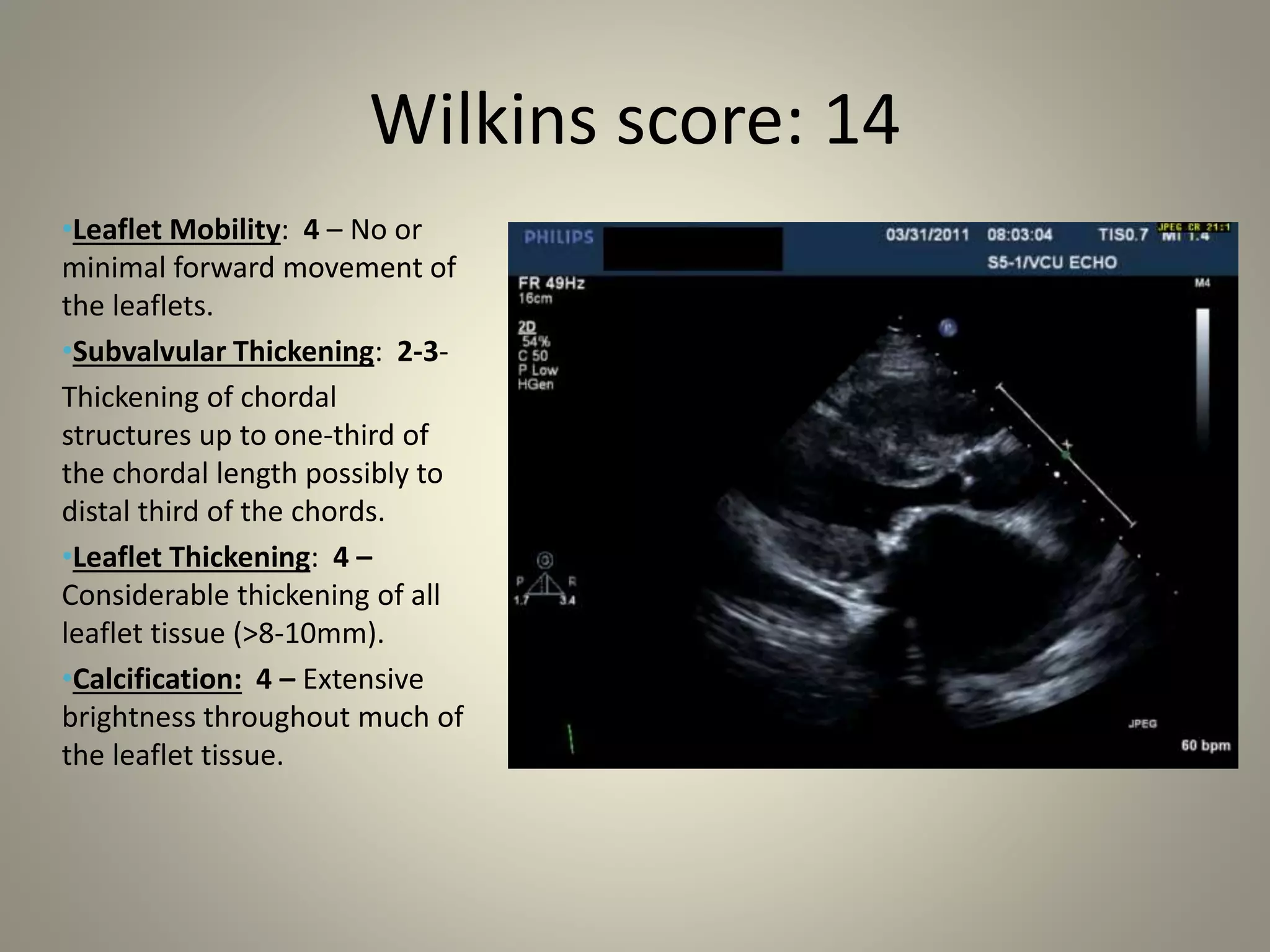
•Leaflet Mobility: 4 – No or
minimal forward movement of
the leaflets.
•Subvalvular Thickening: 2-3-
Thickening of chordal
structures up to one-third of
the chordal length possibly to
distal third of the chords.
•Leaflet Thickening: 4 –
Considerable thickening of all
leaflet tissue (>8-10mm).
•Calcification: 4 – Extensive
brightness throughout much of
the leaflet tissue.
Wilkins score: 14
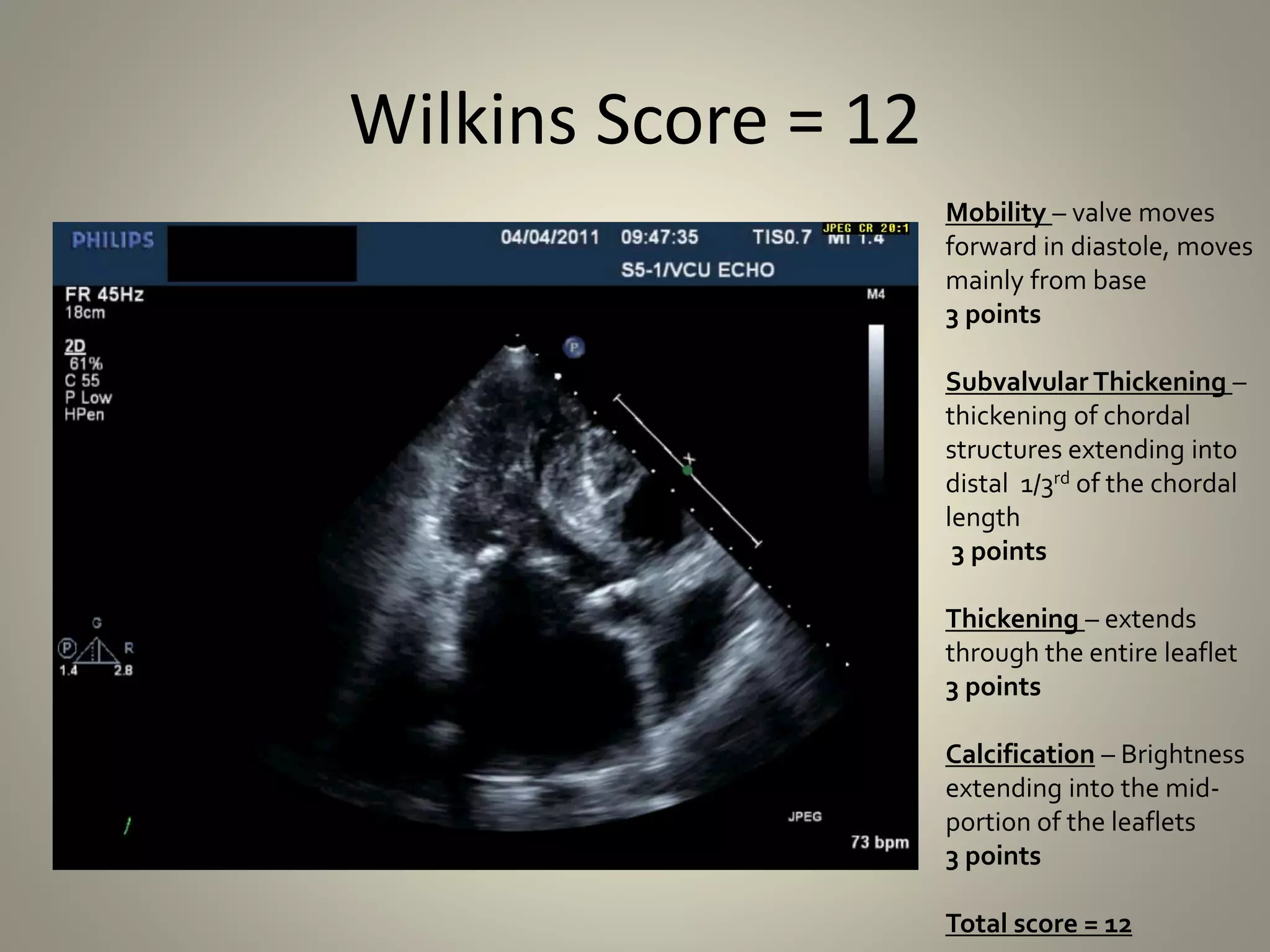
Wilkins Score = 12
Mobility – valve moves
forward in diastole, moves
mainly from base
3 points
Subvalvular Thickening –
thickening of chordal
structures extending into
distal 1/3rd of the chordal
length
3 points
Thickening – extends
through the entire leaflet
3 points
Calcification – Brightness
extending into the mid-
portion of the leaflets
3 points
Total score = 12
Limitations of wilkins score
• Assessment of commissural involvement not
included.
• Limited in ability to differentiate nodular
fibrosis from calcification.
• Doesn’t account for uneven distribution of
pathologic abnormalities.
• Frequent underestimation of subvalvular
disease.
• Doesn’t use results from TEE or 3D echo
Commissural Calcification
Score
• Extent of commissural calcification is quantified – each
half commissure (anterolateral & posteromedial) is given a
score of 1 for detection of high-intensity bright echoes.
• Ranges from grade 0 to grade 4.
• Commissural calcification is a strong predictor of adverse
outcomes of BMV as well as of the occurrence of severe
MR as a major complication of BMV. (J Am Coll Cardiol 1996;27:1225-31)
• Influence of commissural score – most evident in pt with
wilkins score <8; not significant in pt with wilkins score >8.
Commissural Calcification Score
Cormier Score
• Derived from a study which assessed late
functional results after successful PTMC and
its determinants ( Iung et al, J Am Coll Cardiol1996;27:407-14)
• Based on echocardiographic and fluoroscopic
assessment of valve mobility, subvalvular
disease and leaflet calcification
• By multivariate analysis, the independent
predictors of good functional results were
echocardiagraphic group (p = 0.O1), functional
class (p = 0.02) and cardiothoracic index (p =
0.005) before the procedure and valve area after
the procedure (p=0.007).
Iung et al, J Am Coll Cardiol 1996;27:407-14
Cormier Score
• Wilkins score in the range of 7-9 correlates
with echocardiographic group 1.
• a range of 8-12 correlates with
echocardiographic group 2.
• a range of 10-15 correlates with
echocardiographic group 3
Iung et al, J Am Coll Cardiol 1996;27:407-14
RT-3DE score
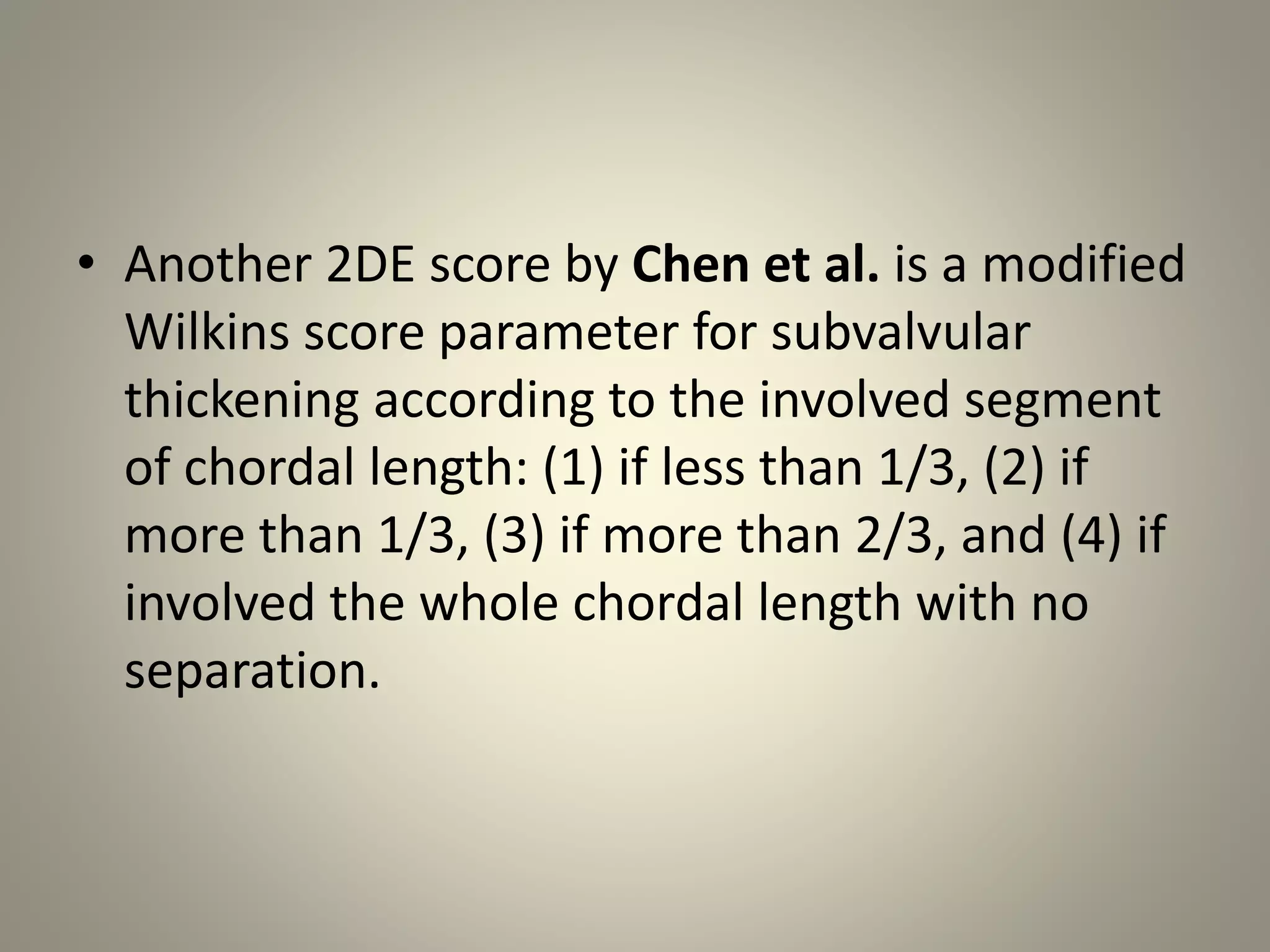
• Based on real time 3D TTE
• Highly reproducible, good interobserver and
intraobserver agreement
RT-3DE score
• Incidence and severity of post- procedural MR
were associated with high RT-3DE score
• Another 2DE score by Chen et al. is a modified
Wilkins score parameter for subvalvular
thickening according to the involved segment
of chordal length: (1) if less than 1/3, (2) if
more than 1/3, (3) if more than 2/3, and (4) if
involved the whole chordal length with no
separation.
• Reid score includes leaflet motion, leaflet thickness,
subvalvular disease, and commissural calcium.
• Leaflet motion was expressed as a slope by dividing the
height (H) by the length (L) of doming of anterior
leaflet. Leaflet thickness was expressed as the ratio
between the thickness of the tip of MV and thickness
of posterior wall of aortic root.
• The score was assigned as 0 for mild affection, 1 for
moderate , and 2 for severe affection
Nobuyoshi Score
MR- Echo Score (Padial et al. JACC1996;27:1251-31)
• Total MR-Echo score – only independent
predictor of significant MR following PTMC
using Inoue technique ( Elasfar et al , Cardiology Research and
Practice vol.2011)
• Total MR-echo score of 7 Positive predictive
value 97.7% (Padial et al. JACC1996;27:1251-31)
Limitations of scoring system
• No individual scoring system is superior to another.
Complement each other for comprehensive
echocardiographic assessment.
• All scoring system have got variable reproducibility
• All scores are semiquantitative
• Subvalvular disease is frequently underestimated
Ideal echo scoring system
• Inclusion of all points that proved to predict and affect the BMV outcome
via large study.
• High reproducibility and reliability
• Easily applicable and interpretable by most cardiologists within a
reasonable time.
• Validation in large studies that include pt with different age groups (not
only young)
• Global and segmental evaluation of each MV apparatus component
seperately to localize the deformity in a specific portion of MV apparatus.
• Unified for both TTE & TEE approaches
Thank you…

Mitral valve scoring before BMV
  • 1.
    Mitral valve scorefor assessment of valve anatomy and suitability for Percutaneous Balloon Mitral Valvuloplasty (PBMV) Dr Amit Kumar Senior Resident, Department of Cardiology R.N.T. Medical College Udaipur,India
  • 2.
    • Percutaneous balloonmitral valvuloplasty (BMV) was introduced in 1984 by Inoue et al, for treatment of selected patients with mitral stenosis. (J Thorac Cardiovasc Surg 1984;87:394-402) • BMV – treatment of choice for majority of patients with moderate or severe rheumatic mitral stenosis (ACC/AHA guidelines)
  • 3.
    • Success ofBMV depends on appropriate patient selection. • Several echocardiographic scores have been proposed to optimize patient selection and to predict outcome.
  • 4.
    • Wilkins score(MGH score/Boston score/Abascal score). (Br Heart J.1988;60:299-308) • Commissural calcium score. ( J Am Coll Cardiol 1997;29:175-80) • Cormier score ( Echocardiographic gouping/ Iung- cormier score) (Circulation.1996;94:2124-30) • Real-time 3D echocardiography score (RT 3DE score/ Anwar score) (J Am Soc Echocardiogr.2010;23:13-22)
  • 5.
    • Chen etal score (J Am Coll Cardiol 1989;14(7):1651–8) • Reid score (Circulation. 1989;80 (3):515–24) • Nobuyoshi score (Circulation. 1989;80 (4):782–92)
  • 6.
    • Commissural fusionis the requisite lesion for BMV to be effective because commissural splitting is the dominant mechanism by which MV stenosis is relieved in this technique.
  • 7.
    • Pathological processof RF causes progressive leaflet thickening, calcification, commissural and/or chordal fusion- thus resulting in narrowing of MV orifice. (Ann Intern Med 1972;77:939-75) • Accordingly, four types of MS have been described (Circulation. 1956; 14:398-406) 1) Commissural – 31% 2) Cuspal – 15.5% 3) Chordal – 8.5% 4) Combined – 45%
  • 10.
    • Despite theexpertise in percutaneous mitral commissurotomy (PTMC), mitral regurgitation remains a major complication. ( U.A. Kaul et al. “Mitral regurgitation following PTMC: a single center experience,” Journal of Heart Valve Disease, vol.9,no.2,pp262-268,2000) • Incidence of severe MR after PTMC in the literature varies b/w 1.4% and 7.5% ( Hernandez et al. American Journal of Cardiology,vol.70,no.13,pp.1169-1174,1992) ; ( Padial et al. JACC,vol.27,no.5,pp.1225-1231,1996)
  • 11.
    • Mild MRafter PTMC occurs in 40% pt. – usually d/t commissural splitting (Circulation1991;84:1669-79) • Severe MR after PTMC is typically caused by leaflet rupture and less frequently by subvalvular apparatus damage (Am J Cardiol 1988;62:264-9)
  • 12.
    • Studies ofsurgically excised mitral valves of pt. who developed sev.MR after PTMC have consistently shown three anatomic characterstics  1) Heterogeneously thickened MV with thick areas coexisting with thin or almost normal zones, 2) Severe fusion, thickening and shortening of subvalvular apparatus, 3) Calcium in one or both commissures Kaplan JD, Isner JM, Karas RH, et al. In vitro analysis of mechanisms of balloonvalvuloplasty of stenotic mitral valves. Am J Cardio11987;59:318-23; . Sadee AS, Becket AE. In vitro dilatation of mitral valve stenosis: the importance of subvalvular involvement as a cause of mitral valve insulfficiency. Br. Heart J 1991;65:277-9
  • 13.
    • MR-Echo Score– Predictor of developing significant MR following PTMC
  • 14.
    Wilkins score • Mostcommonly used • 2D TTE assessment of mitral valve -> leaflet thickening, leaflet mobility, calcification and subvalvular involvement . • Each feature is graded on a scale of 1 to 4, yielding a maximal score of 16 and minimal score of 4.
  • 16.
  • 17.
  • 18.
    • Chordal thickening, shorteningand fusion – PLAX and A4C
  • 19.
  • 20.
  • 21.
    • In 1988,Wilkins and coworkers found that total MV echocardiographic score was the best predictor of immediate outcome after BMV. (Br Heart J.1988;60:299-308) • High score (advanced leaflet deformity) was associated with a suboptimal outcome while a low score (a mobile valve with limited thickening) was associated with an optimal outcome. (Br Heart J.1988;60:299-308) • All patients with score < 9 had optimal results and those with score >11 had suboptimal results. Score failed to predict outcome in those with scores of 9 to 11. (Br Heart J.1988;60:299-308)
  • 22.
    • MV morphologyis considered favorable for BMV if total score <=8. • A score >8 does not preclude BMV, but is associated with less optimal results
  • 23.
    • Wilkins score– not able to predict which patients will develop significant MR after PTMC. Abascal MV, Wilkins GT, Choong CY, Block PC, Palacios I, Weyman AE. Mitral regurgitation after percutaneous balloon mitral valvuloplasty in adults: evaluation by pulsed Doppler echocardiography. J Am Coll Cardiol 1988;11:257- 63.
  • 24.
    •Leaflet Mobility: 4– No or minimal forward movement of the leaflets. •Subvalvular Thickening: 2-3- Thickening of chordal structures up to one-third of the chordal length possibly to distal third of the chords. •Leaflet Thickening: 4 – Considerable thickening of all leaflet tissue (>8-10mm). •Calcification: 4 – Extensive brightness throughout much of the leaflet tissue. Wilkins score: 14
  • 25.
    Wilkins Score =12 Mobility – valve moves forward in diastole, moves mainly from base 3 points Subvalvular Thickening – thickening of chordal structures extending into distal 1/3rd of the chordal length 3 points Thickening – extends through the entire leaflet 3 points Calcification – Brightness extending into the mid- portion of the leaflets 3 points Total score = 12
  • 28.
    Limitations of wilkinsscore • Assessment of commissural involvement not included. • Limited in ability to differentiate nodular fibrosis from calcification. • Doesn’t account for uneven distribution of pathologic abnormalities. • Frequent underestimation of subvalvular disease. • Doesn’t use results from TEE or 3D echo
  • 29.
    Commissural Calcification Score • Extentof commissural calcification is quantified – each half commissure (anterolateral & posteromedial) is given a score of 1 for detection of high-intensity bright echoes. • Ranges from grade 0 to grade 4. • Commissural calcification is a strong predictor of adverse outcomes of BMV as well as of the occurrence of severe MR as a major complication of BMV. (J Am Coll Cardiol 1996;27:1225-31) • Influence of commissural score – most evident in pt with wilkins score <8; not significant in pt with wilkins score >8.
  • 30.
  • 31.
    Cormier Score • Derivedfrom a study which assessed late functional results after successful PTMC and its determinants ( Iung et al, J Am Coll Cardiol1996;27:407-14) • Based on echocardiographic and fluoroscopic assessment of valve mobility, subvalvular disease and leaflet calcification
  • 32.
    • By multivariateanalysis, the independent predictors of good functional results were echocardiagraphic group (p = 0.O1), functional class (p = 0.02) and cardiothoracic index (p = 0.005) before the procedure and valve area after the procedure (p=0.007). Iung et al, J Am Coll Cardiol 1996;27:407-14
  • 33.
  • 34.
    • Wilkins scorein the range of 7-9 correlates with echocardiographic group 1. • a range of 8-12 correlates with echocardiographic group 2. • a range of 10-15 correlates with echocardiographic group 3 Iung et al, J Am Coll Cardiol 1996;27:407-14
  • 35.
    RT-3DE score • Basedon real time 3D TTE • Highly reproducible, good interobserver and intraobserver agreement
  • 36.
  • 37.
    • Incidence andseverity of post- procedural MR were associated with high RT-3DE score
  • 38.
    • Another 2DEscore by Chen et al. is a modified Wilkins score parameter for subvalvular thickening according to the involved segment of chordal length: (1) if less than 1/3, (2) if more than 1/3, (3) if more than 2/3, and (4) if involved the whole chordal length with no separation.
  • 39.
    • Reid scoreincludes leaflet motion, leaflet thickness, subvalvular disease, and commissural calcium. • Leaflet motion was expressed as a slope by dividing the height (H) by the length (L) of doming of anterior leaflet. Leaflet thickness was expressed as the ratio between the thickness of the tip of MV and thickness of posterior wall of aortic root. • The score was assigned as 0 for mild affection, 1 for moderate , and 2 for severe affection
  • 40.
  • 41.
    MR- Echo Score(Padial et al. JACC1996;27:1251-31) • Total MR-Echo score – only independent predictor of significant MR following PTMC using Inoue technique ( Elasfar et al , Cardiology Research and Practice vol.2011) • Total MR-echo score of 7 Positive predictive value 97.7% (Padial et al. JACC1996;27:1251-31)
  • 43.
    Limitations of scoringsystem • No individual scoring system is superior to another. Complement each other for comprehensive echocardiographic assessment. • All scoring system have got variable reproducibility • All scores are semiquantitative • Subvalvular disease is frequently underestimated
  • 44.
    Ideal echo scoringsystem • Inclusion of all points that proved to predict and affect the BMV outcome via large study. • High reproducibility and reliability • Easily applicable and interpretable by most cardiologists within a reasonable time. • Validation in large studies that include pt with different age groups (not only young) • Global and segmental evaluation of each MV apparatus component seperately to localize the deformity in a specific portion of MV apparatus. • Unified for both TTE & TEE approaches
  • 45.