ASSESSMENT OF OPERABILITY OF
LEFT TO RIGHT SHUNTS
DR MAHENDRA
JIPMER,CARDIOLOGY
INTRODUCTION
• PAH associated with CHD remains a problem
 Mainly in pts in whom the LR shunt
wasn’t diagnosed until childhood or even
adulthood
 In patients who didn’t have access to
cardiovascular care and surgical management as
infants, particularly in developing countries
• The 2009 ESC/ERS/ISHLT guidelines on the
management of PAH subdivided PAH-CHD into
4 clinical groups:
(1) Eisenmenger syndrome
(2) PAH associated with systemic-to-pulmonary
shunts
(3) PAH with small defects
(4) PAH after surgical repair
Eur Heart J 2009
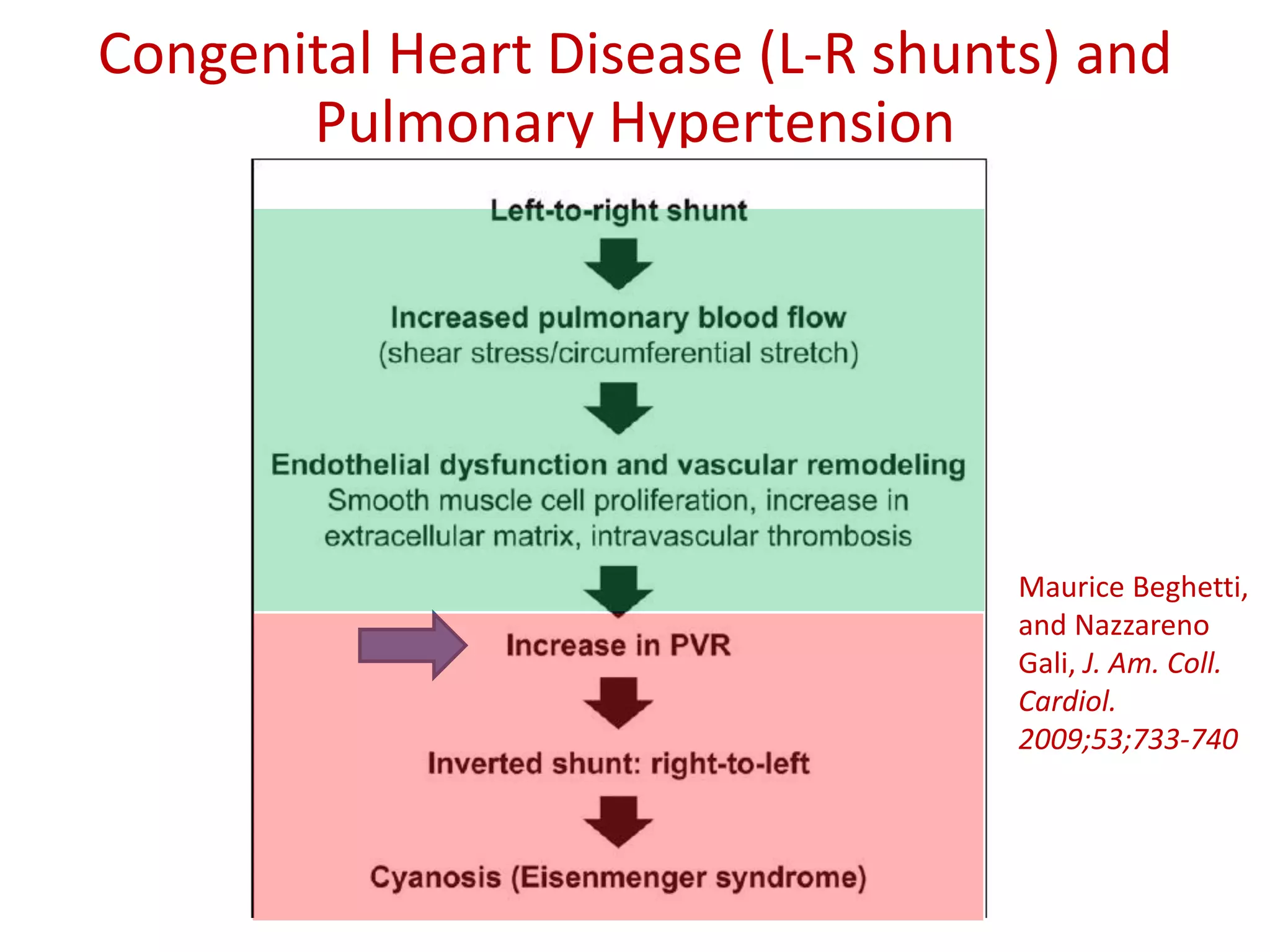
Congenital Heart Disease (L-R shunts) and
Pulmonary Hypertension
Maurice Beghetti,
and Nazzareno
Gali, J. Am. Coll.
Cardiol.
2009;53;733-740
• The response of the pulmonary vasculature to
high pulmonary blood flow is however not
uniform and does not occur in a predictable
fashion
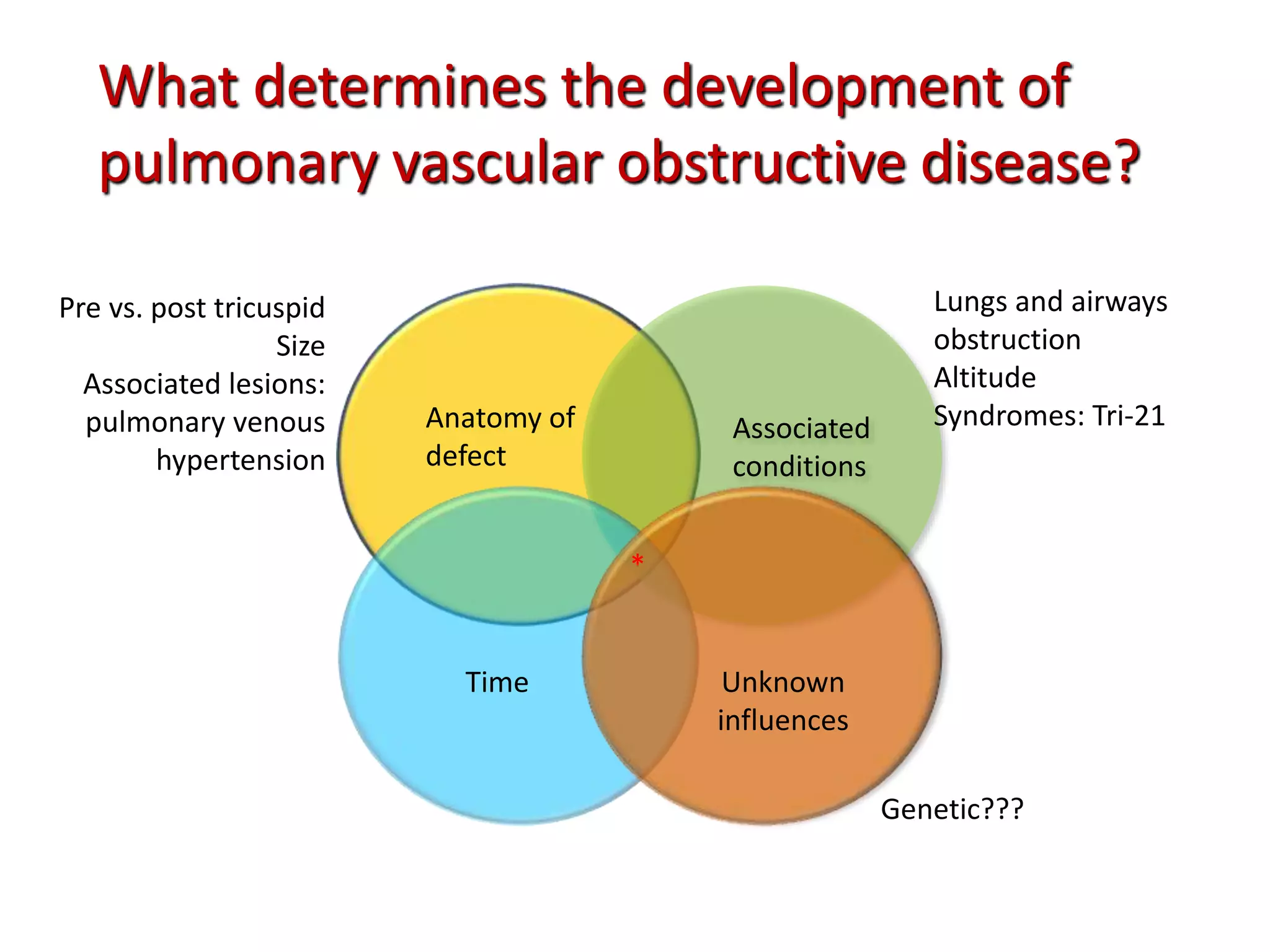
What determines the development of
pulmonary vascular obstructive disease?
Anatomy of
defect
Associated
conditions
Time
Pre vs. post tricuspid
Size
Associated lesions:
pulmonary venous
hypertension
Lungs and airways
obstruction
Altitude
Syndromes: Tri-21
Unknown
influences
Genetic???
*
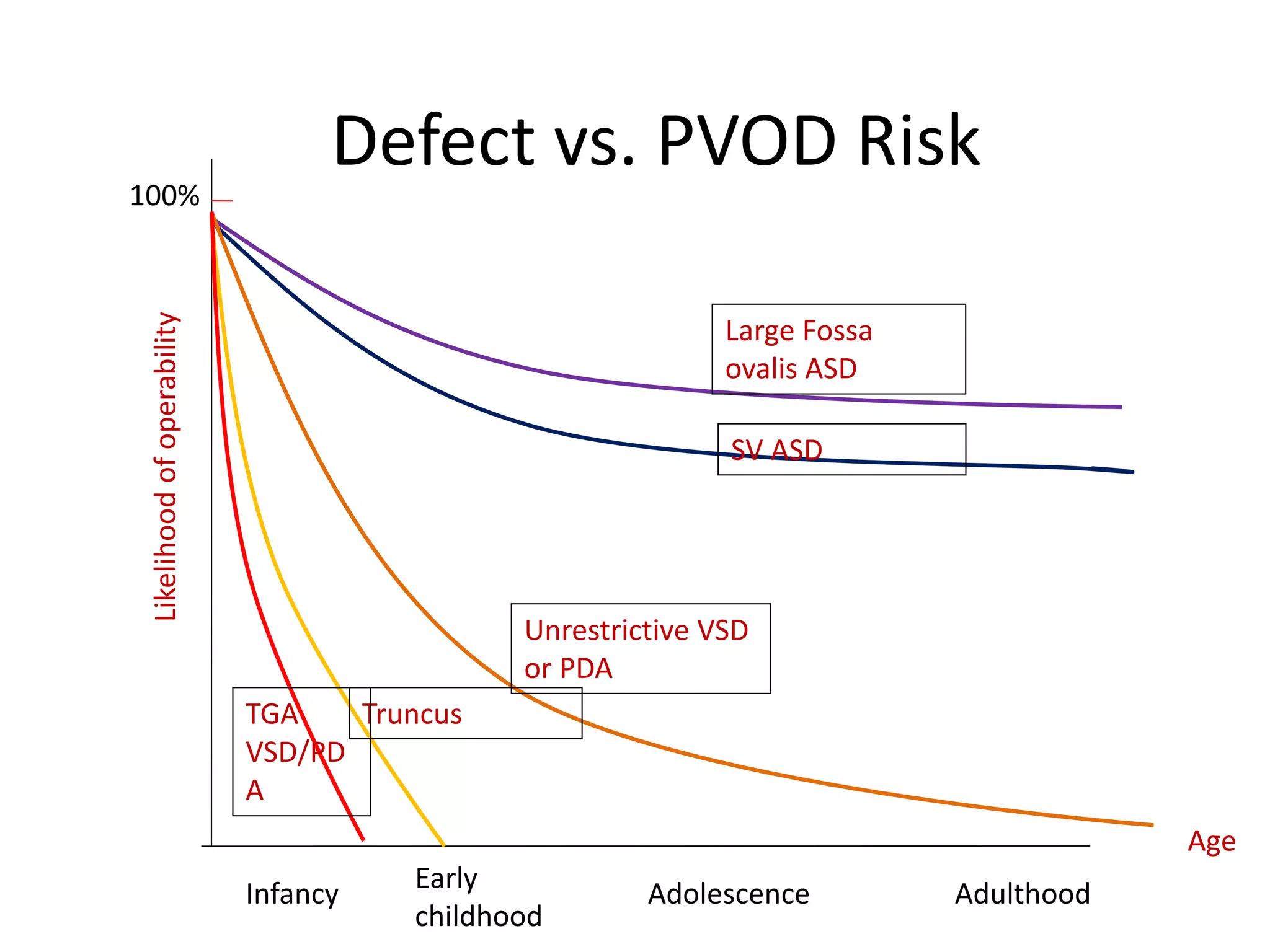
Large Fossa
ovalis ASD
SV ASD
Unrestrictive VSD
or PDA
TruncusTGA
VSD/PD
A
100%
Likelihoodofoperability
Age
Infancy Early
childhood
Adolescence Adulthood
Defect vs. PVOD Risk
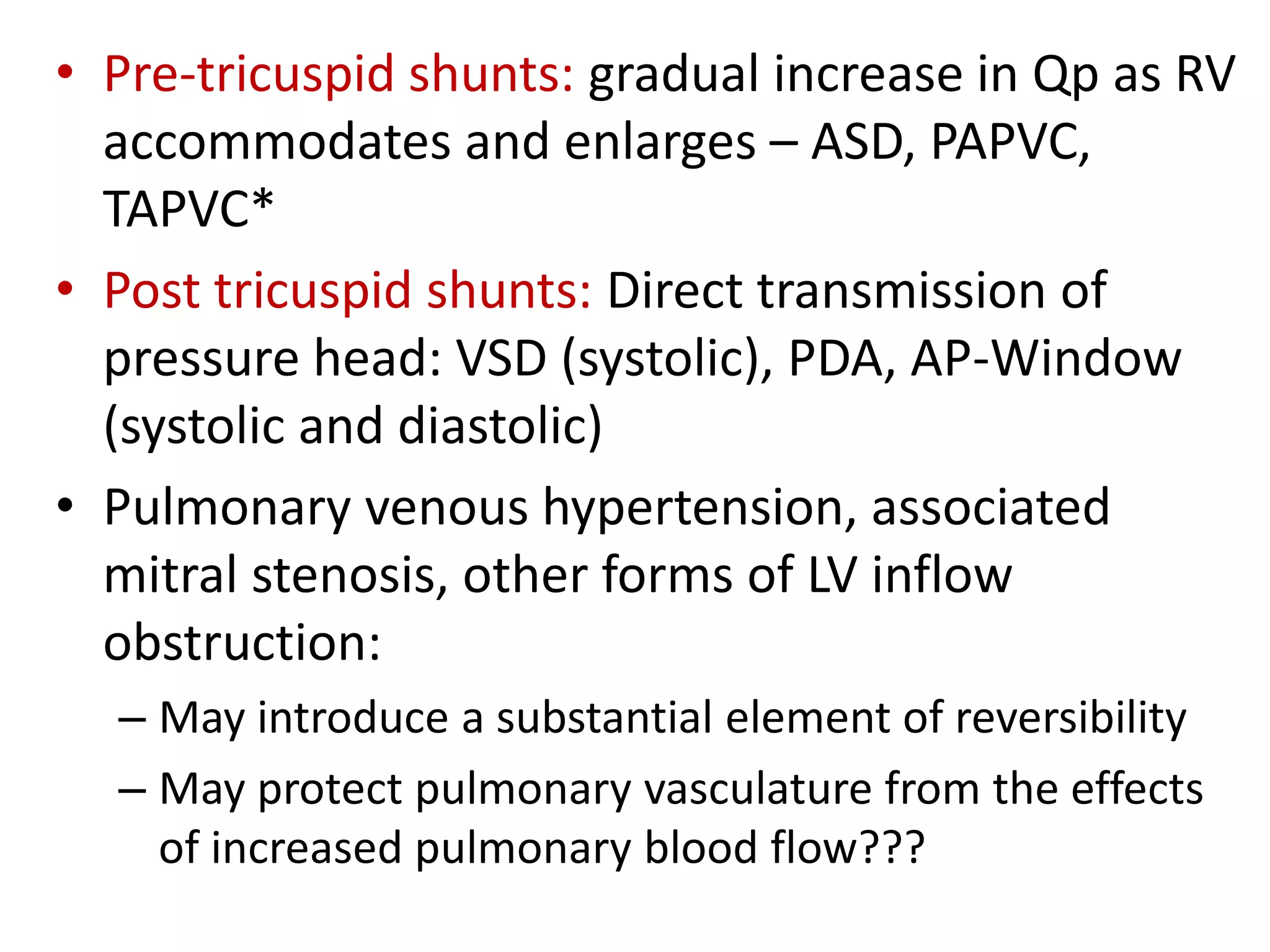
• Pre-tricuspid shunts: gradual increase in Qp as RV
accommodates and enlarges – ASD, PAPVC,
TAPVC*
• Post tricuspid shunts: Direct transmission of
pressure head: VSD (systolic), PDA, AP-Window
(systolic and diastolic)
• Pulmonary venous hypertension, associated
mitral stenosis, other forms of LV inflow
obstruction:
– May introduce a substantial element of reversibility
– May protect pulmonary vasculature from the effects
of increased pulmonary blood flow???
Hypoxia elevates pulmonary vascular resistance
• Diseases of pulmonary parenchyma
• Airways (upper and lower)
• Hypoventilation
• High altitude
Time
• The likelihood of development of PVOD increases with
time
• The rate of increase in PVR varies depending on a
number of influences
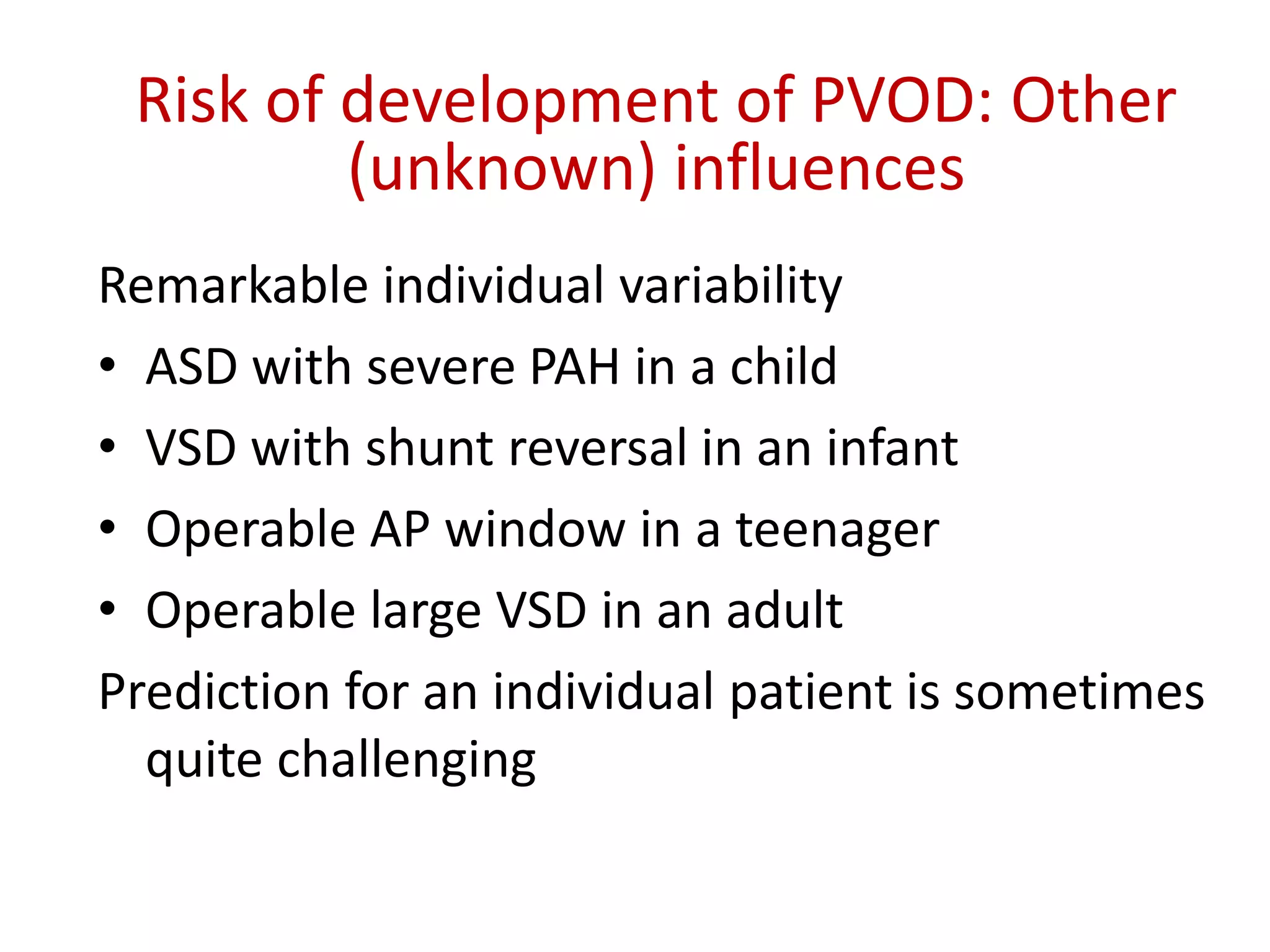
Risk of development of PVOD: Other
(unknown) influences
Remarkable individual variability
• ASD with severe PAH in a child
• VSD with shunt reversal in an infant
• Operable AP window in a teenager
• Operable large VSD in an adult
Prediction for an individual patient is sometimes
quite challenging
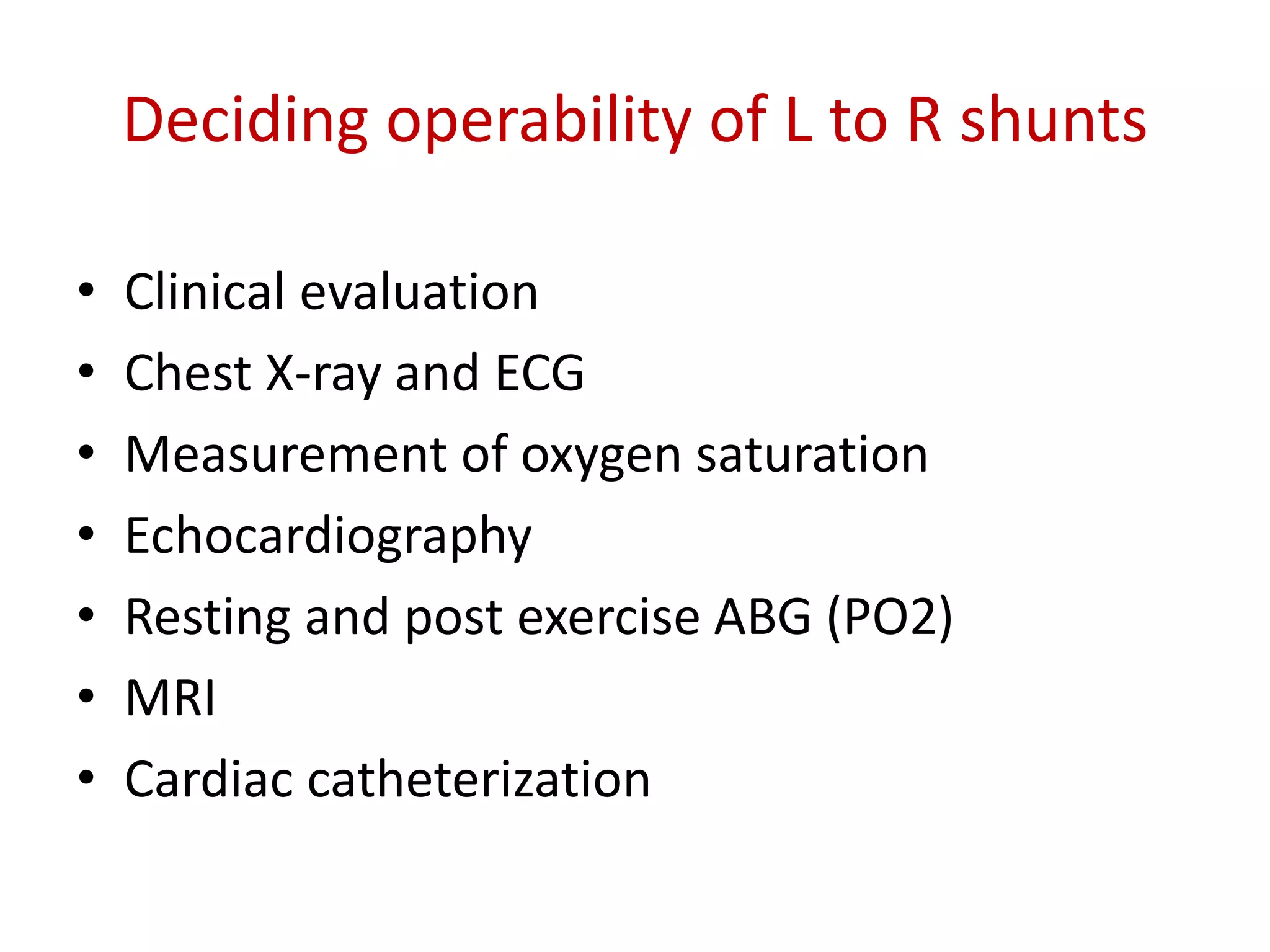
Deciding operability of L to R shunts
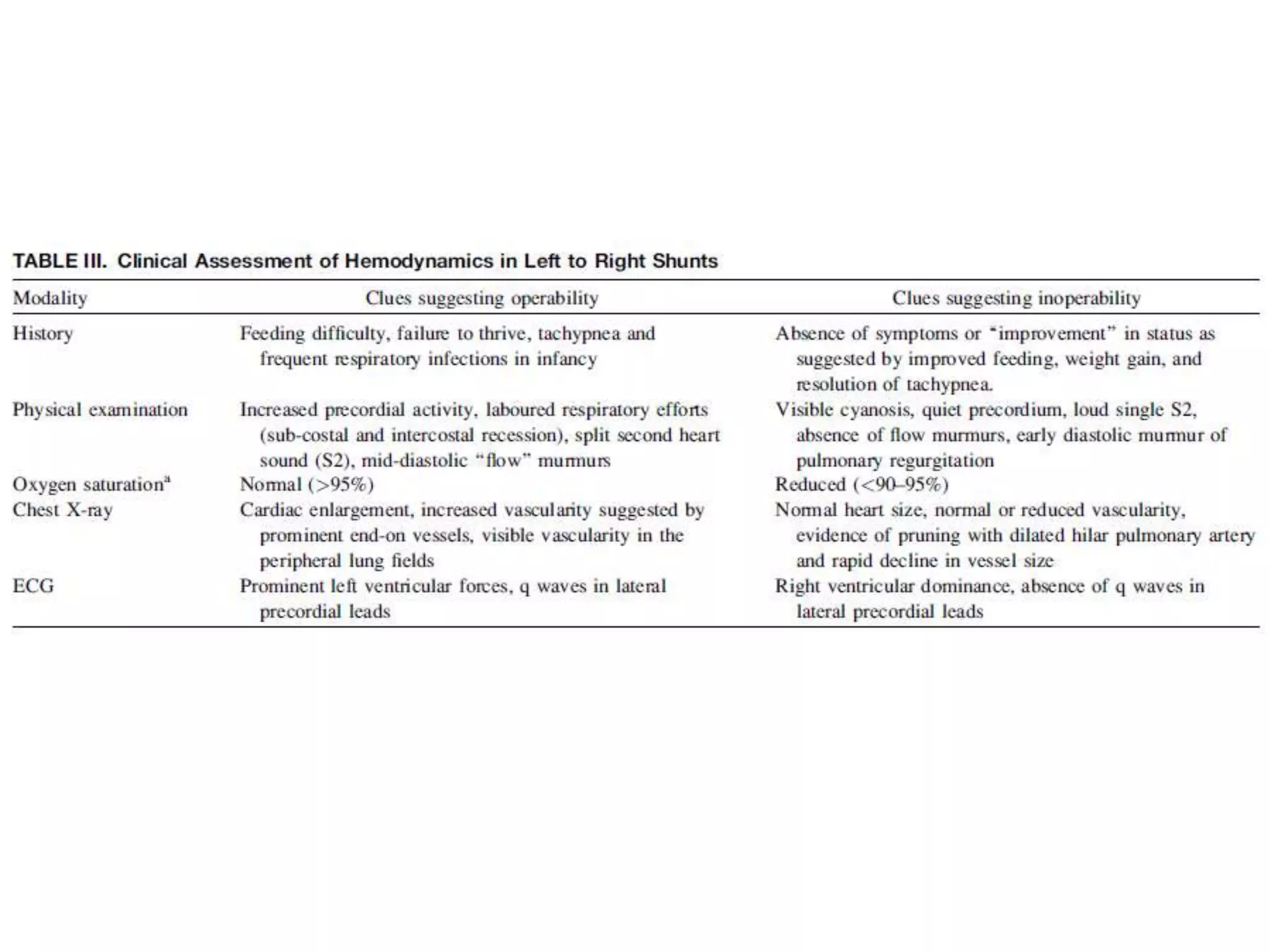
• Clinical evaluation
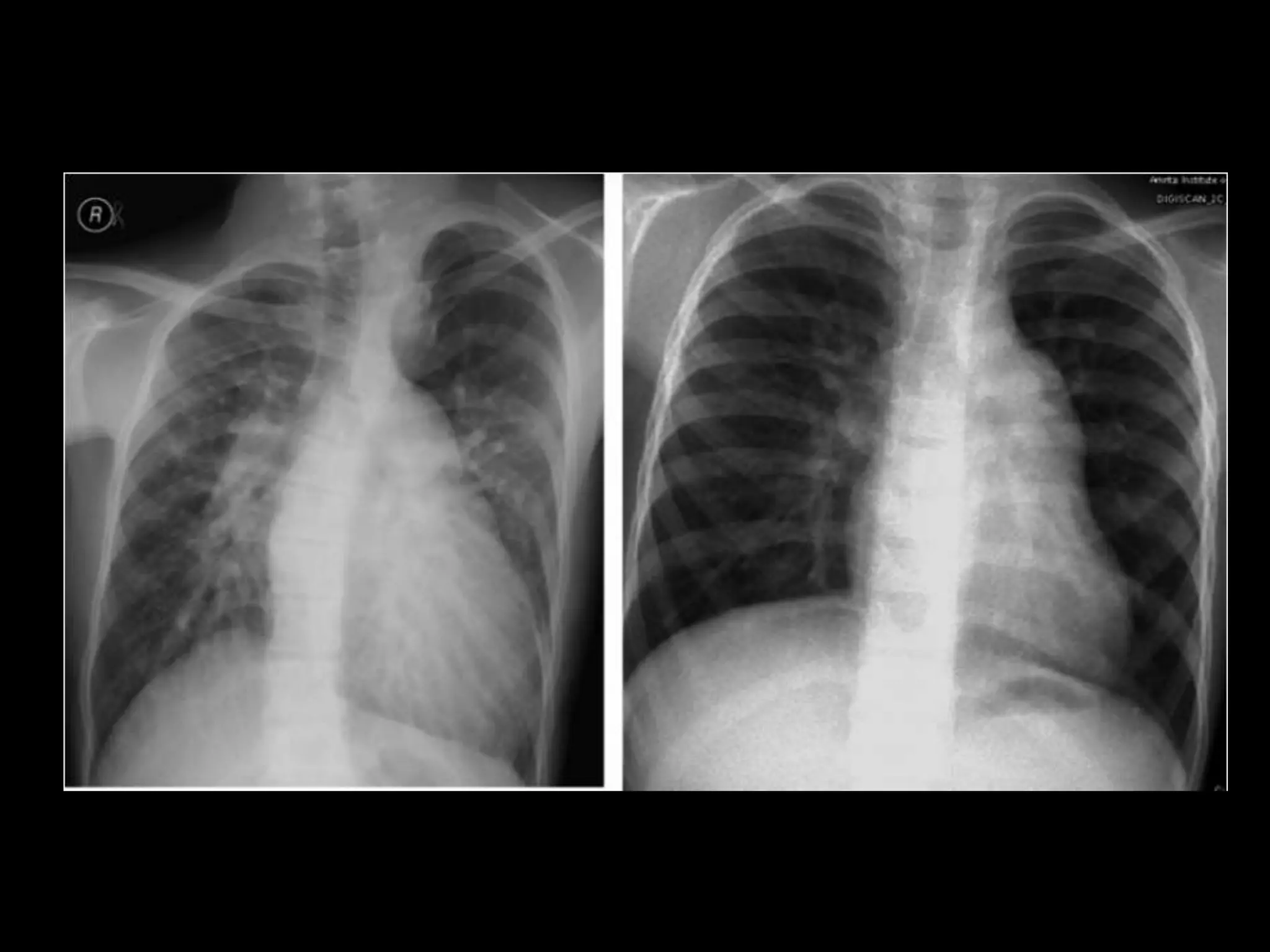
• Chest X-ray and ECG
• Measurement of oxygen saturation
• Echocardiography
• Resting and post exercise ABG (PO2)
• MRI
• Cardiac catheterization
What principles govern decision on
operability?
• Post tricuspid shunts: Generally operable if
there is evidence of a significant shunt in the
basal state irrespective of PA pressure
• Pre-tricuspid shunts: Pulmonary hypertension
(anything more than mild) warrants concern
especially if basal shunt is not obvious
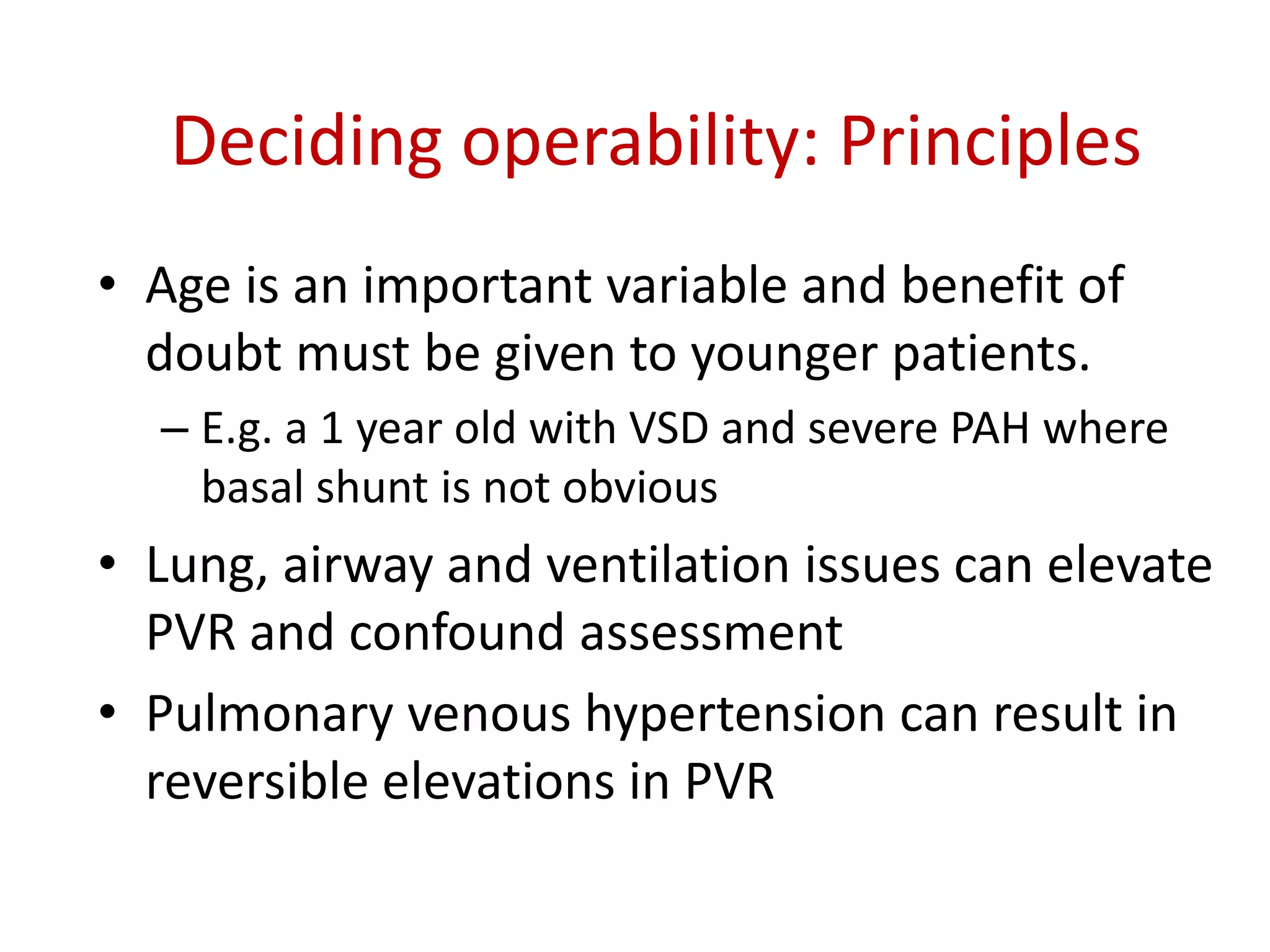
Deciding operability: Principles
• Age is an important variable and benefit of
doubt must be given to younger patients.
– E.g. a 1 year old with VSD and severe PAH where
basal shunt is not obvious
• Lung, airway and ventilation issues can elevate
PVR and confound assessment
• Pulmonary venous hypertension can result in
reversible elevations in PVR
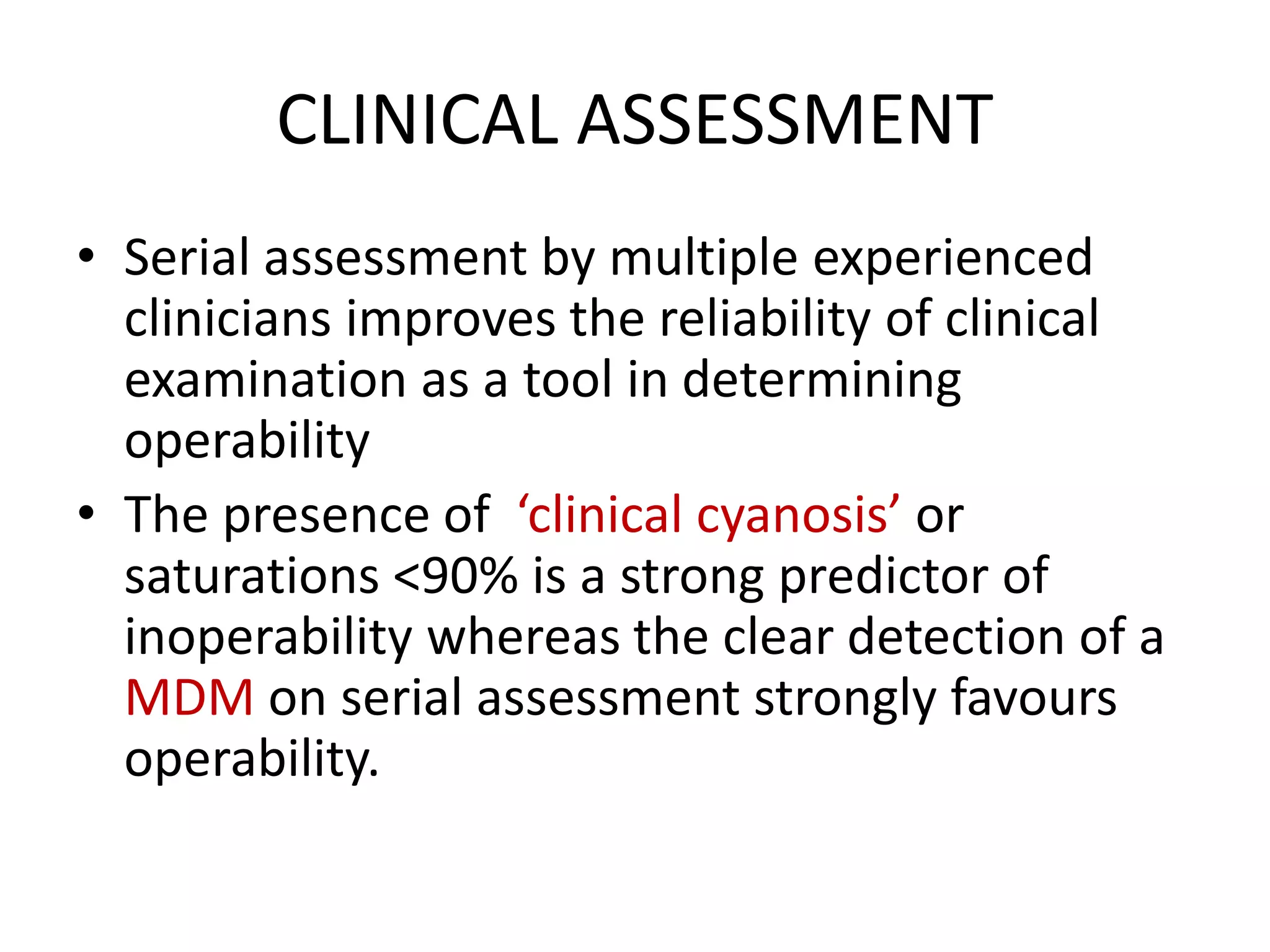
CLINICAL ASSESSMENT
• Serial assessment by multiple experienced
clinicians improves the reliability of clinical
examination as a tool in determining
operability
• The presence of ‘clinical cyanosis’ or
saturations <90% is a strong predictor of
inoperability whereas the clear detection of a
MDM on serial assessment strongly favours
operability.
LV
RVLA
LV
RA
RV
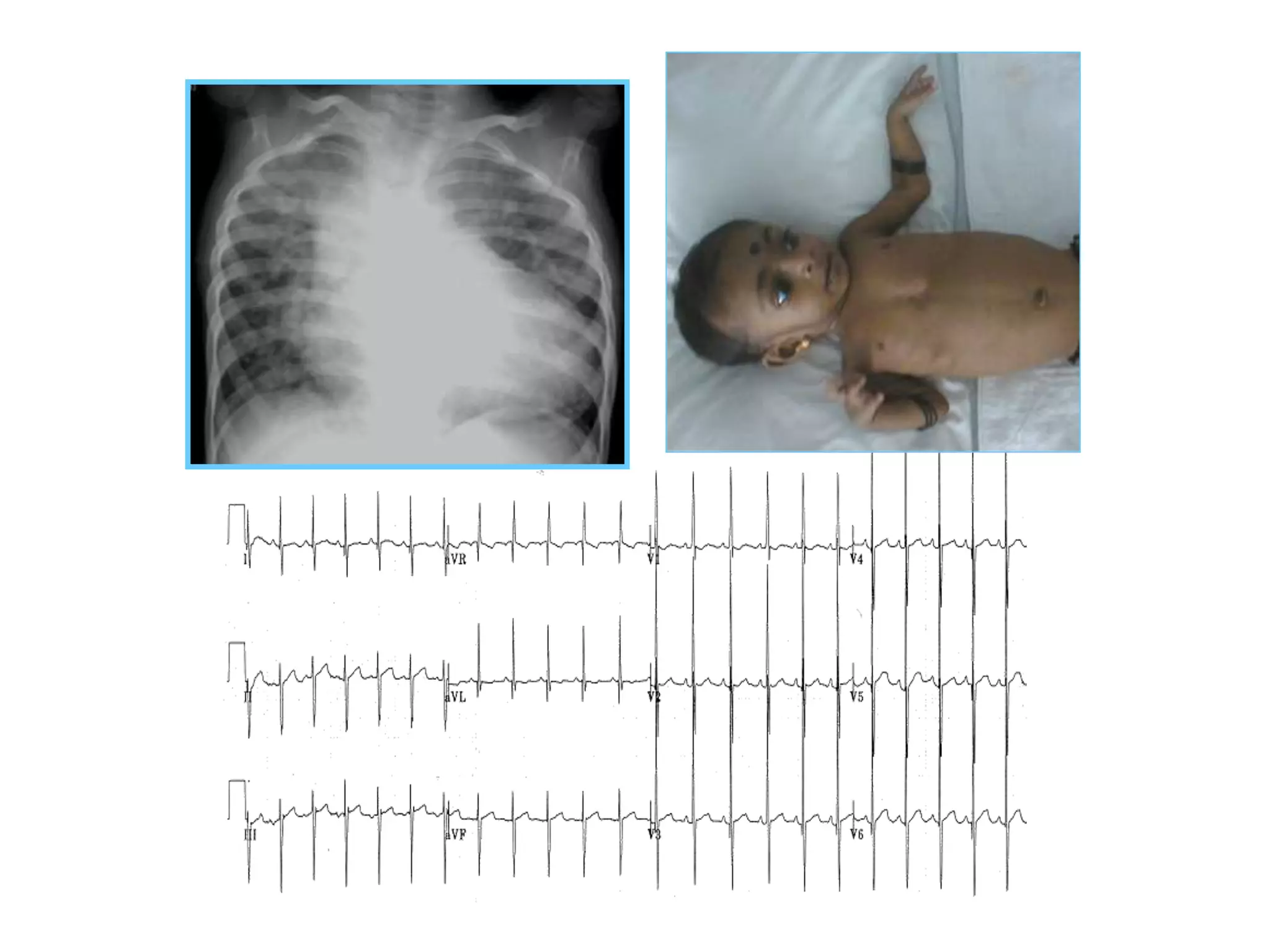
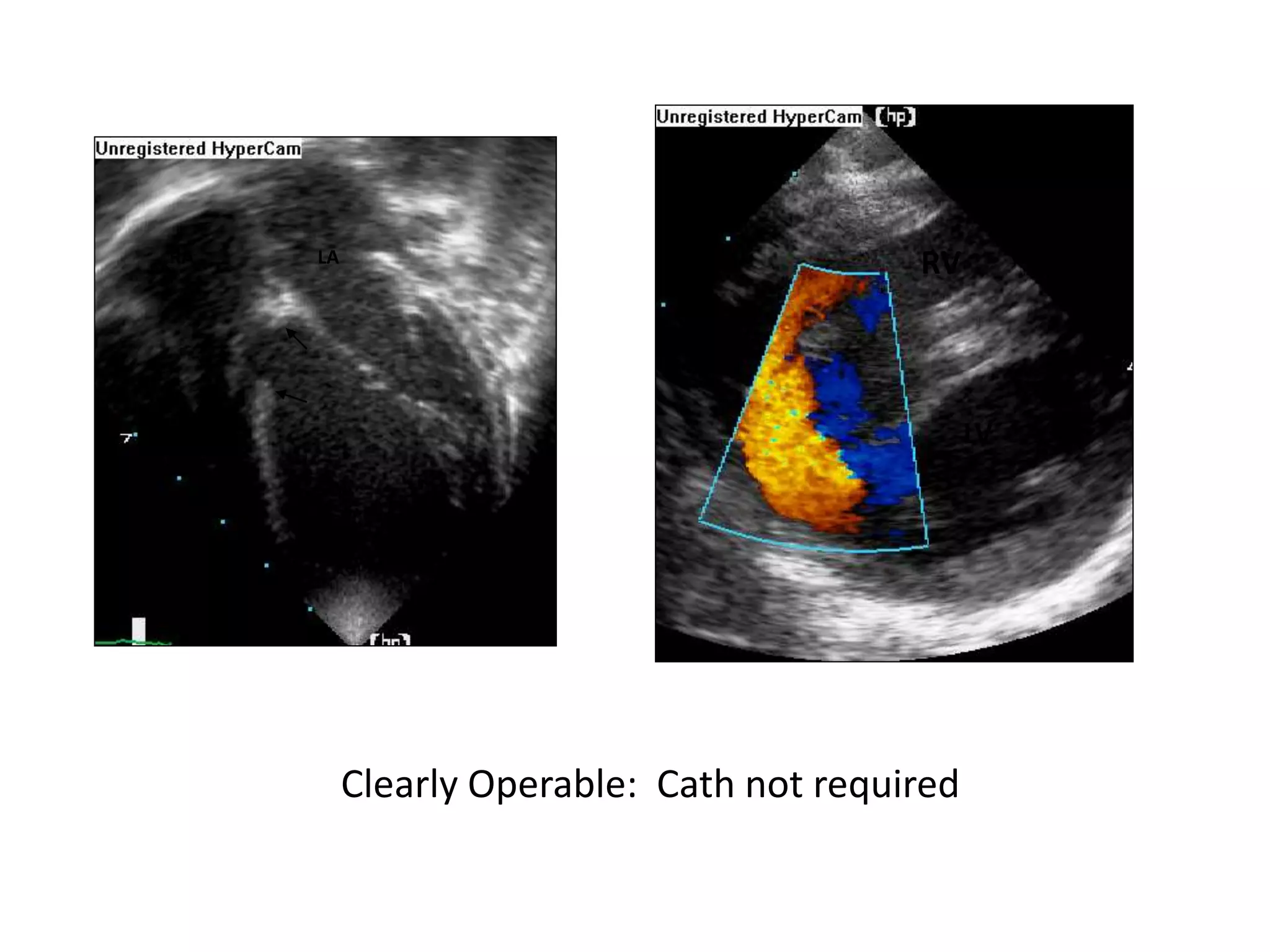
Clearly Operable: Cath not required
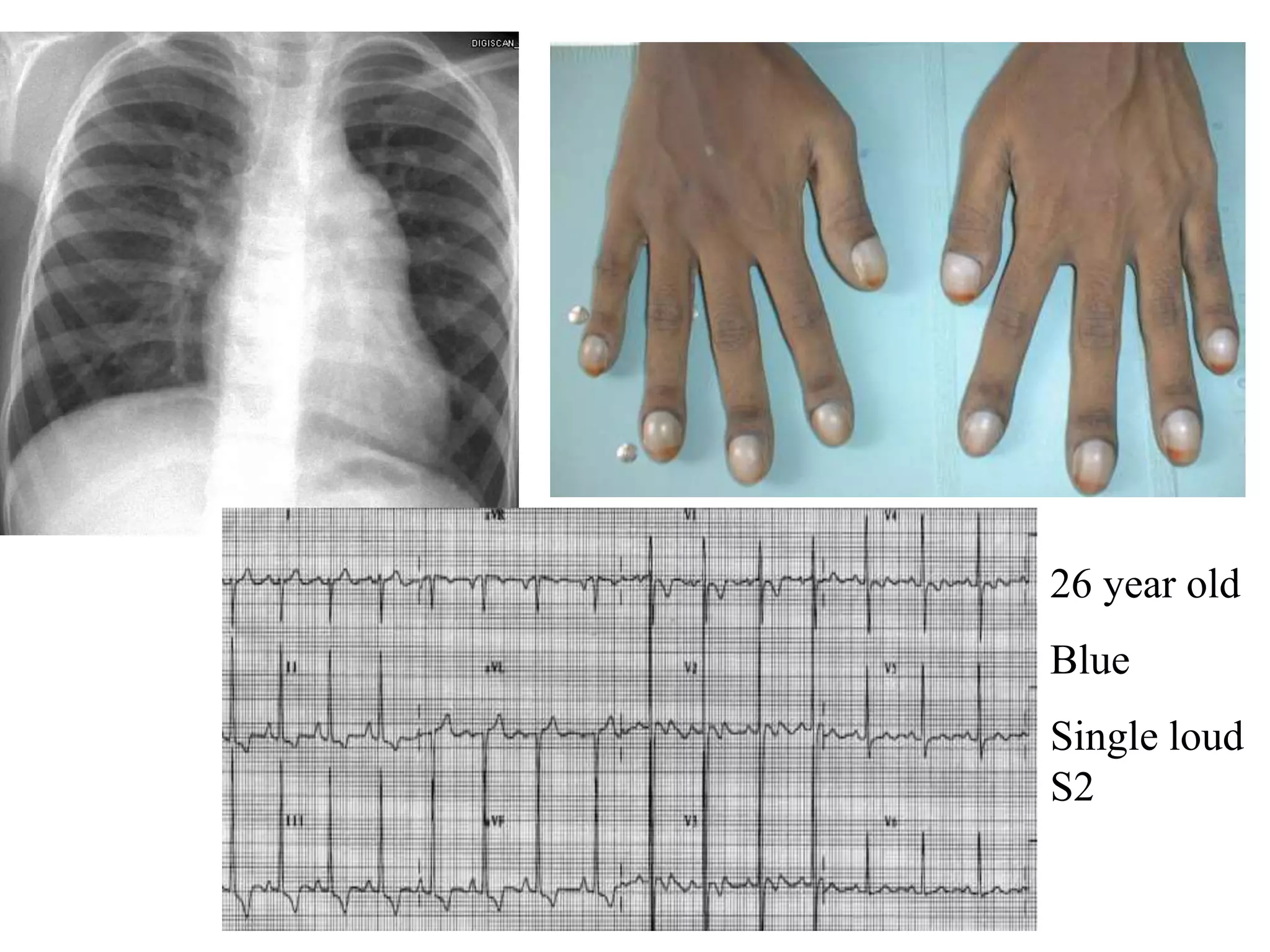
26 year old
Blue
Single loud
S2
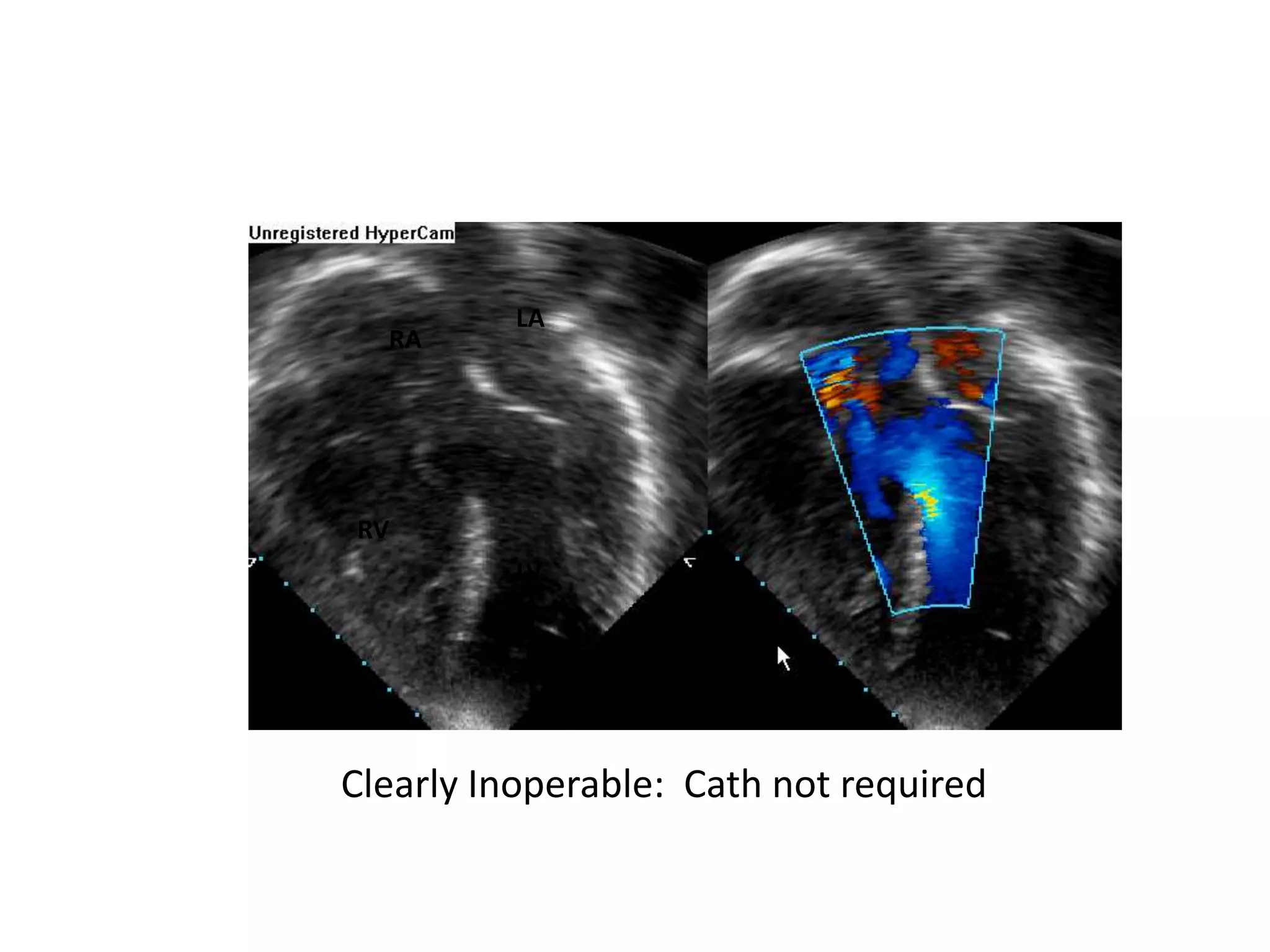
Clearly Inoperable: Cath not required
RV
LV
RA
LA
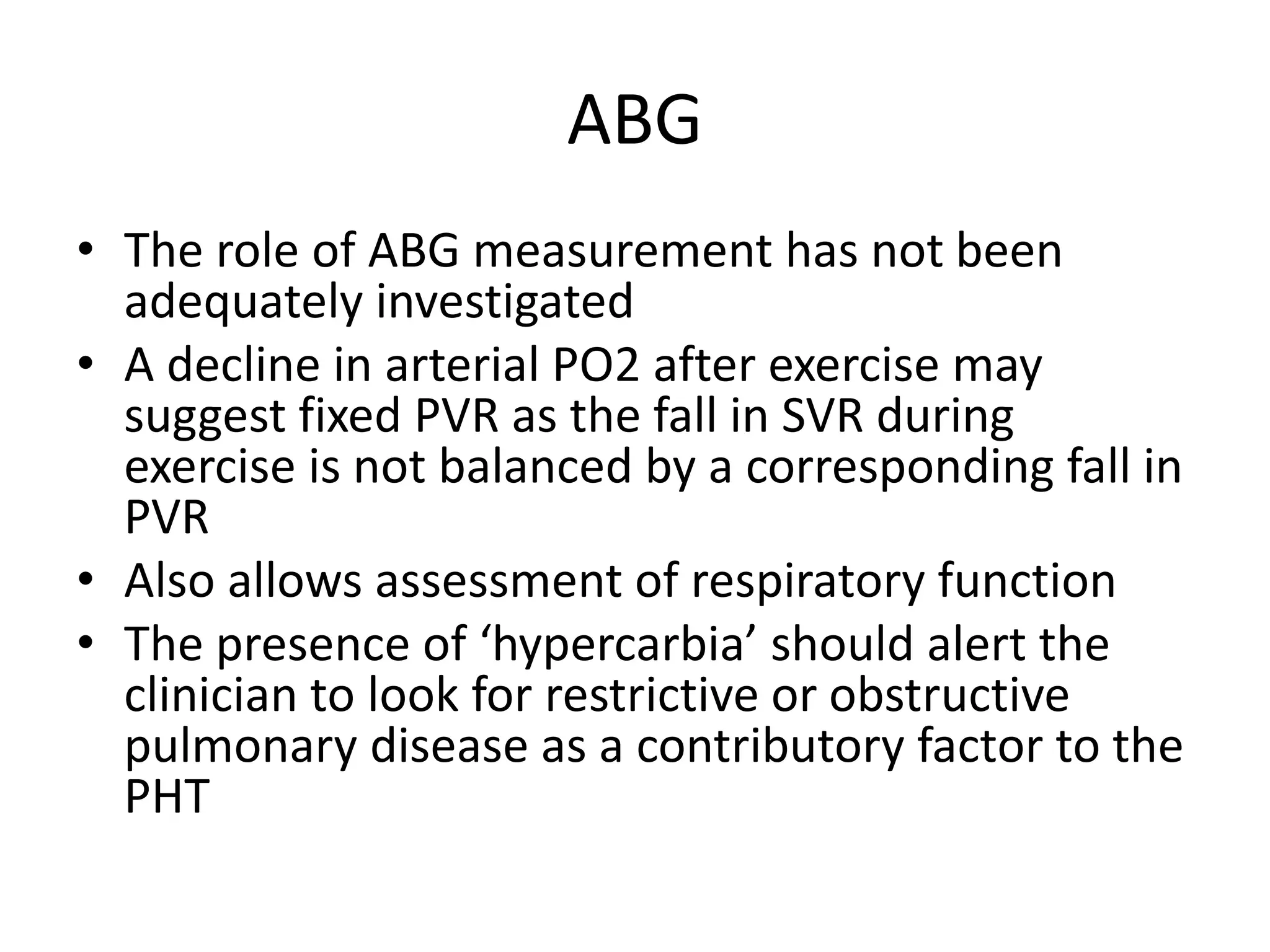
ABG
• The role of ABG measurement has not been
adequately investigated
• A decline in arterial PO2 after exercise may
suggest fixed PVR as the fall in SVR during
exercise is not balanced by a corresponding fall in
PVR
• Also allows assessment of respiratory function
• The presence of ‘hypercarbia’ should alert the
clinician to look for restrictive or obstructive
pulmonary disease as a contributory factor to the
PHT
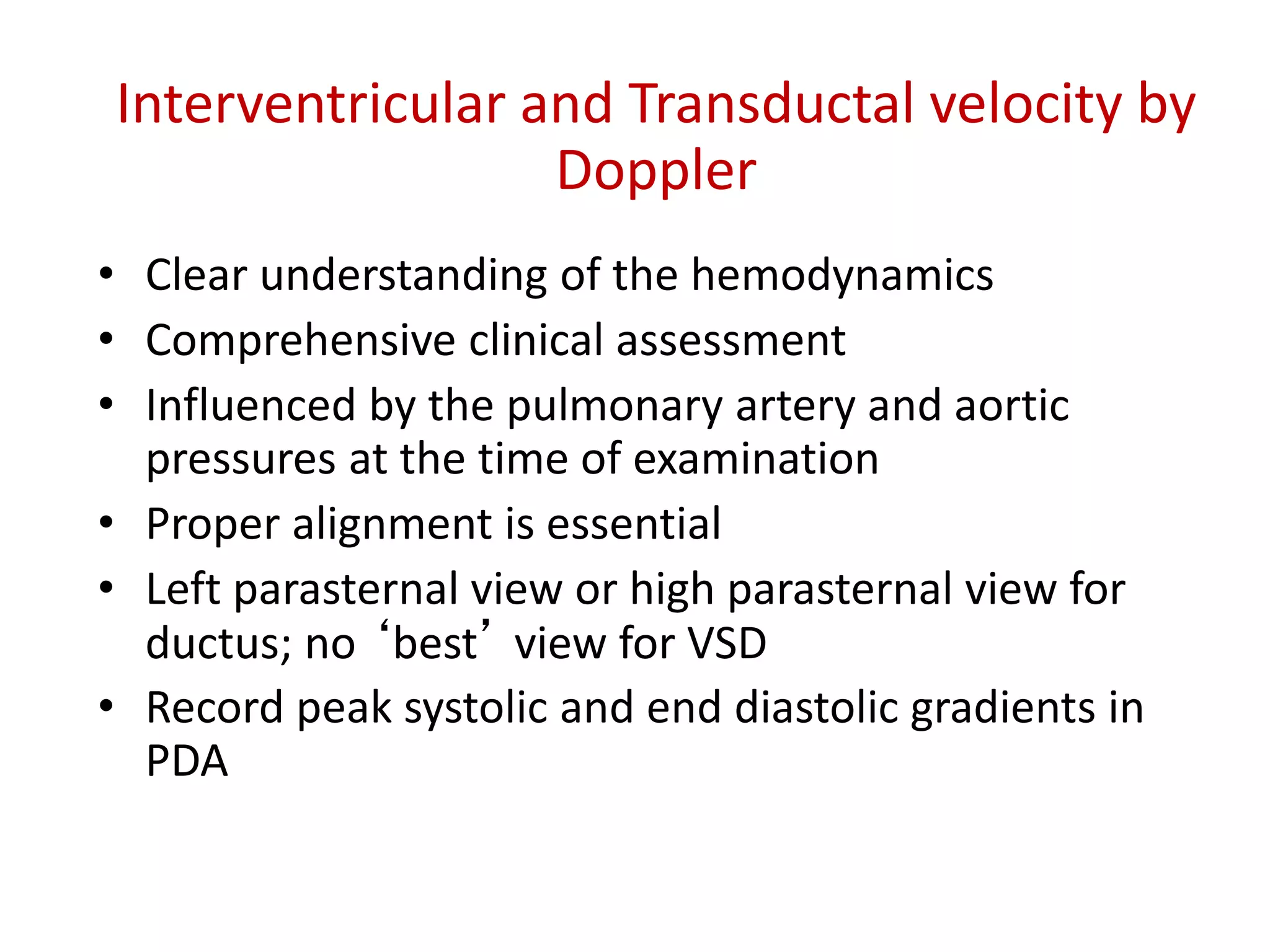
Interventricular and Transductal velocity by
Doppler
• Clear understanding of the hemodynamics
• Comprehensive clinical assessment
• Influenced by the pulmonary artery and aortic
pressures at the time of examination
• Proper alignment is essential
• Left parasternal view or high parasternal view for
ductus; no ‘best’ view for VSD
• Record peak systolic and end diastolic gradients in
PDA
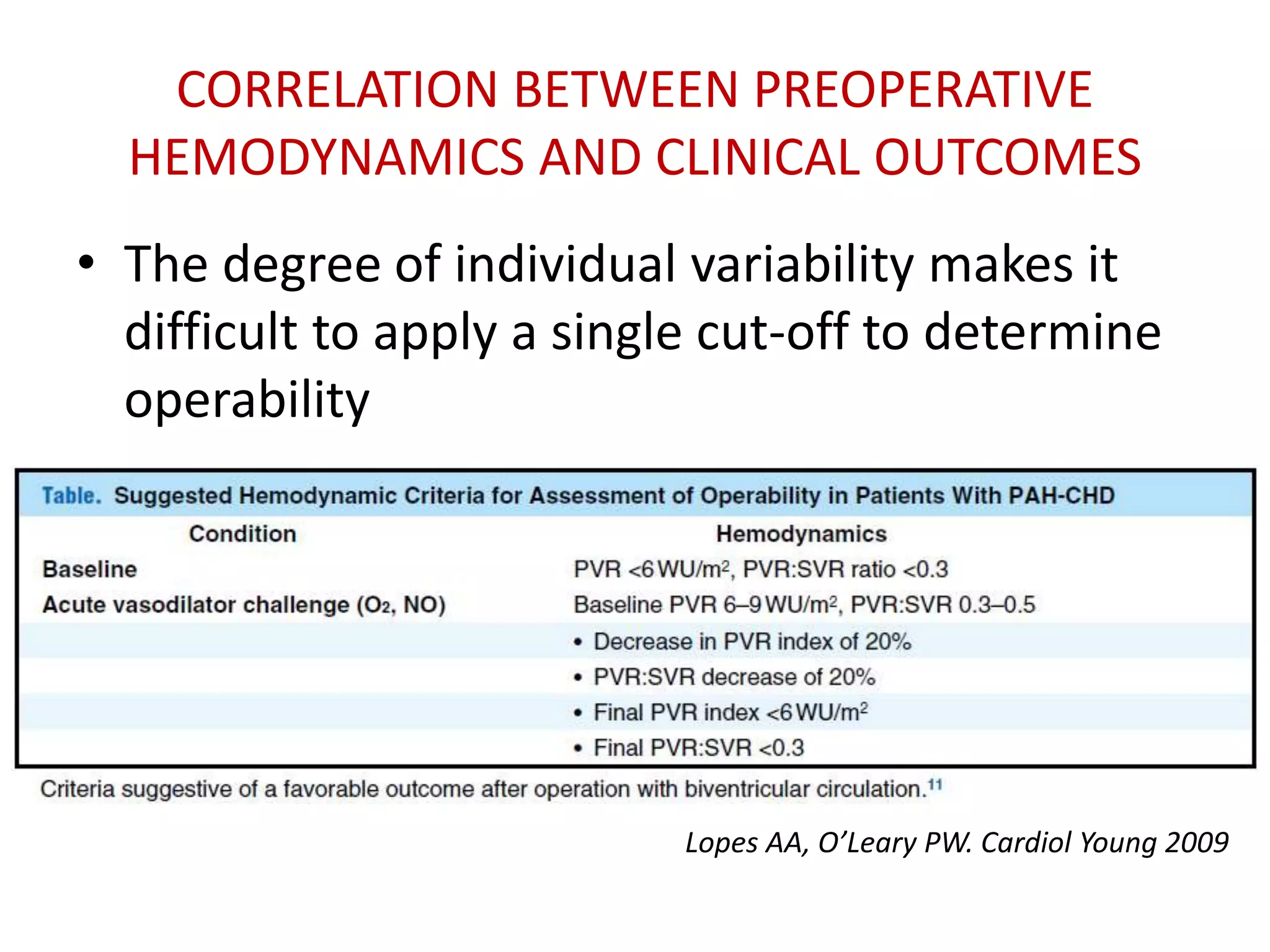
CORRELATION BETWEEN PREOPERATIVE
HEMODYNAMICS AND CLINICAL OUTCOMES
• The degree of individual variability makes it
difficult to apply a single cut-off to determine
operability
Lopes AA, O’Leary PW. Cardiol Young 2009
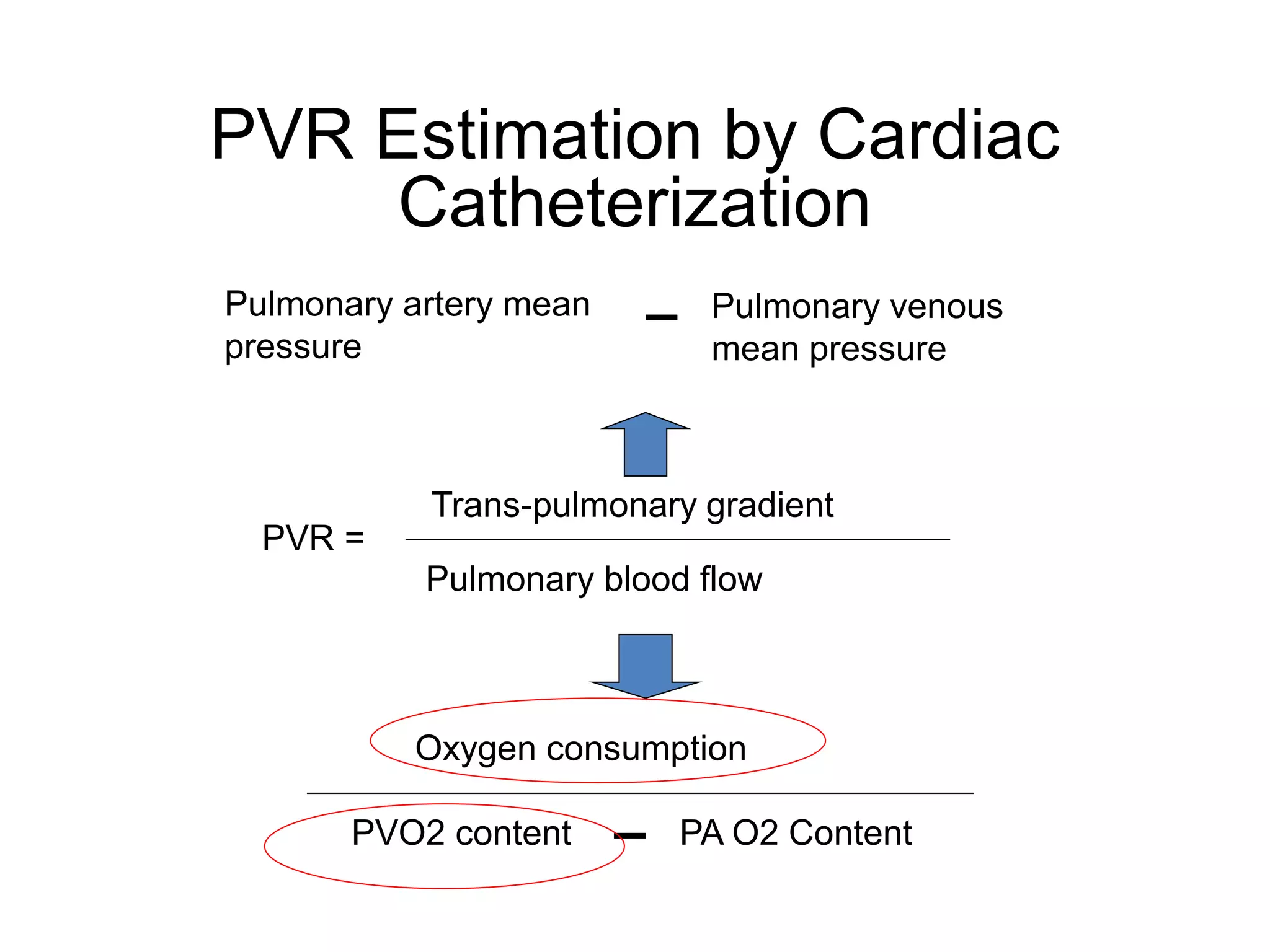
PVR Estimation by Cardiac
Catheterization
Pulmonary artery mean
pressure
Pulmonary venous
mean pressure
Trans-pulmonary gradient
PVR =
Pulmonary blood flow
Oxygen consumption
PVO2 content PA O2 Content
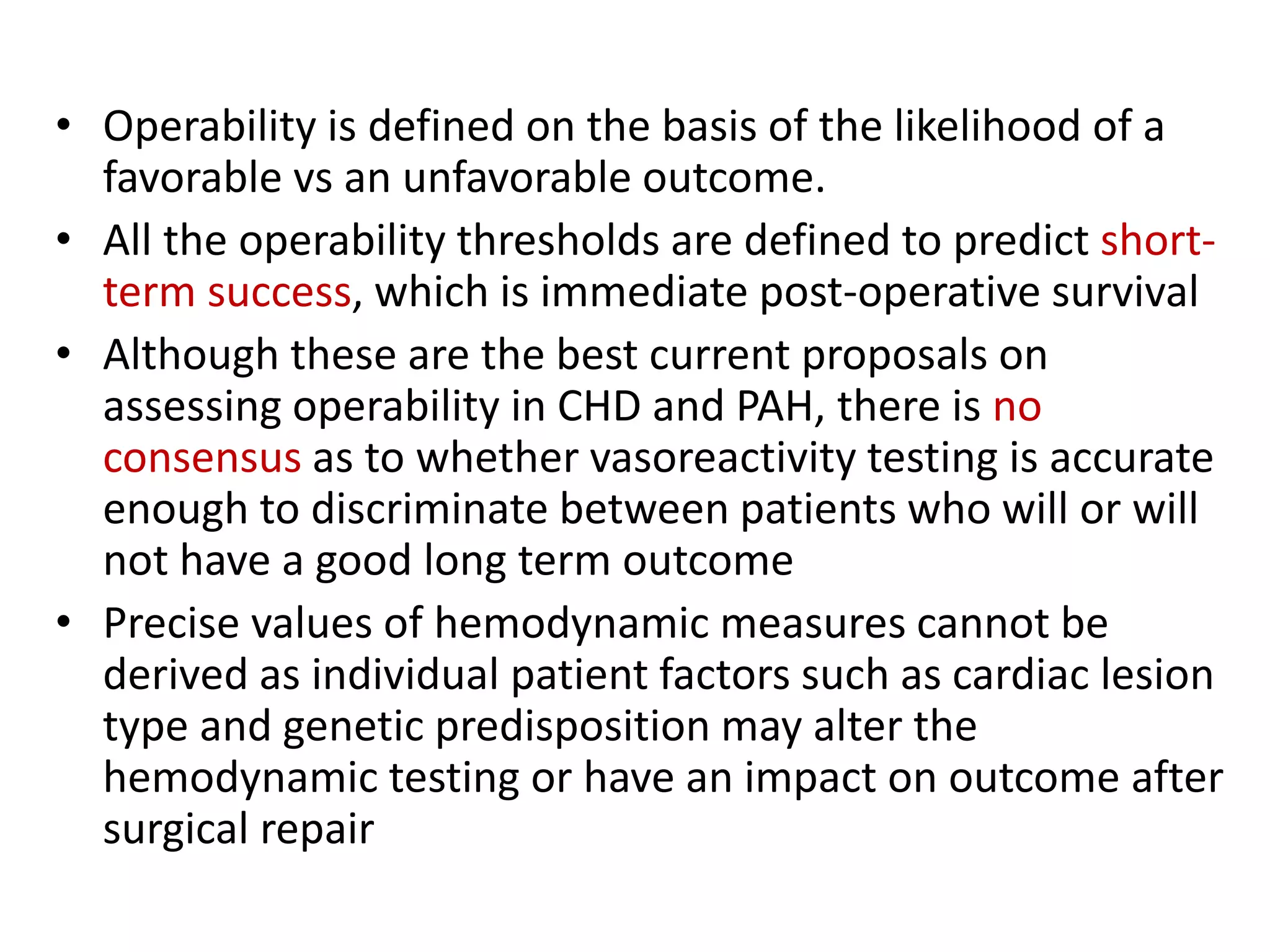
• Operability is defined on the basis of the likelihood of a
favorable vs an unfavorable outcome.
• All the operability thresholds are defined to predict short-
term success, which is immediate post-operative survival
• Although these are the best current proposals on
assessing operability in CHD and PAH, there is no
consensus as to whether vasoreactivity testing is accurate
enough to discriminate between patients who will or will
not have a good long term outcome
• Precise values of hemodynamic measures cannot be
derived as individual patient factors such as cardiac lesion
type and genetic predisposition may alter the
hemodynamic testing or have an impact on outcome after
surgical repair
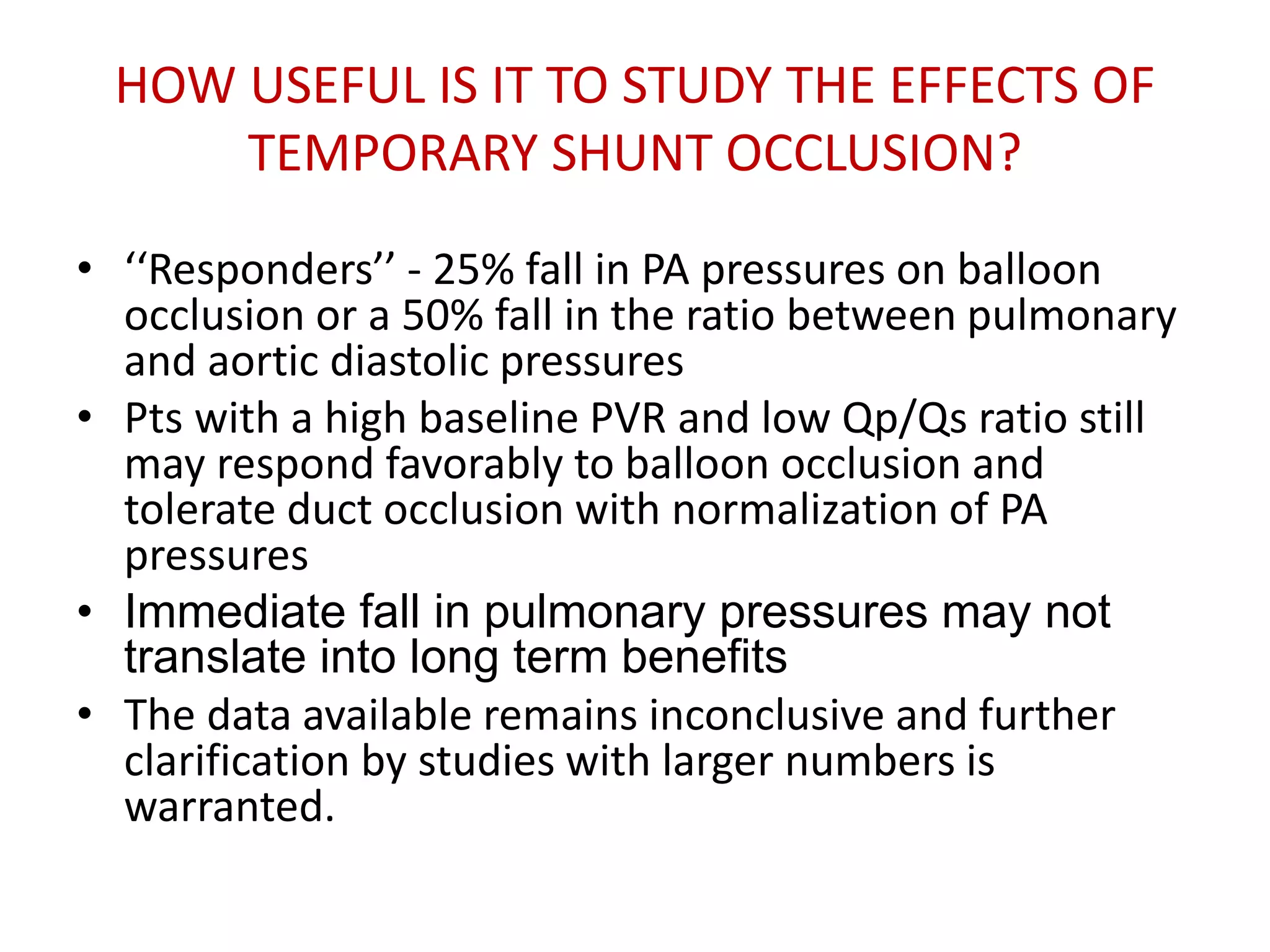
• Hemodynamic assessment also aids in
appropriate device selection
• The fenestrated ASD device can be considered
in selected pts
• ASD or VSD device for patients with PDA and
pulmonary hypertension instead of Amplatzer
PDO
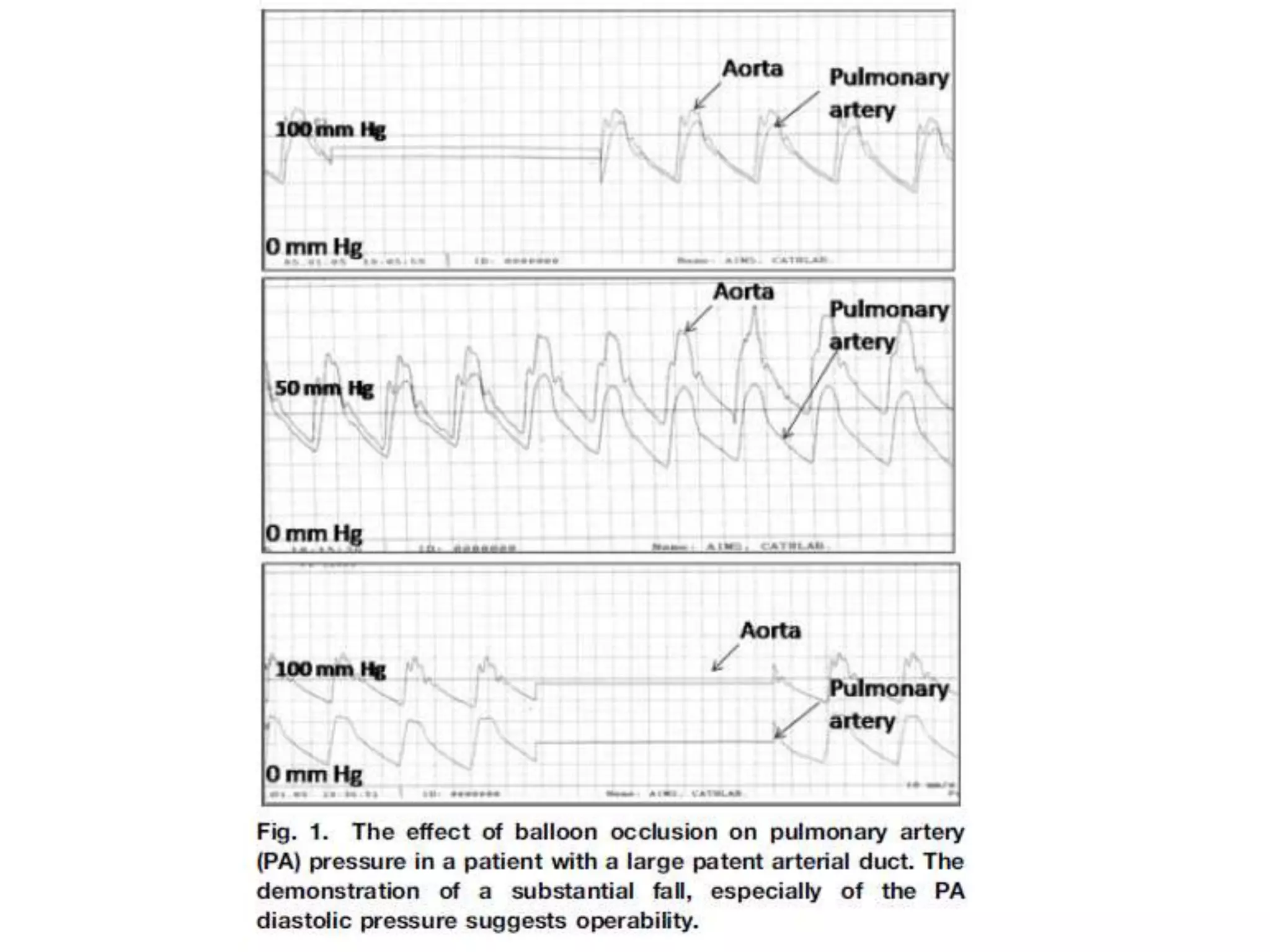
HOW USEFUL IS IT TO STUDY THE EFFECTS OF
TEMPORARY SHUNT OCCLUSION?
• ‘‘Responders’’ - 25% fall in PA pressures on balloon
occlusion or a 50% fall in the ratio between pulmonary
and aortic diastolic pressures
• Pts with a high baseline PVR and low Qp/Qs ratio still
may respond favorably to balloon occlusion and
tolerate duct occlusion with normalization of PA
pressures
• Immediate fall in pulmonary pressures may not
translate into long term benefits
• The data available remains inconclusive and further
clarification by studies with larger numbers is
warranted.
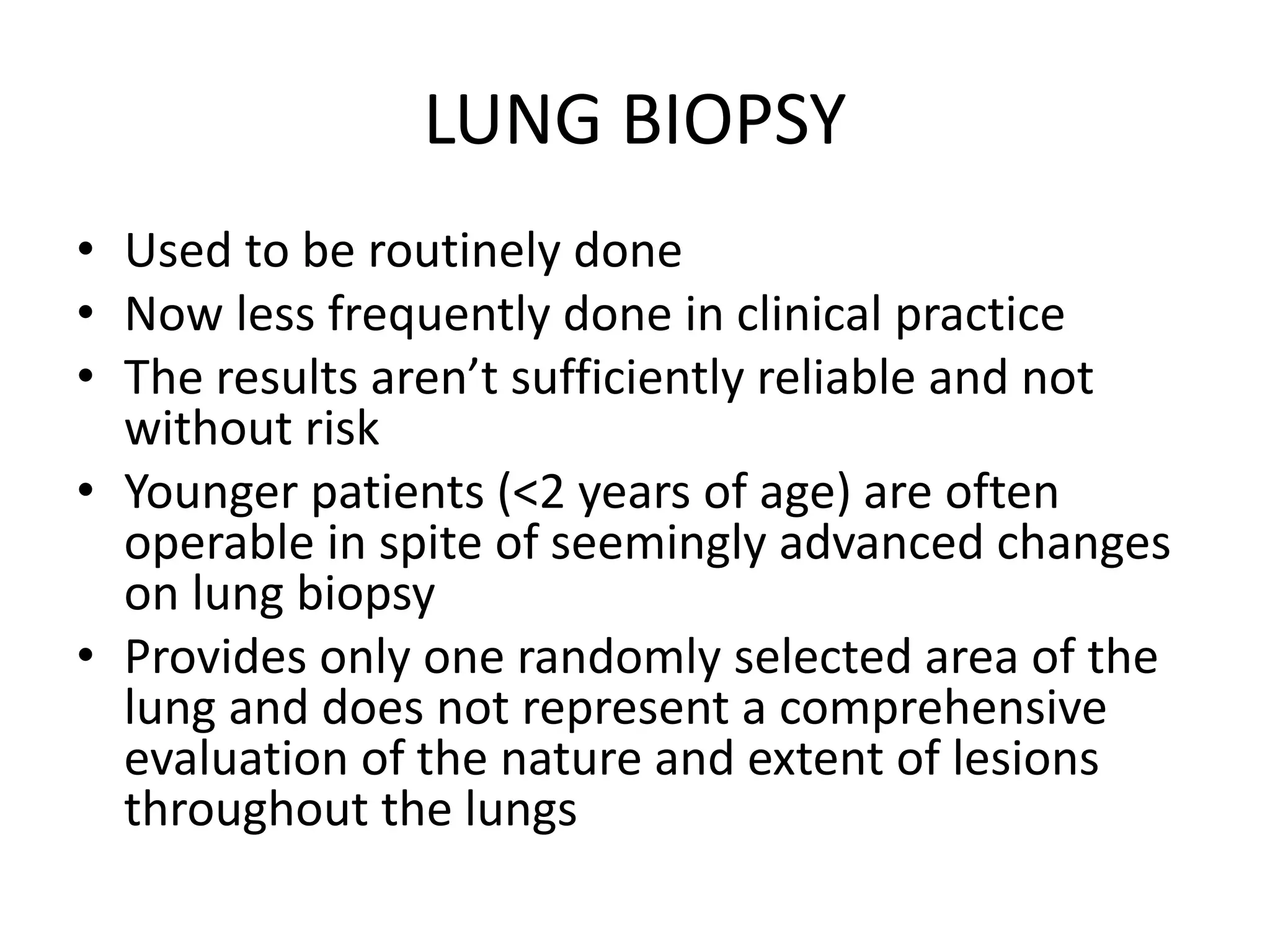
LUNG BIOPSY
• Used to be routinely done
• Now less frequently done in clinical practice
• The results aren’t sufficiently reliable and not
without risk
• Younger patients (<2 years of age) are often
operable in spite of seemingly advanced changes
on lung biopsy
• Provides only one randomly selected area of the
lung and does not represent a comprehensive
evaluation of the nature and extent of lesions
throughout the lungs
NOVEL MARKERS OF ASSESSING
OPERABILITY
BIOMARKERS :
• ANP,BNP,Nt-pro-BNP,cardiac troponin T,uric
acid,urinary prostaglandin metabolites,eNOS
and dimethylarginines,ET-1 and ET-1:ET3
ratio,circulating VWF , cytokines (IL-1a, -2, -4, -
6, -8, -10 and 12p70, TNF-b, MCP-1 and
osteopontin),CRP,pim-1 & HbA1c
• Circulating endothelial cells and micro-RNAs
CONCLUSION
• Determining operability is important in patients
with left to right shunts who present late
• A number of unresolved issues exist with
currently available methods
• A comprehensive assessment that incorporates
clinical evaluation, noninvasive investigations and
in selected cases, cardiac catheterization is
needed
• When in doubt, do not send patient for surgery
• Efforts to evolve clear guidelines through careful
prospective studies need to be undertaken

Assessment of operability of left to right shunts

  • 1.
    ASSESSMENT OF OPERABILITYOF LEFT TO RIGHT SHUNTS DR MAHENDRA JIPMER,CARDIOLOGY
  • 2.
    INTRODUCTION • PAH associatedwith CHD remains a problem  Mainly in pts in whom the LR shunt wasn’t diagnosed until childhood or even adulthood  In patients who didn’t have access to cardiovascular care and surgical management as infants, particularly in developing countries
  • 3.
    • The 2009ESC/ERS/ISHLT guidelines on the management of PAH subdivided PAH-CHD into 4 clinical groups: (1) Eisenmenger syndrome (2) PAH associated with systemic-to-pulmonary shunts (3) PAH with small defects (4) PAH after surgical repair Eur Heart J 2009
  • 4.
    Congenital Heart Disease(L-R shunts) and Pulmonary Hypertension Maurice Beghetti, and Nazzareno Gali, J. Am. Coll. Cardiol. 2009;53;733-740
  • 5.
    • The responseof the pulmonary vasculature to high pulmonary blood flow is however not uniform and does not occur in a predictable fashion
  • 6.
    What determines thedevelopment of pulmonary vascular obstructive disease? Anatomy of defect Associated conditions Time Pre vs. post tricuspid Size Associated lesions: pulmonary venous hypertension Lungs and airways obstruction Altitude Syndromes: Tri-21 Unknown influences Genetic??? *
  • 7.
    Large Fossa ovalis ASD SVASD Unrestrictive VSD or PDA TruncusTGA VSD/PD A 100% Likelihoodofoperability Age Infancy Early childhood Adolescence Adulthood Defect vs. PVOD Risk
  • 8.
    • Pre-tricuspid shunts:gradual increase in Qp as RV accommodates and enlarges – ASD, PAPVC, TAPVC* • Post tricuspid shunts: Direct transmission of pressure head: VSD (systolic), PDA, AP-Window (systolic and diastolic) • Pulmonary venous hypertension, associated mitral stenosis, other forms of LV inflow obstruction: – May introduce a substantial element of reversibility – May protect pulmonary vasculature from the effects of increased pulmonary blood flow???
  • 9.
    Hypoxia elevates pulmonaryvascular resistance • Diseases of pulmonary parenchyma • Airways (upper and lower) • Hypoventilation • High altitude Time • The likelihood of development of PVOD increases with time • The rate of increase in PVR varies depending on a number of influences
  • 10.
    Risk of developmentof PVOD: Other (unknown) influences Remarkable individual variability • ASD with severe PAH in a child • VSD with shunt reversal in an infant • Operable AP window in a teenager • Operable large VSD in an adult Prediction for an individual patient is sometimes quite challenging
  • 11.
    Deciding operability ofL to R shunts • Clinical evaluation • Chest X-ray and ECG • Measurement of oxygen saturation • Echocardiography • Resting and post exercise ABG (PO2) • MRI • Cardiac catheterization
  • 12.
    What principles governdecision on operability? • Post tricuspid shunts: Generally operable if there is evidence of a significant shunt in the basal state irrespective of PA pressure • Pre-tricuspid shunts: Pulmonary hypertension (anything more than mild) warrants concern especially if basal shunt is not obvious
  • 13.
    Deciding operability: Principles •Age is an important variable and benefit of doubt must be given to younger patients. – E.g. a 1 year old with VSD and severe PAH where basal shunt is not obvious • Lung, airway and ventilation issues can elevate PVR and confound assessment • Pulmonary venous hypertension can result in reversible elevations in PVR
  • 14.
    CLINICAL ASSESSMENT • Serialassessment by multiple experienced clinicians improves the reliability of clinical examination as a tool in determining operability • The presence of ‘clinical cyanosis’ or saturations <90% is a strong predictor of inoperability whereas the clear detection of a MDM on serial assessment strongly favours operability.
  • 16.
  • 17.
  • 18.
    Clearly Inoperable: Cathnot required RV LV RA LA
  • 21.
    ABG • The roleof ABG measurement has not been adequately investigated • A decline in arterial PO2 after exercise may suggest fixed PVR as the fall in SVR during exercise is not balanced by a corresponding fall in PVR • Also allows assessment of respiratory function • The presence of ‘hypercarbia’ should alert the clinician to look for restrictive or obstructive pulmonary disease as a contributory factor to the PHT
  • 22.
    Interventricular and Transductalvelocity by Doppler • Clear understanding of the hemodynamics • Comprehensive clinical assessment • Influenced by the pulmonary artery and aortic pressures at the time of examination • Proper alignment is essential • Left parasternal view or high parasternal view for ductus; no ‘best’ view for VSD • Record peak systolic and end diastolic gradients in PDA
  • 23.
    CORRELATION BETWEEN PREOPERATIVE HEMODYNAMICSAND CLINICAL OUTCOMES • The degree of individual variability makes it difficult to apply a single cut-off to determine operability Lopes AA, O’Leary PW. Cardiol Young 2009
  • 24.
    PVR Estimation byCardiac Catheterization Pulmonary artery mean pressure Pulmonary venous mean pressure Trans-pulmonary gradient PVR = Pulmonary blood flow Oxygen consumption PVO2 content PA O2 Content
  • 25.
    • Operability isdefined on the basis of the likelihood of a favorable vs an unfavorable outcome. • All the operability thresholds are defined to predict short- term success, which is immediate post-operative survival • Although these are the best current proposals on assessing operability in CHD and PAH, there is no consensus as to whether vasoreactivity testing is accurate enough to discriminate between patients who will or will not have a good long term outcome • Precise values of hemodynamic measures cannot be derived as individual patient factors such as cardiac lesion type and genetic predisposition may alter the hemodynamic testing or have an impact on outcome after surgical repair
  • 27.
    • Hemodynamic assessmentalso aids in appropriate device selection • The fenestrated ASD device can be considered in selected pts • ASD or VSD device for patients with PDA and pulmonary hypertension instead of Amplatzer PDO
  • 28.
    HOW USEFUL ISIT TO STUDY THE EFFECTS OF TEMPORARY SHUNT OCCLUSION? • ‘‘Responders’’ - 25% fall in PA pressures on balloon occlusion or a 50% fall in the ratio between pulmonary and aortic diastolic pressures • Pts with a high baseline PVR and low Qp/Qs ratio still may respond favorably to balloon occlusion and tolerate duct occlusion with normalization of PA pressures • Immediate fall in pulmonary pressures may not translate into long term benefits • The data available remains inconclusive and further clarification by studies with larger numbers is warranted.
  • 30.
    LUNG BIOPSY • Usedto be routinely done • Now less frequently done in clinical practice • The results aren’t sufficiently reliable and not without risk • Younger patients (<2 years of age) are often operable in spite of seemingly advanced changes on lung biopsy • Provides only one randomly selected area of the lung and does not represent a comprehensive evaluation of the nature and extent of lesions throughout the lungs
  • 31.
    NOVEL MARKERS OFASSESSING OPERABILITY BIOMARKERS : • ANP,BNP,Nt-pro-BNP,cardiac troponin T,uric acid,urinary prostaglandin metabolites,eNOS and dimethylarginines,ET-1 and ET-1:ET3 ratio,circulating VWF , cytokines (IL-1a, -2, -4, - 6, -8, -10 and 12p70, TNF-b, MCP-1 and osteopontin),CRP,pim-1 & HbA1c • Circulating endothelial cells and micro-RNAs
  • 32.
    CONCLUSION • Determining operabilityis important in patients with left to right shunts who present late • A number of unresolved issues exist with currently available methods • A comprehensive assessment that incorporates clinical evaluation, noninvasive investigations and in selected cases, cardiac catheterization is needed • When in doubt, do not send patient for surgery • Efforts to evolve clear guidelines through careful prospective studies need to be undertaken