Mitochondrial DNA
 Tayyba javad
 Preston university
 Samester 2nd
 MS.c biology
 Course Molecular Biology
MITOCHONDRIAL DNA
OVERVIEW
 INTRODUCTION
 GENETIC MATERIAL IN MITOCHONDTIA
 Replication of mt DNA
 INHERITENCE OF mtDNA
 CONCLUSION
INTRODUCTION
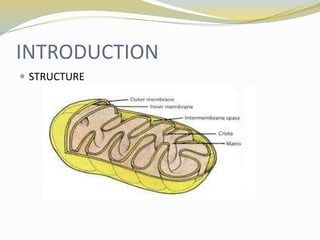
 STRUCTURE
Function
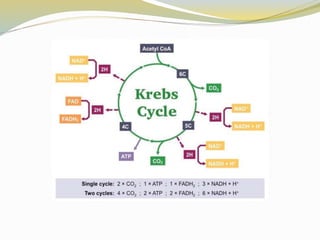
 Mitochondria generates the ATP which is energy currency
of cell.
 Site of krebs cycle
Evolution
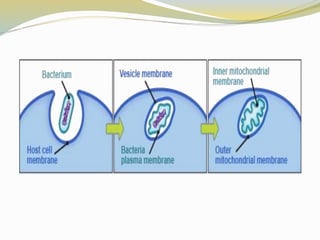
 Reduced forms of bacterial “ endosymbionts” that live
and replicate within our cells
 Evolution of mitochondria is explained on the basis of
“endosymbiont theory”
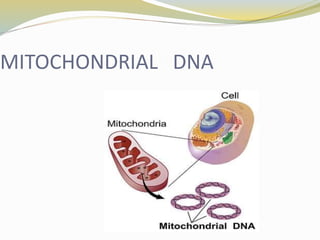
Mitochondrial DNA
A typical cell has about 100 mitochondria.
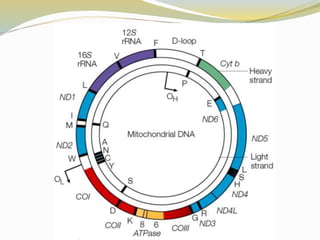
mtDNA is circular molecule .
When engulfed ,endosymbiont(mitochondria) lost almost
all genes because they were not needed
 mtDNA retain some essential genes.
 mtDNA contains 16569 bp
 37 genes
 It resembles with a plasmid.
 It is controlled by nuclear DNA.
 It is made up of two strands . outer heavy and inner
light.
 Both strands have gene of replication.
 Different regions on mtDNA prduce different proteins .
 mitochondria show different expression in different
organs
 mtDNA shows Hetroplasmy
Replication of mtDNA
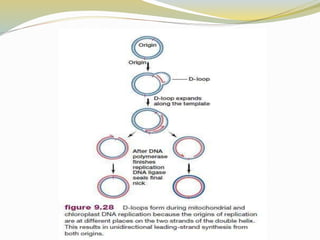
Mitochondria show d-loop replication.
Replication starts at replication site of H strand.
As it reaches another region of replication at L strand it
starts to circle in opposite direction.
 In case of mtDNA stop codons are AGA , AAG
 In case of nuclear DNA we have UAA ,UAG ,UGA
 IN mtDNA UGA codes for tryptophan
MUTATIONS:
mtDNA shows high mutation rate.
It does not show proof reading activities as observed in
case of DNA replication.
Lot of mutations take place during replication scheme
Mutageneic effects like oxidents, free radicles.
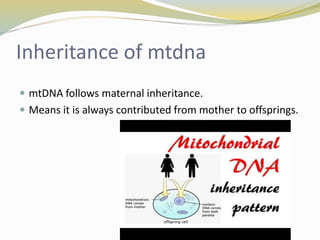
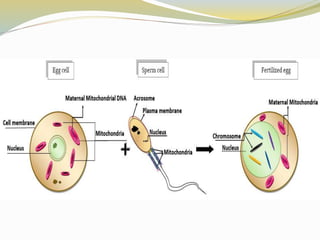
Inheritance of mtdna
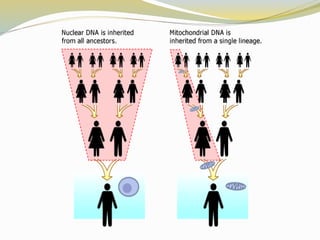
 mtDNA follows maternal inheritance.
 Means it is always contributed from mother to offsprings.
Why it follows maternal
inheritence?
conclusion
 The mitochondrial genome is circular, whereas the nuclear genome
is linear (Figure 3).
 The mitochondrial genome is built of 16,569 DNA base pairs,
whereas the nuclear genome is made of 3.3 billion DNA base pairs.
 The mitochondrial genome contains 37 genes that encode 13
proteins, 22 tRNAs and 2 rRNAs
 The 13 mitochondrial gene-encoded proteins all instruct cells to
produce protein subunits of the enzyme complexes of the
oxidative phosphorylation system, which enables mitochondria to
act as the powerhouses of our cells.
 The small mitochondrial genome is not able to independently
produce all of the proteins needed for functionality; thus,
mitochondria rely heavily on imported nuclear gene products.


Mitochondrial dna

  • 1.
    Mitochondrial DNA  Tayybajavad  Preston university  Samester 2nd  MS.c biology  Course Molecular Biology
  • 2.
  • 3.
    OVERVIEW  INTRODUCTION  GENETICMATERIAL IN MITOCHONDTIA  Replication of mt DNA  INHERITENCE OF mtDNA  CONCLUSION
  • 4.
  • 5.
    Function  Mitochondria generatesthe ATP which is energy currency of cell.  Site of krebs cycle
  • 7.
    Evolution  Reduced formsof bacterial “ endosymbionts” that live and replicate within our cells  Evolution of mitochondria is explained on the basis of “endosymbiont theory”
  • 9.
    Mitochondrial DNA A typicalcell has about 100 mitochondria. mtDNA is circular molecule . When engulfed ,endosymbiont(mitochondria) lost almost all genes because they were not needed
  • 10.
     mtDNA retainsome essential genes.  mtDNA contains 16569 bp  37 genes
  • 11.
     It resembleswith a plasmid.  It is controlled by nuclear DNA.  It is made up of two strands . outer heavy and inner light.  Both strands have gene of replication.
  • 13.
     Different regionson mtDNA prduce different proteins .  mitochondria show different expression in different organs  mtDNA shows Hetroplasmy
  • 14.
    Replication of mtDNA Mitochondriashow d-loop replication. Replication starts at replication site of H strand. As it reaches another region of replication at L strand it starts to circle in opposite direction.
  • 16.
     In caseof mtDNA stop codons are AGA , AAG  In case of nuclear DNA we have UAA ,UAG ,UGA  IN mtDNA UGA codes for tryptophan
  • 17.
    MUTATIONS: mtDNA shows highmutation rate. It does not show proof reading activities as observed in case of DNA replication. Lot of mutations take place during replication scheme Mutageneic effects like oxidents, free radicles.
  • 18.
    Inheritance of mtdna mtDNA follows maternal inheritance.  Means it is always contributed from mother to offsprings.
  • 20.
    Why it followsmaternal inheritence?
  • 22.
    conclusion  The mitochondrialgenome is circular, whereas the nuclear genome is linear (Figure 3).  The mitochondrial genome is built of 16,569 DNA base pairs, whereas the nuclear genome is made of 3.3 billion DNA base pairs.  The mitochondrial genome contains 37 genes that encode 13 proteins, 22 tRNAs and 2 rRNAs  The 13 mitochondrial gene-encoded proteins all instruct cells to produce protein subunits of the enzyme complexes of the oxidative phosphorylation system, which enables mitochondria to act as the powerhouses of our cells.  The small mitochondrial genome is not able to independently produce all of the proteins needed for functionality; thus, mitochondria rely heavily on imported nuclear gene products. 