MINERALIZED TISSUES
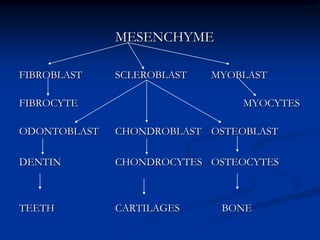
				MESENCHYMEFIBROBLAST		SCLEROBLAST  	MYOBLAST		 			     	FIBROCYTE						MYOCYTES		     ODONTOBLAST	CHONDROBLAST 	OSTEOBLASTDENTIN		CHONDROCYTES	OSTEOCYTESTEETH		CARTILAGES	    BONE
Osteology – study of structure, function and                       composition of bonesChondrology 	- study of structure, function and                       composition of  cartilgesFunction Of BonesSupport
Protection
Movement
Mineral storage
Hemopoeisis/hematopoiesis
Leverage for locomotionGross Anatomy of BonesI. Compact BonesLong BonesDiaphysis-tubular partEpiphyses-bone endsEpiphyseal Plate
Blood Vessel-with nutrient arteries and veinsMedullary cavity-marrow cavity of bonesMembranePeriosteum-covers the entire outer surface of each bone except in epiphysesEndosteum     - innermost covering of bones
Chemical Composition of Bones1. Organic componentsCollagen fibers
CHON
Polyssacharides2. Inorganic componentscalcium phosphate
calcium carbonate
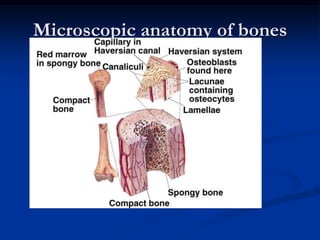
Hydroxypatite ionsMicroscopic anatomy of bones
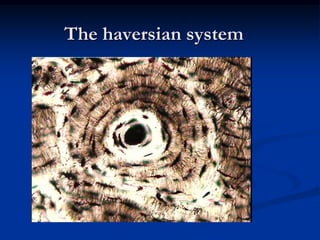
The haversian system
Bone DevelopmentOSSIFICATION – process of bone                                        development1. Intramembranous ossification         - direct bone development of membrane           bones2.Endochondral ossification       - development of bones preceeded by          cartilages
Classification  of Bones1. Long Bones    Ex. femur, humerus2. Short BonesEx. trapezoid3. Flat BonesEx. Sternum, ribs4. Irregular Bones     Ex. Hip bones, vertebrae
TYPES OF BONES : (OSTEOGENESIS)Compact Bone (Lamellar Bone)	- hard bone matrix – CaCO3,CaPO4,OH)      - long bones2. Spongy Bone (Cancelous Bone)	- consist of bony trabecullae and bone marrow	- trabeculae – beams,bars,rods			      - irregularly arranged lamellae without 			haversian canals
BONE  MARROW Occupies cavities between trabellaeYellow marrow – a reticulum of connective tissue  fibers that support blood vessels, nerve fibers, adipose tissuesRed Marrow – (Hemopoietic Bone)       - site of RBC and Some type of WBC                   production- ex. Flat bones
3.ACELLAR BONES (ASPIDIN)Bones formed in scales of modern fishes
No canaliculi
Ex. Scales of fishes,cementum of teeth4. MEMBRANE BONEformed by blastema (mesenchymal cells w/c differentiates into tissues)Develop through ossificationBone deposited directly within the membranous blastema without being preceeded by cartilages (intramembranous)May be compact or spongy,lamellar or non-lamellar, no haversian canalsEx. Lower jaw, skull, pectoral girdles,dentin, dermal bones of teleost,apodans
5. Replacement BonesArise from pre-existing cartilagesSoft bonesEndochondral ossificationEx. Fontannels, tetrapod bones with cartilaginous diaphysis and 2 epiphysis, epiphyseal plate
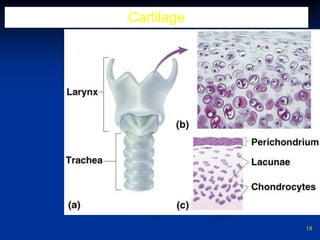
II. Cartilage - specialized connective tissue in which fibers are laid down along the lines of stress in long, parallel arrays firm and flexible chondrocytes - cartilage cells that live within spaces (lacunae) within cartilage matrix-CHONDRIFICATION – chondroblast- chondrocytes17
Cartilage18
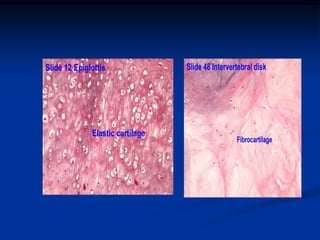
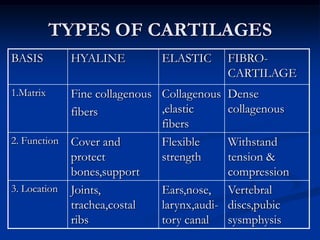
TYPES OF CARTILAGES
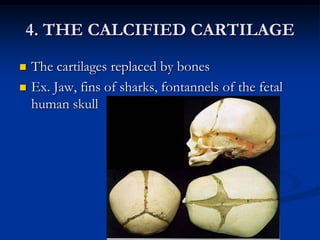
4. THE CALCIFIED CARTILAGEThe cartilages replaced by bonesEx. Jaw, fins of sharks, fontannels of the fetal human skull
III. DENTINDeveloped from the odontoblastOdontoblast are not trapped in lacunae during osteogenesis – retreat as dentin depositsCanaliculi – dentibal tubulesEx. Enameloid of placoid scales, dentin of the teeth
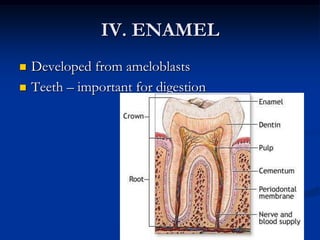
IV. ENAMELDeveloped from ameloblastsTeeth – important for digestion
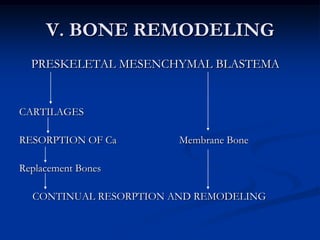
V. BONE REMODELING	PRESKELETAL MESENCHYMAL BLASTEMACARTILAGESRESORPTION OF Ca		Membrane BoneReplacement Bones     CONTINUAL RESORPTION AND REMODELING
PARATHORMONE AND CALCITONINThe hormones that influence or regulates the withdrawal of calcium to maintain calcificationOSTEOBLAST – developing bone cellsOSTEOCLAST – bone destructing cellsOSTEOCYTES – bone-building cells
VI. CONNECTIVE TISSUES OF BONESTENDONLIGAMENTSCARTILAGES
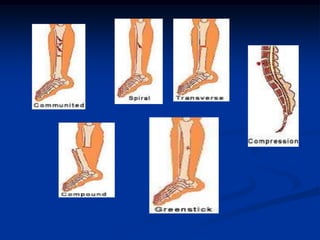
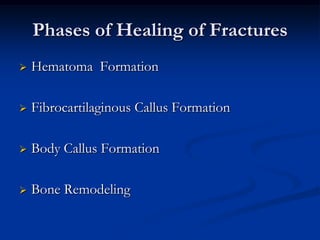
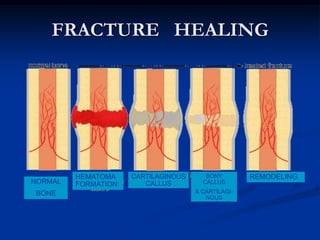
Phases of Healing of FracturesHematoma  Formation
Fibrocartilaginous Callus Formation
Body Callus Formation

Mineralized tissues

  • 1.
  • 4.
    MESENCHYMEFIBROBLAST SCLEROBLAST MYOBLAST FIBROCYTE MYOCYTES ODONTOBLAST CHONDROBLAST OSTEOBLASTDENTIN CHONDROCYTES OSTEOCYTESTEETH CARTILAGES BONE
  • 5.
    Osteology – studyof structure, function and composition of bonesChondrology - study of structure, function and composition of cartilgesFunction Of BonesSupport
  • 6.
  • 7.
  • 8.
  • 9.
  • 10.
    Leverage for locomotionGrossAnatomy of BonesI. Compact BonesLong BonesDiaphysis-tubular partEpiphyses-bone endsEpiphyseal Plate
  • 11.
    Blood Vessel-with nutrientarteries and veinsMedullary cavity-marrow cavity of bonesMembranePeriosteum-covers the entire outer surface of each bone except in epiphysesEndosteum - innermost covering of bones
  • 12.
    Chemical Composition ofBones1. Organic componentsCollagen fibers
  • 13.
  • 14.
  • 15.
  • 16.
  • 17.
  • 18.
    Bone DevelopmentOSSIFICATION –process of bone development1. Intramembranous ossification - direct bone development of membrane bones2.Endochondral ossification - development of bones preceeded by cartilages
  • 19.
    Classification ofBones1. Long Bones Ex. femur, humerus2. Short BonesEx. trapezoid3. Flat BonesEx. Sternum, ribs4. Irregular Bones Ex. Hip bones, vertebrae
  • 20.
    TYPES OF BONES: (OSTEOGENESIS)Compact Bone (Lamellar Bone) - hard bone matrix – CaCO3,CaPO4,OH) - long bones2. Spongy Bone (Cancelous Bone) - consist of bony trabecullae and bone marrow - trabeculae – beams,bars,rods - irregularly arranged lamellae without haversian canals
  • 21.
    BONE MARROWOccupies cavities between trabellaeYellow marrow – a reticulum of connective tissue fibers that support blood vessels, nerve fibers, adipose tissuesRed Marrow – (Hemopoietic Bone) - site of RBC and Some type of WBC production- ex. Flat bones
  • 22.
    3.ACELLAR BONES (ASPIDIN)Bonesformed in scales of modern fishes
  • 23.
  • 24.
    Ex. Scales offishes,cementum of teeth4. MEMBRANE BONEformed by blastema (mesenchymal cells w/c differentiates into tissues)Develop through ossificationBone deposited directly within the membranous blastema without being preceeded by cartilages (intramembranous)May be compact or spongy,lamellar or non-lamellar, no haversian canalsEx. Lower jaw, skull, pectoral girdles,dentin, dermal bones of teleost,apodans
  • 25.
    5. Replacement BonesArisefrom pre-existing cartilagesSoft bonesEndochondral ossificationEx. Fontannels, tetrapod bones with cartilaginous diaphysis and 2 epiphysis, epiphyseal plate
  • 26.
    II. Cartilage -specialized connective tissue in which fibers are laid down along the lines of stress in long, parallel arrays firm and flexible chondrocytes - cartilage cells that live within spaces (lacunae) within cartilage matrix-CHONDRIFICATION – chondroblast- chondrocytes17
  • 27.
  • 29.
  • 30.
    4. THE CALCIFIEDCARTILAGEThe cartilages replaced by bonesEx. Jaw, fins of sharks, fontannels of the fetal human skull
  • 31.
    III. DENTINDeveloped fromthe odontoblastOdontoblast are not trapped in lacunae during osteogenesis – retreat as dentin depositsCanaliculi – dentibal tubulesEx. Enameloid of placoid scales, dentin of the teeth
  • 32.
    IV. ENAMELDeveloped fromameloblastsTeeth – important for digestion
  • 33.
    V. BONE REMODELING PRESKELETALMESENCHYMAL BLASTEMACARTILAGESRESORPTION OF Ca Membrane BoneReplacement Bones CONTINUAL RESORPTION AND REMODELING
  • 34.
    PARATHORMONE AND CALCITONINThehormones that influence or regulates the withdrawal of calcium to maintain calcificationOSTEOBLAST – developing bone cellsOSTEOCLAST – bone destructing cellsOSTEOCYTES – bone-building cells
  • 35.
    VI. CONNECTIVE TISSUESOF BONESTENDONLIGAMENTSCARTILAGES
  • 37.
    Phases of Healingof FracturesHematoma Formation
  • 38.
  • 39.