University of sulaimania
School of science
Dp:biology


                   Practical comparative anatomy


    Prepared by;             HUMAN TEETH
    Sherzad.qadir abdullah
Teeth are Made of:

   The hard material of the tooth is composed of calcium,
    phosphorus, and other mineral salts.
   The material in the majority of the tooth is called dentine.
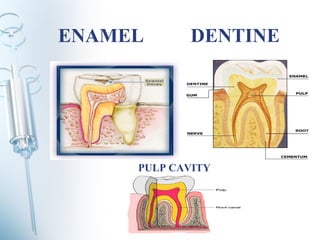
   The hard, shiny layer that you brush is called the enamel.
Human
 You have teeth soTeeth bite, crush or break your food.
                   that you can
 Teeth help to break down food so that your digestive system
  can get the nutrients out of the food.
 You need energy to stay alive.
 Humans are omnivores. They eat plants and meat
      In adult humans there are 32 permanent teeth.
Structure of a tooth
      External parts of a tooth
Internal Parts of a Tooth
Human Anatomy
ENAMEL      DENTINE


     PULP CAVITY
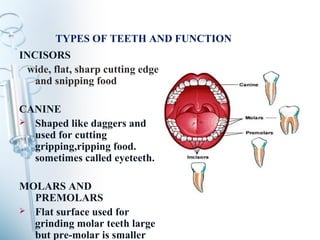
TYPES OF TEETH AND FUNCTION
INCISORS
  wide, flat, sharp cutting edge
   and snipping food

CANINE
 Shaped like daggers and
  used for cutting
  gripping,ripping food.
  sometimes called eyeteeth.

MOLARS AND
  PREMOLARS
 Flat surface used for
  grinding molar teeth large
  but pre-molar is smaller
TOOTH DECAY             NERVES


        Blood Vessels
Tooth Eruption Chart
               Tooth                 Primary                  Permanent

Upper Teeth

Central Incisor        8-12 months                7-8 years

Lateral Incisor        9-13 months                8-9 years

Canine                 16-22 months               11-12 years

1st Premolar           -                          10-11 years

2nd Premolar           -                          10-12 years

1st Molar              13-19 months               6-7 years

2nd Molar              25-33 months               12-13 years

Wisdom Tooth           -                          17-21 years
Lower Teeth
Central Incisor        6-10 months                6-7 years

Lateral Incisor        10-16 months               7-8 years

Canine                 17-23 months               9-10 years

1st Premolar           -                          10-12 years

2nd Premolar           -                          11-12 years

1st Molar              14-18 months               6-7 years

2nd Molar              23-31 months               11-13 years

Wisdom Tooth           -                          17-21 years
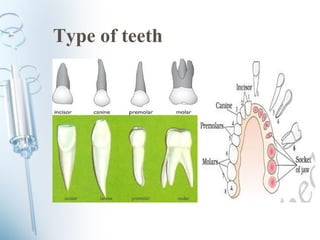
Type of teeth
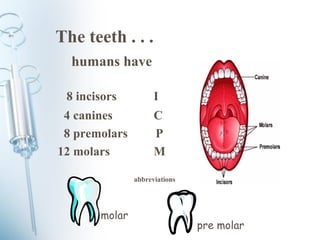
The teeth . . .
  humans have

 8 incisors          I
 4 canines           C
 8 premolars         P
12 molars            M

               abbreviations


       molar
                               pre molar
foods a re good for our te e th
Foods that cause tooth decay
cavities caused


                     Bacteria causes a build
                         up of plaque.


Plaque acid attacks the tooth       The tooth eventually rots away
Brush your teeth twice a day


Try not to eat too many sweets


              Visit the dentist twice a year
References
1. JoelWAger III,1 Ravi K Nalla,1,2,3 Guive Balooch,1,4 Grace
   Kim,1,2 Megan Pugach,4 Stefan Habelitz,4
   GraysonWMarshall,4 John H Kinney,5,6 and Robert O
   Ritchie1,2 Published online on.August 28, 2006 American
   Society doi:10.1359//JBMR.060816

2- Dr. Yusuf Emes Bull Int Assoc Paleodont. 2011;5(1):37-
   47. Istanbul University Faculty of Dentistry, Department
   of Oral and Maxillofacial Surgery Istanbul, Turkey

3- www.ischool.zm/media/dentition_in_humans
4- www.auburn.edu/academic/classes/zy/../Tooth
   DevelopmentTxt
5- www.users.forthnet.gr/ath/abyss/dep1151.htm :
   21/03/2009
THANK YOU FOR LISTENS

Human teeth

  • 1.
    University of sulaimania Schoolof science Dp:biology Practical comparative anatomy Prepared by; HUMAN TEETH Sherzad.qadir abdullah
  • 2.
    Teeth are Madeof:  The hard material of the tooth is composed of calcium, phosphorus, and other mineral salts.  The material in the majority of the tooth is called dentine.  The hard, shiny layer that you brush is called the enamel.
  • 3.
    Human  You haveteeth soTeeth bite, crush or break your food. that you can  Teeth help to break down food so that your digestive system can get the nutrients out of the food.  You need energy to stay alive.  Humans are omnivores. They eat plants and meat  In adult humans there are 32 permanent teeth.
  • 4.
    Structure of atooth External parts of a tooth
  • 5.
  • 6.
  • 7.
    ENAMEL DENTINE PULP CAVITY
  • 8.
    TYPES OF TEETHAND FUNCTION INCISORS wide, flat, sharp cutting edge and snipping food CANINE  Shaped like daggers and used for cutting gripping,ripping food. sometimes called eyeteeth. MOLARS AND PREMOLARS  Flat surface used for grinding molar teeth large but pre-molar is smaller
  • 9.
    TOOTH DECAY NERVES Blood Vessels
  • 10.
    Tooth Eruption Chart Tooth Primary Permanent Upper Teeth Central Incisor 8-12 months 7-8 years Lateral Incisor 9-13 months 8-9 years Canine 16-22 months 11-12 years 1st Premolar - 10-11 years 2nd Premolar - 10-12 years 1st Molar 13-19 months 6-7 years 2nd Molar 25-33 months 12-13 years Wisdom Tooth - 17-21 years Lower Teeth Central Incisor 6-10 months 6-7 years Lateral Incisor 10-16 months 7-8 years Canine 17-23 months 9-10 years 1st Premolar - 10-12 years 2nd Premolar - 11-12 years 1st Molar 14-18 months 6-7 years 2nd Molar 23-31 months 11-13 years Wisdom Tooth - 17-21 years
  • 11.
  • 12.
    The teeth .. . humans have 8 incisors I 4 canines C 8 premolars P 12 molars M abbreviations molar pre molar
  • 13.
    foods a regood for our te e th
  • 14.
    Foods that causetooth decay
  • 15.
    cavities caused Bacteria causes a build up of plaque. Plaque acid attacks the tooth The tooth eventually rots away
  • 16.
    Brush your teethtwice a day Try not to eat too many sweets Visit the dentist twice a year
  • 18.
    References 1. JoelWAger III,1Ravi K Nalla,1,2,3 Guive Balooch,1,4 Grace Kim,1,2 Megan Pugach,4 Stefan Habelitz,4 GraysonWMarshall,4 John H Kinney,5,6 and Robert O Ritchie1,2 Published online on.August 28, 2006 American Society doi:10.1359//JBMR.060816 2- Dr. Yusuf Emes Bull Int Assoc Paleodont. 2011;5(1):37- 47. Istanbul University Faculty of Dentistry, Department of Oral and Maxillofacial Surgery Istanbul, Turkey 3- www.ischool.zm/media/dentition_in_humans 4- www.auburn.edu/academic/classes/zy/../Tooth DevelopmentTxt 5- www.users.forthnet.gr/ath/abyss/dep1151.htm : 21/03/2009
  • 19.

Editor's Notes

  • #5 Crown, part above gum. Has thick outer layer called enamel.Neck, part between crown and root. Provides direct contact with gum.Root, part within the jaw. Forms the cover called cementum.
  • #6 Enamel, Dentine, Pulp Cavity, Blood Vessels, Nerves, and Fibres.
  • #8 Enamel is the surface of a tooth, part of which is exposed Made up of a hard substance that contains calcium phosphate. Dentine is the bone like structure that surrounds the pulp cavity.Made up of tiny channels containing living cells Makes the tooth sensitive. Pulp cavity is in the middle of a tooth . It has soft tissues containing blood vessels and nerves
  • #10 After a meal, bacteria in the mouth feed on any sugar present and turn it into acids. Acids eats the teeth and cause cavities. Nerves are found in the pulp cavity They make the tooth more sensitive Blood vessels are found in the pulp cavity.Blood vessels supply a tooth with oxygen and nutrients