General Methods Of Studying Microorganisms:
Cultivation, Isolation,
Purification And Characterization.
ASEPTIC TECHNIQUE
• Aseptic technique refers to a procedure that is performed under
sterile conditions.
• AIM:
• To prevent the access of micro-organisms during the preparation
and testing.
In The Microbiology Lab We Use Aseptic Technique To:
 Prevent contamination of the specific microorganism we are
working with.
 Prevent contamination of the room and personnel with the
microorganism we are working with.
SOURCES OF CONTAMINATION
• 1. The Atmosphere
• 2. The Breath
• 3. The Hands
• 4. Clothing
• 5. The Hair
• 6. The Working Surface
• 7. Equipment
SAMPLE COLLECTION FOR THE ISOLATION OF MICROBES
Different samples can be collected by using different techniques .
Different types of samples are using for the isolation of microbes.
Examples
A). Clinical Samples
Clinical sample should be collected from the active site of infection and
precautions should be taken to exclude surface contamination of the sample.
We can use different body fluids or tissue of the body for the isolation of the
microbes.
Body fluids , i.e :
Blood, Urine, Saliva, Pus, Sputum, CSF (Cerebrospinal fluid), Stool, Semen,
Synovial fluid, Pericardial fluid, Peritoneal fluid, Pleural fluid, Vaginal discharge
and body Tissue etc.
• B) Soil Samples
• C) Water Samples
Fresh Water Samples
Waste Water Samples
• D) Food Samples
• C) Milk Samples
pasteurized Milk
Unpasteurized Milk
• E) Air
• etc…
CULTURE
What is a culture?
Population of microorganisms grown under well defined conditions.
i.e
 Nutrients
 Temperature
 pH
 Humidity
 Time ( Incubation period )
Continue…….
Culture methods
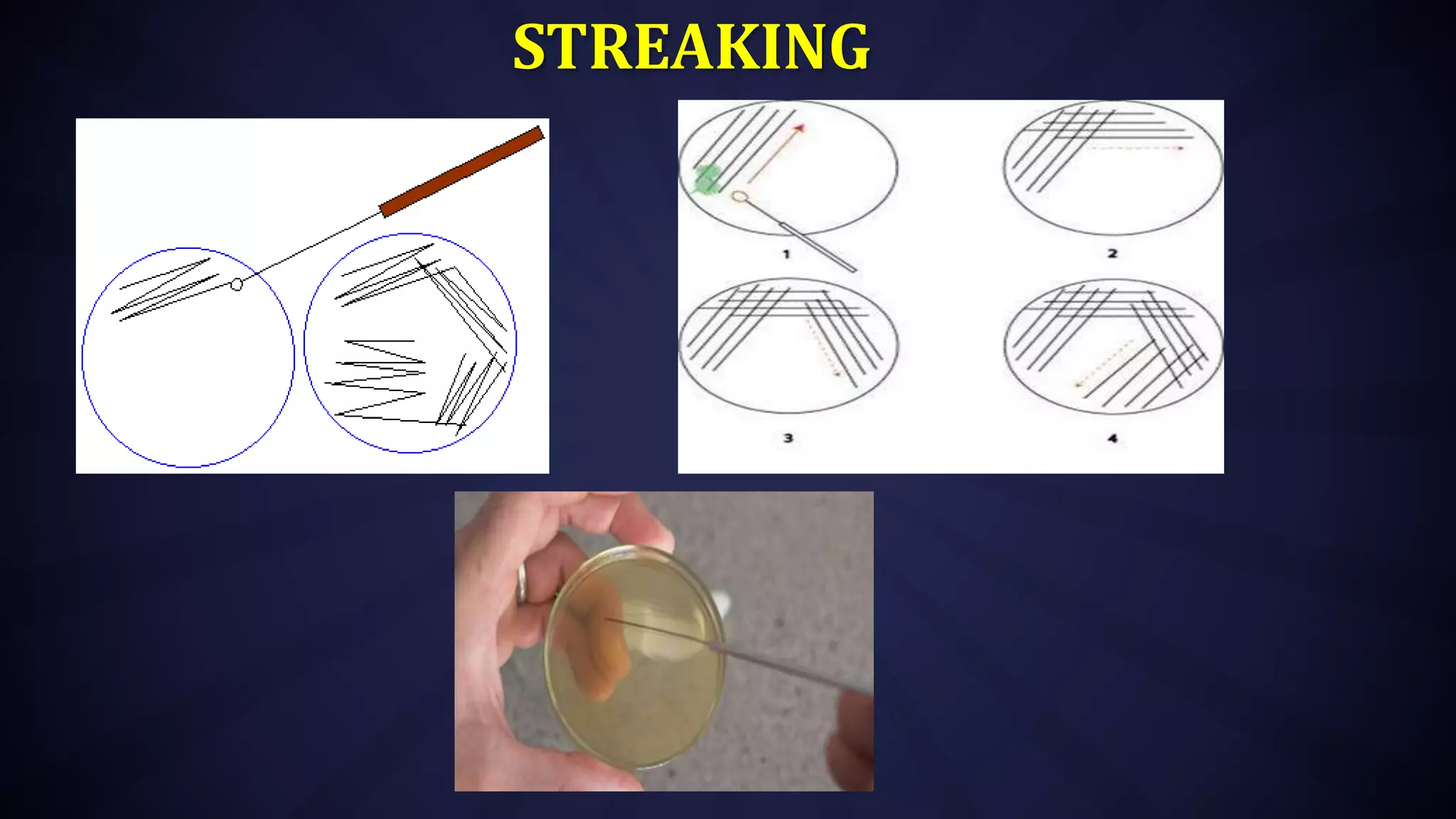
The specimens received in the laboratory and Streaking on the plated
culture media. The appropriate culture media is selected depending upon the
bacteria suspected. The following precautions need to be taken into
consideration when the culture methods are processed.
 Optimal atmospheric conditions ( To provide specific Incubation period )
 Optimal temperature (Most of the bacteria requires a temperature of 37°C
for optimal growth)
 Growth requirement of the bacteria (Different bacteria have different
growth requirements)
MEDIUM
Medium is the plural of media.
Different types of medium are use for the bacterial culturing .
Medium forms
Have two forms
1. Liquid ( broth ) media . (Liquid media are used for growth of pure batch
cultures)
2. Solid media ( semi-solid). (solidified media are used widely for the isolation of
pure cultures, for estimating viable bacterial populations, and a variety of other
purposes.
Have two types
1. Selective media ( support / growth specific microbe)
2. Differential media ( Can support & growth both gram positive & negative bacteria)
STREAKING
.
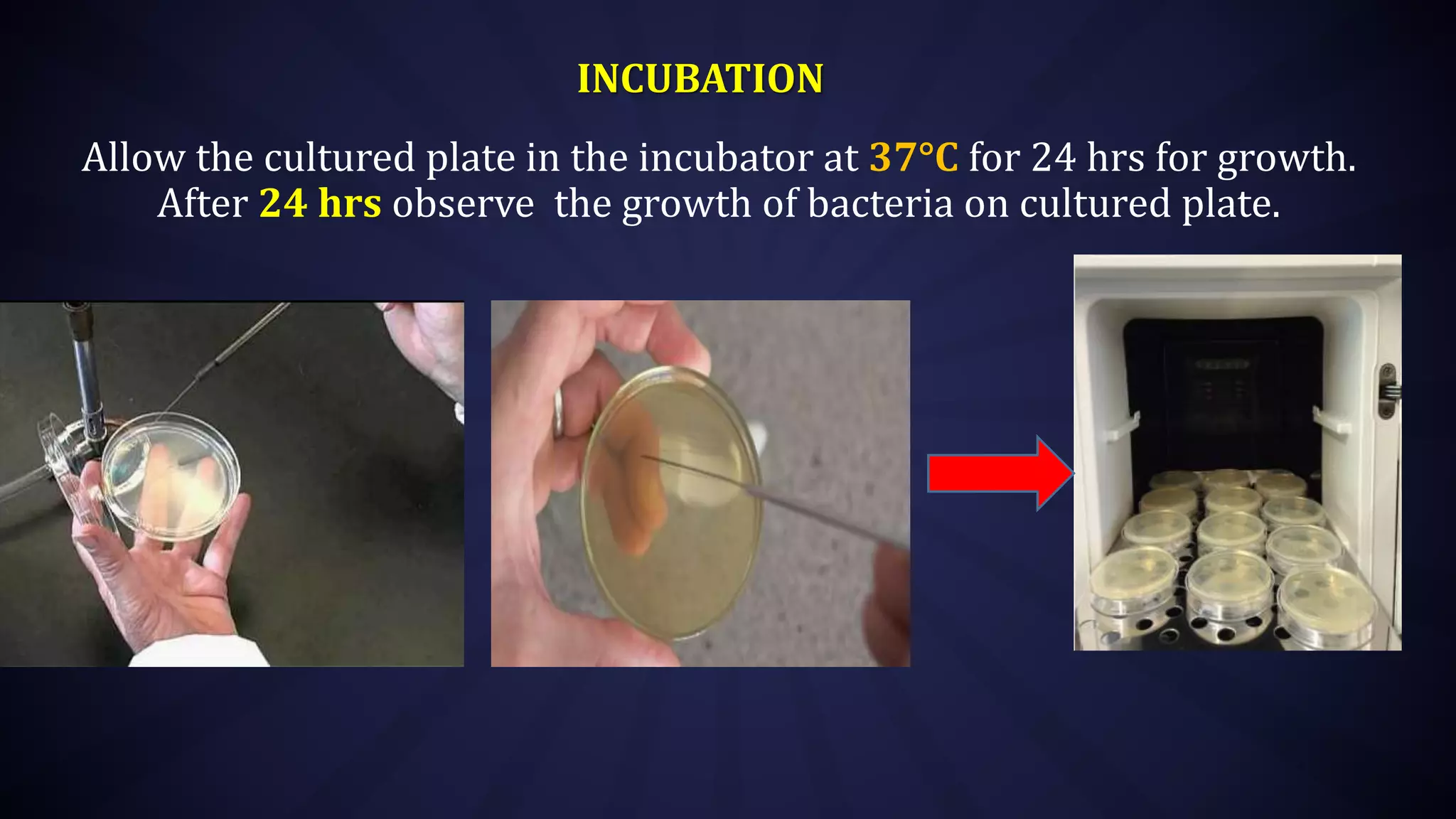
INCUBATION
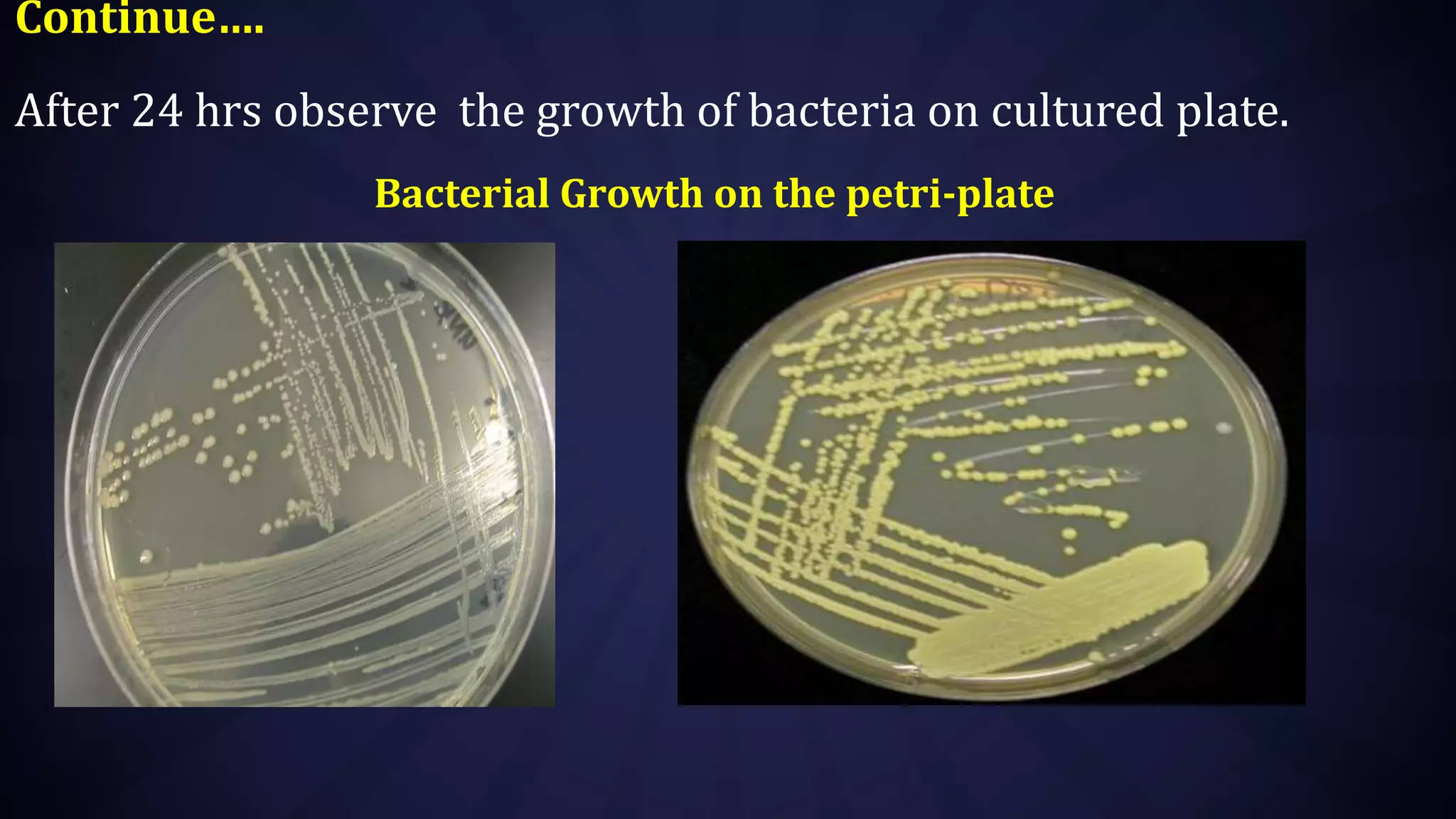
Allow the cultured plate in the incubator at 37°C for 24 hrs for growth.
After 24 hrs observe the growth of bacteria on cultured plate.
Continue….
After 24 hrs observe the growth of bacteria on cultured plate.
Bacterial Growth on the petri-plate
ISOLATION
The process of screening a pure culture by separating one type
of microbes from a mixture is called Isolation.
PURIFICATION
What is pure culture?
A culture containing only one species of microbe is called pure
culture.
Importance
 To isolated a single colony.
 To isolated desire colony.
 To get a single colony/ species from a mixed growth culture.
Continue…..
 In this process a growth culture medium is prepared, a single
bacterial colony is picked from growth plate by using sterile wire
loop and streak on the culture plates.
 These culture plates will keep in the incubator at 37°C for 24 hrs,
for growth.
 After 24 hrs, billions colonies of a single bacterial strain will appear
on the culture plates.
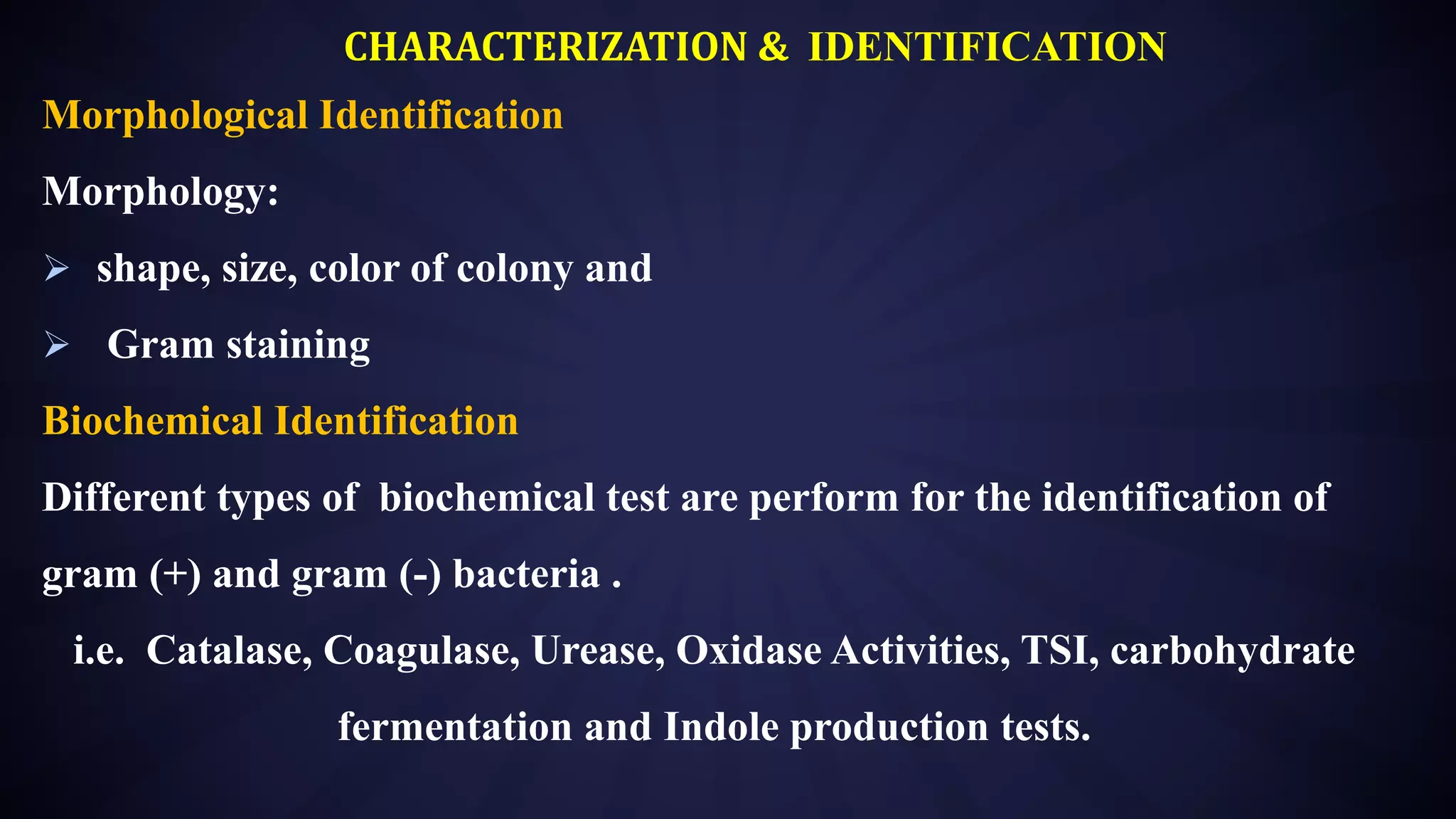
CHARACTERIZATION & IDENTIFICATION
Morphological Identification
Morphology:
 shape, size, color of colony and
 Gram staining
Biochemical Identification
Different types of biochemical test are perform for the identification of
gram (+) and gram (-) bacteria .
i.e. Catalase, Coagulase, Urease, Oxidase Activities, TSI, carbohydrate
fermentation and Indole production tests.
SUMMERY OF THE CHAPTER
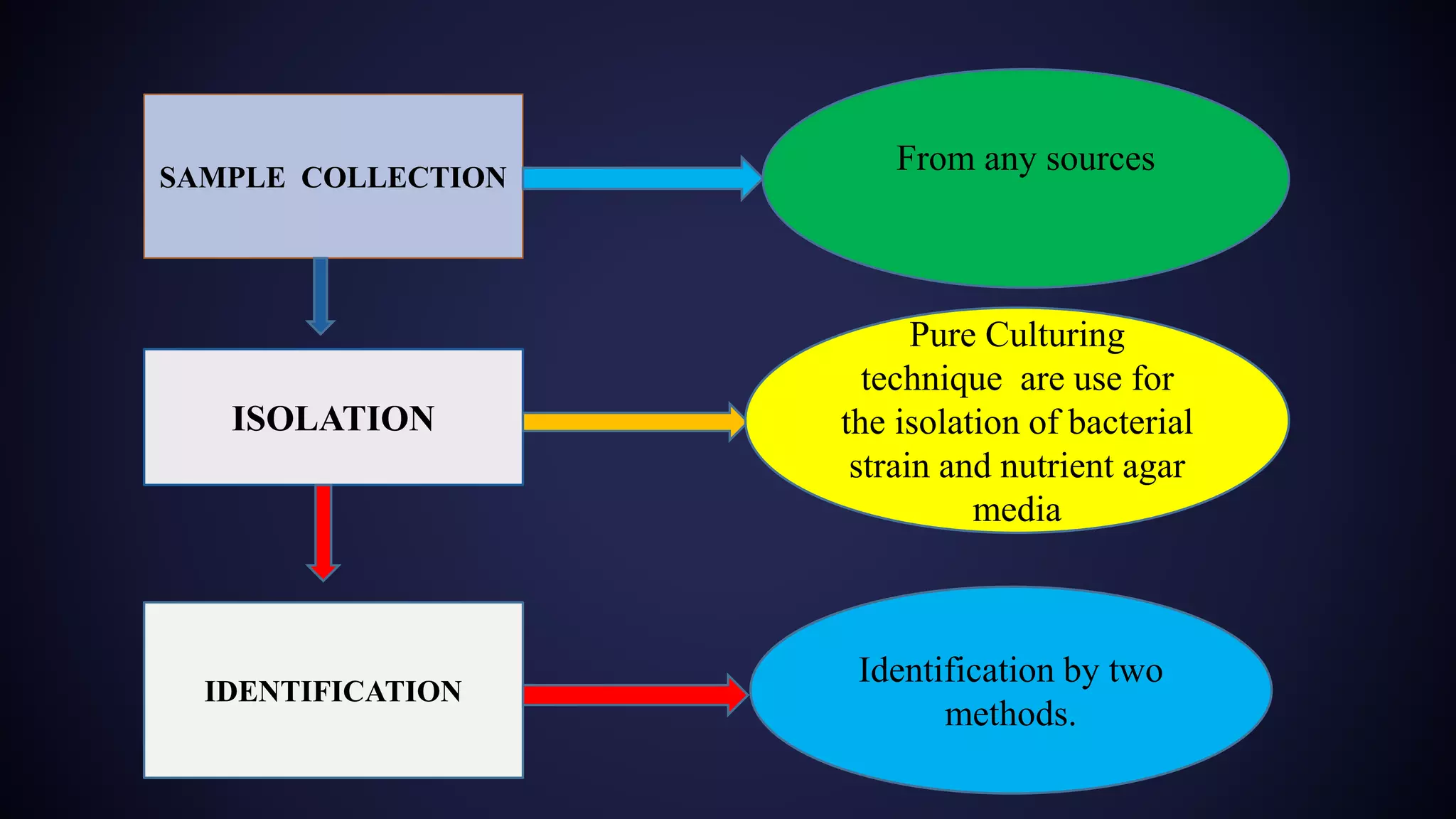
SAMPLE COLLECTION
From any sources
ISOLATION
Pure Culturing
technique are use for
the isolation of bacterial
strain and nutrient agar
media
IDENTIFICATION
Identification by two
methods.
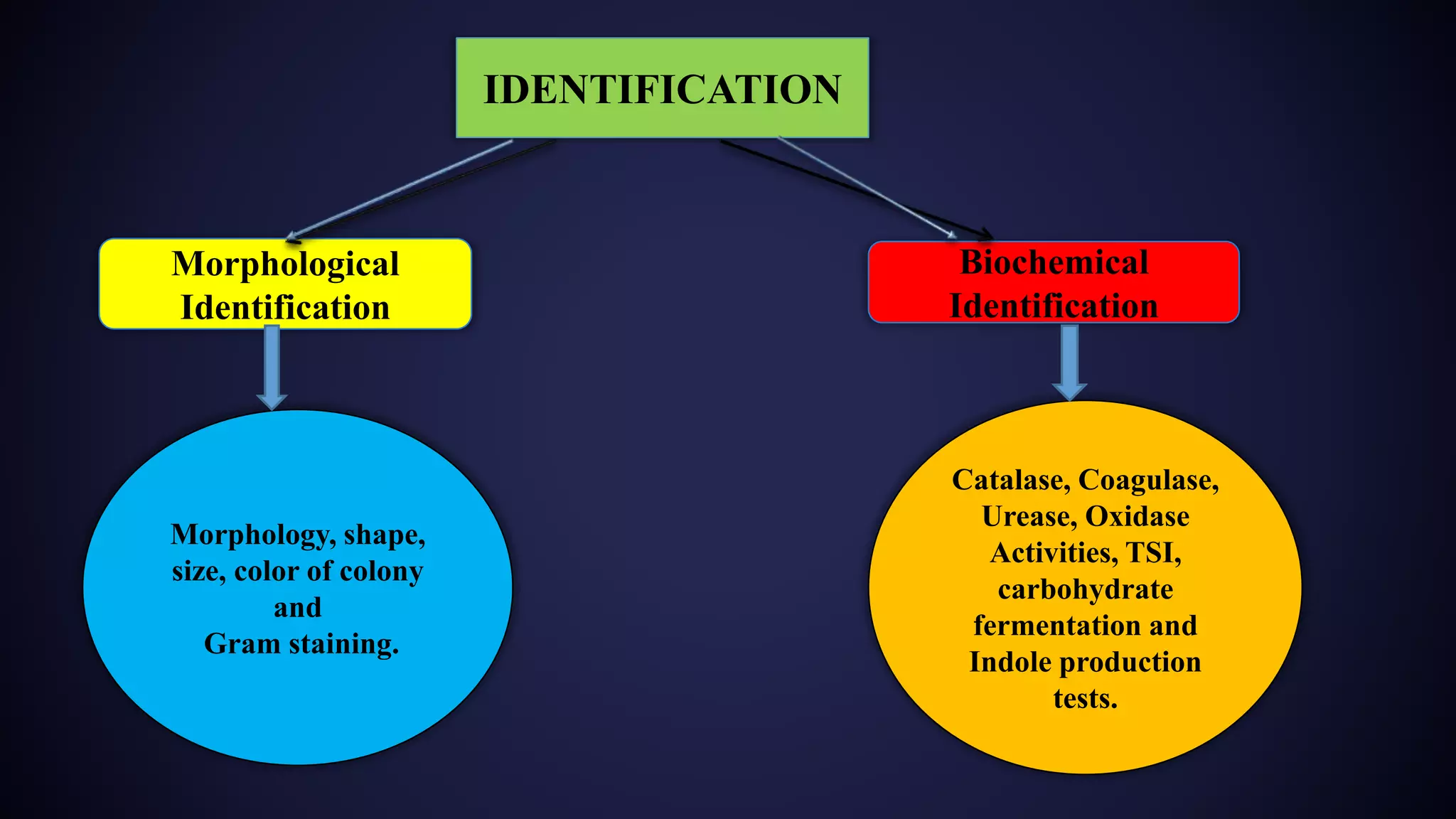
IDENTIFICATION
Morphological
Identification
Biochemical
Identification
Morphology, shape,
size, color of colony
and
Gram staining.
Catalase, Coagulase,
Urease, Oxidase
Activities, TSI,
carbohydrate
fermentation and
Indole production
tests.
END
AMJAD KHAN AFRIDI
DATE: 20/12/2018

microorganisms cultivation, isolation,purification and characterization.

  • 2.
    General Methods OfStudying Microorganisms: Cultivation, Isolation, Purification And Characterization.
  • 3.
    ASEPTIC TECHNIQUE • Aseptictechnique refers to a procedure that is performed under sterile conditions. • AIM: • To prevent the access of micro-organisms during the preparation and testing.
  • 4.
    In The MicrobiologyLab We Use Aseptic Technique To:  Prevent contamination of the specific microorganism we are working with.  Prevent contamination of the room and personnel with the microorganism we are working with.
  • 5.
    SOURCES OF CONTAMINATION •1. The Atmosphere • 2. The Breath • 3. The Hands • 4. Clothing • 5. The Hair • 6. The Working Surface • 7. Equipment
  • 6.
    SAMPLE COLLECTION FORTHE ISOLATION OF MICROBES Different samples can be collected by using different techniques . Different types of samples are using for the isolation of microbes. Examples A). Clinical Samples Clinical sample should be collected from the active site of infection and precautions should be taken to exclude surface contamination of the sample. We can use different body fluids or tissue of the body for the isolation of the microbes. Body fluids , i.e : Blood, Urine, Saliva, Pus, Sputum, CSF (Cerebrospinal fluid), Stool, Semen, Synovial fluid, Pericardial fluid, Peritoneal fluid, Pleural fluid, Vaginal discharge and body Tissue etc.
  • 7.
    • B) SoilSamples • C) Water Samples Fresh Water Samples Waste Water Samples • D) Food Samples • C) Milk Samples pasteurized Milk Unpasteurized Milk • E) Air • etc…
  • 8.
    CULTURE What is aculture? Population of microorganisms grown under well defined conditions. i.e  Nutrients  Temperature  pH  Humidity  Time ( Incubation period )
  • 9.
    Continue……. Culture methods The specimensreceived in the laboratory and Streaking on the plated culture media. The appropriate culture media is selected depending upon the bacteria suspected. The following precautions need to be taken into consideration when the culture methods are processed.  Optimal atmospheric conditions ( To provide specific Incubation period )  Optimal temperature (Most of the bacteria requires a temperature of 37°C for optimal growth)  Growth requirement of the bacteria (Different bacteria have different growth requirements)
  • 10.
    MEDIUM Medium is theplural of media. Different types of medium are use for the bacterial culturing . Medium forms Have two forms 1. Liquid ( broth ) media . (Liquid media are used for growth of pure batch cultures) 2. Solid media ( semi-solid). (solidified media are used widely for the isolation of pure cultures, for estimating viable bacterial populations, and a variety of other purposes. Have two types 1. Selective media ( support / growth specific microbe) 2. Differential media ( Can support & growth both gram positive & negative bacteria)
  • 11.
  • 12.
    INCUBATION Allow the culturedplate in the incubator at 37°C for 24 hrs for growth. After 24 hrs observe the growth of bacteria on cultured plate.
  • 13.
    Continue…. After 24 hrsobserve the growth of bacteria on cultured plate. Bacterial Growth on the petri-plate
  • 14.
    ISOLATION The process ofscreening a pure culture by separating one type of microbes from a mixture is called Isolation.
  • 15.
    PURIFICATION What is pureculture? A culture containing only one species of microbe is called pure culture. Importance  To isolated a single colony.  To isolated desire colony.  To get a single colony/ species from a mixed growth culture.
  • 16.
    Continue…..  In thisprocess a growth culture medium is prepared, a single bacterial colony is picked from growth plate by using sterile wire loop and streak on the culture plates.  These culture plates will keep in the incubator at 37°C for 24 hrs, for growth.  After 24 hrs, billions colonies of a single bacterial strain will appear on the culture plates.
  • 17.
    CHARACTERIZATION & IDENTIFICATION MorphologicalIdentification Morphology:  shape, size, color of colony and  Gram staining Biochemical Identification Different types of biochemical test are perform for the identification of gram (+) and gram (-) bacteria . i.e. Catalase, Coagulase, Urease, Oxidase Activities, TSI, carbohydrate fermentation and Indole production tests.
  • 18.
  • 19.
    SAMPLE COLLECTION From anysources ISOLATION Pure Culturing technique are use for the isolation of bacterial strain and nutrient agar media IDENTIFICATION Identification by two methods.
  • 20.
    IDENTIFICATION Morphological Identification Biochemical Identification Morphology, shape, size, colorof colony and Gram staining. Catalase, Coagulase, Urease, Oxidase Activities, TSI, carbohydrate fermentation and Indole production tests.
  • 21.