INTRODUCTION
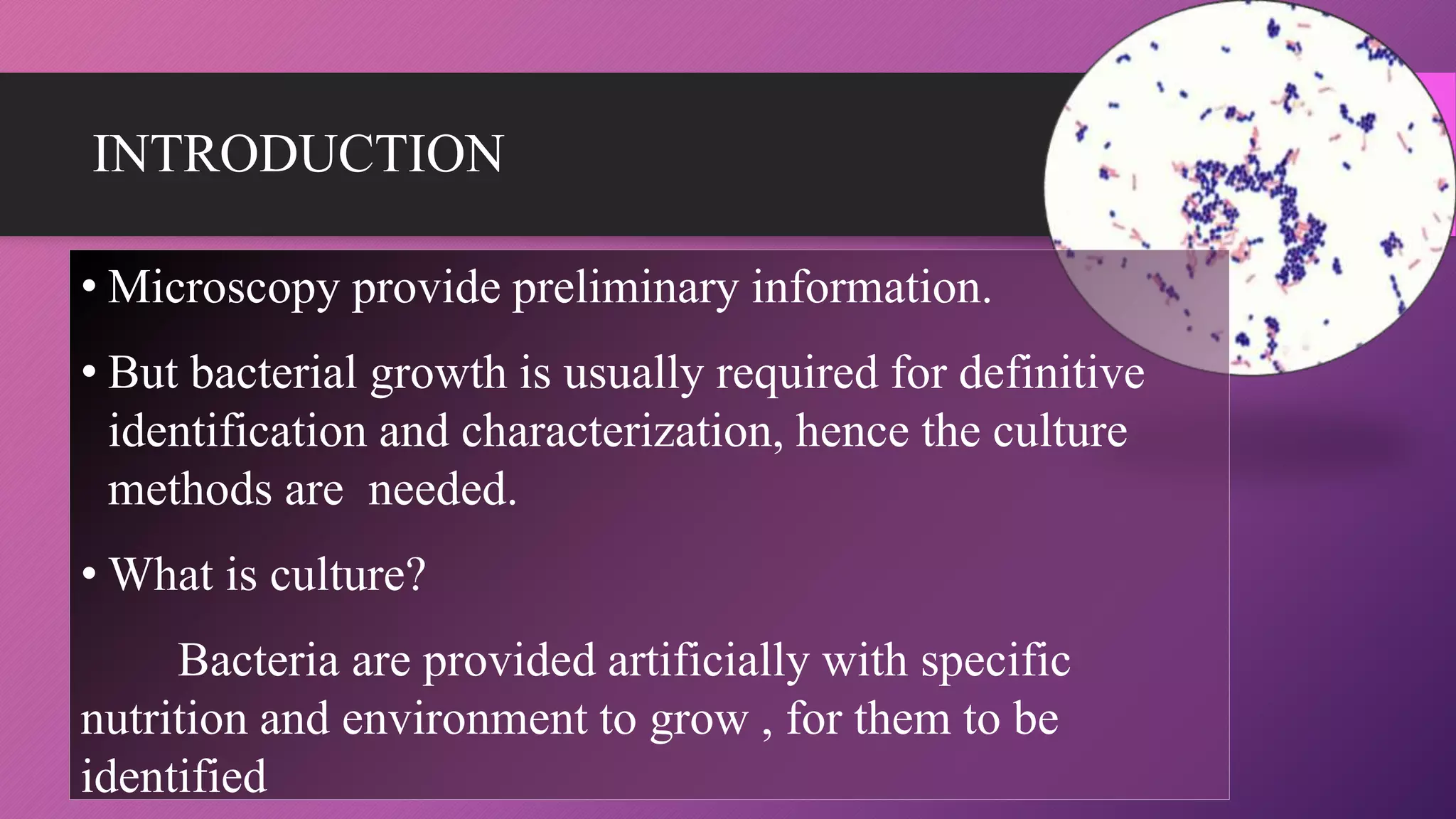
• Microscopy provide preliminary information.
• But bacterial growth is usually required for definitive
identification and characterization, hence the culture
methods are needed.
• What is culture?
Bacteria are provided artificially with specific
nutrition and environment to grow , for them to be
identified
PRINCIPLES - BACTERIAL CULTIVATION
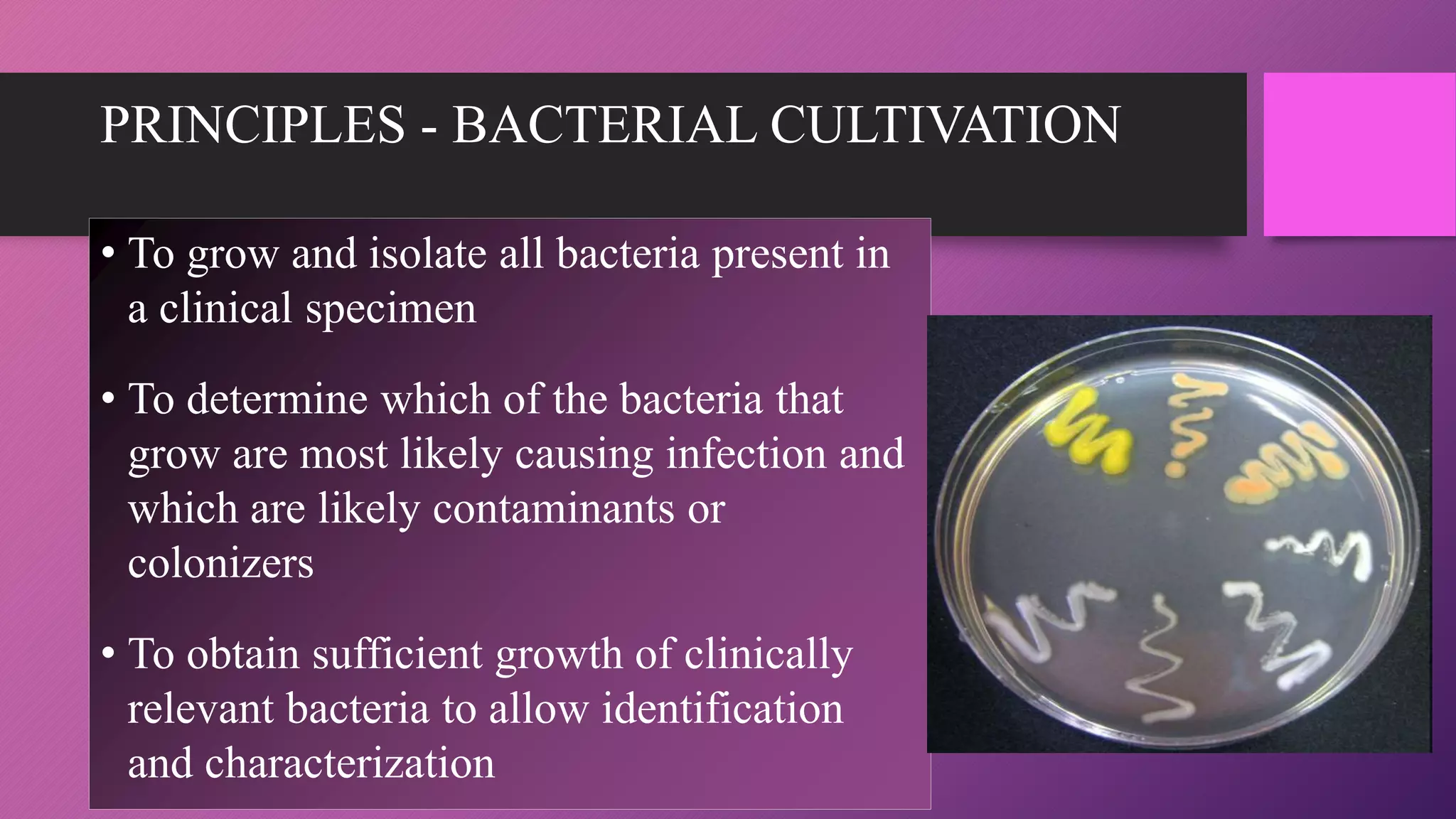
• To grow and isolate all bacteria present in
a clinical specimen
• To determine which of the bacteria that
grow are most likely causing infection and
which are likely contaminants or
colonizers
• To obtain sufficient growth of clinically
relevant bacteria to allow identification
and characterization
HISTORY
• In 1876, Robert Koch (1843–1910) established
that microbes can cause disease.
• Robert Koch developed methods for isolating
bacteria in pure culture, by solid media
prepared using Gelatin
• Fanny Hesse (1880) introduced agar
• Julius Petri (1887) invented Petri plates
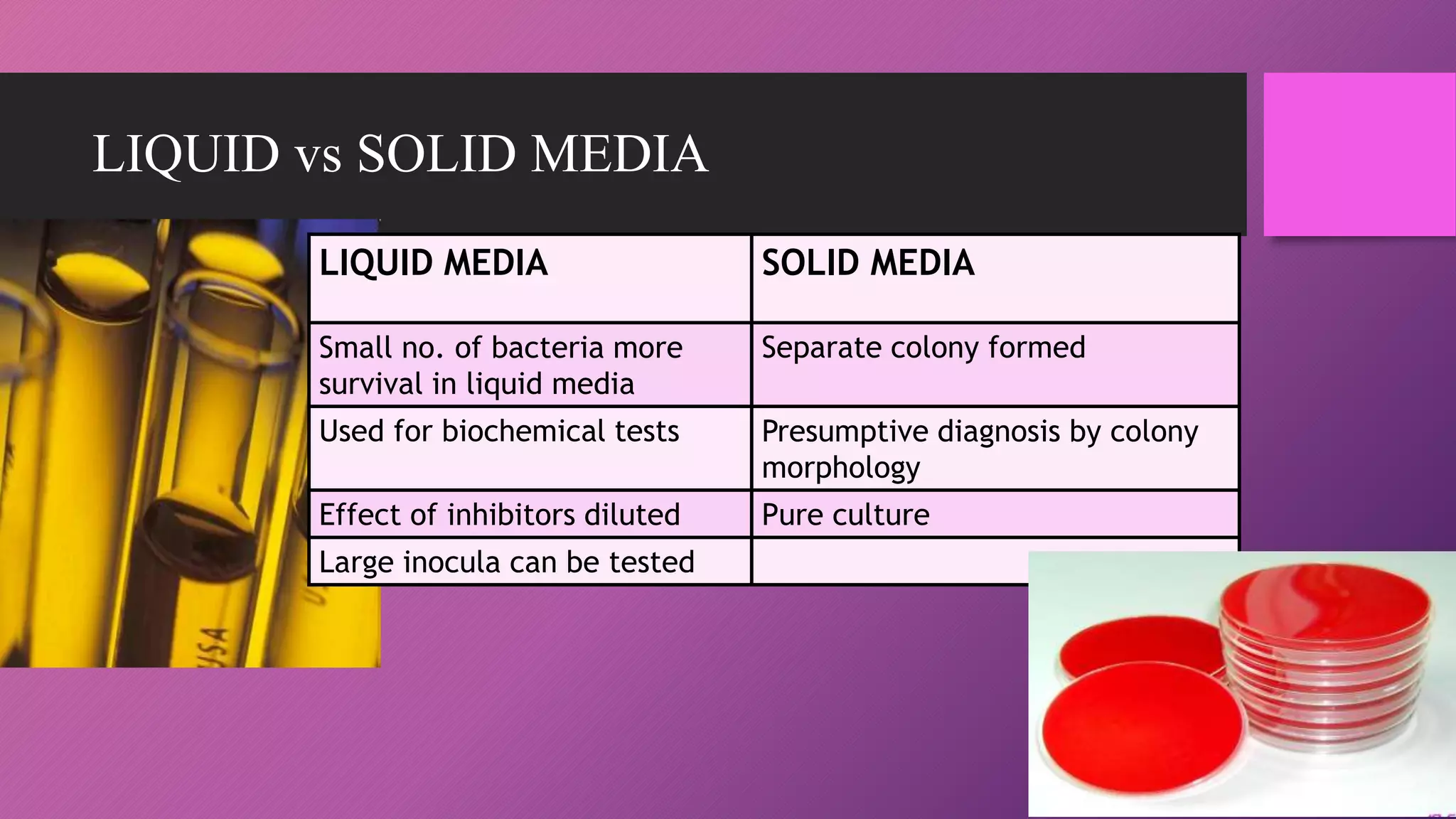
LIQUID vs SOLID MEDIA
LIQUID MEDIA SOLID MEDIA
Small no. of bacteria more
survival in liquid media
Separate colony formed
Used for biochemical tests Presumptive diagnosis by colony
morphology
Effect of inhibitors diluted Pure culture
Large inocula can be tested
CLASSIFICATION
Based on their consistency
a) Solid medium (2%)
b) Liquid medium
c) Semi solid medium (0.2-0.5%)
Based on the constituents
a) Simple medium
b) Complex medium
c) Synthetic or defined medium
d) Special media
Based on Oxygen requirement
- Aerobic media
- Anaerobic media
Special media
Enriched media
Enrichment media
Selective media
Indicator media
Differential media
Sugar media
Transport media
BASIC REQUIREMENTS
•Sterile Petri plates, Test tubes and
Bottles
•Sterile media
•Equipments for obtaining sterility
POURING THE PLATES
CONSTITUENTS
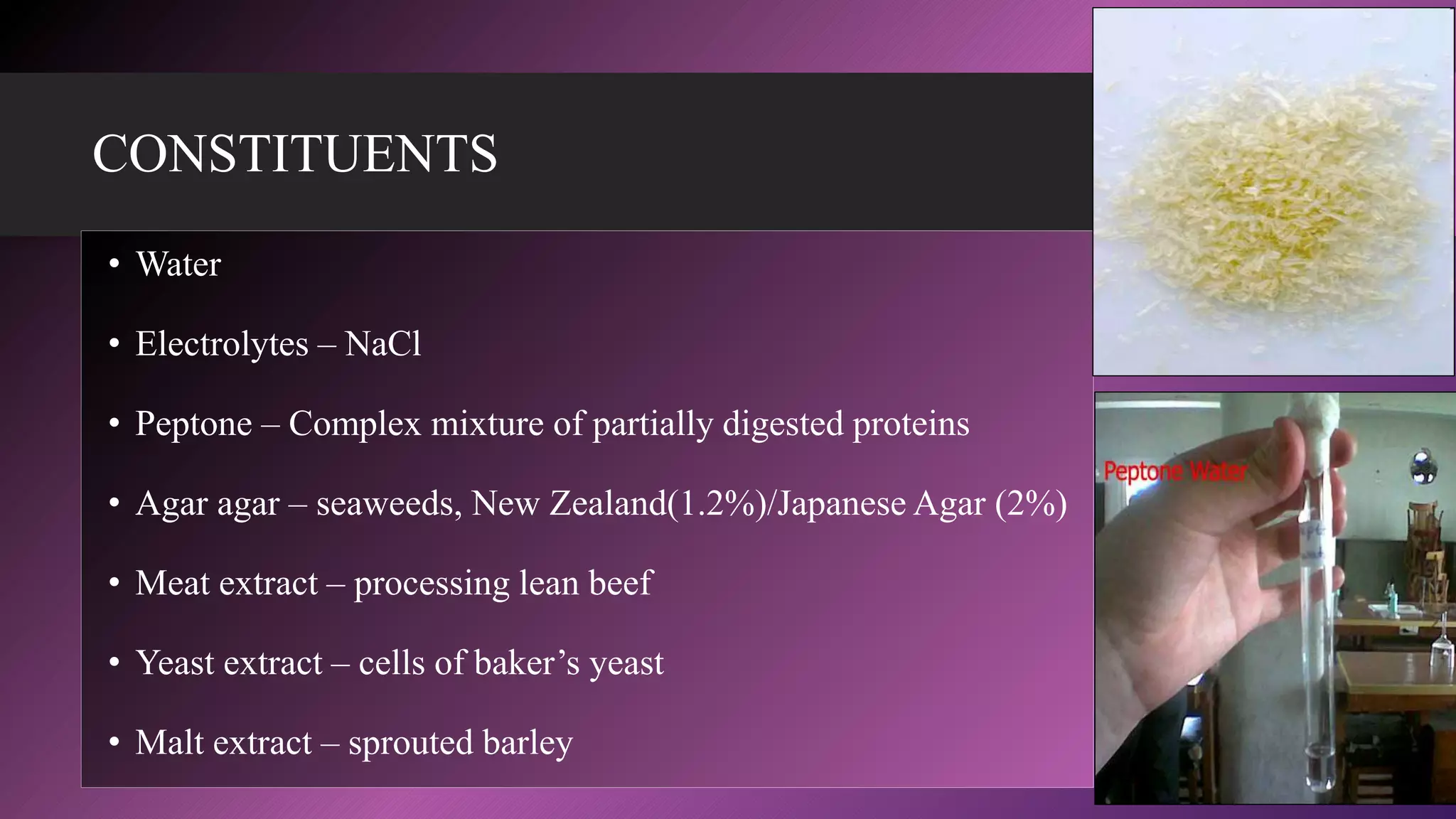
• Water
• Electrolytes – NaCl
• Peptone – Complex mixture of partially digested proteins
• Agar agar – seaweeds, New Zealand(1.2%)/Japanese Agar (2%)
• Meat extract – processing lean beef
• Yeast extract – cells of baker’s yeast
• Malt extract – sprouted barley
SIMPLE MEDIA / BASAL MEDIA
Most commonly used in routine diagnostic laboratories
Eg: Nutrient Broth, Nutrient Agar
• Peptone Water = Peptone (1%)+ NaCl (0.5%)+ Water
• Nutrient Broth = peptone water + meat extract
• Nutrient agar = NB + 2% agar
[Semi-solid medium = Agar conc. Reduced (0.2 - 0.5%) ]
Glucose Broth = NB + 0.5% Glucose
Complex media
• Media other than basal media.
• They have added complex ingredients such as yeast extract or casein
hydrolysate, which consist of a mixture of many chemical species in
unknown proportions
Synthetic or defined media
• Prepared from pure chemical substances, exact composition is known
• Used for special studies, eg. metabolic requirements
• Eg: peptone water- (1% peptone + 0.5% NaCl in water)
TRANSPORT MEDIA
BACTERIA MEDIA
Streptococcus, Haemophilus, Pneumococcus Pike’s media
Neisseria Amie’s media
Stuart’s media
Vibrio cholerae VR media
Cary Blair media
Autoclaved sea water
Shigella, Salmonella Buffered Glycerol saline
Cary Blair media
• Delicate bacteria may not survive during transportation the specimen
• Bacteria do not multiply but remain viable
ENRICHMENT MEDIA
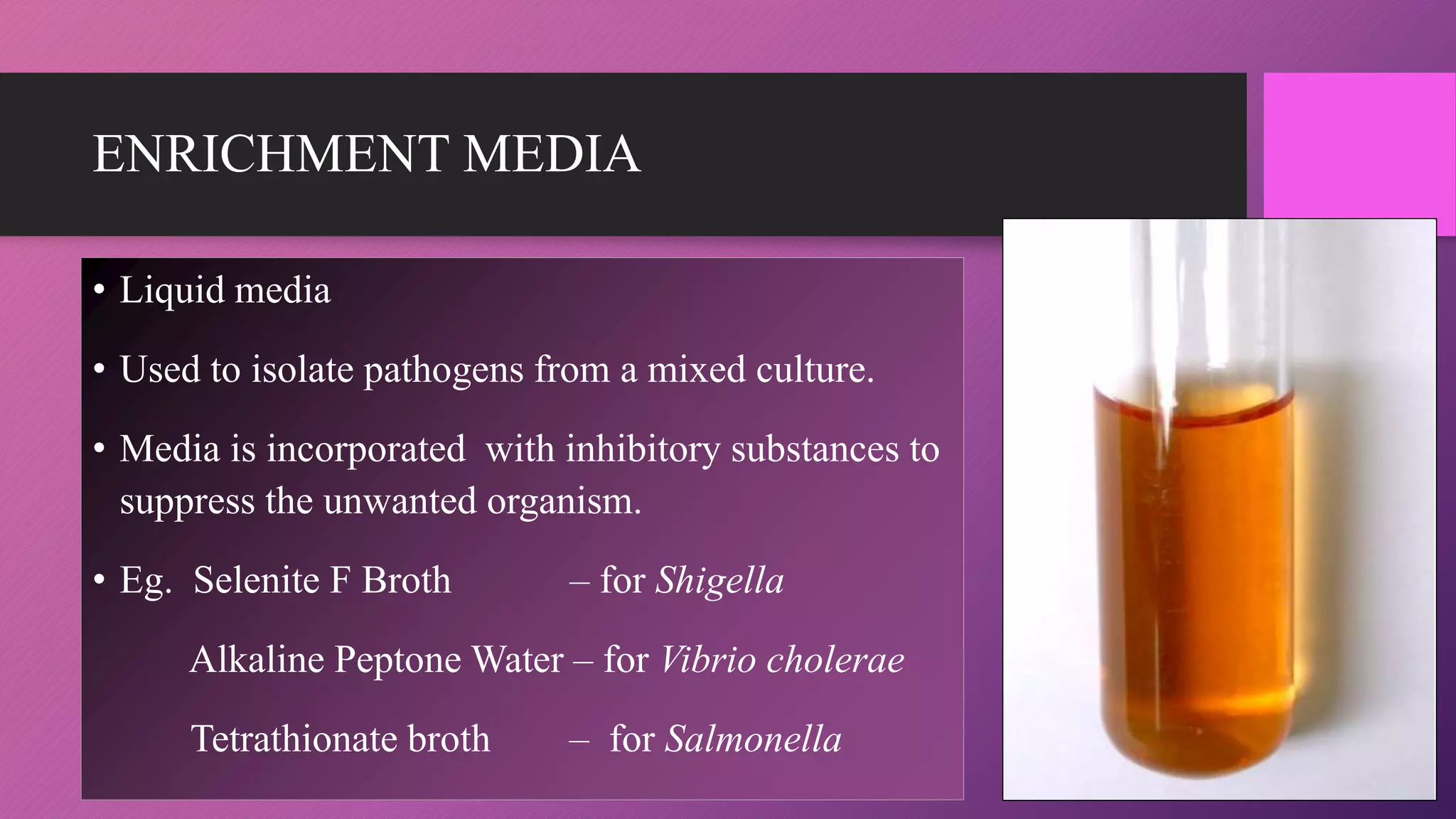
• Liquid media
• Used to isolate pathogens from a mixed culture.
• Media is incorporated with inhibitory substances to
suppress the unwanted organism.
• Eg. Selenite F Broth – for Shigella
Alkaline Peptone Water – for Vibrio cholerae
Tetrathionate broth – for Salmonella
ENRICHED MEDIA
• Solid medium
• Substances like blood, serum, egg are added to the basal medium.
• Used to grow bacteria that are exacting in their nutritional needs.
• Eg: Blood agar, Chocolate agar
Blood Agar Chocolate Agar Milk Agar
BLOOD AGAR
• Alpha Haemolysis – Incomplete
haemolysis, Greenish discolouration
• Beta Haemolysis – Complete haemolysis
• Gamma Haemolysis – No haemolysis
CHOCOLATE AGAR
• Heated Blood agar
• Prepared by adding blood at 75˚c to
melted nutrient agar
• For the growth of Pneumococcus,
Haemophilus, Neisseria
MILK AGAR
• Nutrient agar+ Milk
• Pigmentation of Staphylococcus
aureus is enhanced
INDICATOR MEDIA
• pH indicator dye is added with a fermentable sugar
• Based on sugar is fermented or not colour change occurs
• Eg. –
1) Mac Conkey’s medium – Lactose +pH indicator (Neutral red)
2) CLED (Cystein Lactose Electrolyte Deficient) Medium – (Bromo thymol blue)
3) Thiosulphate Citrate Bile salt Sucrose (TCBS) agar – V.cholera
(Bromo thymol blue)
SELECTIVE MEDIA
• Solid media
• Inhibitory substances are added to prevent growth of unwanted bacteria
• Eg. –
1) Mac Conkey’s medium for gram negative bacteria
2) Thiosulphate Citrate Bile salt Sucrose – V.cholera
3) Lowenstein-Jensen medium – M.tuberculosis
4) Wilson and Blair medium – S.typhi
5) Potassium tellurite medium – Diphtheria bacilli
TCBS showing sucrose fermenting
Vibrio Colonies
DCA showing Salmonella Colonies LJ medium showing
Mycobacteria Colonies
DIFFERENTIAL MEDIA
• A media which has substances incorporated in it
enabling it to distinguish between bacteria.
• Distinguish between lactose fermenters & non
lactose fermenters.
• Eg.
Mac conkey agar
CLED agar
ANAEROBIC MEDIA
• These media are used to grow anaerobic organisms.
• Eg: Robertson’s cooked meat medium, Thioglycolate
medium.
• RCM – minced meat cooked in alkaline water and drained
+ Peptone water
• Anaerobic methods of cultivating bacteria are used to
obtain growth on plates from this media
SUGAR FERMENTATION MEDIA
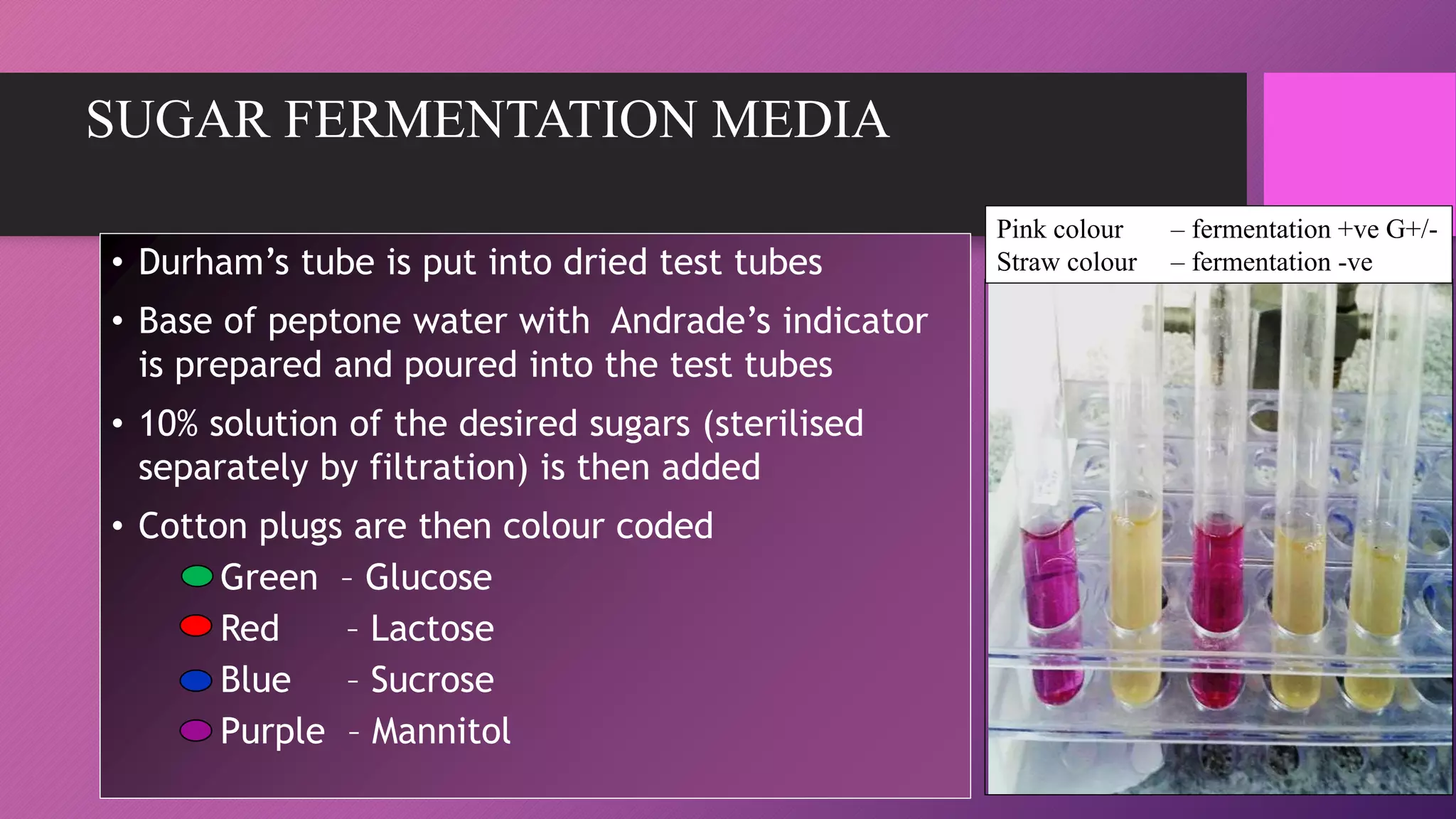
• Durham’s tube is put into dried test tubes
• Base of peptone water with Andrade’s indicator
is prepared and poured into the test tubes
• 10% solution of the desired sugars (sterilised
separately by filtration) is then added
• Cotton plugs are then colour coded
Green – Glucose
Red – Lactose
Blue – Sucrose
Purple – Mannitol
Pink colour – fermentation +ve G+/-
Straw colour – fermentation -ve
MICROBIAL CULTURE
Microbial culture, is a method of multiplying microbial
organisms by letting them reproduce in predetermined
culture medium under controlled laboratory conditions.
PURPOSE OF CULTURE
• To isolate the bacteria in pure culture
• Demonstrate their properties
• Perform the AST
• Obtain sufficient growth for antigen preparation
• Typing (Bacteriophage and Bacteriocin)
• Estimate the viable counts
• Maintain stock culture
CULTURE METHODS
• Streak culture
• Lawn culture
• Stroke culture
• Stab culture
• Pour plate method
• Liquid culture
• Anaerobic culture methods
STREAK CULTURE
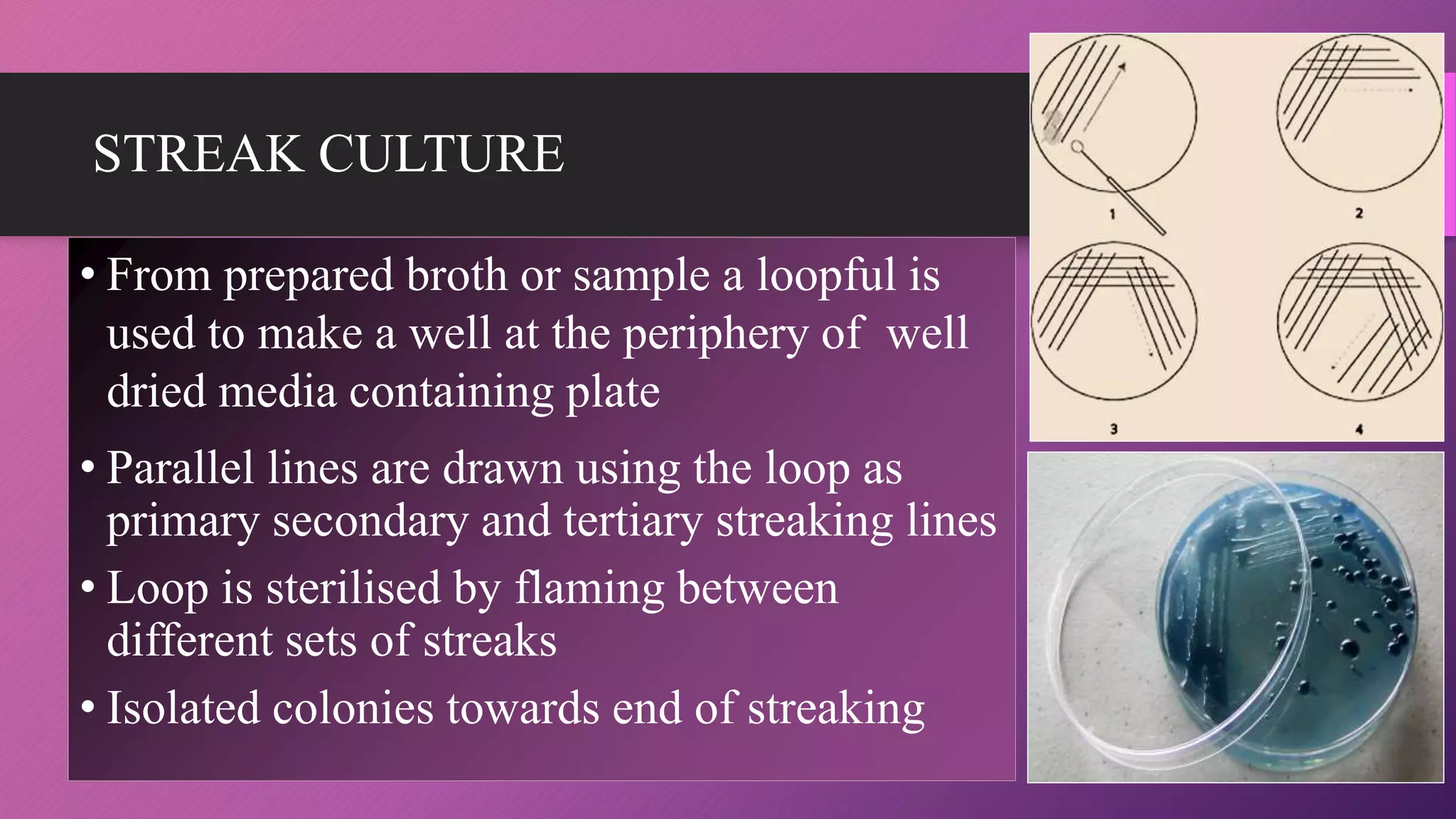
• From prepared broth or sample a loopful is
used to make a well at the periphery of well
dried media containing plate
• Parallel lines are drawn using the loop as
primary secondary and tertiary streaking lines
• Loop is sterilised by flaming between
different sets of streaks
• Isolated colonies towards end of streaking
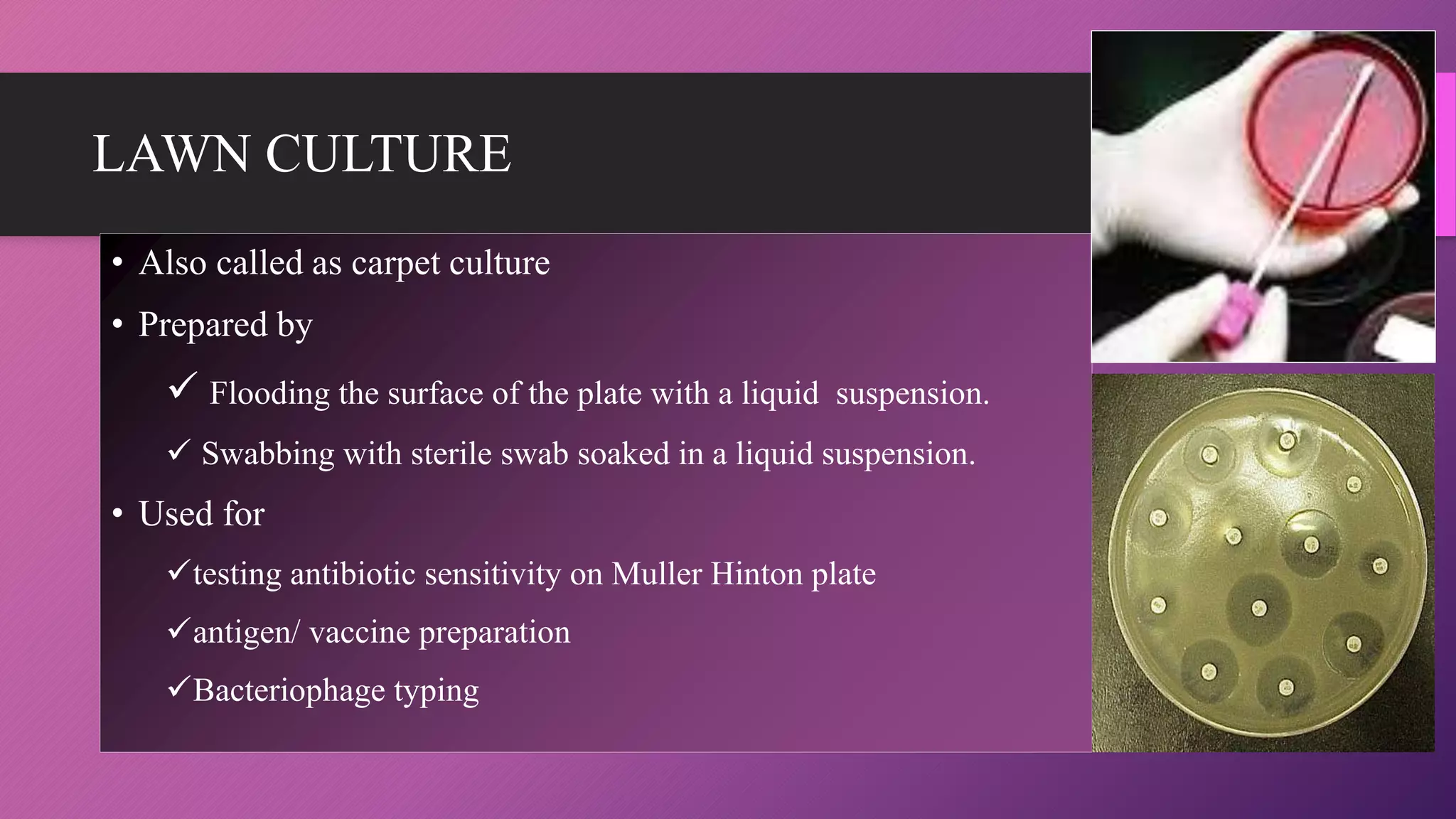
LAWN CULTURE
• Also called as carpet culture
• Prepared by
 Flooding the surface of the plate with a liquid suspension.
 Swabbing with sterile swab soaked in a liquid suspension.
• Used for
testing antibiotic sensitivity on Muller Hinton plate
antigen/ vaccine preparation
Bacteriophage typing
LAWN CULTURE
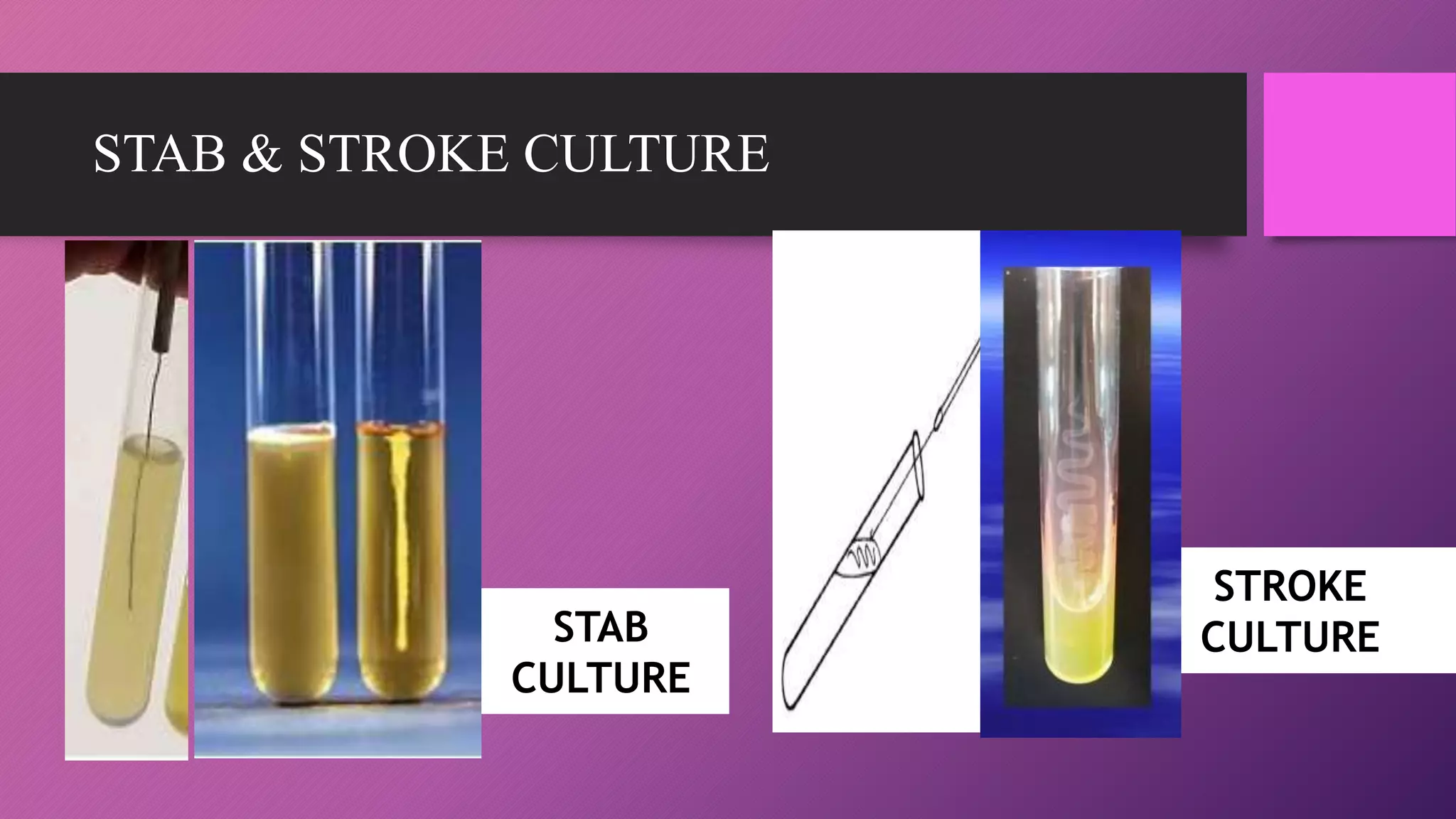
STAB
CULTURE
STROKE
CULTURE
STAB & STROKE CULTURE
POUR PLATE
• Quantitative culture method
• Used to estimate viable bacterial count (No. of
bacteria present per ml of liquid broth/sample)
• Broth/ Bacterial suspension of particular
concentration and volume is added to molten
agar 450C, mixed properly and poured into petri
plates
• Next day colonies can be counted
Bacterial
suspension
+ Agar
LIQUID CULTURE
• In test tubes, screw-capped bottles (eg. McCartney
bottles or flasks)
• Peptone water, BHI broth, Glucose broth, Nutrient
broth
• Inoculated by touching with loop or using pipettes or
syringes (from broth)
• Uses: Blood culture, Water analysis, Biochemical tests
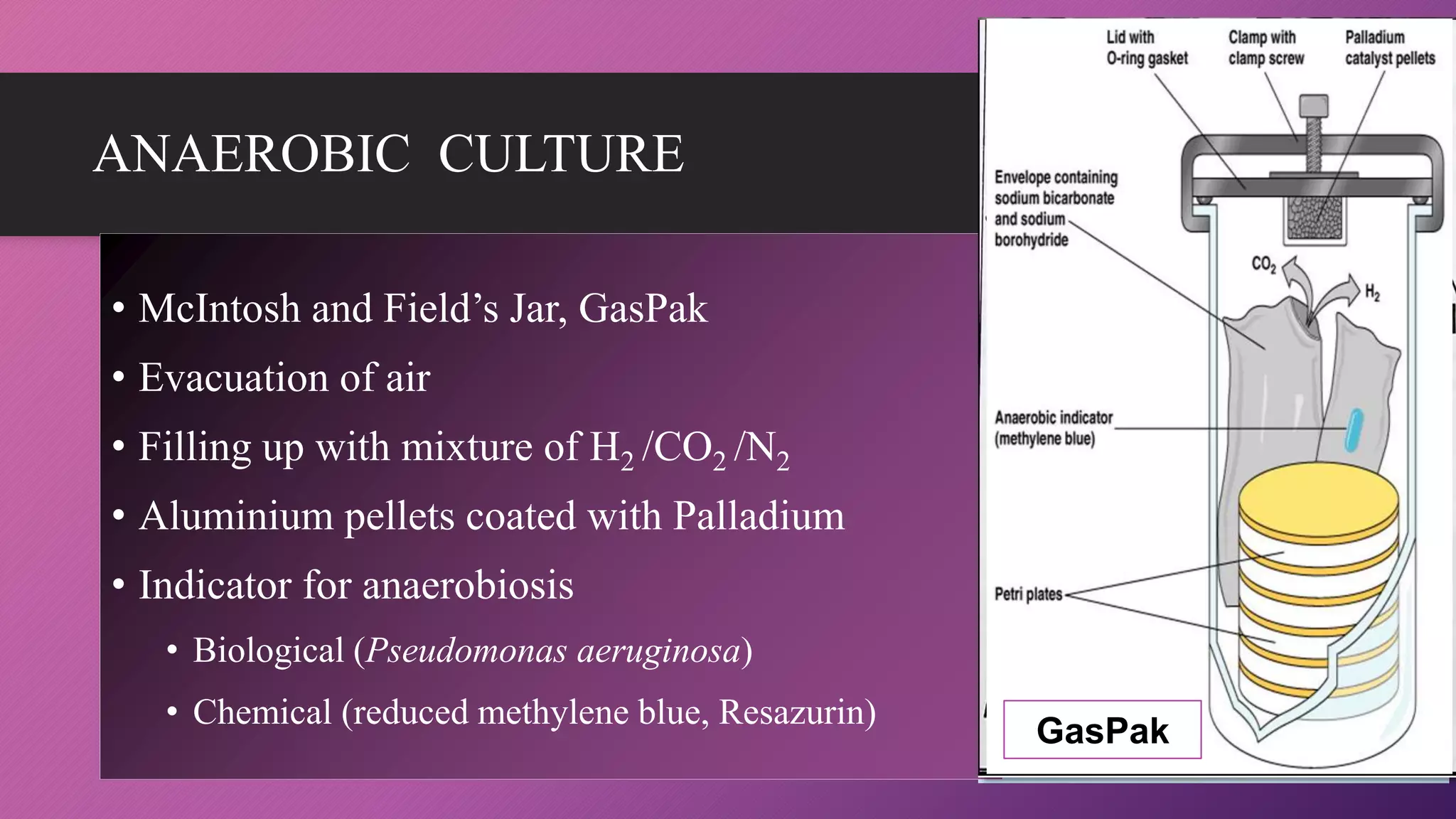
ANAEROBIC CULTURE
• McIntosh and Field’s Jar, GasPak
• Evacuation of air
• Filling up with mixture of H2 /CO2 /N2
• Aluminium pellets coated with Palladium
• Indicator for anaerobiosis
• Biological (Pseudomonas aeruginosa)
• Chemical (reduced methylene blue, Resazurin)
GasPak
THANK
YOU

Culture media and Culture methods

  • 2.
    INTRODUCTION • Microscopy providepreliminary information. • But bacterial growth is usually required for definitive identification and characterization, hence the culture methods are needed. • What is culture? Bacteria are provided artificially with specific nutrition and environment to grow , for them to be identified
  • 3.
    PRINCIPLES - BACTERIALCULTIVATION • To grow and isolate all bacteria present in a clinical specimen • To determine which of the bacteria that grow are most likely causing infection and which are likely contaminants or colonizers • To obtain sufficient growth of clinically relevant bacteria to allow identification and characterization
  • 4.
    HISTORY • In 1876,Robert Koch (1843–1910) established that microbes can cause disease. • Robert Koch developed methods for isolating bacteria in pure culture, by solid media prepared using Gelatin • Fanny Hesse (1880) introduced agar • Julius Petri (1887) invented Petri plates
  • 5.
    LIQUID vs SOLIDMEDIA LIQUID MEDIA SOLID MEDIA Small no. of bacteria more survival in liquid media Separate colony formed Used for biochemical tests Presumptive diagnosis by colony morphology Effect of inhibitors diluted Pure culture Large inocula can be tested
  • 6.
    CLASSIFICATION Based on theirconsistency a) Solid medium (2%) b) Liquid medium c) Semi solid medium (0.2-0.5%) Based on the constituents a) Simple medium b) Complex medium c) Synthetic or defined medium d) Special media Based on Oxygen requirement - Aerobic media - Anaerobic media Special media Enriched media Enrichment media Selective media Indicator media Differential media Sugar media Transport media
  • 7.
    BASIC REQUIREMENTS •Sterile Petriplates, Test tubes and Bottles •Sterile media •Equipments for obtaining sterility
  • 8.
  • 9.
    CONSTITUENTS • Water • Electrolytes– NaCl • Peptone – Complex mixture of partially digested proteins • Agar agar – seaweeds, New Zealand(1.2%)/Japanese Agar (2%) • Meat extract – processing lean beef • Yeast extract – cells of baker’s yeast • Malt extract – sprouted barley
  • 10.
    SIMPLE MEDIA /BASAL MEDIA Most commonly used in routine diagnostic laboratories Eg: Nutrient Broth, Nutrient Agar • Peptone Water = Peptone (1%)+ NaCl (0.5%)+ Water • Nutrient Broth = peptone water + meat extract • Nutrient agar = NB + 2% agar [Semi-solid medium = Agar conc. Reduced (0.2 - 0.5%) ] Glucose Broth = NB + 0.5% Glucose
  • 11.
    Complex media • Mediaother than basal media. • They have added complex ingredients such as yeast extract or casein hydrolysate, which consist of a mixture of many chemical species in unknown proportions Synthetic or defined media • Prepared from pure chemical substances, exact composition is known • Used for special studies, eg. metabolic requirements • Eg: peptone water- (1% peptone + 0.5% NaCl in water)
  • 12.
    TRANSPORT MEDIA BACTERIA MEDIA Streptococcus,Haemophilus, Pneumococcus Pike’s media Neisseria Amie’s media Stuart’s media Vibrio cholerae VR media Cary Blair media Autoclaved sea water Shigella, Salmonella Buffered Glycerol saline Cary Blair media • Delicate bacteria may not survive during transportation the specimen • Bacteria do not multiply but remain viable
  • 13.
    ENRICHMENT MEDIA • Liquidmedia • Used to isolate pathogens from a mixed culture. • Media is incorporated with inhibitory substances to suppress the unwanted organism. • Eg. Selenite F Broth – for Shigella Alkaline Peptone Water – for Vibrio cholerae Tetrathionate broth – for Salmonella
  • 14.
    ENRICHED MEDIA • Solidmedium • Substances like blood, serum, egg are added to the basal medium. • Used to grow bacteria that are exacting in their nutritional needs. • Eg: Blood agar, Chocolate agar Blood Agar Chocolate Agar Milk Agar
  • 15.
    BLOOD AGAR • AlphaHaemolysis – Incomplete haemolysis, Greenish discolouration • Beta Haemolysis – Complete haemolysis • Gamma Haemolysis – No haemolysis
  • 16.
    CHOCOLATE AGAR • HeatedBlood agar • Prepared by adding blood at 75˚c to melted nutrient agar • For the growth of Pneumococcus, Haemophilus, Neisseria
  • 17.
    MILK AGAR • Nutrientagar+ Milk • Pigmentation of Staphylococcus aureus is enhanced
  • 18.
    INDICATOR MEDIA • pHindicator dye is added with a fermentable sugar • Based on sugar is fermented or not colour change occurs • Eg. – 1) Mac Conkey’s medium – Lactose +pH indicator (Neutral red) 2) CLED (Cystein Lactose Electrolyte Deficient) Medium – (Bromo thymol blue) 3) Thiosulphate Citrate Bile salt Sucrose (TCBS) agar – V.cholera (Bromo thymol blue)
  • 19.
    SELECTIVE MEDIA • Solidmedia • Inhibitory substances are added to prevent growth of unwanted bacteria • Eg. – 1) Mac Conkey’s medium for gram negative bacteria 2) Thiosulphate Citrate Bile salt Sucrose – V.cholera 3) Lowenstein-Jensen medium – M.tuberculosis 4) Wilson and Blair medium – S.typhi 5) Potassium tellurite medium – Diphtheria bacilli
  • 20.
    TCBS showing sucrosefermenting Vibrio Colonies DCA showing Salmonella Colonies LJ medium showing Mycobacteria Colonies
  • 21.
    DIFFERENTIAL MEDIA • Amedia which has substances incorporated in it enabling it to distinguish between bacteria. • Distinguish between lactose fermenters & non lactose fermenters. • Eg. Mac conkey agar CLED agar
  • 22.
    ANAEROBIC MEDIA • Thesemedia are used to grow anaerobic organisms. • Eg: Robertson’s cooked meat medium, Thioglycolate medium. • RCM – minced meat cooked in alkaline water and drained + Peptone water • Anaerobic methods of cultivating bacteria are used to obtain growth on plates from this media
  • 23.
    SUGAR FERMENTATION MEDIA •Durham’s tube is put into dried test tubes • Base of peptone water with Andrade’s indicator is prepared and poured into the test tubes • 10% solution of the desired sugars (sterilised separately by filtration) is then added • Cotton plugs are then colour coded Green – Glucose Red – Lactose Blue – Sucrose Purple – Mannitol Pink colour – fermentation +ve G+/- Straw colour – fermentation -ve
  • 25.
    MICROBIAL CULTURE Microbial culture,is a method of multiplying microbial organisms by letting them reproduce in predetermined culture medium under controlled laboratory conditions.
  • 26.
    PURPOSE OF CULTURE •To isolate the bacteria in pure culture • Demonstrate their properties • Perform the AST • Obtain sufficient growth for antigen preparation • Typing (Bacteriophage and Bacteriocin) • Estimate the viable counts • Maintain stock culture
  • 27.
    CULTURE METHODS • Streakculture • Lawn culture • Stroke culture • Stab culture • Pour plate method • Liquid culture • Anaerobic culture methods
  • 28.
    STREAK CULTURE • Fromprepared broth or sample a loopful is used to make a well at the periphery of well dried media containing plate • Parallel lines are drawn using the loop as primary secondary and tertiary streaking lines • Loop is sterilised by flaming between different sets of streaks • Isolated colonies towards end of streaking
  • 29.
    LAWN CULTURE • Alsocalled as carpet culture • Prepared by  Flooding the surface of the plate with a liquid suspension.  Swabbing with sterile swab soaked in a liquid suspension. • Used for testing antibiotic sensitivity on Muller Hinton plate antigen/ vaccine preparation Bacteriophage typing
  • 30.
  • 31.
  • 32.
    POUR PLATE • Quantitativeculture method • Used to estimate viable bacterial count (No. of bacteria present per ml of liquid broth/sample) • Broth/ Bacterial suspension of particular concentration and volume is added to molten agar 450C, mixed properly and poured into petri plates • Next day colonies can be counted Bacterial suspension + Agar
  • 33.
    LIQUID CULTURE • Intest tubes, screw-capped bottles (eg. McCartney bottles or flasks) • Peptone water, BHI broth, Glucose broth, Nutrient broth • Inoculated by touching with loop or using pipettes or syringes (from broth) • Uses: Blood culture, Water analysis, Biochemical tests
  • 34.
    ANAEROBIC CULTURE • McIntoshand Field’s Jar, GasPak • Evacuation of air • Filling up with mixture of H2 /CO2 /N2 • Aluminium pellets coated with Palladium • Indicator for anaerobiosis • Biological (Pseudomonas aeruginosa) • Chemical (reduced methylene blue, Resazurin) GasPak
  • 35.