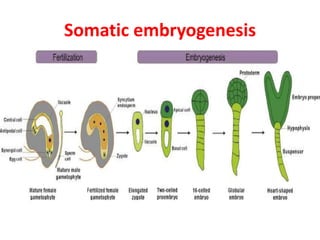
Somatic embryogenesis
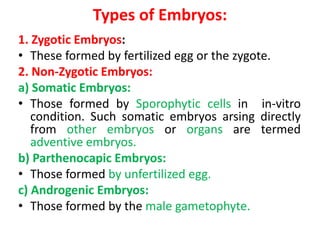
Types of Embryos:
1. Zygotic Embryos:
• These formed by fertilized egg or the zygote.
2. Non-Zygotic Embryos:
a) Somatic Embryos:
• Those formed by Sporophytic cells in in-vitro
condition. Such somatic embryos arsing directly
from other embryos or organs are termed
adventive embryos.
b) Parthenocapic Embryos:
• Those formed by unfertilized egg.
c) Androgenic Embryos:
• Those formed by the male gametophyte.
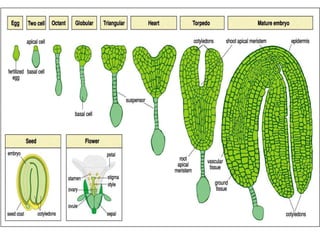
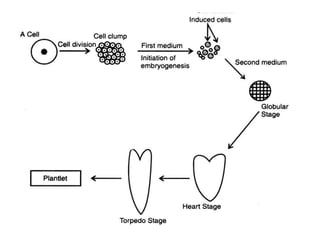
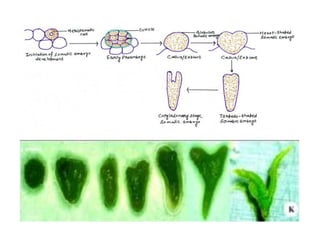
Stages in Embryogenesis
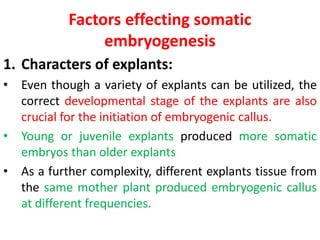
Factors effecting somatic
embryogenesis
1. Characters of explants:
• Even though a variety of explants can be utilized, the
correct developmental stage of the explants are also
crucial for the initiation of embryogenic callus.
• Young or juvenile explants produced more somatic
embryos than older explants
• As a further complexity, different explants tissue from
the same mother plant produced embryogenic callus
at different frequencies.
THANK YOU

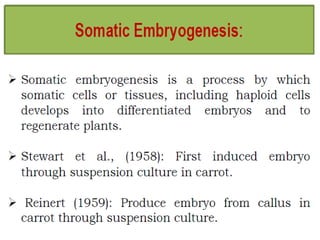
Somatic embryogenesis

  • 1.
  • 4.
    Types of Embryos: 1.Zygotic Embryos: • These formed by fertilized egg or the zygote. 2. Non-Zygotic Embryos: a) Somatic Embryos: • Those formed by Sporophytic cells in in-vitro condition. Such somatic embryos arsing directly from other embryos or organs are termed adventive embryos. b) Parthenocapic Embryos: • Those formed by unfertilized egg. c) Androgenic Embryos: • Those formed by the male gametophyte.
  • 7.
  • 9.
    Factors effecting somatic embryogenesis 1.Characters of explants: • Even though a variety of explants can be utilized, the correct developmental stage of the explants are also crucial for the initiation of embryogenic callus. • Young or juvenile explants produced more somatic embryos than older explants • As a further complexity, different explants tissue from the same mother plant produced embryogenic callus at different frequencies.
  • 19.