Microbial growth
Microbial Growth
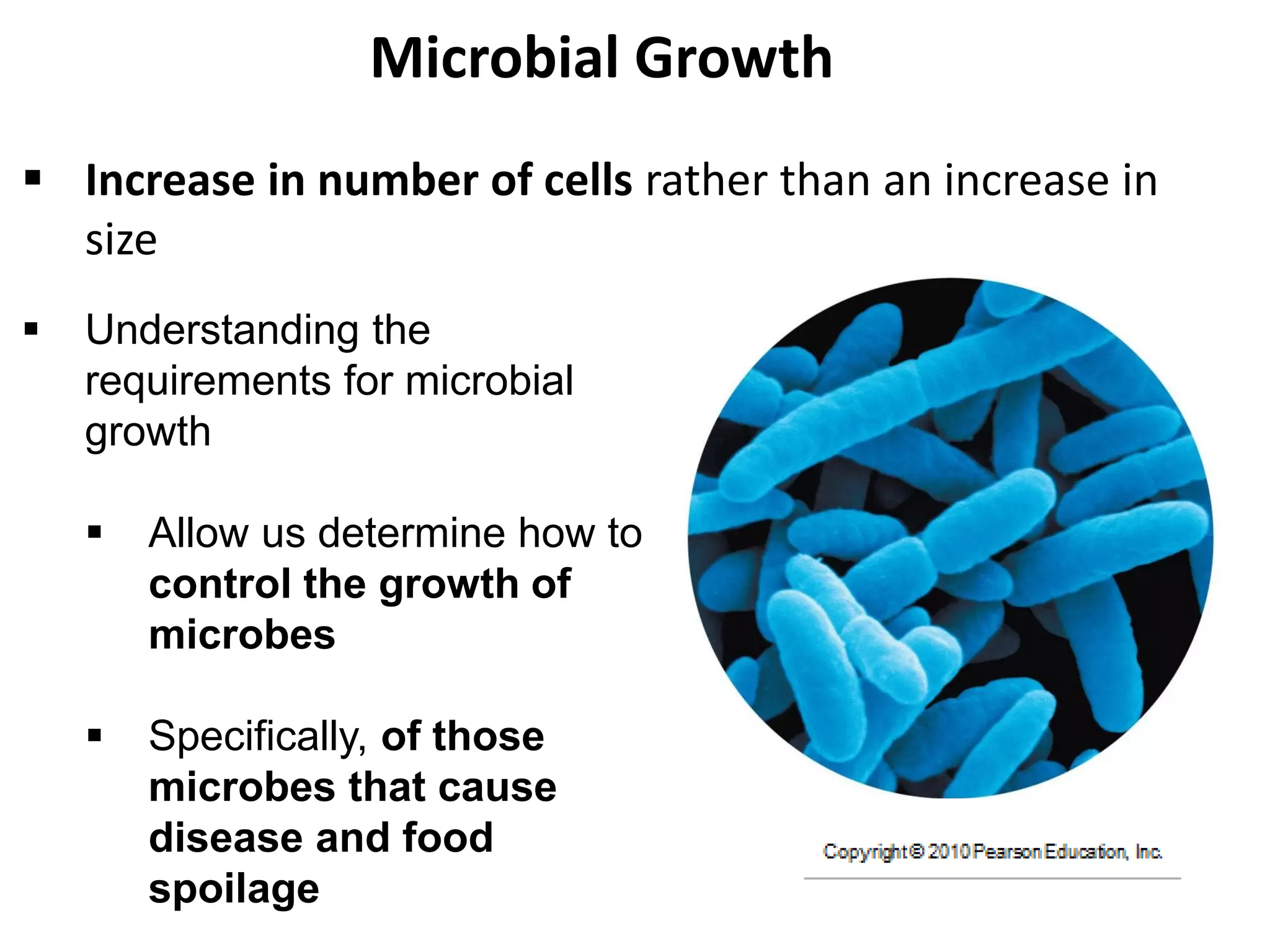
 Increase in number of cells rather than an increase in
size
 Understanding the
requirements for microbial
growth
 Allow us determine how to
control the growth of
microbes
 Specifically, of those
microbes that cause
disease and food
spoilage
The Requirements for Growth
 Physical requirements include
 Temperature
 pH
 Osmotic pressure
 Microorganisms have physical, chemical, and
energy requirements for growth
Effect of temperature
 Minimum growth
temperature - microbe is
able to conduct metabolism
 Maximum growth
temperature – microbe
continues to metabolize
 Optimum growth
temperature – highest
growth rate
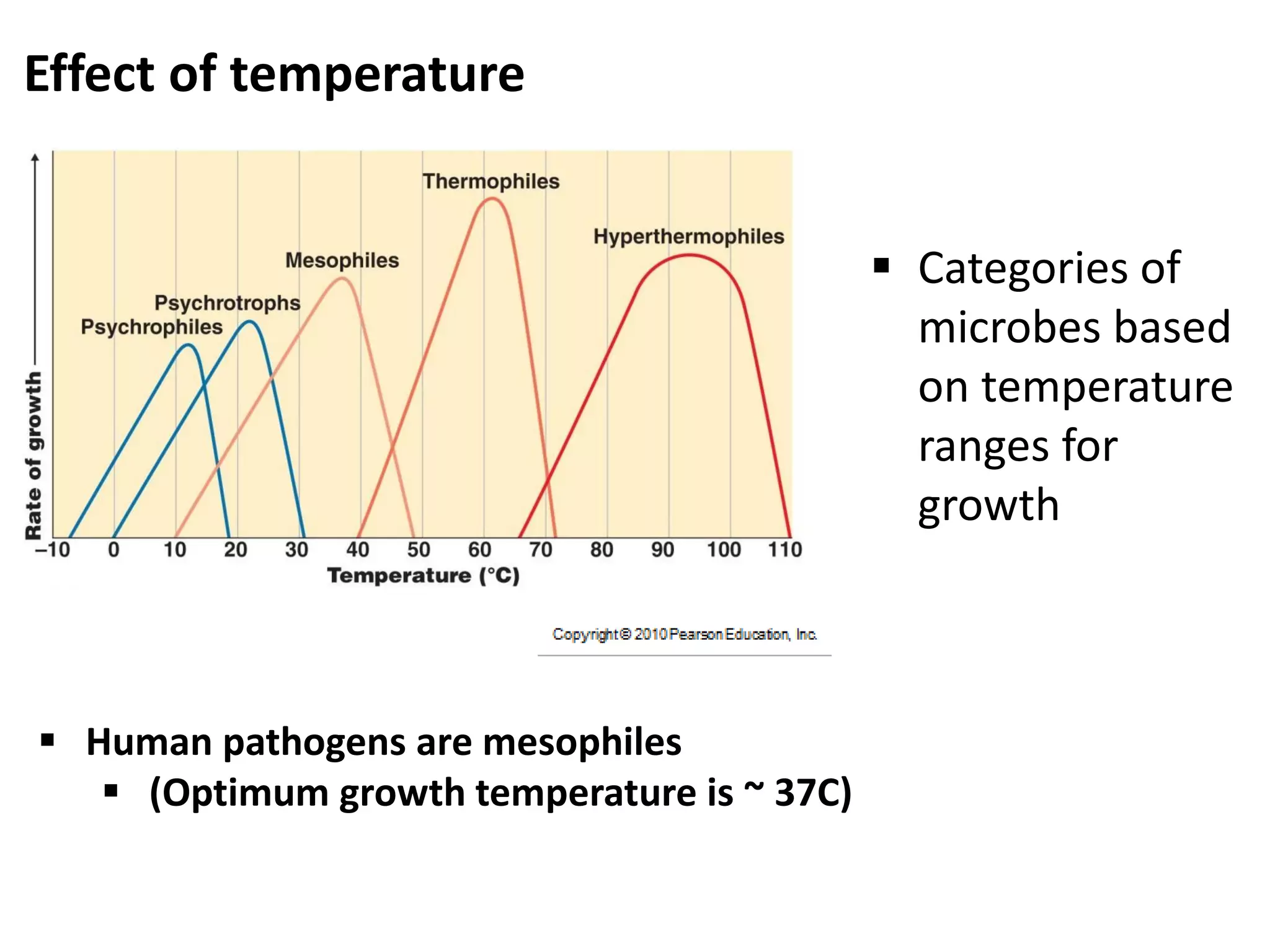
 Growth rate plotted against temperature
 Growth of Escherichia coli on nutrient agar at three different temperature
 Categories of
microbes based
on temperature
ranges for
growth
 Human pathogens are mesophiles
 (Optimum growth temperature is ~ 37C)
Effect of temperature
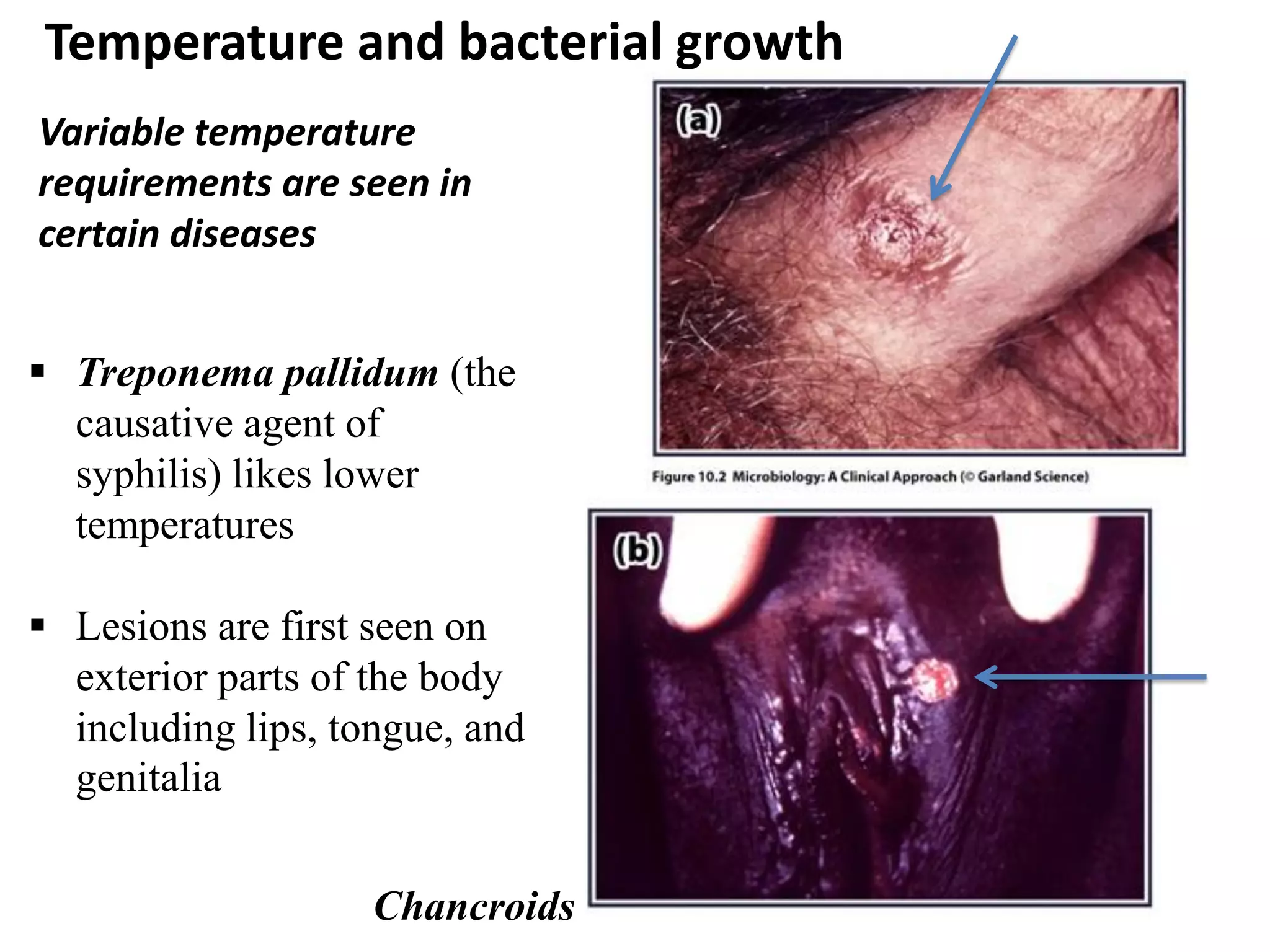
 Treponema pallidum (the
causative agent of
syphilis) likes lower
temperatures
 Lesions are first seen on
exterior parts of the body
including lips, tongue, and
genitalia
Variable temperature
requirements are seen in
certain diseases
Chancroids
Temperature and bacterial growth
Variable temperature
requirements are seen in certain
diseases
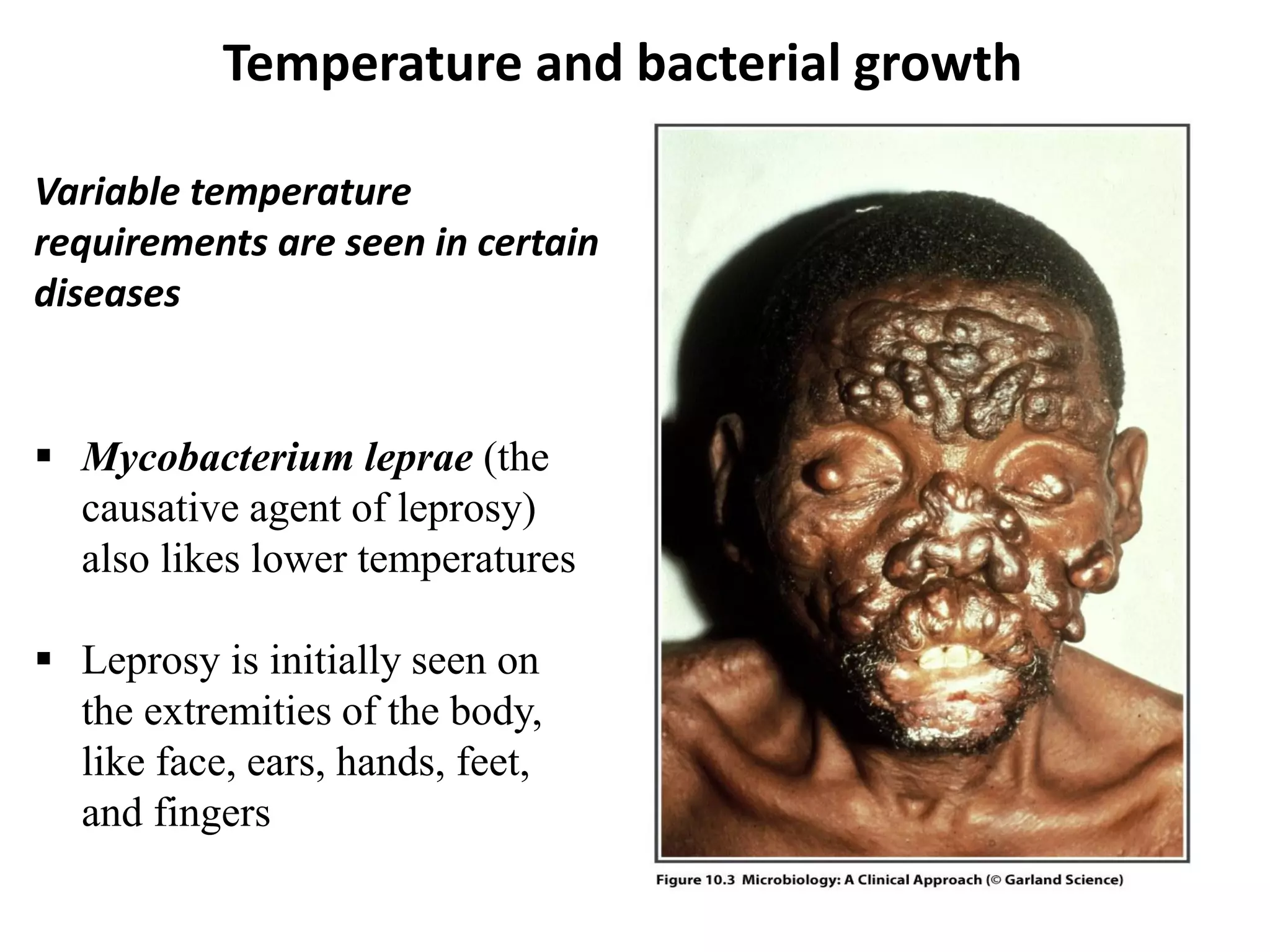
 Mycobacterium leprae (the
causative agent of leprosy)
also likes lower temperatures
 Leprosy is initially seen on
the extremities of the body,
like face, ears, hands, feet,
and fingers
Effect of pH
 Neutrophiles
 Grow best in a narrow range
around neutral pH (pH 6.5-7.5)
 Acidophiles
 Grow best in acidic habitats
 Alkalinophiles
 Live in alkaline soils and water
 Most pathogens are neutrophiles
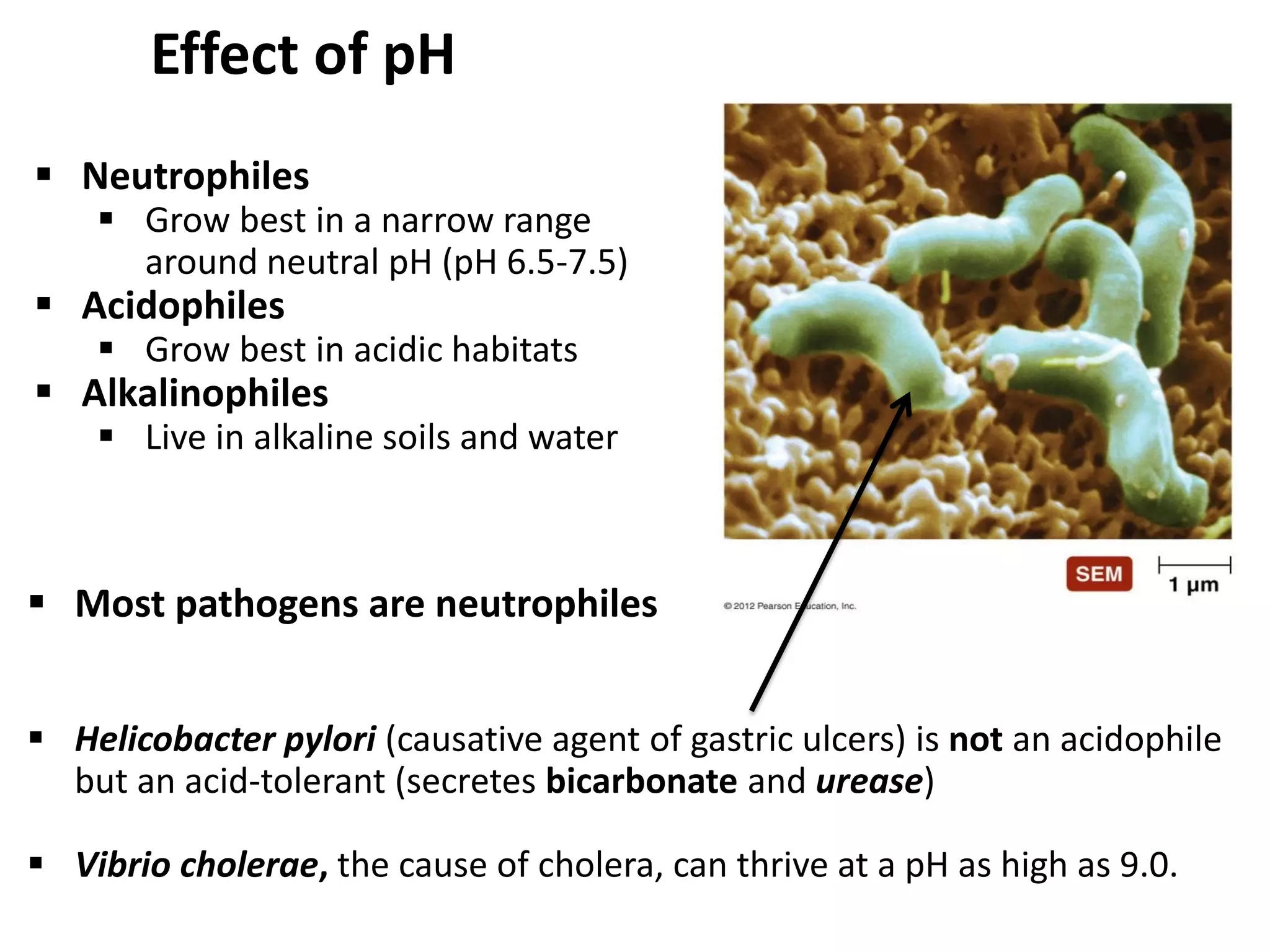
 Helicobacter pylori (causative agent of gastric ulcers) is not an acidophile
but an acid-tolerant (secretes bicarbonate and urease)
 Vibrio cholerae, the cause of cholera, can thrive at a pH as high as 9.0.
Effect of Osmotic Pressure
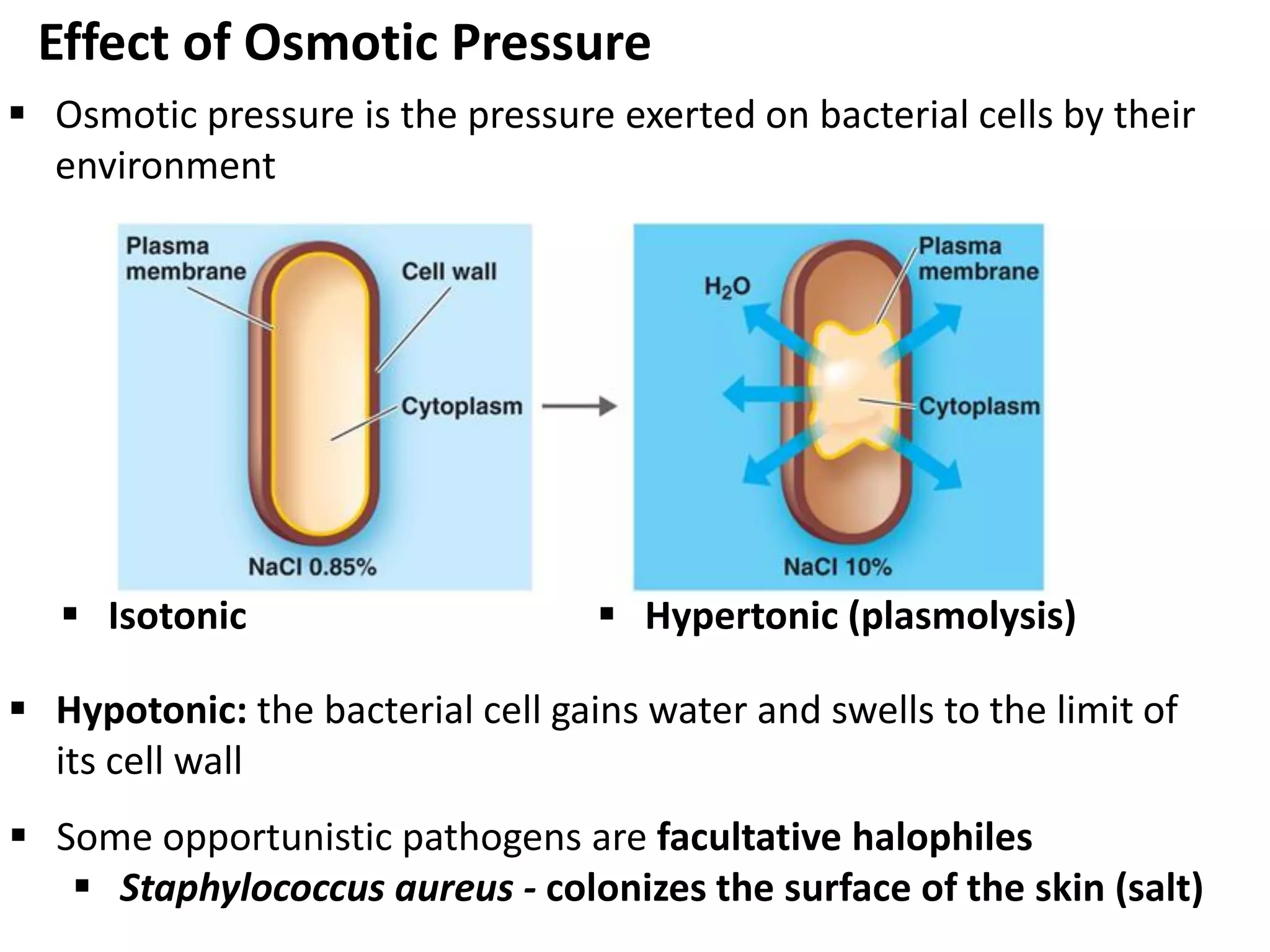
 Isotonic  Hypertonic (plasmolysis)
 Osmotic pressure is the pressure exerted on bacterial cells by their
environment
 Hypotonic: the bacterial cell gains water and swells to the limit of
its cell wall
 Some opportunistic pathogens are facultative halophiles
 Staphylococcus aureus - colonizes the surface of the skin (salt)
Chemical Requirements
 Microorganisms use a variety of chemicals (nutrients) as a source
of energy to build organic molecules and cell structures
 Several core chemicals are required for bacterial growth
 Chemoheterotrophs, which include pathogenic bacteria, use organic
molecules as a source of carbon and energy
 Trace elements or
micronutrients are
minerals essential for
the function of
certain enzymes
 Include
 copper
 zinc
 manganese
 molybdenum
Trace elements and
growth factors
Oxygen Requirements
 Capnophiles are microbes that require higher concentration of
carbon dioxide (3-10%) in addition to low oxygen levels
 Superoxide dismutase (SOD) converts superoxide radicals (O2
-) to
molecular oxygen and hydrogen peroxide, which is also toxic
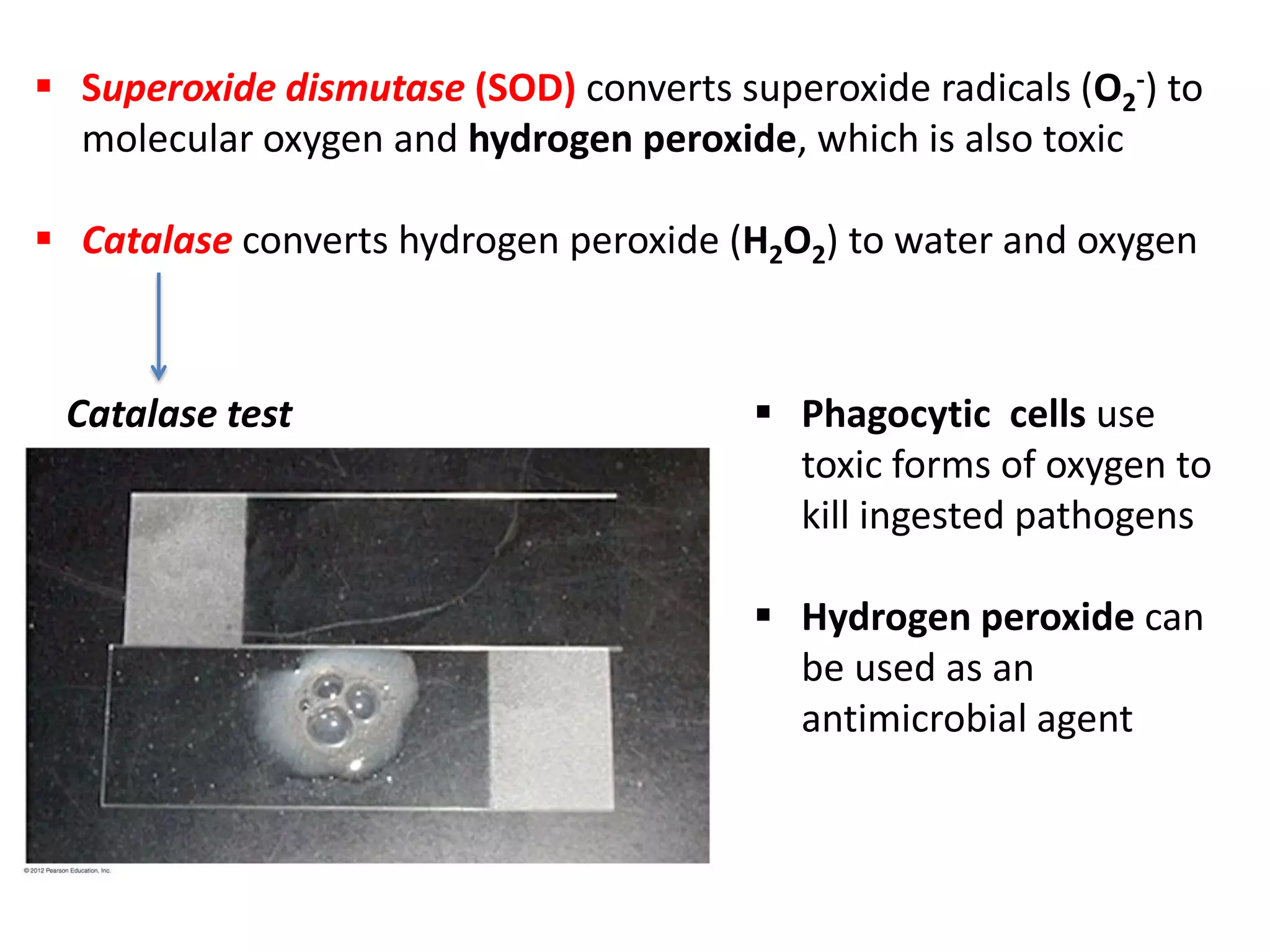
 Catalase converts hydrogen peroxide (H2O2) to water and oxygen
Catalase test  Phagocytic cells use
toxic forms of oxygen to
kill ingested pathogens
 Hydrogen peroxide can
be used as an
antimicrobial agent
 Many of the bacteria that form our normal flora and
many pathogens are facultative anaerobes
 Some pathogens can be obligate anaerobes
 Gas gangrene is caused by
Clostridium perfringens
 Exposure of this organism
to air is a lethal event for
the bacterium
How do we culture
microbes?
 To cultivate (or culture)
microorganisms
 A sample (inoculum) is
placed into/on broths (liquid
media) and solid media
 Microorganisms that grow
from an inoculum are called
a culture
 Cultures visible on solid
media as discrete units
are called colonies
Petri plate
Deeps
Slants
What criteria must a culture medium meet?
 All nutrients required by bacteria in the specimen
including growth factors
 Sufficient moisture, properly adjusted pH of the
medium, oxygen requirements
 Proper temperature of incubation for growth
 Sterilization and aseptic techniques are designed to
minimize contamination of the specimen
A chemically defined medium (synthetic medium)
A complex medium
 Nutrient broth is the liquid version of the medium - without
agar (another example is TSB/TSA: Trypticase soy broth/agar)
Anaerobic microbial cultures, media, and systems
 Stab cultures
 Reducing media are
used to culture
anaerobes
 Contain chemicals
such as thioglycollate
that combines with
oxygen and removes it
from the medium
 Anaerobic culture system (anaerobic jar or GasPakTM jar)
An Anaerobic
Chamber
Handling and culturing clinical specimens
 Clinical specimens are collected to identify a suspected
pathogen
 Specimens often include microorganisms associated with
the normal microbiota
 Suspected pathogen in the clinical specimen must be
isolated from the normal microbiota in culture
 Several techniques can be used to isolate organisms in pure
cultures (axenic cultures)
Handling and culturing clinical specimens
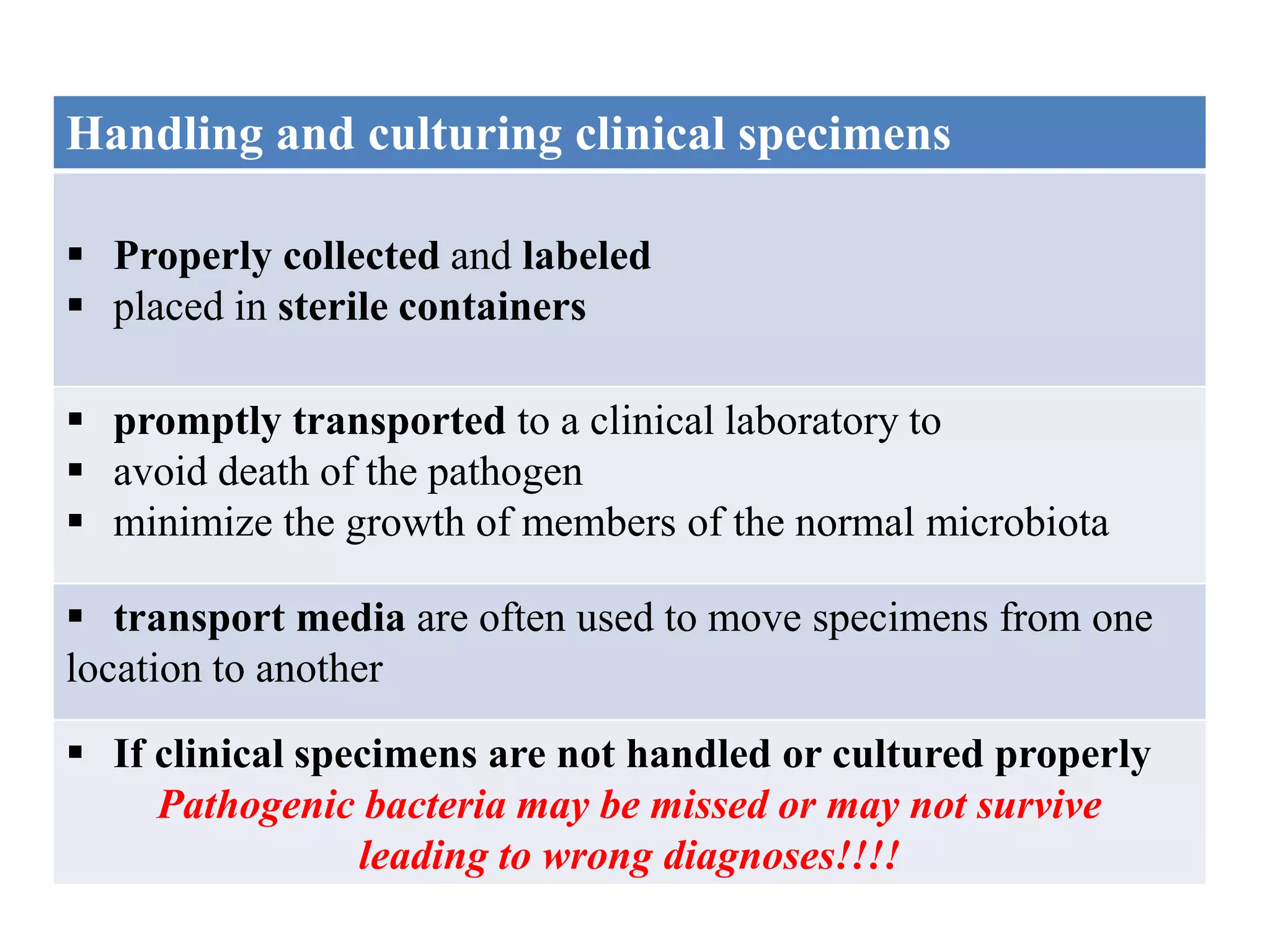
 Properly collected and labeled
 placed in sterile containers
 promptly transported to a clinical laboratory to
 avoid death of the pathogen
 minimize the growth of members of the normal microbiota
 transport media are often used to move specimens from one
location to another
 If clinical specimens are not handled or cultured properly
Pathogenic bacteria may be missed or may not survive
leading to wrong diagnoses!!!!
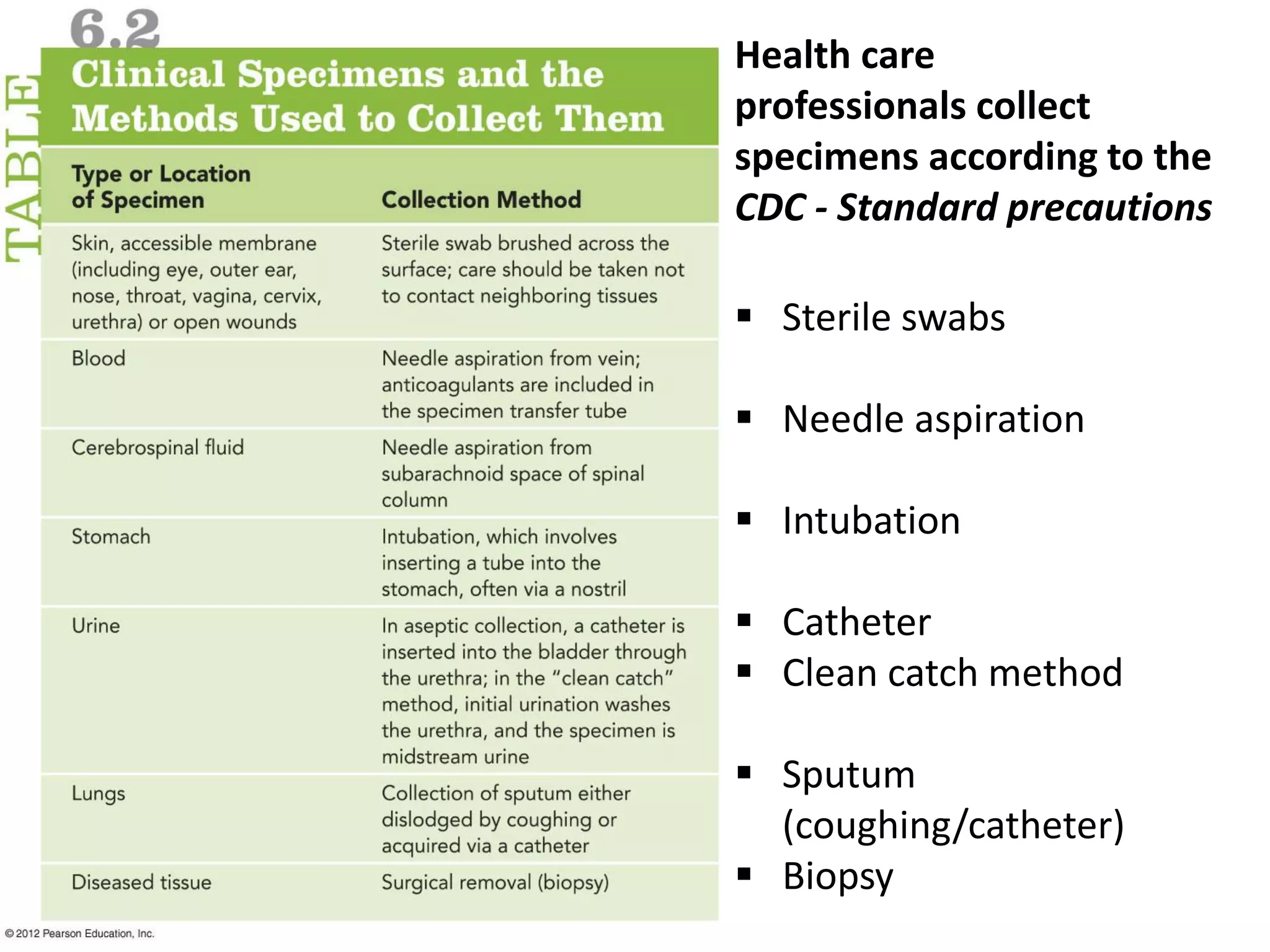
Health care
professionals collect
specimens according to the
CDC - Standard precautions
 Sterile swabs
 Needle aspiration
 Intubation
 Catheter
 Clean catch method
 Sputum
(coughing/catheter)
 Biopsy
 Streak-plate
technique of
isolation
 The method of
serial dilutions
Techniques to isolate microorganisms in pure cultures or
axenic cultures
 Pour-plate/spread-plate
techniques of isolation
 Plating serial
dilutions of the
specimen
 Pour plate method
 Spread plate
method
Characteristics of bacterial colonies can help in the
process of identification
*
*
*
*
*
*
*
*
Mixed
culture
Pure
culture
Clinical implications of bacterial growth and
culture media
 Bacteria can be “fastidious” in a
laboratory setting, Nesseria
gonorrhoeae or Haemophilus
influenzae
 Some cannot be grown on
culture media: Mycobacterium
leprae (armadillos) or
Treponema pallidum (rabbits)
 Some others are obligate
intracellular parasites
(chlamydias and richettsias) and
require cultures of living cells
 Chocolate agar used to
culture H. influenzae and
N. gonorrhoeae
Enriched medium
Enriched, selective, and differential media help
establish the presence of pathogens
 A selective medium contains ingredients that inhibit the growth of
some organisms while encouraging the growth of others
Sabouraud
dextrose agar
selects for the
growth of fungi
while inhibits the
growth of
bacteria
Nutrient agar - pH 7.3 Sabouraud agar - pH 5.6
Enriched, selective, and differential media help
establish the presence of pathogens
 Blood agar plate (BAP) is an enriched and differential medium,
which is usually used to detect hemolytic activity
No hemolysis
(gamma-hemolysis)
Alpha-hemolysis
Beta-hemolysis
 Streptococcus pyogenes
 Streptococcus pneumoniae
 Enterococcus faecalis
Beta-hemolysis
Enriched, selective, and differential media help
establish the presence of pathogens
 Many selective media are also differential media
Enriched, selective, and differential media help
establish the presence of pathogens
 Many selective media are also differential media
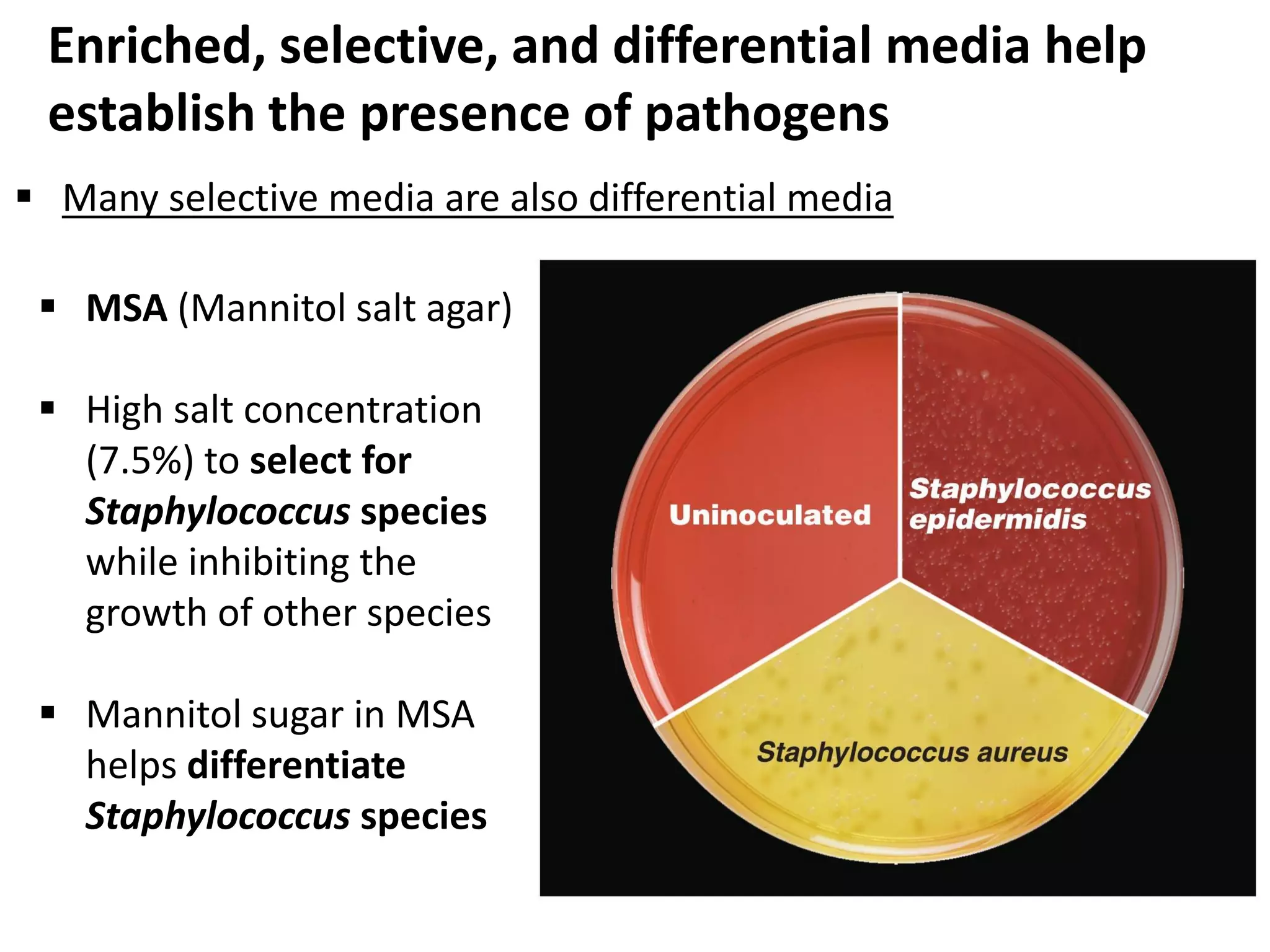
 MSA (Mannitol salt agar)
 High salt concentration
(7.5%) to select for
Staphylococcus species
while inhibiting the
growth of other species
 Mannitol sugar in MSA
helps differentiate
Staphylococcus species
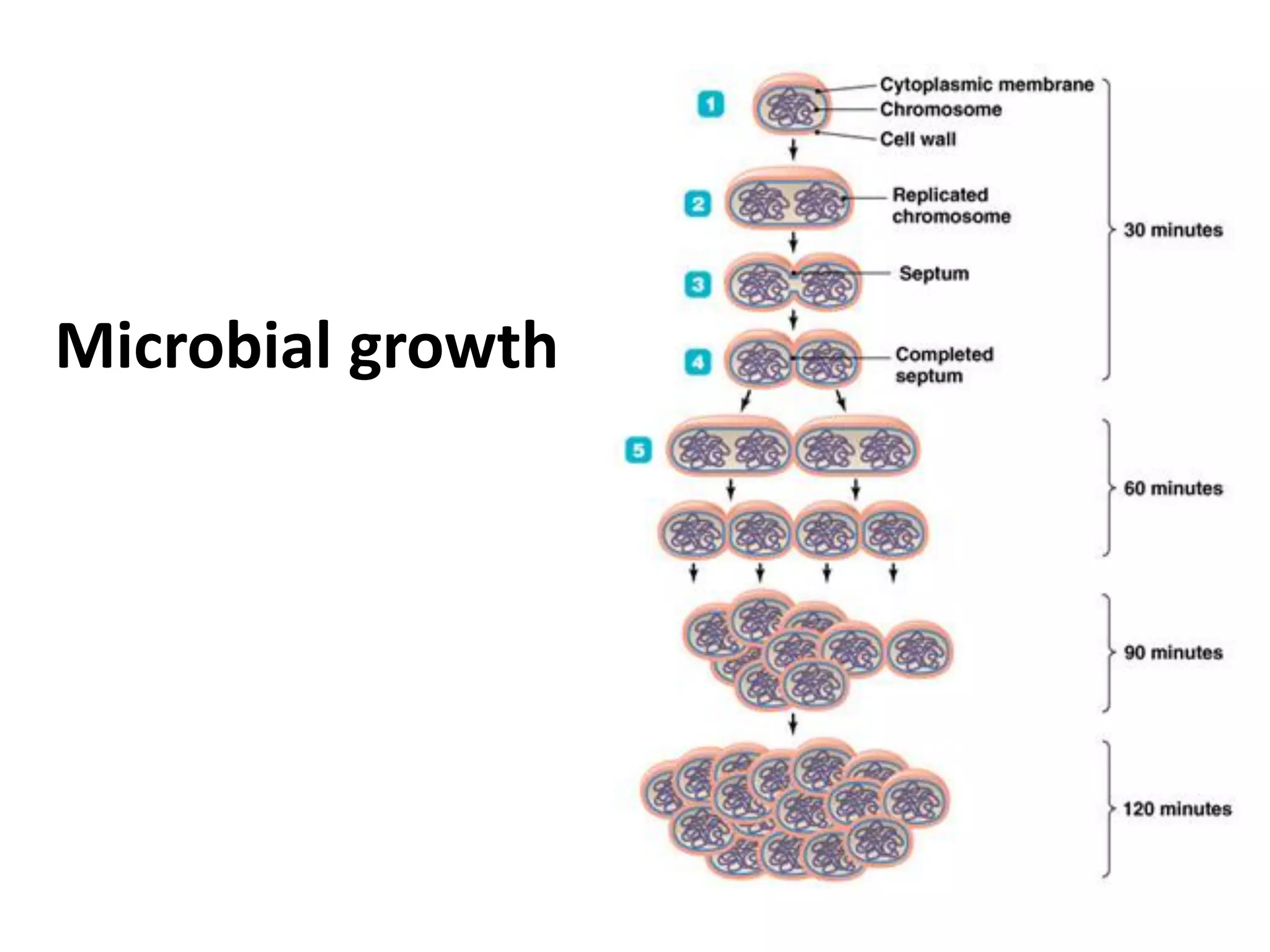
Bacterial growth by binary fission – asexual
reproduction
 Generation time is the time
required for a bacterial cell
to grow and divide
 Under optimal conditions,
E. coli or S. aureus have a
generation time of ~ 20 min
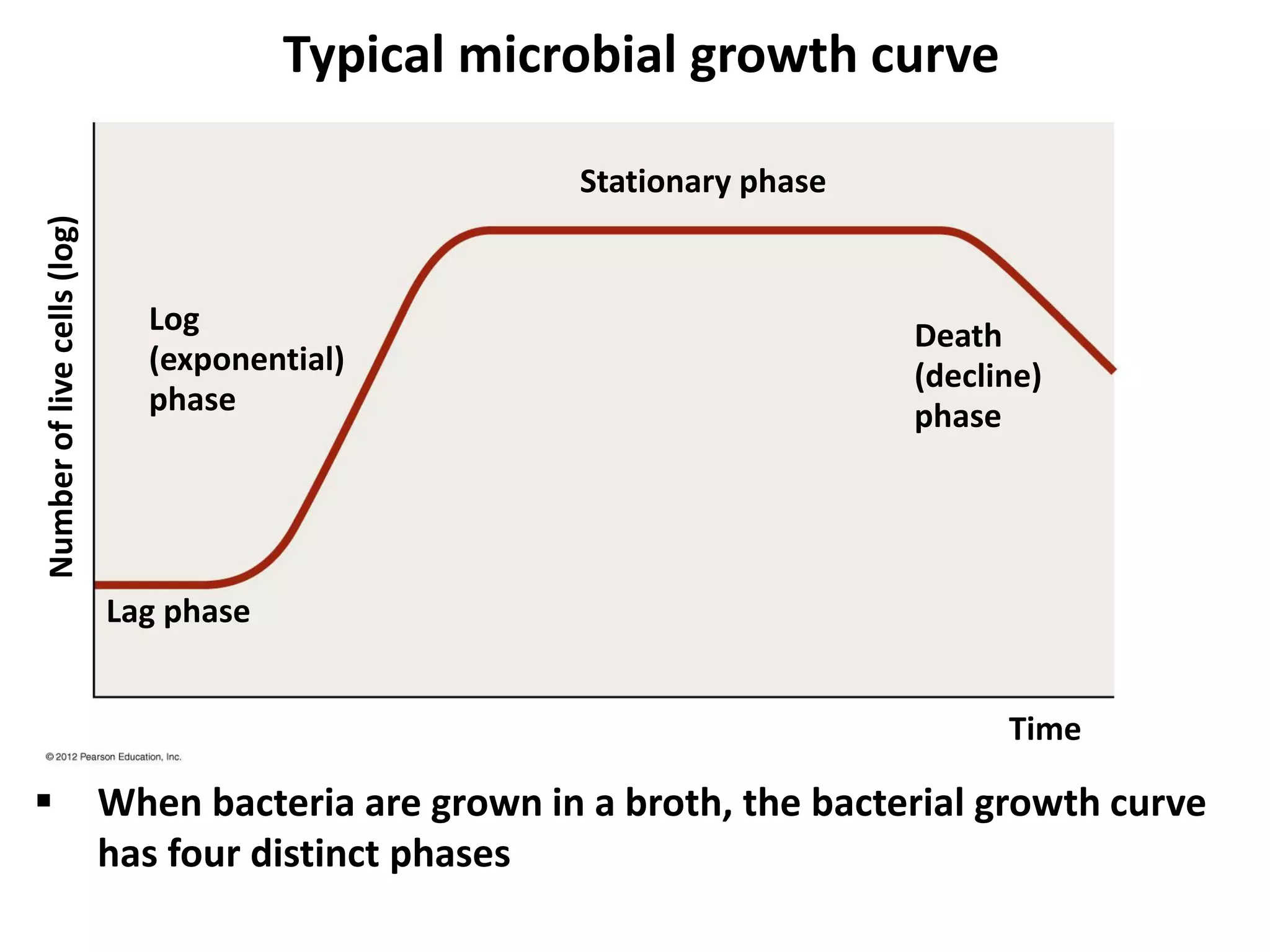
Typical microbial growth curve
Stationary phase
Death
(decline)
phase
Log
(exponential)
phase
Lag phase
Time
Numberoflivecells(log)
 When bacteria are grown in a broth, the bacterial growth curve
has four distinct phases
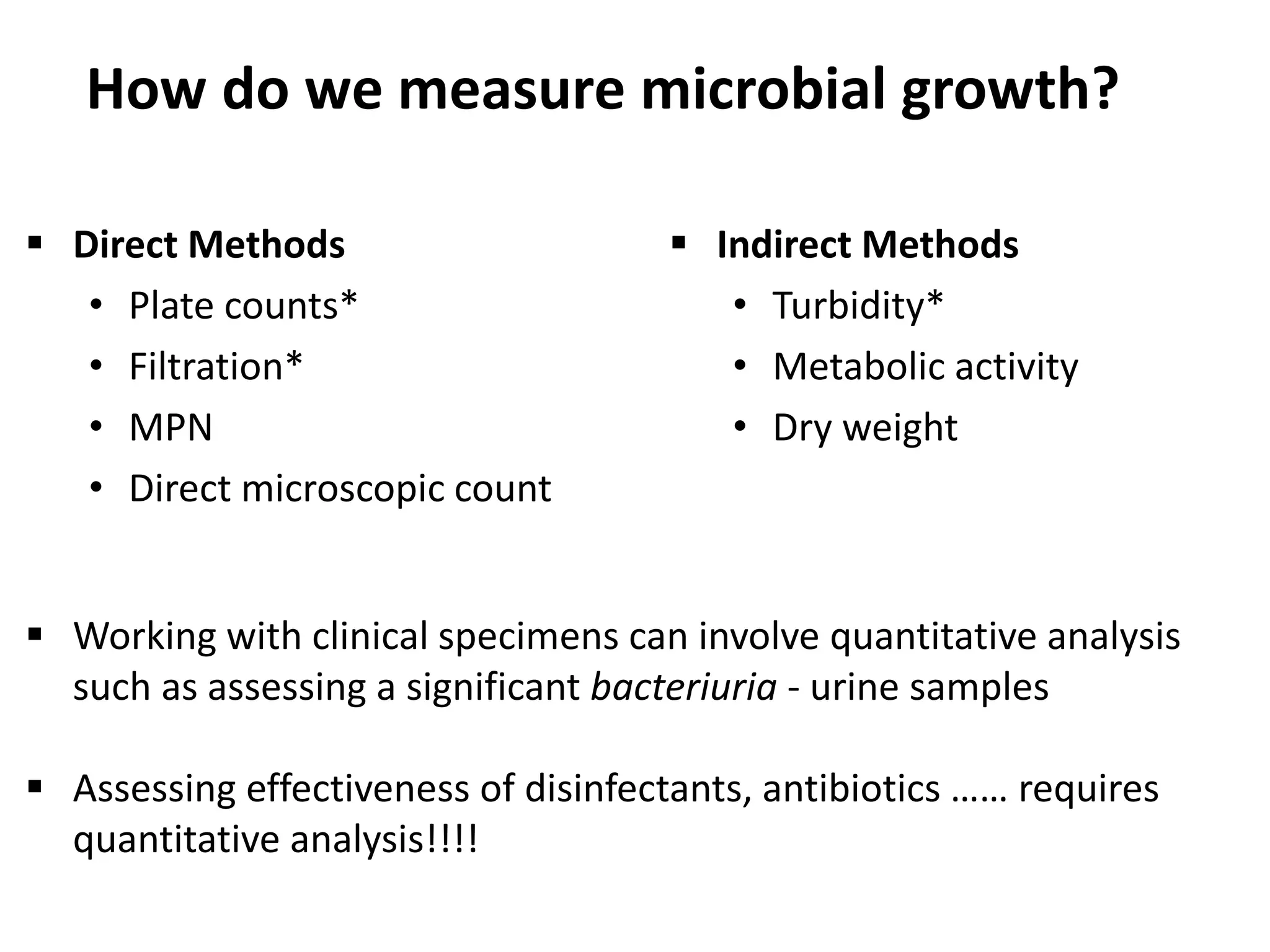
How do we measure microbial growth?
 Direct Methods
• Plate counts*
• Filtration*
• MPN
• Direct microscopic count
 Indirect Methods
• Turbidity*
• Metabolic activity
• Dry weight
 Working with clinical specimens can involve quantitative analysis
such as assessing a significant bacteriuria - urine samples
 Assessing effectiveness of disinfectants, antibiotics …… requires
quantitative analysis!!!!
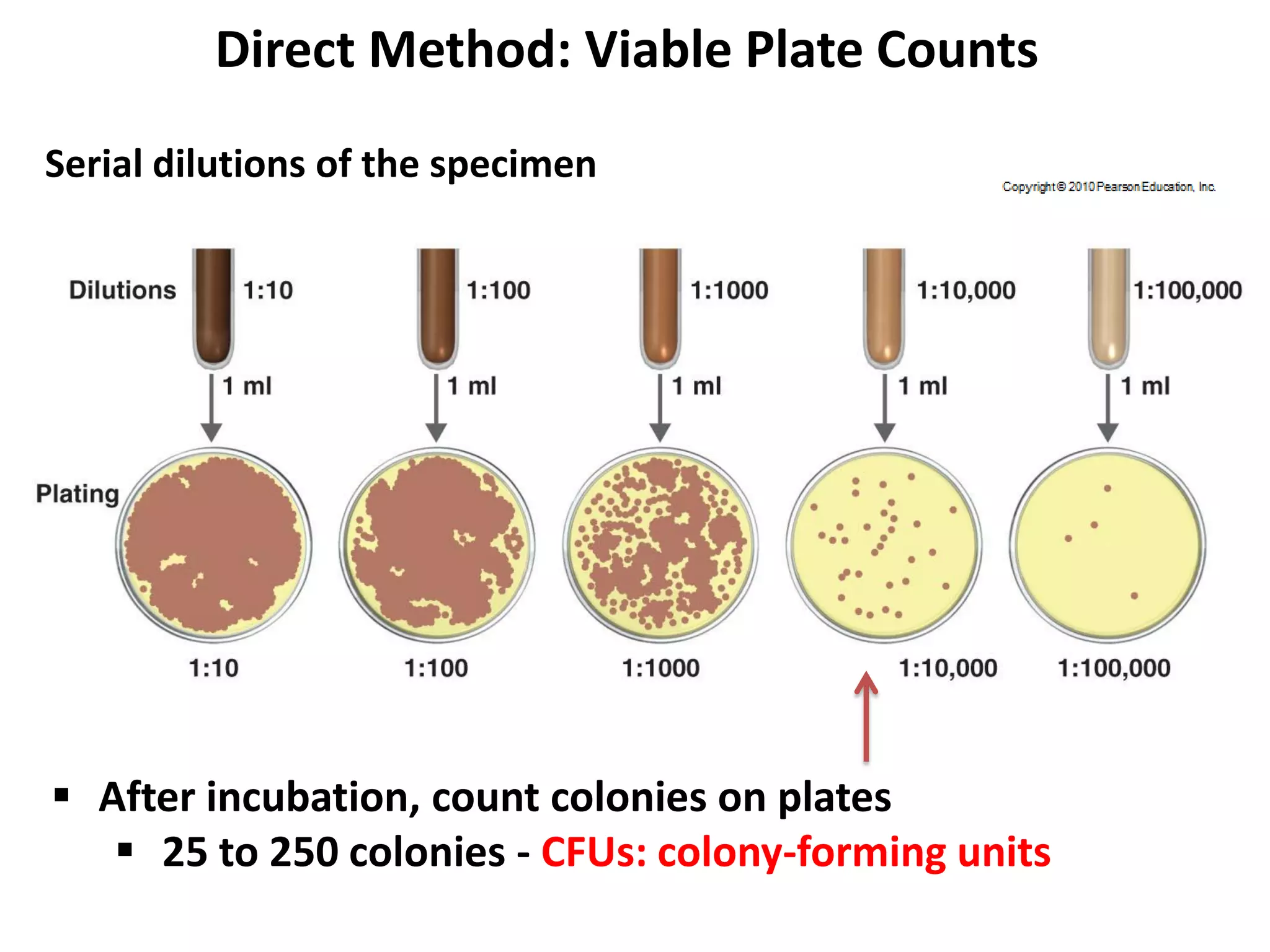
Direct Method: Viable Plate Counts
 After incubation, count colonies on plates
 25 to 250 colonies - CFUs: colony-forming units
Serial dilutions of the specimen
Direct Method
Counting Bacteria
by Membrane
Filtration
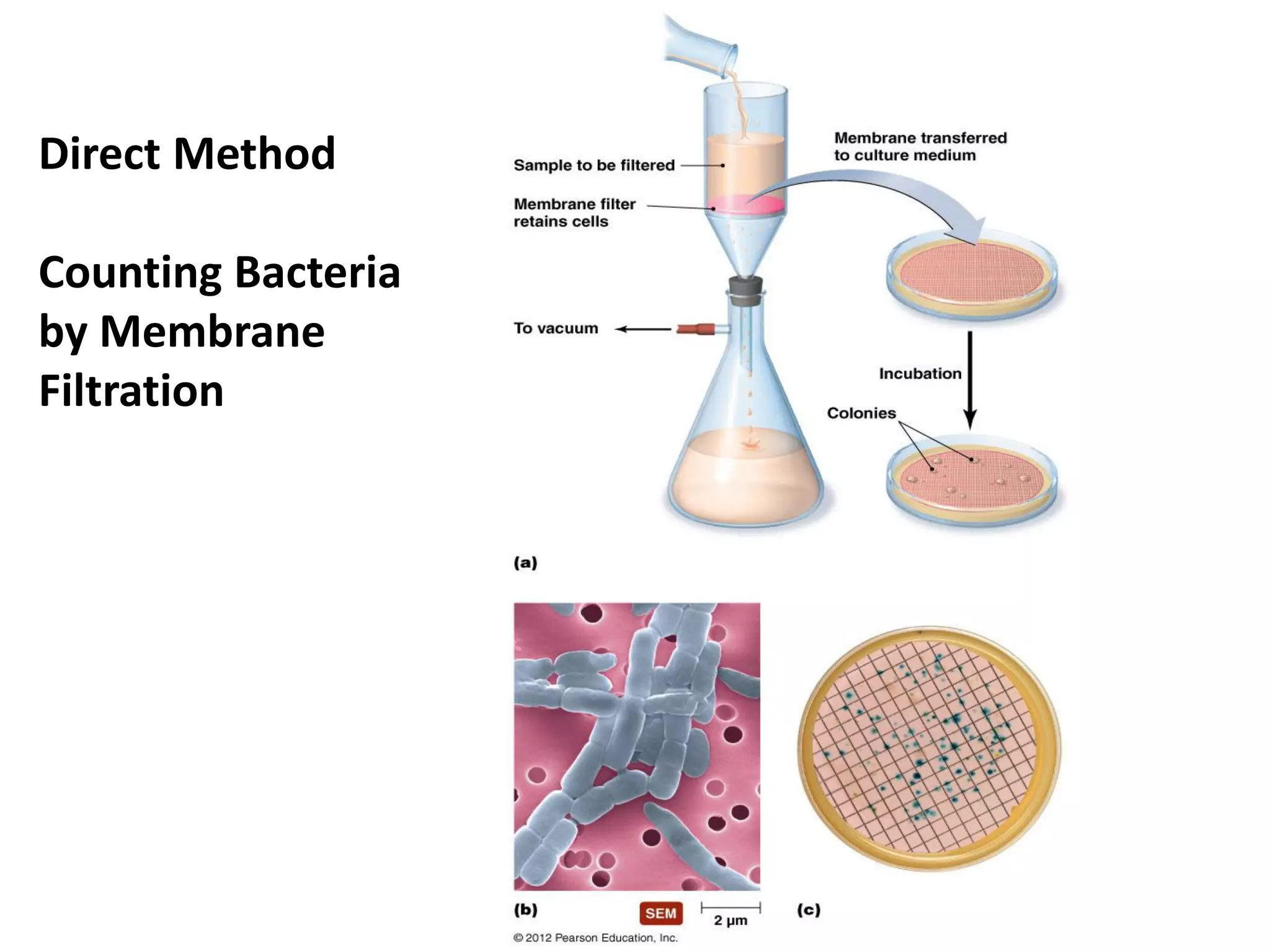
Direct Method: Counting Bacteria by Membrane Filtration
 Bacteria are filtered
out and retained on the
surface of the filter
 The filter is transferred to a culture
medium
 Colonies arise from the bacterial cells
on the surface of the filter
Indirect Methods
Turbidity
 This method uses an
instrument called
spectrophotometer
 The amount of light
hitting the detector is
inversely proportional to
the number of bacteria
 The less light
transmitted, the more
bacteria in the sample
Preserving Bacterial Cultures
 Bacterial cultures are stored by slowing the cell’s metabolism
 Prevent exhaustion of all nutrients and excessive accumulation
of waste products
 Storage for short period of time
 Refrigeration (weeks to months)
 Long-term storage
 Deep-freezing (years)
 Lyophilization (freeze-drying) (decades)
 Involves removing water from a frozen culture using an
intense vacuum. Lyophilized cultures are restored by
adding them to liquid media

3 bio265 microbial growth instructor dr di bonaventura

  • 1.
  • 2.
    Microbial Growth  Increasein number of cells rather than an increase in size  Understanding the requirements for microbial growth  Allow us determine how to control the growth of microbes  Specifically, of those microbes that cause disease and food spoilage
  • 3.
    The Requirements forGrowth  Physical requirements include  Temperature  pH  Osmotic pressure  Microorganisms have physical, chemical, and energy requirements for growth
  • 4.
    Effect of temperature Minimum growth temperature - microbe is able to conduct metabolism  Maximum growth temperature – microbe continues to metabolize  Optimum growth temperature – highest growth rate  Growth rate plotted against temperature  Growth of Escherichia coli on nutrient agar at three different temperature
  • 5.
     Categories of microbesbased on temperature ranges for growth  Human pathogens are mesophiles  (Optimum growth temperature is ~ 37C) Effect of temperature
  • 6.
     Treponema pallidum(the causative agent of syphilis) likes lower temperatures  Lesions are first seen on exterior parts of the body including lips, tongue, and genitalia Variable temperature requirements are seen in certain diseases Chancroids Temperature and bacterial growth
  • 7.
    Temperature and bacterialgrowth Variable temperature requirements are seen in certain diseases  Mycobacterium leprae (the causative agent of leprosy) also likes lower temperatures  Leprosy is initially seen on the extremities of the body, like face, ears, hands, feet, and fingers
  • 8.
    Effect of pH Neutrophiles  Grow best in a narrow range around neutral pH (pH 6.5-7.5)  Acidophiles  Grow best in acidic habitats  Alkalinophiles  Live in alkaline soils and water  Most pathogens are neutrophiles  Helicobacter pylori (causative agent of gastric ulcers) is not an acidophile but an acid-tolerant (secretes bicarbonate and urease)  Vibrio cholerae, the cause of cholera, can thrive at a pH as high as 9.0.
  • 9.
    Effect of OsmoticPressure  Isotonic  Hypertonic (plasmolysis)  Osmotic pressure is the pressure exerted on bacterial cells by their environment  Hypotonic: the bacterial cell gains water and swells to the limit of its cell wall  Some opportunistic pathogens are facultative halophiles  Staphylococcus aureus - colonizes the surface of the skin (salt)
  • 10.
    Chemical Requirements  Microorganismsuse a variety of chemicals (nutrients) as a source of energy to build organic molecules and cell structures  Several core chemicals are required for bacterial growth  Chemoheterotrophs, which include pathogenic bacteria, use organic molecules as a source of carbon and energy
  • 11.
     Trace elementsor micronutrients are minerals essential for the function of certain enzymes  Include  copper  zinc  manganese  molybdenum Trace elements and growth factors
  • 12.
    Oxygen Requirements  Capnophilesare microbes that require higher concentration of carbon dioxide (3-10%) in addition to low oxygen levels
  • 13.
     Superoxide dismutase(SOD) converts superoxide radicals (O2 -) to molecular oxygen and hydrogen peroxide, which is also toxic  Catalase converts hydrogen peroxide (H2O2) to water and oxygen Catalase test  Phagocytic cells use toxic forms of oxygen to kill ingested pathogens  Hydrogen peroxide can be used as an antimicrobial agent
  • 14.
     Many ofthe bacteria that form our normal flora and many pathogens are facultative anaerobes  Some pathogens can be obligate anaerobes  Gas gangrene is caused by Clostridium perfringens  Exposure of this organism to air is a lethal event for the bacterium
  • 15.
    How do weculture microbes?  To cultivate (or culture) microorganisms  A sample (inoculum) is placed into/on broths (liquid media) and solid media  Microorganisms that grow from an inoculum are called a culture  Cultures visible on solid media as discrete units are called colonies Petri plate Deeps Slants
  • 16.
    What criteria musta culture medium meet?  All nutrients required by bacteria in the specimen including growth factors  Sufficient moisture, properly adjusted pH of the medium, oxygen requirements  Proper temperature of incubation for growth  Sterilization and aseptic techniques are designed to minimize contamination of the specimen
  • 17.
    A chemically definedmedium (synthetic medium)
  • 18.
    A complex medium Nutrient broth is the liquid version of the medium - without agar (another example is TSB/TSA: Trypticase soy broth/agar)
  • 19.
    Anaerobic microbial cultures,media, and systems  Stab cultures  Reducing media are used to culture anaerobes  Contain chemicals such as thioglycollate that combines with oxygen and removes it from the medium  Anaerobic culture system (anaerobic jar or GasPakTM jar)
  • 20.
  • 21.
    Handling and culturingclinical specimens  Clinical specimens are collected to identify a suspected pathogen  Specimens often include microorganisms associated with the normal microbiota  Suspected pathogen in the clinical specimen must be isolated from the normal microbiota in culture  Several techniques can be used to isolate organisms in pure cultures (axenic cultures)
  • 22.
    Handling and culturingclinical specimens  Properly collected and labeled  placed in sterile containers  promptly transported to a clinical laboratory to  avoid death of the pathogen  minimize the growth of members of the normal microbiota  transport media are often used to move specimens from one location to another  If clinical specimens are not handled or cultured properly Pathogenic bacteria may be missed or may not survive leading to wrong diagnoses!!!!
  • 23.
    Health care professionals collect specimensaccording to the CDC - Standard precautions  Sterile swabs  Needle aspiration  Intubation  Catheter  Clean catch method  Sputum (coughing/catheter)  Biopsy
  • 24.
     Streak-plate technique of isolation The method of serial dilutions Techniques to isolate microorganisms in pure cultures or axenic cultures  Pour-plate/spread-plate techniques of isolation
  • 25.
     Plating serial dilutionsof the specimen  Pour plate method  Spread plate method
  • 26.
    Characteristics of bacterialcolonies can help in the process of identification * * * * * * * * Mixed culture Pure culture
  • 27.
    Clinical implications ofbacterial growth and culture media  Bacteria can be “fastidious” in a laboratory setting, Nesseria gonorrhoeae or Haemophilus influenzae  Some cannot be grown on culture media: Mycobacterium leprae (armadillos) or Treponema pallidum (rabbits)  Some others are obligate intracellular parasites (chlamydias and richettsias) and require cultures of living cells  Chocolate agar used to culture H. influenzae and N. gonorrhoeae Enriched medium
  • 28.
    Enriched, selective, anddifferential media help establish the presence of pathogens  A selective medium contains ingredients that inhibit the growth of some organisms while encouraging the growth of others Sabouraud dextrose agar selects for the growth of fungi while inhibits the growth of bacteria Nutrient agar - pH 7.3 Sabouraud agar - pH 5.6
  • 29.
    Enriched, selective, anddifferential media help establish the presence of pathogens  Blood agar plate (BAP) is an enriched and differential medium, which is usually used to detect hemolytic activity No hemolysis (gamma-hemolysis) Alpha-hemolysis Beta-hemolysis  Streptococcus pyogenes  Streptococcus pneumoniae  Enterococcus faecalis
  • 30.
  • 31.
    Enriched, selective, anddifferential media help establish the presence of pathogens  Many selective media are also differential media
  • 33.
    Enriched, selective, anddifferential media help establish the presence of pathogens  Many selective media are also differential media  MSA (Mannitol salt agar)  High salt concentration (7.5%) to select for Staphylococcus species while inhibiting the growth of other species  Mannitol sugar in MSA helps differentiate Staphylococcus species
  • 34.
    Bacterial growth bybinary fission – asexual reproduction  Generation time is the time required for a bacterial cell to grow and divide  Under optimal conditions, E. coli or S. aureus have a generation time of ~ 20 min
  • 35.
    Typical microbial growthcurve Stationary phase Death (decline) phase Log (exponential) phase Lag phase Time Numberoflivecells(log)  When bacteria are grown in a broth, the bacterial growth curve has four distinct phases
  • 36.
    How do wemeasure microbial growth?  Direct Methods • Plate counts* • Filtration* • MPN • Direct microscopic count  Indirect Methods • Turbidity* • Metabolic activity • Dry weight  Working with clinical specimens can involve quantitative analysis such as assessing a significant bacteriuria - urine samples  Assessing effectiveness of disinfectants, antibiotics …… requires quantitative analysis!!!!
  • 37.
    Direct Method: ViablePlate Counts  After incubation, count colonies on plates  25 to 250 colonies - CFUs: colony-forming units Serial dilutions of the specimen
  • 38.
  • 39.
    Direct Method: CountingBacteria by Membrane Filtration  Bacteria are filtered out and retained on the surface of the filter  The filter is transferred to a culture medium  Colonies arise from the bacterial cells on the surface of the filter
  • 40.
    Indirect Methods Turbidity  Thismethod uses an instrument called spectrophotometer  The amount of light hitting the detector is inversely proportional to the number of bacteria  The less light transmitted, the more bacteria in the sample
  • 41.
    Preserving Bacterial Cultures Bacterial cultures are stored by slowing the cell’s metabolism  Prevent exhaustion of all nutrients and excessive accumulation of waste products  Storage for short period of time  Refrigeration (weeks to months)  Long-term storage  Deep-freezing (years)  Lyophilization (freeze-drying) (decades)  Involves removing water from a frozen culture using an intense vacuum. Lyophilized cultures are restored by adding them to liquid media