INFORMATION
Conjunctiva: The thin, tough lining that covers
the inner wall of the eyelid and the sclera (The
white of the eyes)
Conjunctivitis:
An infection or inflammation of the conjunctiva.
Keratitis: An infection or inflammation of the
cornea-The domed covering over the iris and lens.
https://my.clevelandclinic.org/health/body/24329-conjunctiva
 Mostly minor eye infections heal well on their own, others
can be serious and may cause permanent vision loss.
 It is important to contact a health professional if a person
has changes in their eyes or vision that could indicate an
infection.
 Eye infections can happen in one eye or both eyes. Some
infections aren’t serious.
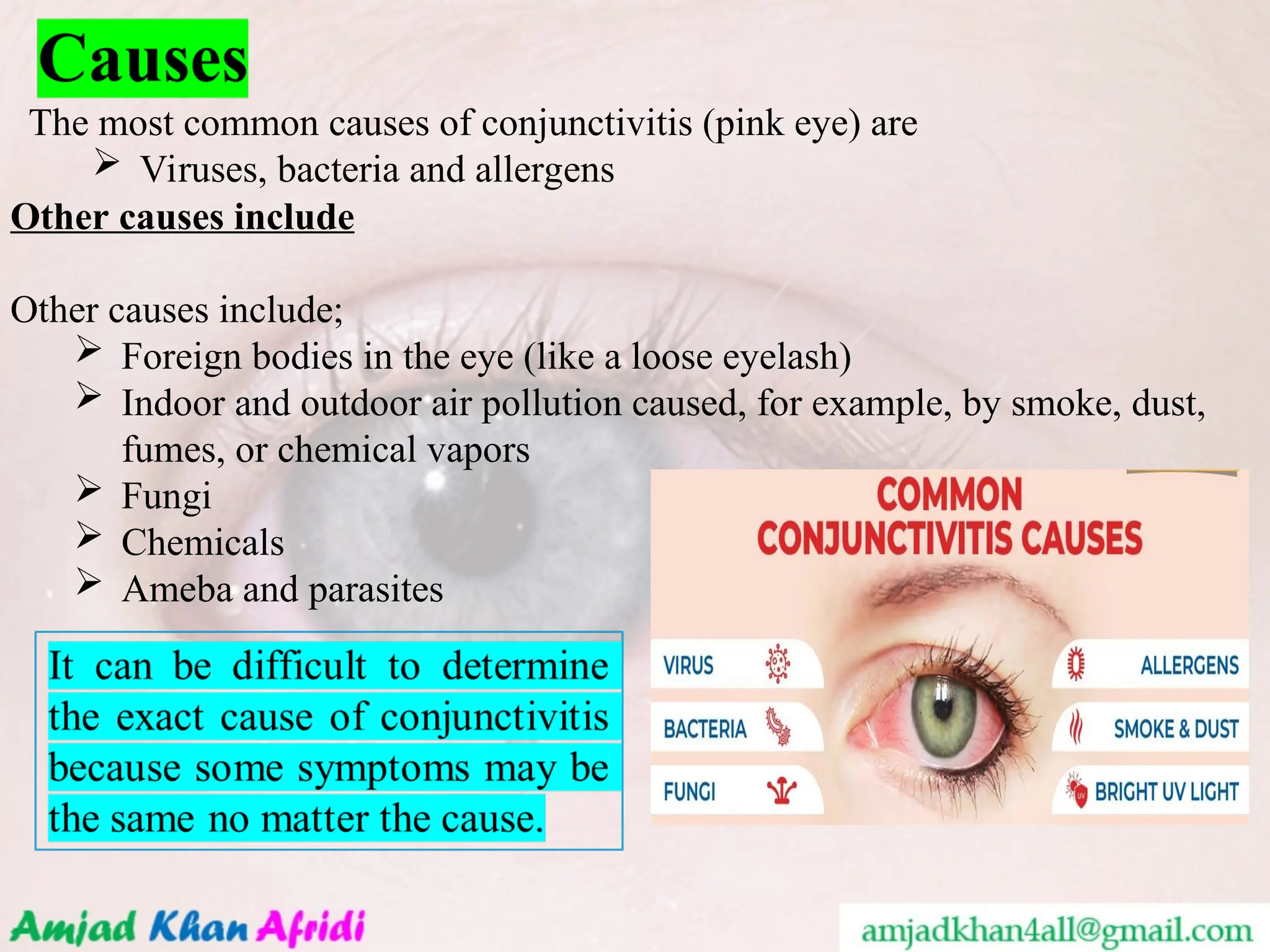
The most common causes of conjunctivitis (pink eye) are
 Viruses, bacteria and allergens
Other causes include
Other causes include;
 Foreign bodies in the eye (like a loose eyelash)
 Indoor and outdoor air pollution caused, for example, by smoke, dust,
fumes, or chemical vapors
 Fungi
 Chemicals
 Ameba and parasites
Also called Viral keratitis
Infection of the eye caused by a number of different viruses, such as;
Herpes simplex type 1.
Varicella zoster virus, which also causes chickenpox and shingles
Adenoviruses.
Rubeola (measles) virus
Picornaviruses
Sometimes can result in large outbreaks depending on the virus
Very contagious
 Viral conjunctivitis is highly contagious.
 Most viruses that cause conjunctivitis spread through hand-to-eye
contact by hands or objects that are contaminated with the
infectious virus. Having contact with infectious tears, eye discharge,
or respiratory discharges can contaminate hands.
 Viral conjunctivitis can also spread by large respiratory tract
droplets.
 As viral conjunctivitis can be highly contagious, infected
individuals should be counseled to prevent transmission e.g.,
washing hands frequently, using separate towels, and avoiding close
contact with others during the period of contagion.
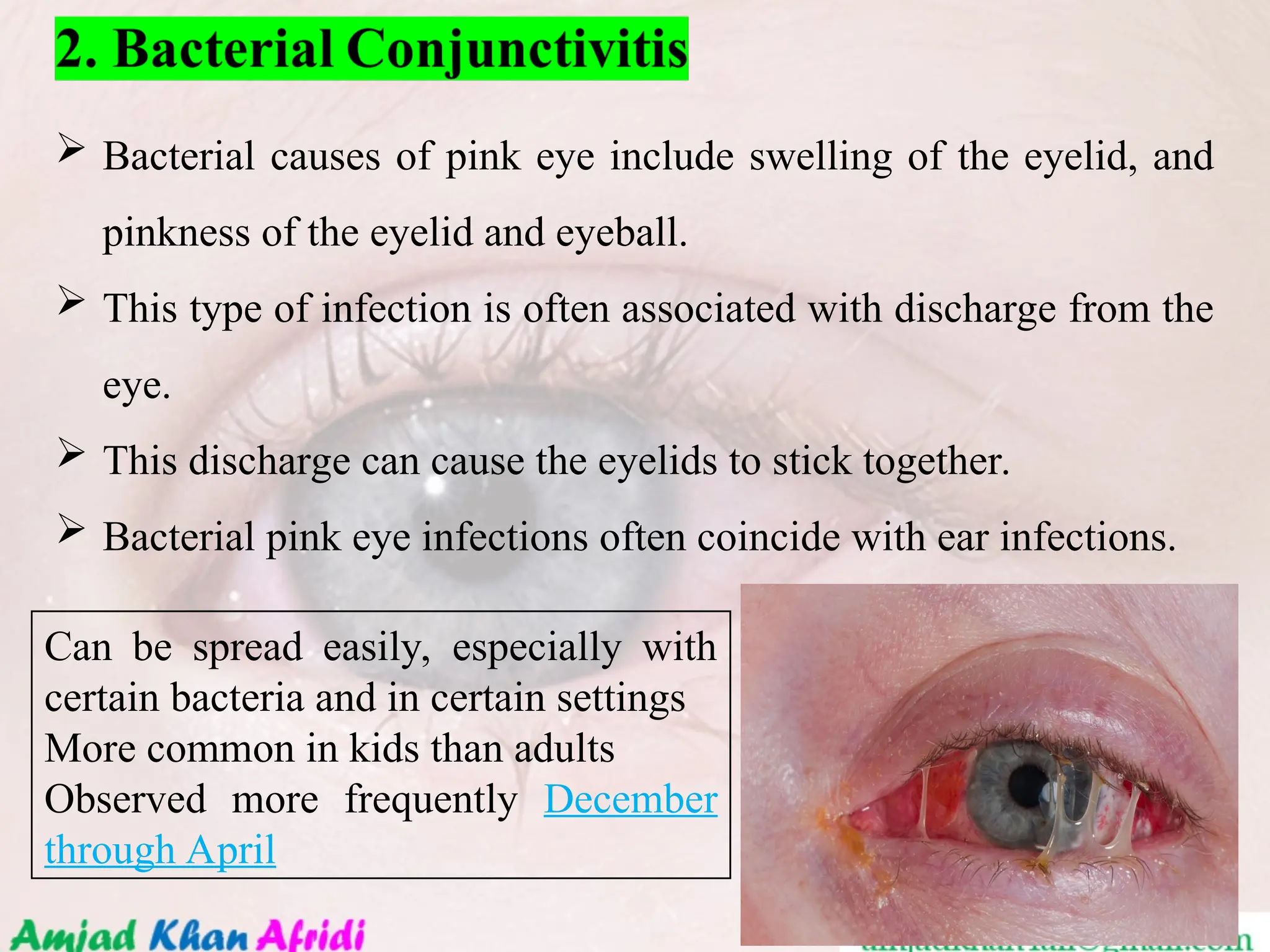
 Bacterial causes of pink eye include swelling of the eyelid, and
pinkness of the eyelid and eyeball.
 This type of infection is often associated with discharge from the
eye.
 This discharge can cause the eyelids to stick together.
 Bacterial pink eye infections often coincide with ear infections.
Can be spread easily, especially with
certain bacteria and in certain settings
More common in kids than adults
Observed more frequently December
through April
Infection of the eye caused by certain
bacteria;
Staphylococcus aureus,
Streptococcus pneumoniae,
Haemophilus influenzae,
Moraxella catarrhalis,
Chlamydia trachomatis and
Neisseria gonorrhoeae etc.
Acute Bacterial Conjunctivitis
Neisseria meningitidis Conjunctivitis
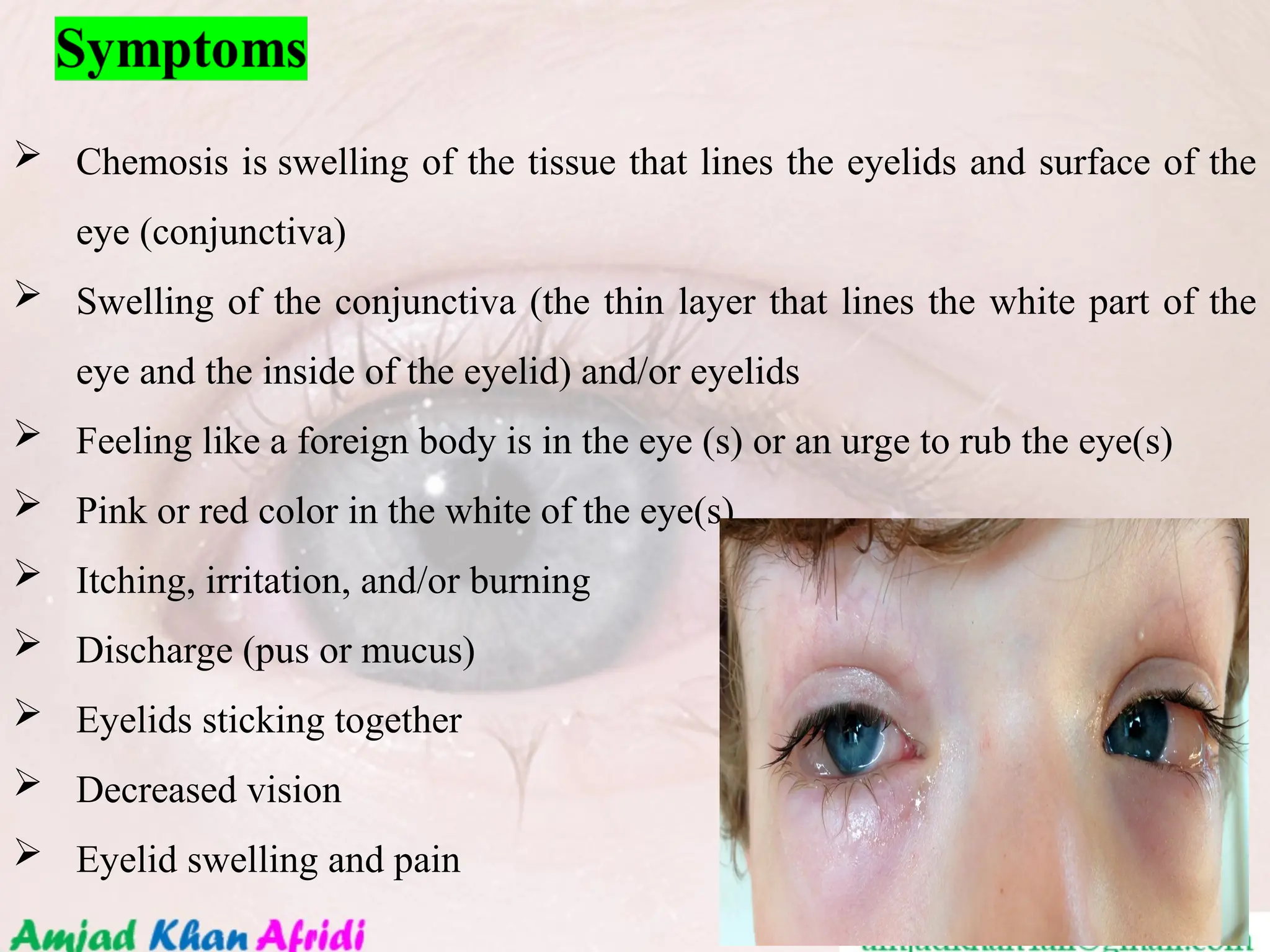
 Chemosis is swelling of the tissue that lines the eyelids and surface of the
eye (conjunctiva)
 Swelling of the conjunctiva (the thin layer that lines the white part of the
eye and the inside of the eyelid) and/or eyelids
 Feeling like a foreign body is in the eye (s) or an urge to rub the eye(s)
 Pink or red color in the white of the eye(s)
 Itching, irritation, and/or burning
 Discharge (pus or mucus)
 Eyelids sticking together
 Decreased vision
 Eyelid swelling and pain
Its occurs when the conjunctiva becomes swollen or inflamed due to a reaction
to pollen, dust mites, pet dander, mold, or other allergy-causing substances
Or other having allergic disease, such as hay fever, asthma, and eczema. It is
caused by the body’s reaction to certain substances it is allergic to, such as;
•Pollen from trees, plants, grasses, and weeds (Flowers)
•Dust mites
•Animal dander
•Molds
•Cosmetics
• Intense itching or burning eyes, urge to rub eyes.
• Red eyes.
• Tearing (watery eyes)
• Widened blood vessels in the clear tissue covering the white of the eye
• Watery or white, stringy mucus discharge.
• Swollen eyelids.
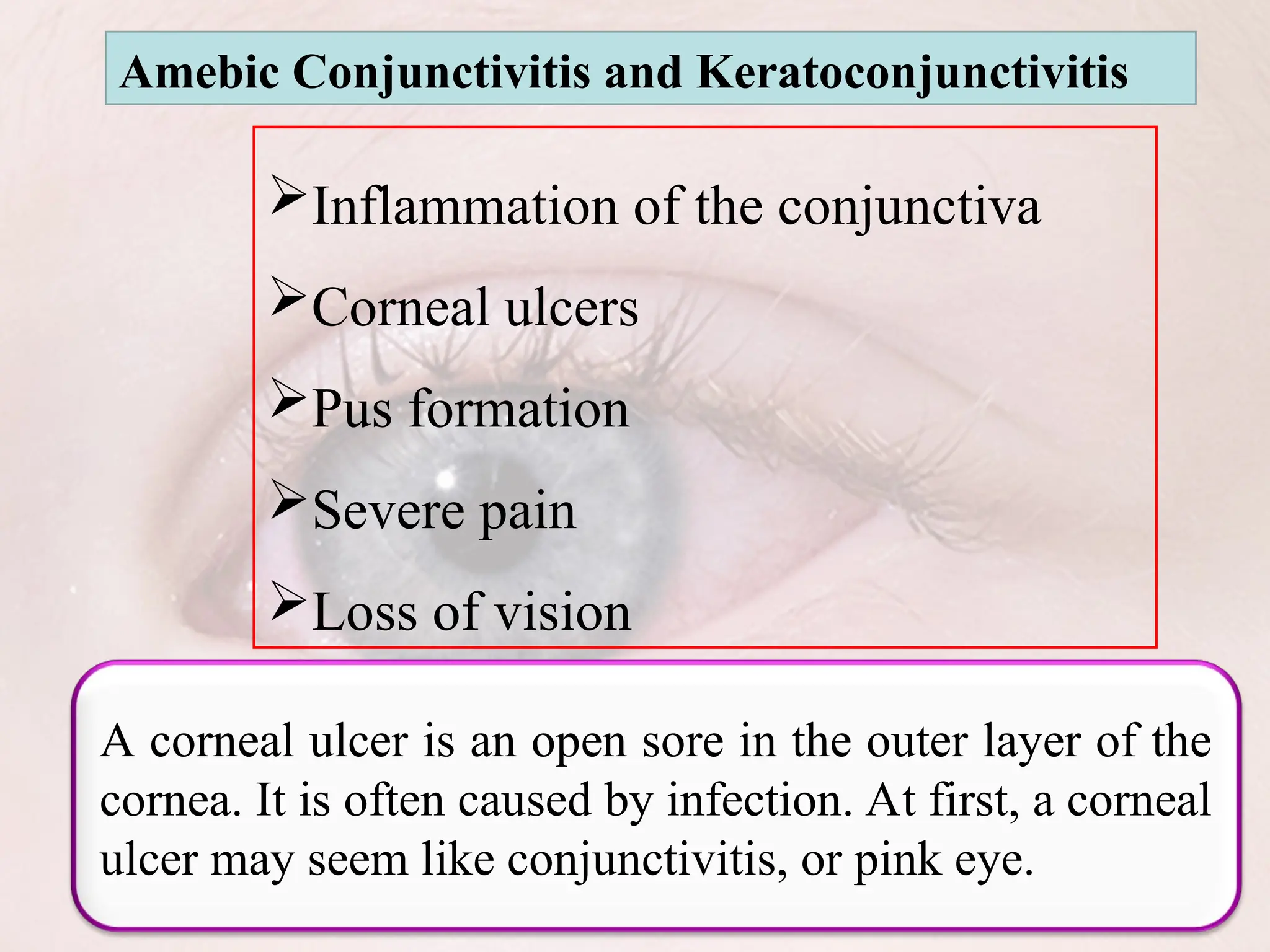
A corneal ulcer is an open sore in the outer layer of the
cornea. It is often caused by infection. At first, a corneal
ulcer may seem like conjunctivitis, or pink eye.
Amebic Conjunctivitis and Keratoconjunctivitis
Inflammation of the conjunctiva
Corneal ulcers
Pus formation
Severe pain
Loss of vision
Several species of amebae-genus Acanthamoeba.
Etiology Agent
Reservoirs and mode of transmission.
• Ameba contaminated water
• Unsterile contact lens
• Cleaning and wetting solutions
DIAGNOSIS:
Microscopic examination of scraping, swabs.
Eyes Infection (conjunctivitis)        .

Eyes Infection (conjunctivitis) .

  • 2.
    INFORMATION Conjunctiva: The thin,tough lining that covers the inner wall of the eyelid and the sclera (The white of the eyes) Conjunctivitis: An infection or inflammation of the conjunctiva. Keratitis: An infection or inflammation of the cornea-The domed covering over the iris and lens. https://my.clevelandclinic.org/health/body/24329-conjunctiva
  • 3.
     Mostly minoreye infections heal well on their own, others can be serious and may cause permanent vision loss.  It is important to contact a health professional if a person has changes in their eyes or vision that could indicate an infection.  Eye infections can happen in one eye or both eyes. Some infections aren’t serious.
  • 4.
    The most commoncauses of conjunctivitis (pink eye) are  Viruses, bacteria and allergens Other causes include Other causes include;  Foreign bodies in the eye (like a loose eyelash)  Indoor and outdoor air pollution caused, for example, by smoke, dust, fumes, or chemical vapors  Fungi  Chemicals  Ameba and parasites
  • 5.
    Also called Viralkeratitis Infection of the eye caused by a number of different viruses, such as; Herpes simplex type 1. Varicella zoster virus, which also causes chickenpox and shingles Adenoviruses. Rubeola (measles) virus Picornaviruses Sometimes can result in large outbreaks depending on the virus Very contagious
  • 6.
     Viral conjunctivitisis highly contagious.  Most viruses that cause conjunctivitis spread through hand-to-eye contact by hands or objects that are contaminated with the infectious virus. Having contact with infectious tears, eye discharge, or respiratory discharges can contaminate hands.  Viral conjunctivitis can also spread by large respiratory tract droplets.  As viral conjunctivitis can be highly contagious, infected individuals should be counseled to prevent transmission e.g., washing hands frequently, using separate towels, and avoiding close contact with others during the period of contagion.
  • 8.
     Bacterial causesof pink eye include swelling of the eyelid, and pinkness of the eyelid and eyeball.  This type of infection is often associated with discharge from the eye.  This discharge can cause the eyelids to stick together.  Bacterial pink eye infections often coincide with ear infections. Can be spread easily, especially with certain bacteria and in certain settings More common in kids than adults Observed more frequently December through April
  • 9.
    Infection of theeye caused by certain bacteria; Staphylococcus aureus, Streptococcus pneumoniae, Haemophilus influenzae, Moraxella catarrhalis, Chlamydia trachomatis and Neisseria gonorrhoeae etc.
  • 10.
    Acute Bacterial Conjunctivitis Neisseriameningitidis Conjunctivitis
  • 11.
     Chemosis isswelling of the tissue that lines the eyelids and surface of the eye (conjunctiva)  Swelling of the conjunctiva (the thin layer that lines the white part of the eye and the inside of the eyelid) and/or eyelids  Feeling like a foreign body is in the eye (s) or an urge to rub the eye(s)  Pink or red color in the white of the eye(s)  Itching, irritation, and/or burning  Discharge (pus or mucus)  Eyelids sticking together  Decreased vision  Eyelid swelling and pain
  • 12.
    Its occurs whenthe conjunctiva becomes swollen or inflamed due to a reaction to pollen, dust mites, pet dander, mold, or other allergy-causing substances Or other having allergic disease, such as hay fever, asthma, and eczema. It is caused by the body’s reaction to certain substances it is allergic to, such as; •Pollen from trees, plants, grasses, and weeds (Flowers) •Dust mites •Animal dander •Molds •Cosmetics
  • 13.
    • Intense itchingor burning eyes, urge to rub eyes. • Red eyes. • Tearing (watery eyes) • Widened blood vessels in the clear tissue covering the white of the eye • Watery or white, stringy mucus discharge. • Swollen eyelids.
  • 14.
    A corneal ulceris an open sore in the outer layer of the cornea. It is often caused by infection. At first, a corneal ulcer may seem like conjunctivitis, or pink eye. Amebic Conjunctivitis and Keratoconjunctivitis Inflammation of the conjunctiva Corneal ulcers Pus formation Severe pain Loss of vision
  • 15.
    Several species ofamebae-genus Acanthamoeba. Etiology Agent Reservoirs and mode of transmission. • Ameba contaminated water • Unsterile contact lens • Cleaning and wetting solutions DIAGNOSIS: Microscopic examination of scraping, swabs.

Editor's Notes

  • #1  The conjunctiva is a thin layer of tissue that covers the whites of the eyes and insides of the eyelids. Conjunctivitis is an infection or inflammation of the conjunctiva. here are many eye infections, including conjunctivitis, keratitis, and cellulitis. Symptoms can include itchiness, discharge, vision changes, and more.
  • #3 https://my.clevelandclinic.org/health/body/24329-conjunctiva
  • #6 Patients with viral conjunctivitis present with sudden onset foreign body sensation, red eyes, itching, light sensitivity, burning, and watery discharge.
  • #7 Patients with viral conjunctivitis present with sudden onset foreign body sensation, red eyes, itching, light sensitivity, burning, and watery discharge.
  • #8 Patients with viral conjunctivitis present with sudden onset foreign body sensation, red eyes, itching, light sensitivity, burning, and watery discharge.
  • #9 https://www.cdc.gov/conjunctivitis/clinical.html
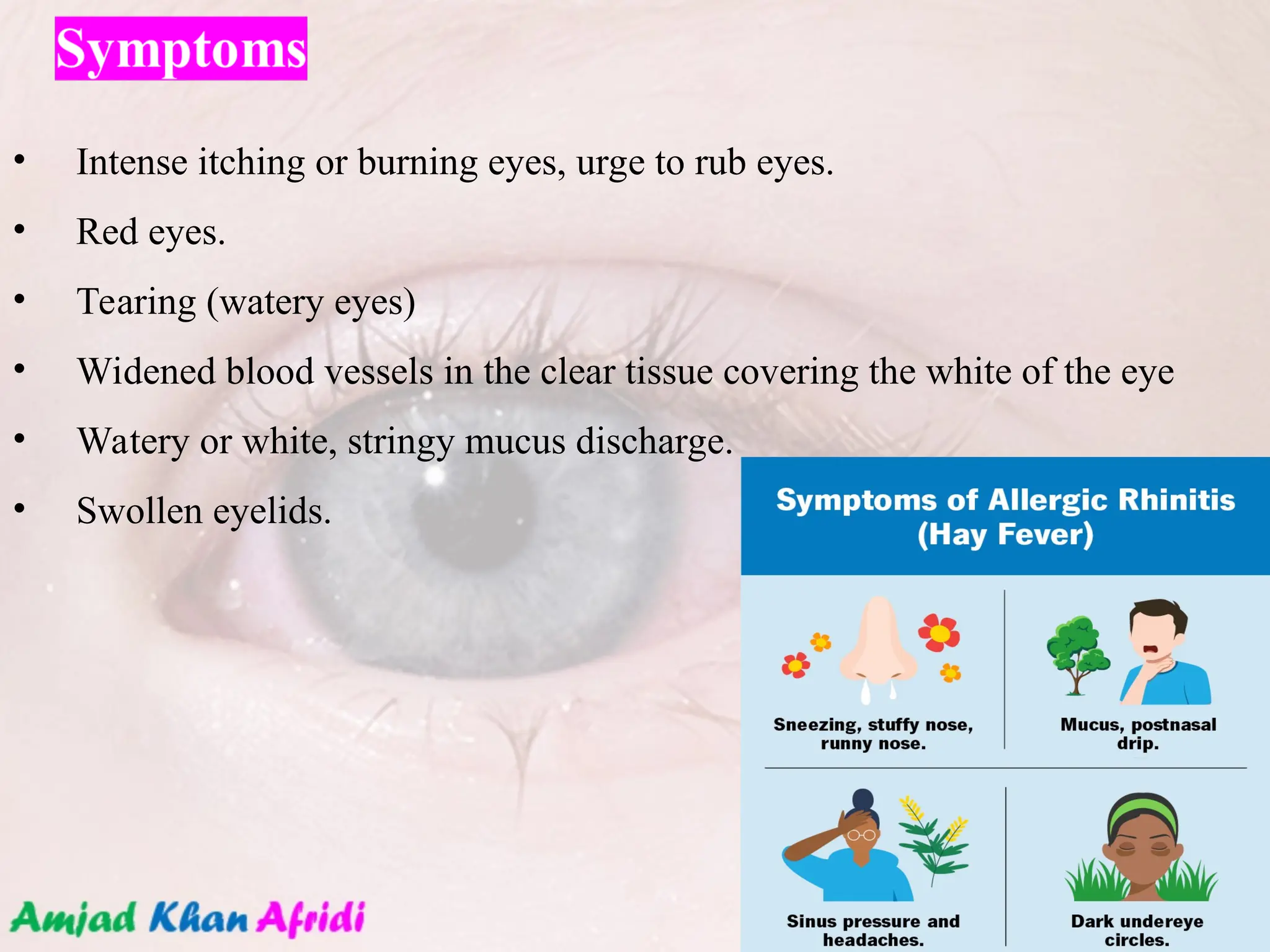
  • #13 Hay fever, also called allergic rhinitis, causes cold-like symptoms. These may include a runny nose, itchy eyes, congestion, sneezing and sinus pressure. But unlike a cold, hay fever isn't caused by a virus.
  • #14 Hay fever, also called allergic rhinitis, causes cold-like symptoms. These may include a runny nose, itchy eyes, congestion, sneezing and sinus pressure. But unlike a cold, hay fever isn't caused by a virus.
  • #17 Hay fever, also called allergic rhinitis, causes cold-like symptoms. These may include a runny nose, itchy eyes, congestion, sneezing and sinus pressure. But unlike a cold, hay fever isn't caused by a virus.