Downloaded 202 times
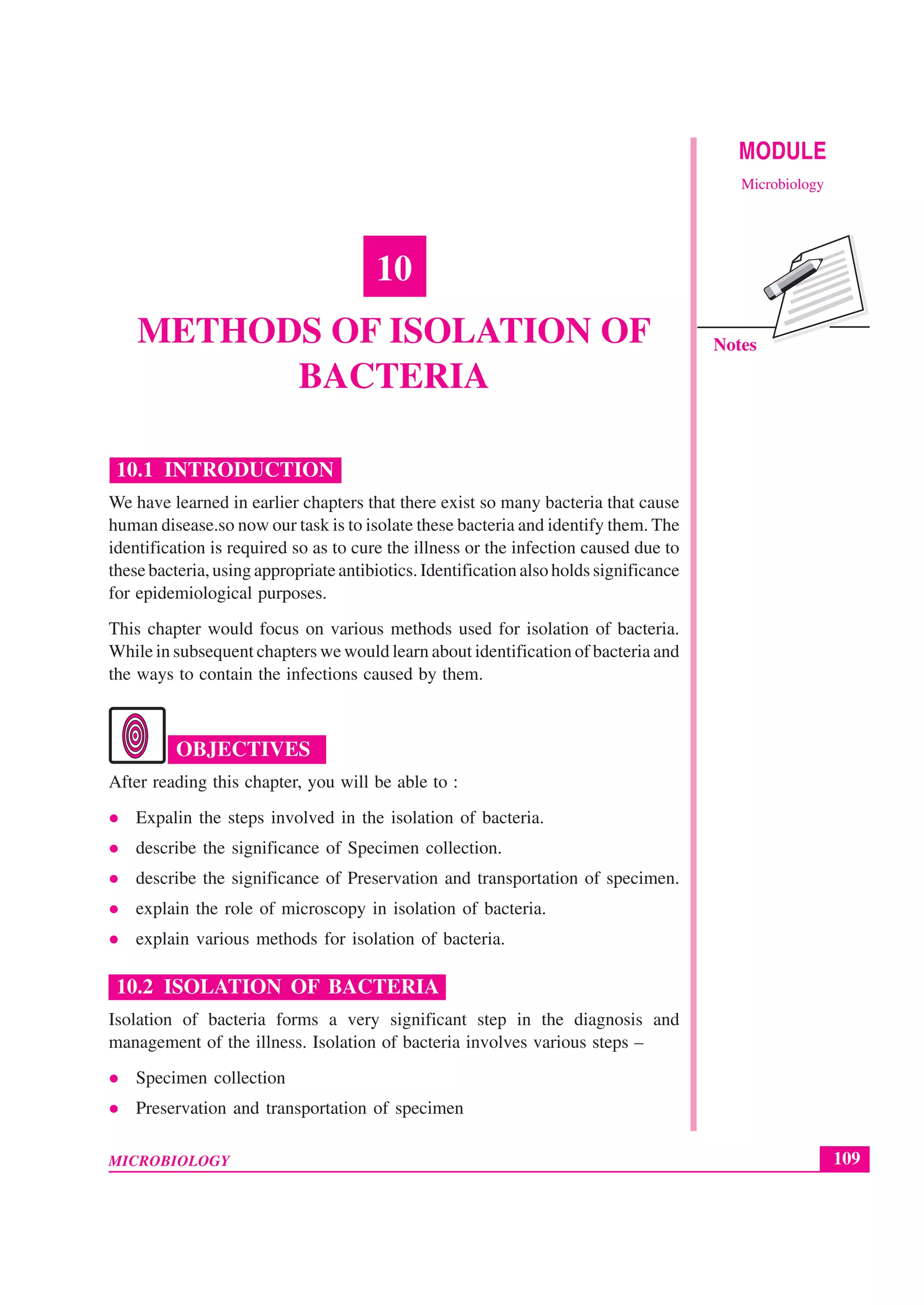
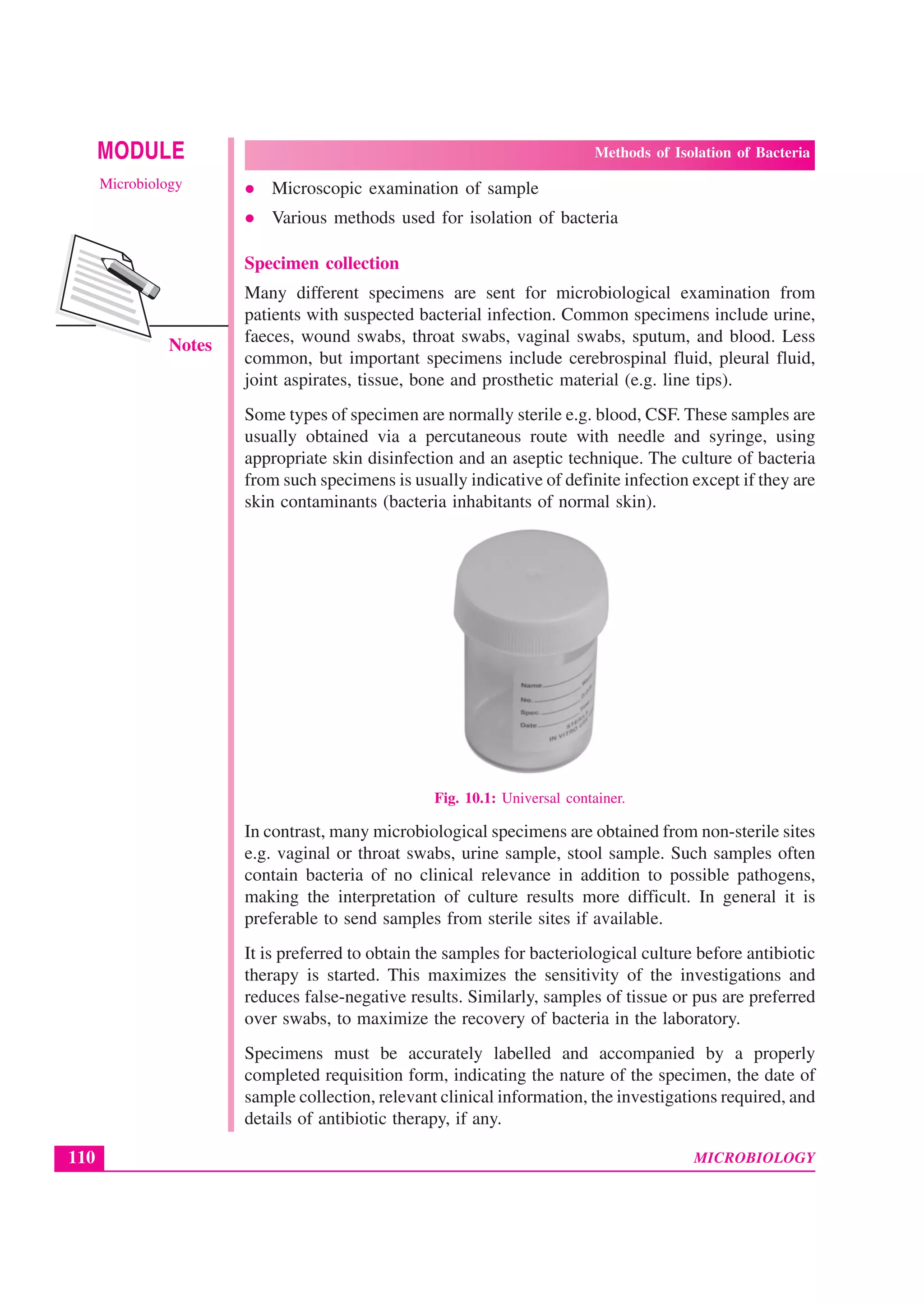
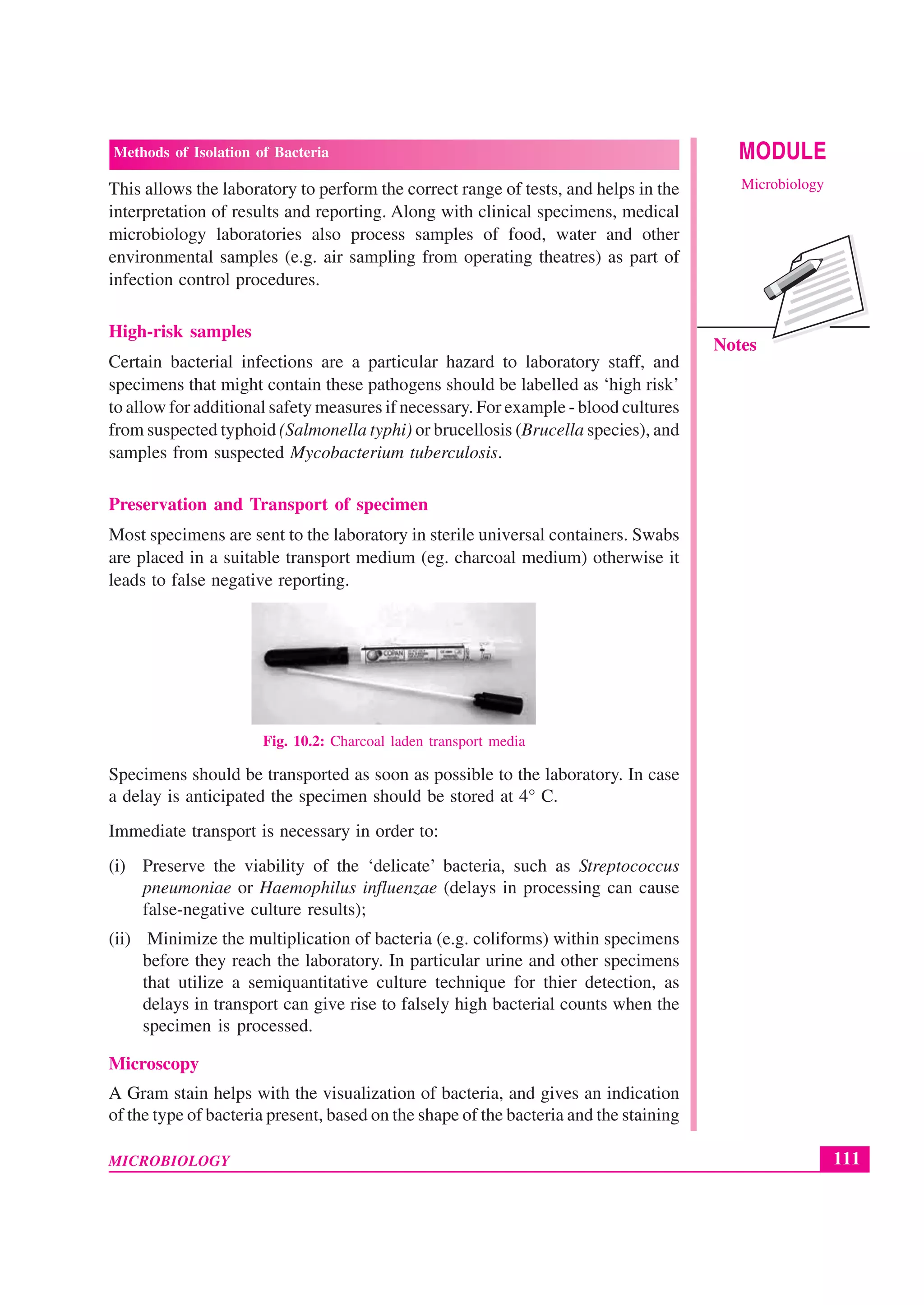
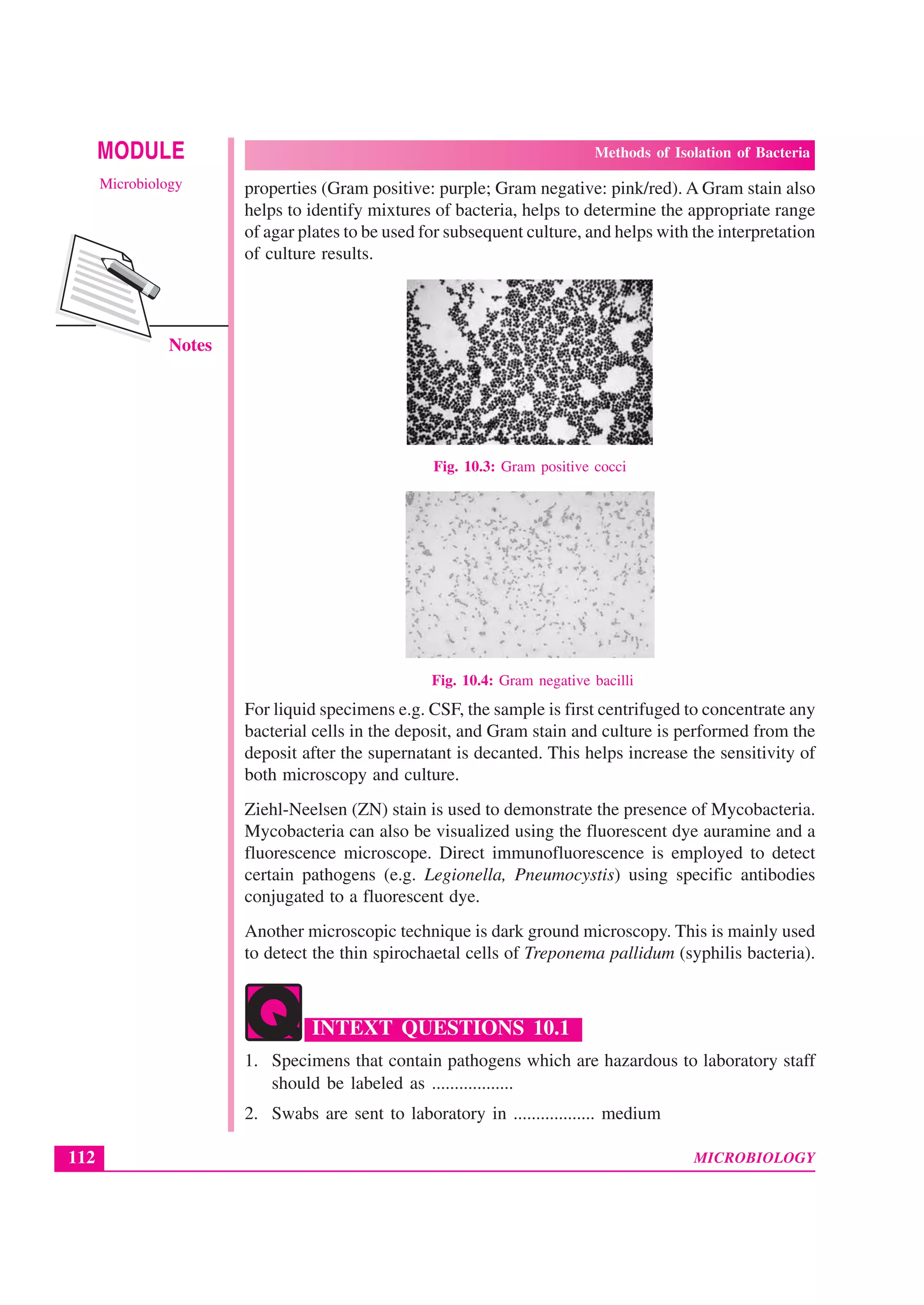
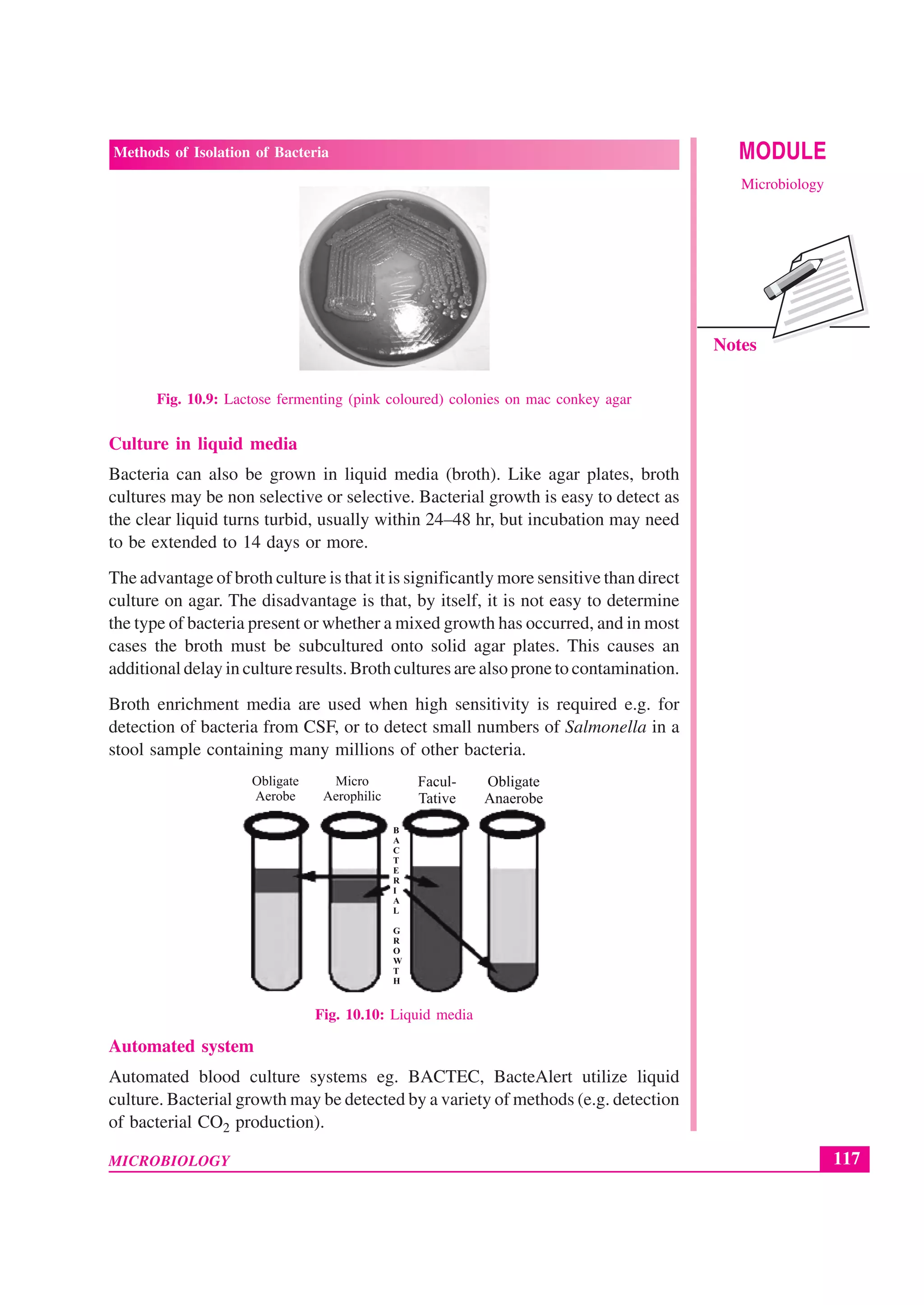
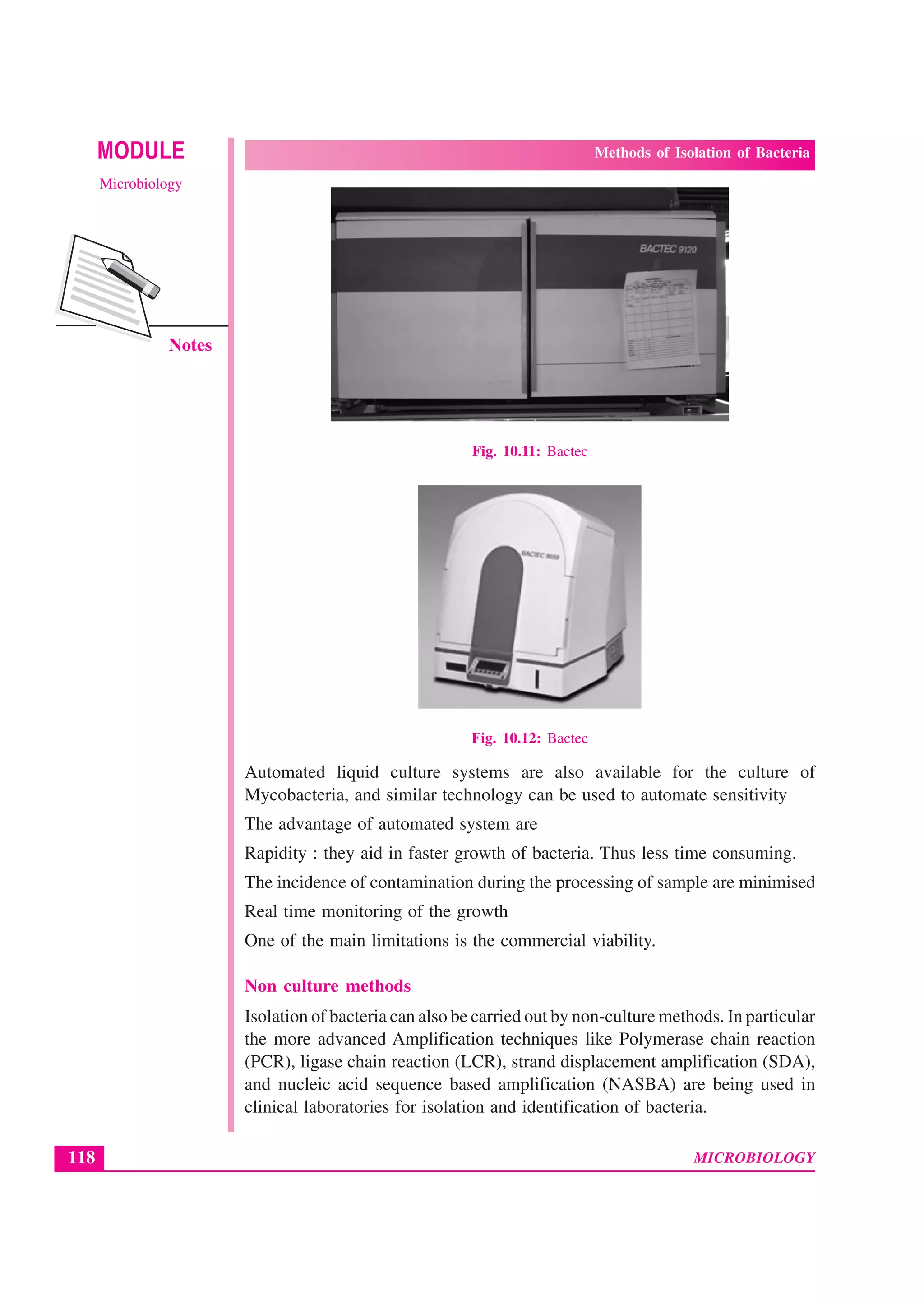
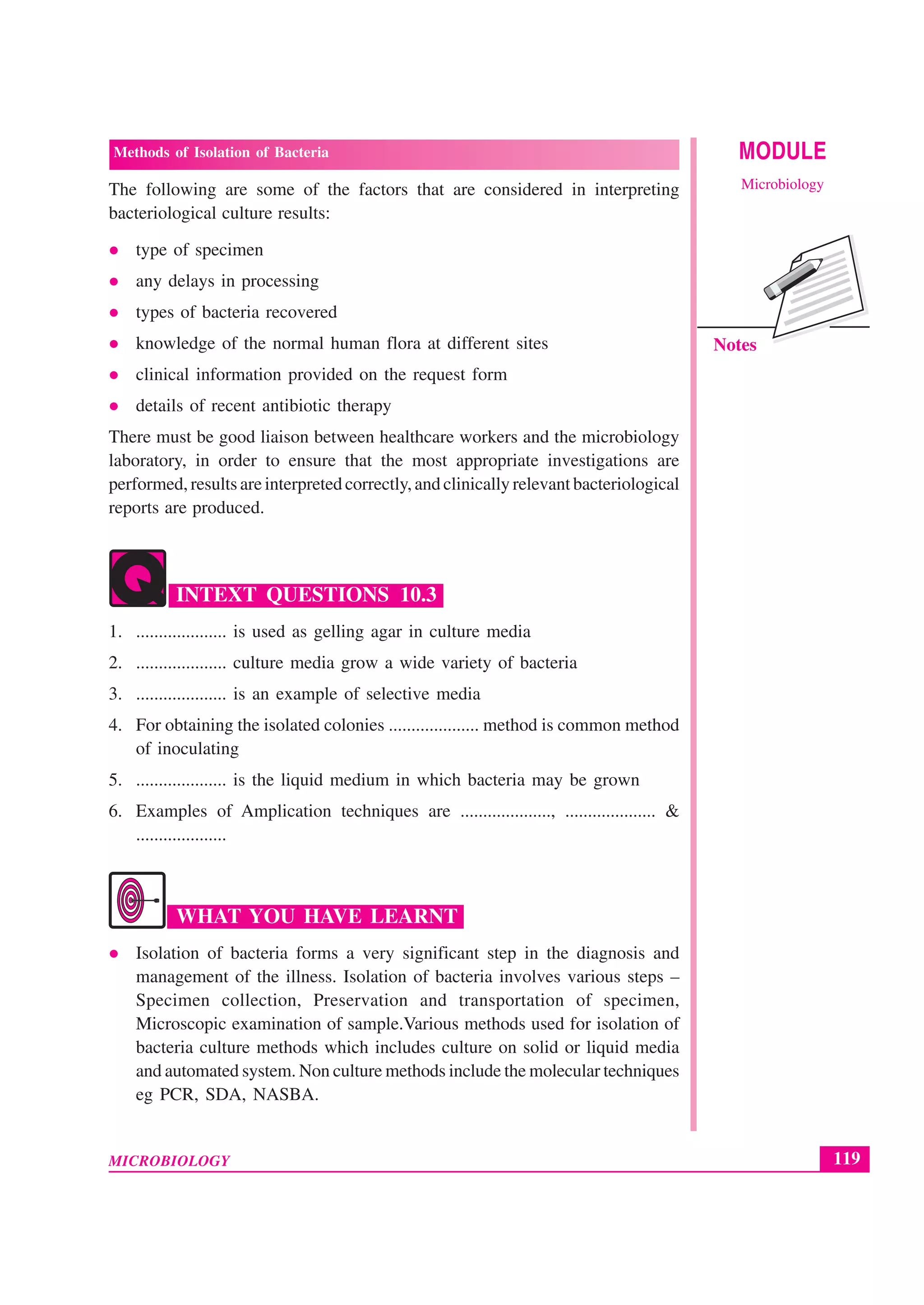
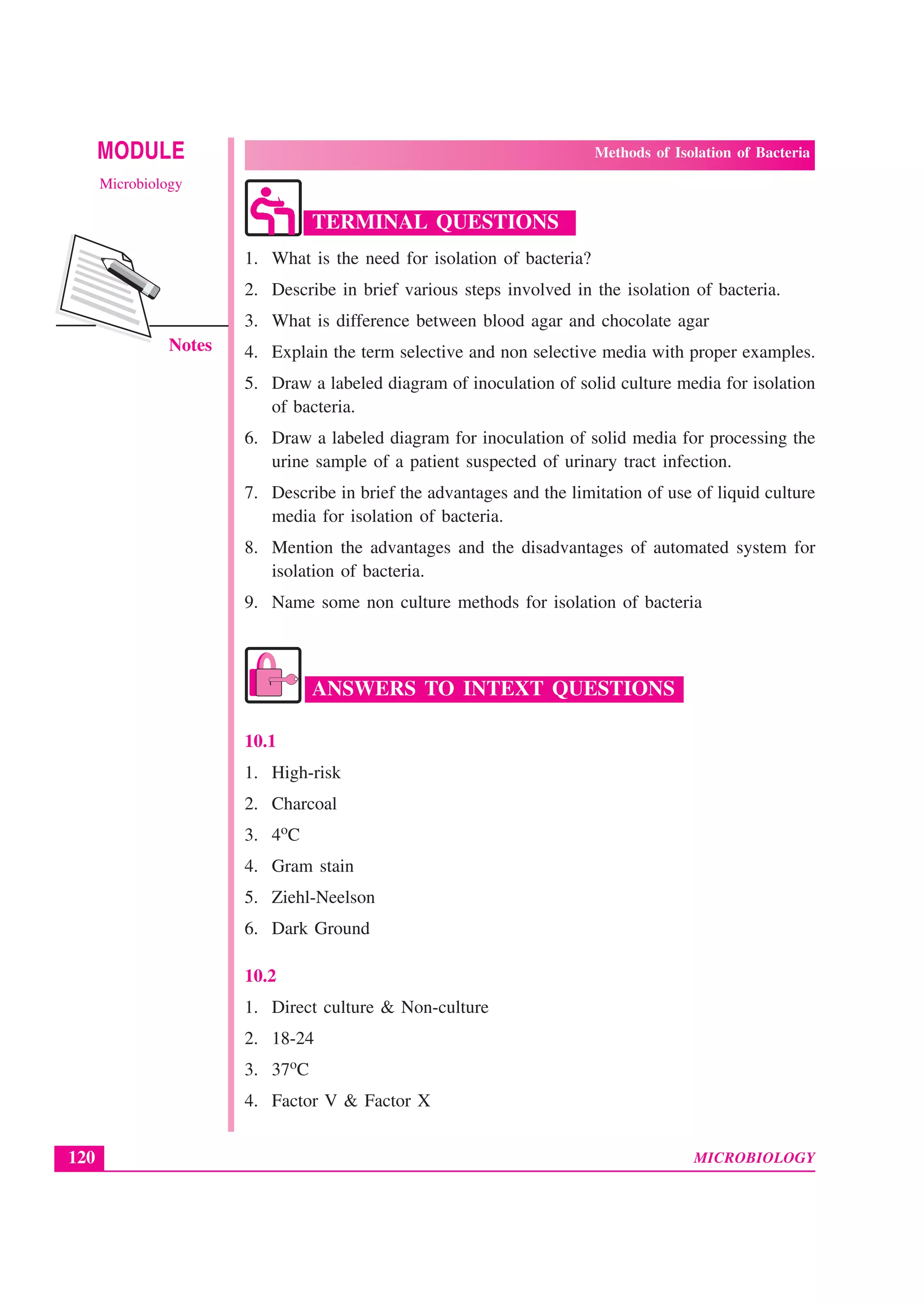

Isolation of bacteria is a significant step in diagnosing and managing bacterial infections. It involves collecting specimens, preserving and transporting them to the lab, examining samples microscopically, and using various culture and non-culture methods to isolate bacteria. Culture methods include using solid or liquid media, and automated systems, to allow bacterial colonies to grow. Non-culture methods involve molecular techniques like PCR. Proper specimen handling and use of appropriate culture conditions and media allow isolation of pathogenic bacteria to enable treatment and control of infections.


