By Praveen Garg
Asst. Prof.
VITS, Satna (mp)
 Archaebacteria is a type of single celled prokaryotic
organism.
 They belong to kingdom of Archaea.
 They are also known as most primitive organisms on the
earth.
 They are known as “living fossils”.
 Archaebacteria constituents their own domain- “The
domain of archaea”.
 They can survive in extreme environment such as high
salty, high temperature, and high acidic.
 The domain of archaea include both aerobic and
anaerobic species.
 They are unicellular, cocci, spherical and rod shaped
and 1µm in size.
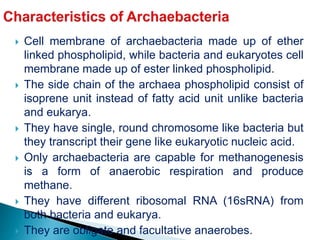
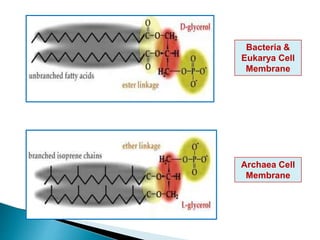
 Cell membrane of archaebacteria made up of ether
linked phospholipid, while bacteria and eukaryotes cell
membrane made up of ester linked phospholipid.
 The side chain of the archaea phospholipid consist of
isoprene unit instead of fatty acid unit unlike bacteria
and eukarya.
 They have single, round chromosome like bacteria but
they transcript their gene like eukaryotic nucleic acid.
 Only archaebacteria are capable for methanogenesis
is a form of anaerobic respiration and produce
methane.
 They have different ribosomal RNA (16sRNA) from
both bacteria and eukarya.
 They are obligate and facultative anaerobes.
Archaea Cell
Membrane
Bacteria &
Eukarya Cell
Membrane
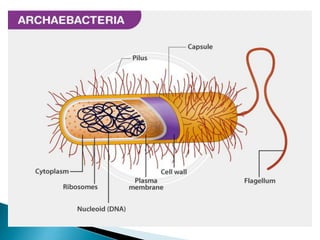
 They have rigid cell wall, which provide shape and
support to archaebacteria. They also protect the cell
from bursting in hypotonic solution.
 The cell wall is composed of Pseudomurein, which
prevent archaebacteria from the effect of lysosome.
Lysozyme dissolved the cell wall of pathogenic
bacteria.
 They do not possess membrane bound organelles. Its
cytoplasm have all nutrients required for metabolism.
 They have plasmid and antibiotic resistant enzymes.
 Mode of reproduction is asexual like as binary fission,
fragmentation, budding.
There are mainly five types of archaebacteria.
 Crenarchaeota
 Euryarchaeota
 Korarchaeota
 Thaumarchaeota
 Nanoarchaeota
Crenarchaeota:
 They can exist in broad range of habitat. They are
tolerant to high temperature and extreme heat.
 They have special type of protein, which help to survive
in high temperature.
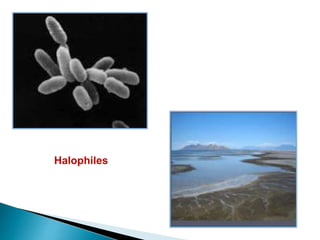
 It can be found in deep sea vents, hot springs, and
superheated water region.
 They have used as specific inhibitors for various
enzymes.
Example:
Thermophiles
Hyperthermophiles
Thermoacidophiles
Euryarchaeota:
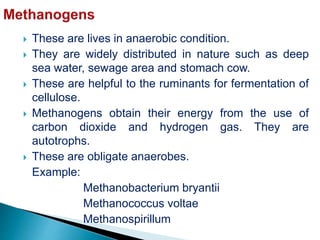
 They can survive in extreme alkaline or salt condition.
They have ability to produce methane.
 These microbes encode enzymes that help to digest
dietary carbohydrate and proteins.
Example:
Methanogens
Halophiles
Korarchaeota:
 They possess the genes common with Crenarchaeota
and Euryarchaeota.
 These are the oldest surviving organism on earth.
Example:
Hyperthermophiles
Thaumarchaeota:
 These include archaea that oxidize ammonia.
 Play important role in biogeochemical cycle.
Example:
Nitrosopumilus meritimus
Nanoarchaeota:
 This is an obligate symbiont of archaea.
Example:
Nanoarchaeum equitans
Archaebacteria can be divided in three major
groups.
 Thermoacidophiles
 Halophiles
 Methanogens
Thermoacidophiles:
 These are lives in hot, acidic water such as sulpur
spring or deep sea thermal vents.
 These are called extreme thermophiles or heat loving.
 These are facultative anaerobes.
 These are chemosynthetic, i.e., they obtain energy
from oxidising sulphur for synthesis of food. Under
aerobic conditions they usually oxidise sulphur to
sulphuric acid.
2S + 2H2O + 3O2 → 2H2SO4
Example:
Thermus aquaticus
Thermo plasma
Thermoproteus
 They can lives in high salt concentration such as dead
sea and great salt lake because of the presence of lipid
membrane, mucilage covering, absence of sap
vacuoles and high internal salt.
 These are also facultative anaerobes.
 These are also called as salt loving archaebacteria.
 These halophiles bacteria produce a purple colour
bacteria known as bacteriorhodopsin, which allow to
use sunlight as a source of photosynthetic energy,
similar to plants.
 These have cell membranes with red carotenoid
pigment for protection against harmful solar radiations
Example:
Haloarcula
Halophiles
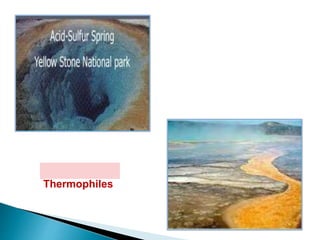
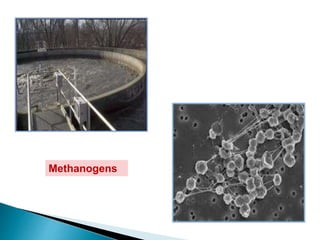
 These are lives in anaerobic condition.
 They are widely distributed in nature such as deep
sea water, sewage area and stomach cow.
 These are helpful to the ruminants for fermentation of
cellulose.
 Methanogens obtain their energy from the use of
carbon dioxide and hydrogen gas. They are
autotrophs.
 These are obligate anaerobes.
Example:
Methanobacterium bryantii
Methanococcus voltae
Methanospirillum
Halophiles
Thermophiles
Methanogens
 They are capable of producing methane. They
act on the organic matter and decompose it to
release methane, which is then used for
cooking, lighting and gobar gas production.
Thus they play the role of primary producers.
 They help in fermentation of cellulose in
ruminants.
 Thermus aquticus used in Polymerase chain
reaction for DNA amplification.
 Play important role in carbon cycle, nitrogen and
sulpur cycle.
 They can help in antibiotics production.
Thank you

Archaebacteria

  • 1.
    By Praveen Garg Asst.Prof. VITS, Satna (mp)
  • 2.
     Archaebacteria isa type of single celled prokaryotic organism.  They belong to kingdom of Archaea.  They are also known as most primitive organisms on the earth.  They are known as “living fossils”.  Archaebacteria constituents their own domain- “The domain of archaea”.  They can survive in extreme environment such as high salty, high temperature, and high acidic.  The domain of archaea include both aerobic and anaerobic species.  They are unicellular, cocci, spherical and rod shaped and 1µm in size.
  • 4.
     Cell membraneof archaebacteria made up of ether linked phospholipid, while bacteria and eukaryotes cell membrane made up of ester linked phospholipid.  The side chain of the archaea phospholipid consist of isoprene unit instead of fatty acid unit unlike bacteria and eukarya.  They have single, round chromosome like bacteria but they transcript their gene like eukaryotic nucleic acid.  Only archaebacteria are capable for methanogenesis is a form of anaerobic respiration and produce methane.  They have different ribosomal RNA (16sRNA) from both bacteria and eukarya.  They are obligate and facultative anaerobes.
  • 5.
  • 6.
     They haverigid cell wall, which provide shape and support to archaebacteria. They also protect the cell from bursting in hypotonic solution.  The cell wall is composed of Pseudomurein, which prevent archaebacteria from the effect of lysosome. Lysozyme dissolved the cell wall of pathogenic bacteria.  They do not possess membrane bound organelles. Its cytoplasm have all nutrients required for metabolism.  They have plasmid and antibiotic resistant enzymes.  Mode of reproduction is asexual like as binary fission, fragmentation, budding.
  • 7.
    There are mainlyfive types of archaebacteria.  Crenarchaeota  Euryarchaeota  Korarchaeota  Thaumarchaeota  Nanoarchaeota
  • 8.
    Crenarchaeota:  They canexist in broad range of habitat. They are tolerant to high temperature and extreme heat.  They have special type of protein, which help to survive in high temperature.  It can be found in deep sea vents, hot springs, and superheated water region.  They have used as specific inhibitors for various enzymes. Example: Thermophiles Hyperthermophiles Thermoacidophiles
  • 9.
    Euryarchaeota:  They cansurvive in extreme alkaline or salt condition. They have ability to produce methane.  These microbes encode enzymes that help to digest dietary carbohydrate and proteins. Example: Methanogens Halophiles Korarchaeota:  They possess the genes common with Crenarchaeota and Euryarchaeota.  These are the oldest surviving organism on earth. Example: Hyperthermophiles
  • 10.
    Thaumarchaeota:  These includearchaea that oxidize ammonia.  Play important role in biogeochemical cycle. Example: Nitrosopumilus meritimus Nanoarchaeota:  This is an obligate symbiont of archaea. Example: Nanoarchaeum equitans
  • 11.
    Archaebacteria can bedivided in three major groups.  Thermoacidophiles  Halophiles  Methanogens
  • 12.
    Thermoacidophiles:  These arelives in hot, acidic water such as sulpur spring or deep sea thermal vents.  These are called extreme thermophiles or heat loving.  These are facultative anaerobes.  These are chemosynthetic, i.e., they obtain energy from oxidising sulphur for synthesis of food. Under aerobic conditions they usually oxidise sulphur to sulphuric acid. 2S + 2H2O + 3O2 → 2H2SO4 Example: Thermus aquaticus Thermo plasma Thermoproteus
  • 13.
     They canlives in high salt concentration such as dead sea and great salt lake because of the presence of lipid membrane, mucilage covering, absence of sap vacuoles and high internal salt.  These are also facultative anaerobes.  These are also called as salt loving archaebacteria.  These halophiles bacteria produce a purple colour bacteria known as bacteriorhodopsin, which allow to use sunlight as a source of photosynthetic energy, similar to plants.  These have cell membranes with red carotenoid pigment for protection against harmful solar radiations Example: Haloarcula Halophiles
  • 14.
     These arelives in anaerobic condition.  They are widely distributed in nature such as deep sea water, sewage area and stomach cow.  These are helpful to the ruminants for fermentation of cellulose.  Methanogens obtain their energy from the use of carbon dioxide and hydrogen gas. They are autotrophs.  These are obligate anaerobes. Example: Methanobacterium bryantii Methanococcus voltae Methanospirillum
  • 15.
  • 16.
  • 17.
  • 18.
     They arecapable of producing methane. They act on the organic matter and decompose it to release methane, which is then used for cooking, lighting and gobar gas production. Thus they play the role of primary producers.  They help in fermentation of cellulose in ruminants.  Thermus aquticus used in Polymerase chain reaction for DNA amplification.  Play important role in carbon cycle, nitrogen and sulpur cycle.  They can help in antibiotics production.
  • 19.