



![Particle size analysis
For size distribution analysis, different sizes in a batch were
separated by sieving by using a set of standard sieves. The
amounts retained on different sieves were weighed .
Encapsulation efficiency [8]
Encapsulation efficiency was calculated using the formula:
Encapsulation efficiency =
Actual Drug Content / Theoretical Drug Content ×100](https://image.slidesharecdn.com/microencapsulationgss-160227005508/85/Microencapsulation-59-320.jpg)
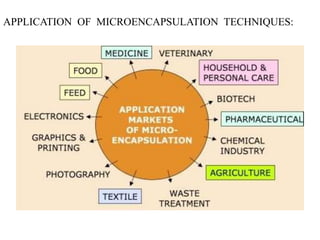

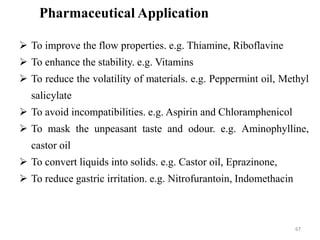
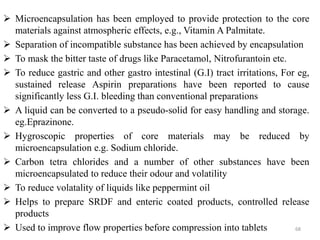
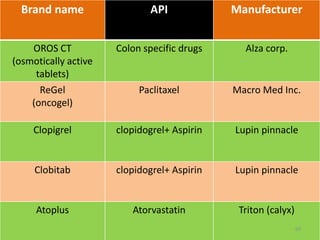


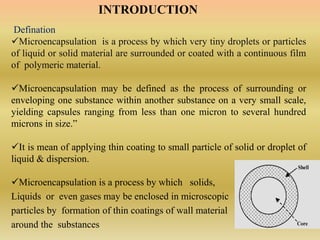
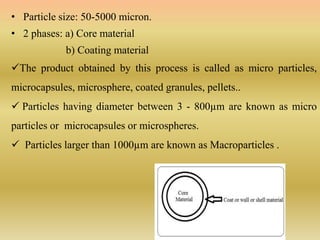
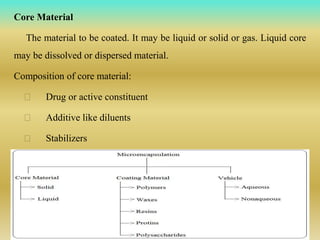
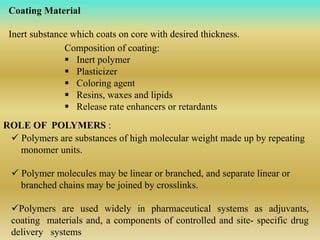
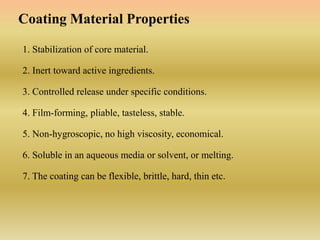
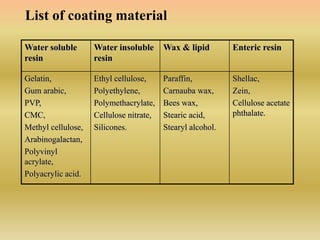
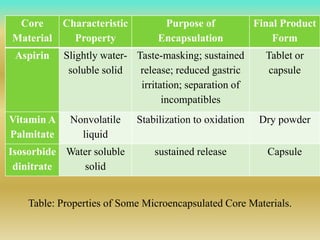
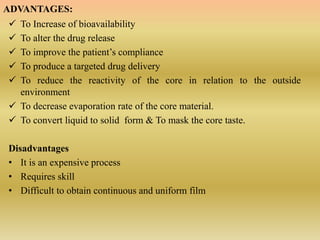
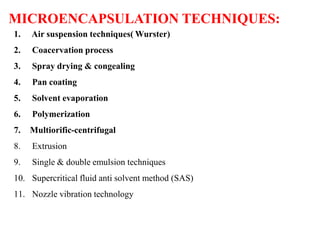
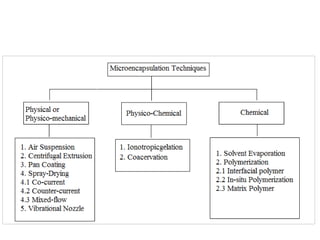
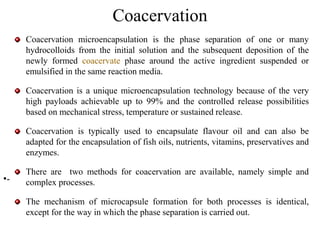
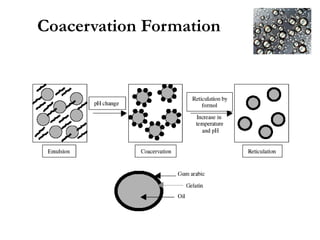
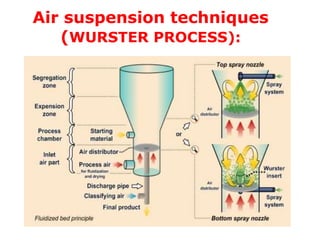
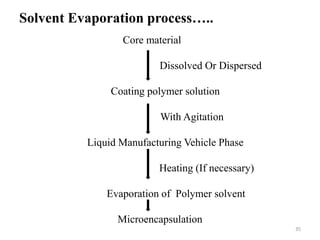
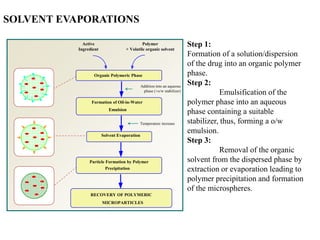
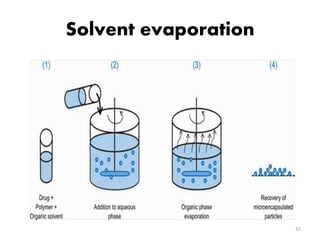
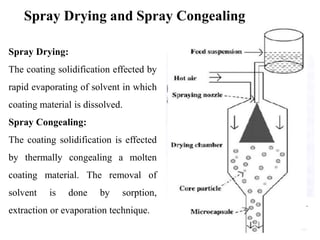
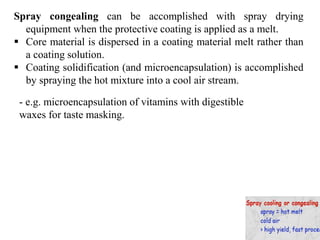
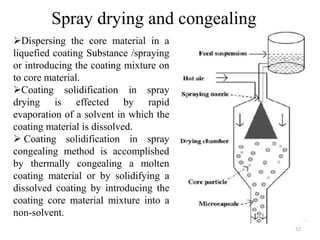
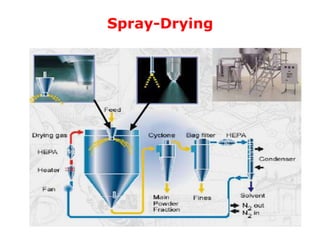
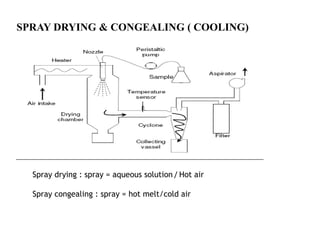
Microencapsulation involves coating solid, liquid, or gaseous active ingredients within thin polymeric coatings to produce microcapsules 1-1000 microns in size. It offers several advantages including protecting active ingredients, controlling release rates, and masking tastes/odors. Common techniques include solvent evaporation, pan coating, spray drying, and polymerization. Coacervation involves separating a hydrocolloid coating from solution and depositing it around active ingredient droplets. Microencapsulation has applications in food, pharmaceuticals, and other industries by improving product shelf life, stability and delivery properties.


