Mucosal Drug Delivery System
Dr Meenakshi Gupta
Senior Assistant Professor
University Institute of Pharmacy
C. S. J. M. University Kanpur U.P
Content
 Introduction,
 Principles of bioadhesion /mucoadhesion,
 Concepts,
 advantages and disadvantages,
 transmucosal permeability and
 formulation considerations of buccal delivery systems
Mucosal Drug Delivery System: Definition
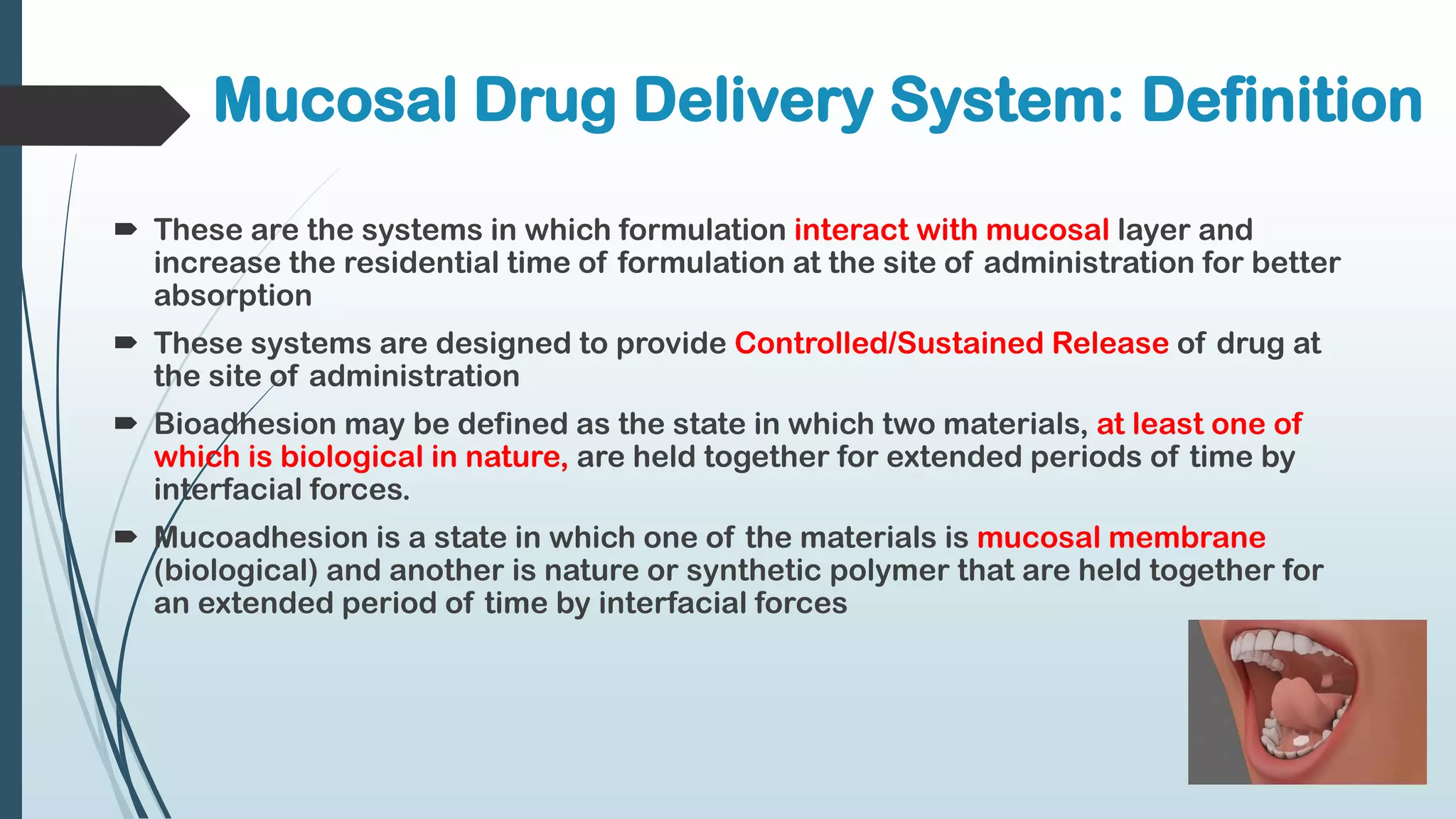
 These are the systems in which formulation interact with mucosal layer and
increase the residential time of formulation at the site of administration for better
absorption
 These systems are designed to provide Controlled/Sustained Release of drug at
the site of administration
 Bioadhesion may be defined as the state in which two materials, at least one of
which is biological in nature, are held together for extended periods of time by
interfacial forces.
 Mucoadhesion is a state in which one of the materials is mucosal membrane
(biological) and another is nature or synthetic polymer that are held together for
an extended period of time by interfacial forces
Bioadhesion & Mucoadhesion
 Immobilization of drug delivery systems at the biological surface by the process
of adhesion is referred to as “bioadhesion” or
 Bioadhesion is the ability of a material (synthetic or biological) to adhere to a
biological tissue for an extended period of time.
 When these adhesive interactions are confined to the mucus layer lining of
mucosal surface, this is called as “mucoadhesion”.
 The interfacial molecular attractive forces between the two surfaces of the
biological substrate and the natural or synthetic polymers allows the polymer to
adhere to the biological surface for an extended period of time.
 Provide site specific action by localization of the drug delivery system in a
particular region.
 Close contact with the mucosa increase of the residence time of the
pharmaceutical dosage form in a specific region.

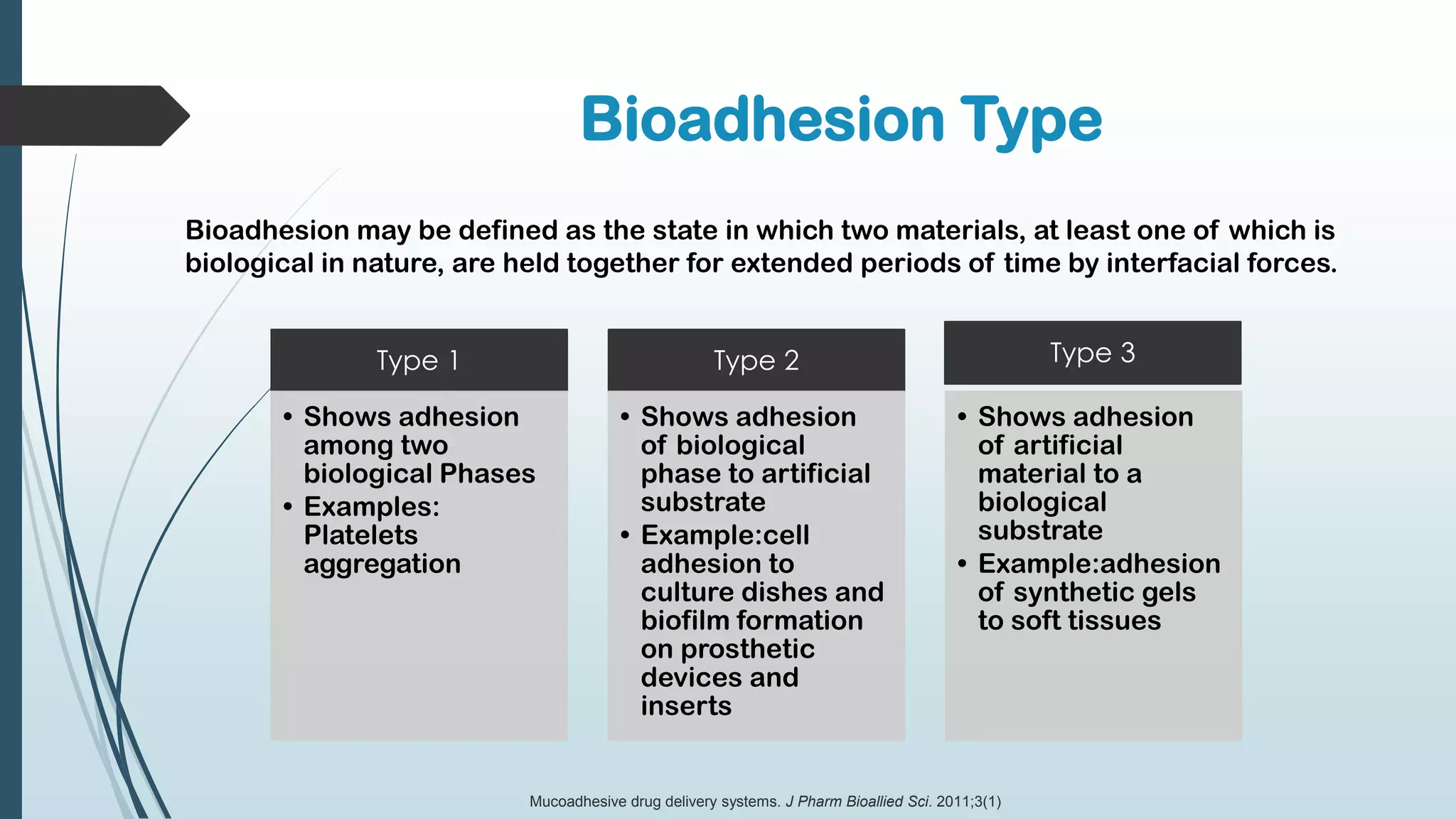
Bioadhesion Type
Type 1
• Shows adhesion
among two
biological Phases
• Examples:
Platelets
aggregation
Type 2
• Shows adhesion
of biological
phase to artificial
substrate
• Example:cell
adhesion to
culture dishes and
biofilm formation
on prosthetic
devices and
inserts
Type 3
• Shows adhesion
of artificial
material to a
biological
substrate
• Example:adhesion
of synthetic gels
to soft tissues
Bioadhesion may be defined as the state in which two materials, at least one of which is
biological in nature, are held together for extended periods of time by interfacial forces.
Mucoadhesive drug delivery systems. J Pharm Bioallied Sci. 2011;3(1)
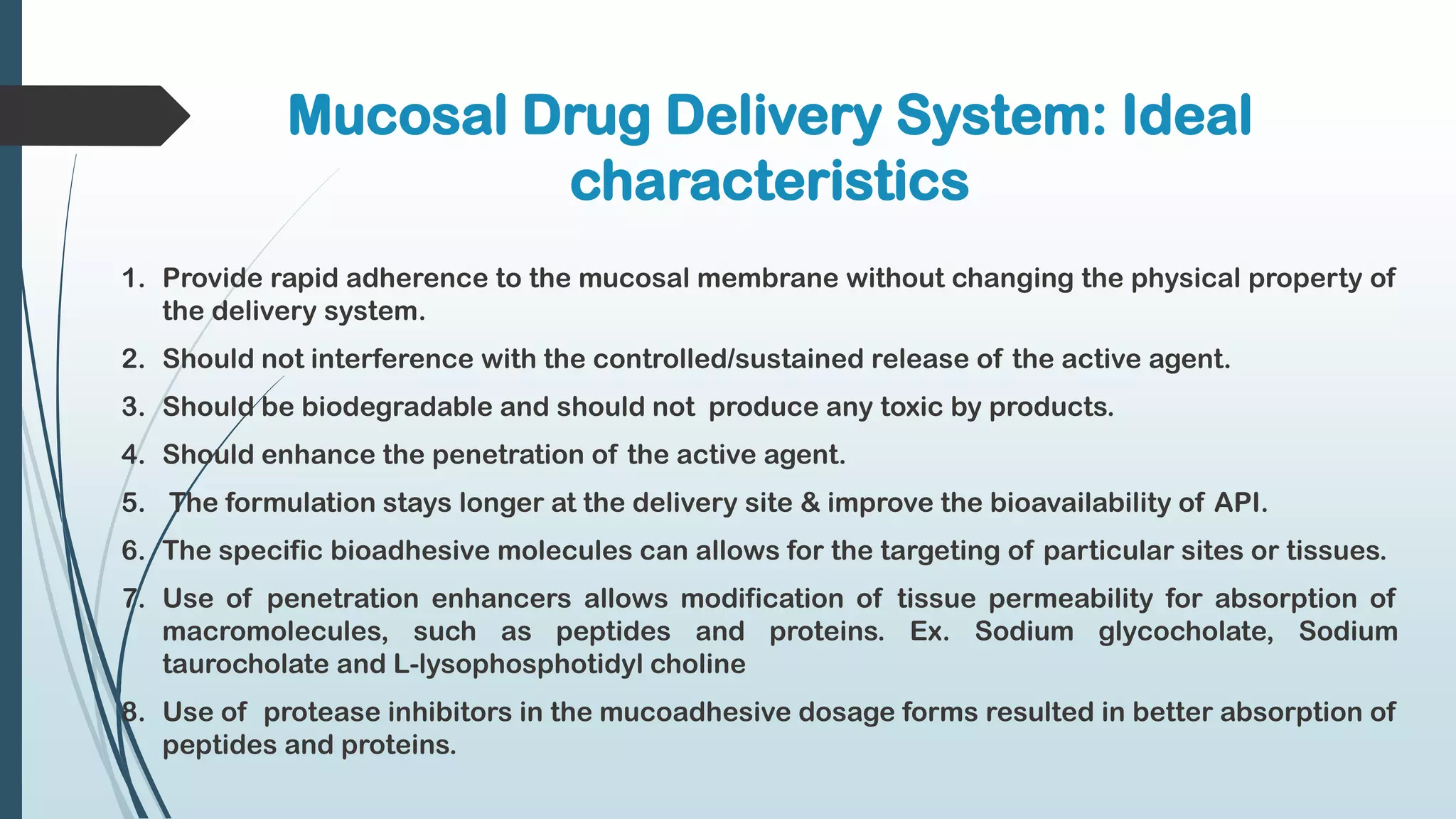
Mucosal Drug Delivery System: Ideal
characteristics
1. Provide rapid adherence to the mucosal membrane without changing the physical property of
the delivery system.
2. Should not interference with the controlled/sustained release of the active agent.
3. Should be biodegradable and should not produce any toxic by products.
4. Should enhance the penetration of the active agent.
5. The formulation stays longer at the delivery site & improve the bioavailability of API.
6. The specific bioadhesive molecules can allows for the targeting of particular sites or tissues.
7. Use of penetration enhancers allows modification of tissue permeability for absorption of
macromolecules, such as peptides and proteins. Ex. Sodium glycocholate, Sodium
taurocholate and L-lysophosphotidyl choline
8. Use of protease inhibitors in the mucoadhesive dosage forms resulted in better absorption of
peptides and proteins.
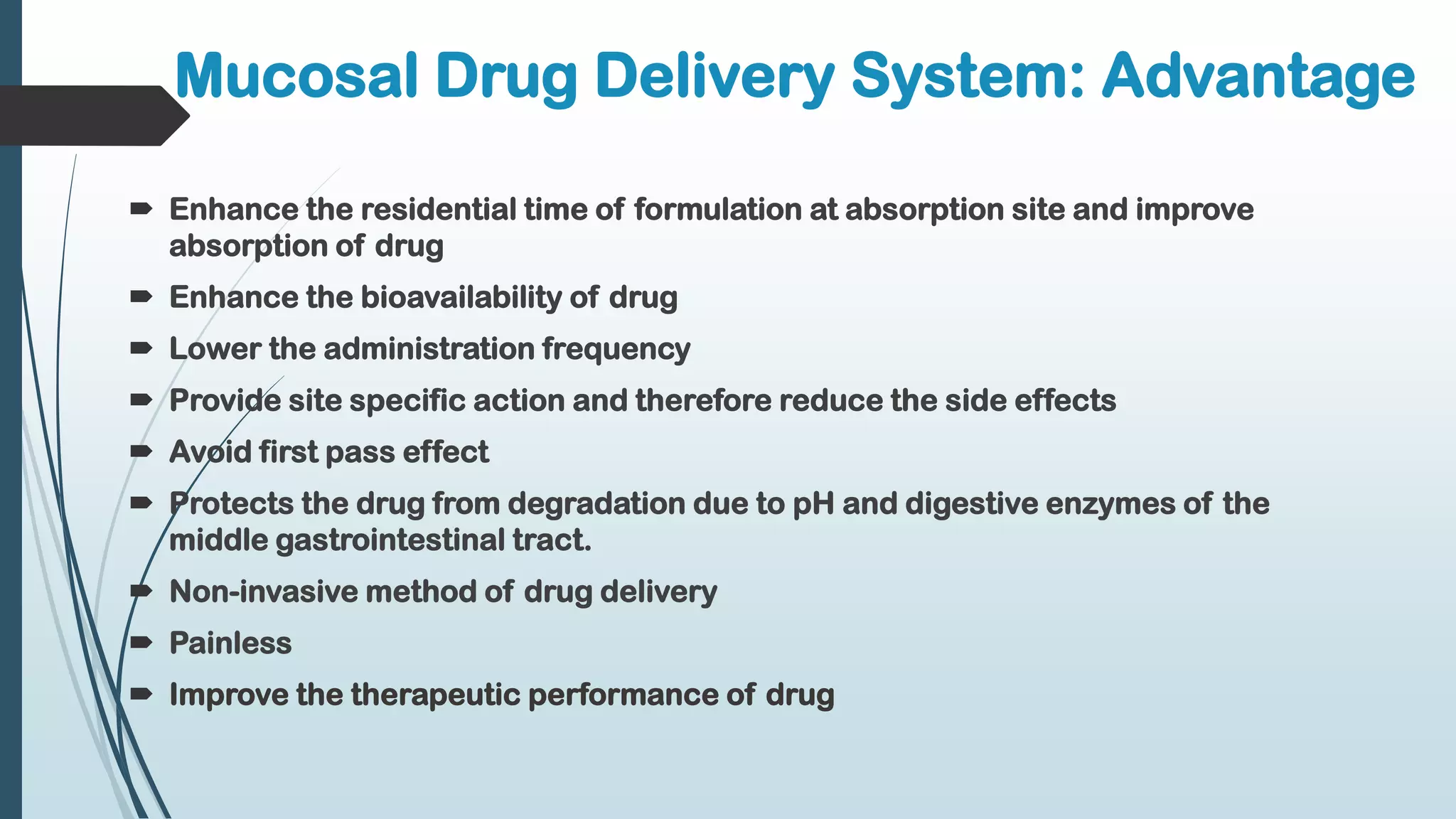
Mucosal Drug Delivery System: Advantage
 Enhance the residential time of formulation at absorption site and improve
absorption of drug
 Enhance the bioavailability of drug
 Lower the administration frequency
 Provide site specific action and therefore reduce the side effects
 Avoid first pass effect
 Protects the drug from degradation due to pH and digestive enzymes of the
middle gastrointestinal tract.
 Non-invasive method of drug delivery
 Painless
 Improve the therapeutic performance of drug
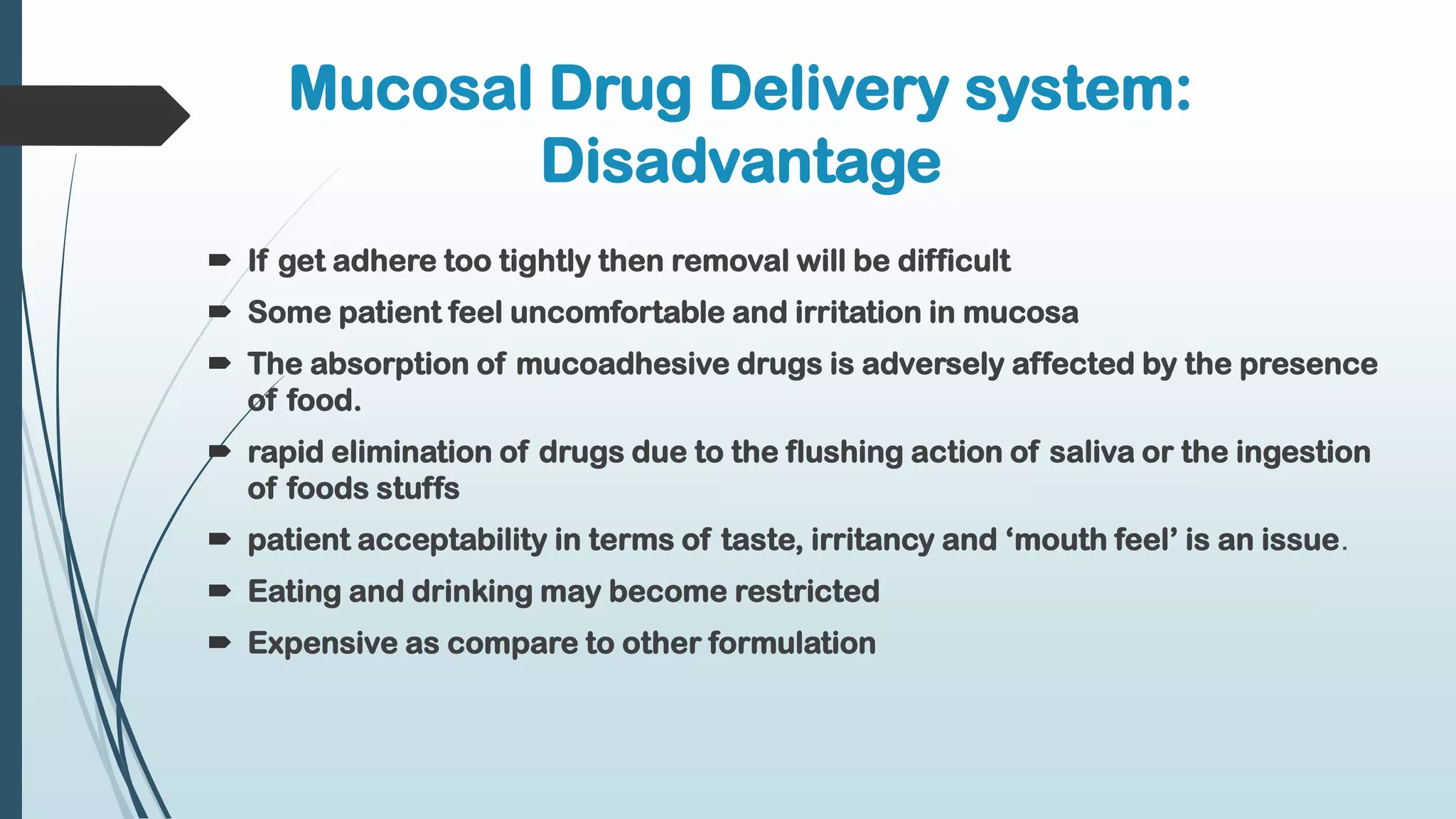
Mucosal Drug Delivery system:
Disadvantage
 If get adhere too tightly then removal will be difficult
 Some patient feel uncomfortable and irritation in mucosa
 The absorption of mucoadhesive drugs is adversely affected by the presence
of food.
 rapid elimination of drugs due to the flushing action of saliva or the ingestion
of foods stuffs
 patient acceptability in terms of taste, irritancy and ‘mouth feel’ is an issue.
 Eating and drinking may become restricted
 Expensive as compare to other formulation
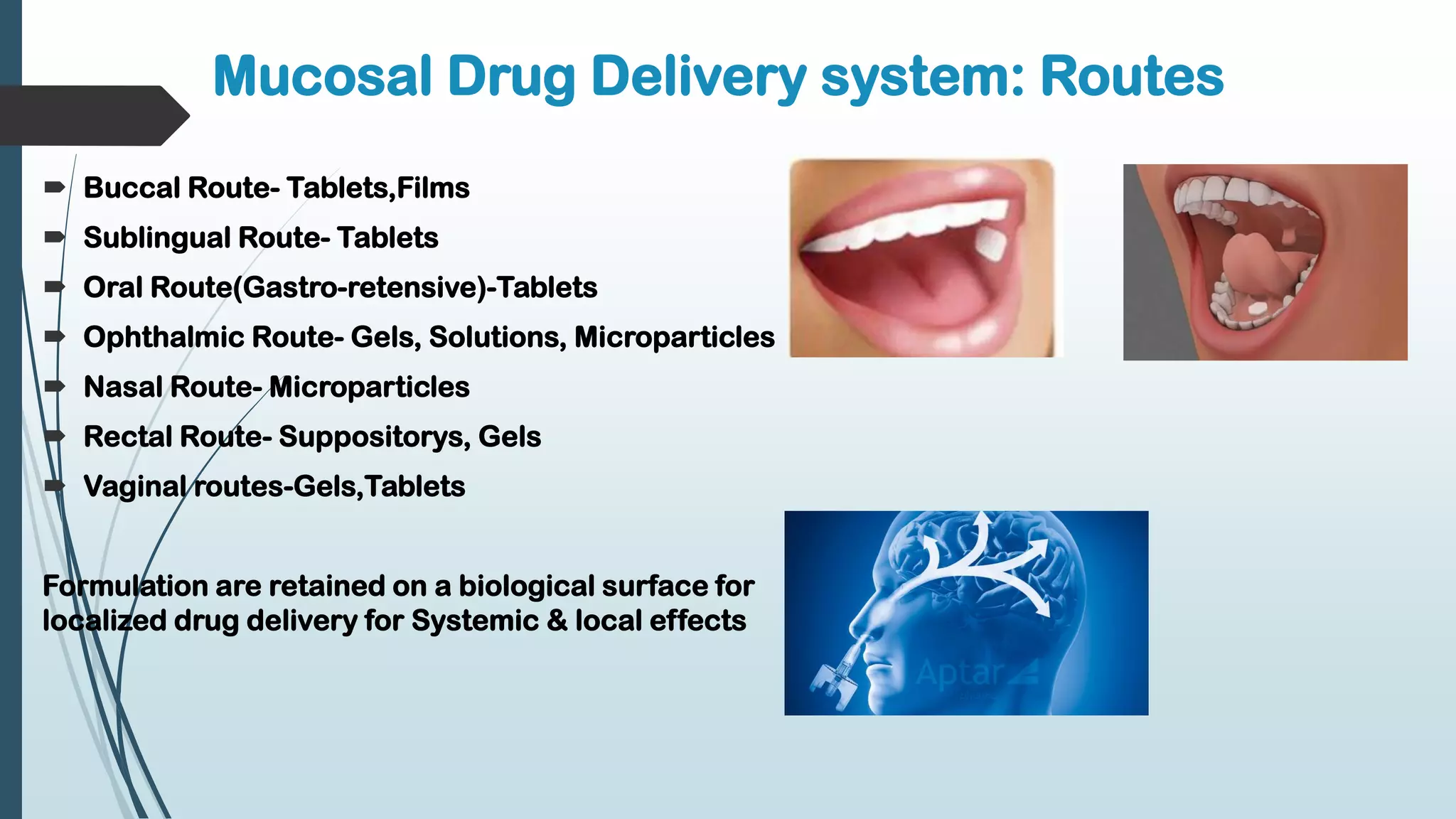
Mucosal Drug Delivery system: Routes
 Buccal Route- Tablets,Films
 Sublingual Route- Tablets
 Oral Route(Gastro-retensive)-Tablets
 Ophthalmic Route- Gels, Solutions, Microparticles
 Nasal Route- Microparticles
 Rectal Route- Suppositorys, Gels
 Vaginal routes-Gels,Tablets
Formulation are retained on a biological surface for
localized drug delivery for Systemic & local effects
Mucosal membranes
 Mucosal layer is an epithelial layer whose surface is covered by mucus
 These moist membranes line the passage such as the mouth, gastrointestinal
tract, respiratory tract, nose,eye and vagina.
 Mucus protect and lubricate the epithelium
 thickness of mucus can vary from 50-450 µm in the stomach to less than 1 µm
in the oral cavity
 mucus is negatively charged that contain glycoprotein (known as mucin)
water and inorganic salts.
 It has visco-elastic nature and maintain a pH of 5.8–7.4
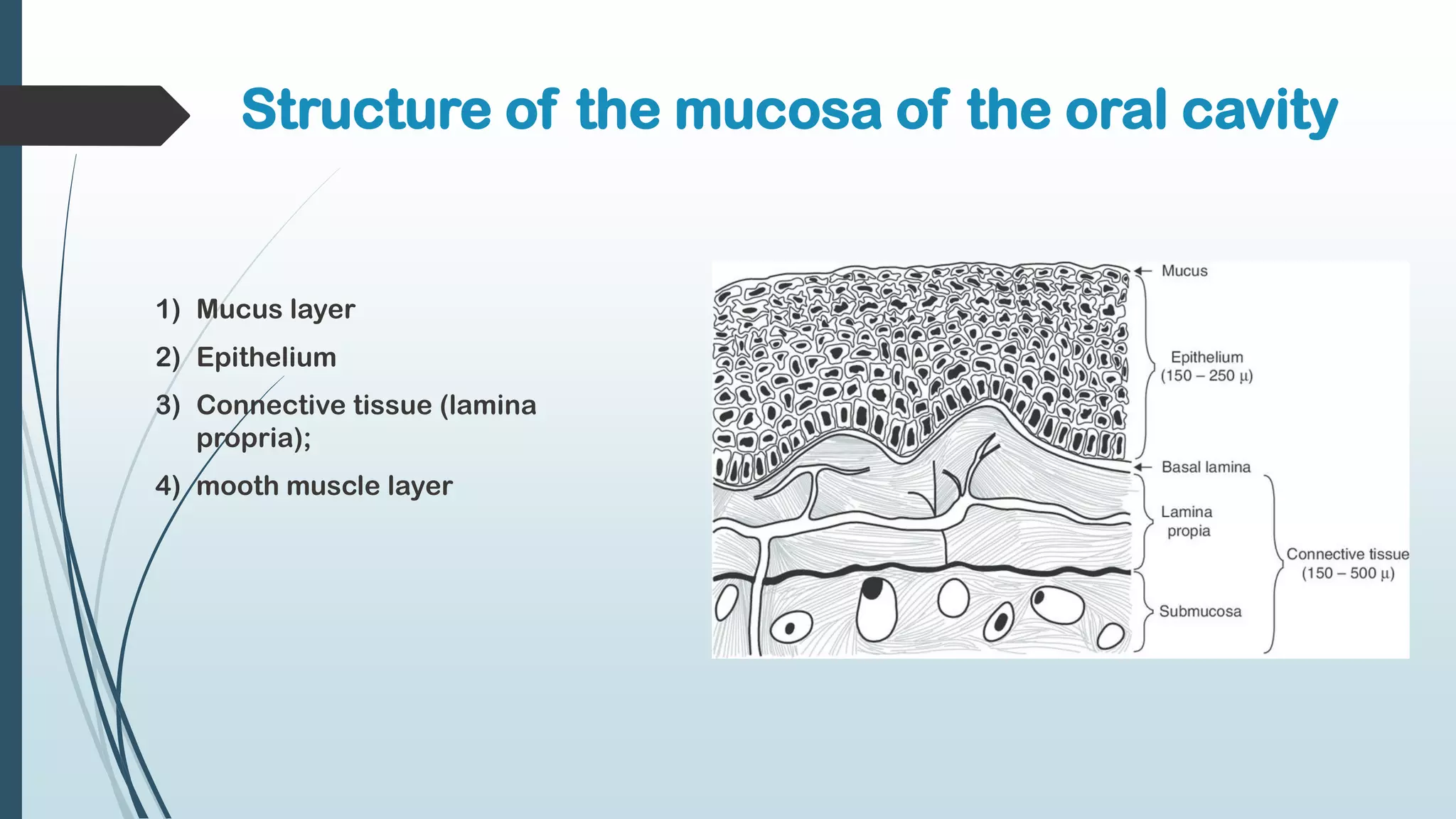
Structure of the mucosa of the oral cavity
1) Mucus layer
2) Epithelium
3) Connective tissue (lamina
propria);
4) mooth muscle layer
Bioadhesive Polymer: Definition
 Bioadhesive polymers are synthetic or natural polymers that binds
to biological substrates such as skin, mucosal membranes.
 These polymers are also referred to as biological ‘glues’ as they
combined with the drugs and allow the binding of formulation to the
site of administration.
Bioadhesive Polymer
 microparticles and nano-particulate systems based on chitosan and
derivatives
 polymers derived from polyacrylic acid, such as polycarbophil and
carbomers,
 polymers derived from cellulose, such as hydroxyethylcellulose and
carboxymethylcellulose,
 alginates, chitosan and derivatives and more recently, lectins and
their derivatives
Characteristic of Mucoadhesive Polymers
 sufficient number of hydrogen bonding chemical groups (-OH and –
COOH)
 anionic surface chain
 high molecular weight
 high chain flexibility
 surface tension that will induce spreading into the mucus layer.
 Each of these characteristics favours the formation of bonds that
are either chemical or mechanical origin.
Transmucosal Permeability
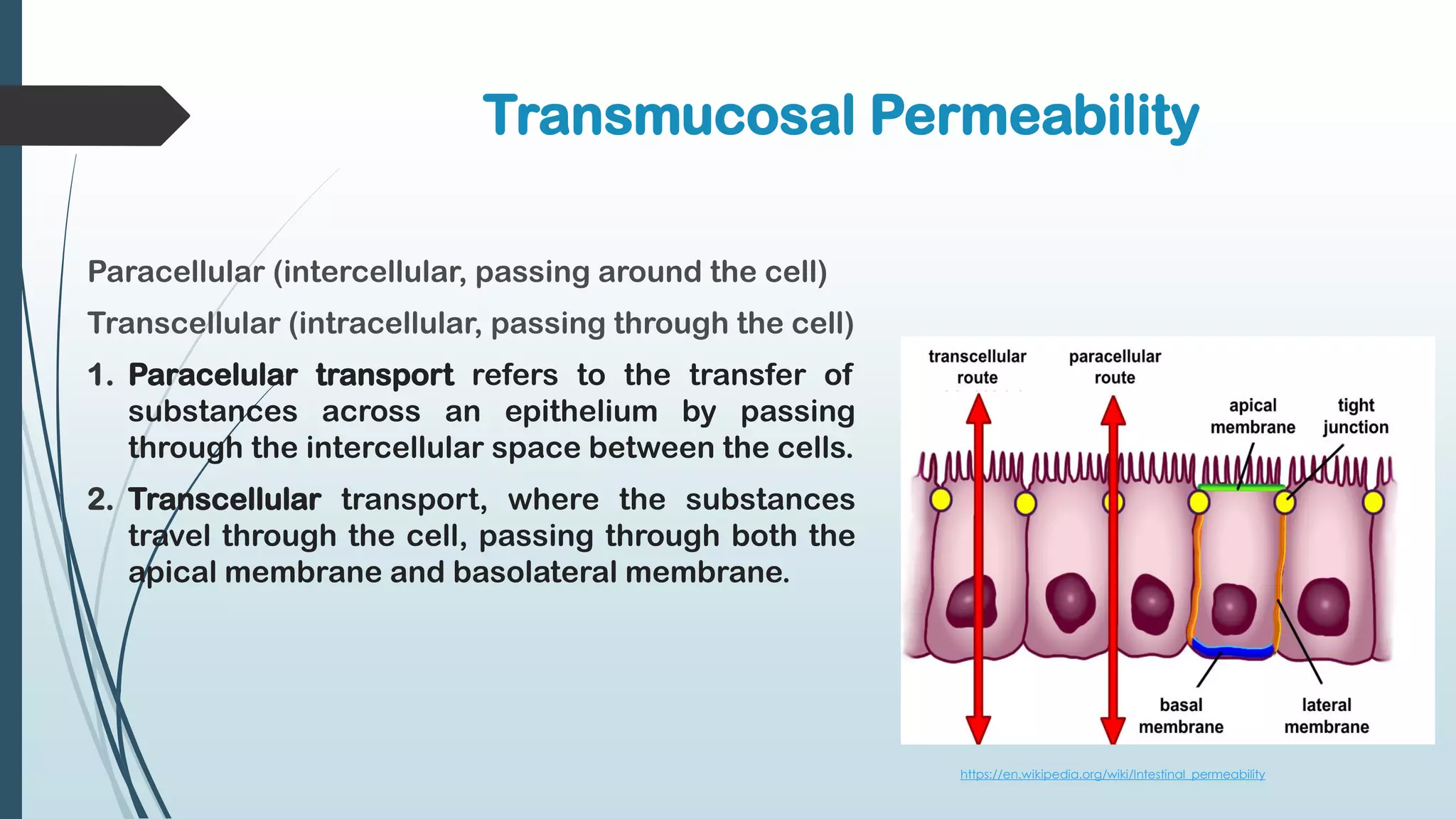
Paracellular (intercellular, passing around the cell)
Transcellular (intracellular, passing through the cell)
1. Paracelular transport refers to the transfer of
substances across an epithelium by passing
through the intercellular space between the cells.
2. Transcellular transport, where the substances
travel through the cell, passing through both the
apical membrane and basolateral membrane.
https://en.wikipedia.org/wiki/Intestinal_permeability
Transmucosal Permeability
 Buccal mucosa offers higher permeability and faster onset of drug
delivery as comparison to the skin.
 the nasal delivery system, include robustness, ease of use, and
avoidance of drug metabolism and degradation.
 Permeation across the buccal mucosa has been reported to be
mainly by the paracellular route
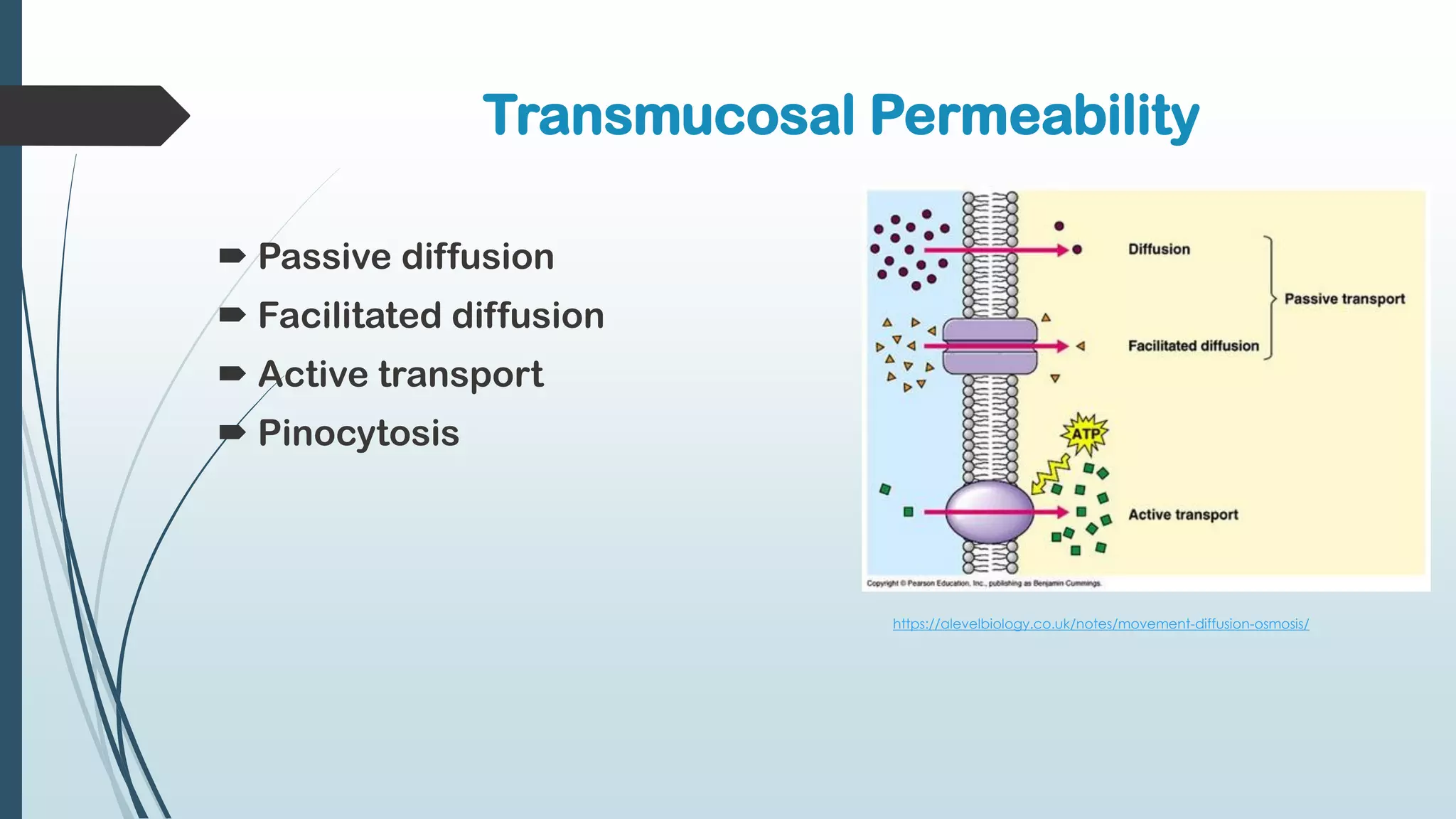
 Passive diffusion
 Facilitated diffusion
 Active transport
 Pinocytosis
Transmucosal Permeability
https://alevelbiology.co.uk/notes/movement-diffusion-osmosis/
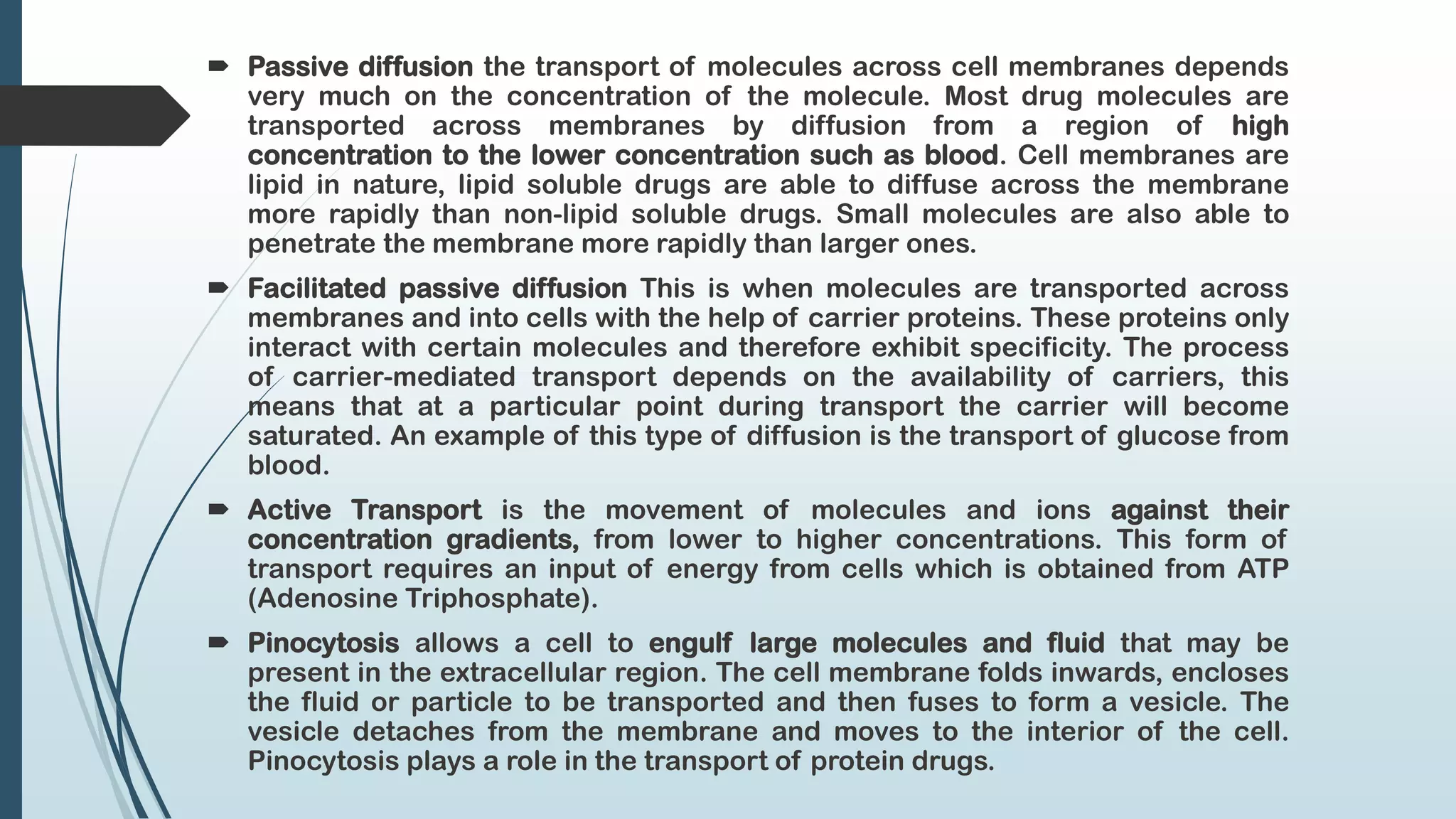
 Passive diffusion the transport of molecules across cell membranes depends
very much on the concentration of the molecule. Most drug molecules are
transported across membranes by diffusion from a region of high
concentration to the lower concentration such as blood. Cell membranes are
lipid in nature, lipid soluble drugs are able to diffuse across the membrane
more rapidly than non-lipid soluble drugs. Small molecules are also able to
penetrate the membrane more rapidly than larger ones.
 Facilitated passive diffusion This is when molecules are transported across
membranes and into cells with the help of carrier proteins. These proteins only
interact with certain molecules and therefore exhibit specificity. The process
of carrier-mediated transport depends on the availability of carriers, this
means that at a particular point during transport the carrier will become
saturated. An example of this type of diffusion is the transport of glucose from
blood.
 Active Transport is the movement of molecules and ions against their
concentration gradients, from lower to higher concentrations. This form of
transport requires an input of energy from cells which is obtained from ATP
(Adenosine Triphosphate).
 Pinocytosis allows a cell to engulf large molecules and fluid that may be
present in the extracellular region. The cell membrane folds inwards, encloses
the fluid or particle to be transported and then fuses to form a vesicle. The
vesicle detaches from the membrane and moves to the interior of the cell.
Pinocytosis plays a role in the transport of protein drugs.
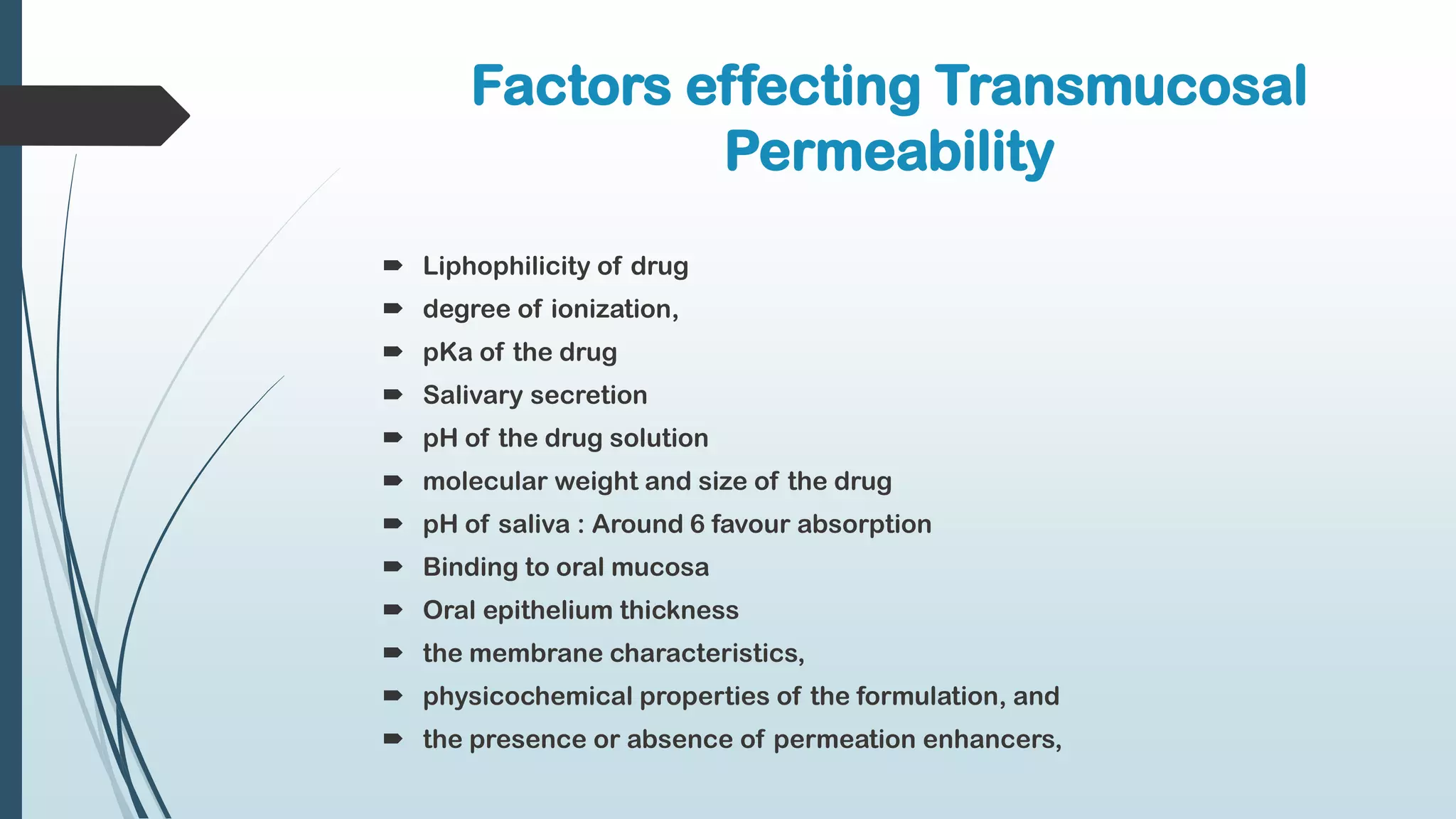
Factors effecting Transmucosal
Permeability
 Liphophilicity of drug
 degree of ionization,
 pKa of the drug
 Salivary secretion
 pH of the drug solution
 molecular weight and size of the drug
 pH of saliva : Around 6 favour absorption
 Binding to oral mucosa
 Oral epithelium thickness
 the membrane characteristics,
 physicochemical properties of the formulation, and
 the presence or absence of permeation enhancers,
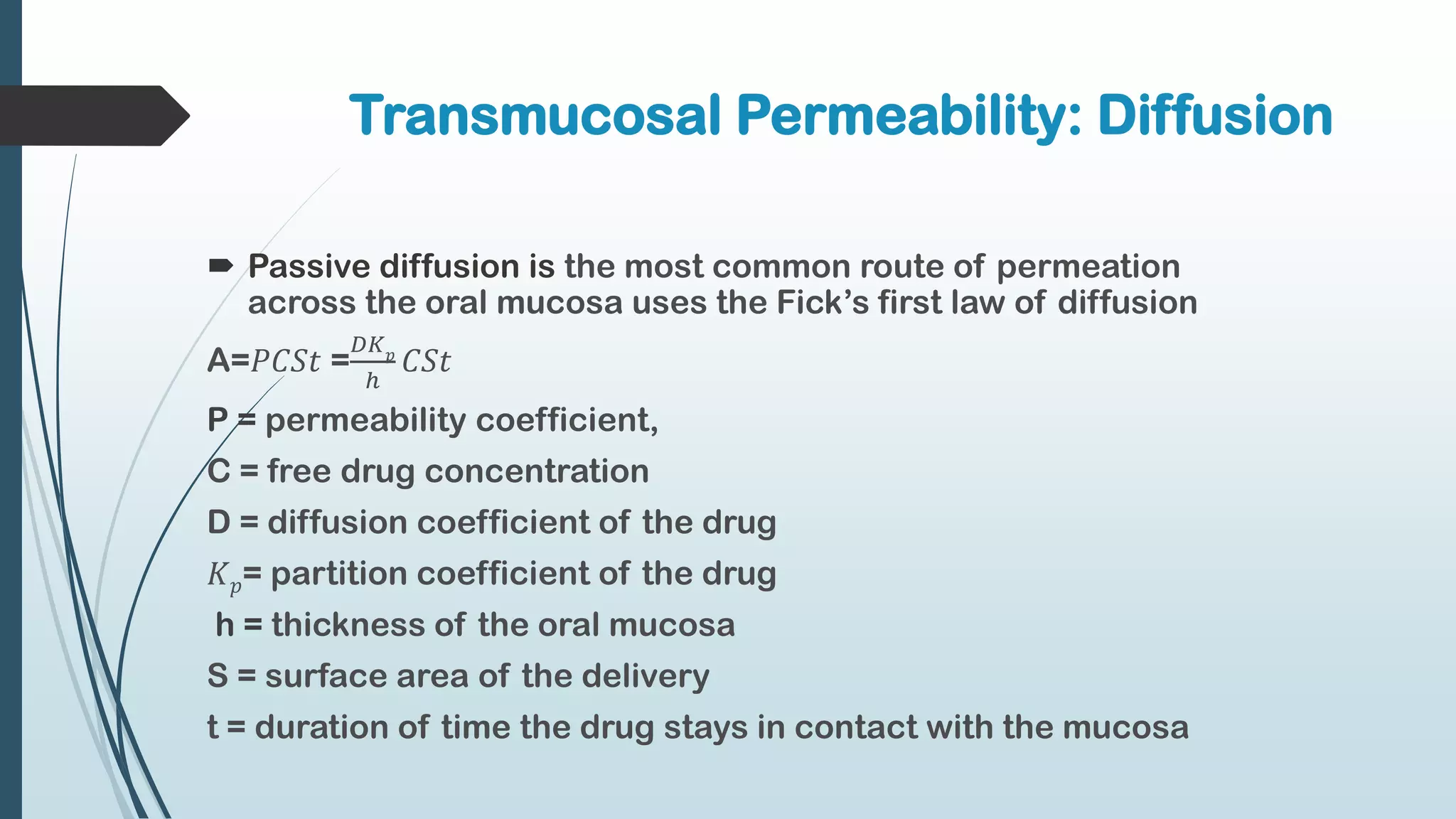
 Passive diffusion is the most common route of permeation
across the oral mucosa uses the Fick’s first law of diffusion
A=𝑃𝐶𝑆𝑡 =
𝐷𝐾𝑝
ℎ
𝐶𝑆𝑡
P = permeability coefficient,
C = free drug concentration
D = diffusion coefficient of the drug
𝐾𝑝= partition coefficient of the drug
h = thickness of the oral mucosa
S = surface area of the delivery
t = duration of time the drug stays in contact with the mucosa
Transmucosal Permeability: Diffusion
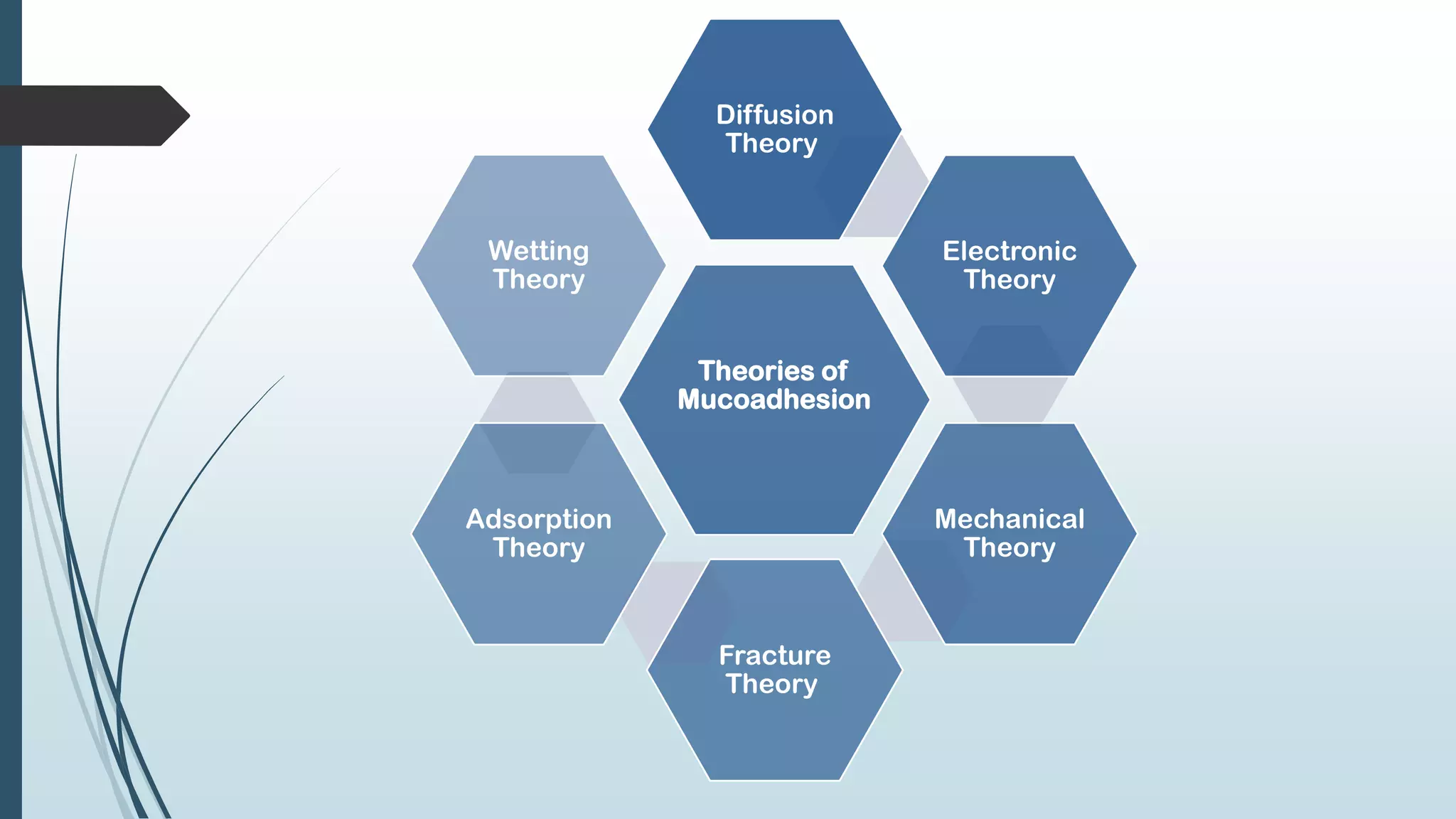
Theories of
Mucoadhesion
Diffusion
Theory
Electronic
Theory
Mechanical
Theory
Fracture
Theory
Adsorption
Theory
Wetting
Theory
Electronic theory
 It states that both mucoadhesive and biological materials must have
opposing electrical charges.
 When two materials (mucoadhesive polymer and biological membrane)
come into close contact, electron transfer occur between the two forming
of a double layer of electric charge at the interface.
 The attractive forces within this electronic double layer determines the
mucoadhesive strength.
Mucoadhesive drug delivery systems,Brazilian Journal of Pharmaceutical Sciences vol. 46(1) 2010
A detailed review on oral mucosal drug delivery system. Int. J of Pharm Sci and Res 3.3 (2012): 659.
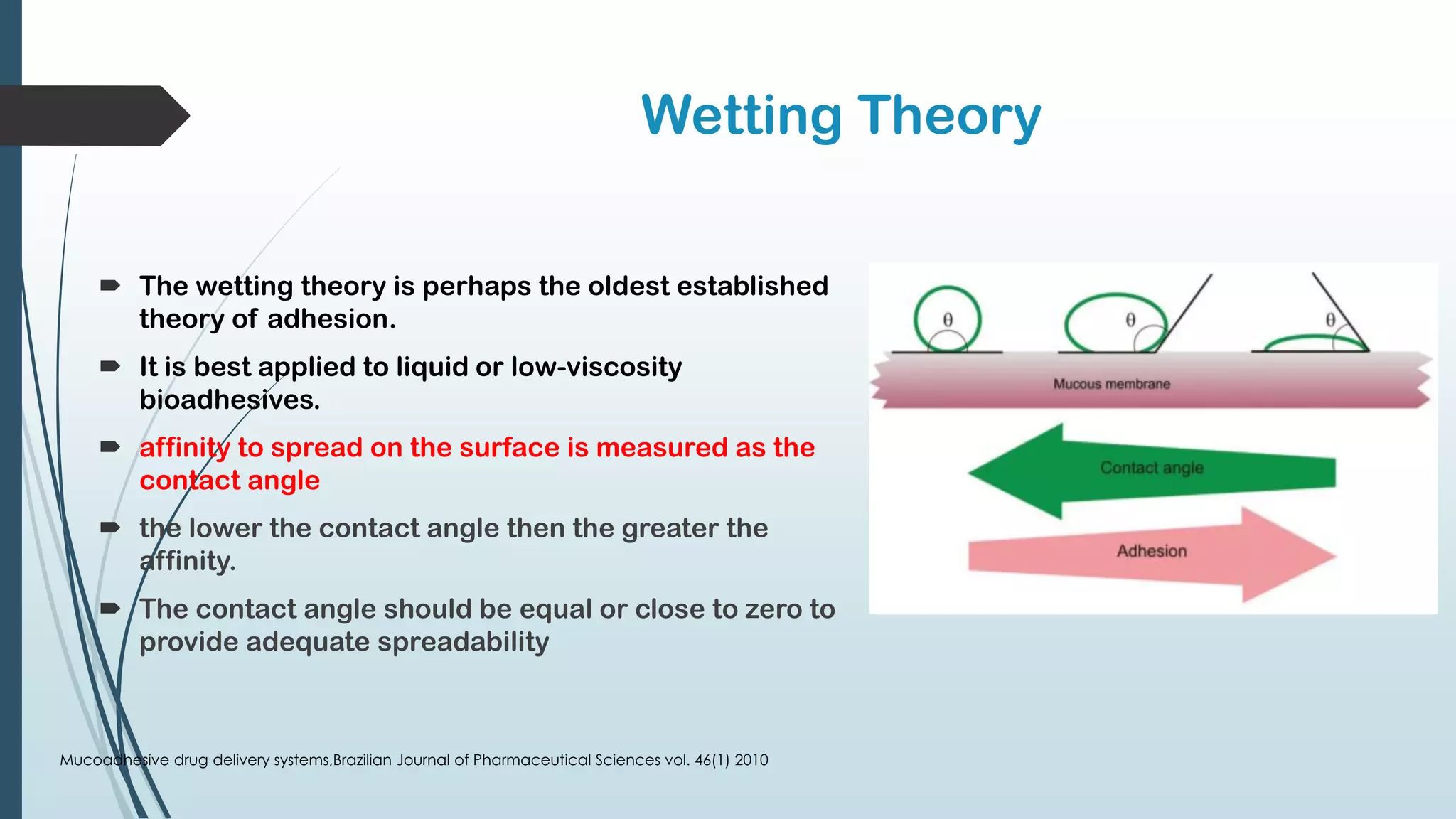
Wetting Theory
 The wetting theory is perhaps the oldest established
theory of adhesion.
 It is best applied to liquid or low-viscosity
bioadhesives.
 affinity to spread on the surface is measured as the
contact angle
 the lower the contact angle then the greater the
affinity.
 The contact angle should be equal or close to zero to
provide adequate spreadability
Mucoadhesive drug delivery systems,Brazilian Journal of Pharmaceutical Sciences vol. 46(1) 2010
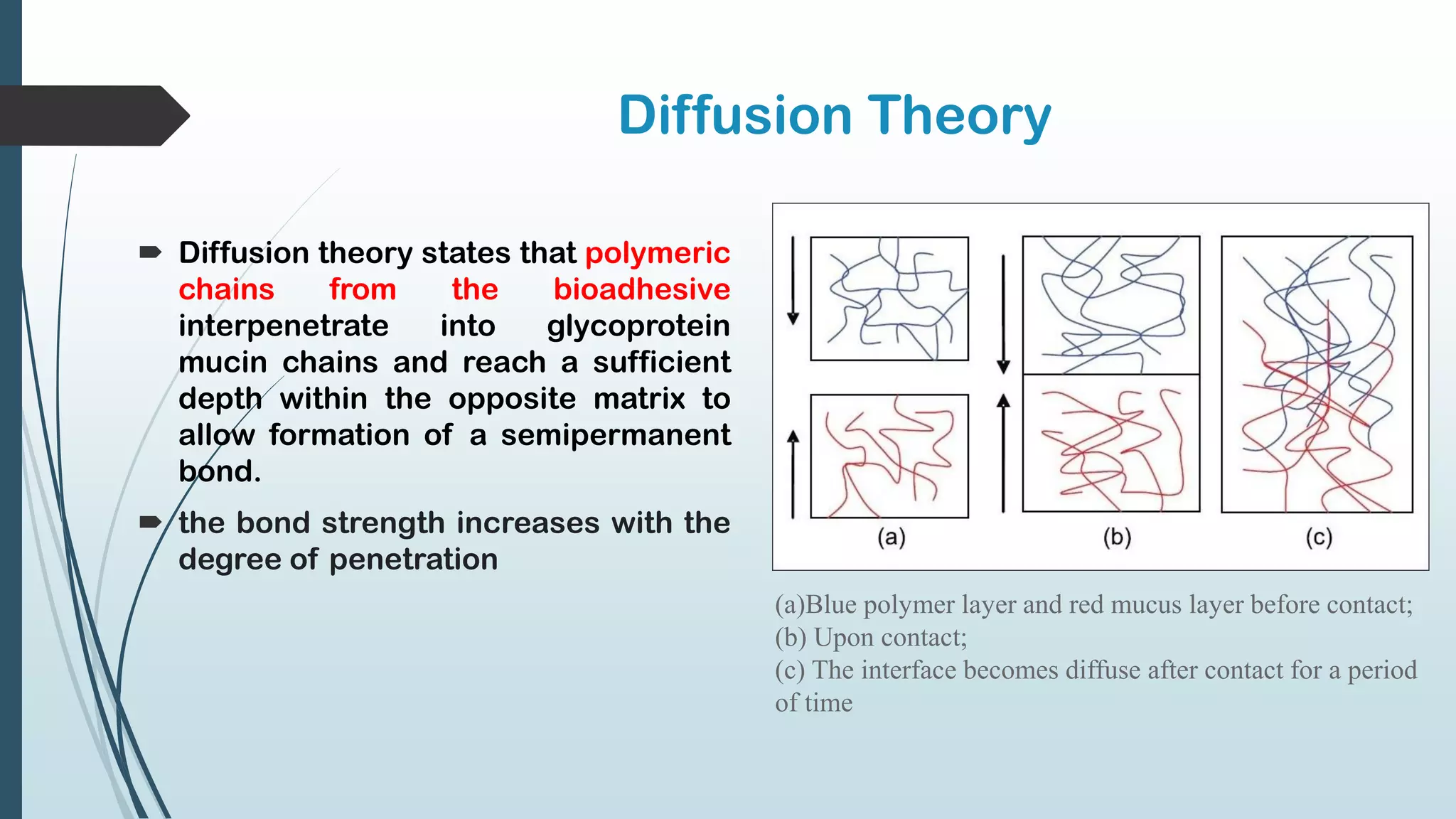
Diffusion Theory
 Diffusion theory states that polymeric
chains from the bioadhesive
interpenetrate into glycoprotein
mucin chains and reach a sufficient
depth within the opposite matrix to
allow formation of a semipermanent
bond.
 the bond strength increases with the
degree of penetration
(a)Blue polymer layer and red mucus layer before contact;
(b) Upon contact;
(c) The interface becomes diffuse after contact for a period
of time
Adsorption Theory
 This is another widely accepted theory, where adhesion between the substrate
and adhesive is due to primary and secondary bonding
 According to this theory, after an initial contact between two surfaces, the
mucoadhesive device adheres to the mucus by
 The primary bonds are due to chemisorption, and result in comparatively long lasting
covalent and non-covalent bonds
 secondary chemical interactions, such as in van der Waals and hydrogen bonds,
electrostatic attraction or hydrophobic interactions.
 Such forces have been considered the most important in the adhesive interaction
phenomenon
Mechanical Theory
 Mechanical theory considers adhesion to be due to the filling of the
irregularities on a rough surface by a mucoadhesive liquid.
 Moreover, such roughness increases the interfacial area available to
interactions thereby aiding dissipating energy and can be
considered the most important phenomenon of the process
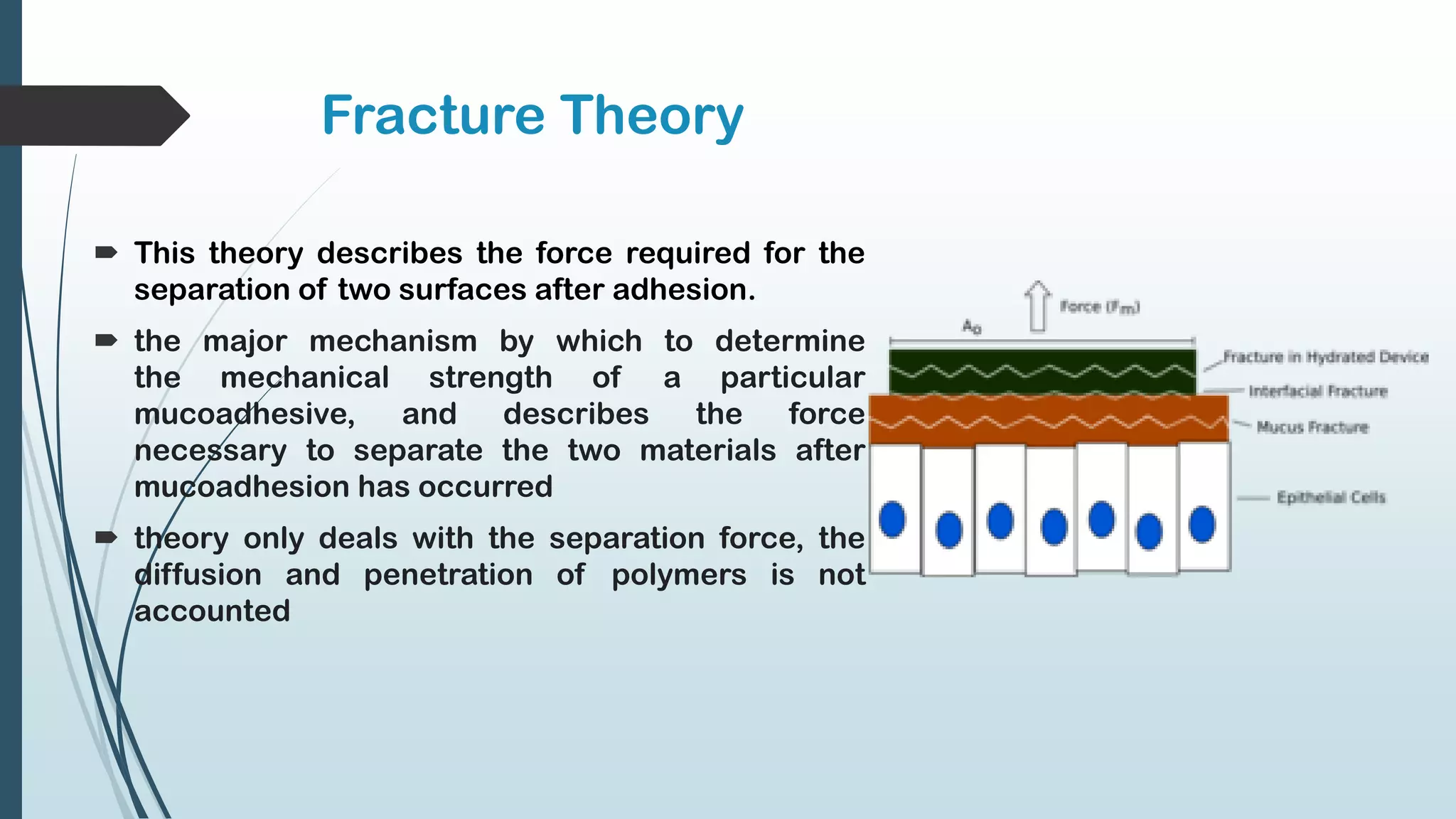
Fracture Theory
 This theory describes the force required for the
separation of two surfaces after adhesion.
 the major mechanism by which to determine
the mechanical strength of a particular
mucoadhesive, and describes the force
necessary to separate the two materials after
mucoadhesion has occurred
 theory only deals with the separation force, the
diffusion and penetration of polymers is not
accounted
Types of Bioadhesive Formulations
1.Solid Bioadhesive Formulations
 Tablets : Dry formulations such as tablets are able to form strong interactions
with mucosal surfaces by attracting water from the mucosal surface. An example
is Buccastem® which is used in the treatment of nausea, vomiting and
vertigovertigo. It is administered to the buccal mucosa (inside of the cheeks).
 Inserts: These include ocular inserts such as eye drops and eye gels. An
example is Pilogel® which is used in the treatment of glaucoma (raised pressure
in the eye). Pilogel® contains the bioadhesive agent carbomer 940,which
minimises irritation and prevents the loss of product by keeping the gel in place.
 Lozenges: Bioadhesive lozenges containing antibiotics and local anaesthetics
can be used topically to treat conditions affecting the mouth. Research has
shown that bioadhesive lozenges are able to release drugs in a controlled
manner by prolonging the drug release.
Types of Bioadhesive Formulations
Semi-solid bioadhesive Formulations
 Gels :Bioadhesive polymers that are able to form gels include polyacrylic
acid which adheres to mucosal surfaces in a cross-linked form. Gel
formulations are used to target several parts of the body including the eye,
vagina and oral cavity. An advantage of gels is that they are able to form a
very close contact with mucosal membranes and rapidly release drugs at
their site of absorption.
 Films: Bioadhesive films that are flexible in nature can be used to directly
deliver drugs to specific mucosal membranes. They form a very close
contact with the membrane and are able to deliver an accurate dose of
drug to the site of absorption. An example of a bioadhesive film is Zilactin®
which is used in the treatment of cold sores and mouth ulcers.
Types of Bioadhesive Formulations
Liquid Bioadhesive Formulations
Viscous liquids: Viscous liquids containing bioadhesive polymers such as
carboxymethyl cellulose may be used to protect mucosal membranes from
damage and irritation. They can also be used to deliver drugs to specific sites.
An example is artificial tears, a carbomer solution used to treat dry eyes.
Gel-forming liquids: These formulations are administered as liquids but
undergo a change in their form in response to conditions such as temperature
and pH. Such formulations are used for the controlled-release of drugs into the
eye.
Types of Bioadhesive Formulations:Eye
 Hypotears® and Sno Tears® Eye drops are used for dry eye and tear
deficiency and they generally lubricate the eyes. They both contain the
polymer polyvinyl alcohol (PVA) which increases tear production and
protects the eye from further irritation.
 GelTears® and Viscotears® Liquid gel eye drops are used for dry eye
conditions contain carbomer 980 (polyacrylic acid). Carbomers lubricate
the eye by clinging to the surface of the eye. This can help reduce the
frequency of their application into the eye.
 Pilogel® Is an eye gel used in the treatment of glaucoma. It contains the
high molecular weight polymer polyacrylic acid. The polymer increases the
viscosity of the gel which provides a prolonged retention of the gel in the
eye.
References
 Salunke, P. A., et al. "An Overview: Site Specific Drug Delivery System." INDO
AMERICAN JOURNAL OF PHARMACEUTICAL SCIENCES 3.1 (2016): 57-72.

Mucosal-Drug-Delivery-system.pdf

  • 1.
    Mucosal Drug DeliverySystem Dr Meenakshi Gupta Senior Assistant Professor University Institute of Pharmacy C. S. J. M. University Kanpur U.P
  • 2.
    Content  Introduction,  Principlesof bioadhesion /mucoadhesion,  Concepts,  advantages and disadvantages,  transmucosal permeability and  formulation considerations of buccal delivery systems
  • 3.
    Mucosal Drug DeliverySystem: Definition  These are the systems in which formulation interact with mucosal layer and increase the residential time of formulation at the site of administration for better absorption  These systems are designed to provide Controlled/Sustained Release of drug at the site of administration  Bioadhesion may be defined as the state in which two materials, at least one of which is biological in nature, are held together for extended periods of time by interfacial forces.  Mucoadhesion is a state in which one of the materials is mucosal membrane (biological) and another is nature or synthetic polymer that are held together for an extended period of time by interfacial forces
  • 4.
    Bioadhesion & Mucoadhesion Immobilization of drug delivery systems at the biological surface by the process of adhesion is referred to as “bioadhesion” or  Bioadhesion is the ability of a material (synthetic or biological) to adhere to a biological tissue for an extended period of time.  When these adhesive interactions are confined to the mucus layer lining of mucosal surface, this is called as “mucoadhesion”.  The interfacial molecular attractive forces between the two surfaces of the biological substrate and the natural or synthetic polymers allows the polymer to adhere to the biological surface for an extended period of time.  Provide site specific action by localization of the drug delivery system in a particular region.  Close contact with the mucosa increase of the residence time of the pharmaceutical dosage form in a specific region. 
  • 5.
    Bioadhesion Type Type 1 •Shows adhesion among two biological Phases • Examples: Platelets aggregation Type 2 • Shows adhesion of biological phase to artificial substrate • Example:cell adhesion to culture dishes and biofilm formation on prosthetic devices and inserts Type 3 • Shows adhesion of artificial material to a biological substrate • Example:adhesion of synthetic gels to soft tissues Bioadhesion may be defined as the state in which two materials, at least one of which is biological in nature, are held together for extended periods of time by interfacial forces. Mucoadhesive drug delivery systems. J Pharm Bioallied Sci. 2011;3(1)
  • 6.
    Mucosal Drug DeliverySystem: Ideal characteristics 1. Provide rapid adherence to the mucosal membrane without changing the physical property of the delivery system. 2. Should not interference with the controlled/sustained release of the active agent. 3. Should be biodegradable and should not produce any toxic by products. 4. Should enhance the penetration of the active agent. 5. The formulation stays longer at the delivery site & improve the bioavailability of API. 6. The specific bioadhesive molecules can allows for the targeting of particular sites or tissues. 7. Use of penetration enhancers allows modification of tissue permeability for absorption of macromolecules, such as peptides and proteins. Ex. Sodium glycocholate, Sodium taurocholate and L-lysophosphotidyl choline 8. Use of protease inhibitors in the mucoadhesive dosage forms resulted in better absorption of peptides and proteins.
  • 7.
    Mucosal Drug DeliverySystem: Advantage  Enhance the residential time of formulation at absorption site and improve absorption of drug  Enhance the bioavailability of drug  Lower the administration frequency  Provide site specific action and therefore reduce the side effects  Avoid first pass effect  Protects the drug from degradation due to pH and digestive enzymes of the middle gastrointestinal tract.  Non-invasive method of drug delivery  Painless  Improve the therapeutic performance of drug
  • 8.
    Mucosal Drug Deliverysystem: Disadvantage  If get adhere too tightly then removal will be difficult  Some patient feel uncomfortable and irritation in mucosa  The absorption of mucoadhesive drugs is adversely affected by the presence of food.  rapid elimination of drugs due to the flushing action of saliva or the ingestion of foods stuffs  patient acceptability in terms of taste, irritancy and ‘mouth feel’ is an issue.  Eating and drinking may become restricted  Expensive as compare to other formulation
  • 9.
    Mucosal Drug Deliverysystem: Routes  Buccal Route- Tablets,Films  Sublingual Route- Tablets  Oral Route(Gastro-retensive)-Tablets  Ophthalmic Route- Gels, Solutions, Microparticles  Nasal Route- Microparticles  Rectal Route- Suppositorys, Gels  Vaginal routes-Gels,Tablets Formulation are retained on a biological surface for localized drug delivery for Systemic & local effects
  • 10.
    Mucosal membranes  Mucosallayer is an epithelial layer whose surface is covered by mucus  These moist membranes line the passage such as the mouth, gastrointestinal tract, respiratory tract, nose,eye and vagina.  Mucus protect and lubricate the epithelium  thickness of mucus can vary from 50-450 µm in the stomach to less than 1 µm in the oral cavity  mucus is negatively charged that contain glycoprotein (known as mucin) water and inorganic salts.  It has visco-elastic nature and maintain a pH of 5.8–7.4
  • 11.
    Structure of themucosa of the oral cavity 1) Mucus layer 2) Epithelium 3) Connective tissue (lamina propria); 4) mooth muscle layer
  • 12.
    Bioadhesive Polymer: Definition Bioadhesive polymers are synthetic or natural polymers that binds to biological substrates such as skin, mucosal membranes.  These polymers are also referred to as biological ‘glues’ as they combined with the drugs and allow the binding of formulation to the site of administration.
  • 13.
    Bioadhesive Polymer  microparticlesand nano-particulate systems based on chitosan and derivatives  polymers derived from polyacrylic acid, such as polycarbophil and carbomers,  polymers derived from cellulose, such as hydroxyethylcellulose and carboxymethylcellulose,  alginates, chitosan and derivatives and more recently, lectins and their derivatives
  • 14.
    Characteristic of MucoadhesivePolymers  sufficient number of hydrogen bonding chemical groups (-OH and – COOH)  anionic surface chain  high molecular weight  high chain flexibility  surface tension that will induce spreading into the mucus layer.  Each of these characteristics favours the formation of bonds that are either chemical or mechanical origin.
  • 15.
    Transmucosal Permeability Paracellular (intercellular,passing around the cell) Transcellular (intracellular, passing through the cell) 1. Paracelular transport refers to the transfer of substances across an epithelium by passing through the intercellular space between the cells. 2. Transcellular transport, where the substances travel through the cell, passing through both the apical membrane and basolateral membrane. https://en.wikipedia.org/wiki/Intestinal_permeability
  • 16.
    Transmucosal Permeability  Buccalmucosa offers higher permeability and faster onset of drug delivery as comparison to the skin.  the nasal delivery system, include robustness, ease of use, and avoidance of drug metabolism and degradation.  Permeation across the buccal mucosa has been reported to be mainly by the paracellular route
  • 17.
     Passive diffusion Facilitated diffusion  Active transport  Pinocytosis Transmucosal Permeability https://alevelbiology.co.uk/notes/movement-diffusion-osmosis/
  • 18.
     Passive diffusionthe transport of molecules across cell membranes depends very much on the concentration of the molecule. Most drug molecules are transported across membranes by diffusion from a region of high concentration to the lower concentration such as blood. Cell membranes are lipid in nature, lipid soluble drugs are able to diffuse across the membrane more rapidly than non-lipid soluble drugs. Small molecules are also able to penetrate the membrane more rapidly than larger ones.  Facilitated passive diffusion This is when molecules are transported across membranes and into cells with the help of carrier proteins. These proteins only interact with certain molecules and therefore exhibit specificity. The process of carrier-mediated transport depends on the availability of carriers, this means that at a particular point during transport the carrier will become saturated. An example of this type of diffusion is the transport of glucose from blood.  Active Transport is the movement of molecules and ions against their concentration gradients, from lower to higher concentrations. This form of transport requires an input of energy from cells which is obtained from ATP (Adenosine Triphosphate).  Pinocytosis allows a cell to engulf large molecules and fluid that may be present in the extracellular region. The cell membrane folds inwards, encloses the fluid or particle to be transported and then fuses to form a vesicle. The vesicle detaches from the membrane and moves to the interior of the cell. Pinocytosis plays a role in the transport of protein drugs.
  • 19.
    Factors effecting Transmucosal Permeability Liphophilicity of drug  degree of ionization,  pKa of the drug  Salivary secretion  pH of the drug solution  molecular weight and size of the drug  pH of saliva : Around 6 favour absorption  Binding to oral mucosa  Oral epithelium thickness  the membrane characteristics,  physicochemical properties of the formulation, and  the presence or absence of permeation enhancers,
  • 20.
     Passive diffusionis the most common route of permeation across the oral mucosa uses the Fick’s first law of diffusion A=𝑃𝐶𝑆𝑡 = 𝐷𝐾𝑝 ℎ 𝐶𝑆𝑡 P = permeability coefficient, C = free drug concentration D = diffusion coefficient of the drug 𝐾𝑝= partition coefficient of the drug h = thickness of the oral mucosa S = surface area of the delivery t = duration of time the drug stays in contact with the mucosa Transmucosal Permeability: Diffusion
  • 21.
  • 22.
    Electronic theory  Itstates that both mucoadhesive and biological materials must have opposing electrical charges.  When two materials (mucoadhesive polymer and biological membrane) come into close contact, electron transfer occur between the two forming of a double layer of electric charge at the interface.  The attractive forces within this electronic double layer determines the mucoadhesive strength. Mucoadhesive drug delivery systems,Brazilian Journal of Pharmaceutical Sciences vol. 46(1) 2010 A detailed review on oral mucosal drug delivery system. Int. J of Pharm Sci and Res 3.3 (2012): 659.
  • 23.
    Wetting Theory  Thewetting theory is perhaps the oldest established theory of adhesion.  It is best applied to liquid or low-viscosity bioadhesives.  affinity to spread on the surface is measured as the contact angle  the lower the contact angle then the greater the affinity.  The contact angle should be equal or close to zero to provide adequate spreadability Mucoadhesive drug delivery systems,Brazilian Journal of Pharmaceutical Sciences vol. 46(1) 2010
  • 24.
    Diffusion Theory  Diffusiontheory states that polymeric chains from the bioadhesive interpenetrate into glycoprotein mucin chains and reach a sufficient depth within the opposite matrix to allow formation of a semipermanent bond.  the bond strength increases with the degree of penetration (a)Blue polymer layer and red mucus layer before contact; (b) Upon contact; (c) The interface becomes diffuse after contact for a period of time
  • 25.
    Adsorption Theory  Thisis another widely accepted theory, where adhesion between the substrate and adhesive is due to primary and secondary bonding  According to this theory, after an initial contact between two surfaces, the mucoadhesive device adheres to the mucus by  The primary bonds are due to chemisorption, and result in comparatively long lasting covalent and non-covalent bonds  secondary chemical interactions, such as in van der Waals and hydrogen bonds, electrostatic attraction or hydrophobic interactions.  Such forces have been considered the most important in the adhesive interaction phenomenon
  • 26.
    Mechanical Theory  Mechanicaltheory considers adhesion to be due to the filling of the irregularities on a rough surface by a mucoadhesive liquid.  Moreover, such roughness increases the interfacial area available to interactions thereby aiding dissipating energy and can be considered the most important phenomenon of the process
  • 27.
    Fracture Theory  Thistheory describes the force required for the separation of two surfaces after adhesion.  the major mechanism by which to determine the mechanical strength of a particular mucoadhesive, and describes the force necessary to separate the two materials after mucoadhesion has occurred  theory only deals with the separation force, the diffusion and penetration of polymers is not accounted
  • 28.
    Types of BioadhesiveFormulations 1.Solid Bioadhesive Formulations  Tablets : Dry formulations such as tablets are able to form strong interactions with mucosal surfaces by attracting water from the mucosal surface. An example is Buccastem® which is used in the treatment of nausea, vomiting and vertigovertigo. It is administered to the buccal mucosa (inside of the cheeks).  Inserts: These include ocular inserts such as eye drops and eye gels. An example is Pilogel® which is used in the treatment of glaucoma (raised pressure in the eye). Pilogel® contains the bioadhesive agent carbomer 940,which minimises irritation and prevents the loss of product by keeping the gel in place.  Lozenges: Bioadhesive lozenges containing antibiotics and local anaesthetics can be used topically to treat conditions affecting the mouth. Research has shown that bioadhesive lozenges are able to release drugs in a controlled manner by prolonging the drug release.
  • 29.
    Types of BioadhesiveFormulations Semi-solid bioadhesive Formulations  Gels :Bioadhesive polymers that are able to form gels include polyacrylic acid which adheres to mucosal surfaces in a cross-linked form. Gel formulations are used to target several parts of the body including the eye, vagina and oral cavity. An advantage of gels is that they are able to form a very close contact with mucosal membranes and rapidly release drugs at their site of absorption.  Films: Bioadhesive films that are flexible in nature can be used to directly deliver drugs to specific mucosal membranes. They form a very close contact with the membrane and are able to deliver an accurate dose of drug to the site of absorption. An example of a bioadhesive film is Zilactin® which is used in the treatment of cold sores and mouth ulcers.
  • 30.
    Types of BioadhesiveFormulations Liquid Bioadhesive Formulations Viscous liquids: Viscous liquids containing bioadhesive polymers such as carboxymethyl cellulose may be used to protect mucosal membranes from damage and irritation. They can also be used to deliver drugs to specific sites. An example is artificial tears, a carbomer solution used to treat dry eyes. Gel-forming liquids: These formulations are administered as liquids but undergo a change in their form in response to conditions such as temperature and pH. Such formulations are used for the controlled-release of drugs into the eye.
  • 31.
    Types of BioadhesiveFormulations:Eye  Hypotears® and Sno Tears® Eye drops are used for dry eye and tear deficiency and they generally lubricate the eyes. They both contain the polymer polyvinyl alcohol (PVA) which increases tear production and protects the eye from further irritation.  GelTears® and Viscotears® Liquid gel eye drops are used for dry eye conditions contain carbomer 980 (polyacrylic acid). Carbomers lubricate the eye by clinging to the surface of the eye. This can help reduce the frequency of their application into the eye.  Pilogel® Is an eye gel used in the treatment of glaucoma. It contains the high molecular weight polymer polyacrylic acid. The polymer increases the viscosity of the gel which provides a prolonged retention of the gel in the eye.
  • 32.
    References  Salunke, P.A., et al. "An Overview: Site Specific Drug Delivery System." INDO AMERICAN JOURNAL OF PHARMACEUTICAL SCIENCES 3.1 (2016): 57-72.