Project Based LearningElizabeth Helfant1851micds!*%!1851micds SHIFT1851
AGENDAWhy PBL?What is and isn’t PBL?Pedagogy within PBL Experience PBLDesign PBL Unit
• Defining projectsComponents of projectsManaging projectsCreating projectsGrading projectsThe realities of projects
Other ObjectivesMake you think and question thingsPut you in some PBL learning situationsExpose you to some technology support toolsHave you build a unit for next year
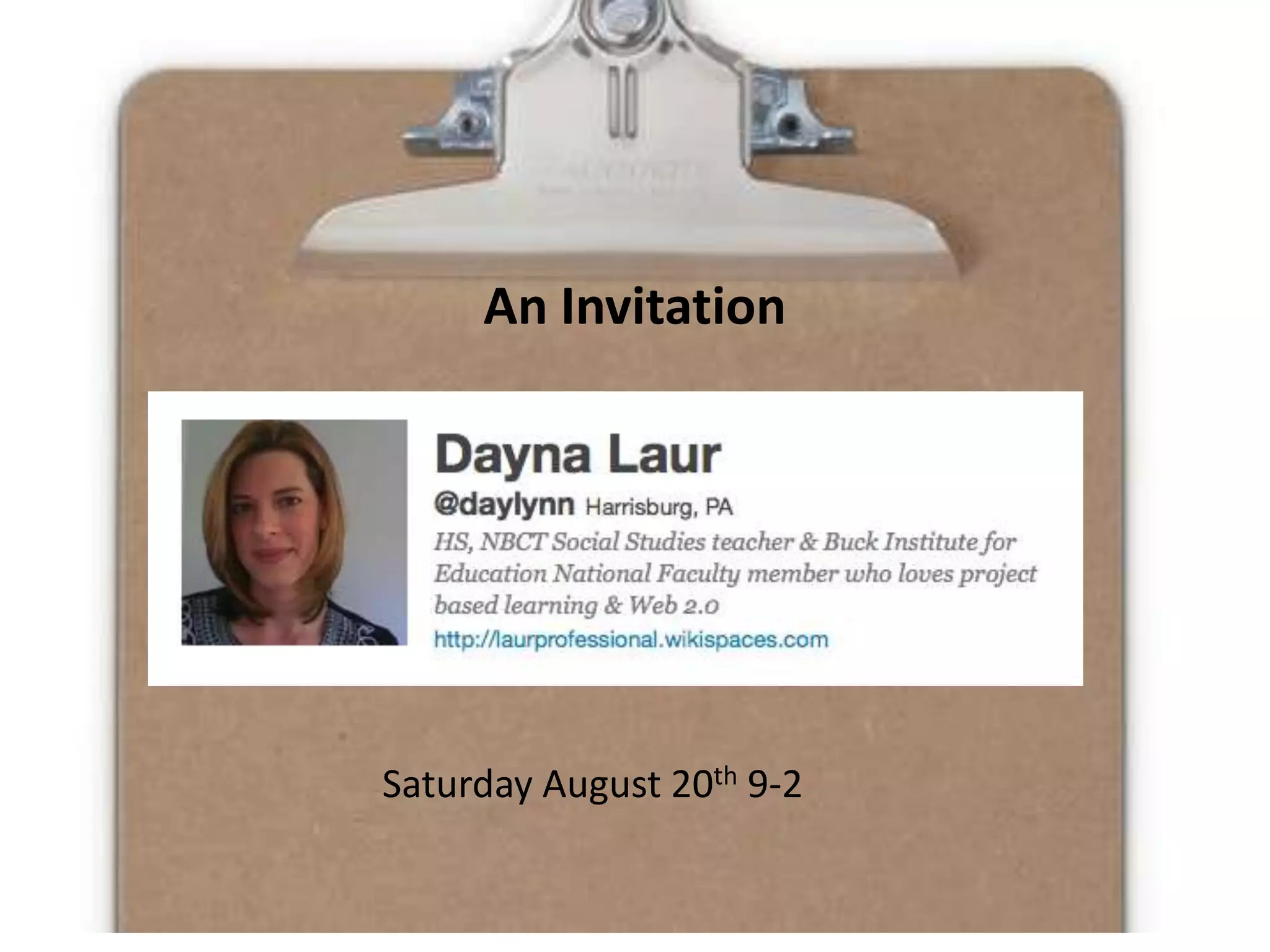
An InvitationSaturday August 20th 9-2
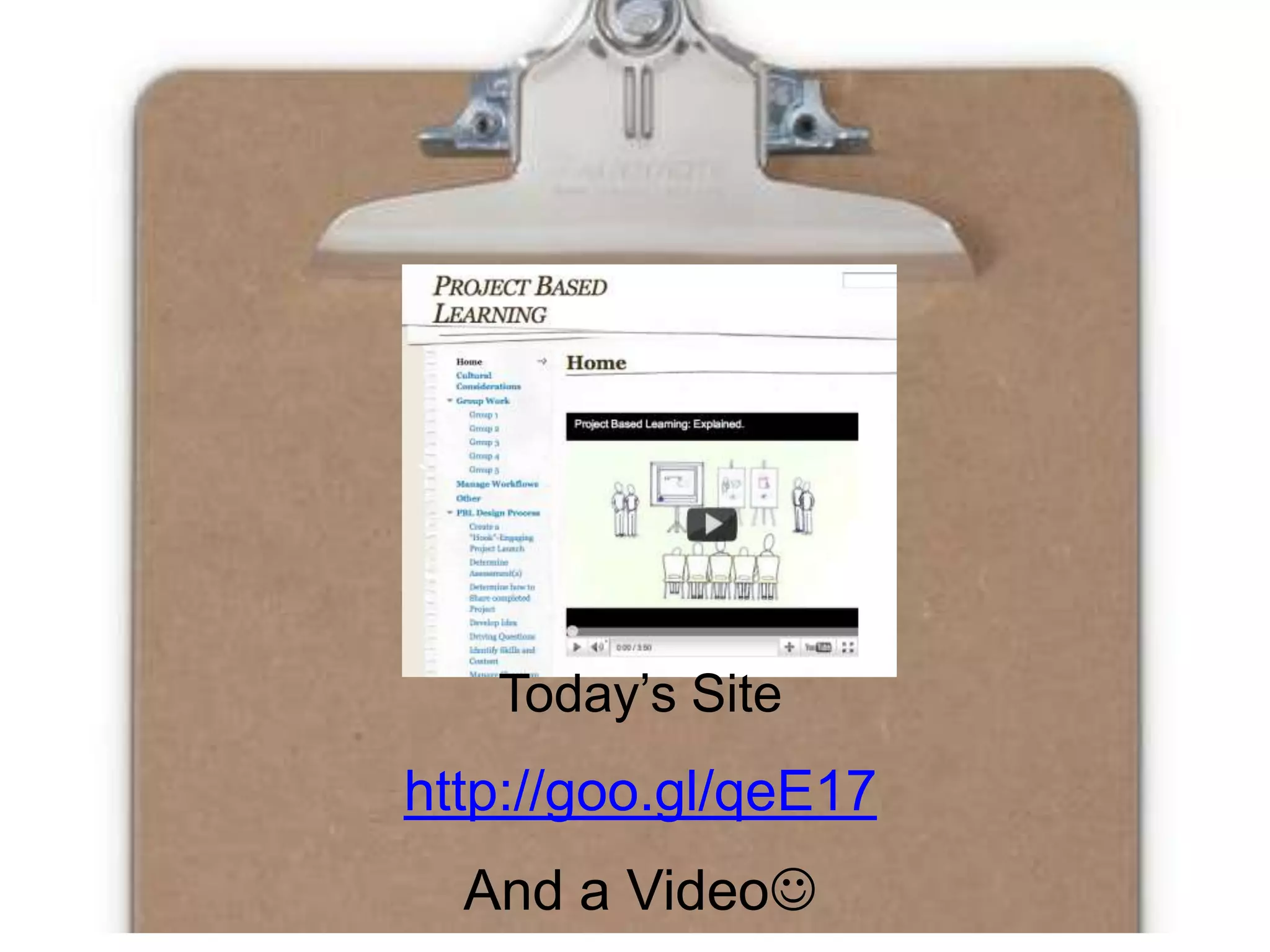
Today’s Sitehttp://goo.gl/qeE17And a Video
Task One:Get into Groups of 4 (If 3, reporter and recorder become 1)IntroductionsAssign each member one of these rollsRecorder – Records groups thoughts and class notes that might be important
Facilitator/Discussion Leader – Keeps group on task, maintains full participation, also records important information from instructions
Reporter- Reports out to larger group
Reflector/Evaluator – Will assess group and individual contribution/engagementRecord these rolls on the Google Site Under Group Work – Group Numbers are on the Table- This page will be your working location.
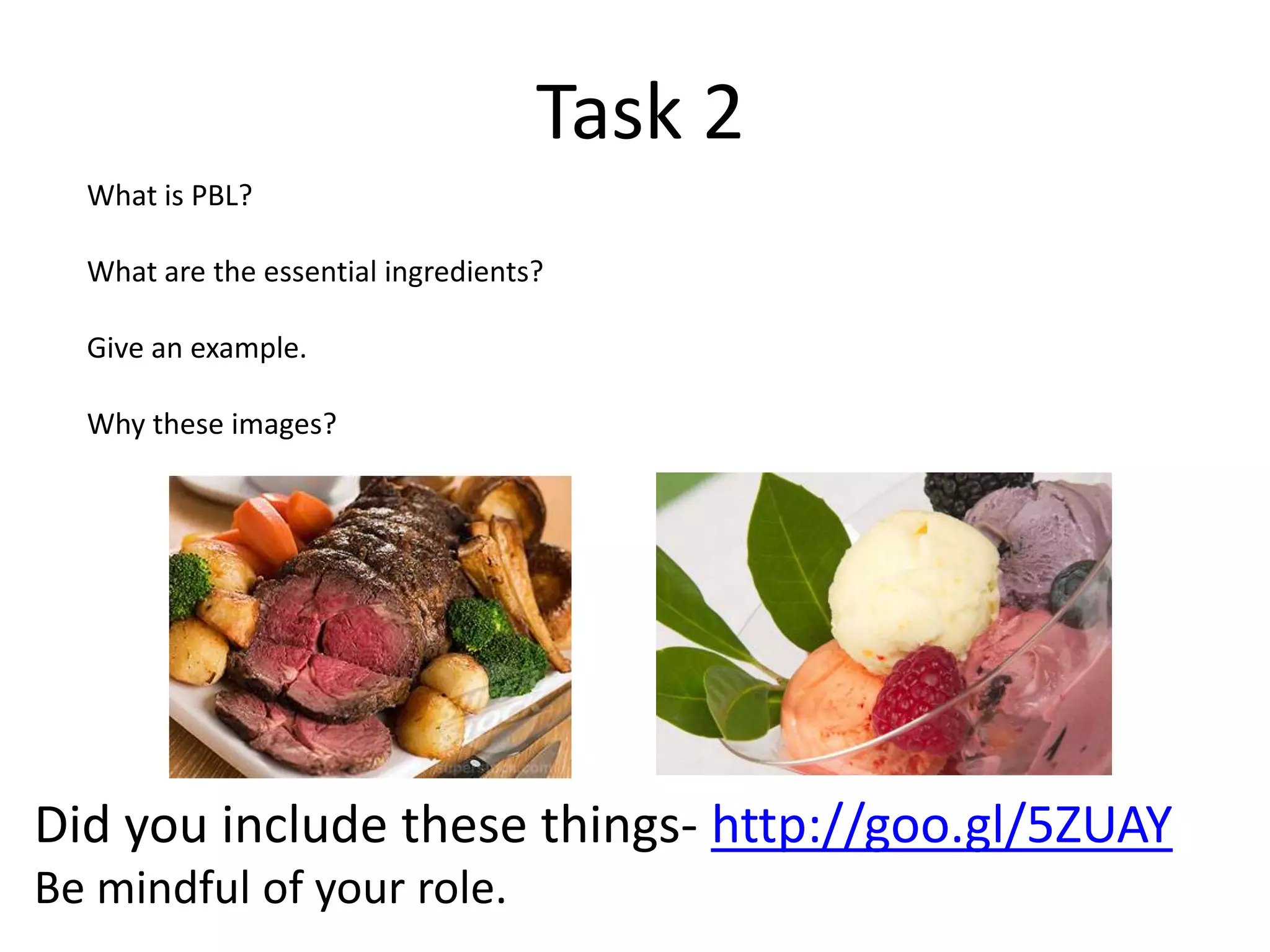
Task 2What is PBL? What are the essential ingredients?Give an example.Why these images?Did you include these things- http://goo.gl/5ZUAYBe mindful of your role.
Task 3Role DiscussionHow did each member perform their role? Fill out the assessment on the Group Site- It’s a Google Form-
Why PBL?
MICDS Upper School Reasons
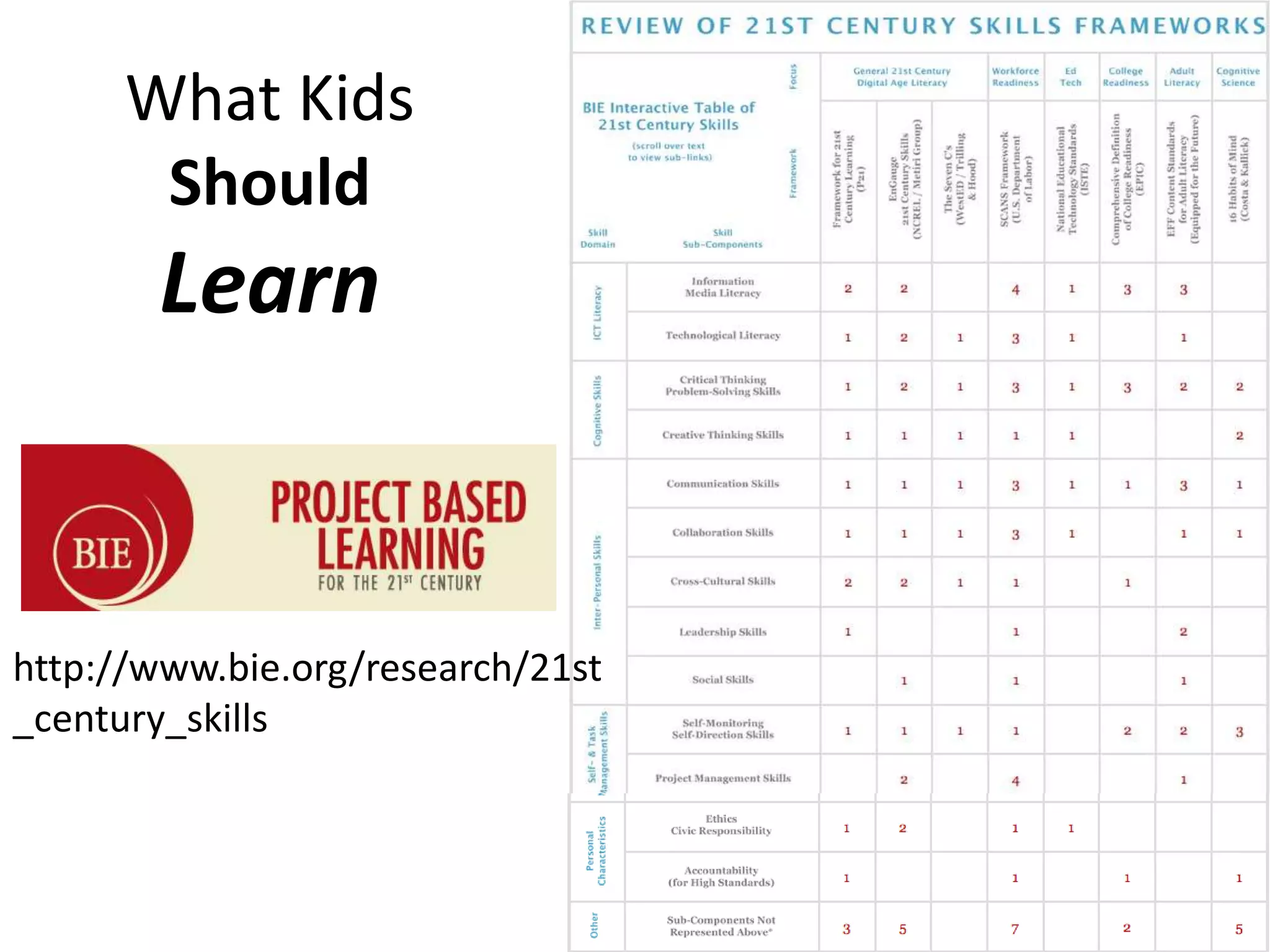
What Kids ShouldLearnhttp://www.bie.org/research/21st_century_skills
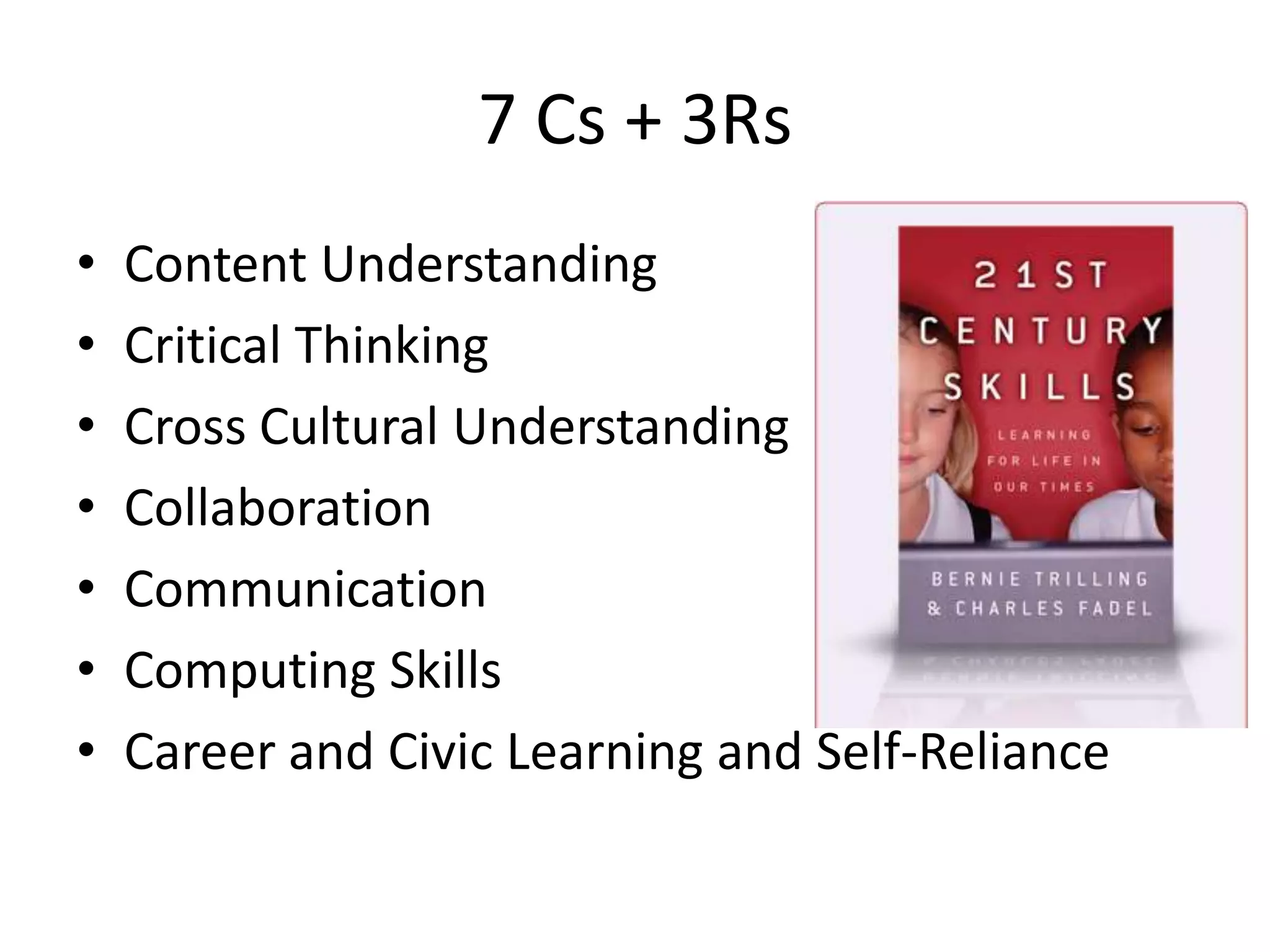
7 Cs + 3RsContent UnderstandingCritical ThinkingCross Cultural UnderstandingCollaborationCommunicationComputing SkillsCareer and Civic Learning and Self-Reliance
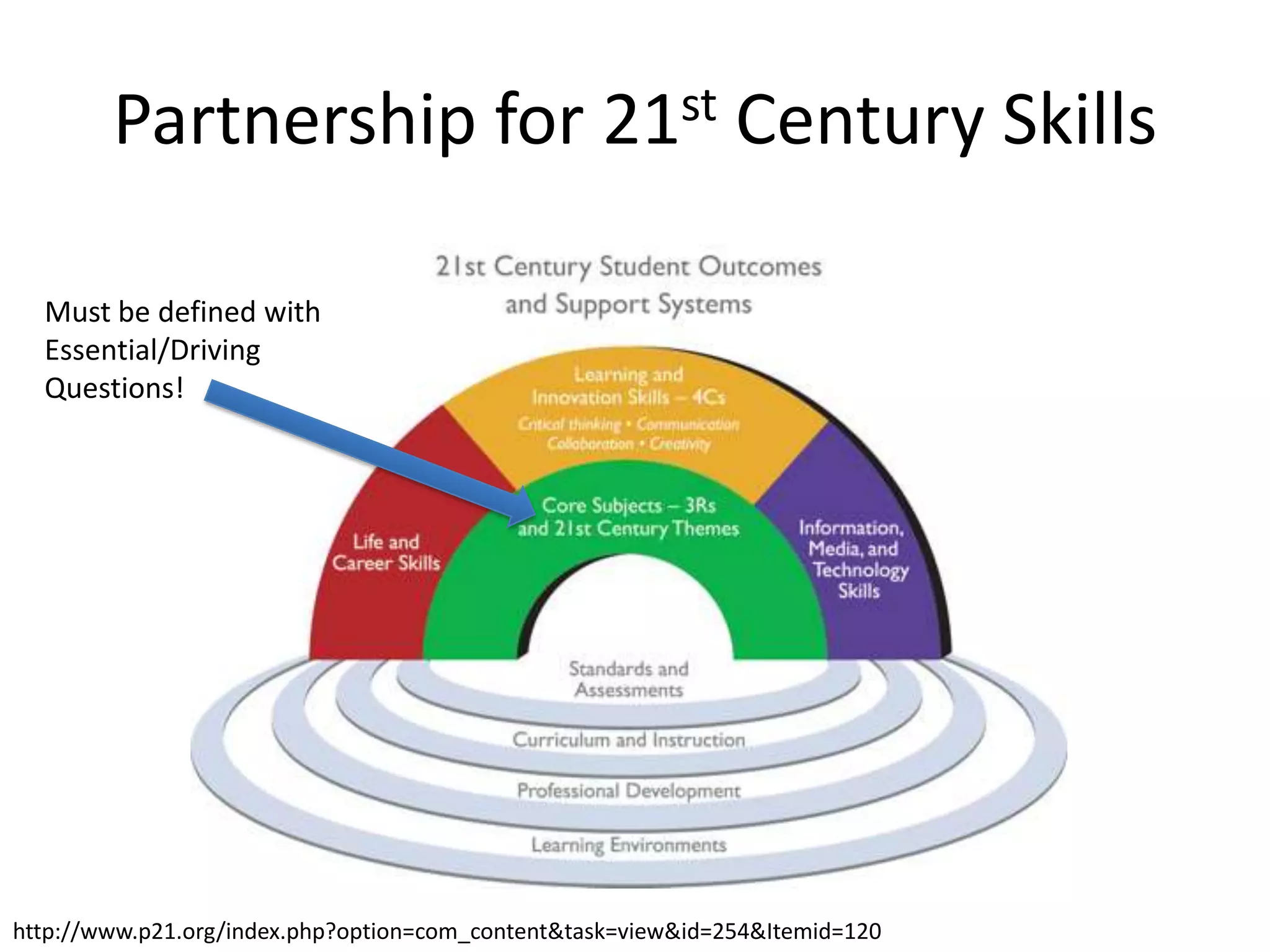
Partnership for 21st Century SkillsMust be defined with Essential/Driving Questions!http://www.p21.org/index.php?option=com_content&task=view&id=254&Itemid=120
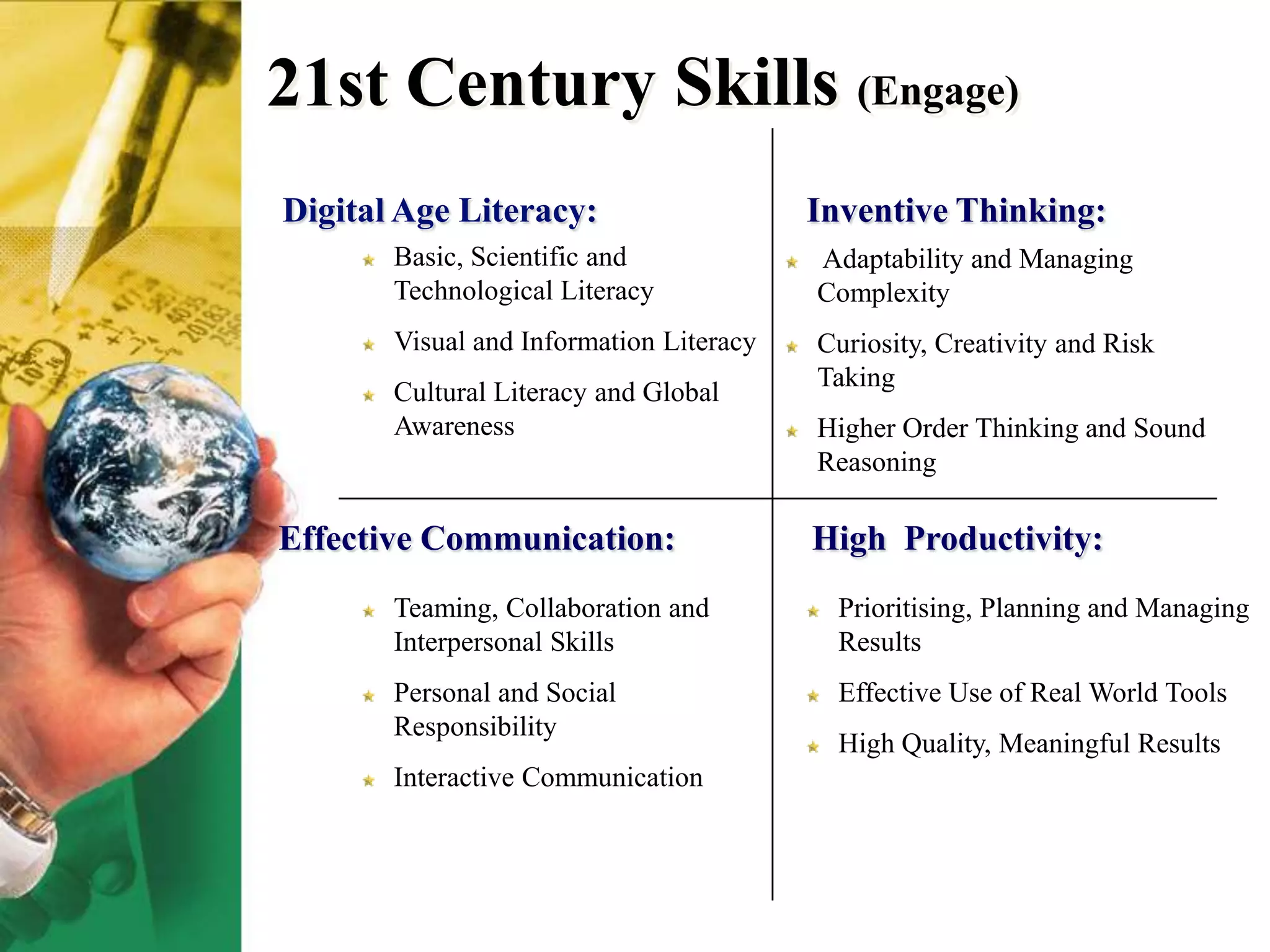
21st Century Skills (Engage)Basic, Scientific and Technological LiteracyVisual and Information LiteracyCultural Literacy and Global AwarenessInventive Thinking:Digital Age Literacy: Adaptability and Managing ComplexityCuriosity, Creativity and Risk TakingHigher Order Thinking and Sound Reasoning     Effective Communication:	High  Productivity:Teaming, Collaboration and Interpersonal SkillsPersonal and Social ResponsibilityInteractive CommunicationPrioritising, Planning and Managing ResultsEffective Use of Real World ToolsHigh Quality, Meaningful Results
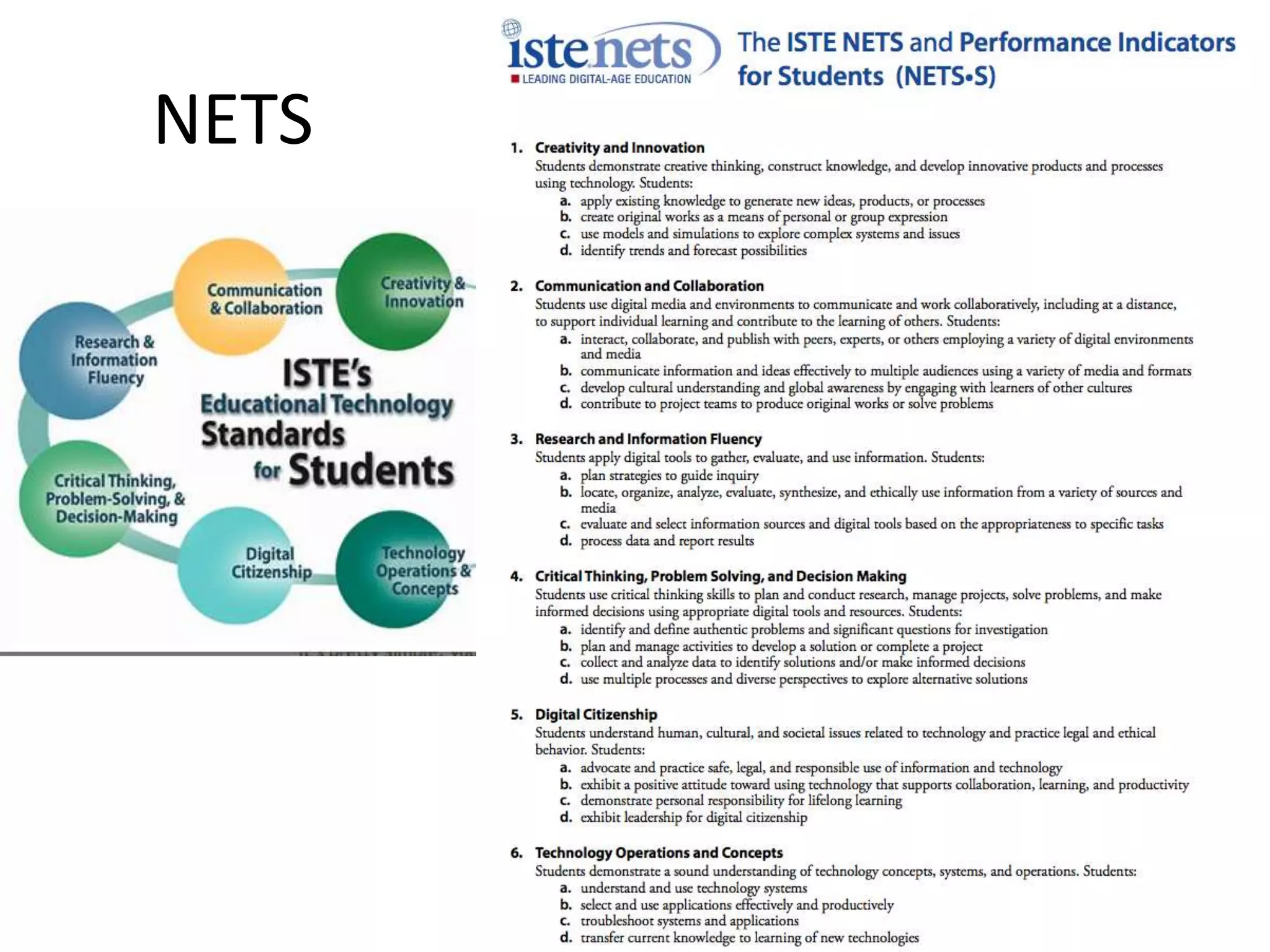
NETS
Skill InventoryWhat skills do your students need more practice with?Which 1-2 skills do you teach well and how do you do that? Individual Writing- Everyone contribute to the google doc- (we’ll do it anonymously but in PBL, I’d have kids logged in)http://goo.gl/o6Bbe
Consider Dispositions and HabitsPerkins Learning Dispositions for Good ThinkingThe Disposition to be curious and questioningThe Disposition to think broadly and adventurouslyThe Disposition to reason clearly and carefullyThe Disposition to organize one’s thinkingThe Disposition to give time to thinkingFrom The Thinking Classroom-Learning and Teaching in a Culture of Thinking, Perkins, Tishman, Jay
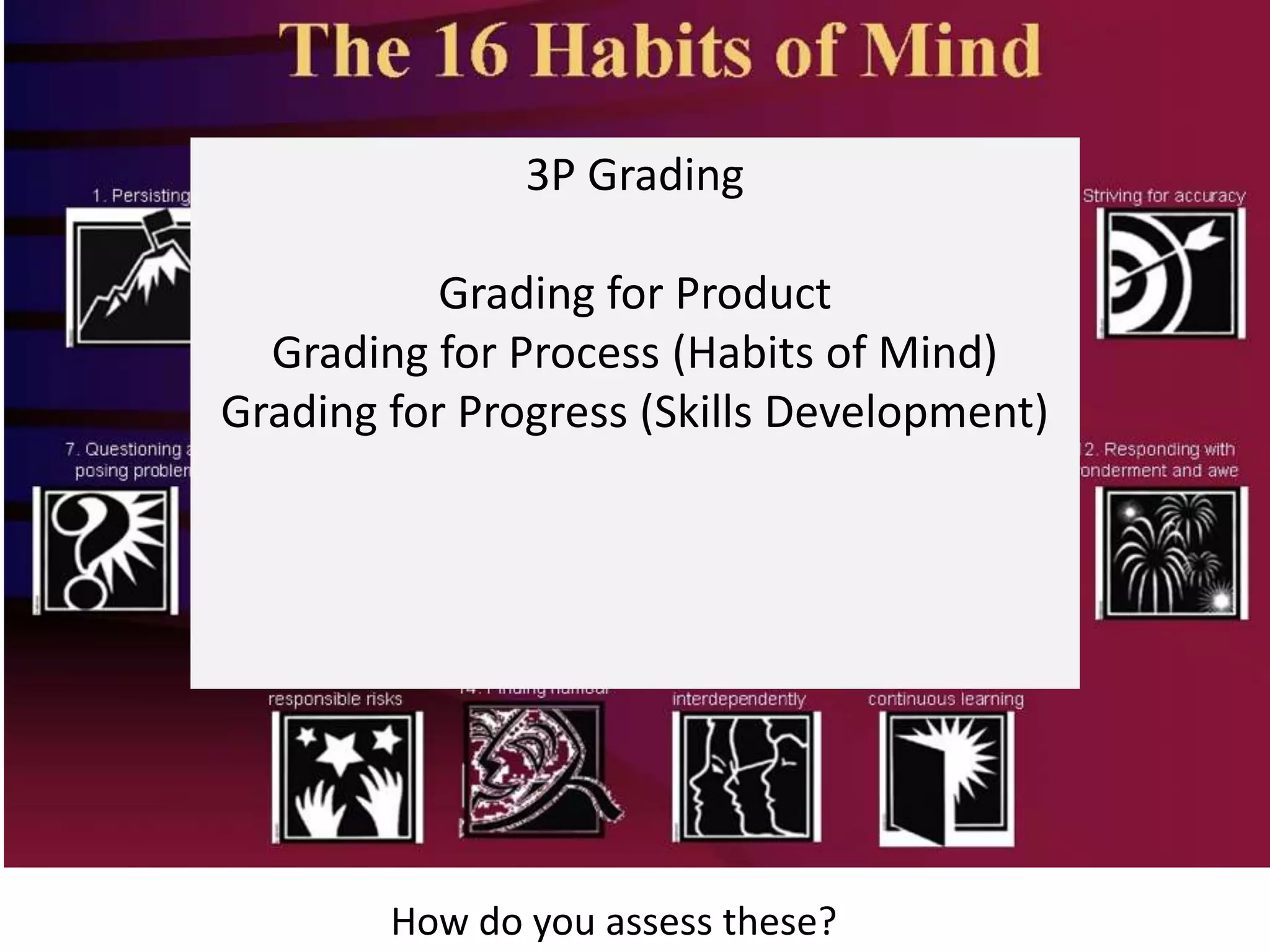
Habits of Mind3P GradingGrading for ProductGrading for Process (Habits of Mind)Grading for Progress (Skills Development)How do you assess these?
Another Reason for PBL:How Kids Learn?
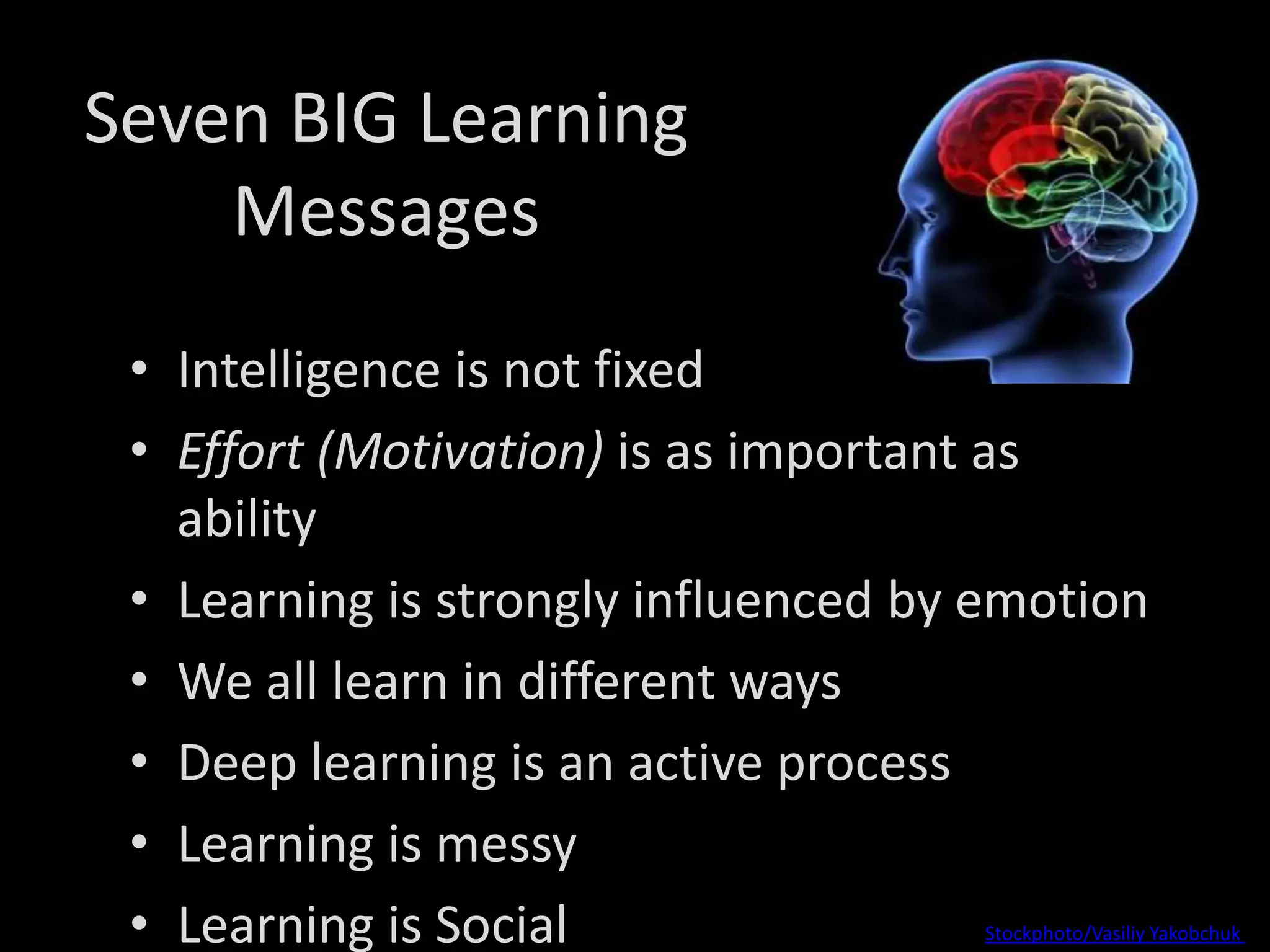
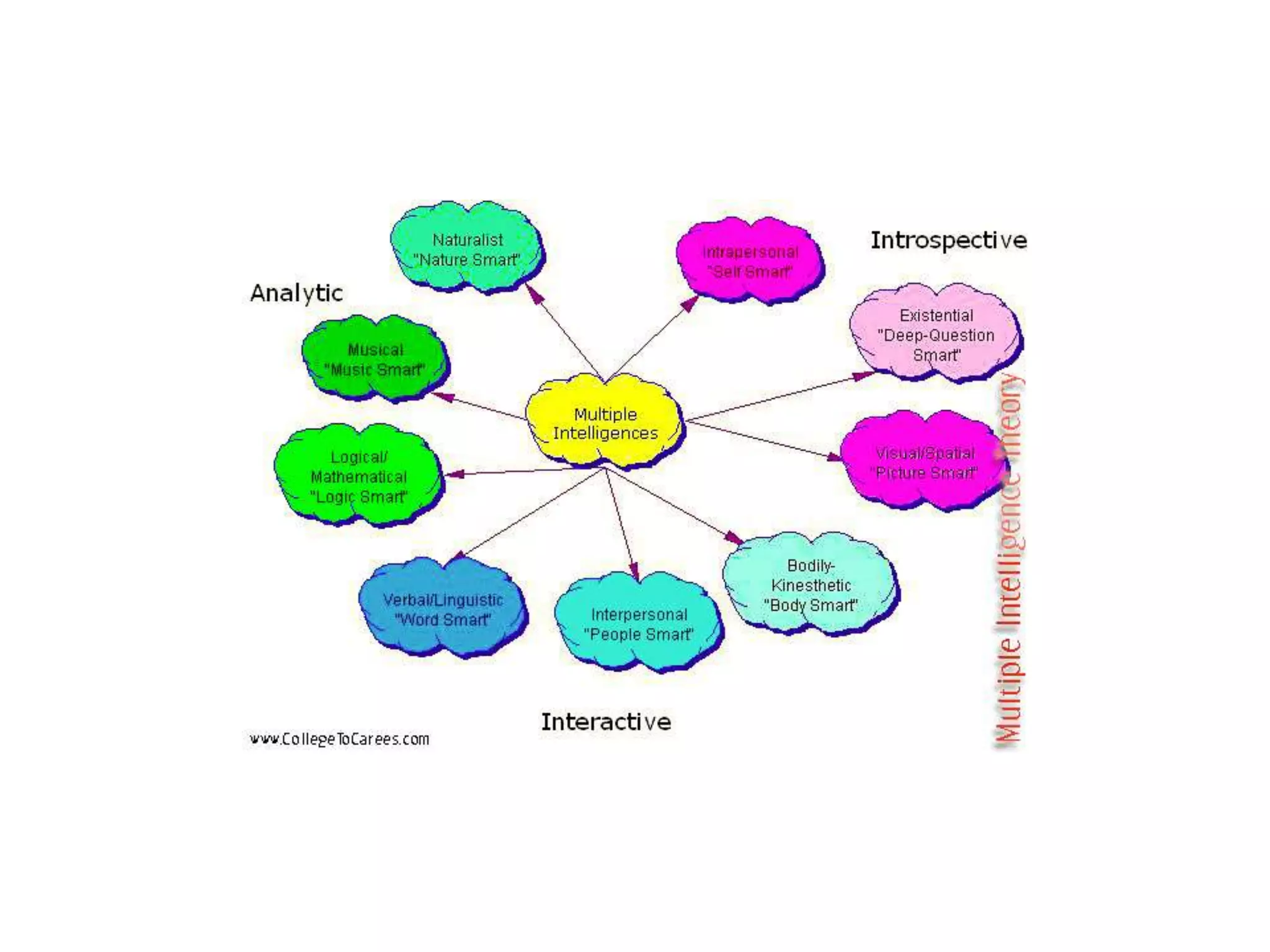
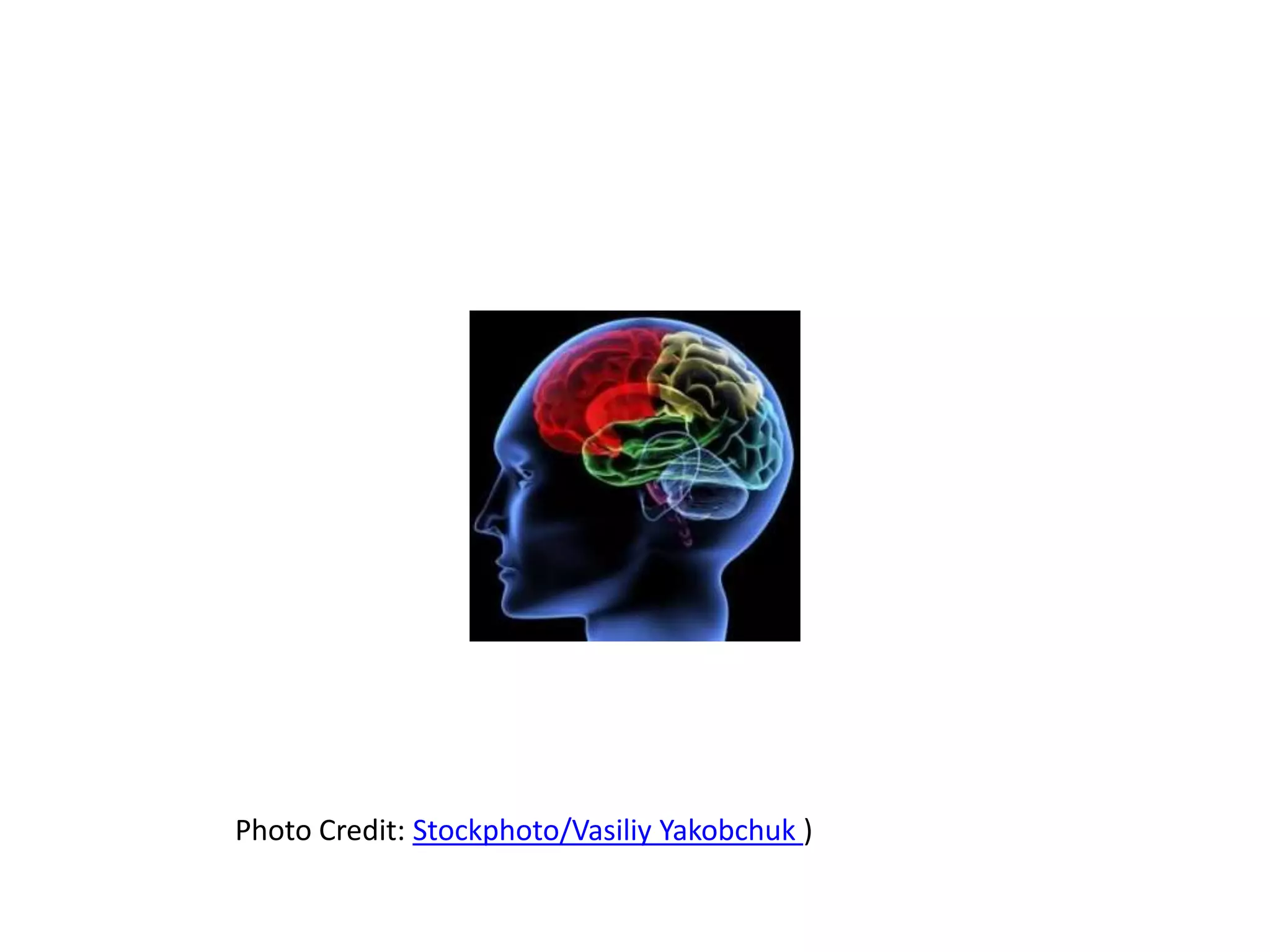
Seven BIG Learning MessagesIntelligence is not fixedEffort (Motivation) is as important as abilityLearning is strongly influenced by emotionWe all learn in different waysDeep learning is an active processLearning is messyLearning is Social Photo Credit: Stockphoto/VasiliyYakobchuk)
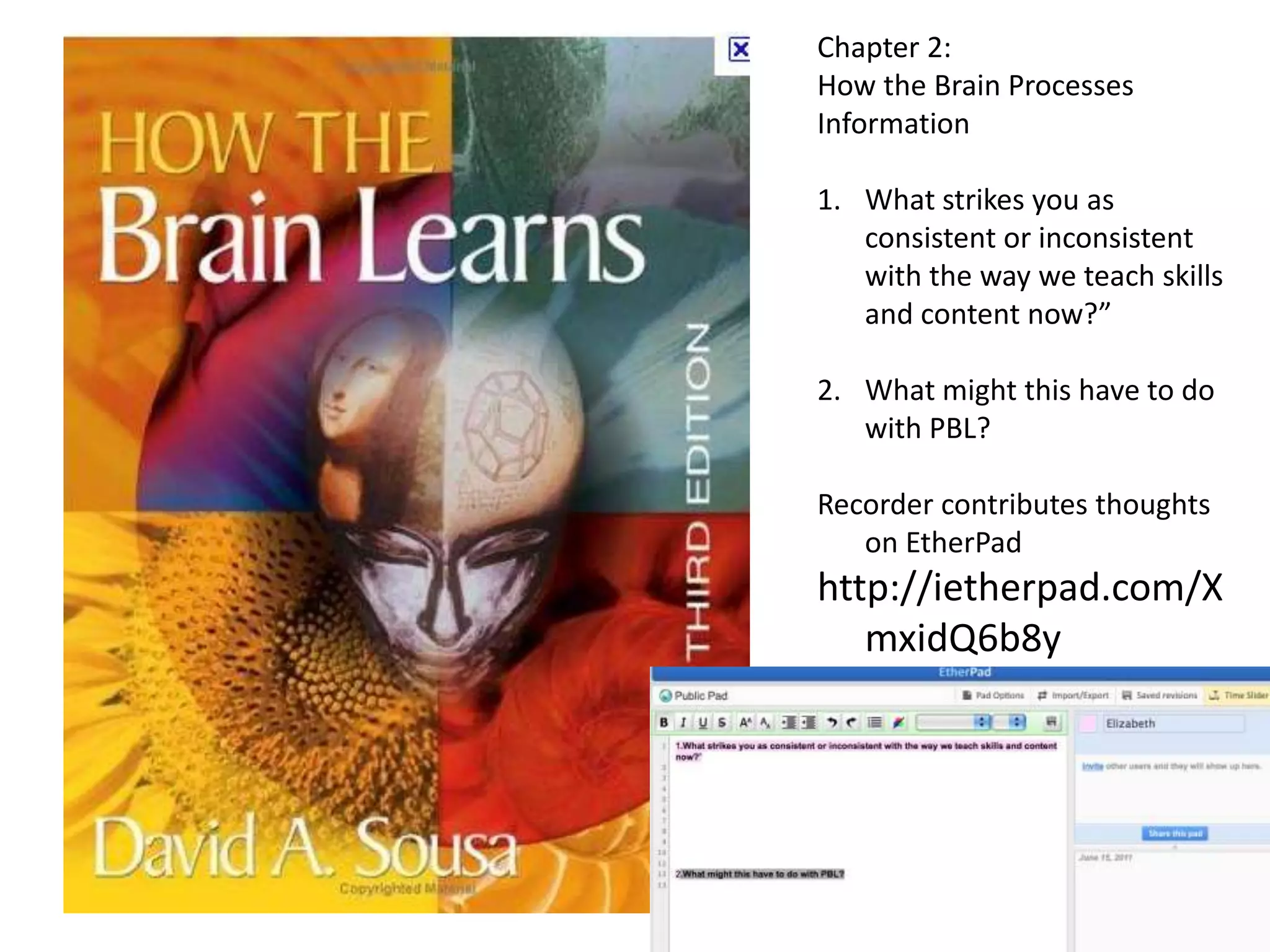
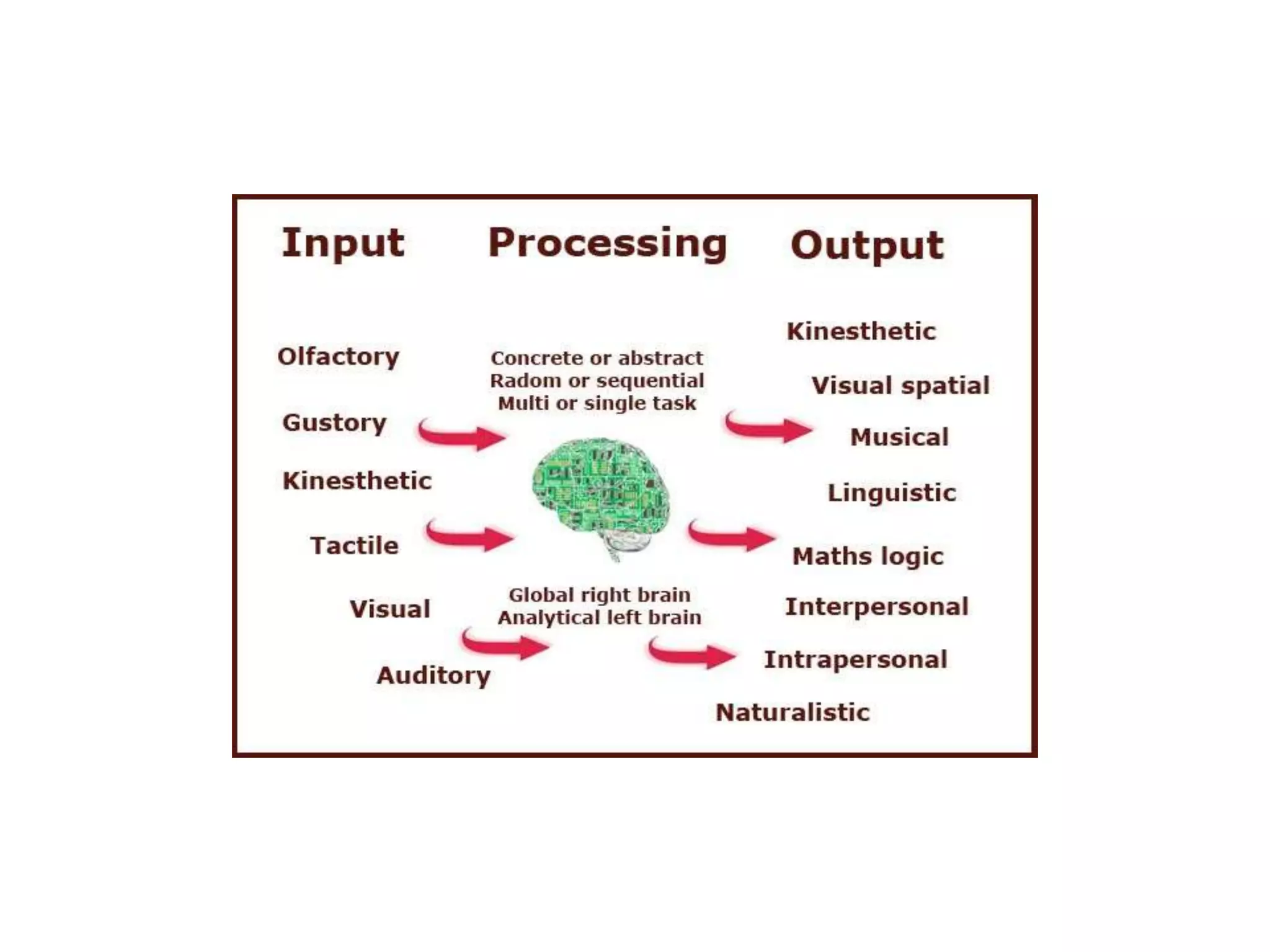
Chapter 2:How the Brain Processes InformationWhat strikes you as consistent or inconsistent with the way we teach skills and content now?”What might this have to do with PBL?Recorder contributes thoughts on EtherPadhttp://ietherpad.com/XmxidQ6b8y
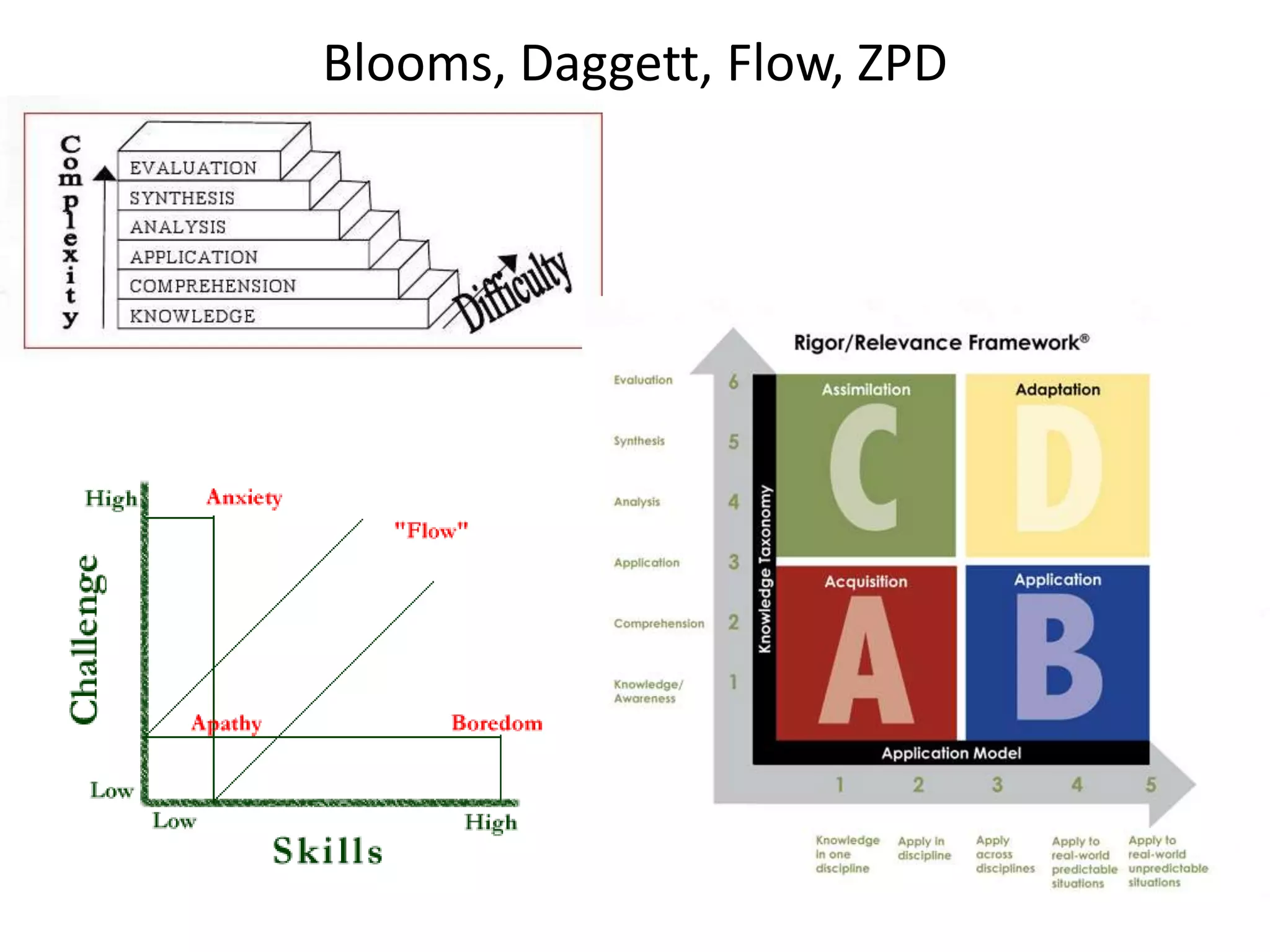
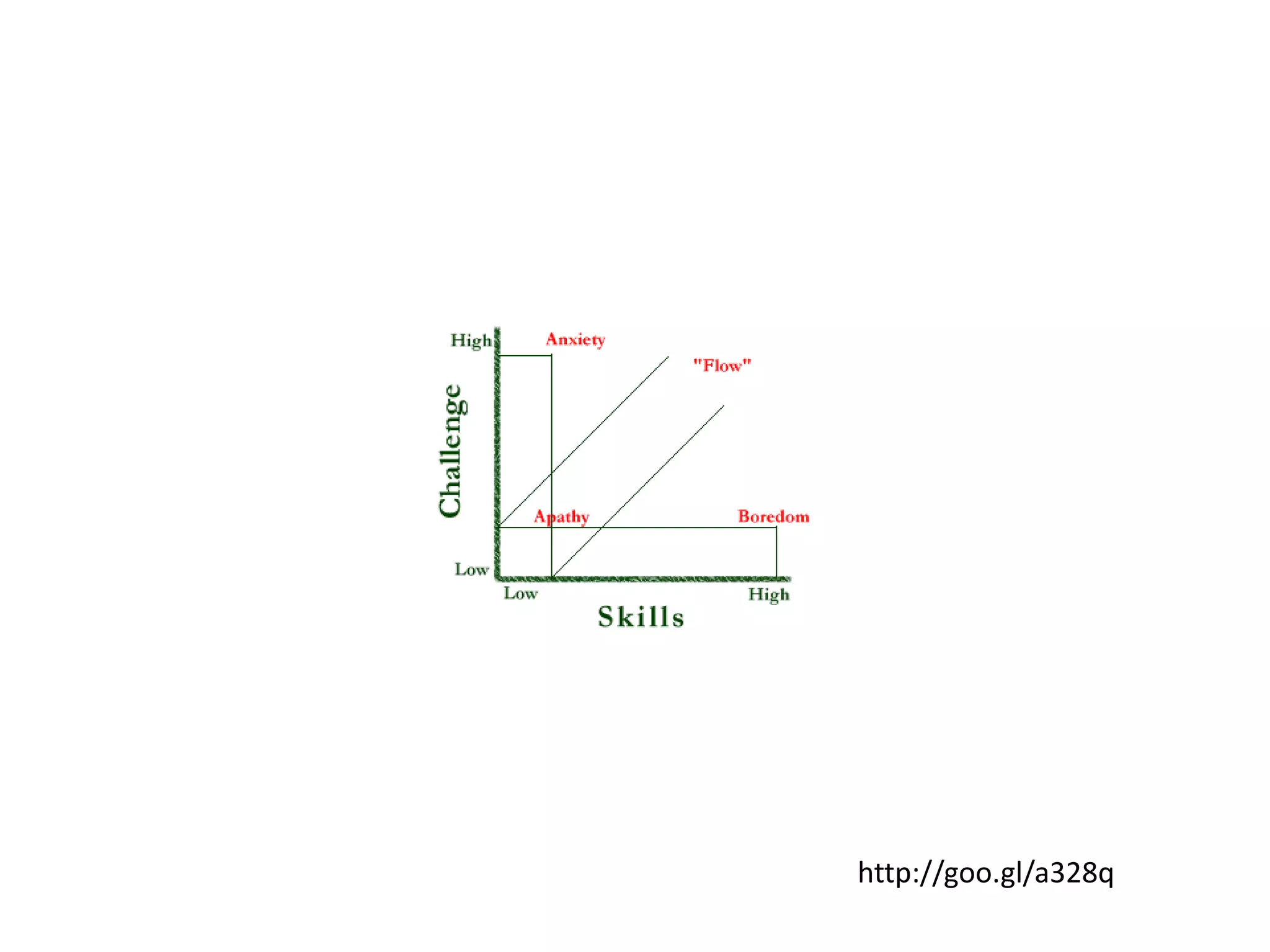
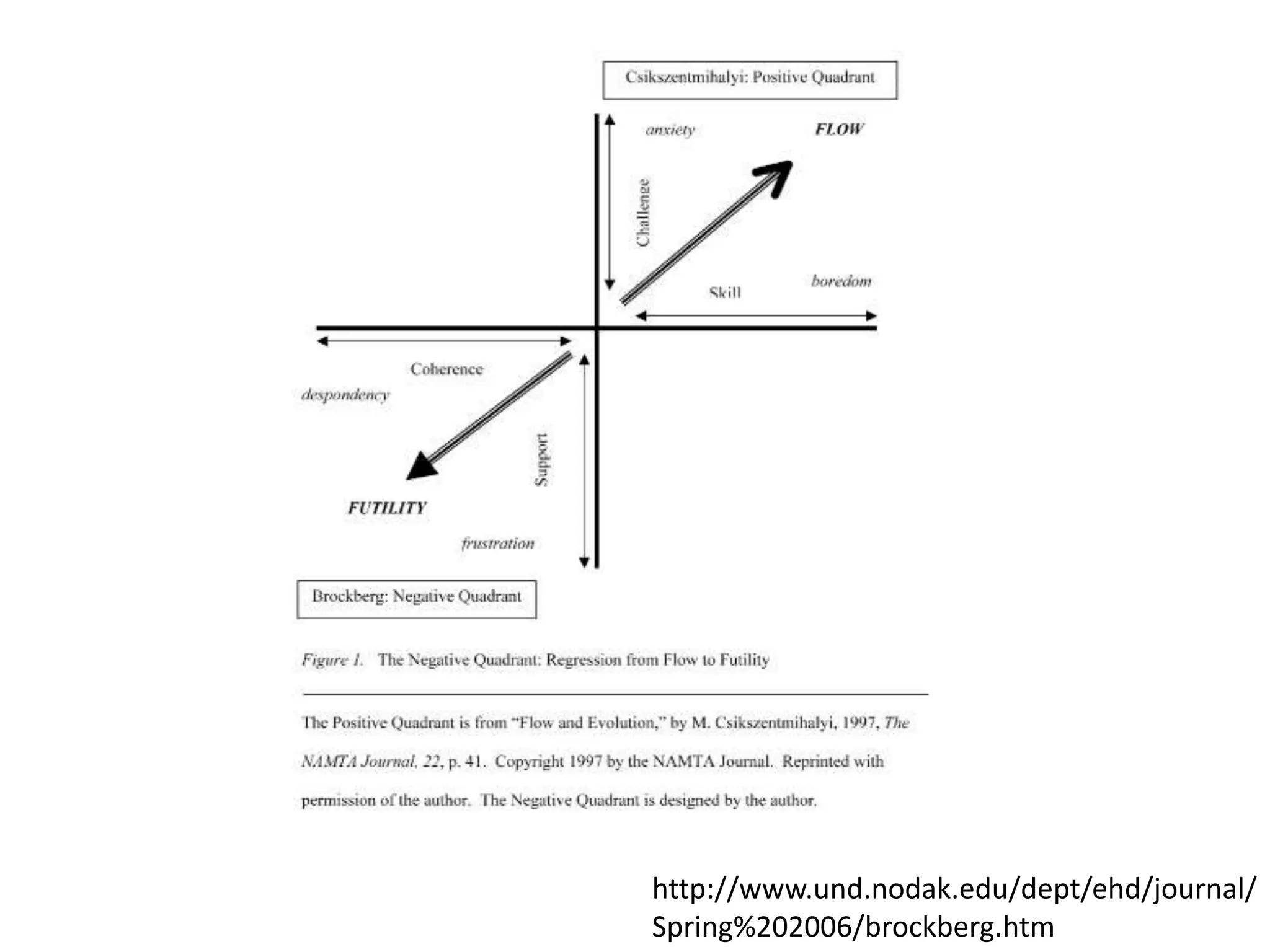
Blooms, Daggett, Flow, ZPD
BREAK
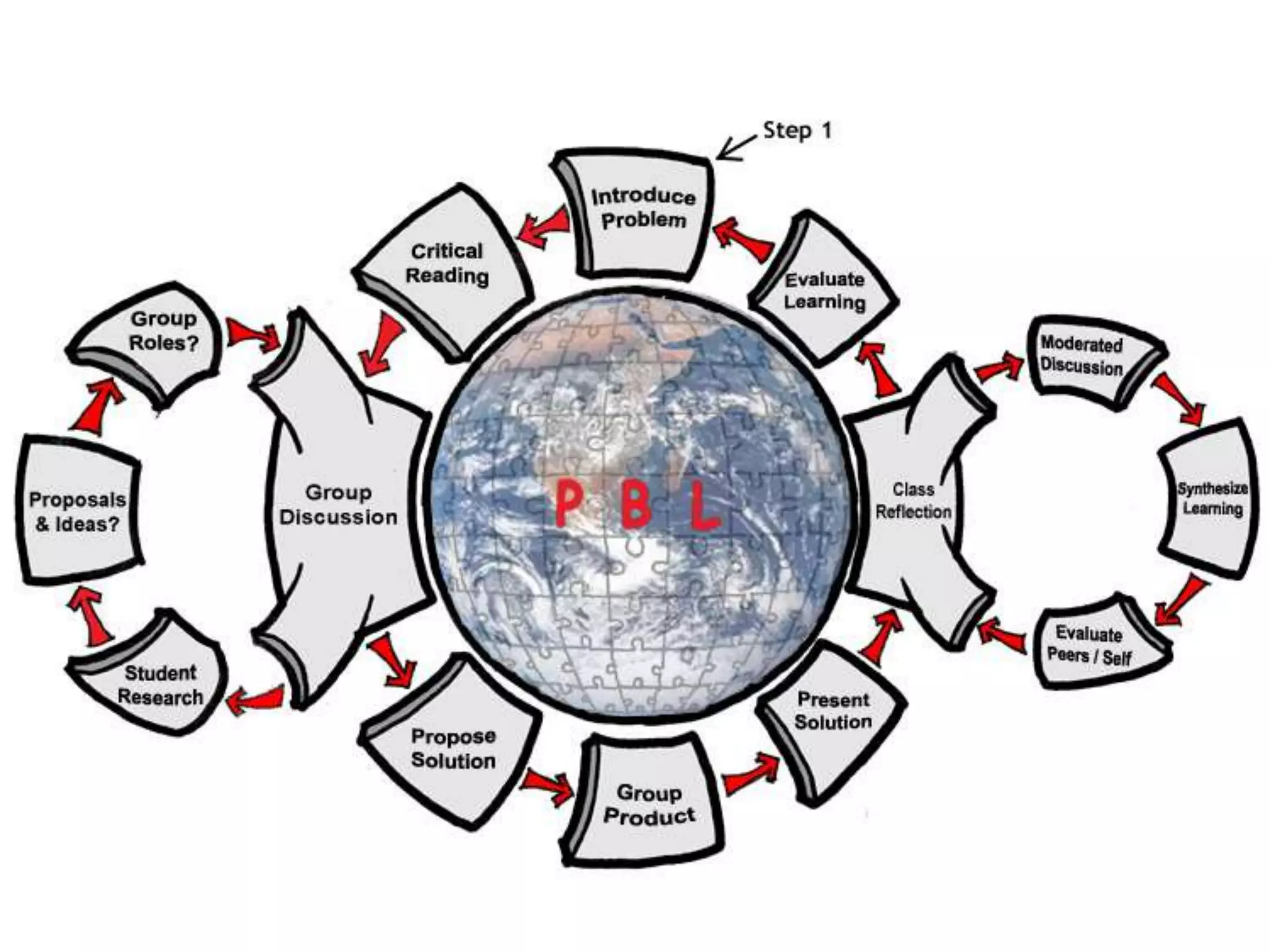
THE PBL PROCESS
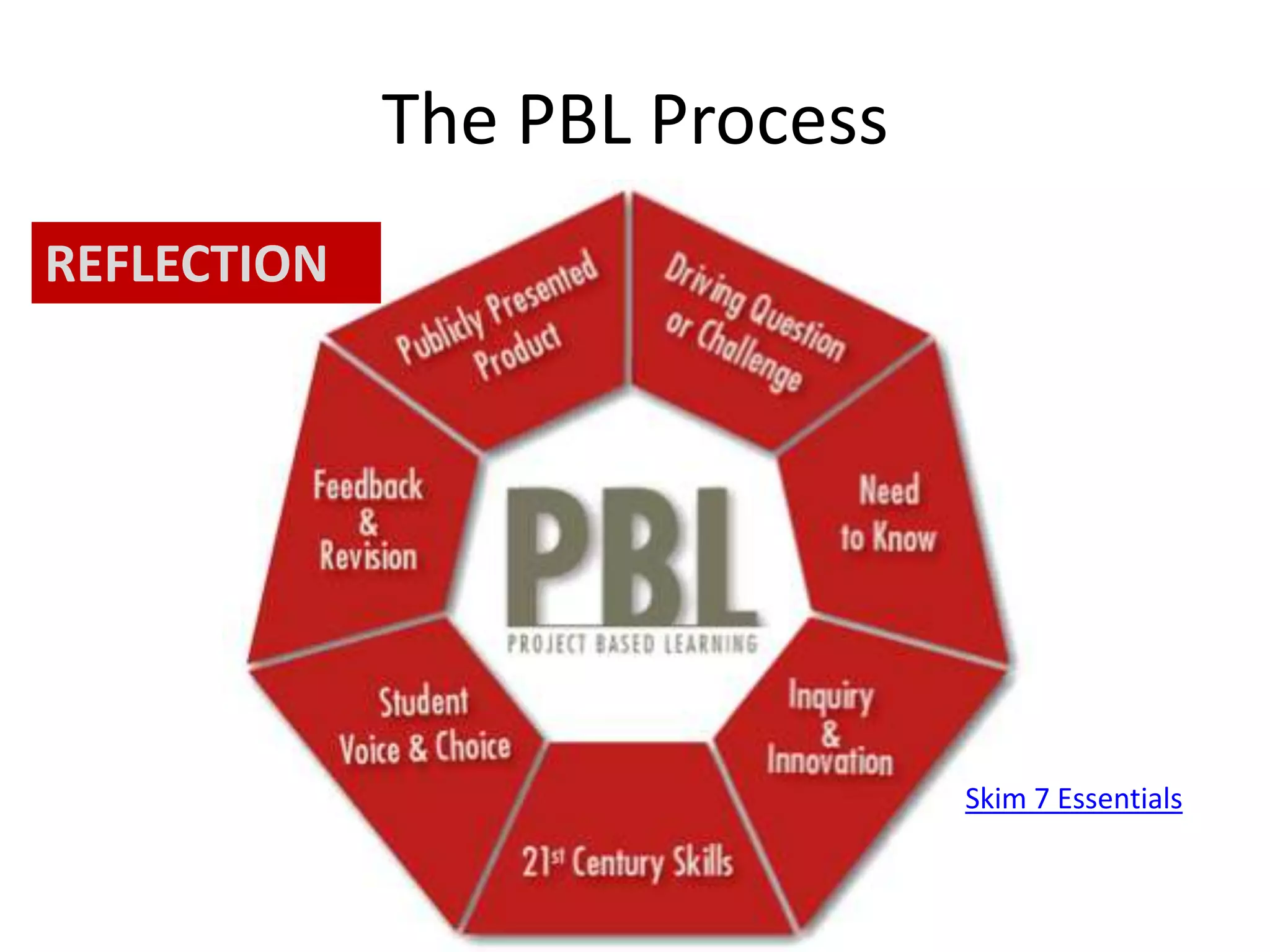
The PBL ProcessREFLECTIONSkim 7 Essentials
Begin with the End in MindCraft the Driving QuestionPlan the AssessentMap the ProjectManage the Process
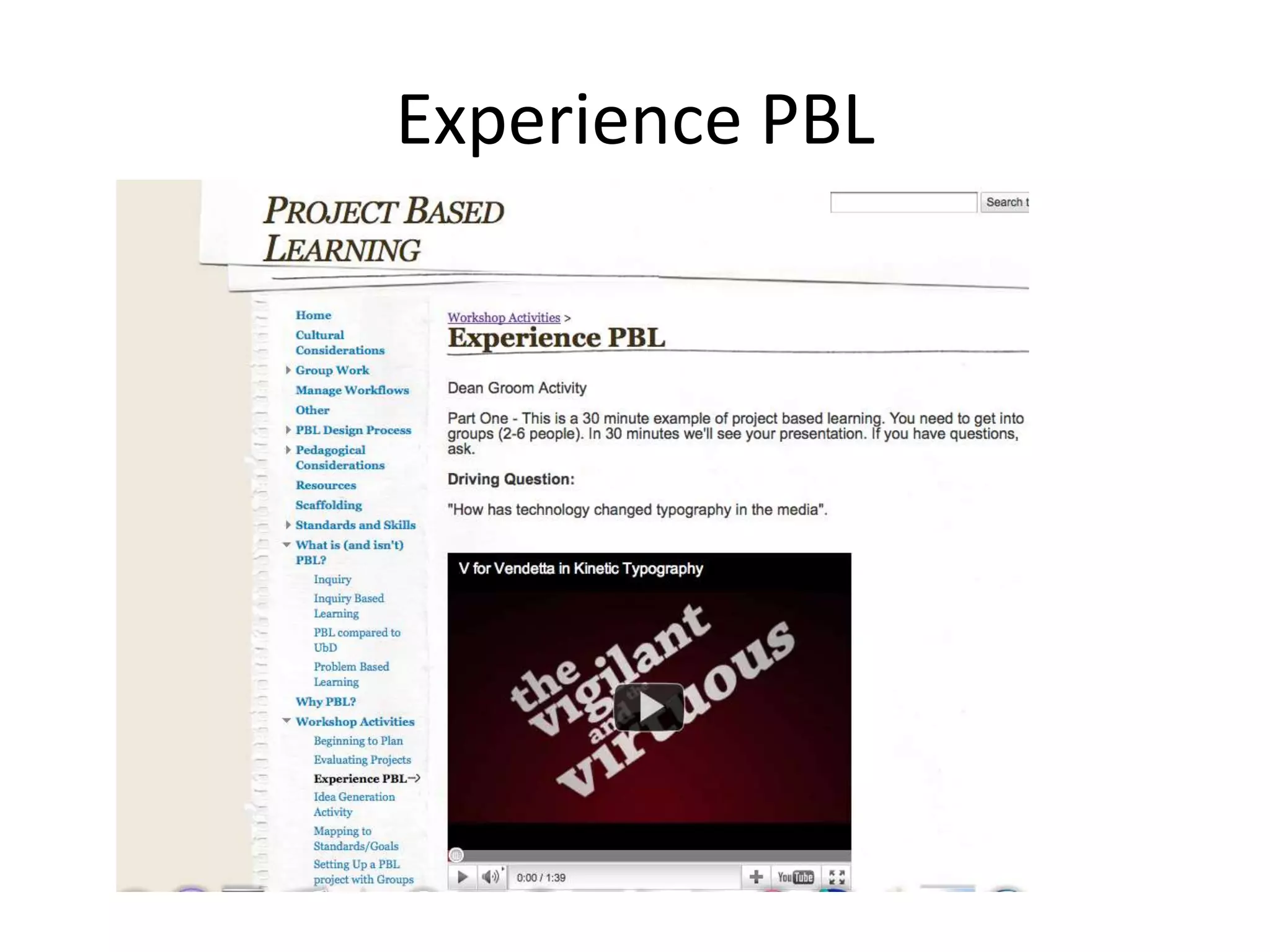
Experience PBL
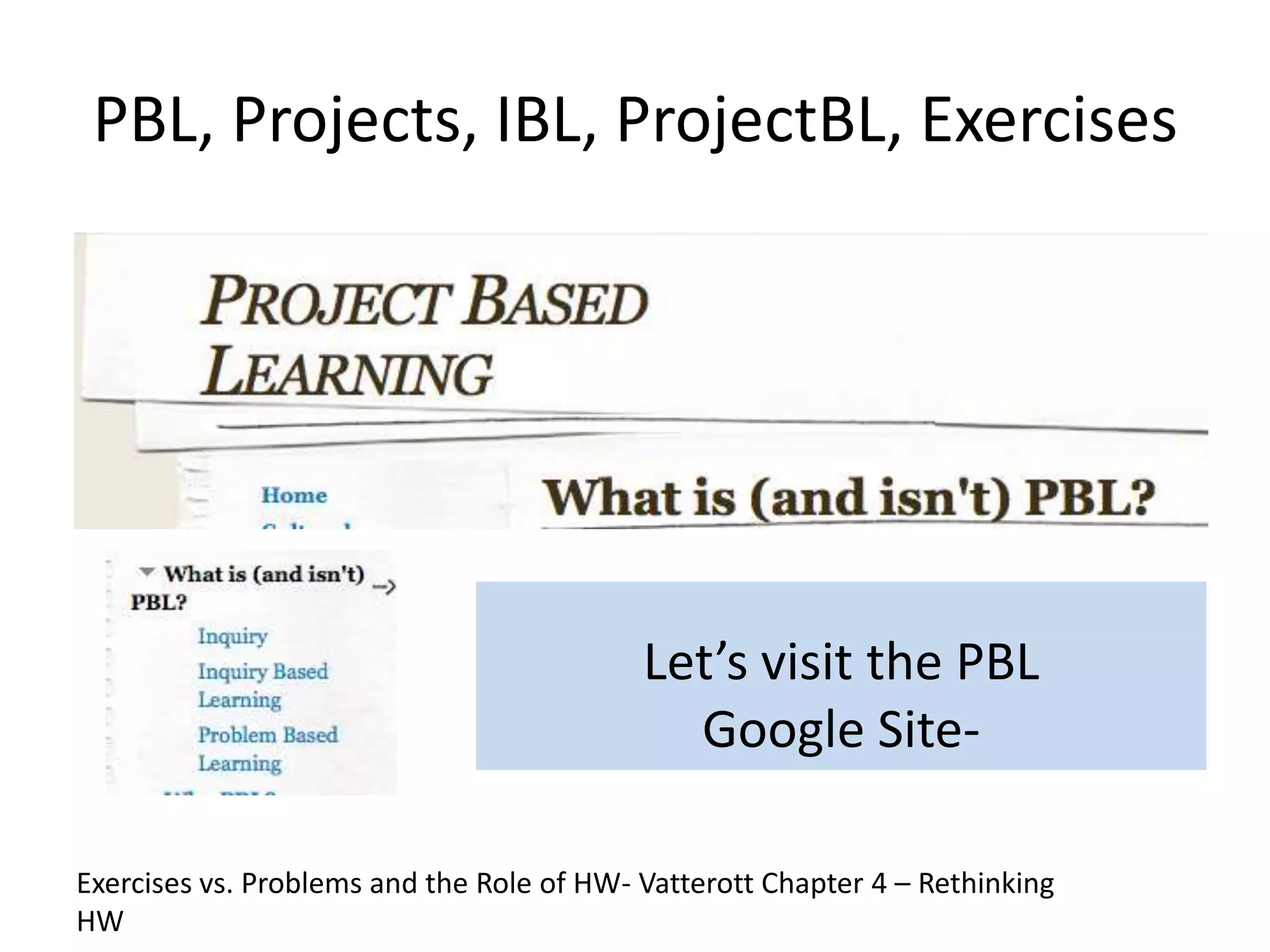
PBL, Projects, IBL, ProjectBL, ExercisesLet’s visit the PBL Google Site- Exercises vs. Problems and the Role of HW- Vatterott Chapter 4 – Rethinking HW
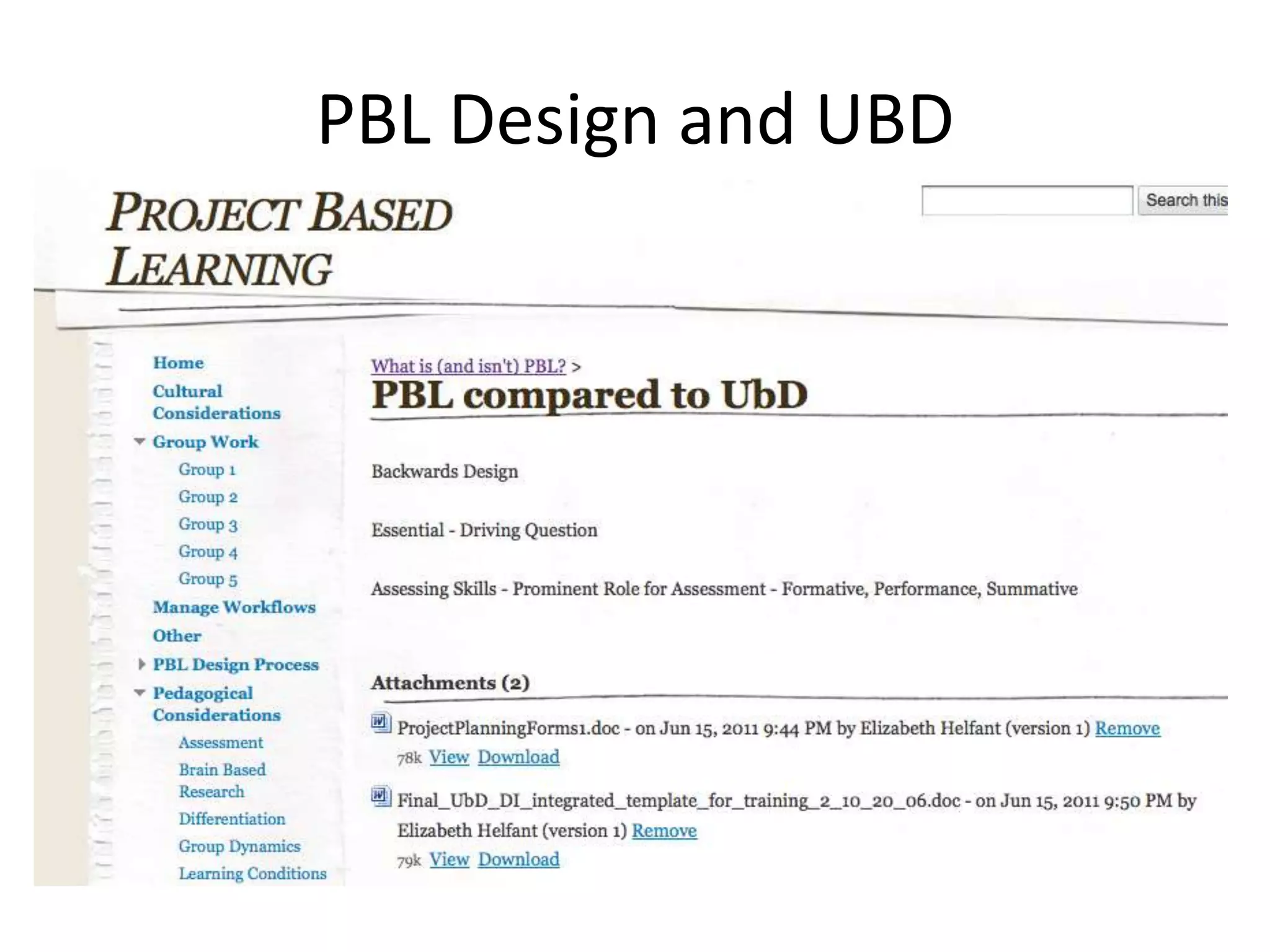
PBL Design and UBD
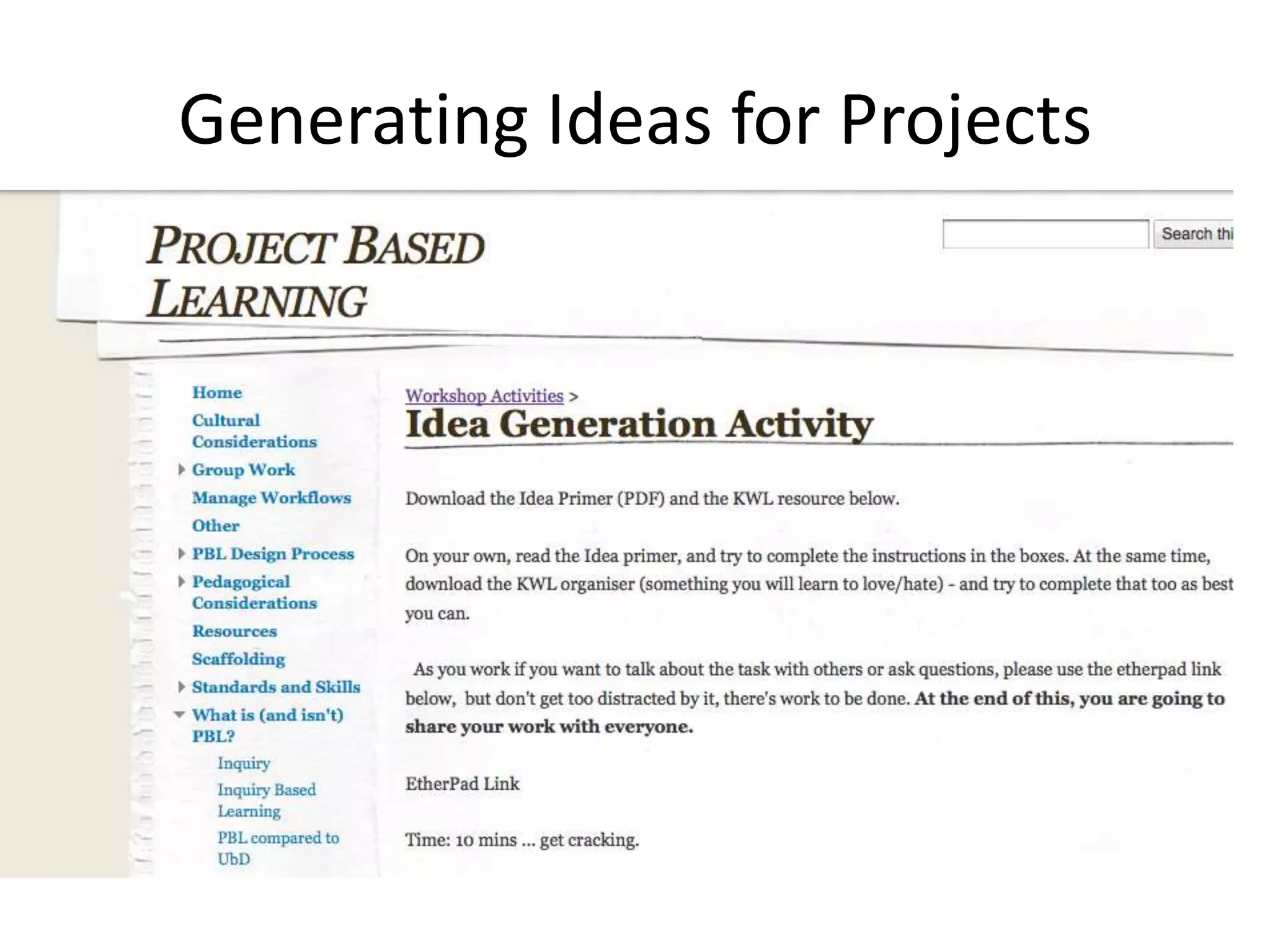
Generating Ideas for Projects
Where do Ideas Come FromOnlineSample Projects (we will evaluate these later)Current Events/NewsNonFiction ReadingsStudent ConversationsAnywhere- Try Keeping an Evernote Notebook and clip stuff that might turn into an idea
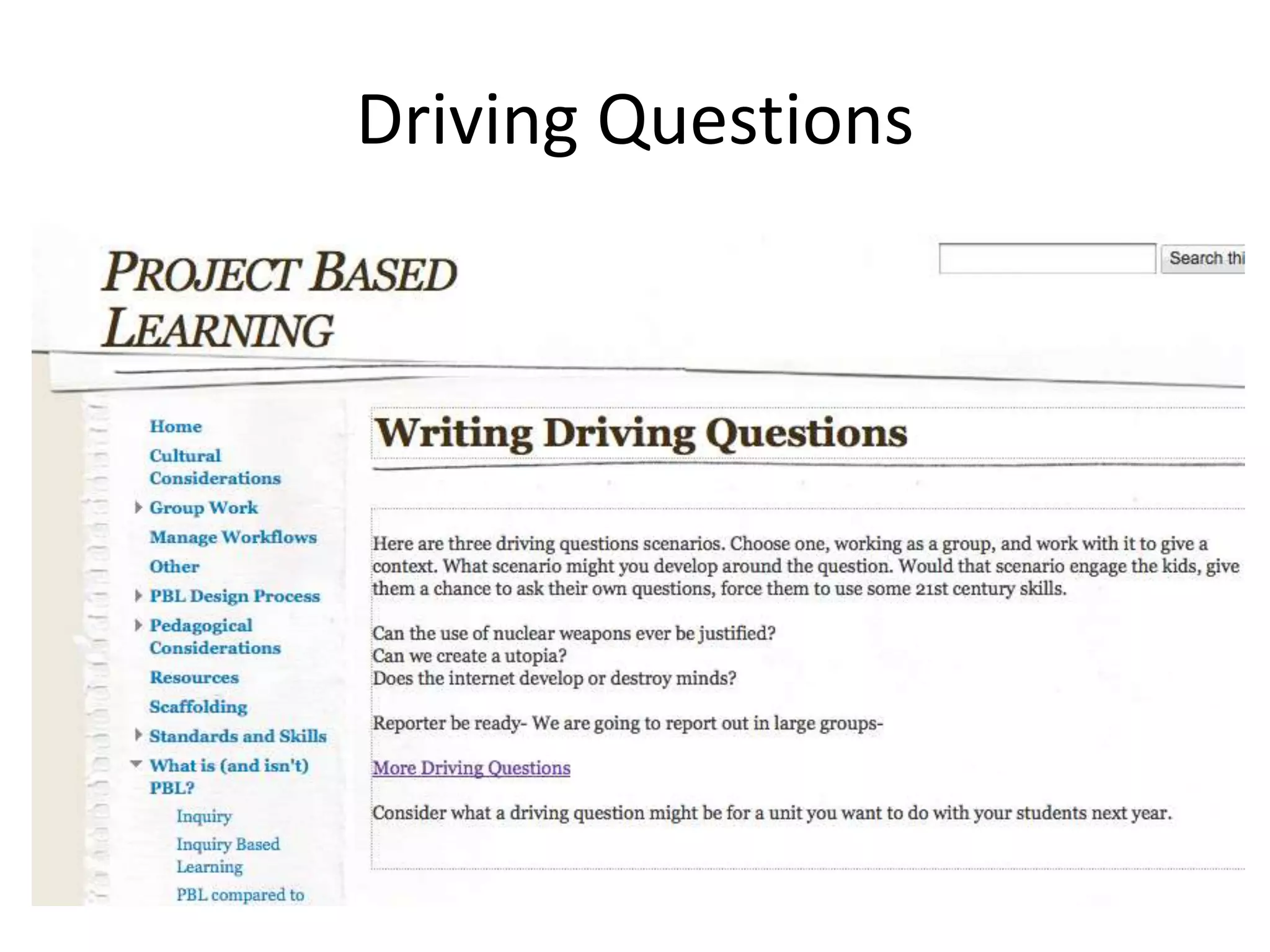
Driving Questions
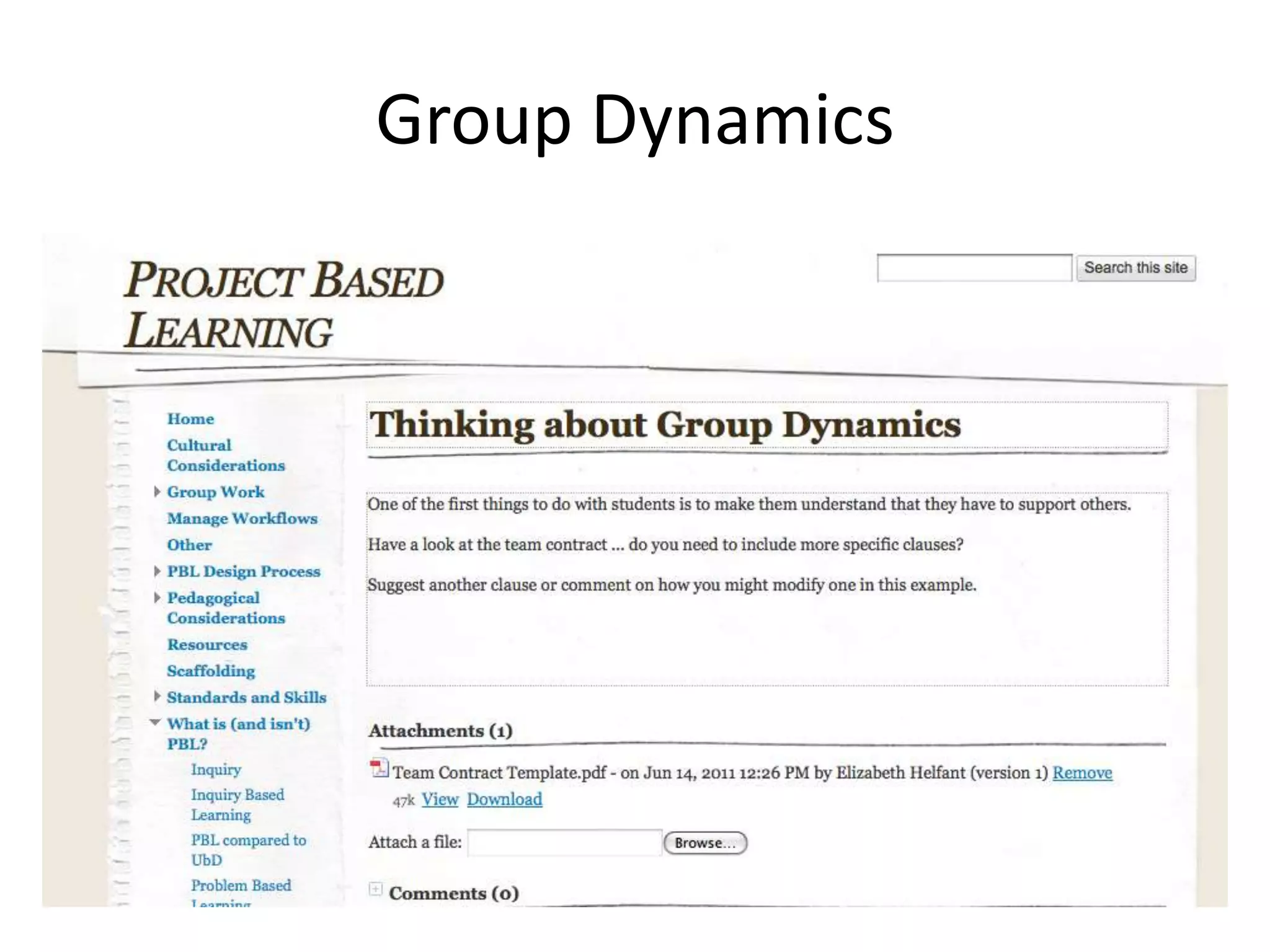
Group Dynamics
Defining projects
1Projects are authentic, real world.
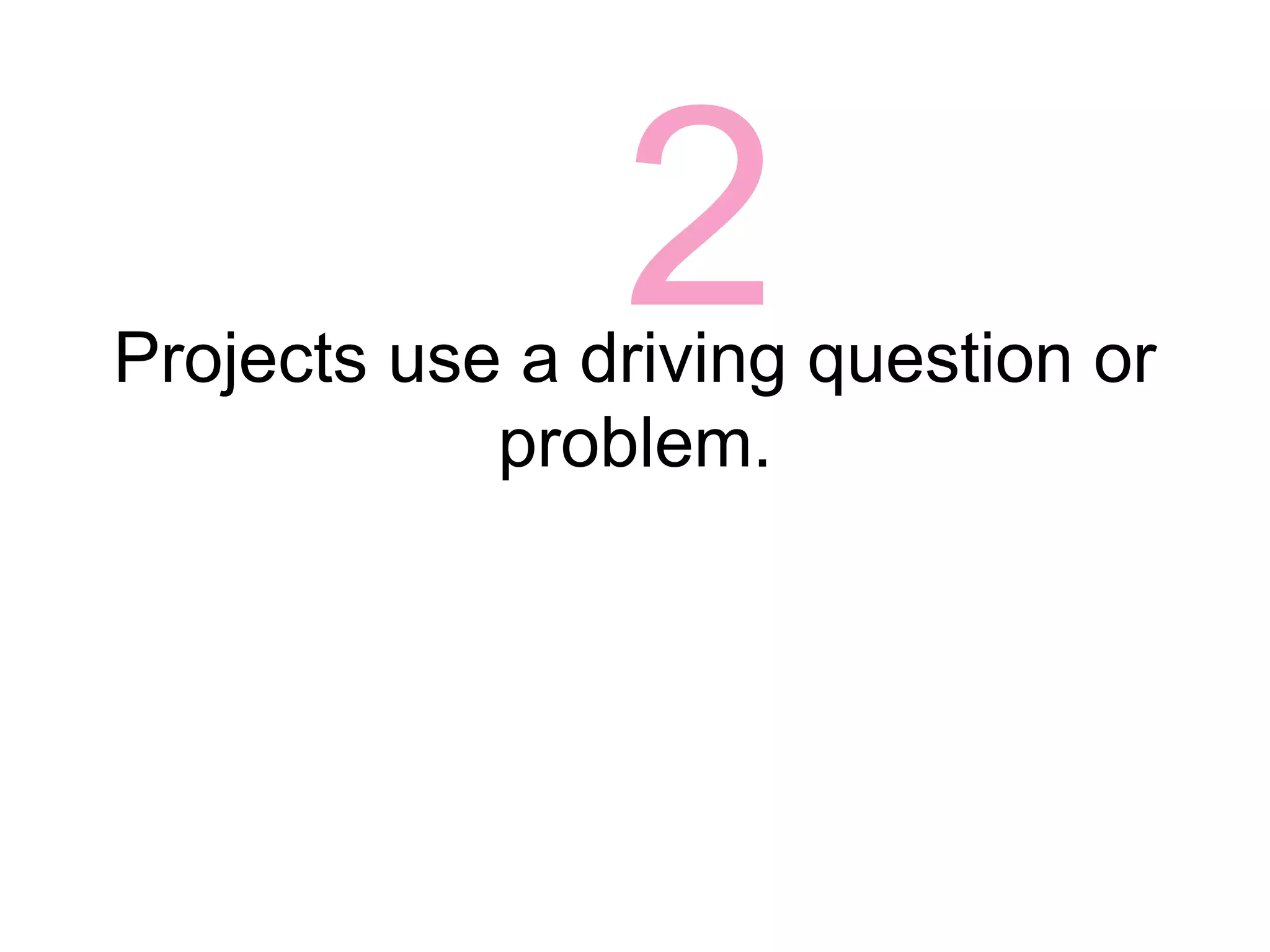
Projects use a driving question or problem.2
3Projects require the production of an artifact.
Projects value depth over breadth.4
Components of projects
5Projects require a task or series of tasks.
Students follow a process or investigation to complete task(s) and produce artifact.6
Project task(s) afford multiple paths to completion and learning.7
8Students should have choice in the topic(s) and/or process of investigation.
9Scaffolds help students perform at a higher level with project tasks.
10Resources are evaluated and synthesized to produce artifact(s).
11Collaborations allows students to negotiate content and receive feedback.
12Assessment encompasses process and product.
13Artifacts afford multiple representations of knowledge.
14Projects take time.
15Good projects offer students opportunities to gauge their learning.
16Teachers embed mechanisms to help students manage projects.
17Projects achieve multiple standards/objectives at the same time.
Creating projects
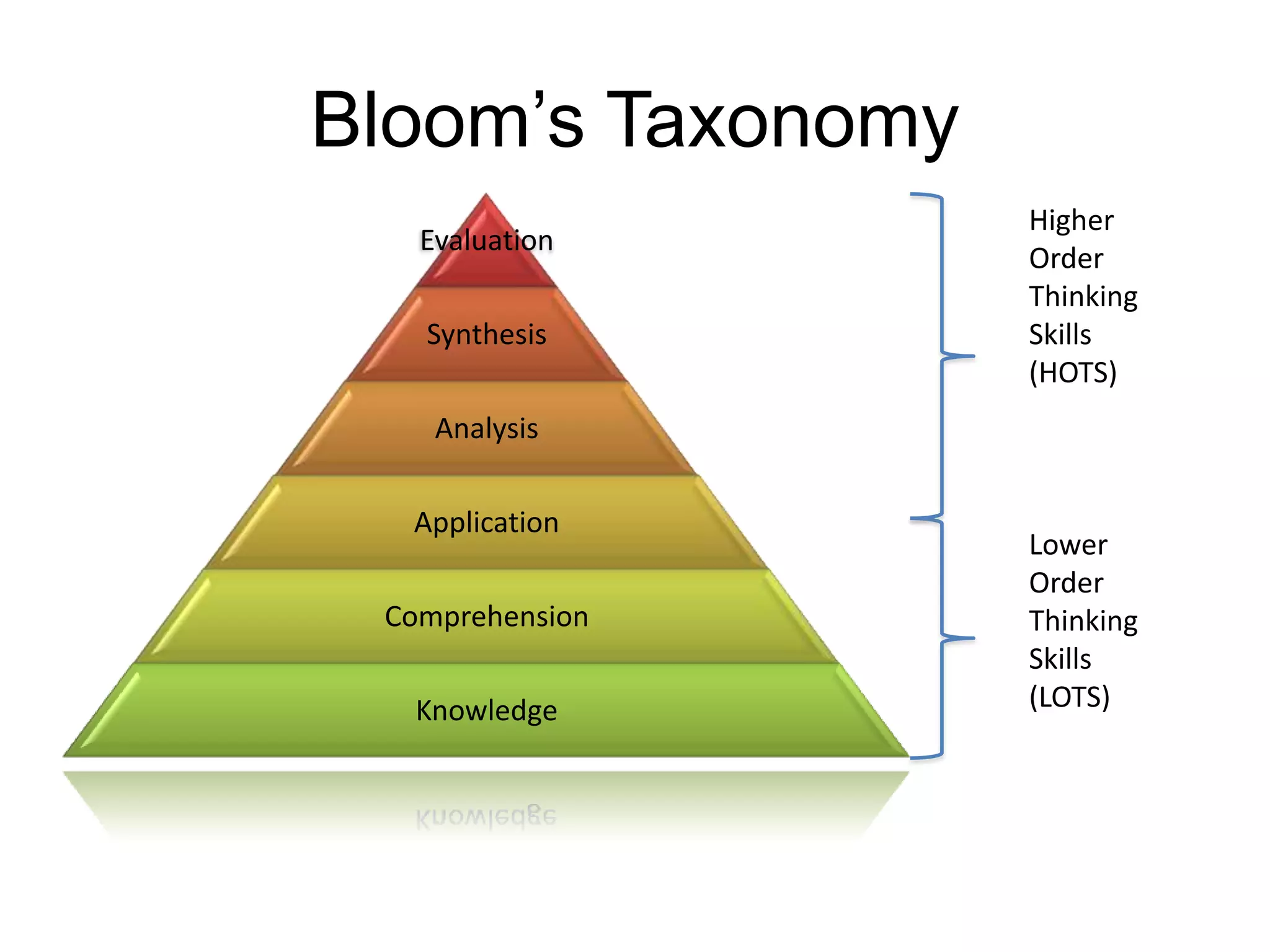
18Projects should encourage students to at least apply knowledge.
Bloom’s TaxonomyHigherOrderThinkingSkills(HOTS)LowerOrderThinkingSkills(LOTS)
19Students will segment their learning from one class or topic to another.
20Students will gauge what is easy to do and choose the path of least resistance.
21Students' previous experiences with projects will impact what artifacts students produce.
22The amount of time and the resources available to the student will impact the artifacts students produce.
Grading projects
23Projects should be rigorous
24Projects take longer to grade...but the final grade shouldn't be the first grade.
25Projects may aggregate multiple sources of knowledge into a portfolio.
26Students will weigh what's good enough versus the amount of time and effort required.
27It is practically impossible for an artifact to represent all that has been learned.
28Process and product must be assessed in order to accommodate all that has been learned.
The realities of projects
29Teachers and students must recognize and accept their roles in project-based learning.
30Teachers and students must be comfortable with the physical messiness of project-based learning.
31Teachers and students must have a tolerance for ambiguity in project-based learning.
32Project-based learning must be integrated with the reality outside a teacher’s classroom.
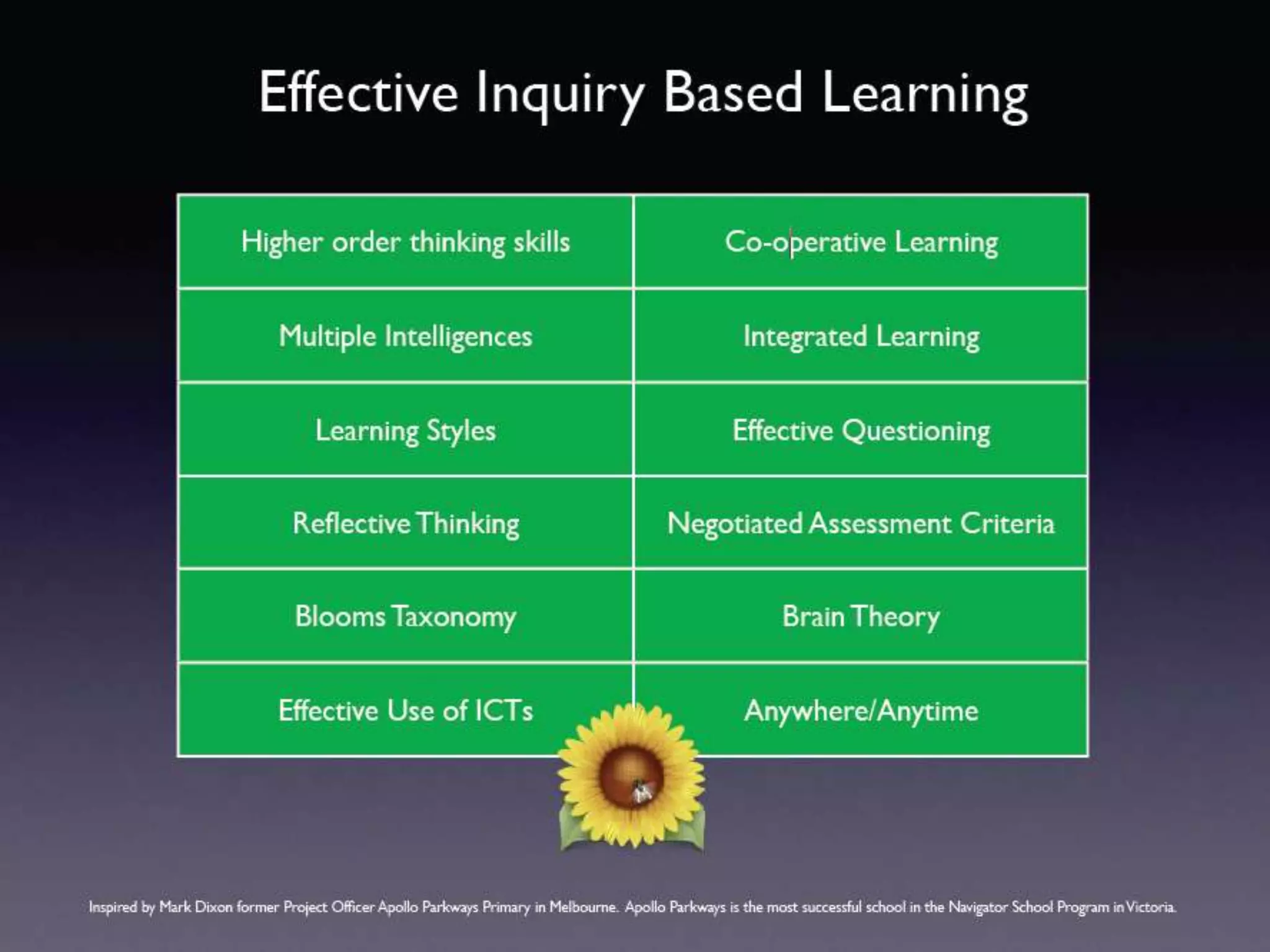
Successful InquiryInvolve students in initial planningSharing learning goalsNegotiating success criteriaPlanning questions which further learningUsing strategies which maximise student thinking and articulation
 Taking notes
 Making notes or drafting
 Using thinking skills
 Citing references
 Sorting and organising
 Interpreting and analysising
 Synthesising and applyingPresenting SkillsUse of ICT
Use of software
Layout and design
Vocabulary studies
Listening
Speaking
Public speaking
Discussion   Learning to Learn SkillsGoal setting
Organisation and time management
Tracking and asking for assistance
Self and peer reflection
CritiquingRigor relevanc
What is assessment?
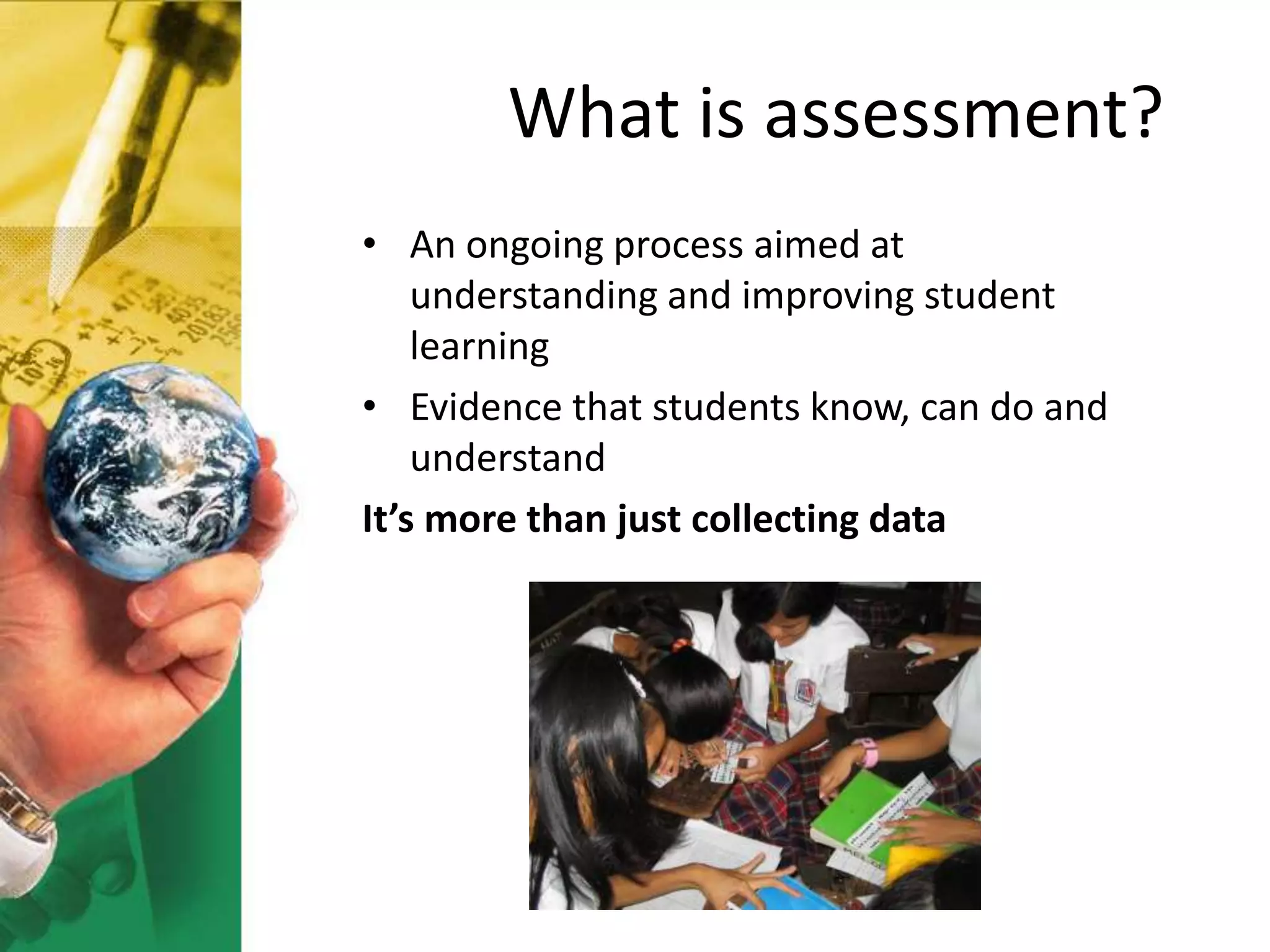
What is assessment?An ongoing process aimed at understanding and improving student learningEvidence that students know, can do and understandIt’s more than just collecting data
Assessment   Focus on how we come to know, as opposed to what we know Focus on the development of information-processing and problem-solving skills
Authentic assessment   Assessing the students’ ability to use what they’ve learning in tasks similar to those in the outside world.
What can be assessed?Student learning characteristics		-Ability differences		-Learning stylesStudent motivational characteristics		-Interest		-Effort		-Goal orientationLearning-Content knowledge-Ability to apply content knowledge-Skills		-Dispositions and attitudes		-Performances
Why do we need to assess?
Importance of AssessmentTo find out what the students know (knowledge)To find out what the students can do, and how well they can do it (skill; performance)To find out how students go about the task of doing their work (process)To find out how students feel about their work (motivation, effort)
Ways  we can assessTrue –False ItemMultiple ChoiceCompletionShort AnswerEssayPractical ExamPapers/ReportsProjectsQuestionnairesInventoriesChecklistPeer RatingSelf RatingJournalPortfolioObservationsDiscussionsInterviews
Self AssessmentData GatheringUnderstandingReflection/AnalysisCreativity
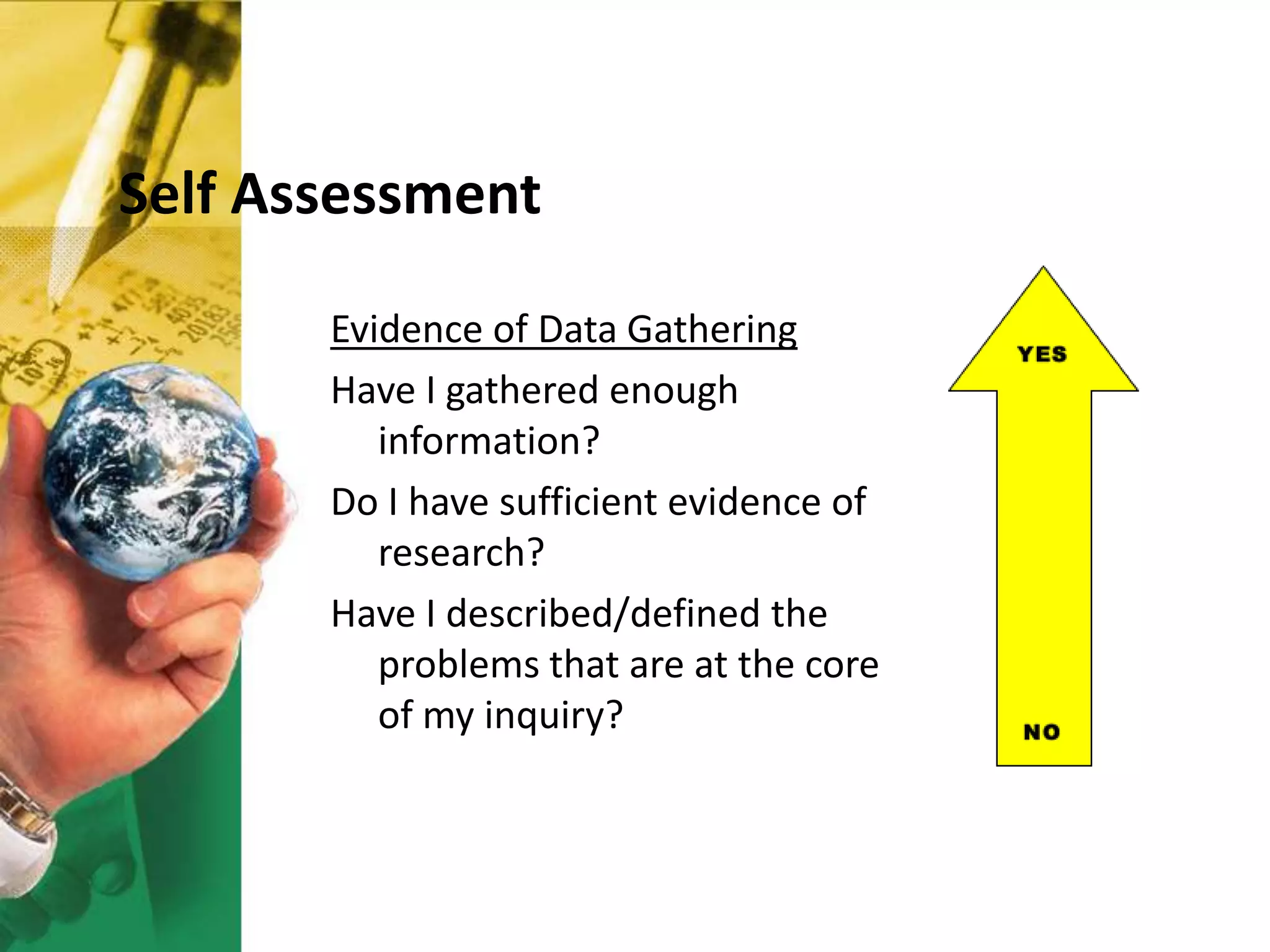
Self Assessment Evidence of Data GatheringHave I gathered enough information?Do I have sufficient evidence of research?Have I described/defined the problems that are at the core of my inquiry?
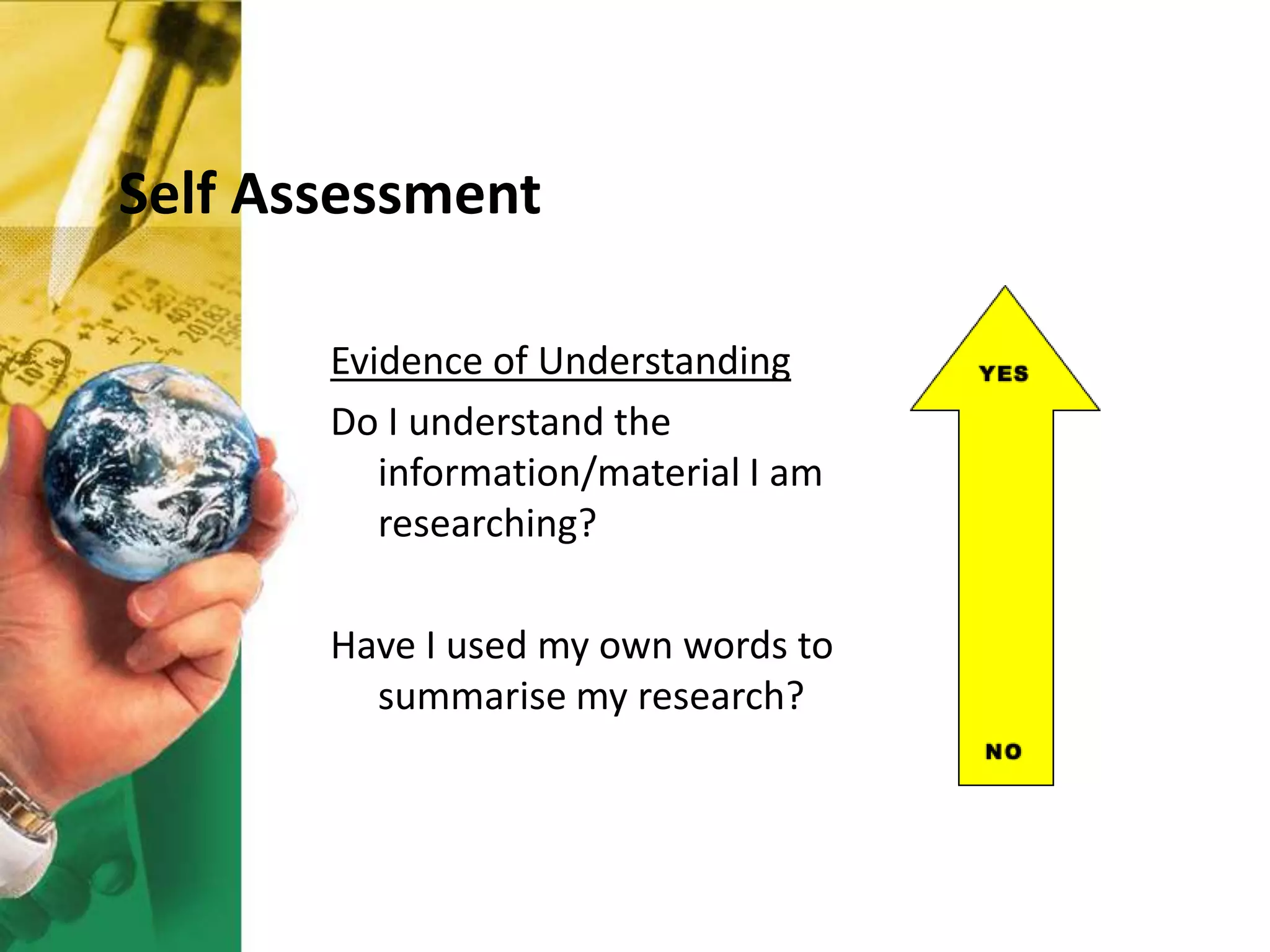
Self AssessmentEvidence of UnderstandingDo I understand the information/material I am researching?Have I used my own words to summarise my research?
Self AssessmentEvidence of Reflection/AnalysisDoes my work show that I have used the information to form my own ideas? Have I addressed the issues at the core of my inquiry?Have I drawn conclusions?
Self AssessmentEvidence of CreativityHave I created anything that shows my own views and opinions of my inquiry?Have I taken any action to do something about my findings?
AssessmentConversations	“When kids are given choices in what they read and what they write, and time to think about what they are doing, their writing and reading get better.     When we trust them to set goals and to evaluate their learning in progress, we will begin to realize that they know much more than we allow them to tell us through our set curriculums, our standardized tests, our writing samples.”Linda Reif
   ‘In times of change the learners will inherit the earth,    while the knowers will find themselves beautifully equipped to deal with a world that no longer exists.’					Eric Hoffer
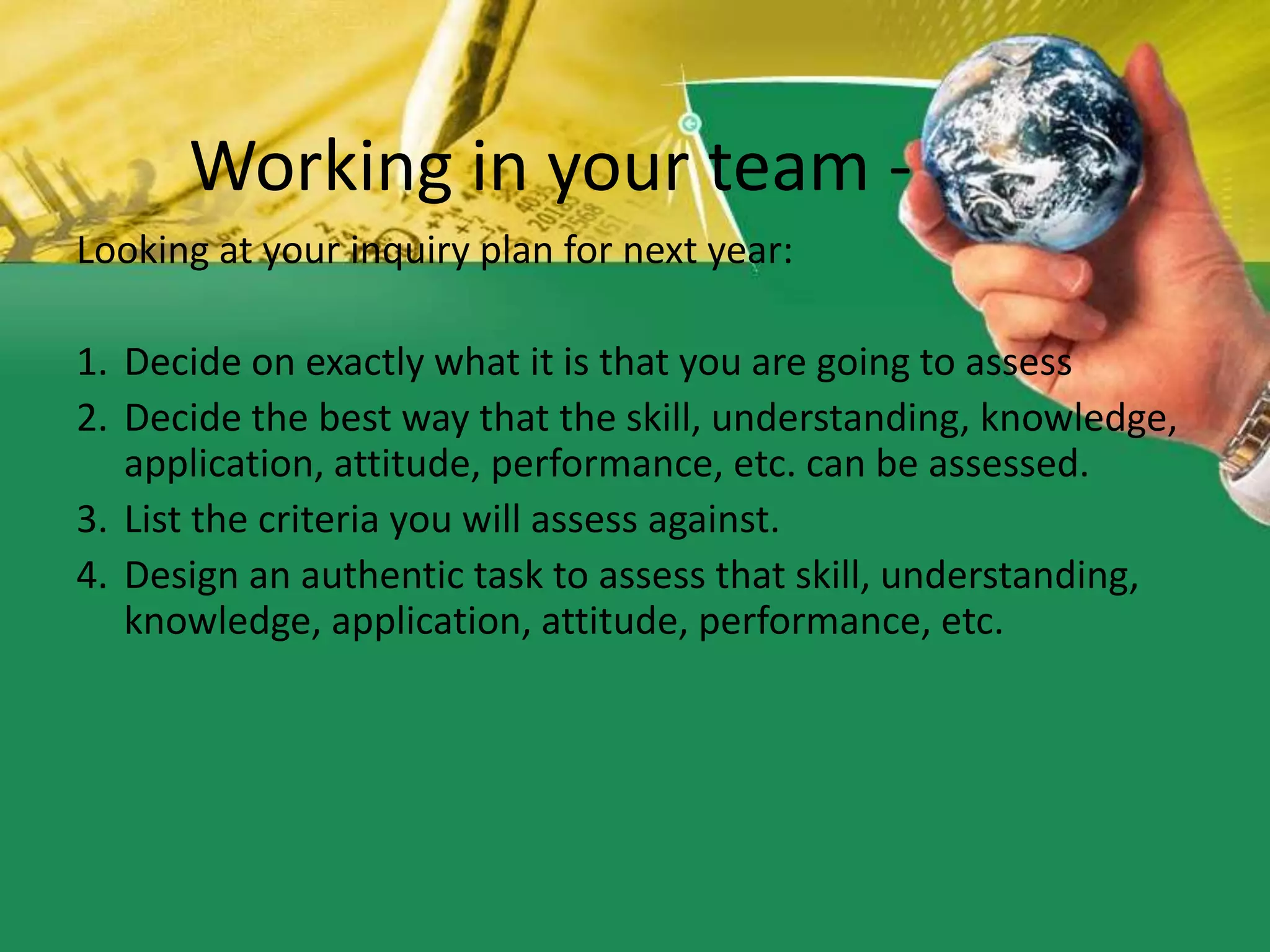
Working in your team -Looking at your inquiry plan for next year:Decide on exactly what it is that you are going to assessDecide the best way that the skill, understanding, knowledge, application, attitude, performance, etc. can be assessed.List the criteria you will assess against.Design an authentic task to assess that skill, understanding, knowledge, application, attitude, performance, etc.
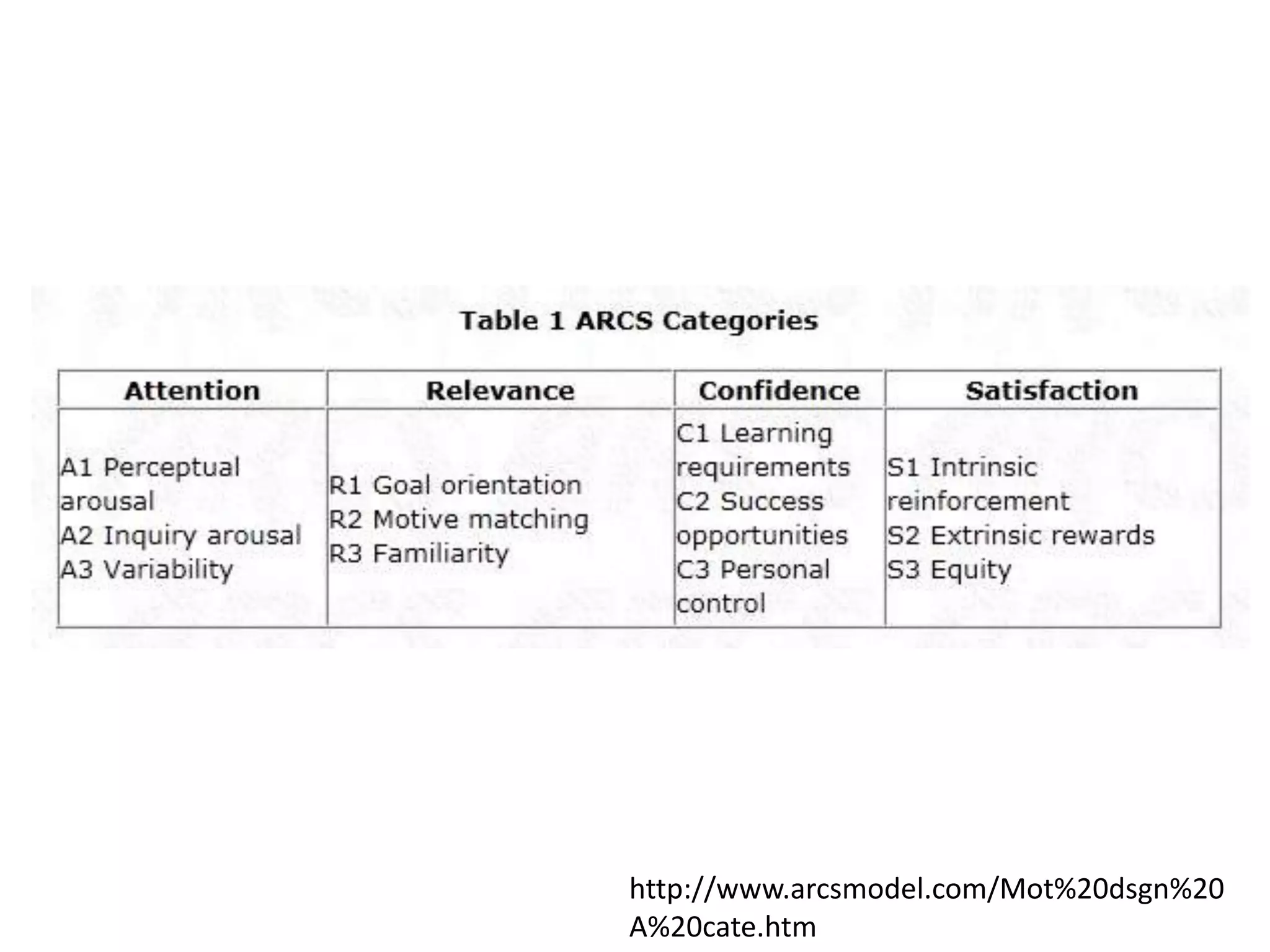
http://www.arcsmodel.com/Mot%20dsgn%20A%20cate.htm
AttentionKeller attention can be gained in two ways: (1) Perceptual arousal – uses surprise or uncertainly to gain interest. Uses novel, surprising, incongruous, and uncertain events; or (2) Inquiry arousal – stimulates curiosity by posing challenging questions or problems to be solved.Methods for grabbing the learners’ attention include the use of: Active participation -Adopt strategies such as games, roleplay or other hands-on methods to get learners involved with the material or subject matter.Variability – To better reinforce materials and account for individual differences in learning styles, use a variety of methods in presenting material (e.g. use of videos, short lectures, mini-discussion groups).Humor -Maintain interest by use a small amount of humor (but not too much to be distracting)Incongruity and Conflict – A devil’s advocate approach in which statements are posed that go against a learner’s past experiences.Specific examples – Use a visual stimuli, story, or biography.Inquiry – Pose questions or problems for the learners to solve, e.g. brainstorming activities.
RelevanceEstablish relevance in order to increase a learner’s motivation. To do this, use concrete language and examples with which the learners are familiar. Six major strategies described by Keller include: Experience – Tell the learners how the new learning will use their existing skills. We best learn by building upon our preset knowledge or skills.Present Worth – What will the subject matter do for me today?Future Usefulness – What will the subject matter do for me tomorrow?Needs Matching – Take advantage of the dynamics of achievement, risk taking, power, and affiliation.Modeling – First of all, “be what you want them to do!” Other strategies include guest speakers, videos, and having the learners who finish their work first to serve as tutors. Choice – Allow the learners to use different methods to pursue their work or allowing s choice in how they organize it.
3. ConfidenceHelp students understand their likelihood for success. If they feel they cannot meet the objectives or that the cost (time or effort) is too high, their motivation will decrease.Provide objectives and prerequisites – Help students estimate the probability of success by presenting performance requirements and evaluation criteria. Ensure the learners are aware of performance requirements and evaluative criteria.Allow for success that is meaningful.Grow the Learners – Allow for small steps of growth during the learning process.Feedback – Provide feedback and support internal attributions for success.Learner Control – Learners should feel some degree of control over their learning and assessment. They should believe that their success is a direct result of the amount of effort they have put forth.
4. SatisfactionLearning must be rewarding or satisfying in some way, whether it is from a sense of achievement, praise from a higher-up, or mere entertainment.Make the learner feel as though the skill is useful or beneficial by providing opportunities to use newly acquired knowledge in a real setting.Provide feedback and reinforcement. When learners appreciate the results, they will be motivated to learn. Satisfaction is based upon motivation, which can be intrinsic or extrinsic.Do not patronize the learner by over-rewarding easy tasks.
http://goo.gl/a328q
http://www.und.nodak.edu/dept/ehd/journal/Spring%202006/brockberg.htm
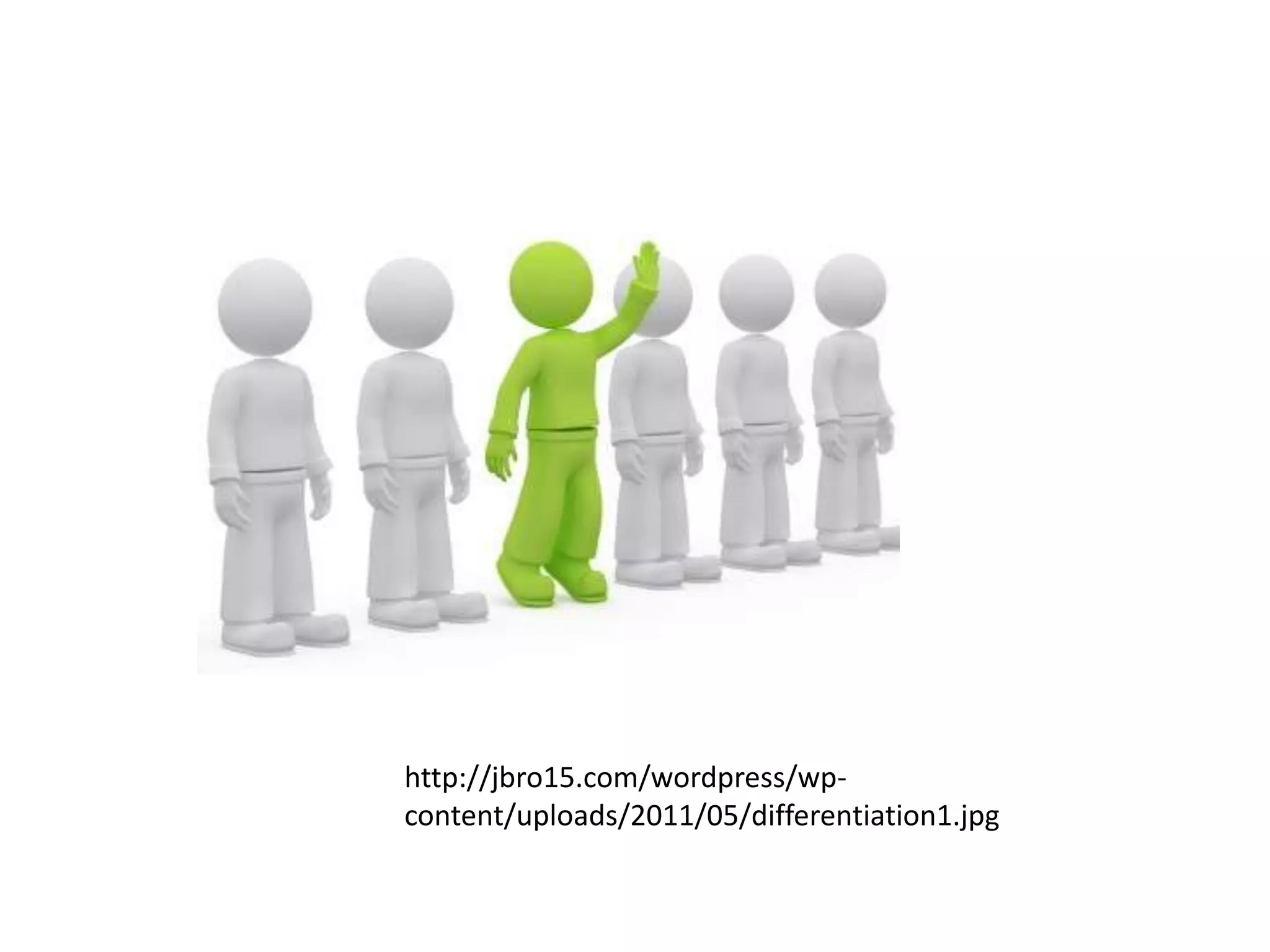
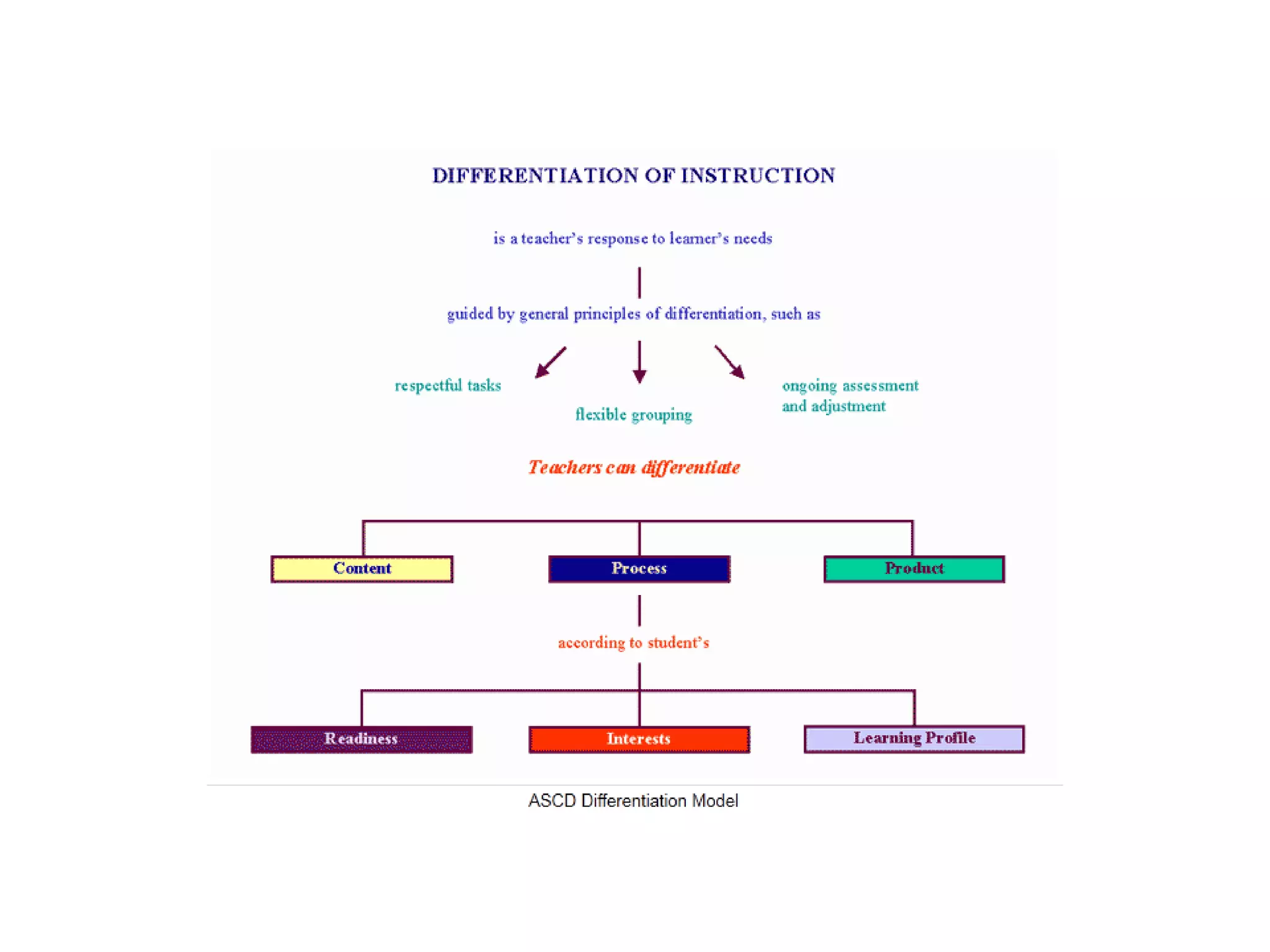
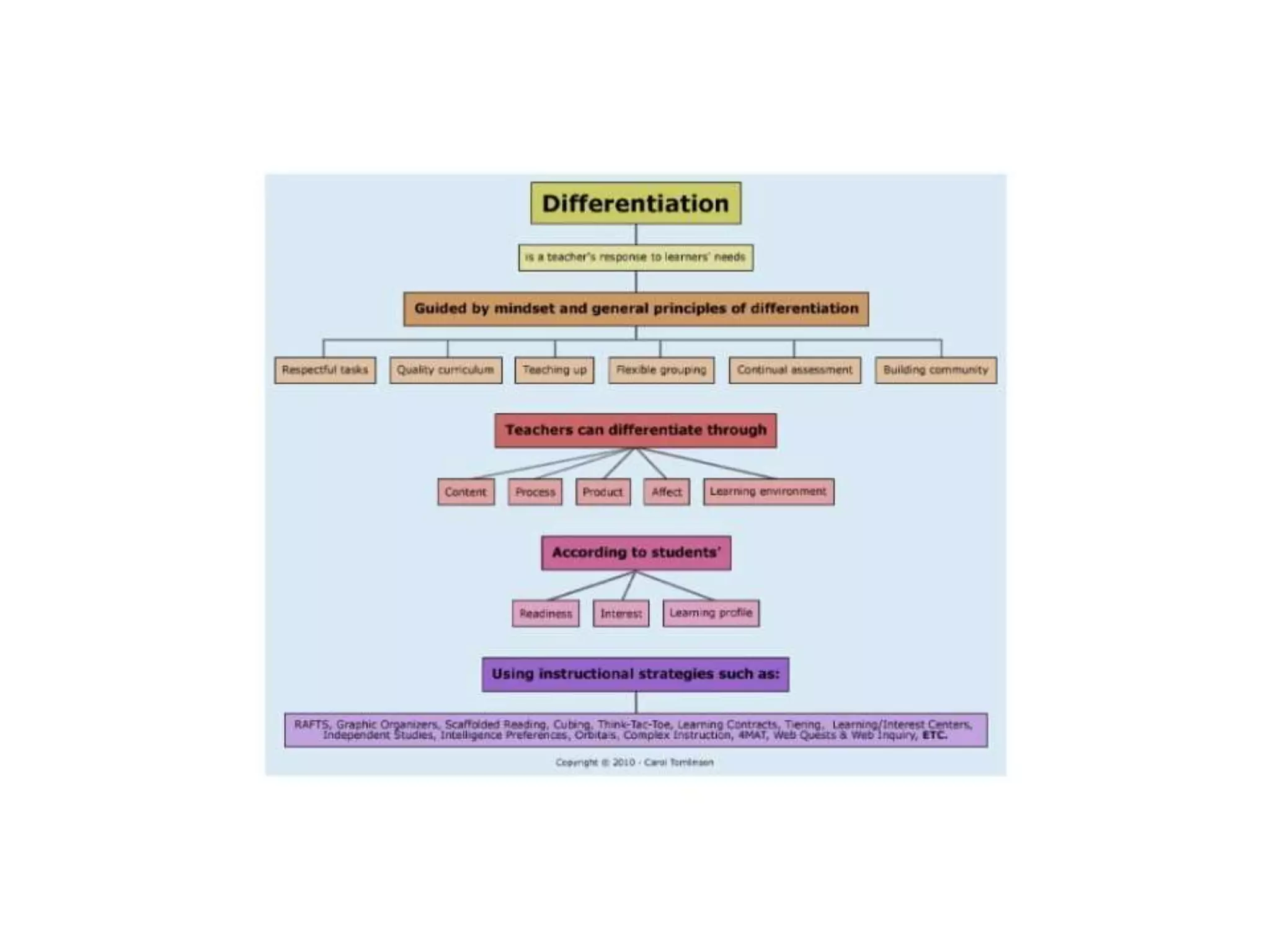
http://jbro15.com/wordpress/wp-content/uploads/2011/05/differentiation1.jpg

micds pbl 2011

  • 1.
    Project Based LearningElizabethHelfant1851micds!*%!1851micds SHIFT1851
  • 2.
    AGENDAWhy PBL?What isand isn’t PBL?Pedagogy within PBL Experience PBLDesign PBL Unit
  • 3.
    • Defining projectsComponentsof projectsManaging projectsCreating projectsGrading projectsThe realities of projects
  • 4.
    Other ObjectivesMake youthink and question thingsPut you in some PBL learning situationsExpose you to some technology support toolsHave you build a unit for next year
  • 5.
  • 6.
  • 7.
    Task One:Get intoGroups of 4 (If 3, reporter and recorder become 1)IntroductionsAssign each member one of these rollsRecorder – Records groups thoughts and class notes that might be important
  • 8.
    Facilitator/Discussion Leader –Keeps group on task, maintains full participation, also records important information from instructions
  • 9.
    Reporter- Reports outto larger group
  • 10.
    Reflector/Evaluator – Willassess group and individual contribution/engagementRecord these rolls on the Google Site Under Group Work – Group Numbers are on the Table- This page will be your working location.
  • 11.
    Task 2What isPBL? What are the essential ingredients?Give an example.Why these images?Did you include these things- http://goo.gl/5ZUAYBe mindful of your role.
  • 12.
    Task 3Role DiscussionHowdid each member perform their role? Fill out the assessment on the Group Site- It’s a Google Form-
  • 13.
  • 14.
  • 15.
  • 16.
    7 Cs +3RsContent UnderstandingCritical ThinkingCross Cultural UnderstandingCollaborationCommunicationComputing SkillsCareer and Civic Learning and Self-Reliance
  • 17.
    Partnership for 21stCentury SkillsMust be defined with Essential/Driving Questions!http://www.p21.org/index.php?option=com_content&task=view&id=254&Itemid=120
  • 18.
    21st Century Skills(Engage)Basic, Scientific and Technological LiteracyVisual and Information LiteracyCultural Literacy and Global AwarenessInventive Thinking:Digital Age Literacy: Adaptability and Managing ComplexityCuriosity, Creativity and Risk TakingHigher Order Thinking and Sound Reasoning Effective Communication: High Productivity:Teaming, Collaboration and Interpersonal SkillsPersonal and Social ResponsibilityInteractive CommunicationPrioritising, Planning and Managing ResultsEffective Use of Real World ToolsHigh Quality, Meaningful Results
  • 19.
  • 20.
    Skill InventoryWhat skillsdo your students need more practice with?Which 1-2 skills do you teach well and how do you do that? Individual Writing- Everyone contribute to the google doc- (we’ll do it anonymously but in PBL, I’d have kids logged in)http://goo.gl/o6Bbe
  • 21.
    Consider Dispositions andHabitsPerkins Learning Dispositions for Good ThinkingThe Disposition to be curious and questioningThe Disposition to think broadly and adventurouslyThe Disposition to reason clearly and carefullyThe Disposition to organize one’s thinkingThe Disposition to give time to thinkingFrom The Thinking Classroom-Learning and Teaching in a Culture of Thinking, Perkins, Tishman, Jay
  • 22.
    Habits of Mind3PGradingGrading for ProductGrading for Process (Habits of Mind)Grading for Progress (Skills Development)How do you assess these?
  • 23.
    Another Reason forPBL:How Kids Learn?
  • 24.
    Seven BIG LearningMessagesIntelligence is not fixedEffort (Motivation) is as important as abilityLearning is strongly influenced by emotionWe all learn in different waysDeep learning is an active processLearning is messyLearning is Social Photo Credit: Stockphoto/VasiliyYakobchuk)
  • 25.
    Chapter 2:How theBrain Processes InformationWhat strikes you as consistent or inconsistent with the way we teach skills and content now?”What might this have to do with PBL?Recorder contributes thoughts on EtherPadhttp://ietherpad.com/XmxidQ6b8y
  • 26.
  • 27.
  • 28.
  • 29.
  • 30.
    Begin with theEnd in MindCraft the Driving QuestionPlan the AssessentMap the ProjectManage the Process
  • 32.
  • 33.
    PBL, Projects, IBL,ProjectBL, ExercisesLet’s visit the PBL Google Site- Exercises vs. Problems and the Role of HW- Vatterott Chapter 4 – Rethinking HW
  • 34.
  • 35.
  • 36.
    Where do IdeasCome FromOnlineSample Projects (we will evaluate these later)Current Events/NewsNonFiction ReadingsStudent ConversationsAnywhere- Try Keeping an Evernote Notebook and clip stuff that might turn into an idea
  • 37.
  • 38.
  • 40.
  • 41.
  • 42.
    Projects use adriving question or problem.2
  • 43.
    3Projects require theproduction of an artifact.
  • 44.
    Projects value depthover breadth.4
  • 45.
  • 46.
    5Projects require atask or series of tasks.
  • 47.
    Students follow aprocess or investigation to complete task(s) and produce artifact.6
  • 48.
    Project task(s) affordmultiple paths to completion and learning.7
  • 49.
    8Students should havechoice in the topic(s) and/or process of investigation.
  • 50.
    9Scaffolds help studentsperform at a higher level with project tasks.
  • 51.
    10Resources are evaluatedand synthesized to produce artifact(s).
  • 52.
    11Collaborations allows studentsto negotiate content and receive feedback.
  • 53.
  • 54.
    13Artifacts afford multiplerepresentations of knowledge.
  • 55.
  • 56.
    15Good projects offerstudents opportunities to gauge their learning.
  • 57.
    16Teachers embed mechanismsto help students manage projects.
  • 58.
    17Projects achieve multiplestandards/objectives at the same time.
  • 59.
  • 60.
    18Projects should encouragestudents to at least apply knowledge.
  • 61.
  • 62.
    19Students will segmenttheir learning from one class or topic to another.
  • 63.
    20Students will gaugewhat is easy to do and choose the path of least resistance.
  • 64.
    21Students' previous experienceswith projects will impact what artifacts students produce.
  • 65.
    22The amount oftime and the resources available to the student will impact the artifacts students produce.
  • 66.
  • 67.
  • 68.
    24Projects take longerto grade...but the final grade shouldn't be the first grade.
  • 69.
    25Projects may aggregatemultiple sources of knowledge into a portfolio.
  • 70.
    26Students will weighwhat's good enough versus the amount of time and effort required.
  • 71.
    27It is practicallyimpossible for an artifact to represent all that has been learned.
  • 72.
    28Process and productmust be assessed in order to accommodate all that has been learned.
  • 73.
  • 74.
    29Teachers and studentsmust recognize and accept their roles in project-based learning.
  • 75.
    30Teachers and studentsmust be comfortable with the physical messiness of project-based learning.
  • 76.
    31Teachers and studentsmust have a tolerance for ambiguity in project-based learning.
  • 77.
    32Project-based learning mustbe integrated with the reality outside a teacher’s classroom.
  • 78.
    Successful InquiryInvolve studentsin initial planningSharing learning goalsNegotiating success criteriaPlanning questions which further learningUsing strategies which maximise student thinking and articulation
  • 79.
  • 80.
    Making notesor drafting
  • 81.
  • 82.
  • 83.
    Sorting andorganising
  • 84.
  • 85.
    Synthesising andapplyingPresenting SkillsUse of ICT
  • 86.
  • 87.
  • 88.
  • 89.
  • 90.
  • 91.
  • 92.
    Discussion Learning to Learn SkillsGoal setting
  • 93.
  • 94.
    Tracking and askingfor assistance
  • 95.
    Self and peerreflection
  • 96.
  • 100.
  • 101.
    What is assessment?Anongoing process aimed at understanding and improving student learningEvidence that students know, can do and understandIt’s more than just collecting data
  • 102.
    Assessment Focus on how we come to know, as opposed to what we know Focus on the development of information-processing and problem-solving skills
  • 103.
    Authentic assessment Assessing the students’ ability to use what they’ve learning in tasks similar to those in the outside world.
  • 104.
    What can beassessed?Student learning characteristics -Ability differences -Learning stylesStudent motivational characteristics -Interest -Effort -Goal orientationLearning-Content knowledge-Ability to apply content knowledge-Skills -Dispositions and attitudes -Performances
  • 105.
    Why do weneed to assess?
  • 106.
    Importance of AssessmentTofind out what the students know (knowledge)To find out what the students can do, and how well they can do it (skill; performance)To find out how students go about the task of doing their work (process)To find out how students feel about their work (motivation, effort)
  • 107.
    Ways wecan assessTrue –False ItemMultiple ChoiceCompletionShort AnswerEssayPractical ExamPapers/ReportsProjectsQuestionnairesInventoriesChecklistPeer RatingSelf RatingJournalPortfolioObservationsDiscussionsInterviews
  • 108.
  • 109.
    Self Assessment Evidenceof Data GatheringHave I gathered enough information?Do I have sufficient evidence of research?Have I described/defined the problems that are at the core of my inquiry?
  • 110.
    Self AssessmentEvidence ofUnderstandingDo I understand the information/material I am researching?Have I used my own words to summarise my research?
  • 111.
    Self AssessmentEvidence ofReflection/AnalysisDoes my work show that I have used the information to form my own ideas? Have I addressed the issues at the core of my inquiry?Have I drawn conclusions?
  • 112.
    Self AssessmentEvidence ofCreativityHave I created anything that shows my own views and opinions of my inquiry?Have I taken any action to do something about my findings?
  • 113.
    AssessmentConversations “When kids aregiven choices in what they read and what they write, and time to think about what they are doing, their writing and reading get better. When we trust them to set goals and to evaluate their learning in progress, we will begin to realize that they know much more than we allow them to tell us through our set curriculums, our standardized tests, our writing samples.”Linda Reif
  • 114.
    ‘In times of change the learners will inherit the earth, while the knowers will find themselves beautifully equipped to deal with a world that no longer exists.’ Eric Hoffer
  • 115.
    Working in yourteam -Looking at your inquiry plan for next year:Decide on exactly what it is that you are going to assessDecide the best way that the skill, understanding, knowledge, application, attitude, performance, etc. can be assessed.List the criteria you will assess against.Design an authentic task to assess that skill, understanding, knowledge, application, attitude, performance, etc.
  • 124.
  • 125.
    AttentionKeller attention canbe gained in two ways: (1) Perceptual arousal – uses surprise or uncertainly to gain interest. Uses novel, surprising, incongruous, and uncertain events; or (2) Inquiry arousal – stimulates curiosity by posing challenging questions or problems to be solved.Methods for grabbing the learners’ attention include the use of: Active participation -Adopt strategies such as games, roleplay or other hands-on methods to get learners involved with the material or subject matter.Variability – To better reinforce materials and account for individual differences in learning styles, use a variety of methods in presenting material (e.g. use of videos, short lectures, mini-discussion groups).Humor -Maintain interest by use a small amount of humor (but not too much to be distracting)Incongruity and Conflict – A devil’s advocate approach in which statements are posed that go against a learner’s past experiences.Specific examples – Use a visual stimuli, story, or biography.Inquiry – Pose questions or problems for the learners to solve, e.g. brainstorming activities.
  • 126.
    RelevanceEstablish relevance inorder to increase a learner’s motivation. To do this, use concrete language and examples with which the learners are familiar. Six major strategies described by Keller include: Experience – Tell the learners how the new learning will use their existing skills. We best learn by building upon our preset knowledge or skills.Present Worth – What will the subject matter do for me today?Future Usefulness – What will the subject matter do for me tomorrow?Needs Matching – Take advantage of the dynamics of achievement, risk taking, power, and affiliation.Modeling – First of all, “be what you want them to do!” Other strategies include guest speakers, videos, and having the learners who finish their work first to serve as tutors. Choice – Allow the learners to use different methods to pursue their work or allowing s choice in how they organize it.

  • 127.
    3. ConfidenceHelp studentsunderstand their likelihood for success. If they feel they cannot meet the objectives or that the cost (time or effort) is too high, their motivation will decrease.Provide objectives and prerequisites – Help students estimate the probability of success by presenting performance requirements and evaluation criteria. Ensure the learners are aware of performance requirements and evaluative criteria.Allow for success that is meaningful.Grow the Learners – Allow for small steps of growth during the learning process.Feedback – Provide feedback and support internal attributions for success.Learner Control – Learners should feel some degree of control over their learning and assessment. They should believe that their success is a direct result of the amount of effort they have put forth.
  • 128.
    4. SatisfactionLearning mustbe rewarding or satisfying in some way, whether it is from a sense of achievement, praise from a higher-up, or mere entertainment.Make the learner feel as though the skill is useful or beneficial by providing opportunities to use newly acquired knowledge in a real setting.Provide feedback and reinforcement. When learners appreciate the results, they will be motivated to learn. Satisfaction is based upon motivation, which can be intrinsic or extrinsic.Do not patronize the learner by over-rewarding easy tasks.
  • 129.
  • 130.
  • 131.
  • 136.
  • 151.

Editor's Notes

  • #8 Volunteer and discuss who would be best-