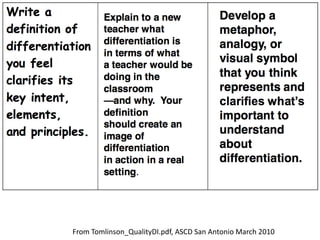
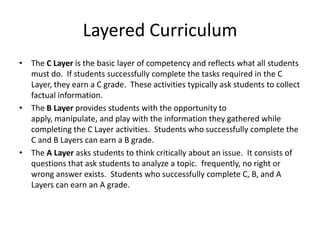
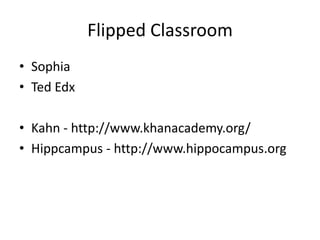
This document discusses strategies for differentiation in the classroom. It begins by defining differentiation and discussing Sternberg's three types of intelligence: analytical, practical, and creative. It emphasizes the need for students to have options for taking in information, organizing ideas, and expressing what they learn. The rest of the document provides examples of strategies to support differentiation, including formative assessment, student choice, understanding assessment, graphic organizers, tiered and layered curriculum approaches, Bloom's Digital Taxonomy, flipped classroom approaches, and using tools like Google Forms, OneNote, and Socrative. It argues these strategies can create a more engaging learning environment.