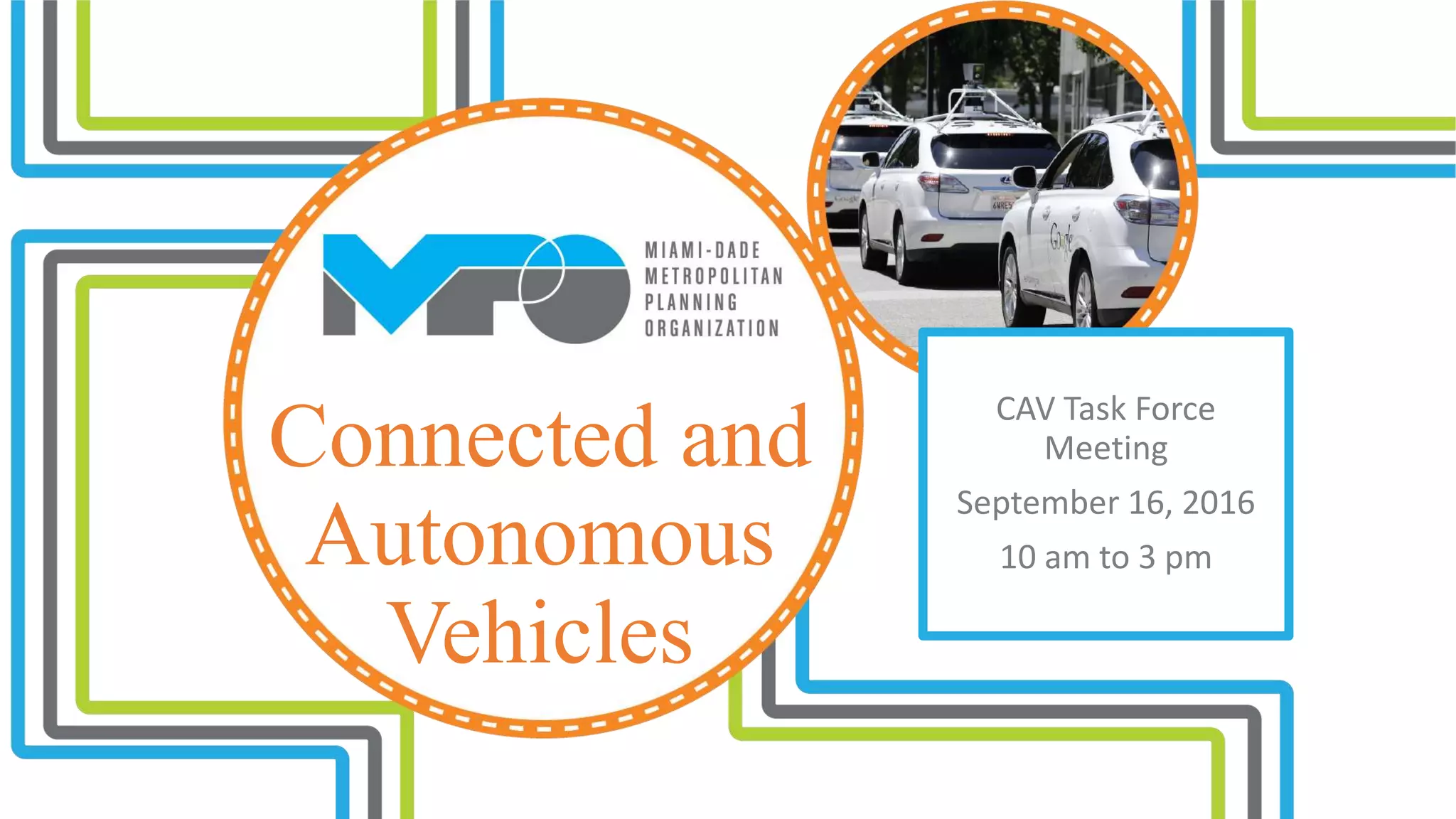
Connected and
Autonomous
Vehicles
CAV Task Force
Meeting
September 16, 2016
10 am to 3 pm
CAV Task Force Meeting
Introductions
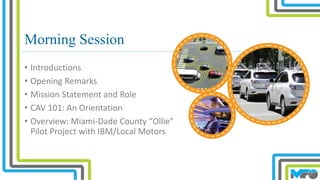
Morning Session
• Introductions
• Opening Remarks
• Mission Statement and Role
• CAV 101: An Orientation
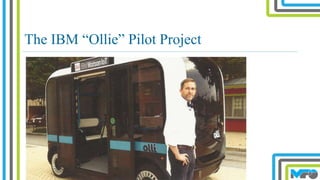
• Overview: Miami-Dade County “Ollie”
Pilot Project with IBM/Local Motors
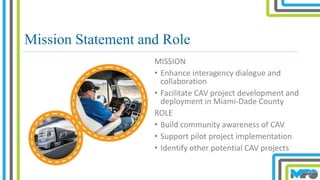
Mission Statement and Role
MISSION
• Enhance interagency dialogue and
collaboration
• Facilitate CAV project development and
deployment in Miami-Dade County
ROLE
• Build community awareness of CAV
• Support pilot project implementation
• Identify other potential CAV projects
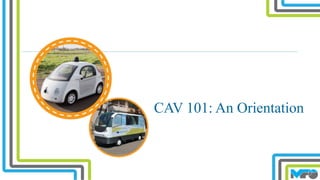
CAV 101: An Orientation
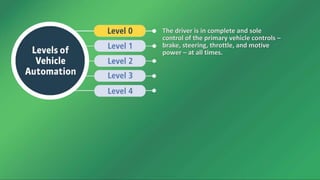
The driver is in complete and sole
control of the primary vehicle controls –
brake, steering, throttle, and motive
power – at all times.
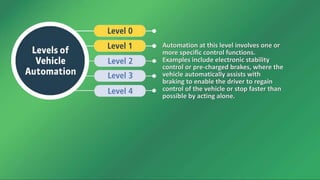
Automation at this level involves one or
more specific control functions.
Examples include electronic stability
control or pre-charged brakes, where the
vehicle automatically assists with
braking to enable the driver to regain
control of the vehicle or stop faster than
possible by acting alone.
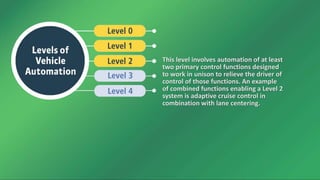
This level involves automation of at least
two primary control functions designed
to work in unison to relieve the driver of
control of those functions. An example
of combined functions enabling a Level 2
system is adaptive cruise control in
combination with lane centering.
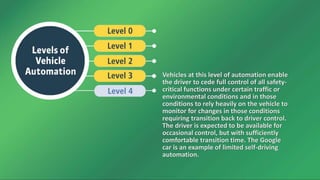
Vehicles at this level of automation enable
the driver to cede full control of all safety-
critical functions under certain traffic or
environmental conditions and in those
conditions to rely heavily on the vehicle to
monitor for changes in those conditions
requiring transition back to driver control.
The driver is expected to be available for
occasional control, but with sufficiently
comfortable transition time. The Google
car is an example of limited self-driving
automation.
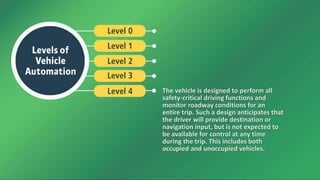
The vehicle is designed to perform all
safety-critical driving functions and
monitor roadway conditions for an
entire trip. Such a design anticipates that
the driver will provide destination or
navigation input, but is not expected to
be available for control at any time
during the trip. This includes both
occupied and unoccupied vehicles.
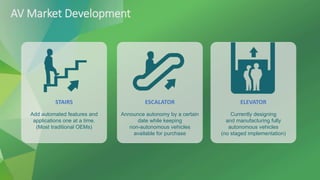
Add automated features and
applications one at a time.
(Most traditional OEMs)
STAIRS
AV Market Development
ESCALATOR
Announce autonomy by a certain
date while keeping
non-autonomous vehicles
available for purchase
ELEVATOR
Currently designing
and manufacturing fully
autonomous vehicles
(no staged implementation)
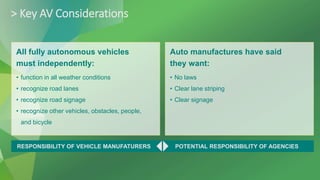
> Key AV Considerations
All fully autonomous vehicles
must independently:
• function in all weather conditions
• recognize road lanes
• recognize road signage
• recognize other vehicles, obstacles, people,
and bicycle
Auto manufactures have said
they want:
• No laws
• Clear lane striping
• Clear signage
RESPONSIBILITY OF VEHICLE MANUFATURERS POTENTIAL RESPONSIBILITY OF AGENCIES
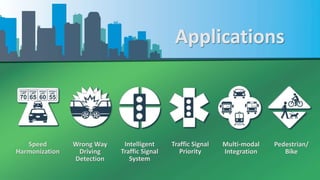
Pedestrian/
Bike
Multi-modal
Integration
Traffic Signal
Priority
Intelligent
Traffic Signal
System
Wrong Way
Driving
Detection
Speed
Harmonization
Applications
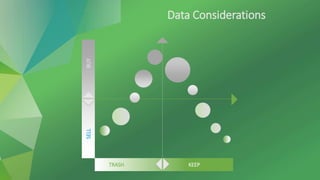
Data Considerations
TRASH KEEP
SELLBUY
Privacy
• Will I be tracked?
• Law enforcement applications?
Q&A
The IBM “Ollie” Pilot Project
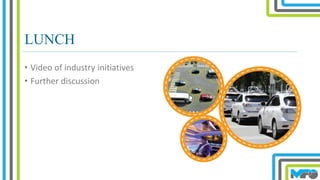
LUNCH
• Video of industry initiatives
• Further discussion
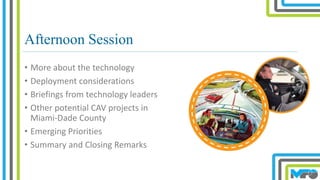
Afternoon Session
• More about the technology
• Deployment considerations
• Briefings from technology leaders
• Other potential CAV projects in
Miami-Dade County
• Emerging Priorities
• Summary and Closing Remarks
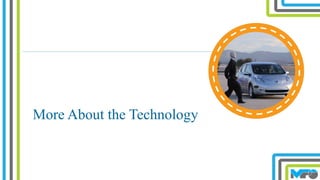
More About the Technology
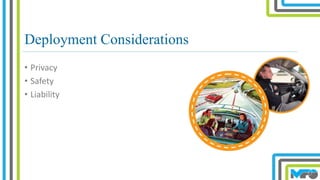
Deployment Considerations
• Privacy
• Safety
• Liability
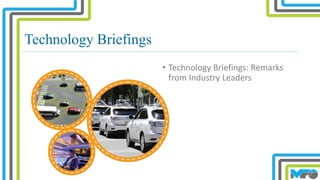
Technology Briefings
• Technology Briefings: Remarks
from Industry Leaders
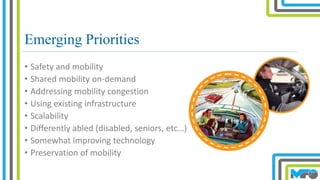
Emerging Priorities
• Safety and mobility
• Shared mobility on-demand
• Addressing mobility congestion
• Using existing infrastructure
• Scalability
• Differently abled (disabled, seniors, etc…)
• Somewhat improving technology
• Preservation of mobility
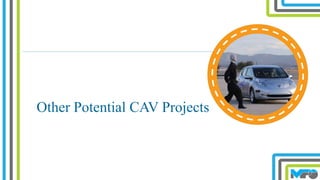
Other Potential CAV Projects
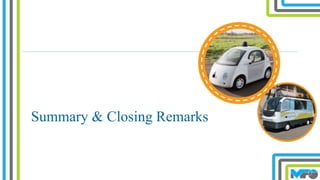
Summary & Closing Remarks
Connected and
Autonomous
Vehicles
Thank you

Miami-Dade MPO CAV Task Force Meeting

  • 1.
    Connected and Autonomous Vehicles CAV TaskForce Meeting September 16, 2016 10 am to 3 pm
  • 2.
  • 3.
  • 4.
    Morning Session • Introductions •Opening Remarks • Mission Statement and Role • CAV 101: An Orientation • Overview: Miami-Dade County “Ollie” Pilot Project with IBM/Local Motors
  • 5.
    Mission Statement andRole MISSION • Enhance interagency dialogue and collaboration • Facilitate CAV project development and deployment in Miami-Dade County ROLE • Build community awareness of CAV • Support pilot project implementation • Identify other potential CAV projects
  • 6.
    CAV 101: AnOrientation
  • 9.
    The driver isin complete and sole control of the primary vehicle controls – brake, steering, throttle, and motive power – at all times.
  • 10.
    Automation at thislevel involves one or more specific control functions. Examples include electronic stability control or pre-charged brakes, where the vehicle automatically assists with braking to enable the driver to regain control of the vehicle or stop faster than possible by acting alone.
  • 11.
    This level involvesautomation of at least two primary control functions designed to work in unison to relieve the driver of control of those functions. An example of combined functions enabling a Level 2 system is adaptive cruise control in combination with lane centering.
  • 12.
    Vehicles at thislevel of automation enable the driver to cede full control of all safety- critical functions under certain traffic or environmental conditions and in those conditions to rely heavily on the vehicle to monitor for changes in those conditions requiring transition back to driver control. The driver is expected to be available for occasional control, but with sufficiently comfortable transition time. The Google car is an example of limited self-driving automation.
  • 13.
    The vehicle isdesigned to perform all safety-critical driving functions and monitor roadway conditions for an entire trip. Such a design anticipates that the driver will provide destination or navigation input, but is not expected to be available for control at any time during the trip. This includes both occupied and unoccupied vehicles.
  • 14.
    Add automated featuresand applications one at a time. (Most traditional OEMs) STAIRS AV Market Development ESCALATOR Announce autonomy by a certain date while keeping non-autonomous vehicles available for purchase ELEVATOR Currently designing and manufacturing fully autonomous vehicles (no staged implementation)
  • 15.
    > Key AVConsiderations All fully autonomous vehicles must independently: • function in all weather conditions • recognize road lanes • recognize road signage • recognize other vehicles, obstacles, people, and bicycle Auto manufactures have said they want: • No laws • Clear lane striping • Clear signage RESPONSIBILITY OF VEHICLE MANUFATURERS POTENTIAL RESPONSIBILITY OF AGENCIES
  • 17.
  • 18.
  • 19.
    Privacy • Will Ibe tracked? • Law enforcement applications?
  • 20.
  • 21.
    The IBM “Ollie”Pilot Project
  • 22.
    LUNCH • Video ofindustry initiatives • Further discussion
  • 23.
    Afternoon Session • Moreabout the technology • Deployment considerations • Briefings from technology leaders • Other potential CAV projects in Miami-Dade County • Emerging Priorities • Summary and Closing Remarks
  • 24.
    More About theTechnology
  • 25.
  • 26.
    Technology Briefings • TechnologyBriefings: Remarks from Industry Leaders
  • 27.
    Emerging Priorities • Safetyand mobility • Shared mobility on-demand • Addressing mobility congestion • Using existing infrastructure • Scalability • Differently abled (disabled, seniors, etc…) • Somewhat improving technology • Preservation of mobility
  • 28.
  • 29.
  • 30.