Visit: www.statisticsassignmenthelp.com
Email: support@statisticsassignmenthelp.com
Phone: +1 (315)-557-6473
Method of Moments and Maximum
Likelihood Estimation
At statisticsassignmenthelp.com, we provide expert solutions to your statistics
assignments. This presentation showcases sample questions and detailed
solutions, exemplifying our commitment to helping students master complex
statistical concepts. Our experienced professionals tackle problems using
methods such as the method of moments and maximum likelihood estimation,
ensuring comprehensive and accurate answers. This sample assignment covers a
range of topics, including exponential, Rayleigh, Laplace distributions, and gene
frequency analysis, demonstrating our ability to handle diverse statistical
challenges. Explore this presentation to see how we can support your academic
success in statistics.
Method of Moments and Maximum Likelihood Estimation
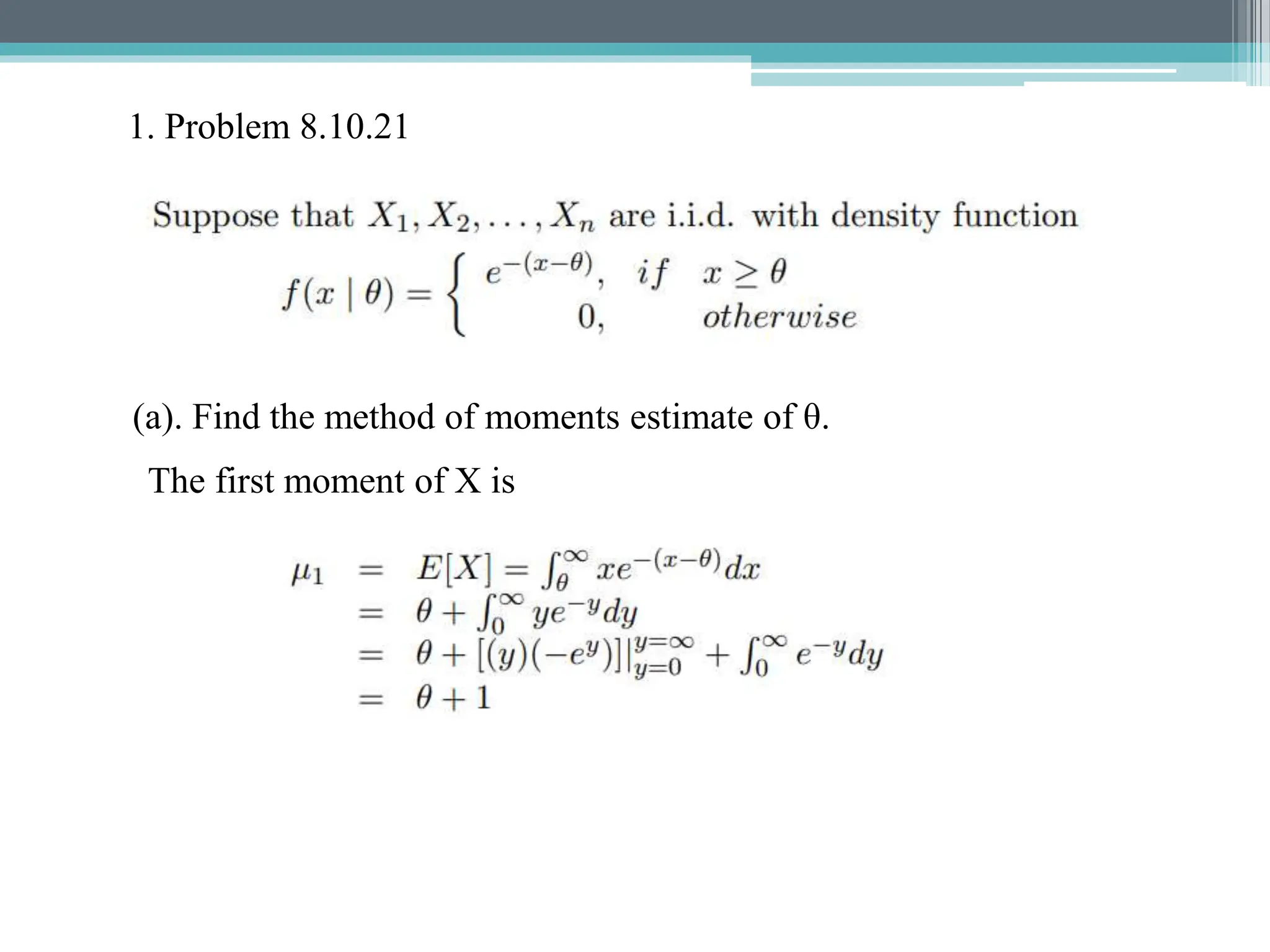
1. Problem 8.10.21
(a). Find the method of moments estimate of θ.
The first moment of X is
(The second line follows by transforming to y = x − θ; the third line
follows from integration-by-parts.)
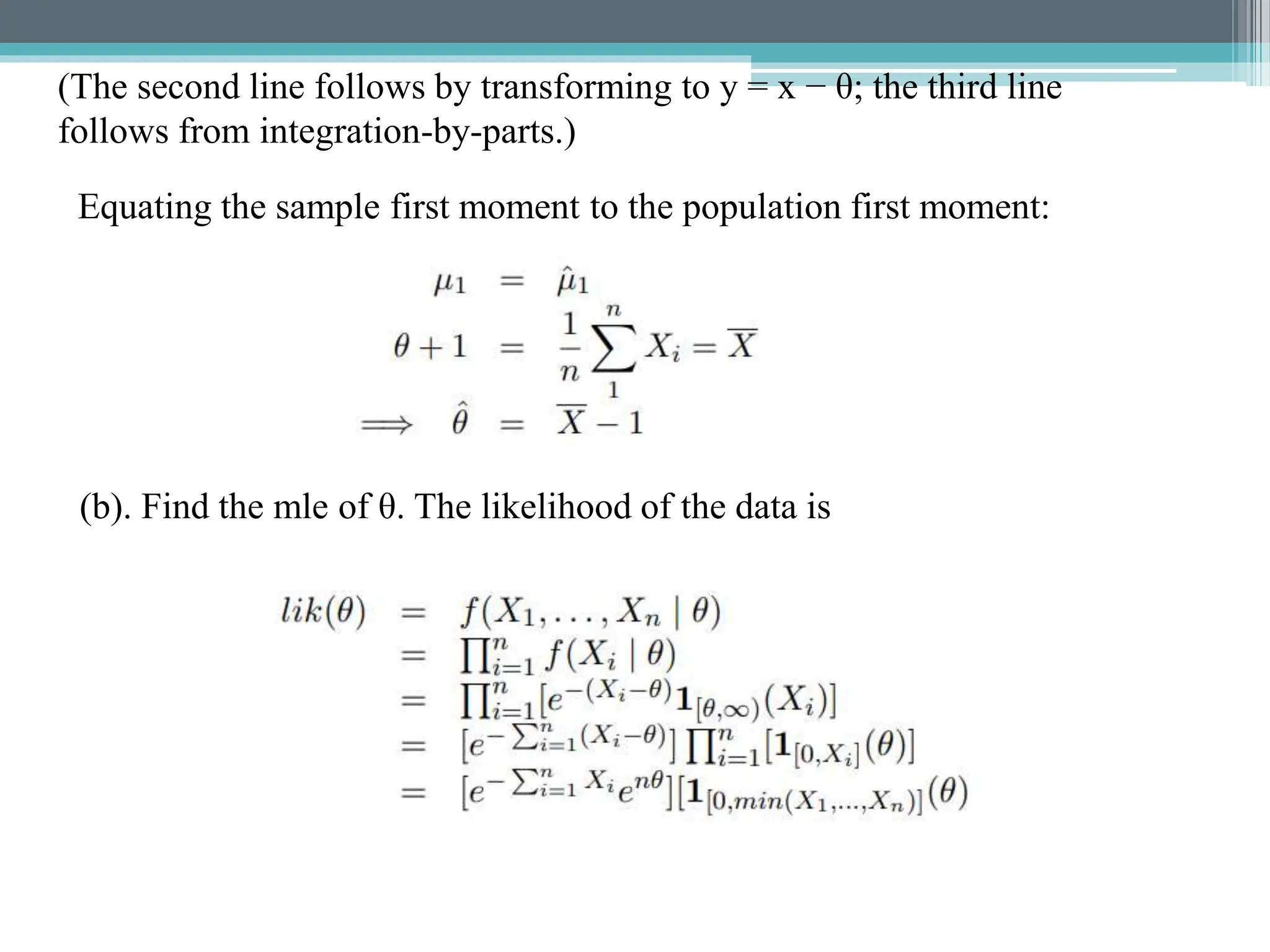
Equating the sample first moment to the population first moment:
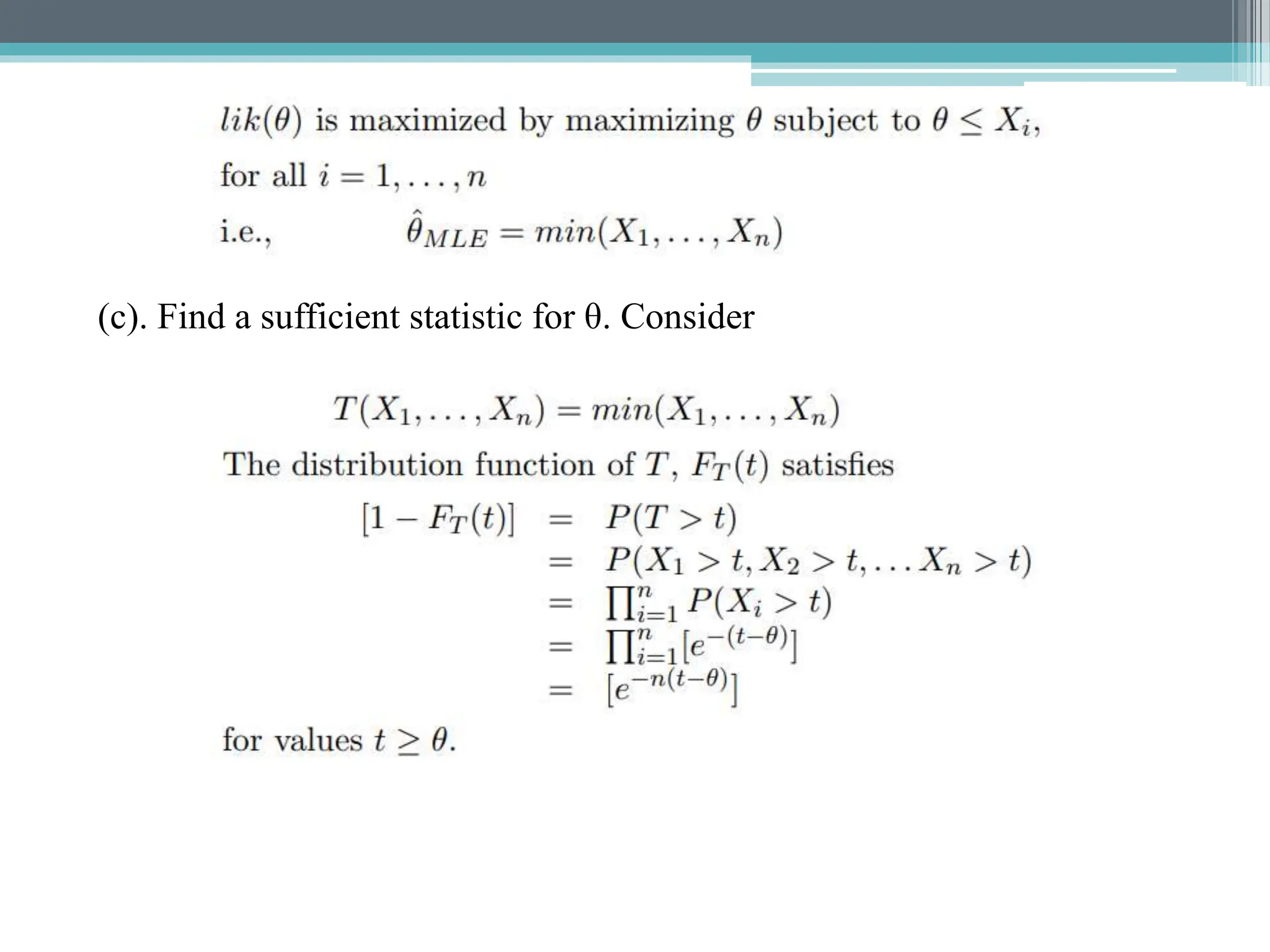
(b). Find the mle of θ. The likelihood of the data is
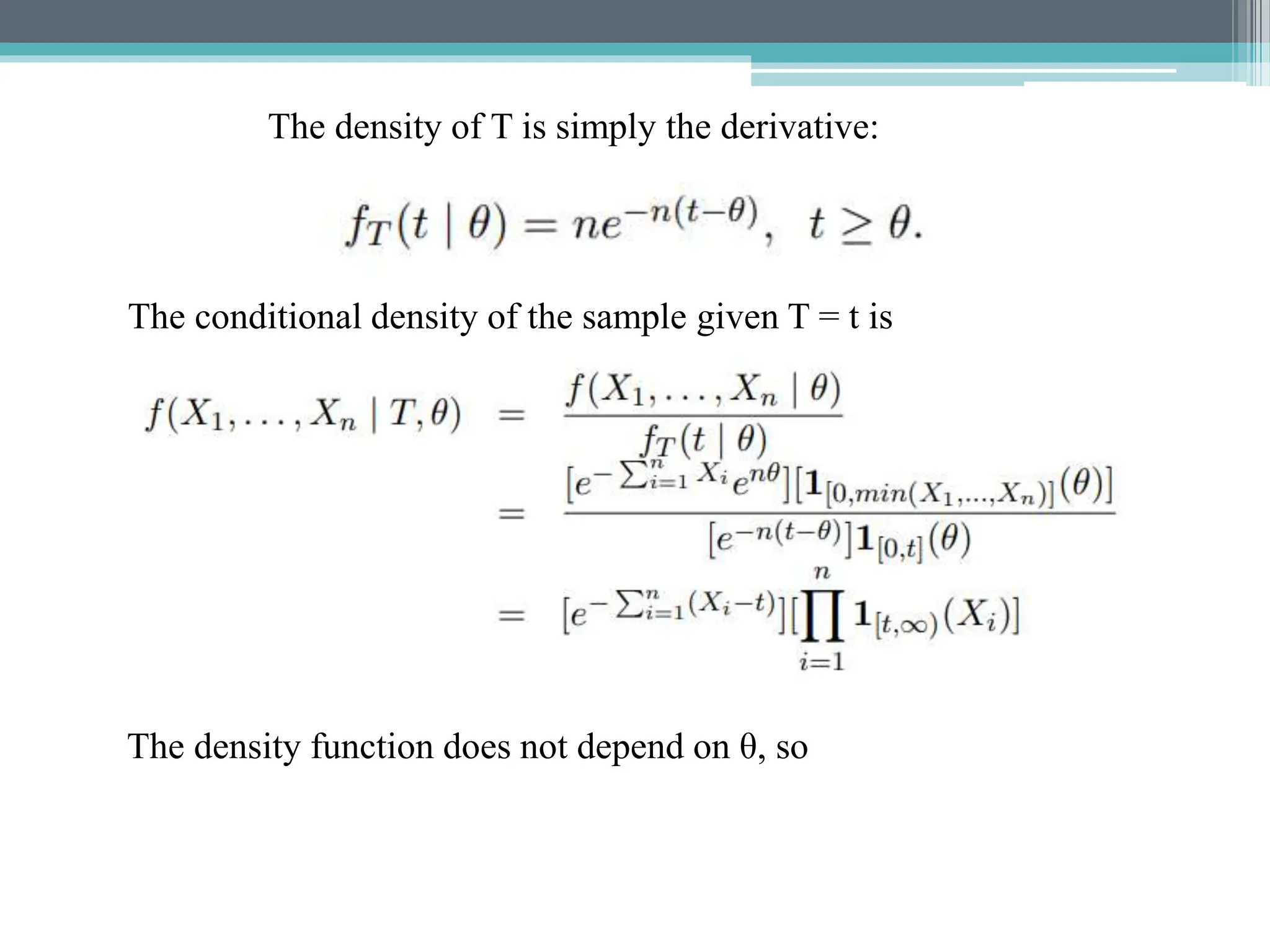
(c). Find a sufficient statistic for θ. Consider
The density of T is simply the derivative:
The conditional density of the sample given T = t is
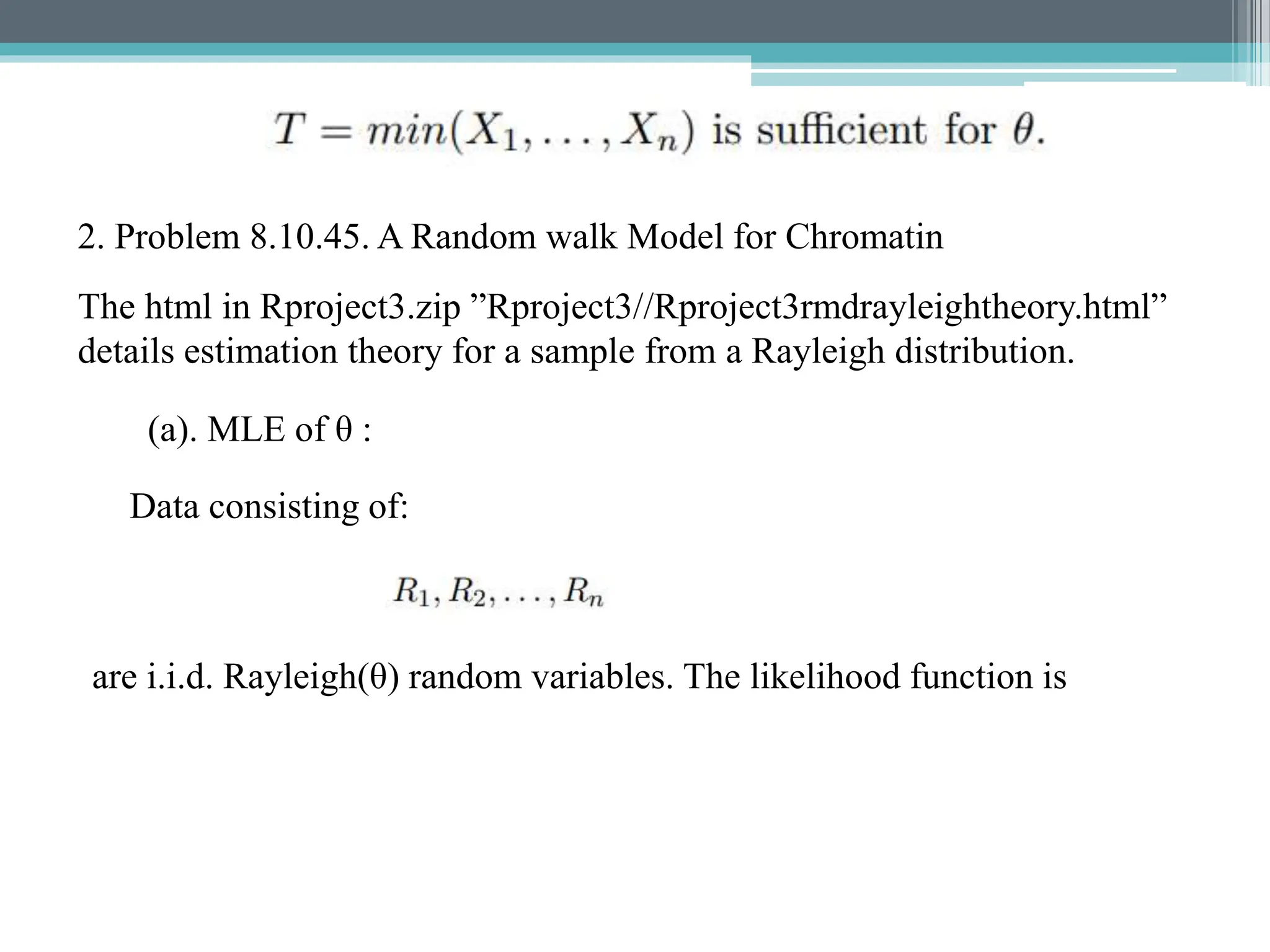
The density function does not depend on θ, so
2. Problem 8.10.45. A Random walk Model for Chromatin
The html in Rproject3.zip ”Rproject3//Rproject3rmdrayleightheory.html”
details estimation theory for a sample from a Rayleigh distribution.
(a). MLE of θ :
Data consisting of:
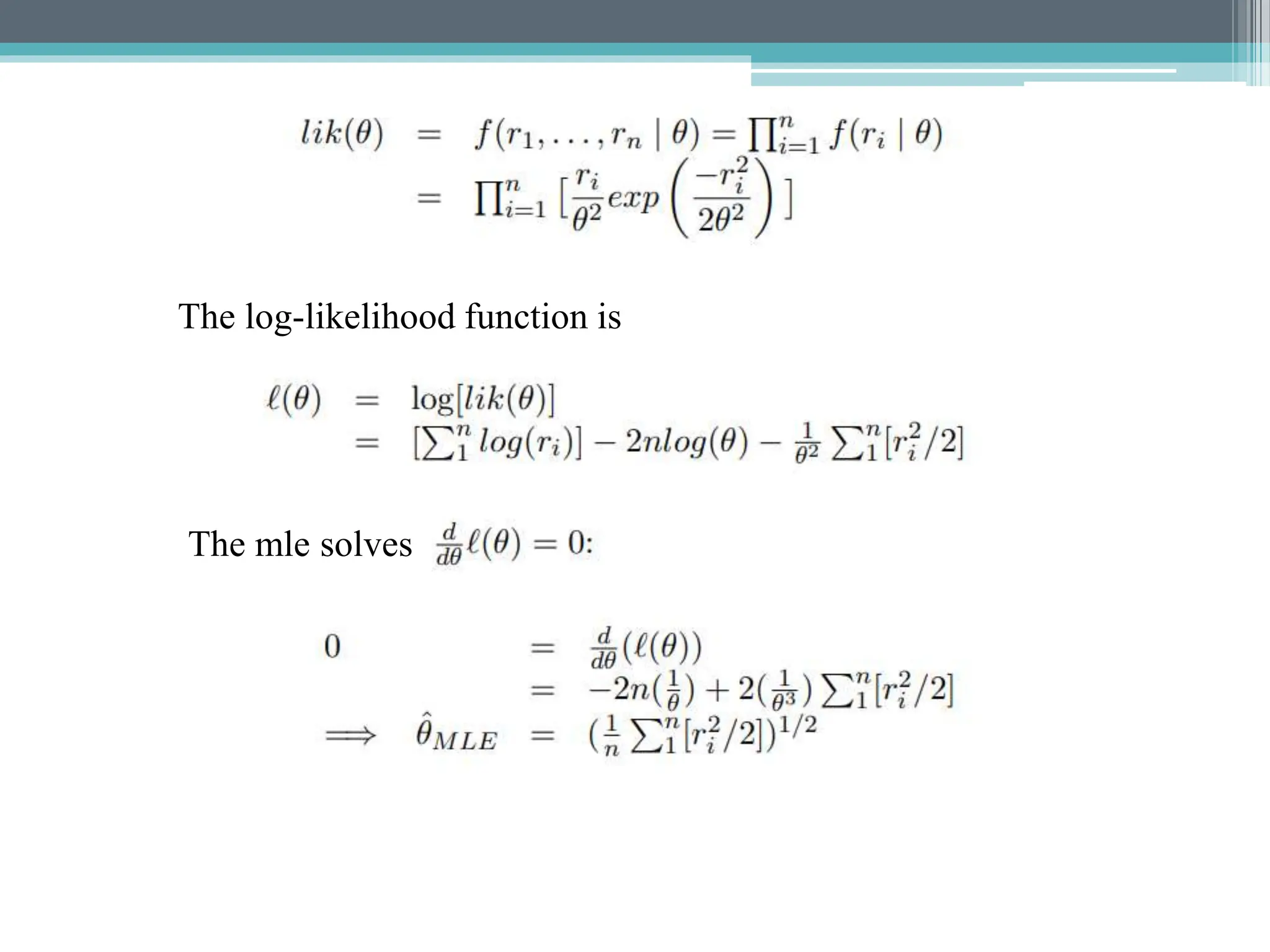
are i.i.d. Rayleigh(θ) random variables. The likelihood function is
The log-likelihood function is
The mle solves
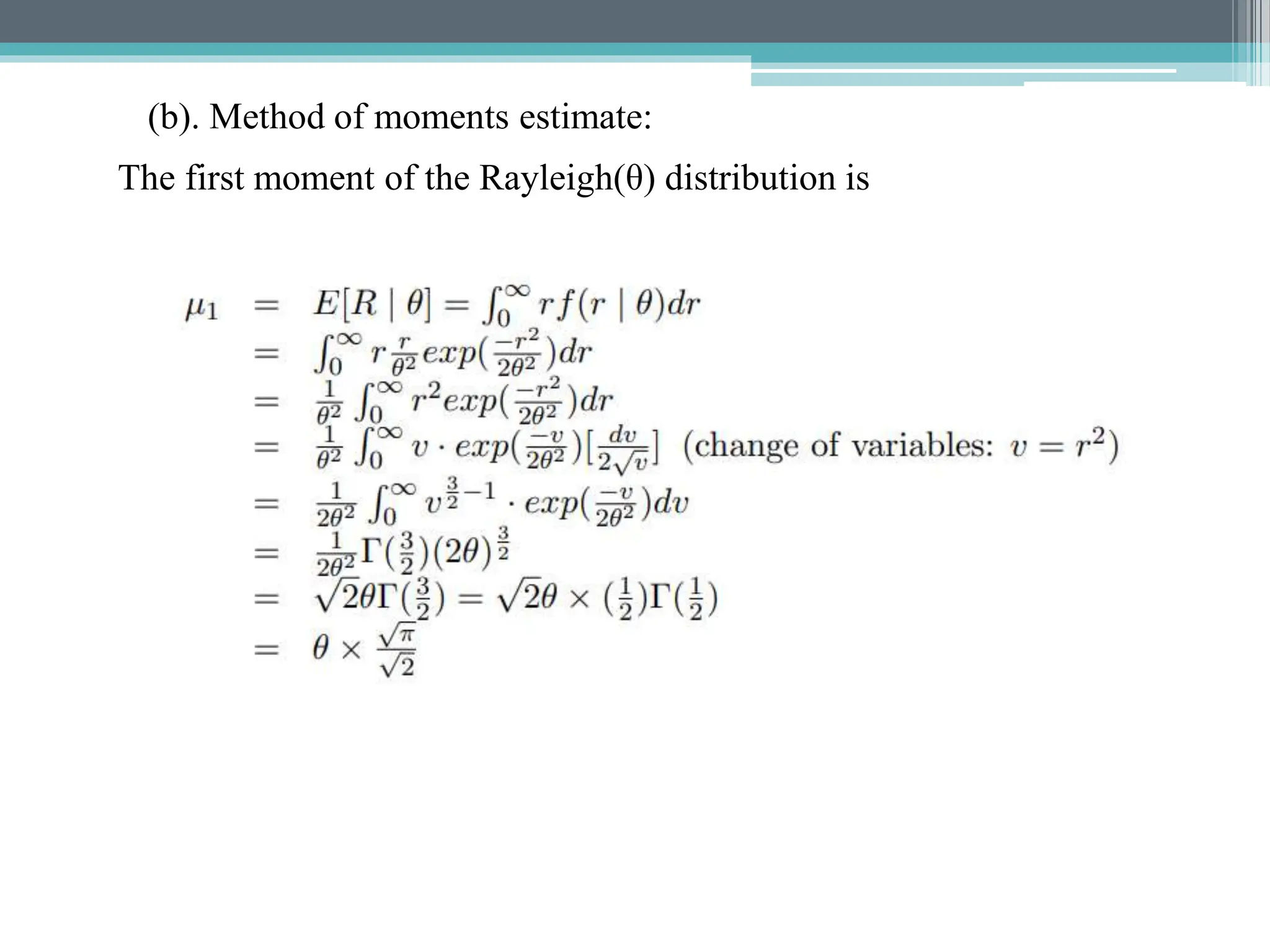
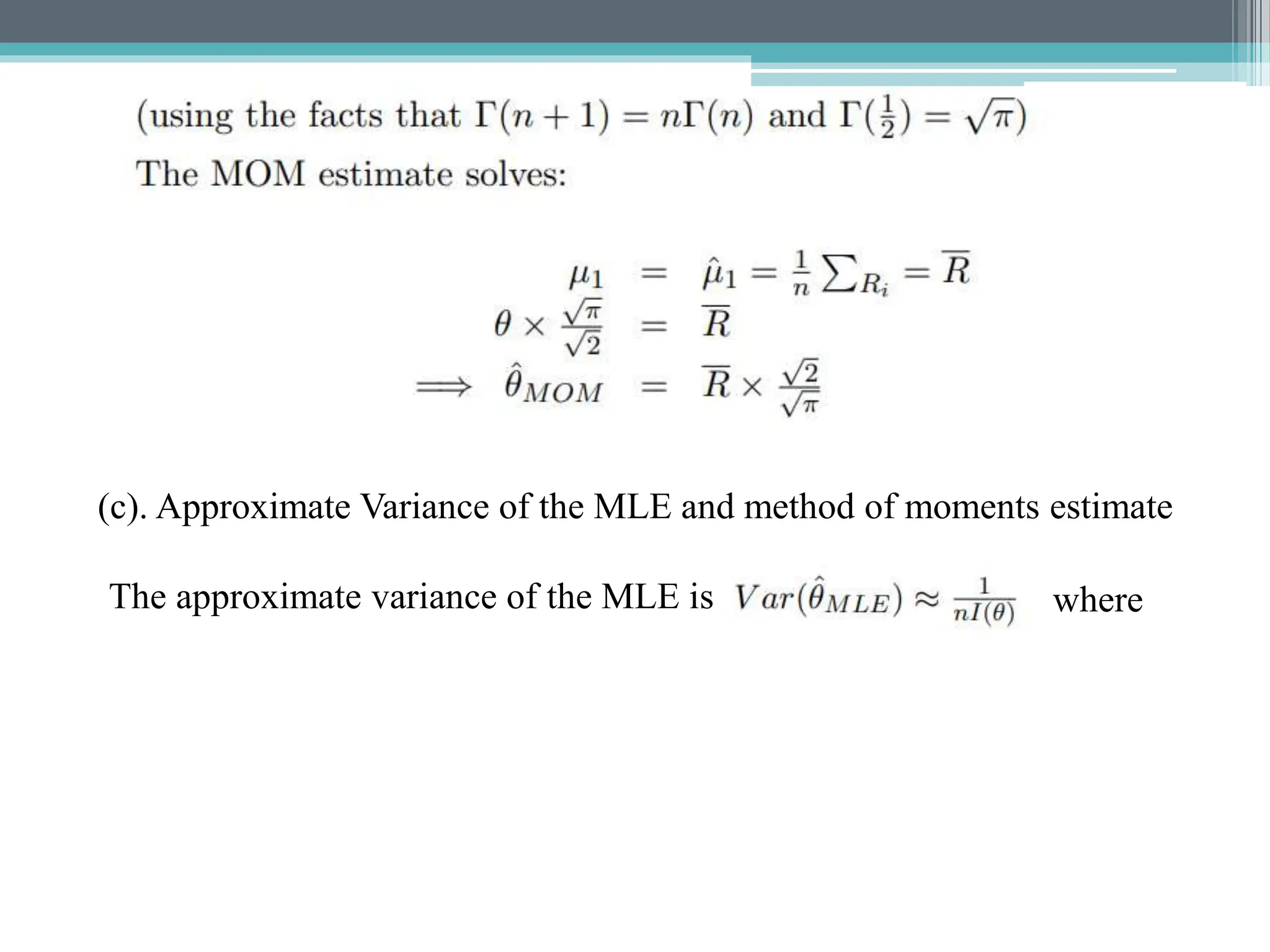
(b). Method of moments estimate:
The first moment of the Rayleigh(θ) distribution is
(c). Approximate Variance of the MLE and method of moments estimate
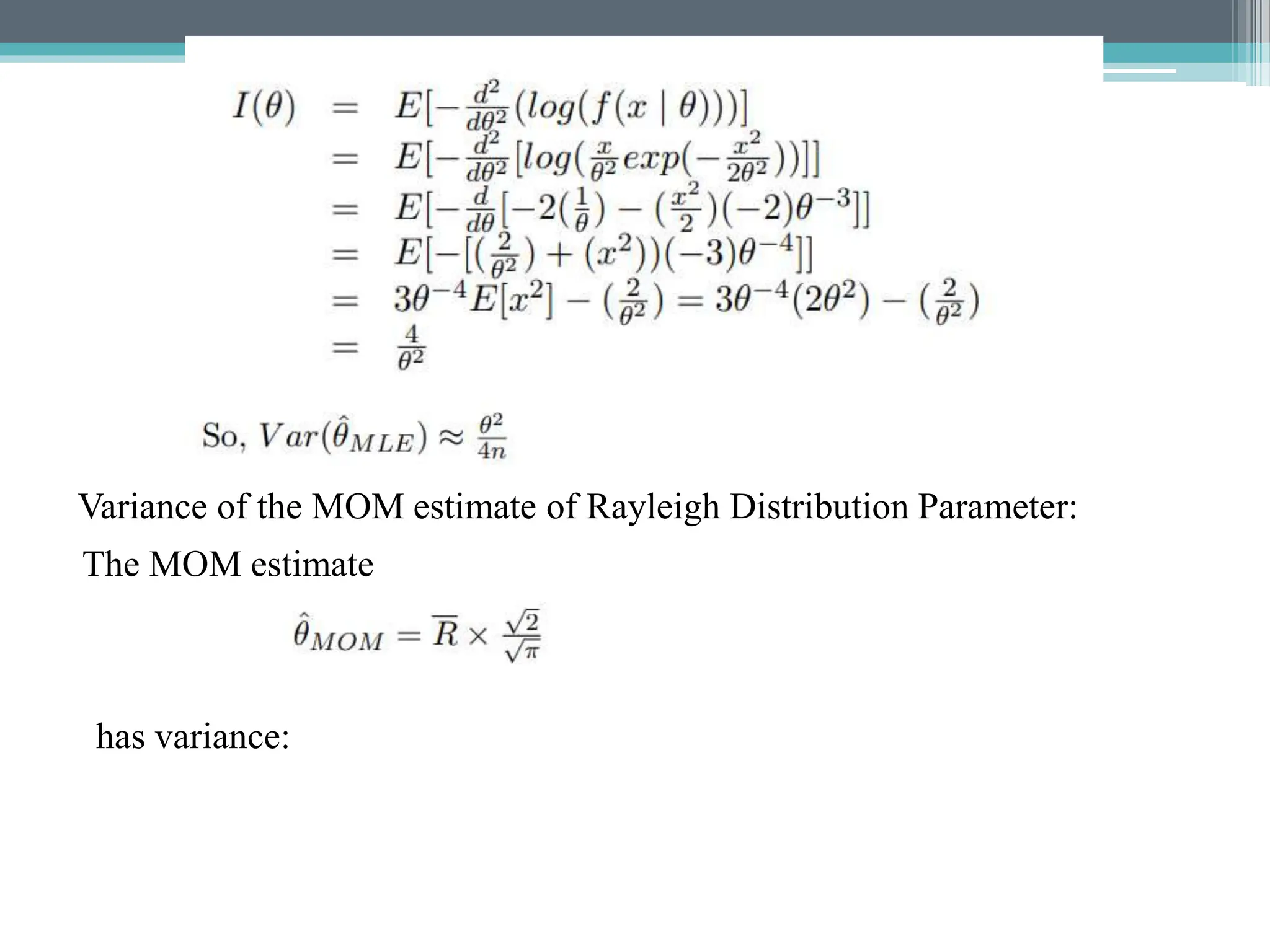
The approximate variance of the MLE is where
Variance of the MOM estimate of Rayleigh Distribution Parameter:
The MOM estimate
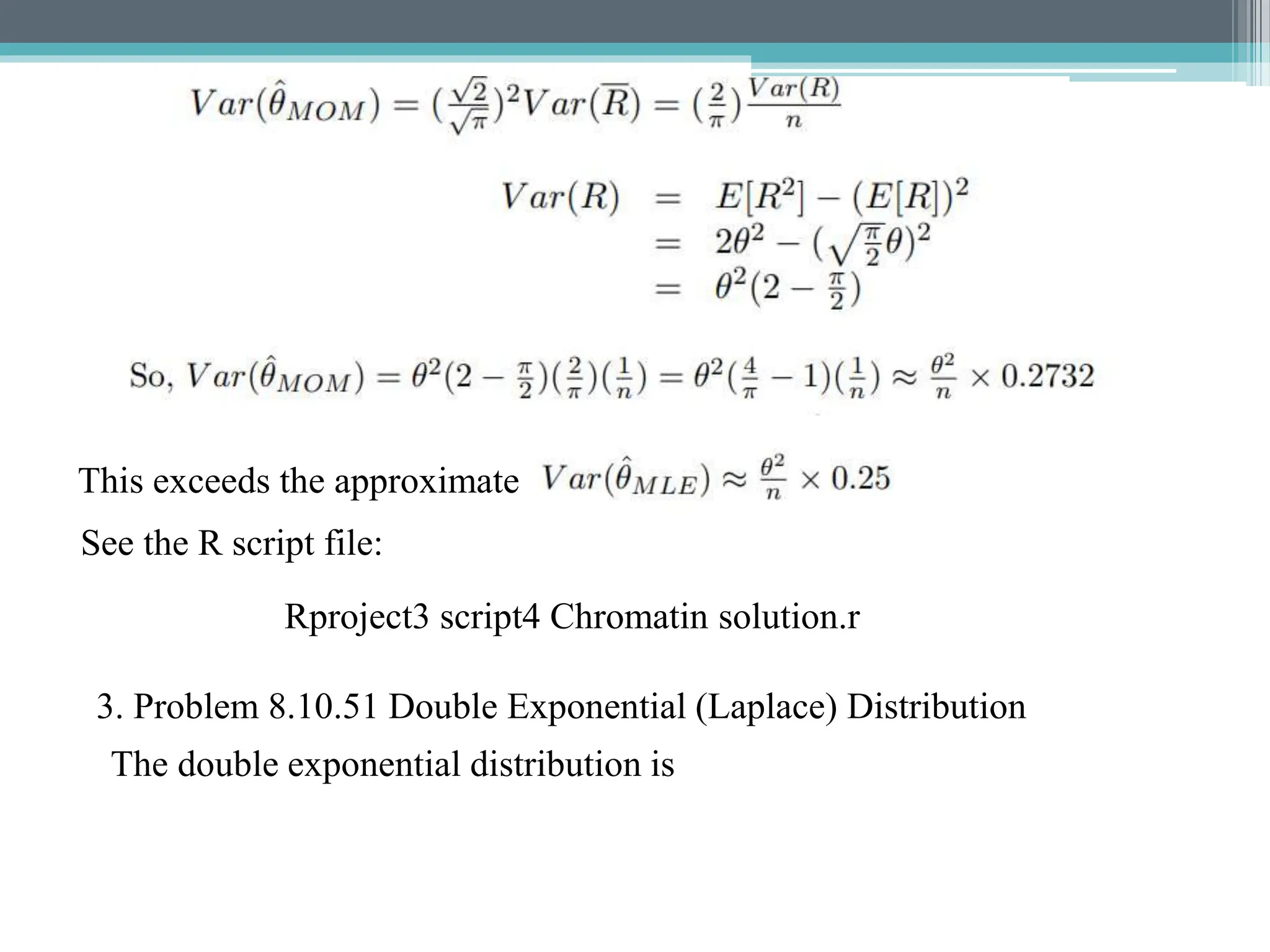
has variance:
This exceeds the approximate
See the R script file:
Rproject3 script4 Chromatin solution.r
3. Problem 8.10.51 Double Exponential (Laplace) Distribution
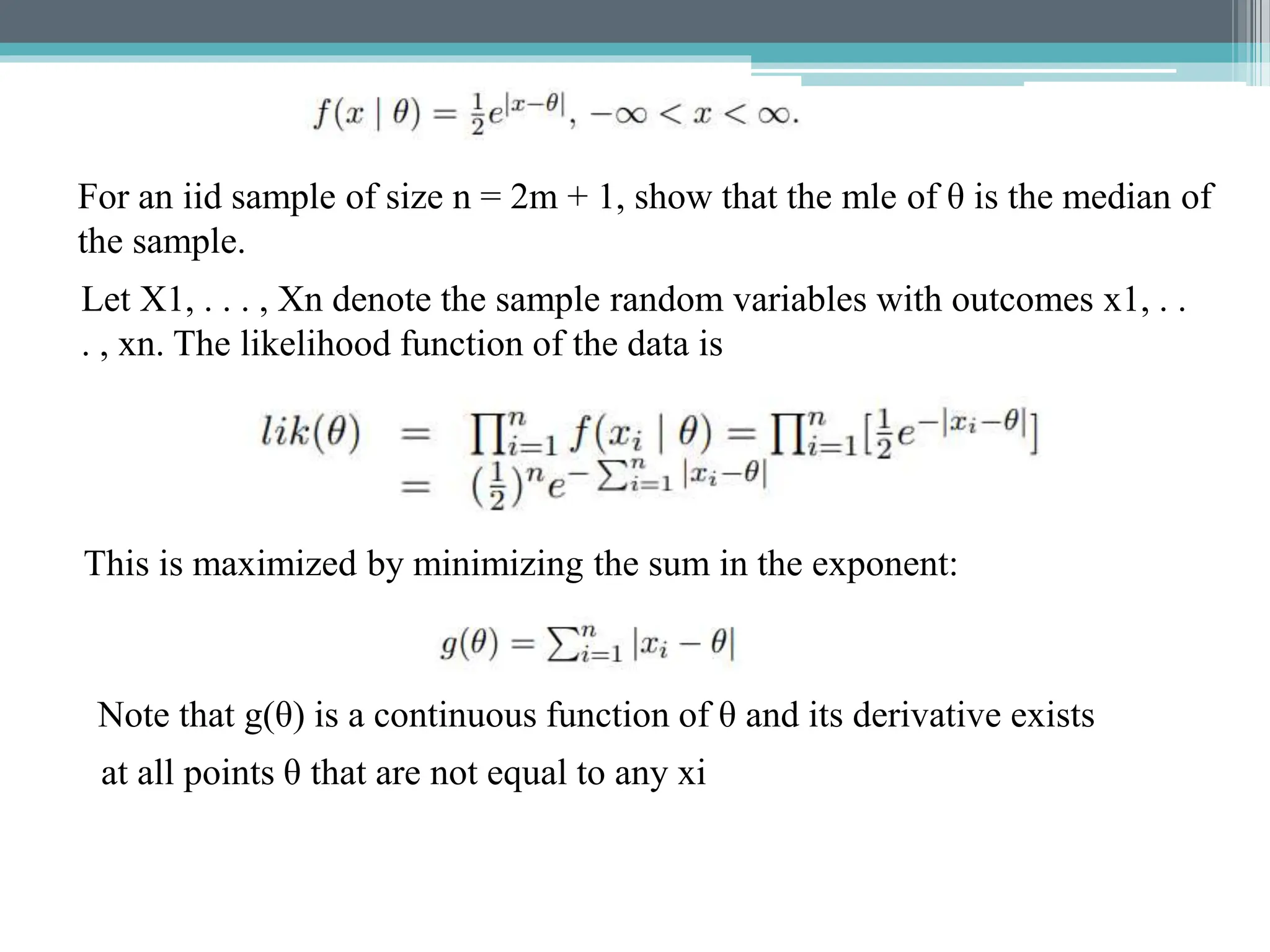
The double exponential distribution is
For an iid sample of size n = 2m + 1, show that the mle of θ is the median of
the sample.
Let X1, . . . , Xn denote the sample random variables with outcomes x1, . .
. , xn. The likelihood function of the data is
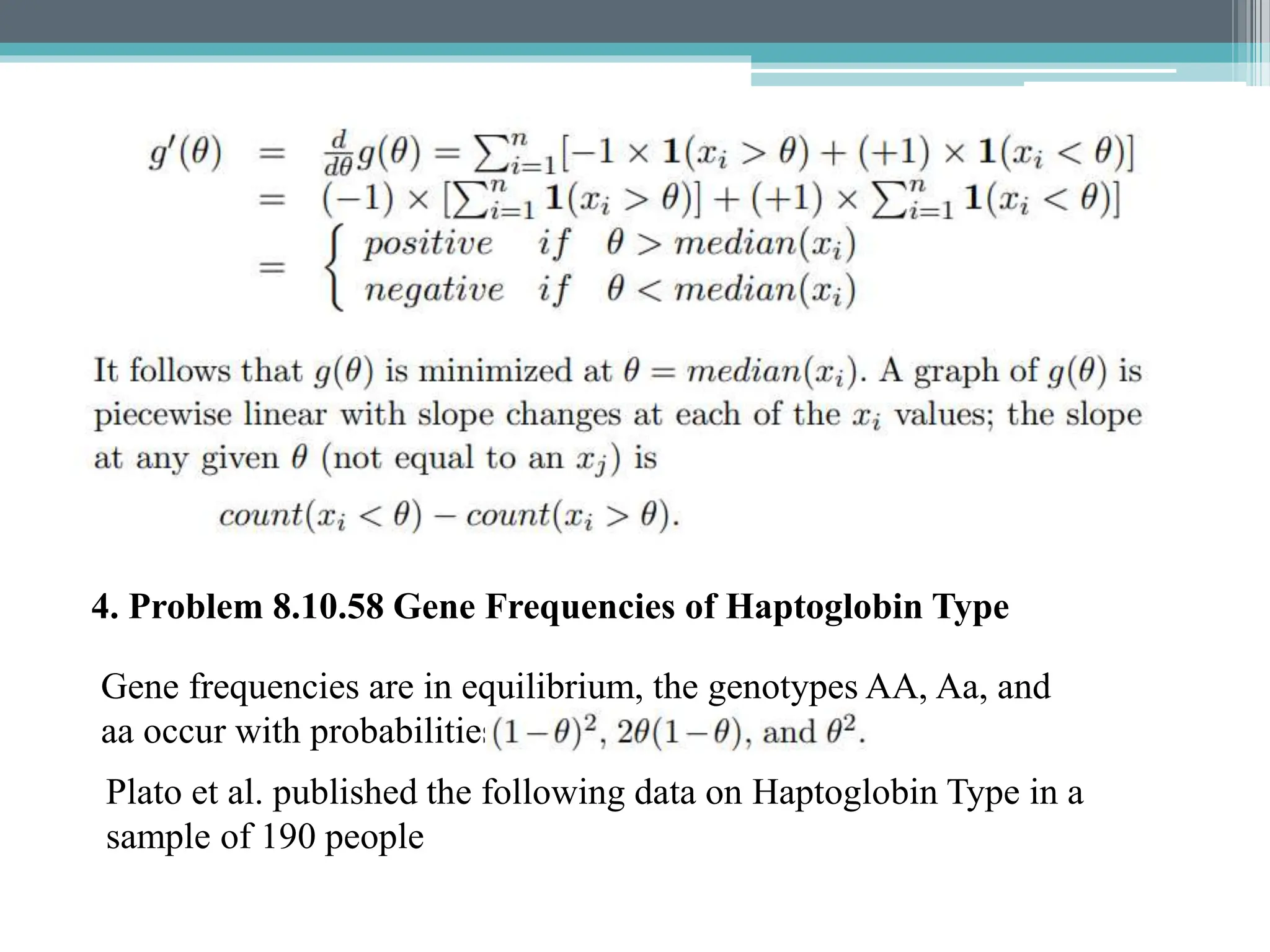
This is maximized by minimizing the sum in the exponent:
Note that g(θ) is a continuous function of θ and its derivative exists
at all points θ that are not equal to any xi
4. Problem 8.10.58 Gene Frequencies of Haptoglobin Type
Gene frequencies are in equilibrium, the genotypes AA, Aa, and
aa occur with probabilities
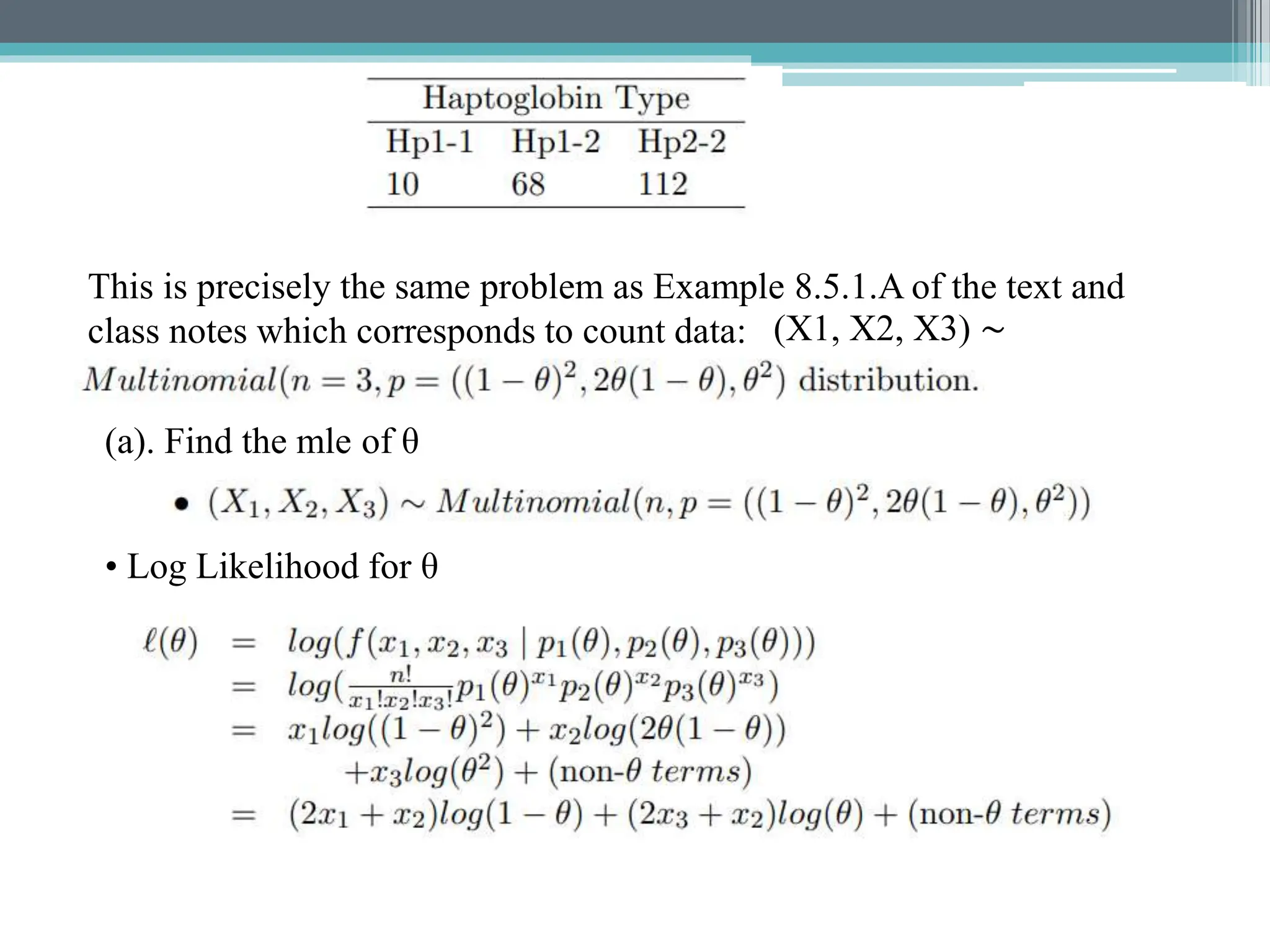
Plato et al. published the following data on Haptoglobin Type in a
sample of 190 people
This is precisely the same problem as Example 8.5.1.A of the text and
class notes which corresponds to count data: (X1, X2, X3) ∼
(a). Find the mle of θ
• Log Likelihood for θ
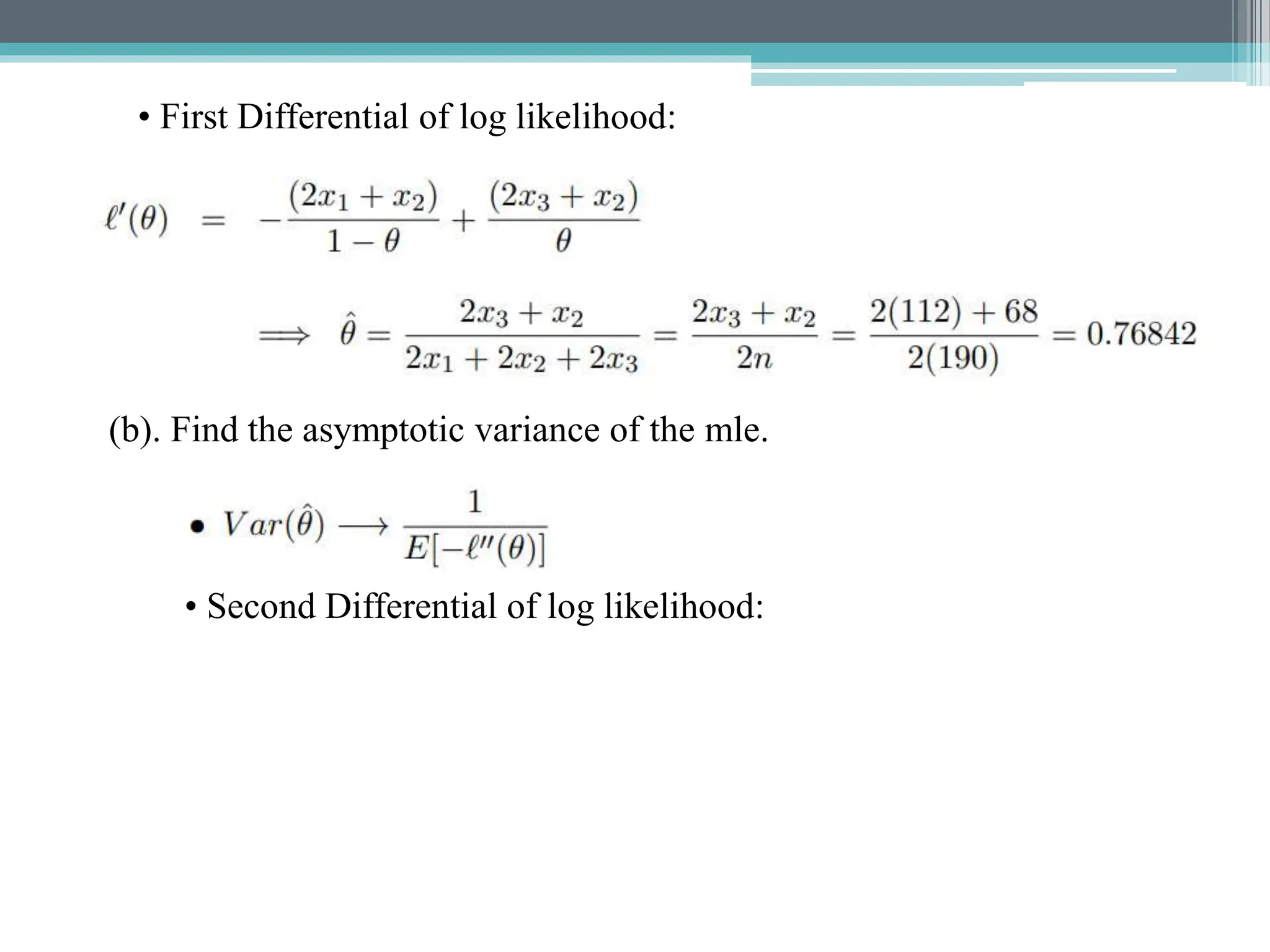
• First Differential of log likelihood:
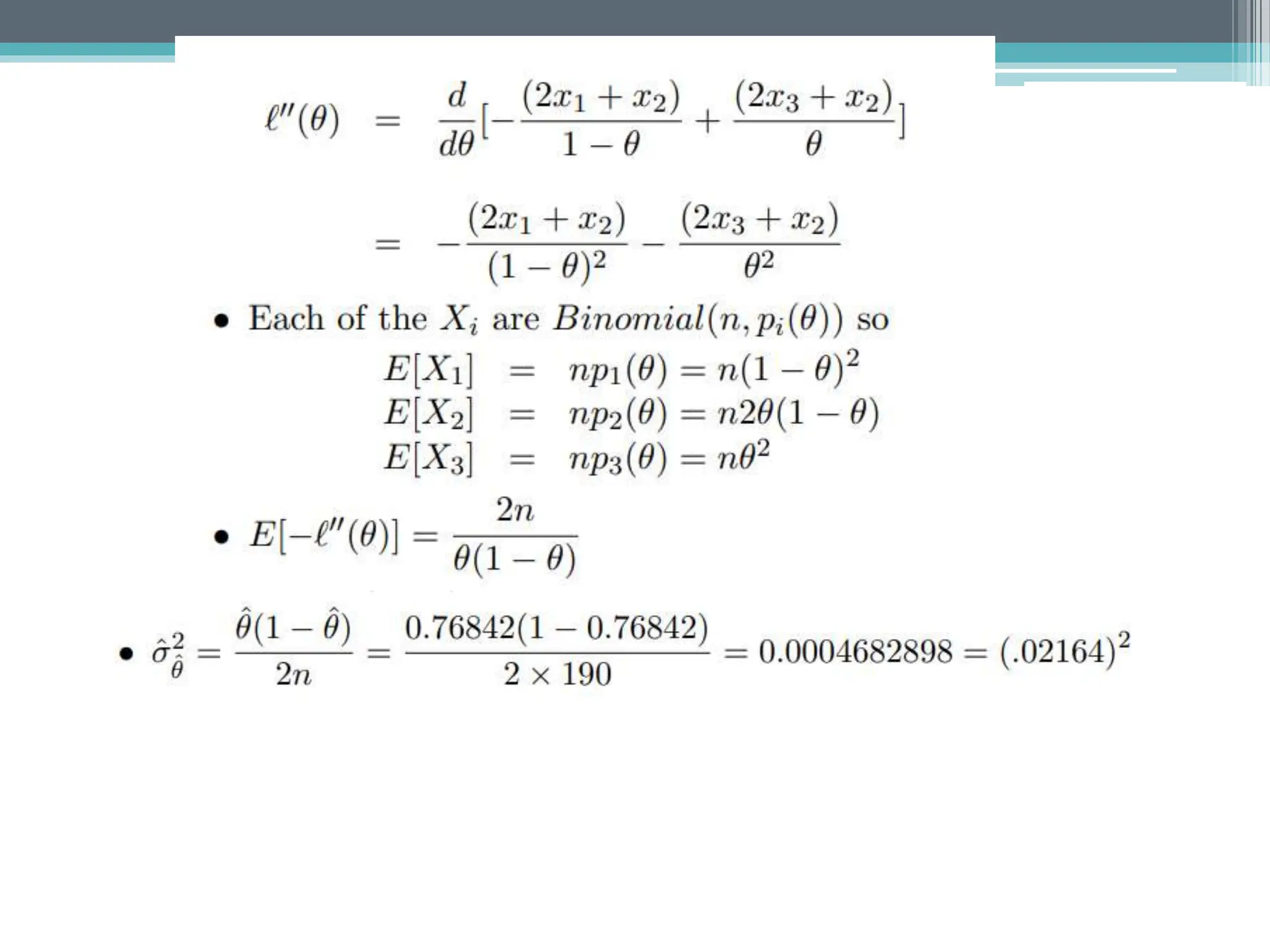
(b). Find the asymptotic variance of the mle.
• Second Differential of log likelihood:
Parts (c), (d), and (e): see the R script

Method of Moments and Maximum Likelihood Estimation

  • 1.
    Visit: www.statisticsassignmenthelp.com Email: support@statisticsassignmenthelp.com Phone:+1 (315)-557-6473 Method of Moments and Maximum Likelihood Estimation
  • 2.
    At statisticsassignmenthelp.com, weprovide expert solutions to your statistics assignments. This presentation showcases sample questions and detailed solutions, exemplifying our commitment to helping students master complex statistical concepts. Our experienced professionals tackle problems using methods such as the method of moments and maximum likelihood estimation, ensuring comprehensive and accurate answers. This sample assignment covers a range of topics, including exponential, Rayleigh, Laplace distributions, and gene frequency analysis, demonstrating our ability to handle diverse statistical challenges. Explore this presentation to see how we can support your academic success in statistics. Method of Moments and Maximum Likelihood Estimation
  • 3.
    1. Problem 8.10.21 (a).Find the method of moments estimate of θ. The first moment of X is
  • 4.
    (The second linefollows by transforming to y = x − θ; the third line follows from integration-by-parts.) Equating the sample first moment to the population first moment: (b). Find the mle of θ. The likelihood of the data is
  • 5.
    (c). Find asufficient statistic for θ. Consider
  • 6.
    The density ofT is simply the derivative: The conditional density of the sample given T = t is The density function does not depend on θ, so
  • 7.
    2. Problem 8.10.45.A Random walk Model for Chromatin The html in Rproject3.zip ”Rproject3//Rproject3rmdrayleightheory.html” details estimation theory for a sample from a Rayleigh distribution. (a). MLE of θ : Data consisting of: are i.i.d. Rayleigh(θ) random variables. The likelihood function is
  • 8.
    The log-likelihood functionis The mle solves
  • 9.
    (b). Method ofmoments estimate: The first moment of the Rayleigh(θ) distribution is
  • 10.
    (c). Approximate Varianceof the MLE and method of moments estimate The approximate variance of the MLE is where
  • 11.
    Variance of theMOM estimate of Rayleigh Distribution Parameter: The MOM estimate has variance:
  • 12.
    This exceeds theapproximate See the R script file: Rproject3 script4 Chromatin solution.r 3. Problem 8.10.51 Double Exponential (Laplace) Distribution The double exponential distribution is
  • 13.
    For an iidsample of size n = 2m + 1, show that the mle of θ is the median of the sample. Let X1, . . . , Xn denote the sample random variables with outcomes x1, . . . , xn. The likelihood function of the data is This is maximized by minimizing the sum in the exponent: Note that g(θ) is a continuous function of θ and its derivative exists at all points θ that are not equal to any xi
  • 14.
    4. Problem 8.10.58Gene Frequencies of Haptoglobin Type Gene frequencies are in equilibrium, the genotypes AA, Aa, and aa occur with probabilities Plato et al. published the following data on Haptoglobin Type in a sample of 190 people
  • 15.
    This is preciselythe same problem as Example 8.5.1.A of the text and class notes which corresponds to count data: (X1, X2, X3) ∼ (a). Find the mle of θ • Log Likelihood for θ
  • 16.
    • First Differentialof log likelihood: (b). Find the asymptotic variance of the mle. • Second Differential of log likelihood:
  • 18.
    Parts (c), (d),and (e): see the R script