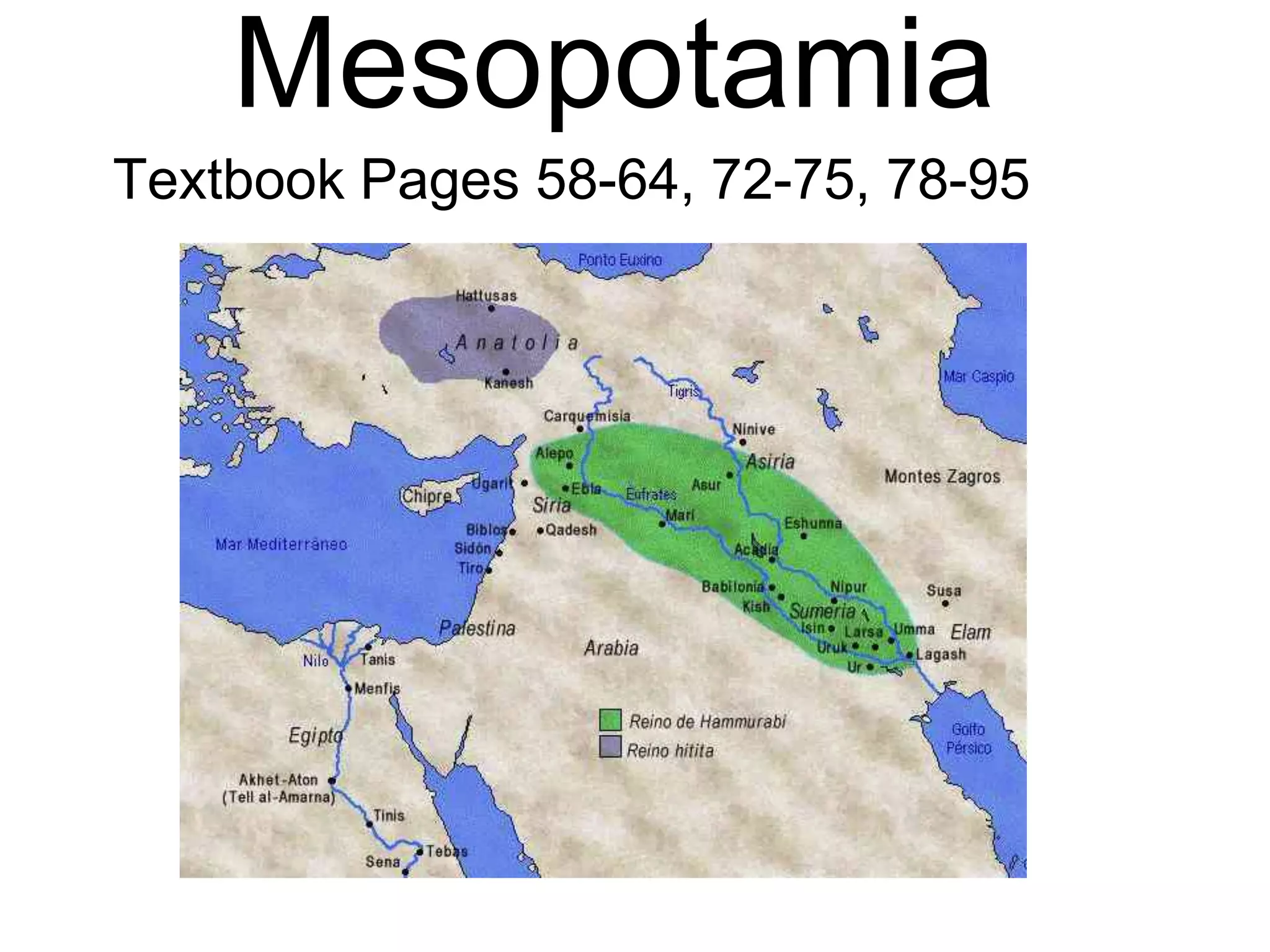
Mesopotamia
Textbook Pages 58-64, 72-75, 78-95
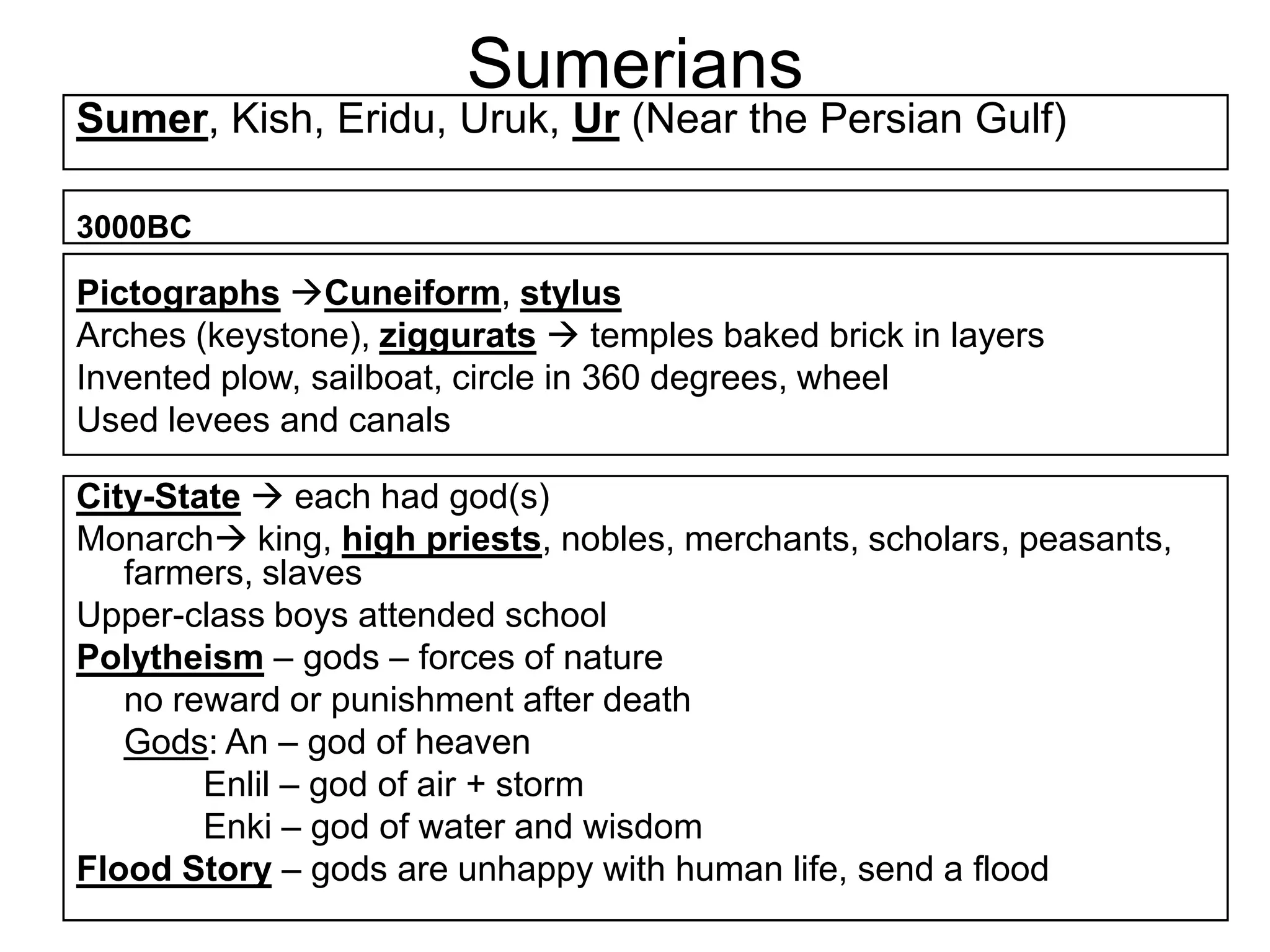
Sumerians
Sumer, Kish, Eridu, Uruk, Ur (Near the Persian Gulf)
3000BC
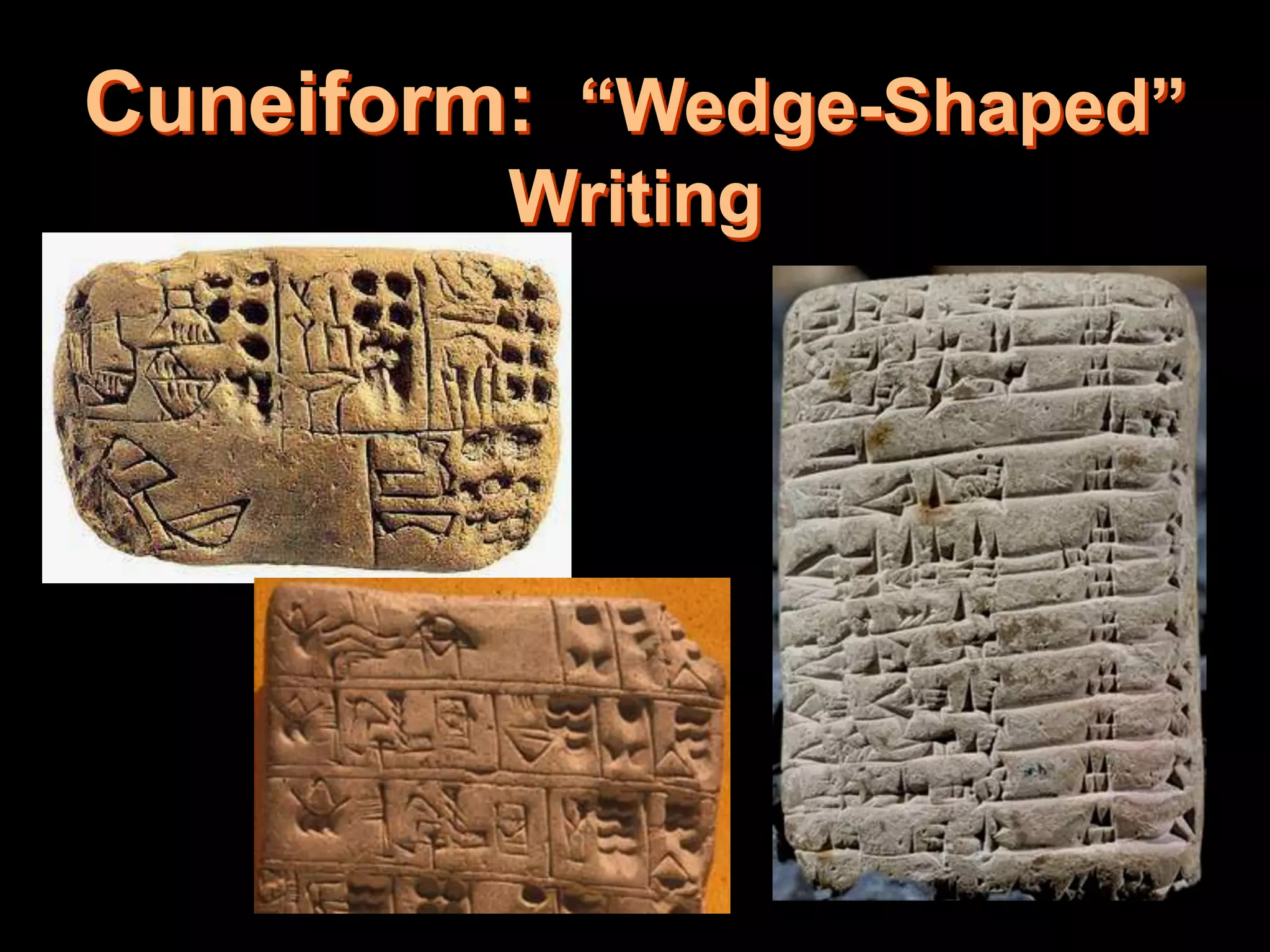
Pictographs Cuneiform, stylus
Arches (keystone), ziggurats  temples baked brick in layers
Invented plow, sailboat, circle in 360 degrees, wheel
Used levees and canals
City-State  each had god(s)
Monarch king, high priests, nobles, merchants, scholars, peasants,
farmers, slaves
Upper-class boys attended school
Polytheism – gods – forces of nature
no reward or punishment after death
Gods: An – god of heaven
Enlil – god of air + storm
Enki – god of water and wisdom
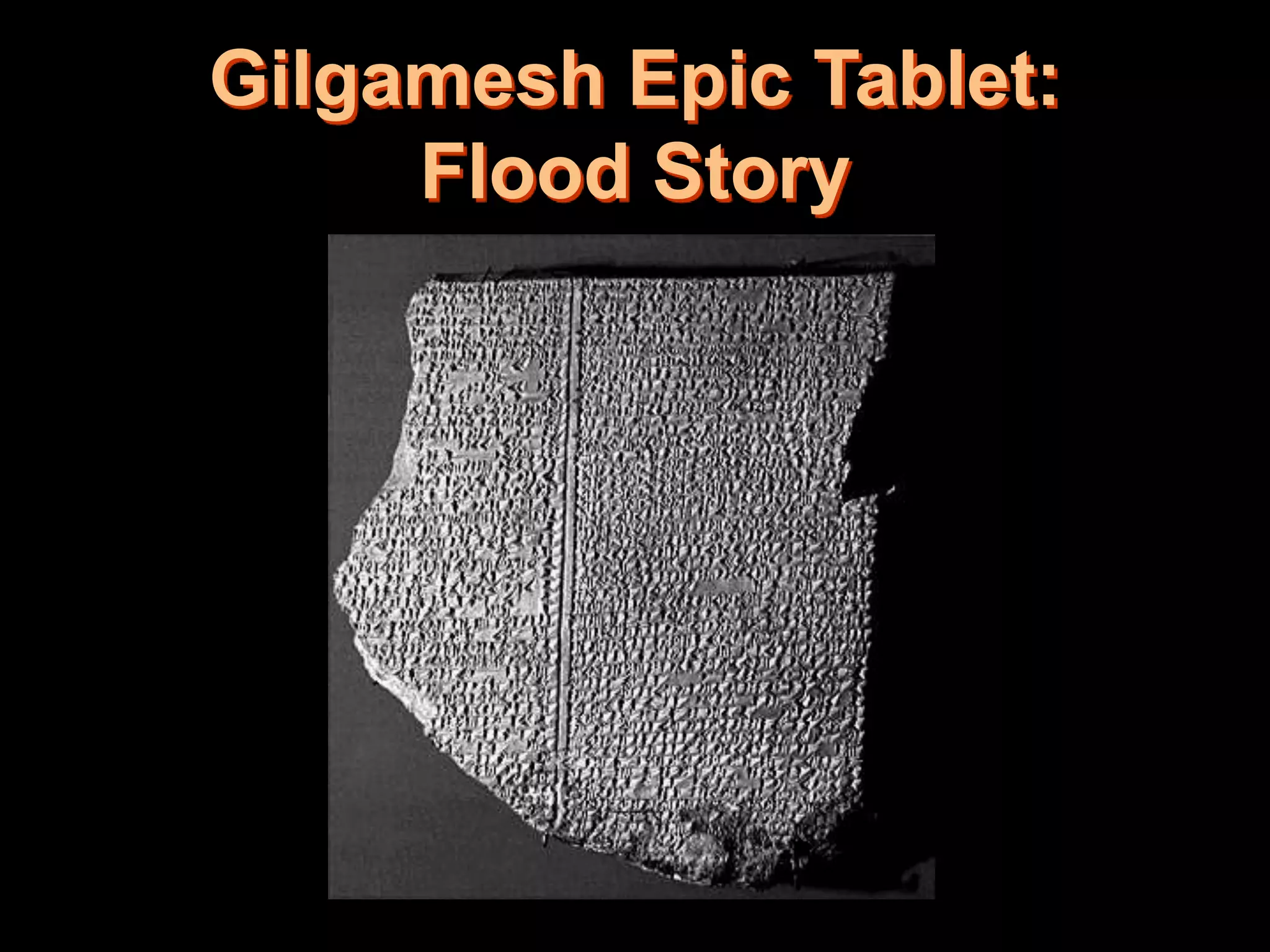
Flood Story – gods are unhappy with human life, send a flood
Cuneiform: “Wedge-Shaped”
Writing
Gilgamesh Epic Tablet:
Flood Story
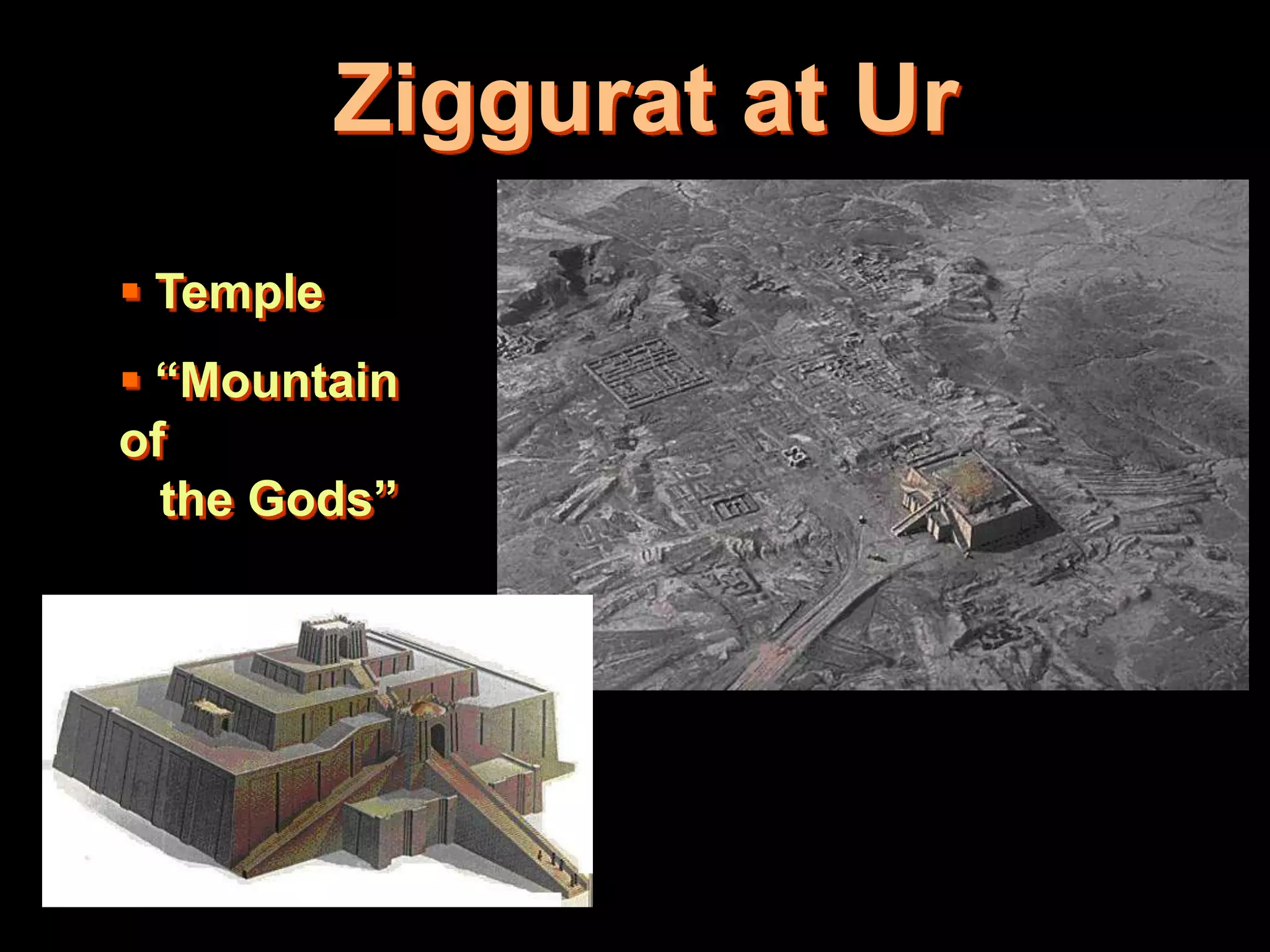
Ziggurat at Ur
 Temple
 “Mountain
of
the Gods”
Babylonians
Akkad, Babylon
1792 BCE
Active Traders, Rights for Women
Adopted culture of Sumerians when
they conquered them
Astronomy/Astrology  Horoscope
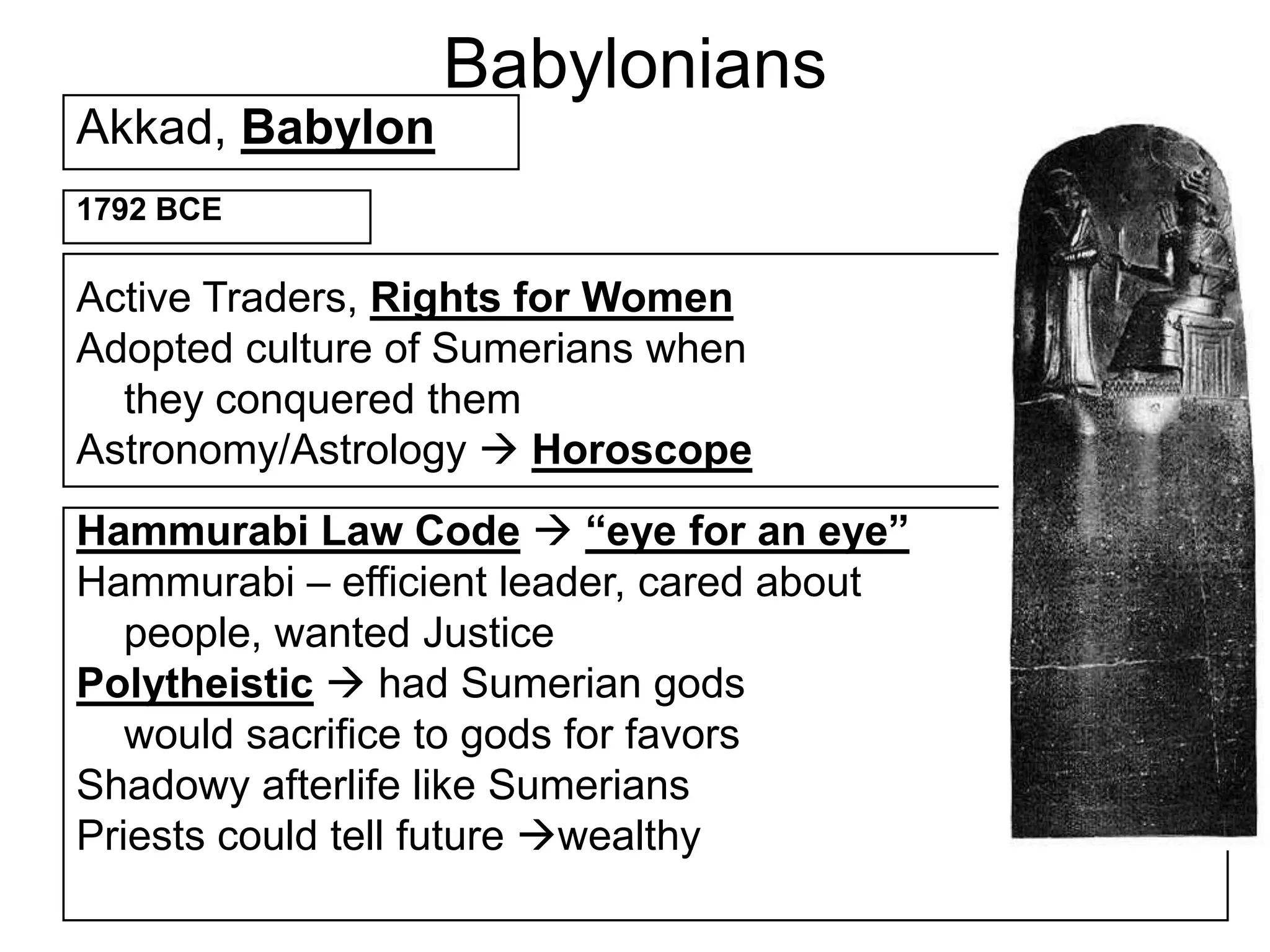
Hammurabi Law Code  “eye for an eye”
Hammurabi – efficient leader, cared about
people, wanted Justice
Polytheistic  had Sumerian gods
would sacrifice to gods for favors
Shadowy afterlife like Sumerians
Priests could tell future wealthy
Hammurabi’s [r. 1792-1750 B. C. E.]
Code
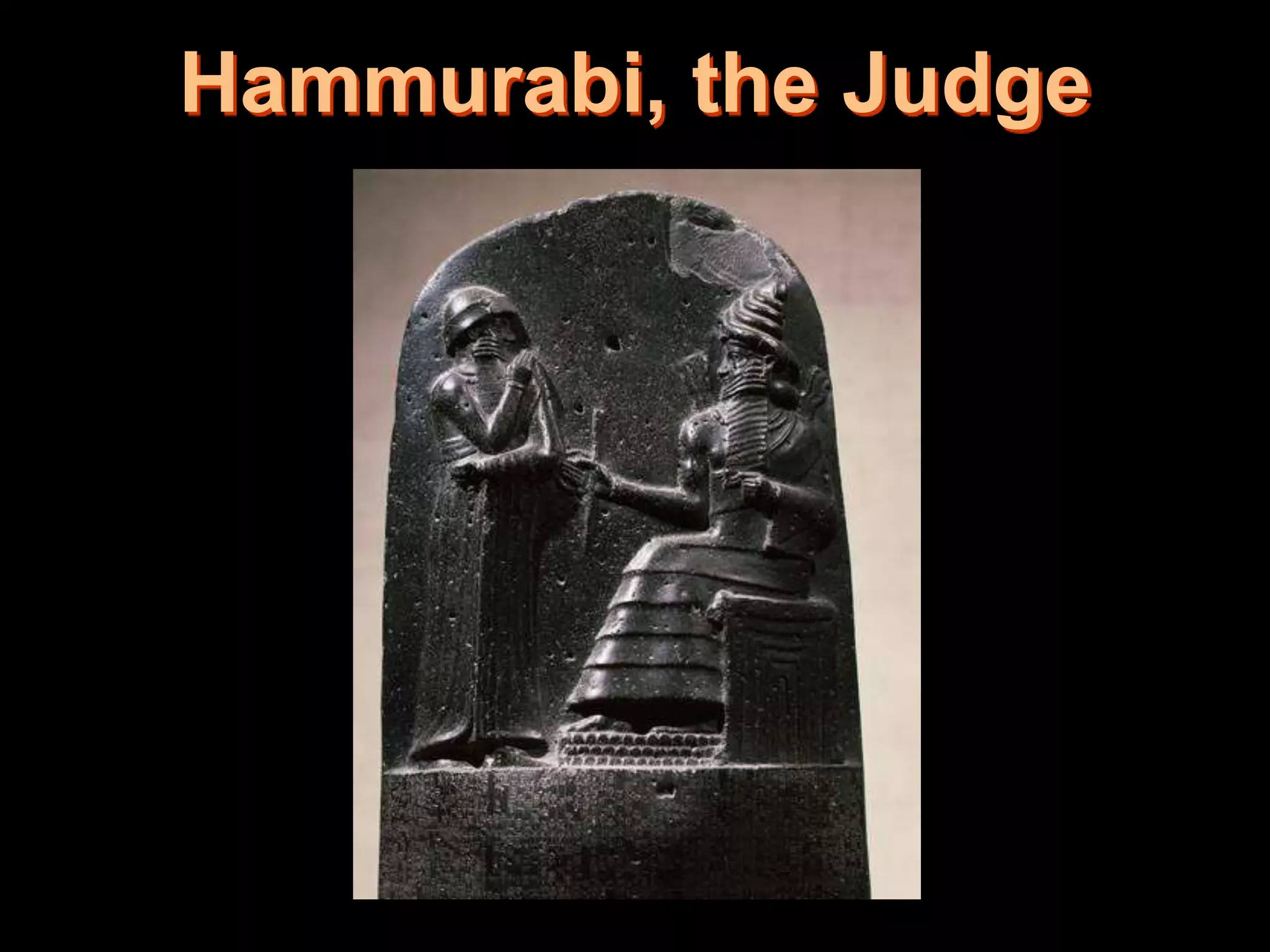
Hammurabi, the Judge
Hittites
Asia Minor, IndoEuropean Language
1600BCE-1200BCE
Warlike people invade from Asia Minor
Looted city of Babylon
Retreat to West Fertile Crescent
1st to smelt iron
Only major crimes received death penalty
You could pay fines for penalties
Had significant religious freedom
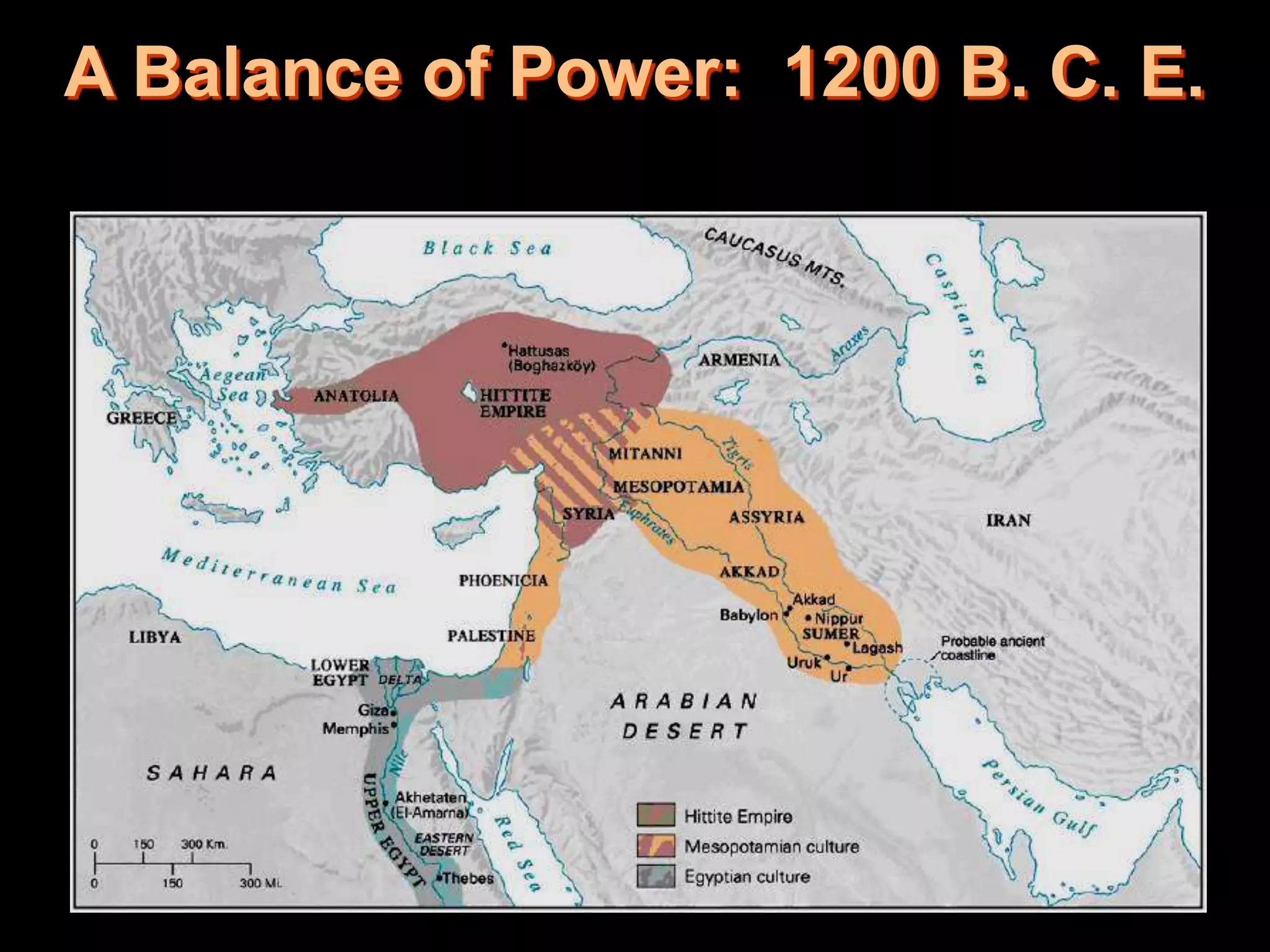
A Balance of Power: 1200 B. C. E.
Assyrians
Ashur, Upper Tigris River, Ninevah
2000BCE, 900-650BCE, 700BCE Loot/destroy Babylon, 635BCE Civil War
Semetic Speaking from North Mesopotamia
Adopt Sumerian culture
Fierce effective warriors, 1st to use cavalry, had a standing army
Expand power into Egypt/Fertile Crescent
height of power  Meso, Syria, Palestine, Nile Valley
Latitude//Longitude, Used circle, Medical Science, Mail service
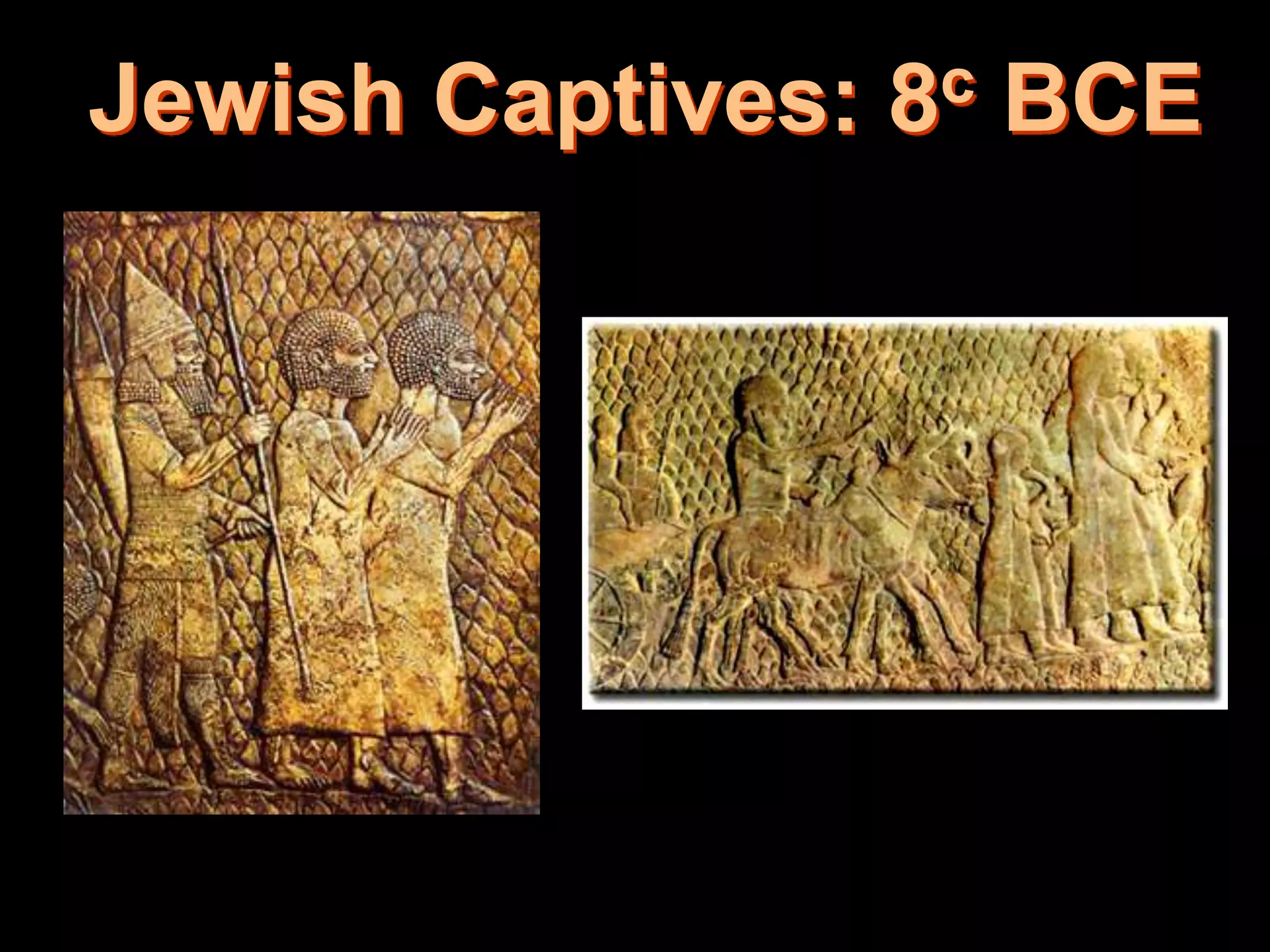
Used terror to control enemies, enslaved people they conquered, killed
enemy soldiers, deport populations cultural diffusion
Governed large Empire
Respect/feared other people’s gods
Gods controlled everything
King of Assyria  responsible only to God Ashur
Nineveh is Capital – double walled for protection
Ashurbanipal’s Library at Nineveh  Epic of Gilgamesh
Jewish Captives: 8c BCE
Chaldeans
Nineveh, Babylon
612BCE capture Nineveh
Conquer most of Fertile Crescent
Trade, canals, buildings
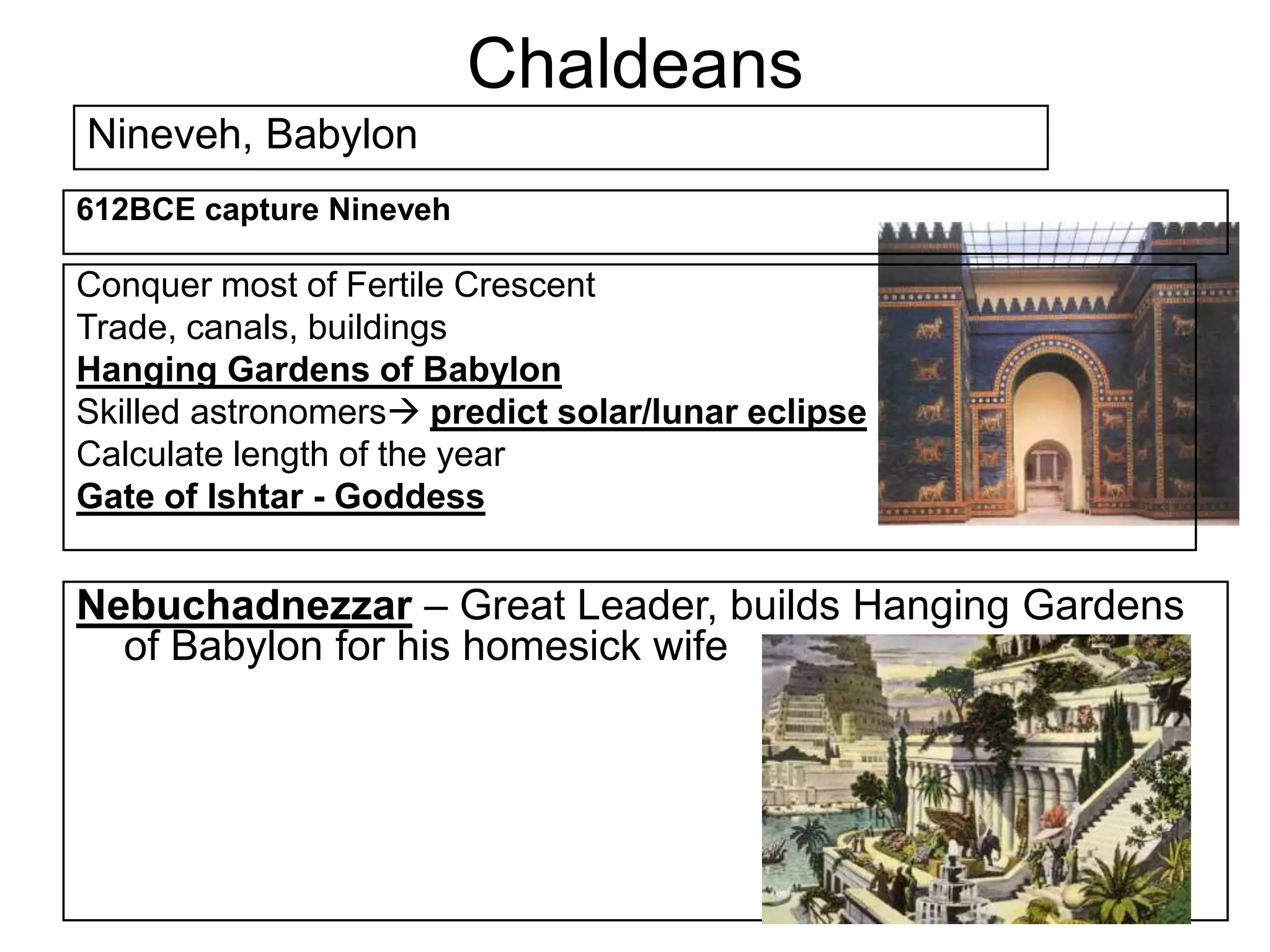
Hanging Gardens of Babylon
Skilled astronomers predict solar/lunar eclipse
Calculate length of the year
Gate of Ishtar - Goddess
Nebuchadnezzar – Great Leader, builds Hanging Gardens
of Babylon for his homesick wife
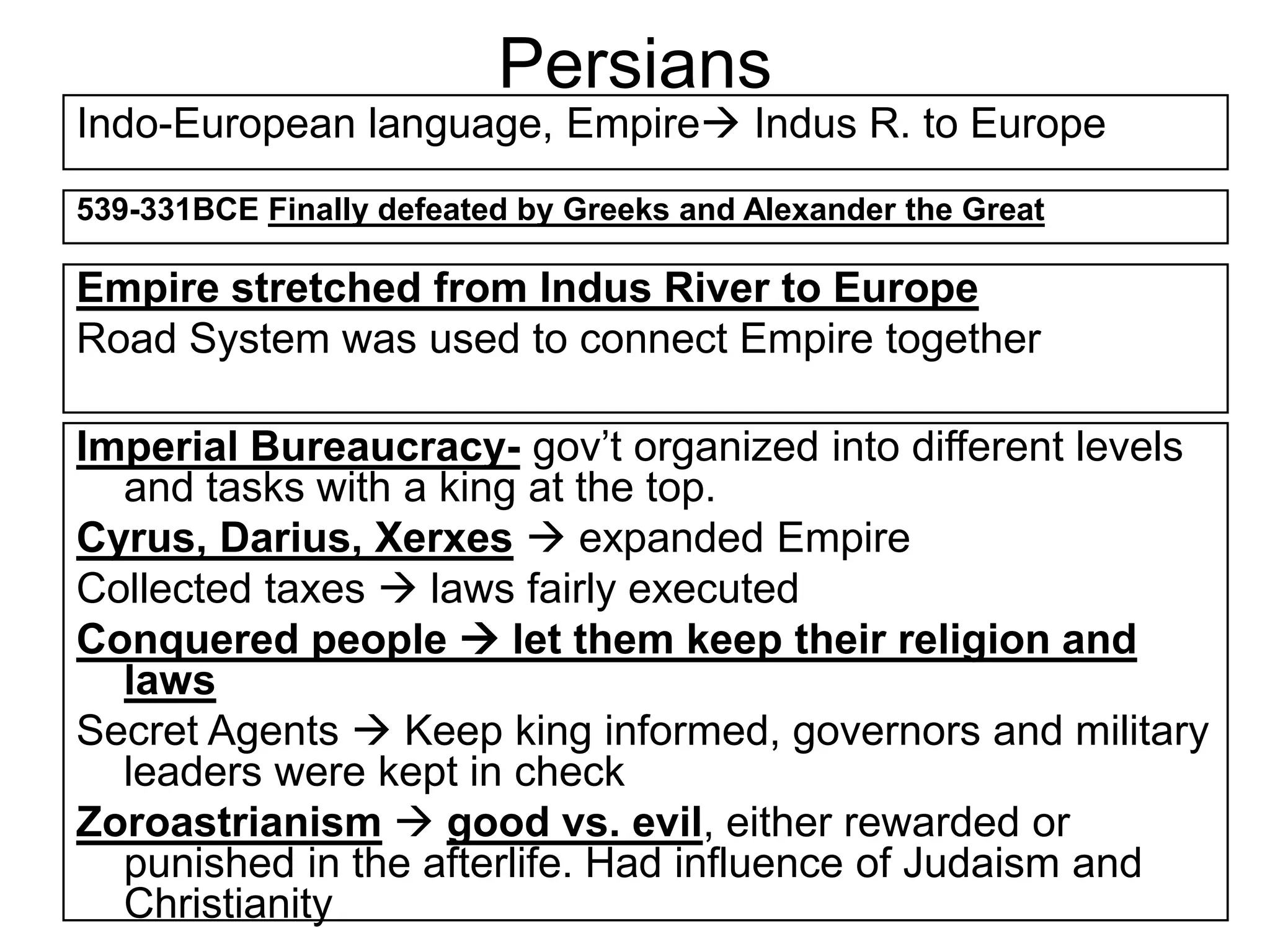
Persians
Indo-European language, Empire Indus R. to Europe
539-331BCE Finally defeated by Greeks and Alexander the Great
Empire stretched from Indus River to Europe
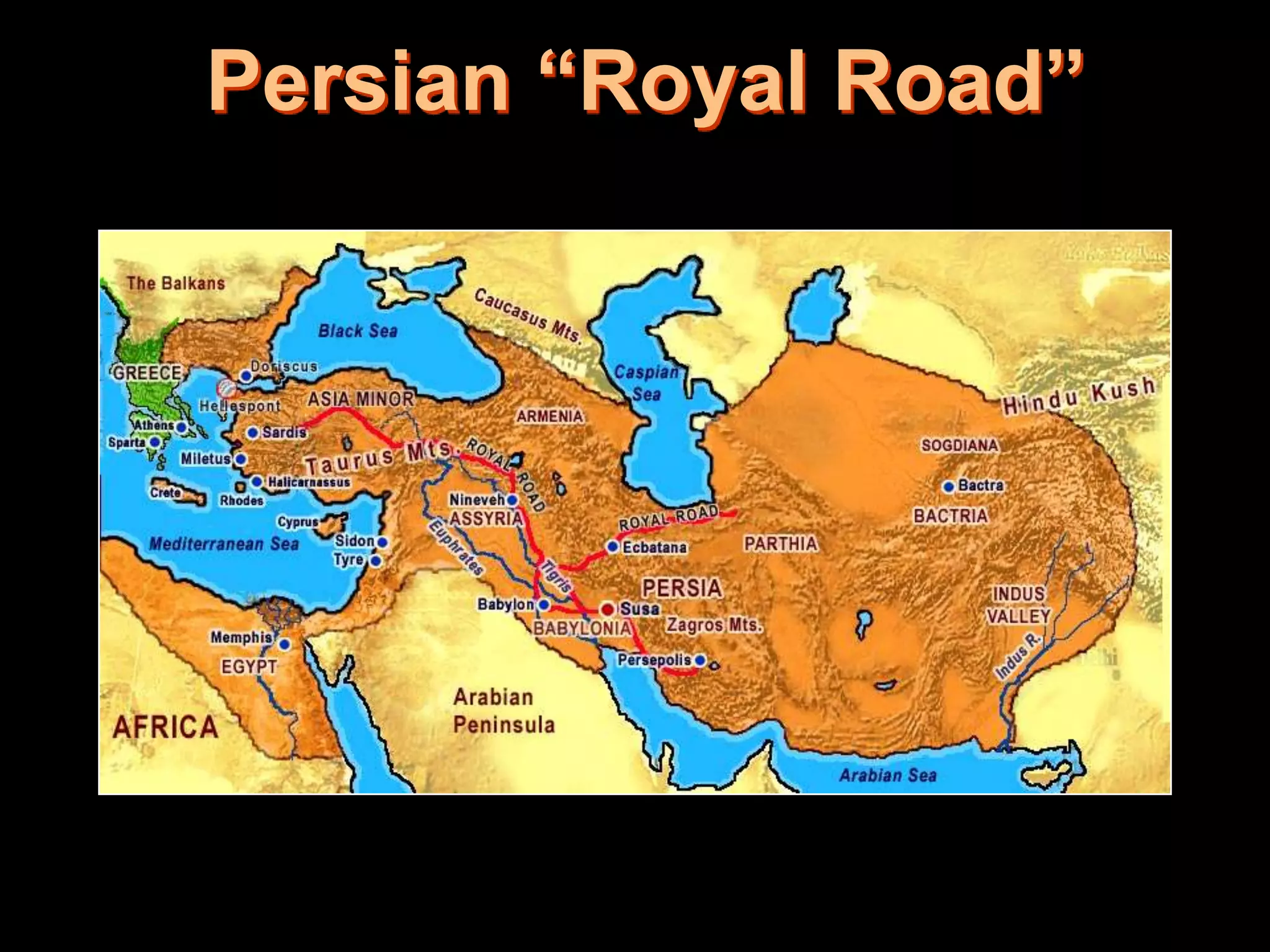
Road System was used to connect Empire together
Imperial Bureaucracy- gov’t organized into different levels
and tasks with a king at the top.
Cyrus, Darius, Xerxes  expanded Empire
Collected taxes  laws fairly executed
Conquered people  let them keep their religion and
laws
Secret Agents  Keep king informed, governors and military
leaders were kept in check
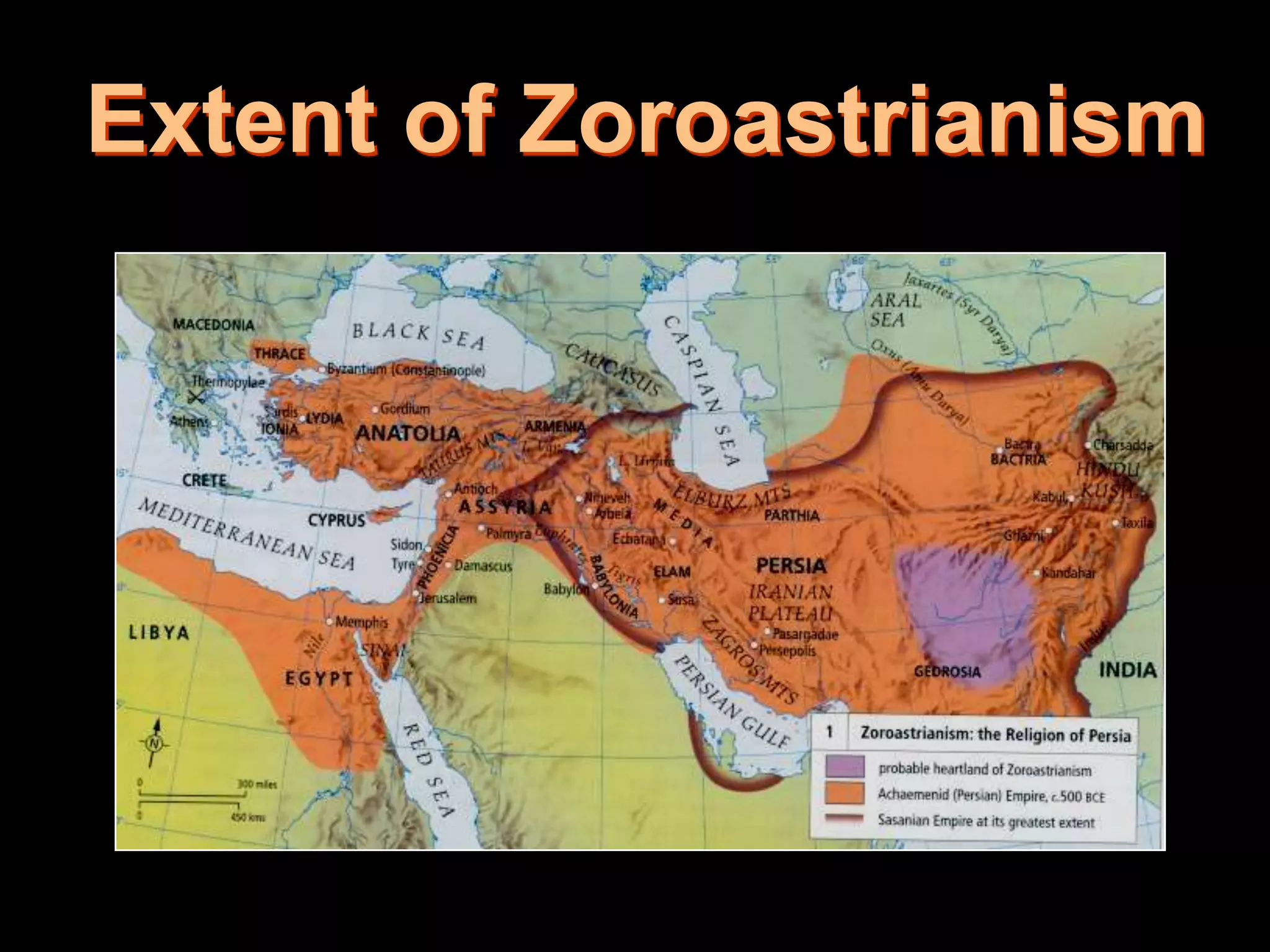
Zoroastrianism  good vs. evil, either rewarded or
punished in the afterlife. Had influence of Judaism and
Christianity
Persian “Royal Road”
Zarathustra [Zoroaster], 6c
BCE:
Good Thoughts, Good Deed, Good Words
“Tree of Life”
Extent of Zoroastrianism
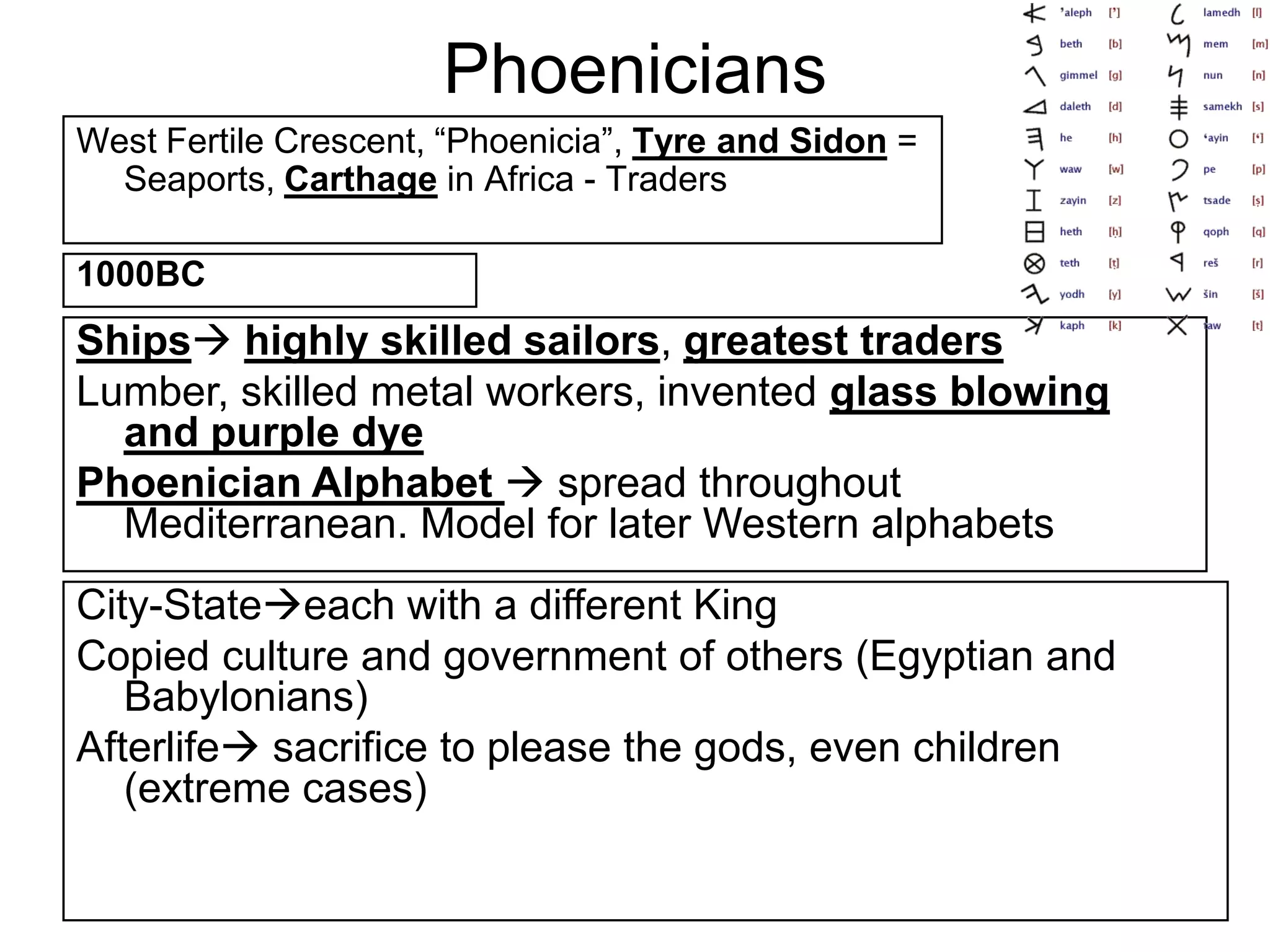
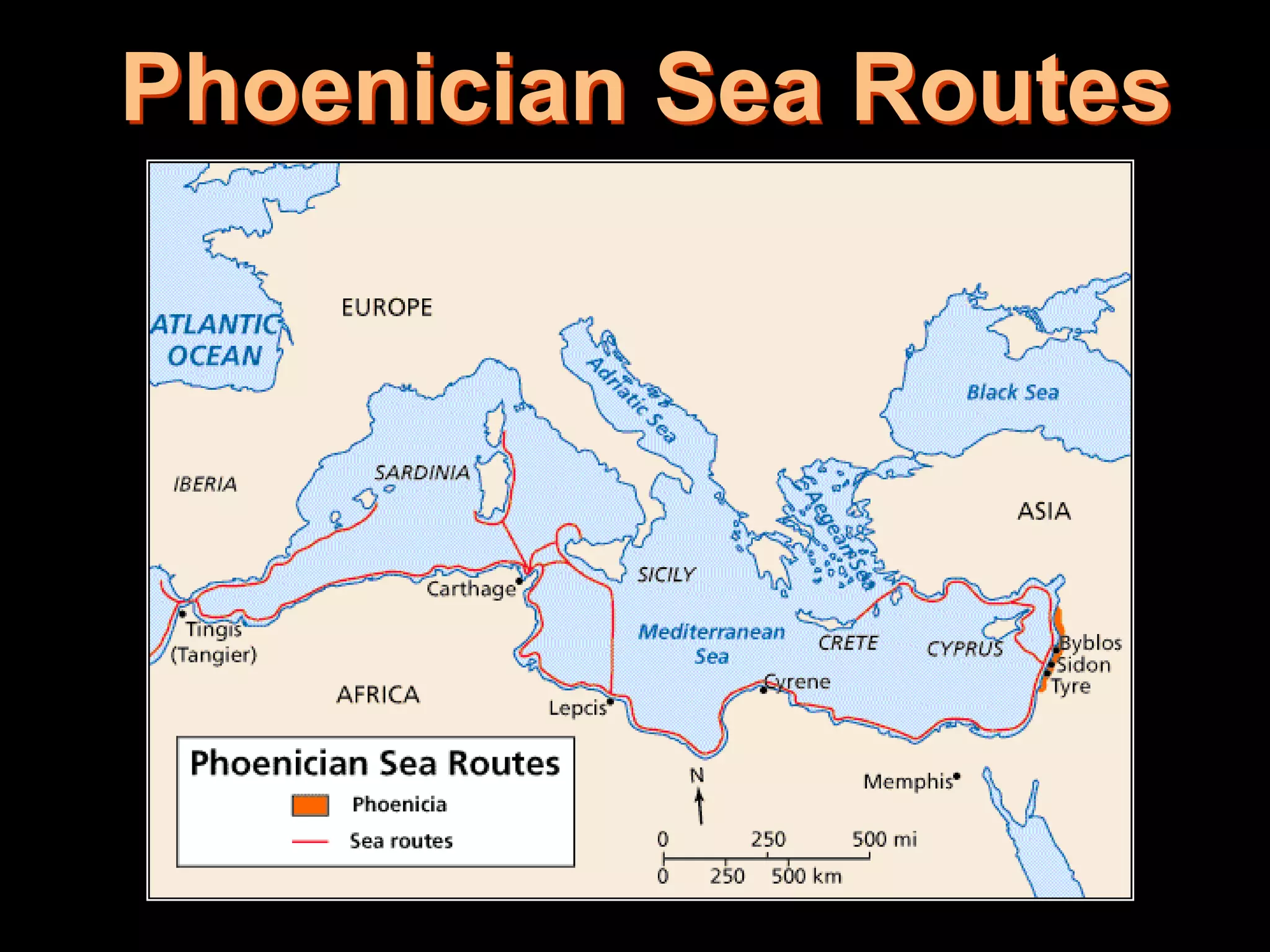
Phoenicians
West Fertile Crescent, “Phoenicia”, Tyre and Sidon =
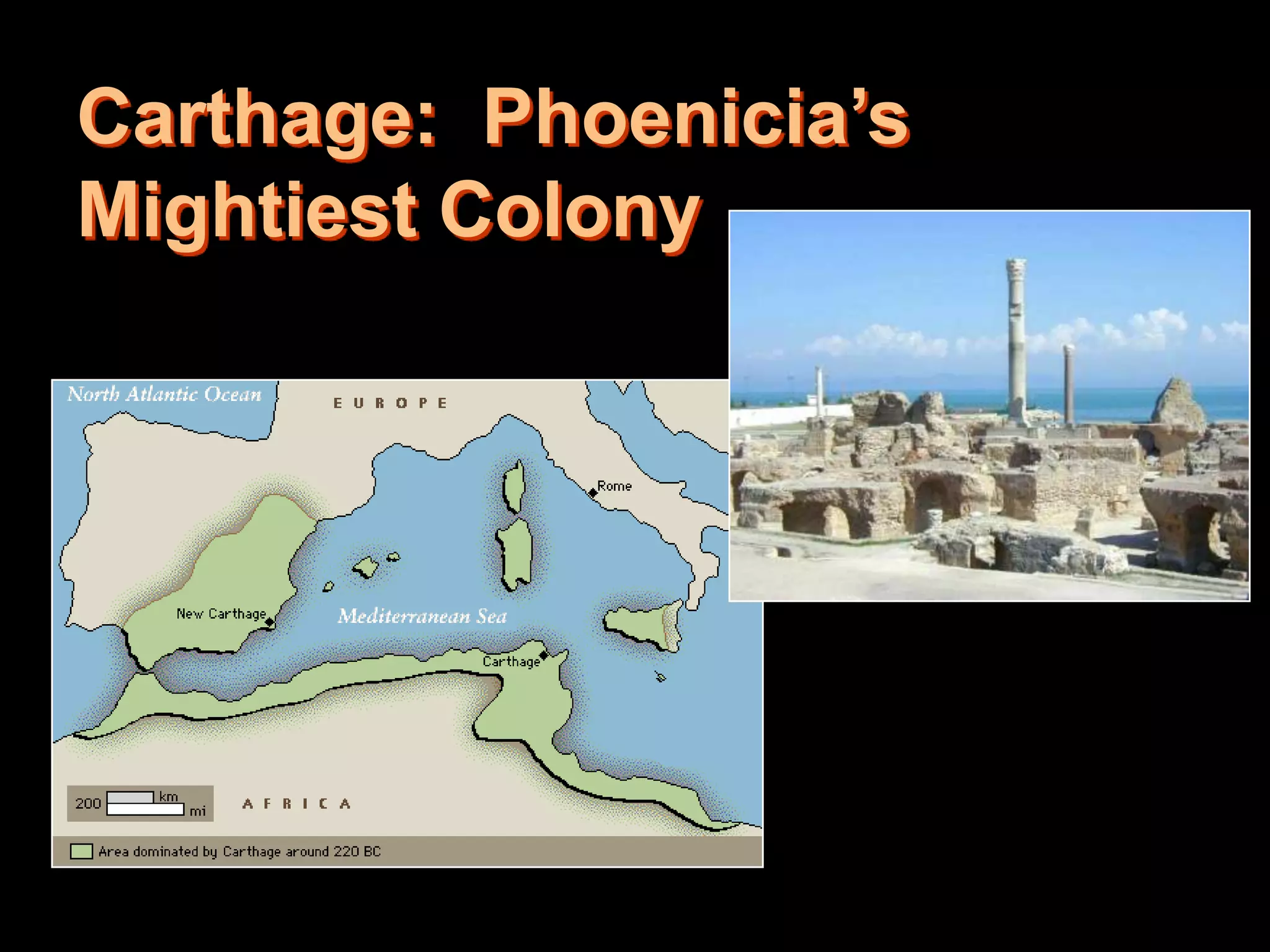
Seaports, Carthage in Africa - Traders
1000BC
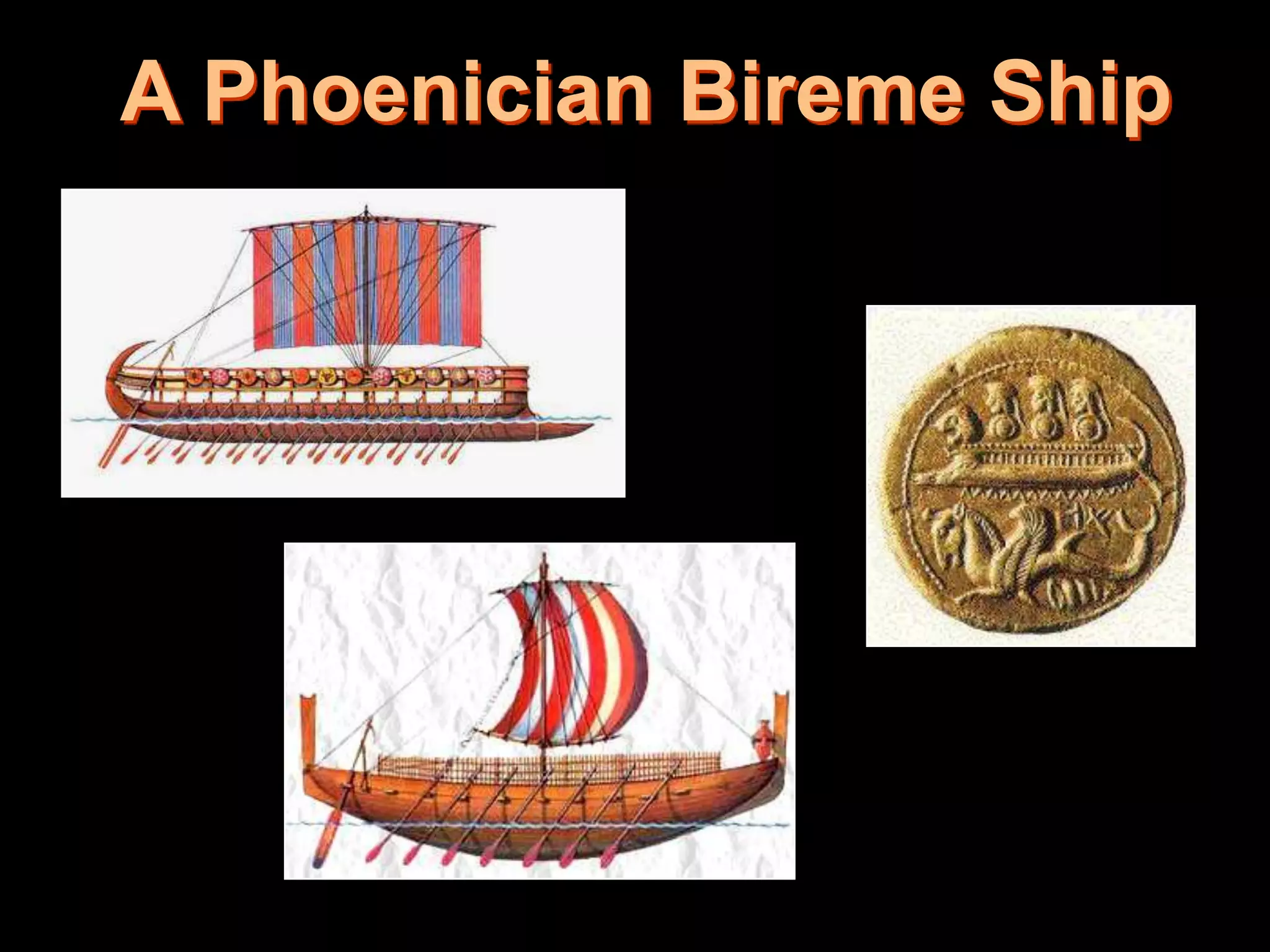
Ships highly skilled sailors, greatest traders
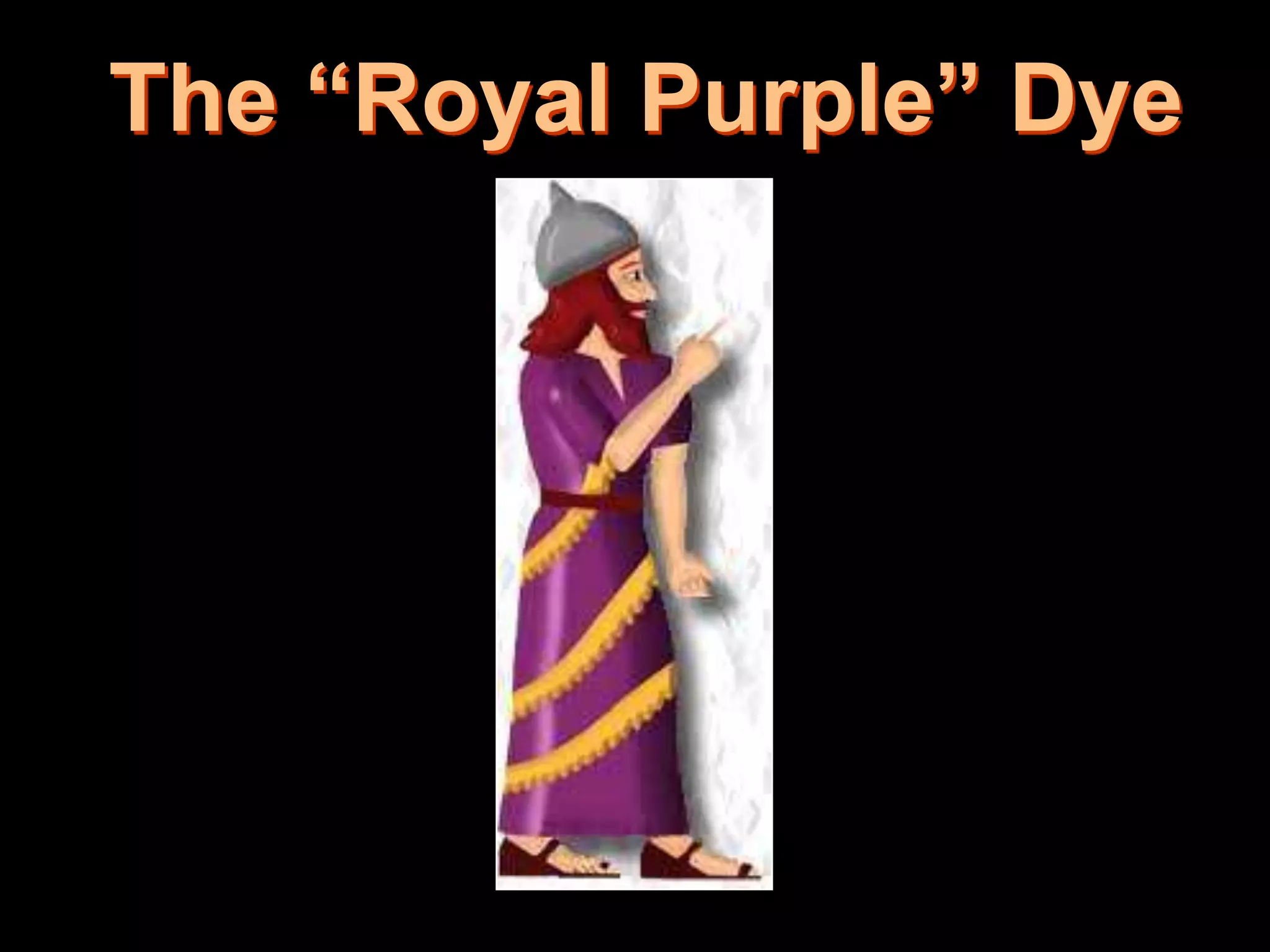
Lumber, skilled metal workers, invented glass blowing
and purple dye
Phoenician Alphabet  spread throughout
Mediterranean. Model for later Western alphabets
City-Stateeach with a different King
Copied culture and government of others (Egyptian and
Babylonians)
Afterlife sacrifice to please the gods, even children
(extreme cases)
Phoenician Sea Routes
A Phoenician Bireme Ship
The “Royal Purple” Dye
Carthage: Phoenicia’s
Mightiest Colony
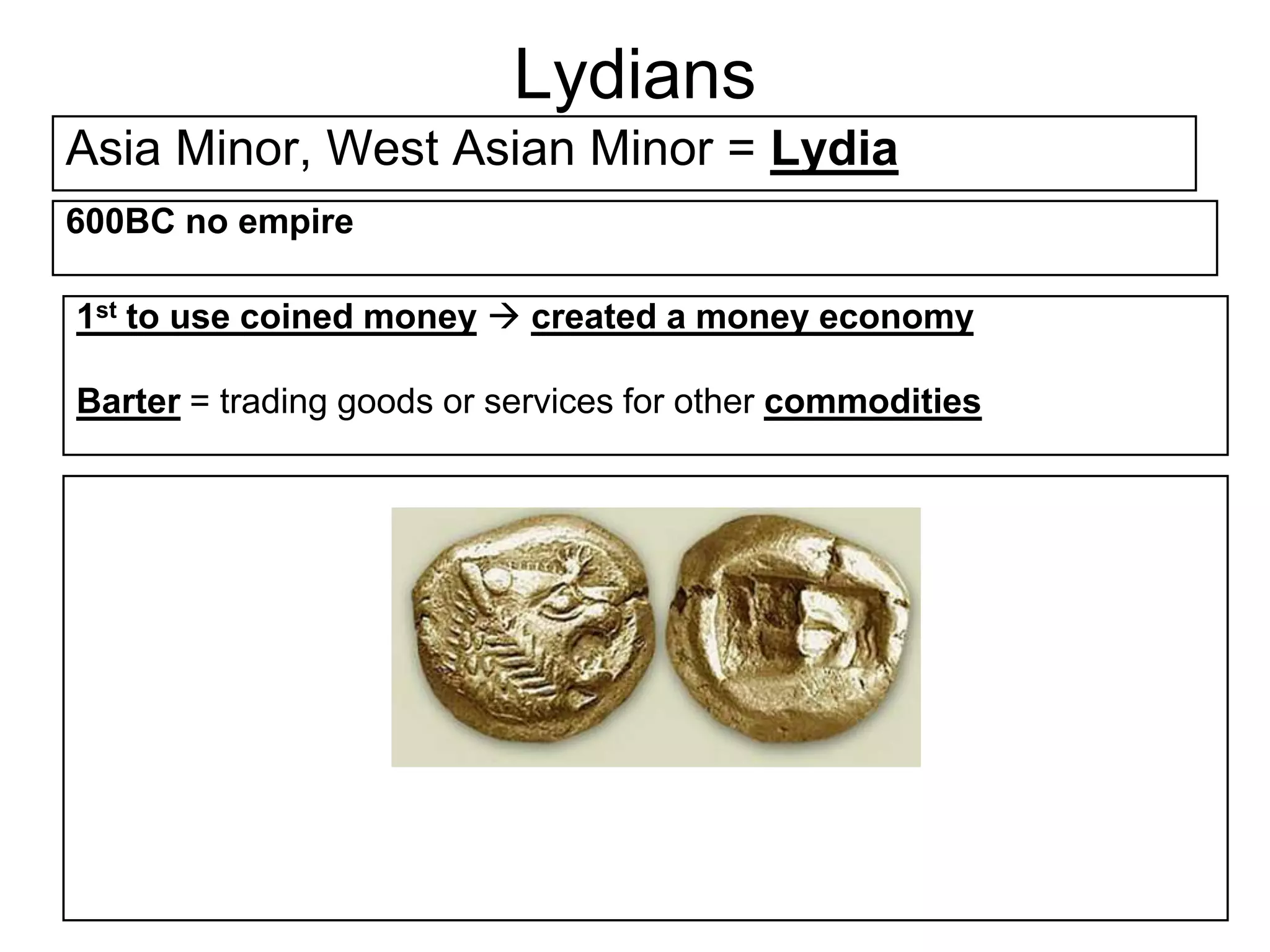
Lydians
Asia Minor, West Asian Minor = Lydia
600BC no empire
1st to use coined money  created a money economy
Barter = trading goods or services for other commodities
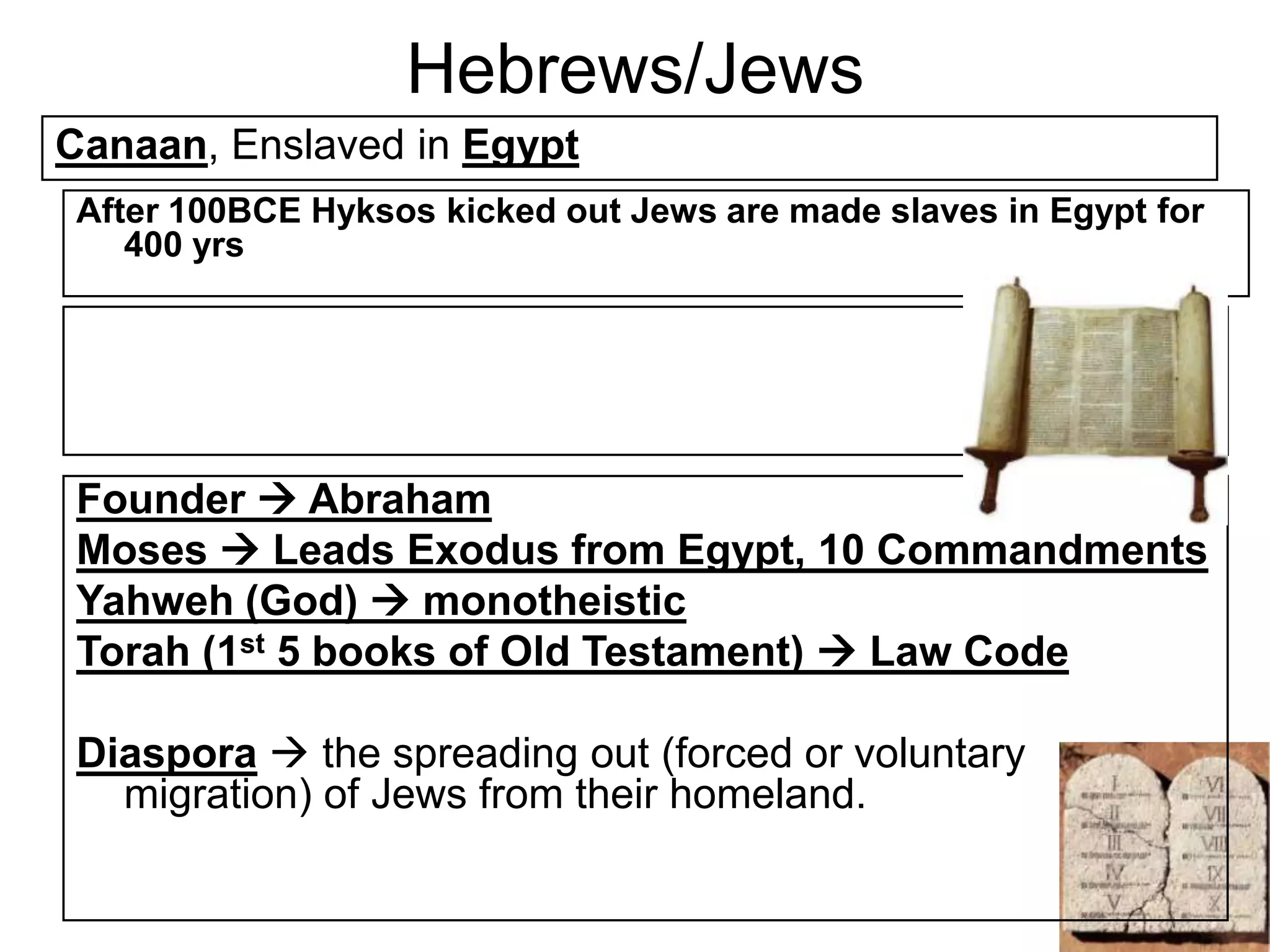
Hebrews/Jews
Canaan, Enslaved in Egypt
After 100BCE Hyksos kicked out Jews are made slaves in Egypt for
400 yrs
Founder  Abraham
Moses  Leads Exodus from Egypt, 10 Commandments
Yahweh (God)  monotheistic
Torah (1st 5 books of Old Testament)  Law Code
Diaspora  the spreading out (forced or voluntary
migration) of Jews from their homeland.
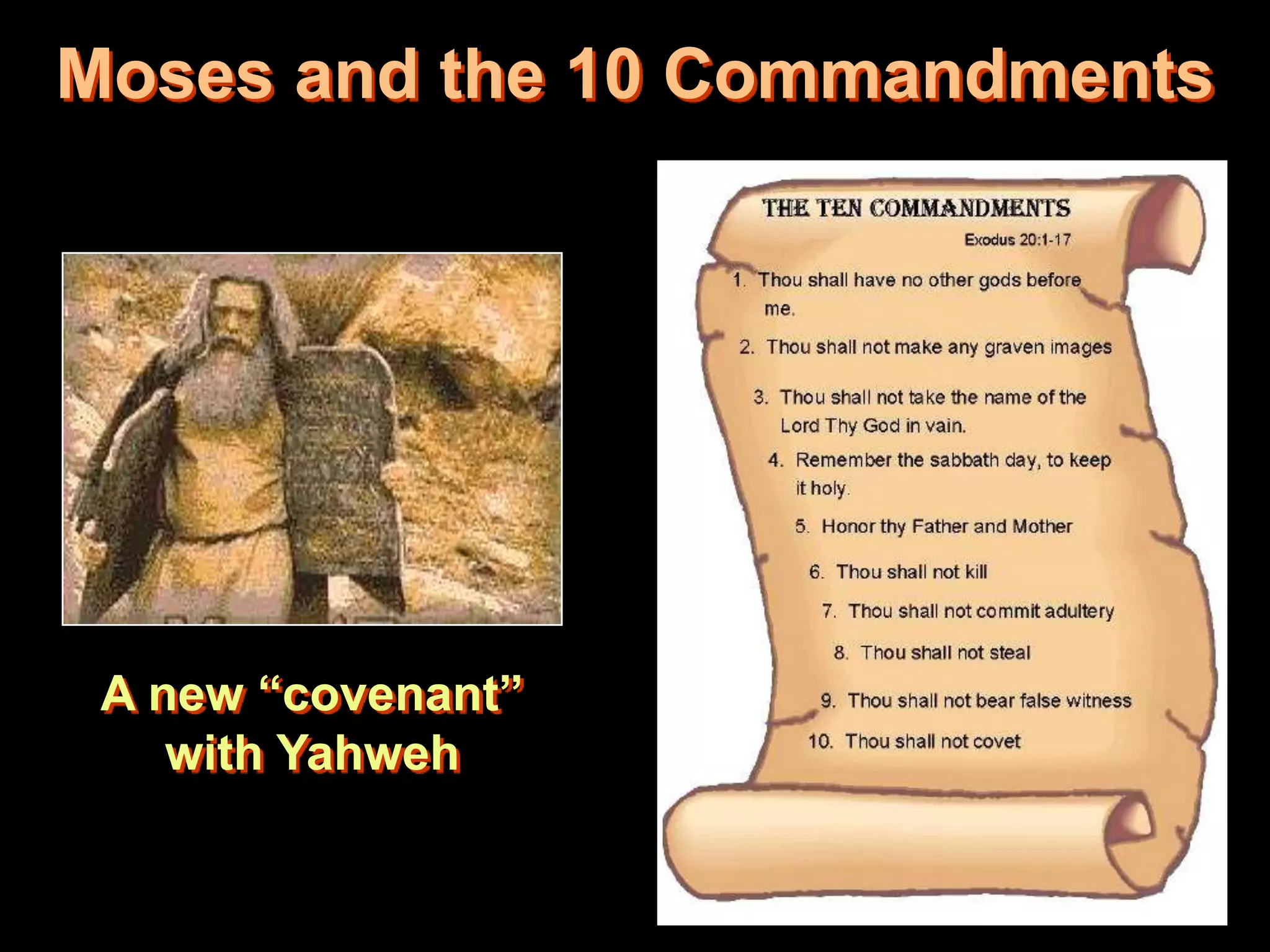
Moses and the 10 Commandments
A new “covenant”
with Yahweh

Mesopotamian Groups Chart with Pictures

  • 1.
  • 2.
    Sumerians Sumer, Kish, Eridu,Uruk, Ur (Near the Persian Gulf) 3000BC Pictographs Cuneiform, stylus Arches (keystone), ziggurats  temples baked brick in layers Invented plow, sailboat, circle in 360 degrees, wheel Used levees and canals City-State  each had god(s) Monarch king, high priests, nobles, merchants, scholars, peasants, farmers, slaves Upper-class boys attended school Polytheism – gods – forces of nature no reward or punishment after death Gods: An – god of heaven Enlil – god of air + storm Enki – god of water and wisdom Flood Story – gods are unhappy with human life, send a flood
  • 3.
  • 4.
  • 5.
    Ziggurat at Ur Temple  “Mountain of the Gods”
  • 6.
    Babylonians Akkad, Babylon 1792 BCE ActiveTraders, Rights for Women Adopted culture of Sumerians when they conquered them Astronomy/Astrology  Horoscope Hammurabi Law Code  “eye for an eye” Hammurabi – efficient leader, cared about people, wanted Justice Polytheistic  had Sumerian gods would sacrifice to gods for favors Shadowy afterlife like Sumerians Priests could tell future wealthy
  • 7.
  • 8.
  • 9.
    Hittites Asia Minor, IndoEuropeanLanguage 1600BCE-1200BCE Warlike people invade from Asia Minor Looted city of Babylon Retreat to West Fertile Crescent 1st to smelt iron Only major crimes received death penalty You could pay fines for penalties Had significant religious freedom
  • 10.
    A Balance ofPower: 1200 B. C. E.
  • 11.
    Assyrians Ashur, Upper TigrisRiver, Ninevah 2000BCE, 900-650BCE, 700BCE Loot/destroy Babylon, 635BCE Civil War Semetic Speaking from North Mesopotamia Adopt Sumerian culture Fierce effective warriors, 1st to use cavalry, had a standing army Expand power into Egypt/Fertile Crescent height of power  Meso, Syria, Palestine, Nile Valley Latitude//Longitude, Used circle, Medical Science, Mail service Used terror to control enemies, enslaved people they conquered, killed enemy soldiers, deport populations cultural diffusion Governed large Empire Respect/feared other people’s gods Gods controlled everything King of Assyria  responsible only to God Ashur Nineveh is Capital – double walled for protection Ashurbanipal’s Library at Nineveh  Epic of Gilgamesh
  • 12.
  • 13.
    Chaldeans Nineveh, Babylon 612BCE captureNineveh Conquer most of Fertile Crescent Trade, canals, buildings Hanging Gardens of Babylon Skilled astronomers predict solar/lunar eclipse Calculate length of the year Gate of Ishtar - Goddess Nebuchadnezzar – Great Leader, builds Hanging Gardens of Babylon for his homesick wife
  • 14.
    Persians Indo-European language, EmpireIndus R. to Europe 539-331BCE Finally defeated by Greeks and Alexander the Great Empire stretched from Indus River to Europe Road System was used to connect Empire together Imperial Bureaucracy- gov’t organized into different levels and tasks with a king at the top. Cyrus, Darius, Xerxes  expanded Empire Collected taxes  laws fairly executed Conquered people  let them keep their religion and laws Secret Agents  Keep king informed, governors and military leaders were kept in check Zoroastrianism  good vs. evil, either rewarded or punished in the afterlife. Had influence of Judaism and Christianity
  • 15.
  • 16.
    Zarathustra [Zoroaster], 6c BCE: GoodThoughts, Good Deed, Good Words “Tree of Life”
  • 17.
  • 18.
    Phoenicians West Fertile Crescent,“Phoenicia”, Tyre and Sidon = Seaports, Carthage in Africa - Traders 1000BC Ships highly skilled sailors, greatest traders Lumber, skilled metal workers, invented glass blowing and purple dye Phoenician Alphabet  spread throughout Mediterranean. Model for later Western alphabets City-Stateeach with a different King Copied culture and government of others (Egyptian and Babylonians) Afterlife sacrifice to please the gods, even children (extreme cases)
  • 19.
  • 20.
  • 21.
  • 22.
  • 23.
    Lydians Asia Minor, WestAsian Minor = Lydia 600BC no empire 1st to use coined money  created a money economy Barter = trading goods or services for other commodities
  • 24.
    Hebrews/Jews Canaan, Enslaved inEgypt After 100BCE Hyksos kicked out Jews are made slaves in Egypt for 400 yrs Founder  Abraham Moses  Leads Exodus from Egypt, 10 Commandments Yahweh (God)  monotheistic Torah (1st 5 books of Old Testament)  Law Code Diaspora  the spreading out (forced or voluntary migration) of Jews from their homeland.
  • 25.
    Moses and the10 Commandments A new “covenant” with Yahweh