Early Civilizations
Dongjun Kim
Pd. F
5/21/08
River Valley Civilizations
 Euphrates, Tigris River – Mesopotamia. Travel,
trade, farming, irrigation.
 Huang He (Yellow River) – China. Farming,
irrigation.
 Nile River – Egypt. Agriculture, farming villages
-> cities
 Indus River – India. Provide food. Surplus let
people do art, craft, writing.
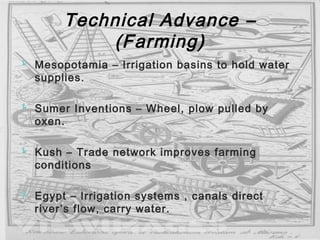
Technical Advance –
(Farming)
 Mesopotamia – Irrigation basins to hold water
supplies.
 Sumer Inventions – Wheel, plow pulled by
oxen.
 Kush – Trade network improves farming
conditions
 Egypt – Irrigation systems , canals direct
river’s flow, carry water.
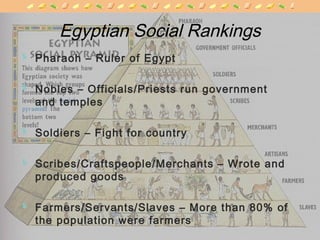
Egyptian Social Rankings
 Pharaoh – Ruler of Egypt
 Nobles – Officials/Priests run government
and temples
 Soldiers – Fight for country
 Scribes/Craftspeople/Merchants – Wrote and
produced goods
 Farmers/Servants/Slaves – More than 80% of
the population were farmers
Hammurabi’s Code
 282 laws to abide by in daily life
 Specific crimes, specific penalties
 Trade, loans, theft, marriage, injury.
murder
 Influence ideas found in laws today
Egyptian Art & Architecture
 Artisans work for temple/government. Made
statues, furniture, jewelry, pottery, shoes.
Paid for job.
 Architects design temples, pyramids, royal
tombs.
 Temples – Sphinxes protect the gate, Obelisk
pillars.
 Artists – Painted on canvas, papyrus,
pottery, plaster, wood.
 Make necklaces, collars, bracelets made out
Egyptian Trade
 Trade expands with empire EX) Sinai
Peninsula had turquoise and copper.
 Trade with Kingdom of Punt, Asia Minor,
Greece. Imported gold, copper, timber.
 Queen Hatshepsut contributed to Egyptian
Trade
 Trade with Kush brings in lots of raw materials
Queen Hatshepsut, & Ramses
the Great
 Queen Hatshepsut – Increase Egyptian
trade, Support art and architecture,
monuments, temples.
 Ramses – Fought Hittites (Asian Minor),
Tehenu. Series of forts strengthening
western frontier. Last great Egyptian
Pharaoh.
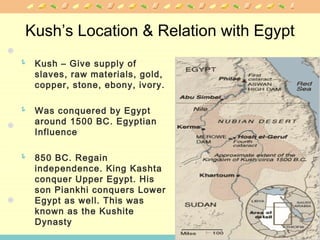
Kush’s Location & Relation with Egypt
 Kush – Give supply of
slaves, raw materials, gold,
copper, stone, ebony, ivory.
 Was conquered by Egypt
around 1500 BC. Egyptian
Influence
 850 BC. Regain
independence. King Kashta
conquer Upper Egypt. His
son Piankhi conquers Lower
Egypt as well. This was
known as the Kushite
Dynasty
Language & Writing
 Phoenicians – Develop one of world’s first
alphabets
 Sumerians – Pictographs, Cuneiform, world’s
first system of writing.
 Egyptians – Hieroglyphics, papyrus
 Kush – Develop own writing, Meroitic.
Questions
 1. What was the Hammurabi’s Code?
 2. More than how many % of Egyptian population were farmers?
 3. Which Egyptian leader contributed greatly to Egyptian trade?
 4. Who was known as the Last Great Pharaoh of Egypt?
 5. What was the writing system of the Kush civilization called?
 6. What was the world’s first writing system called?
 7. The Kush regained independence from Egyptian rule at 850
BC; starting which dynasty?
Answers
 1. Laws to abide by in a daily basis written by
Hammurabi
 2. 80 %
 3. Queen Hatshepsut
 4. Ramses the Great
 5. Meroitic system
 6. Cuneiform
 7. Kushite Dynasty

Early Civilizations

  • 1.
  • 2.
    River Valley Civilizations Euphrates, Tigris River – Mesopotamia. Travel, trade, farming, irrigation.  Huang He (Yellow River) – China. Farming, irrigation.  Nile River – Egypt. Agriculture, farming villages -> cities  Indus River – India. Provide food. Surplus let people do art, craft, writing.
  • 3.
    Technical Advance – (Farming) Mesopotamia – Irrigation basins to hold water supplies.  Sumer Inventions – Wheel, plow pulled by oxen.  Kush – Trade network improves farming conditions  Egypt – Irrigation systems , canals direct river’s flow, carry water.
  • 4.
    Egyptian Social Rankings Pharaoh – Ruler of Egypt  Nobles – Officials/Priests run government and temples  Soldiers – Fight for country  Scribes/Craftspeople/Merchants – Wrote and produced goods  Farmers/Servants/Slaves – More than 80% of the population were farmers
  • 5.
    Hammurabi’s Code  282laws to abide by in daily life  Specific crimes, specific penalties  Trade, loans, theft, marriage, injury. murder  Influence ideas found in laws today
  • 6.
    Egyptian Art &Architecture  Artisans work for temple/government. Made statues, furniture, jewelry, pottery, shoes. Paid for job.  Architects design temples, pyramids, royal tombs.  Temples – Sphinxes protect the gate, Obelisk pillars.  Artists – Painted on canvas, papyrus, pottery, plaster, wood.  Make necklaces, collars, bracelets made out
  • 7.
    Egyptian Trade  Tradeexpands with empire EX) Sinai Peninsula had turquoise and copper.  Trade with Kingdom of Punt, Asia Minor, Greece. Imported gold, copper, timber.  Queen Hatshepsut contributed to Egyptian Trade  Trade with Kush brings in lots of raw materials
  • 8.
    Queen Hatshepsut, &Ramses the Great  Queen Hatshepsut – Increase Egyptian trade, Support art and architecture, monuments, temples.  Ramses – Fought Hittites (Asian Minor), Tehenu. Series of forts strengthening western frontier. Last great Egyptian Pharaoh.
  • 9.
    Kush’s Location &Relation with Egypt  Kush – Give supply of slaves, raw materials, gold, copper, stone, ebony, ivory.  Was conquered by Egypt around 1500 BC. Egyptian Influence  850 BC. Regain independence. King Kashta conquer Upper Egypt. His son Piankhi conquers Lower Egypt as well. This was known as the Kushite Dynasty
  • 10.
    Language & Writing Phoenicians – Develop one of world’s first alphabets  Sumerians – Pictographs, Cuneiform, world’s first system of writing.  Egyptians – Hieroglyphics, papyrus  Kush – Develop own writing, Meroitic.
  • 11.
    Questions  1. Whatwas the Hammurabi’s Code?  2. More than how many % of Egyptian population were farmers?  3. Which Egyptian leader contributed greatly to Egyptian trade?  4. Who was known as the Last Great Pharaoh of Egypt?  5. What was the writing system of the Kush civilization called?  6. What was the world’s first writing system called?  7. The Kush regained independence from Egyptian rule at 850 BC; starting which dynasty?
  • 12.
    Answers  1. Lawsto abide by in a daily basis written by Hammurabi  2. 80 %  3. Queen Hatshepsut  4. Ramses the Great  5. Meroitic system  6. Cuneiform  7. Kushite Dynasty