Mesh construction
This is a technique that is used in 3D modeling where the model is created by modifying
primitive shapes to create a rough draft of the final model, in most cases. A primary function
of box modeling involves extruding and scaling the faces, which are the flat planes that
make up a model.
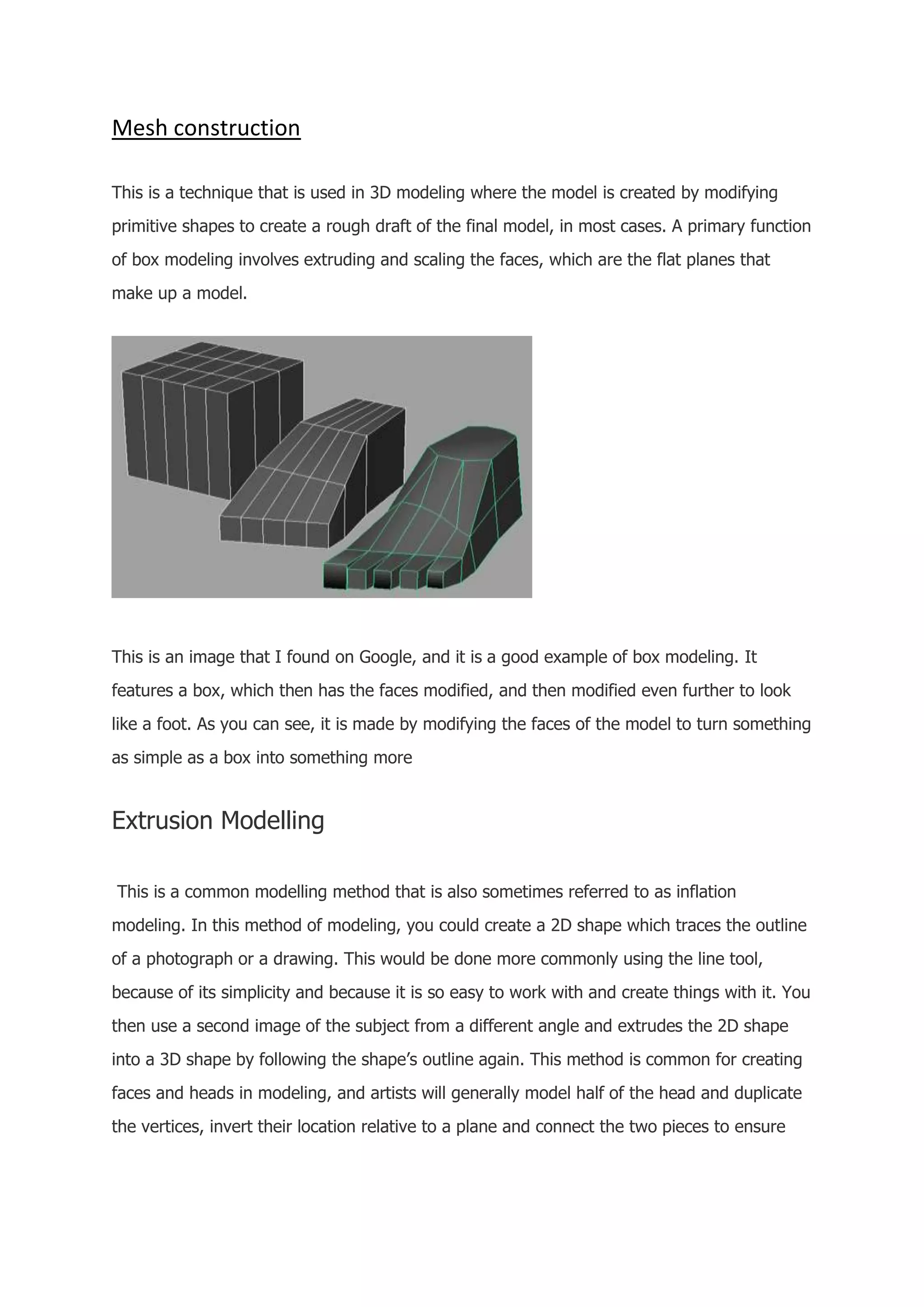
This is an image that I found on Google, and it is a good example of box modeling. It
features a box, which then has the faces modified, and then modified even further to look
like a foot. As you can see, it is made by modifying the faces of the model to turn something
as simple as a box into something more
Extrusion Modelling
This is a common modelling method that is also sometimes referred to as inflation
modeling. In this method of modeling, you could create a 2D shape which traces the outline
of a photograph or a drawing. This would be done more commonly using the line tool,
because of its simplicity and because it is so easy to work with and create things with it. You
then use a second image of the subject from a different angle and extrudes the 2D shape
into a 3D shape by following the shape’s outline again. This method is common for creating
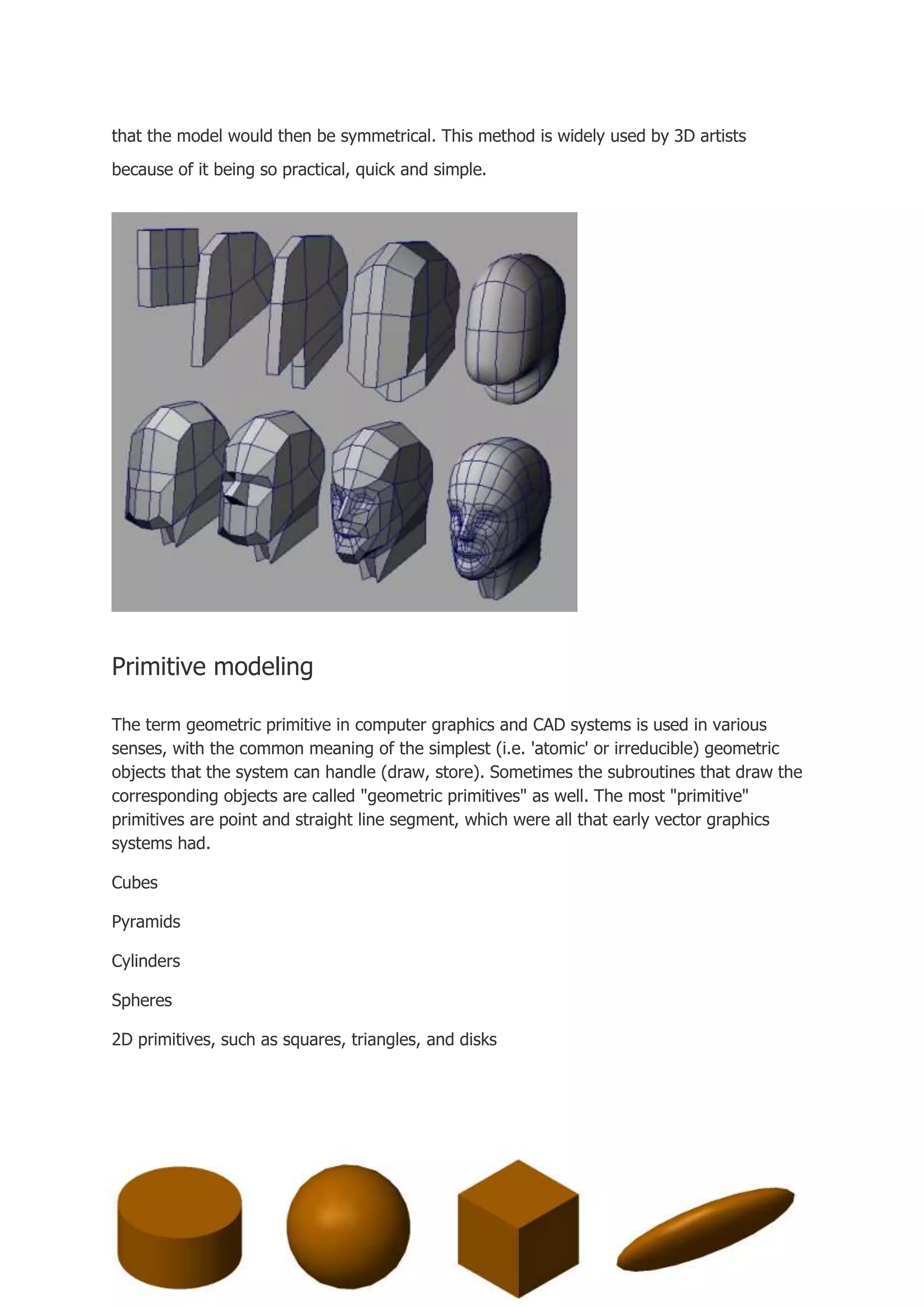
faces and heads in modeling, and artists will generally model half of the head and duplicate
the vertices, invert their location relative to a plane and connect the two pieces to ensure
that the model would then be symmetrical. This method is widely used by 3D artists
because of it being so practical, quick and simple.
Primitive modeling
The term geometric primitive in computer graphics and CAD systems is used in various
senses, with the common meaning of the simplest (i.e. 'atomic' or irreducible) geometric
objects that the system can handle (draw, store). Sometimes the subroutines that draw the
corresponding objects are called "geometric primitives" as well. The most "primitive"
primitives are point and straight line segment, which were all that early vector graphics
systems had.
Cubes
Pyramids
Cylinders
Spheres
2D primitives, such as squares, triangles, and disks
Specialised modelling
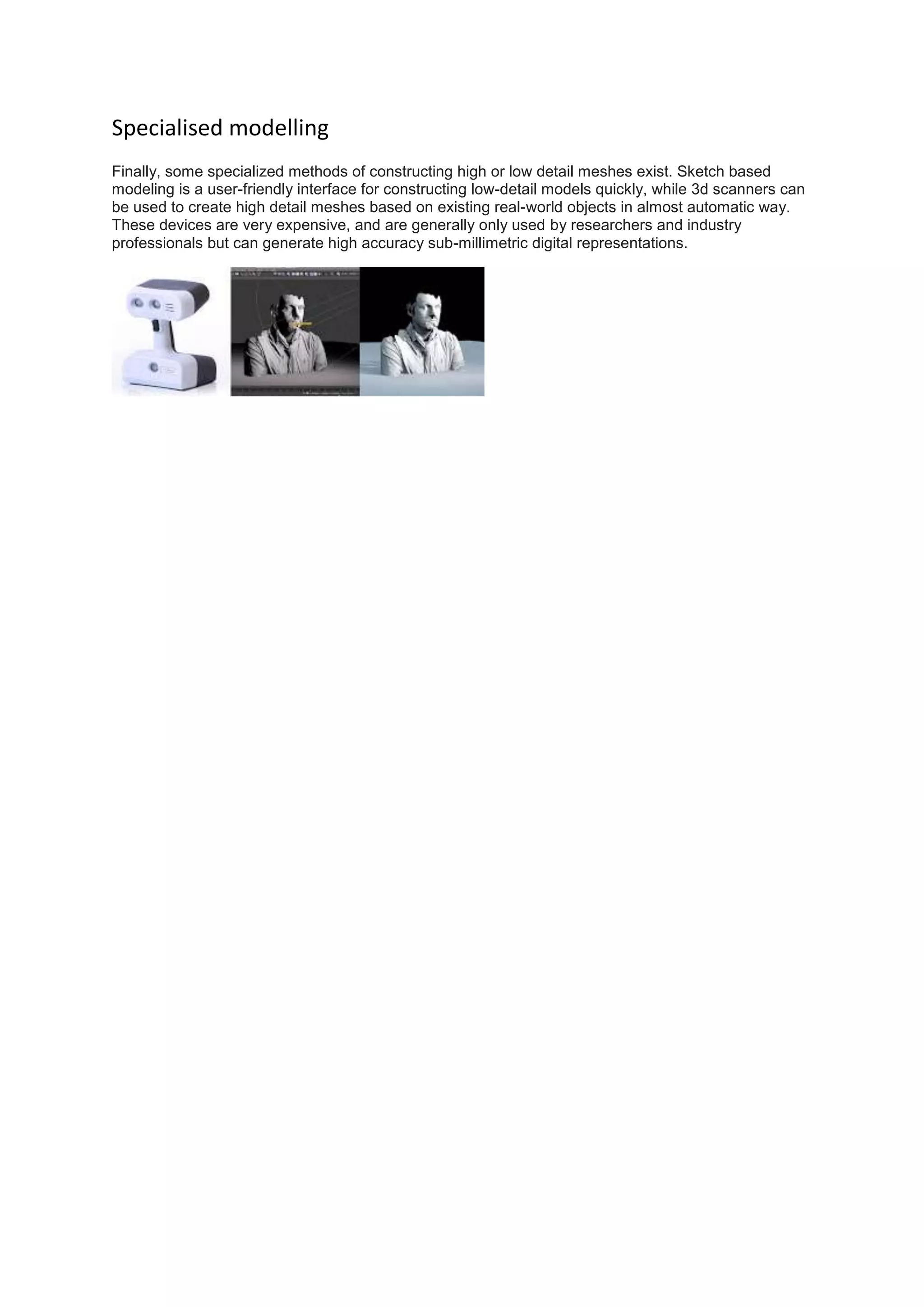
Finally, some specialized methods of constructing high or low detail meshes exist. Sketch based
modeling is a user-friendly interface for constructing low-detail models quickly, while 3d scanners can
be used to create high detail meshes based on existing real-world objects in almost automatic way.
These devices are very expensive, and are generally only used by researchers and industry
professionals but can generate high accuracy sub-millimetric digital representations.

Mesh construction

  • 1.
    Mesh construction This isa technique that is used in 3D modeling where the model is created by modifying primitive shapes to create a rough draft of the final model, in most cases. A primary function of box modeling involves extruding and scaling the faces, which are the flat planes that make up a model. This is an image that I found on Google, and it is a good example of box modeling. It features a box, which then has the faces modified, and then modified even further to look like a foot. As you can see, it is made by modifying the faces of the model to turn something as simple as a box into something more Extrusion Modelling This is a common modelling method that is also sometimes referred to as inflation modeling. In this method of modeling, you could create a 2D shape which traces the outline of a photograph or a drawing. This would be done more commonly using the line tool, because of its simplicity and because it is so easy to work with and create things with it. You then use a second image of the subject from a different angle and extrudes the 2D shape into a 3D shape by following the shape’s outline again. This method is common for creating faces and heads in modeling, and artists will generally model half of the head and duplicate the vertices, invert their location relative to a plane and connect the two pieces to ensure
  • 2.
    that the modelwould then be symmetrical. This method is widely used by 3D artists because of it being so practical, quick and simple. Primitive modeling The term geometric primitive in computer graphics and CAD systems is used in various senses, with the common meaning of the simplest (i.e. 'atomic' or irreducible) geometric objects that the system can handle (draw, store). Sometimes the subroutines that draw the corresponding objects are called "geometric primitives" as well. The most "primitive" primitives are point and straight line segment, which were all that early vector graphics systems had. Cubes Pyramids Cylinders Spheres 2D primitives, such as squares, triangles, and disks
  • 3.
    Specialised modelling Finally, somespecialized methods of constructing high or low detail meshes exist. Sketch based modeling is a user-friendly interface for constructing low-detail models quickly, while 3d scanners can be used to create high detail meshes based on existing real-world objects in almost automatic way. These devices are very expensive, and are generally only used by researchers and industry professionals but can generate high accuracy sub-millimetric digital representations.