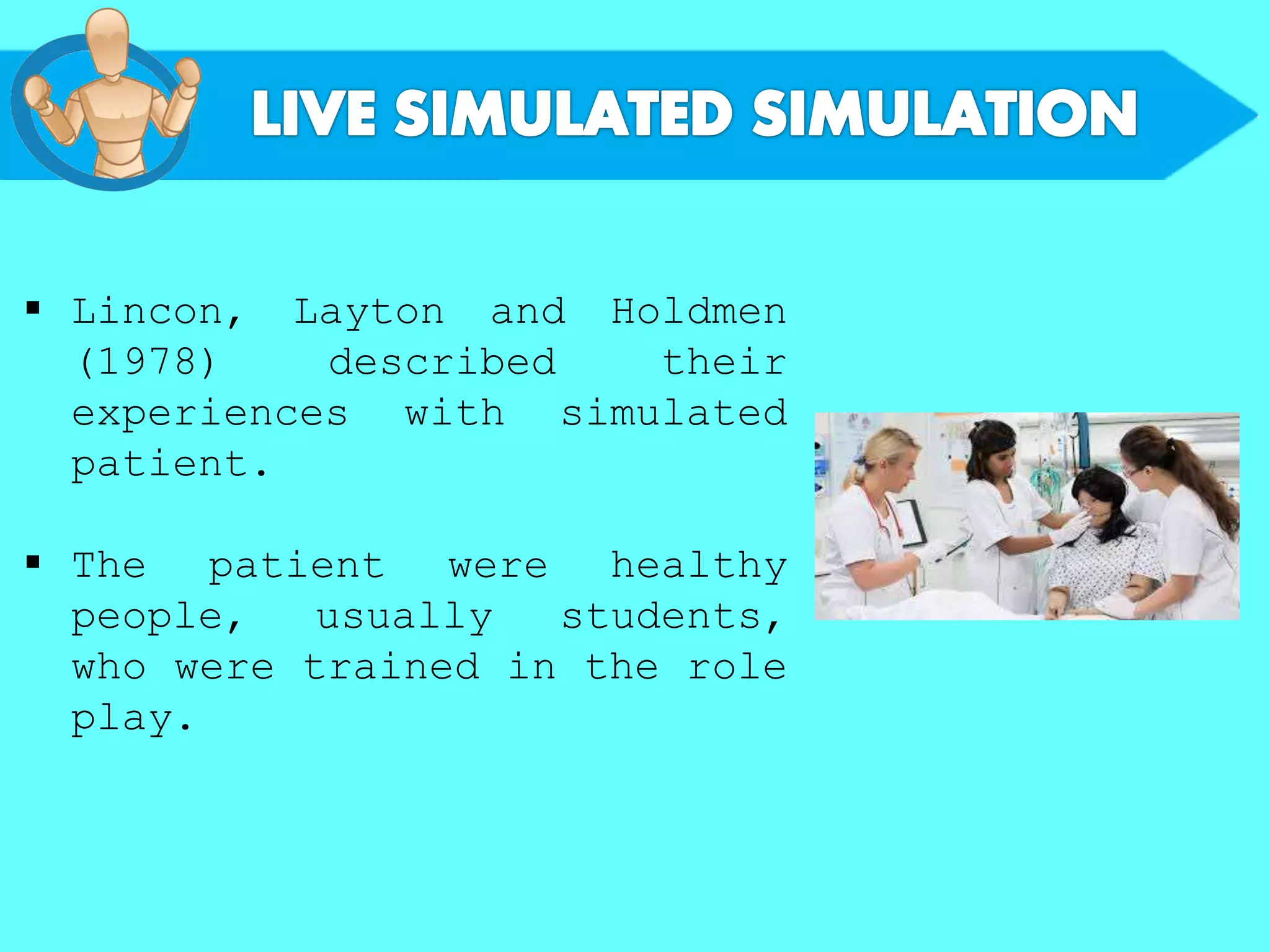
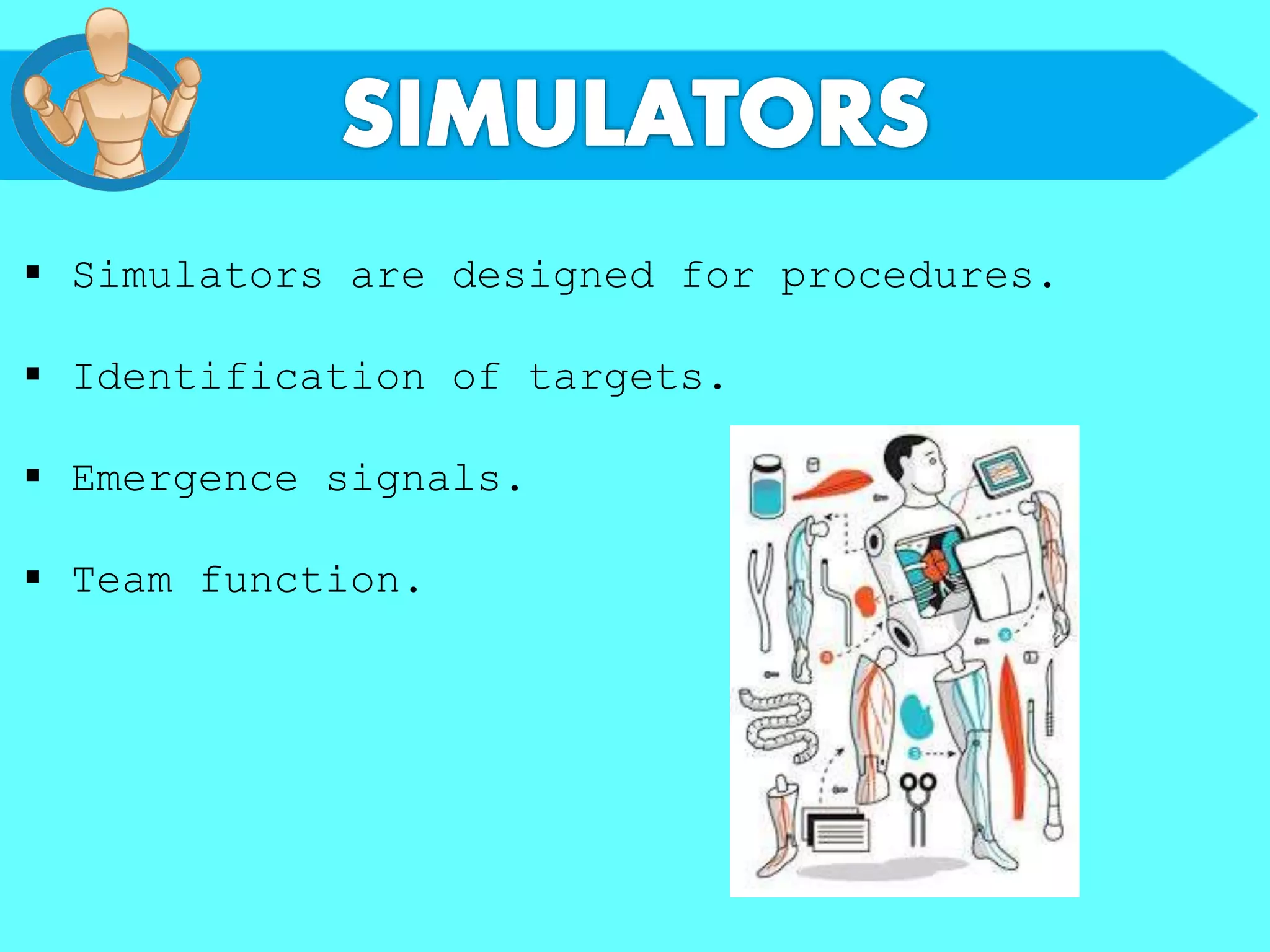
Simulation involves replicating real-life situations to allow students to gain experience. It is not actual training but helps students practice and develop skills. There are different types of simulation including written, audiovisual, live, and computer-based. Simulation provides a safe environment for students to apply knowledge, develop problem-solving abilities, and bridge the gap between theory and practice before interacting with real patients. The teacher facilitates the simulation and leads debriefing discussions to help students learn. While simulation engages students and promotes skill transfer, it also has limitations such as cost and unpredictability.