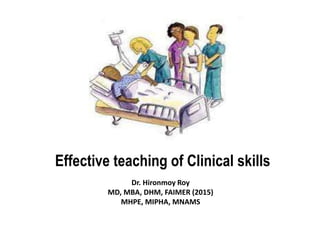
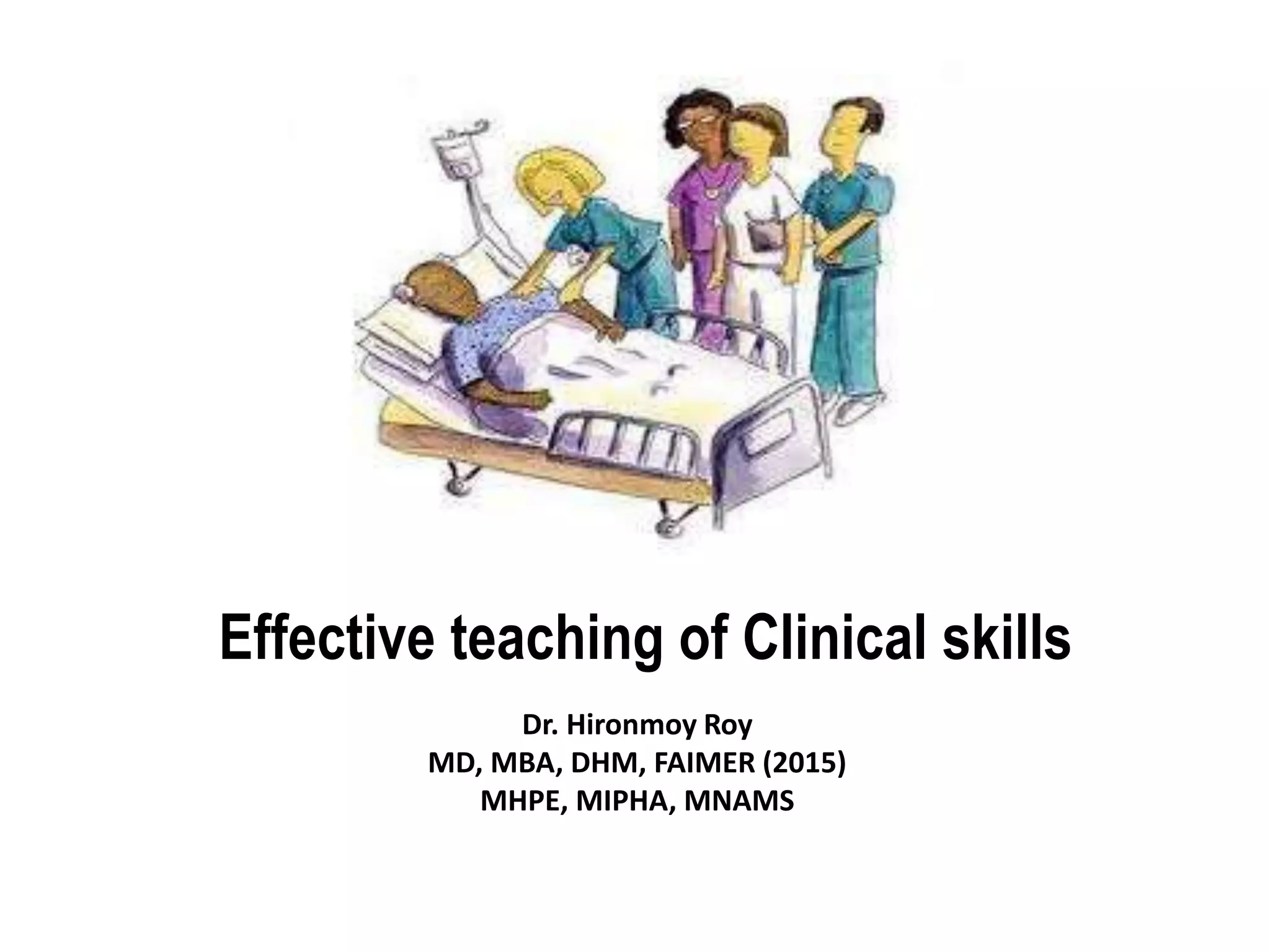
Effective teaching of Clinical skills
Dr. Hironmoy Roy
MD, MBA, DHM, FAIMER (2015)
MHPE, MIPHA, MNAMS
“ The end of education,
especially
professional education is
Not knowledge
but appropriate action”
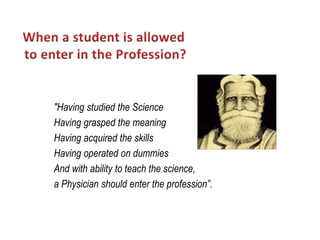
"Having studied the Science
Having grasped the meaning
Having acquired the skills
Having operated on dummies
And with ability to teach the science,
a Physician should enter the profession”.
Skill
" An ability and capacity acquired through
deliberate, systematic and sustained effort
to smoothly and adaptively carry out
complex activities or job functions involving
ideas (cognitive skills), things (technical
skills) and /or people (interpersonal skills).
Skill- types
Intellectual skill
To think in a desirable way- underlining
component is knowledge
e.g. - Ability to interpret liver function test
results of a patient with jaundice
Skill- types
Psycho-motor Skill
Manual abilities needed towards diagnosing
and treating patients
e.g. - Ability to obtain a blood sample by
venepuncture
Skill- types
Communication skill
Ability to communicate with others in a given
situation. Strong underlying component is attitude
e.g. - Ability to motivate relatives for blood donation.
Skill- types
Team Skill
Ability to work together in a team
e.g. - Ability to work towards implementing a
project/ operating on a patient with the team.
Current trends of teaching “skill”
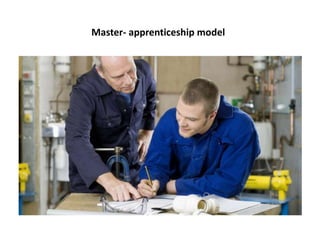
Master- apprenticeship model
• ‘ See one, do one’- heralds problems
• Knowing and watching a procedure does not mean
one can perform it
• Passive observation rather than active
• participation of learners
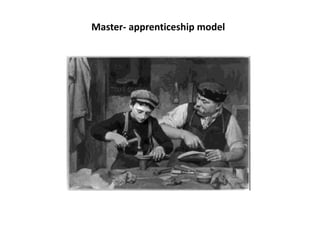
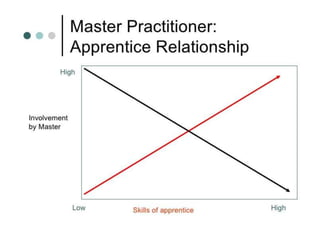
Master- apprenticeship model
The “master is the model”, who
directs, demonstrates, comments, inspires
&
The “apprentice is the disciple”, who,
listens, watches, imitates, does and seeks approval
Problems in teaching
clinical skill
Lack of clear objectives
Large number of students
Teacher has “no time” (load of patient/practice)
Students are not interested (more to MCQ)
Not explicit in the curriculum/syallabus
Not standardized across schools
Over-burdening with content information
Inadequate supervision and feedback
Little opportunities for reflection and discussion
Clinical teaching not given high priority
Then, why to emphasise on learning of skill?
• Growing mistrust among public for medical profession
(cases of negligence, misconduct, and unethical practices)
• Performance emphasis is increasing at all levels of our
professional activity
• Greater public understanding and enhanced patient’s
rights
• Medical school skills education has been slipping down
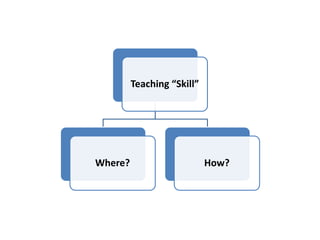
Teaching “Skill”
Where? How?
How u learnt?
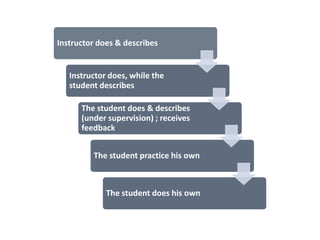
Instructor does & describes
Instructor does, while the
student describes
The student does & describes
(under supervision) ; receives
feedback
The student practice his own
The student does his own
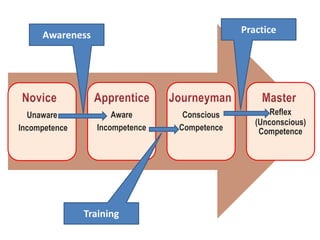
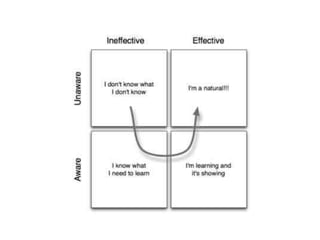
Unaware
Incompetence
Aware
Incompetence
Conscious
Competence
Reflex
(Unconscious)
Competence
Awareness
Training
Practice
Teaching
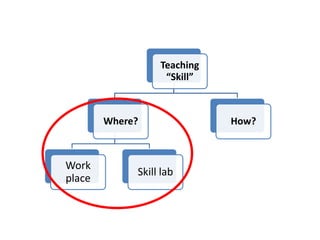
“Skill”
Where?
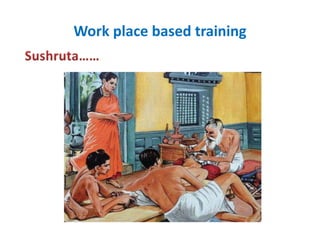
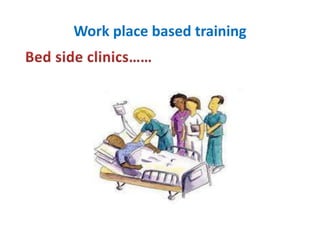
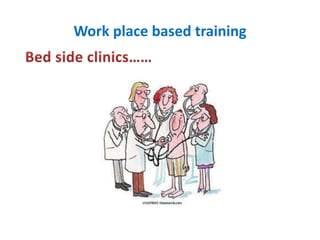
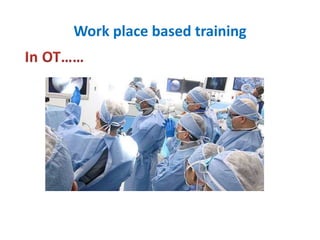
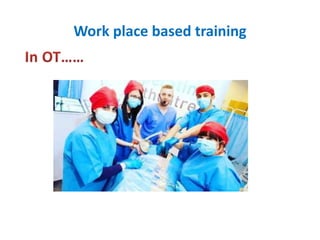
Work
place
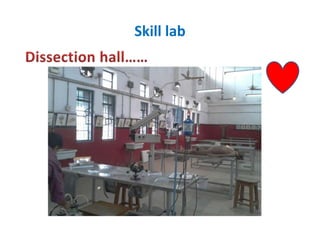
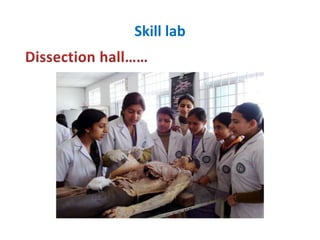
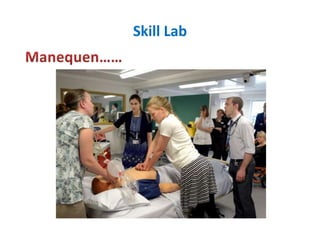
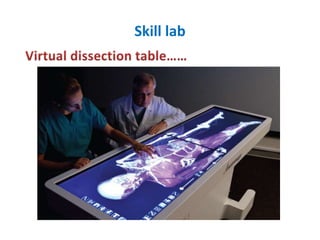
Skill lab
How?
Work place based training
Skill lab
Skill lab
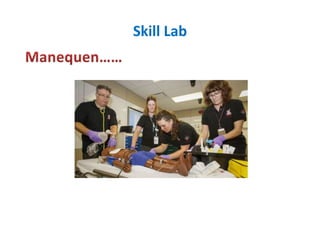
Skill Lab
Skill Lab
Skill lab
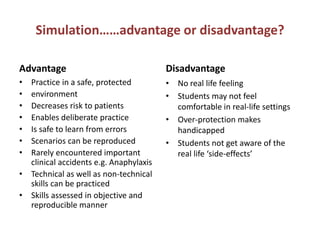
Simulation……advantage or disadvantage?
Advantage
• Practice in a safe, protected
• environment
• Decreases risk to patients
• Enables deliberate practice
• Is safe to learn from errors
• Scenarios can be reproduced
• Rarely encountered important
clinical accidents e.g. Anaphylaxis
• Technical as well as non-technical
skills can be practiced
• Skills assessed in objective and
reproducible manner
Disadvantage
• No real life feeling
• Students may not feel
comfortable in real-life settings
• Over-protection makes
handicapped
• Students not get aware of the
real life ‘side-effects’
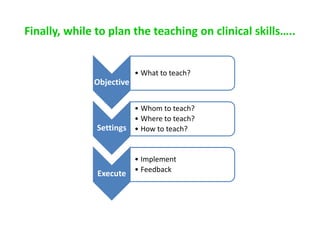
Finally, while to plan the teaching on clinical skills…..
Objective
• What to teach?
Settings
• Whom to teach?
• Where to teach?
• How to teach?
Execute
• Implement
• Feedback
"Education is
Not
Teaching students what they do not know
but
Making them behave as they do not behave”
-----Ruskin Bond

Efeective clinical and practical skill teaching

  • 1.
    Effective teaching ofClinical skills Dr. Hironmoy Roy MD, MBA, DHM, FAIMER (2015) MHPE, MIPHA, MNAMS
  • 2.
    “ The endof education, especially professional education is Not knowledge but appropriate action”
  • 3.
    "Having studied theScience Having grasped the meaning Having acquired the skills Having operated on dummies And with ability to teach the science, a Physician should enter the profession”.
  • 5.
    Skill " An abilityand capacity acquired through deliberate, systematic and sustained effort to smoothly and adaptively carry out complex activities or job functions involving ideas (cognitive skills), things (technical skills) and /or people (interpersonal skills).
  • 6.
    Skill- types Intellectual skill Tothink in a desirable way- underlining component is knowledge e.g. - Ability to interpret liver function test results of a patient with jaundice
  • 7.
    Skill- types Psycho-motor Skill Manualabilities needed towards diagnosing and treating patients e.g. - Ability to obtain a blood sample by venepuncture
  • 8.
    Skill- types Communication skill Abilityto communicate with others in a given situation. Strong underlying component is attitude e.g. - Ability to motivate relatives for blood donation.
  • 9.
    Skill- types Team Skill Abilityto work together in a team e.g. - Ability to work towards implementing a project/ operating on a patient with the team.
  • 10.
    Current trends ofteaching “skill” Master- apprenticeship model • ‘ See one, do one’- heralds problems • Knowing and watching a procedure does not mean one can perform it • Passive observation rather than active • participation of learners
  • 11.
  • 12.
  • 13.
    The “master isthe model”, who directs, demonstrates, comments, inspires & The “apprentice is the disciple”, who, listens, watches, imitates, does and seeks approval
  • 14.
    Problems in teaching clinicalskill Lack of clear objectives Large number of students Teacher has “no time” (load of patient/practice) Students are not interested (more to MCQ) Not explicit in the curriculum/syallabus Not standardized across schools Over-burdening with content information Inadequate supervision and feedback Little opportunities for reflection and discussion Clinical teaching not given high priority
  • 15.
    Then, why toemphasise on learning of skill? • Growing mistrust among public for medical profession (cases of negligence, misconduct, and unethical practices) • Performance emphasis is increasing at all levels of our professional activity • Greater public understanding and enhanced patient’s rights • Medical school skills education has been slipping down
  • 16.
  • 17.
  • 18.
    Instructor does &describes Instructor does, while the student describes The student does & describes (under supervision) ; receives feedback The student practice his own The student does his own
  • 19.
  • 23.
  • 24.
  • 25.
  • 26.
  • 27.
  • 28.
  • 29.
  • 30.
  • 31.
  • 32.
  • 33.
  • 34.
    Simulation……advantage or disadvantage? Advantage •Practice in a safe, protected • environment • Decreases risk to patients • Enables deliberate practice • Is safe to learn from errors • Scenarios can be reproduced • Rarely encountered important clinical accidents e.g. Anaphylaxis • Technical as well as non-technical skills can be practiced • Skills assessed in objective and reproducible manner Disadvantage • No real life feeling • Students may not feel comfortable in real-life settings • Over-protection makes handicapped • Students not get aware of the real life ‘side-effects’
  • 35.
    Finally, while toplan the teaching on clinical skills….. Objective • What to teach? Settings • Whom to teach? • Where to teach? • How to teach? Execute • Implement • Feedback
  • 36.
    "Education is Not Teaching studentswhat they do not know but Making them behave as they do not behave” -----Ruskin Bond