Designing a
Systematic
Learning
Experience
Utilizing
Simulation
ANGELA S. BAILEY, PHD(C), RNC
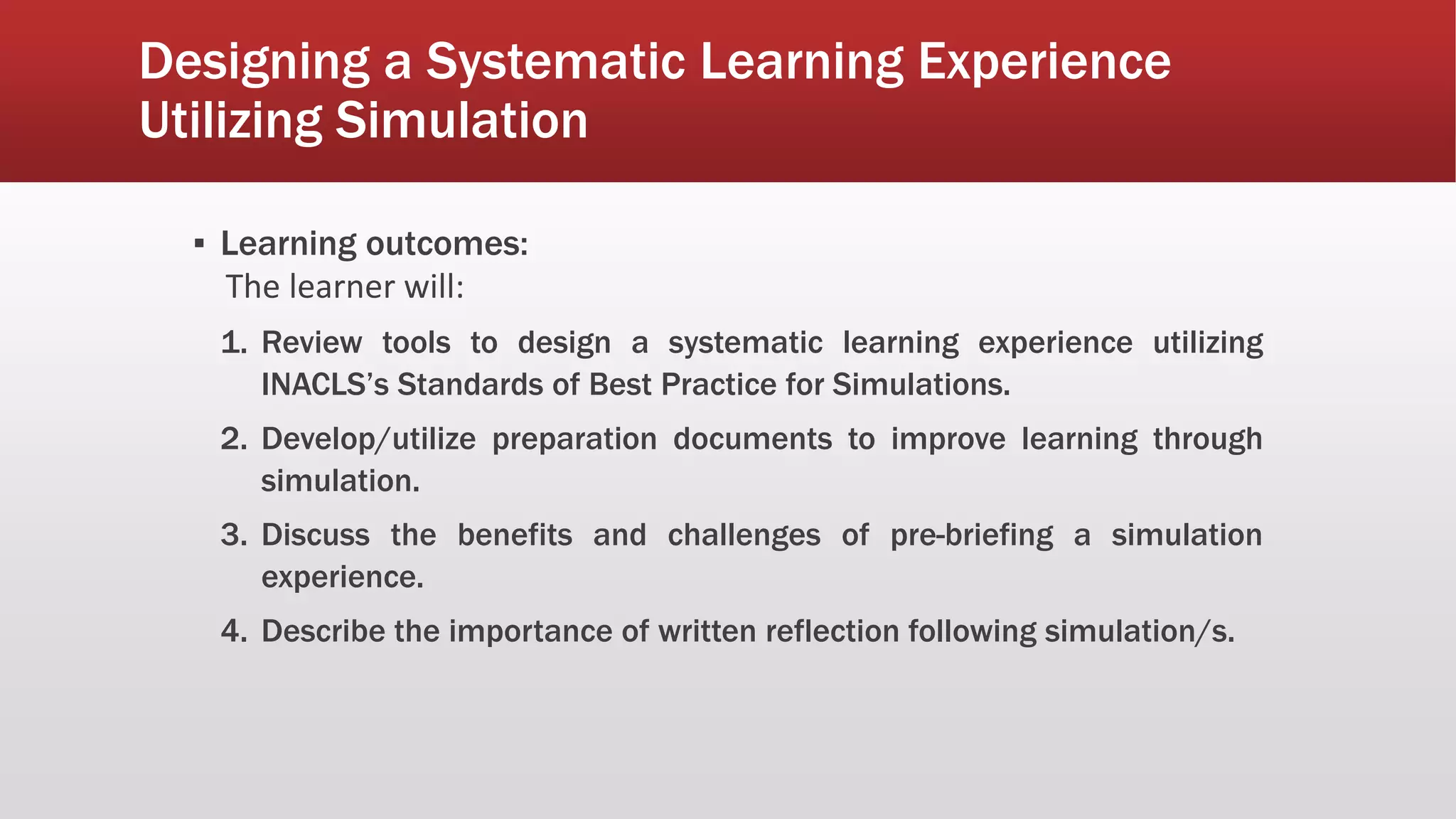
Designing a Systematic Learning Experience
Utilizing Simulation
▪ Learning outcomes:
The learner will:
1. Review tools to design a systematic learning experience utilizing
INACLS’s Standards of Best Practice for Simulations.
2. Develop/utilize preparation documents to improve learning through
simulation.
3. Discuss the benefits and challenges of pre-briefing a simulation
experience.
4. Describe the importance of written reflection following simulation/s.
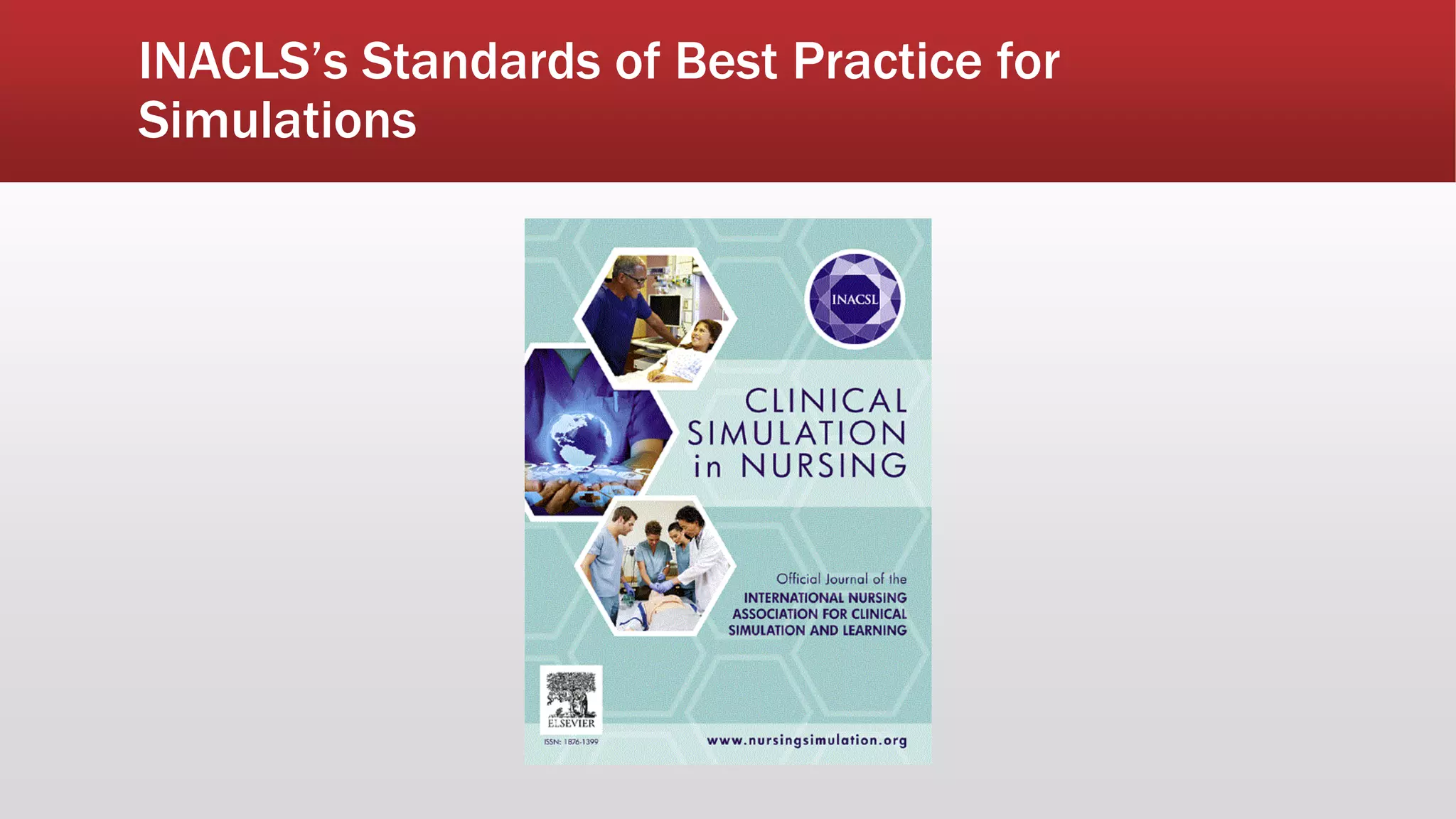
INACLS’s Standards of Best Practice for
Simulations
INACLS’s Standards of Best Practice for
Simulations
Outcomes and Objective
Debriefing
Facilitation
Participant evaluation
Professional integrity
Simulation-enhanced Inter professional Education (Sim-IPE)
Simulation glossary
Simulation Design
(International Nursing Association for Clinical
Simulation and Learning [INACSL], 2016, p. S48)
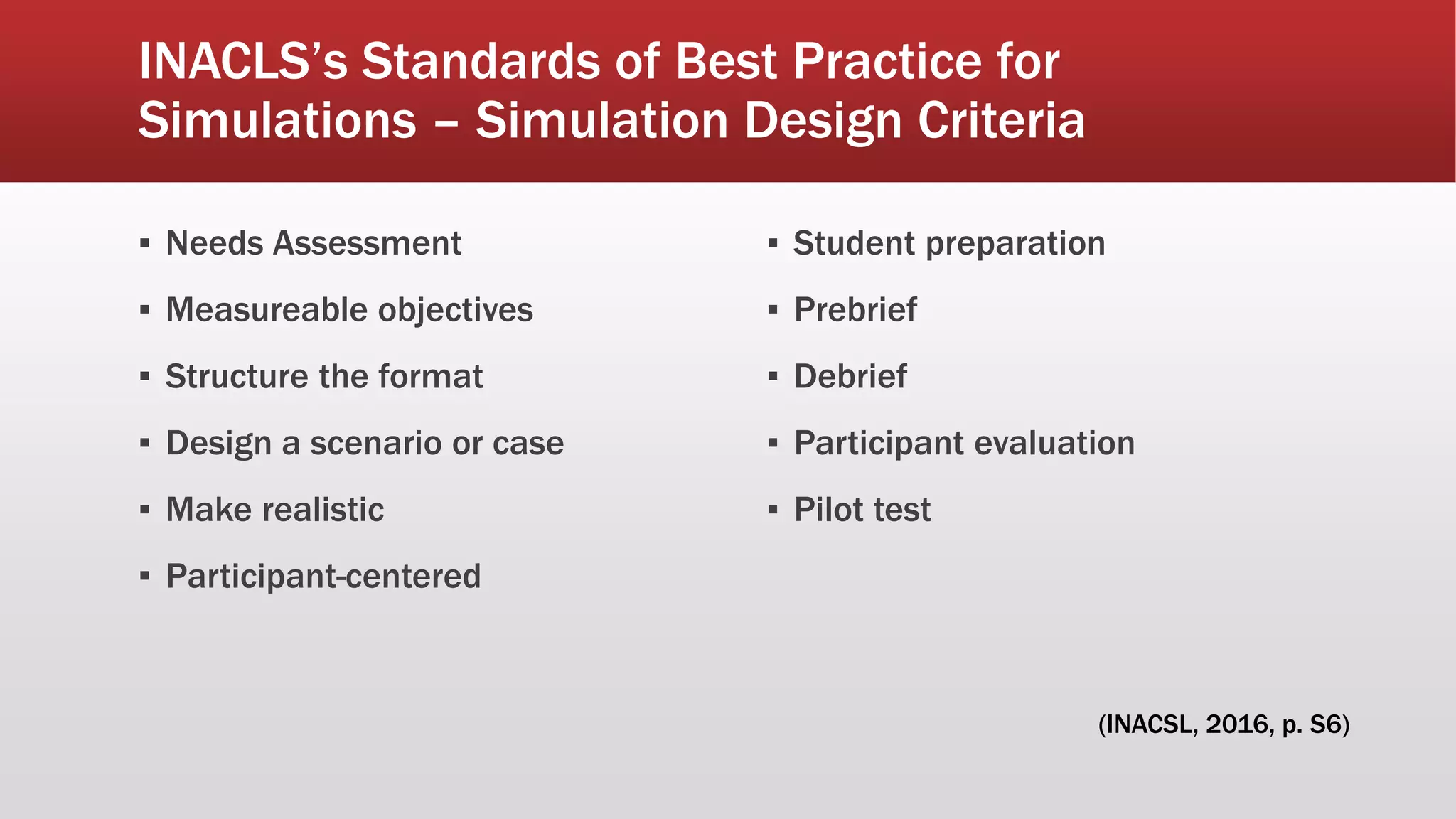
INACLS’s Standards of Best Practice for
Simulations – Simulation Design Criteria
▪ Needs Assessment
▪ Measureable objectives
▪ Structure the format
▪ Design a scenario or case
▪ Make realistic
▪ Participant-centered
▪ Student preparation
▪ Prebrief
▪ Debrief
▪ Participant evaluation
▪ Pilot test
(INACSL, 2016, p. S6)
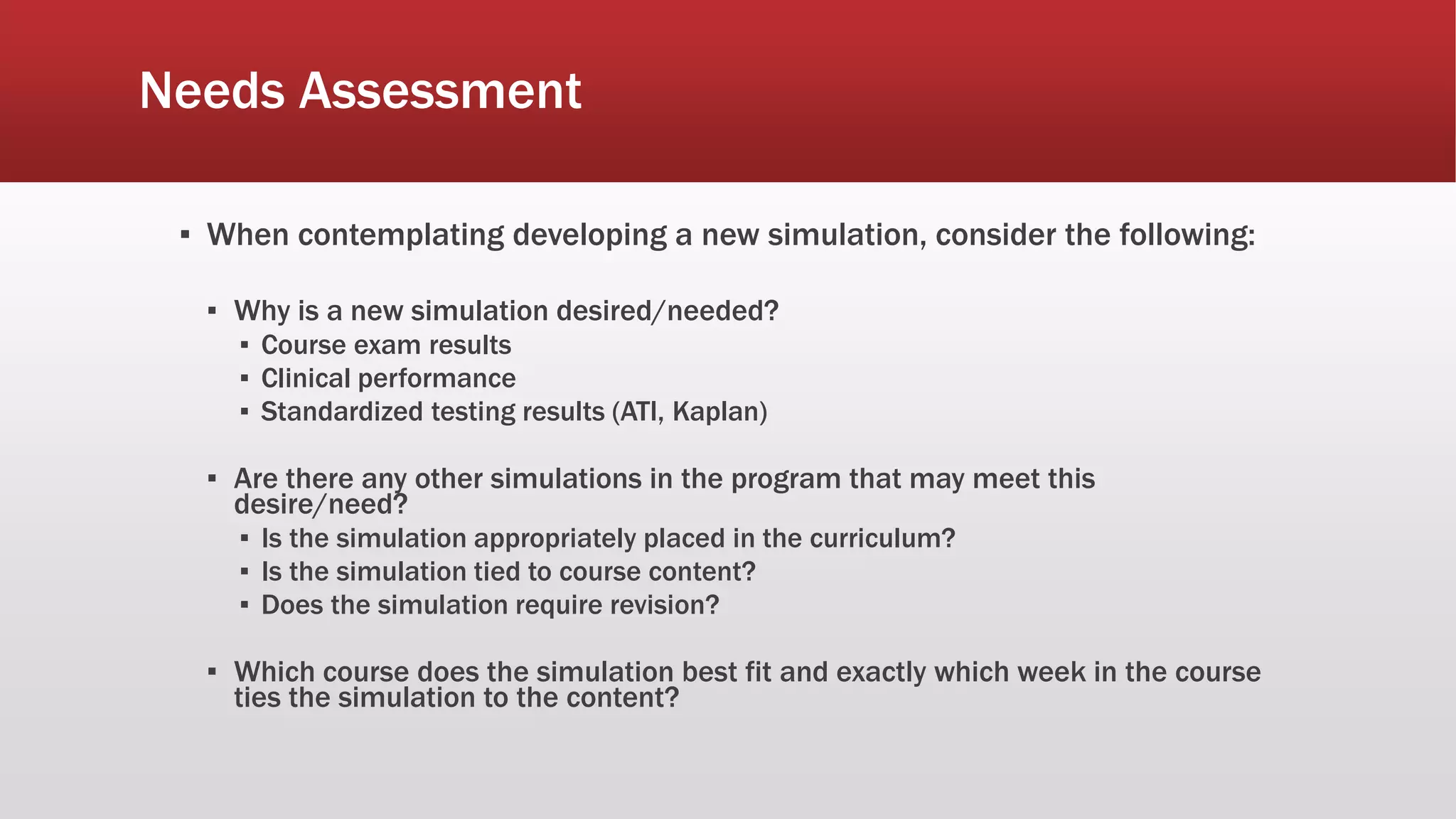
Needs Assessment
▪ When contemplating developing a new simulation, consider the following:
▪ Why is a new simulation desired/needed?
▪ Course exam results
▪ Clinical performance
▪ Standardized testing results (ATI, Kaplan)
▪ Are there any other simulations in the program that may meet this
desire/need?
▪ Is the simulation appropriately placed in the curriculum?
▪ Is the simulation tied to course content?
▪ Does the simulation require revision?
▪ Which course does the simulation best fit and exactly which week in the course
ties the simulation to the content?
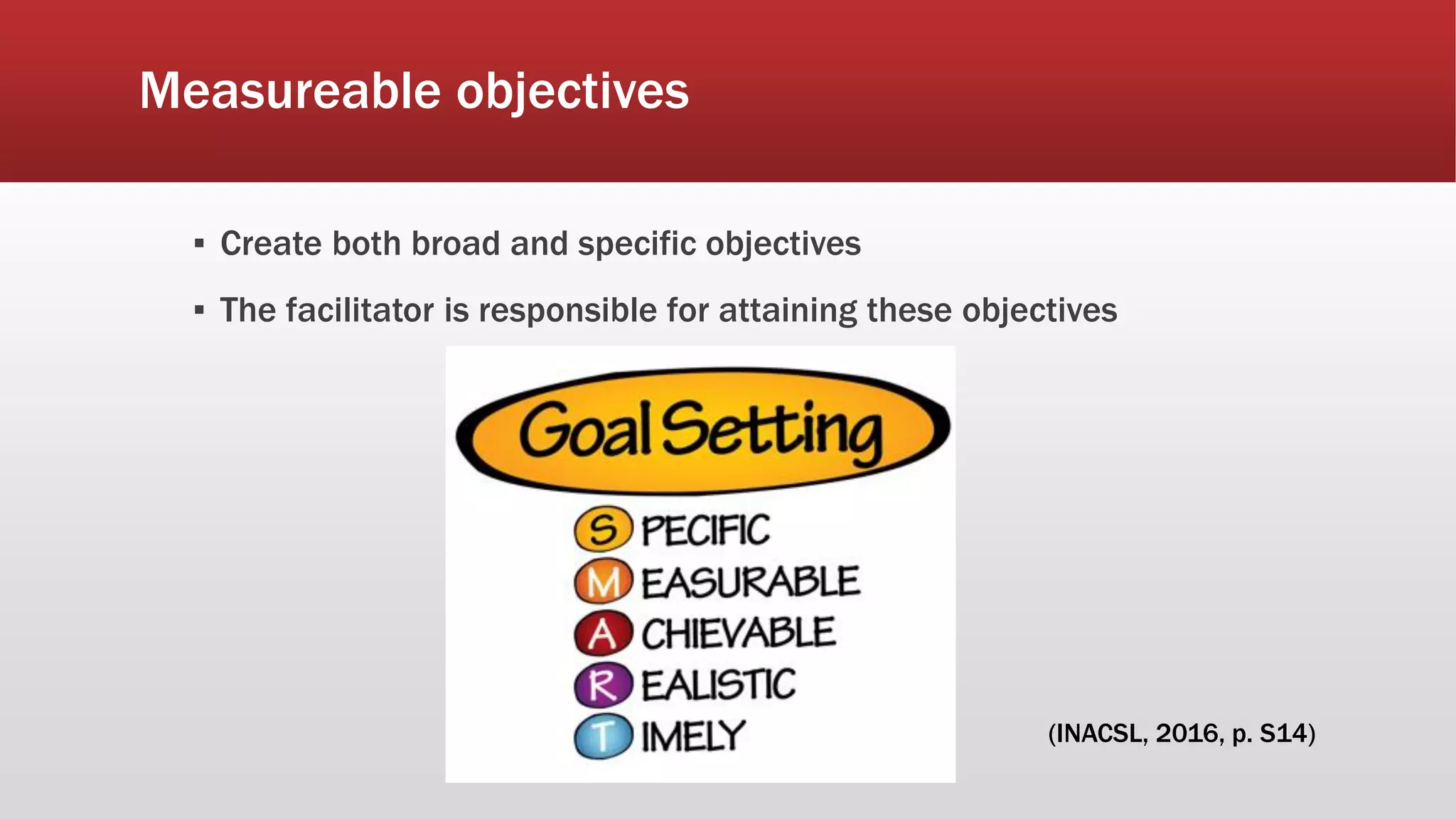
Measureable objectives
▪ Create both broad and specific objectives
▪ The facilitator is responsible for attaining these objectives
(INACSL, 2016, p. S14)
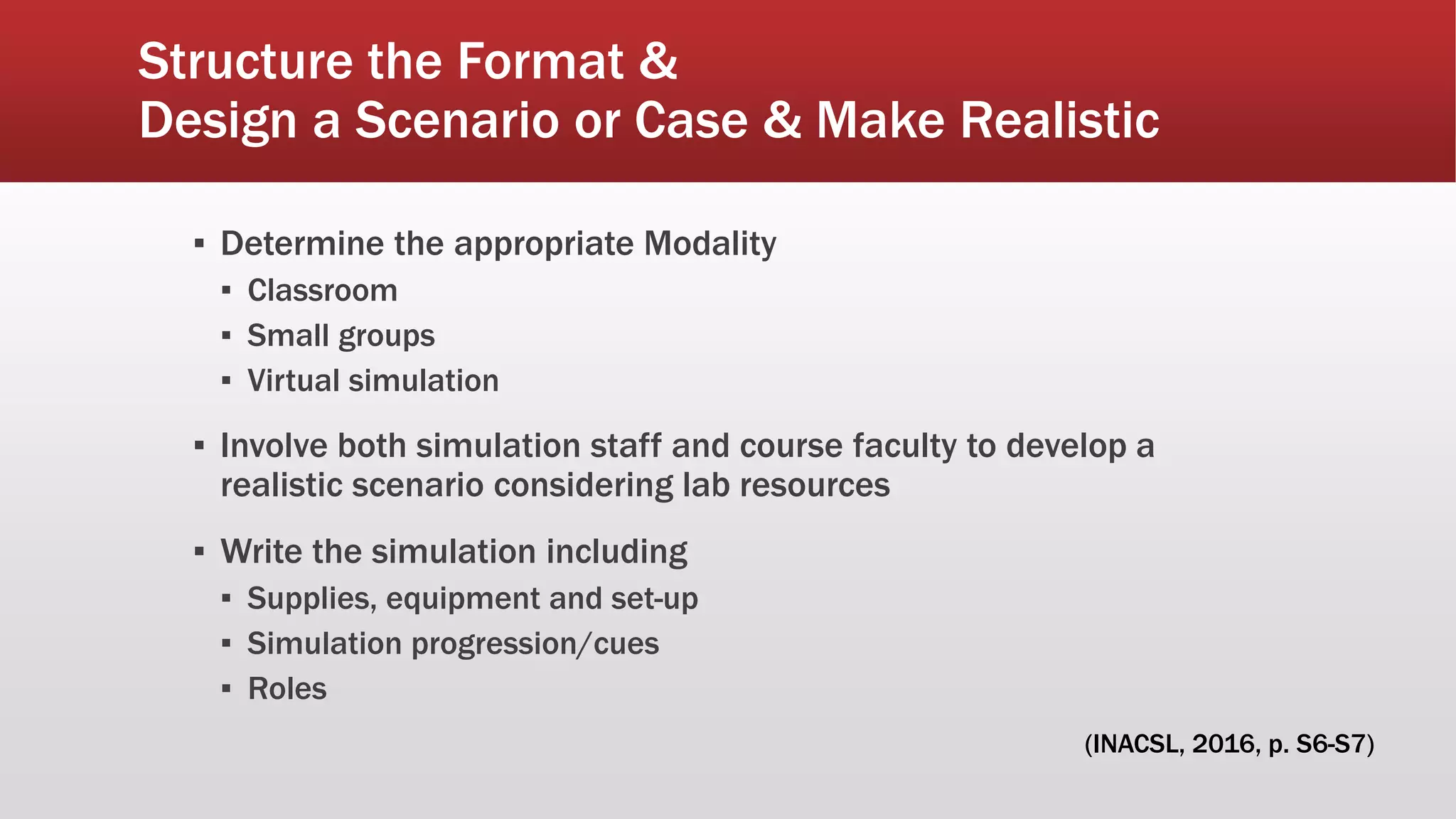
Structure the Format &
Design a Scenario or Case & Make Realistic
▪ Determine the appropriate Modality
▪ Classroom
▪ Small groups
▪ Virtual simulation
▪ Involve both simulation staff and course faculty to develop a
realistic scenario considering lab resources
▪ Write the simulation including
▪ Supplies, equipment and set-up
▪ Simulation progression/cues
▪ Roles
(INACSL, 2016, p. S6-S7)
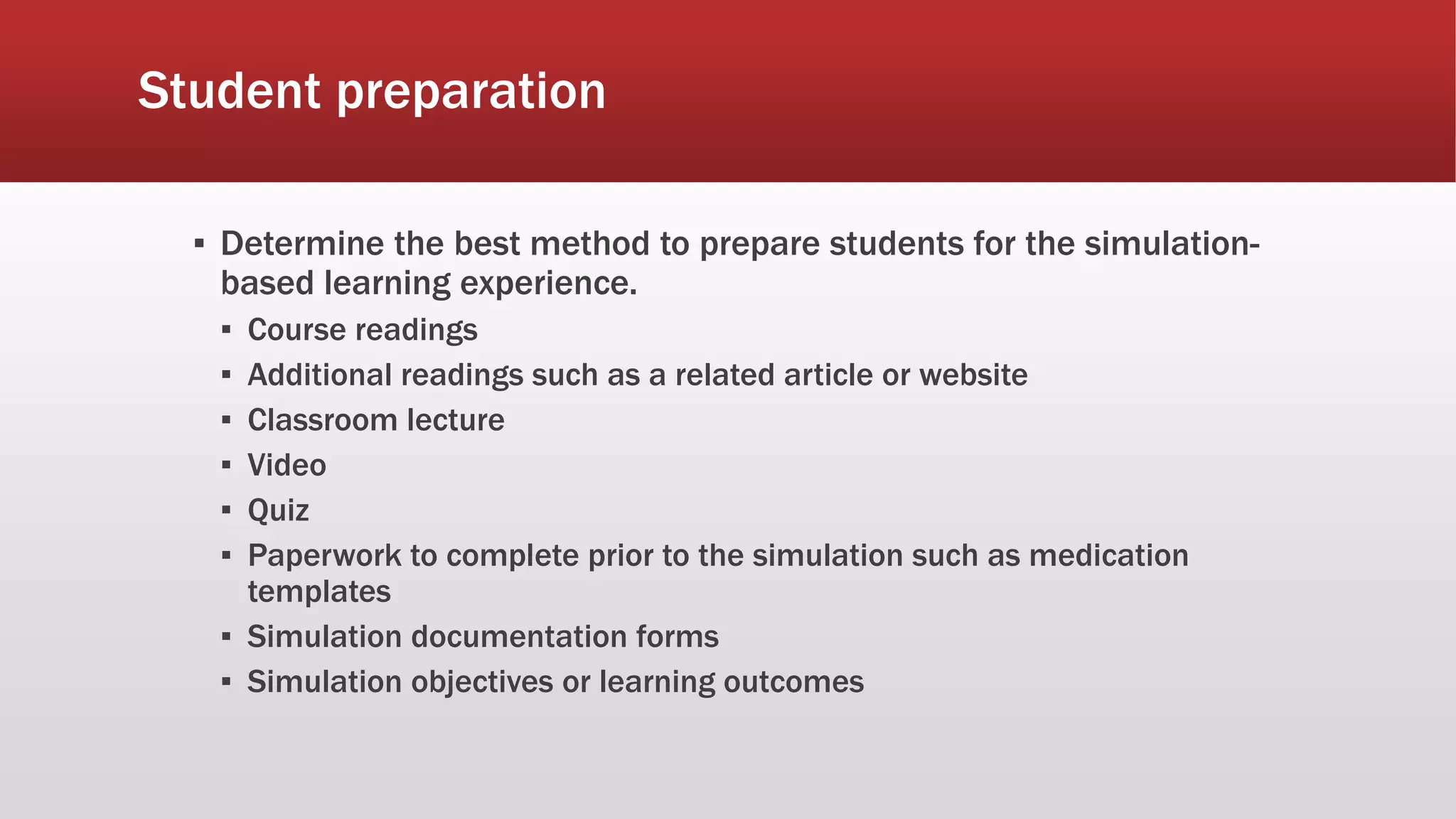
Student preparation
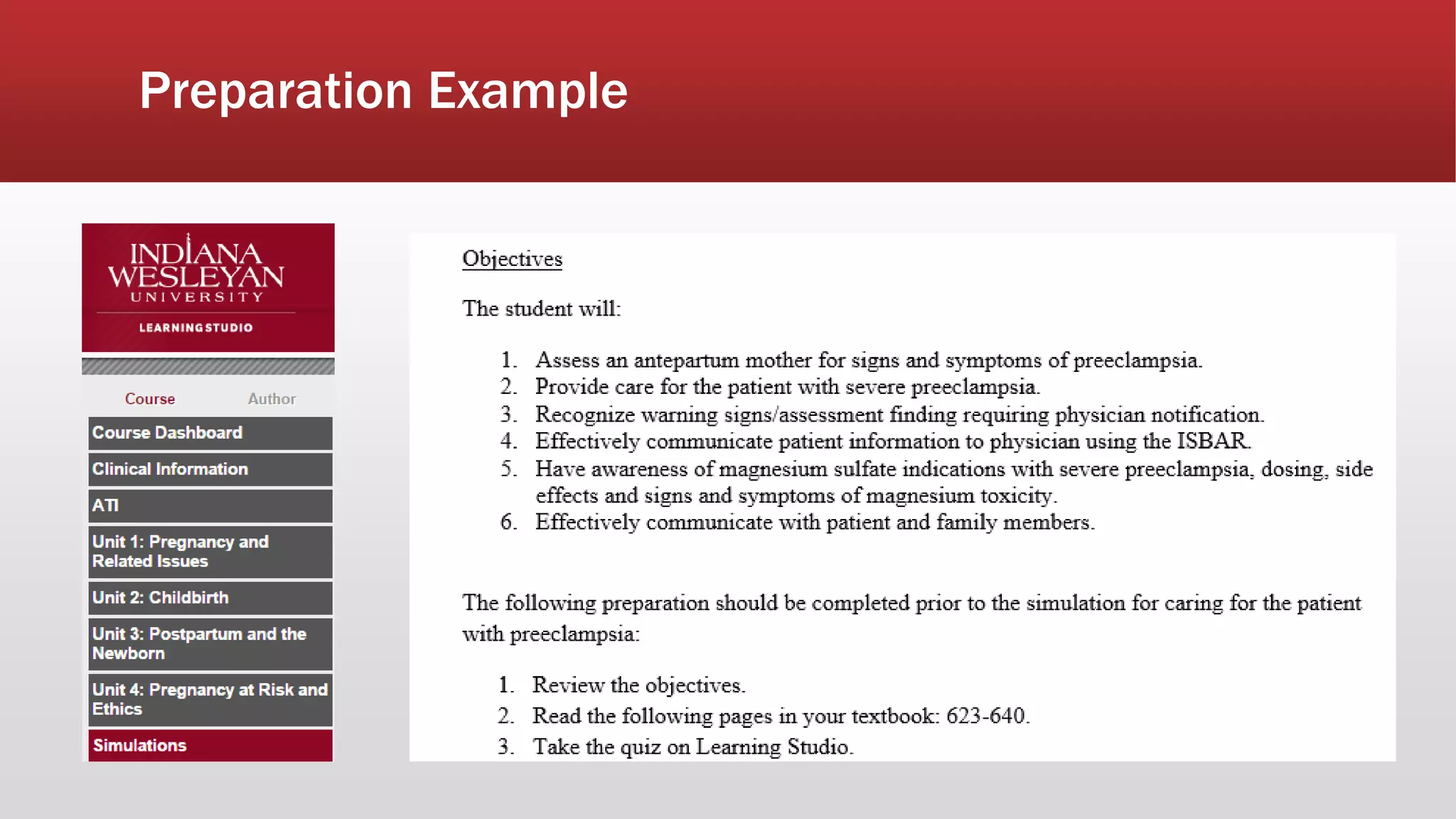
▪ Determine the best method to prepare students for the simulation-
based learning experience.
▪ Course readings
▪ Additional readings such as a related article or website
▪ Classroom lecture
▪ Video
▪ Quiz
▪ Paperwork to complete prior to the simulation such as medication
templates
▪ Simulation documentation forms
▪ Simulation objectives or learning outcomes
Preparation Example
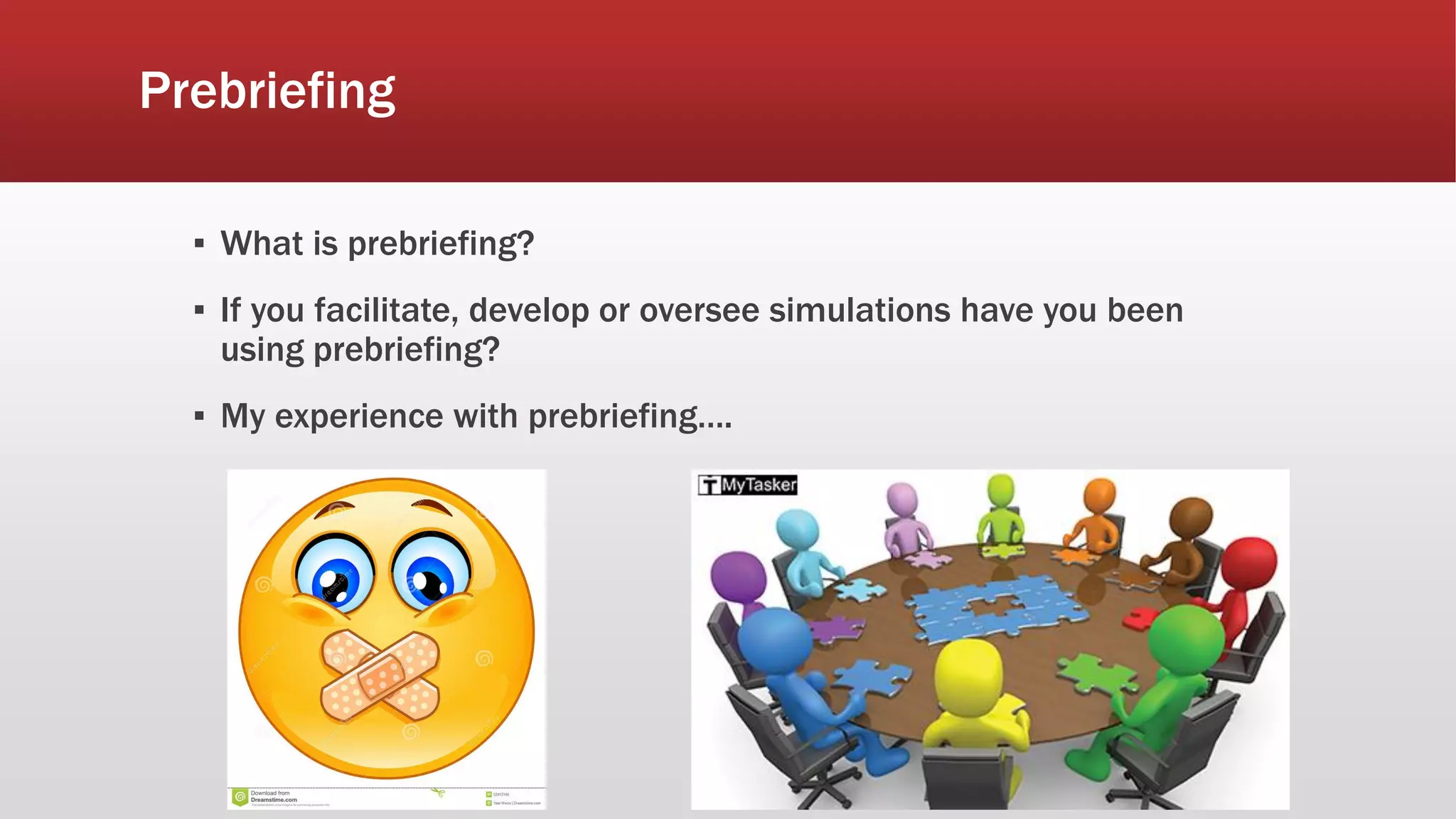
Prebriefing
▪ What is prebriefing?
▪ If you facilitate, develop or oversee simulations have you been
using prebriefing?
▪ My experience with prebriefing….
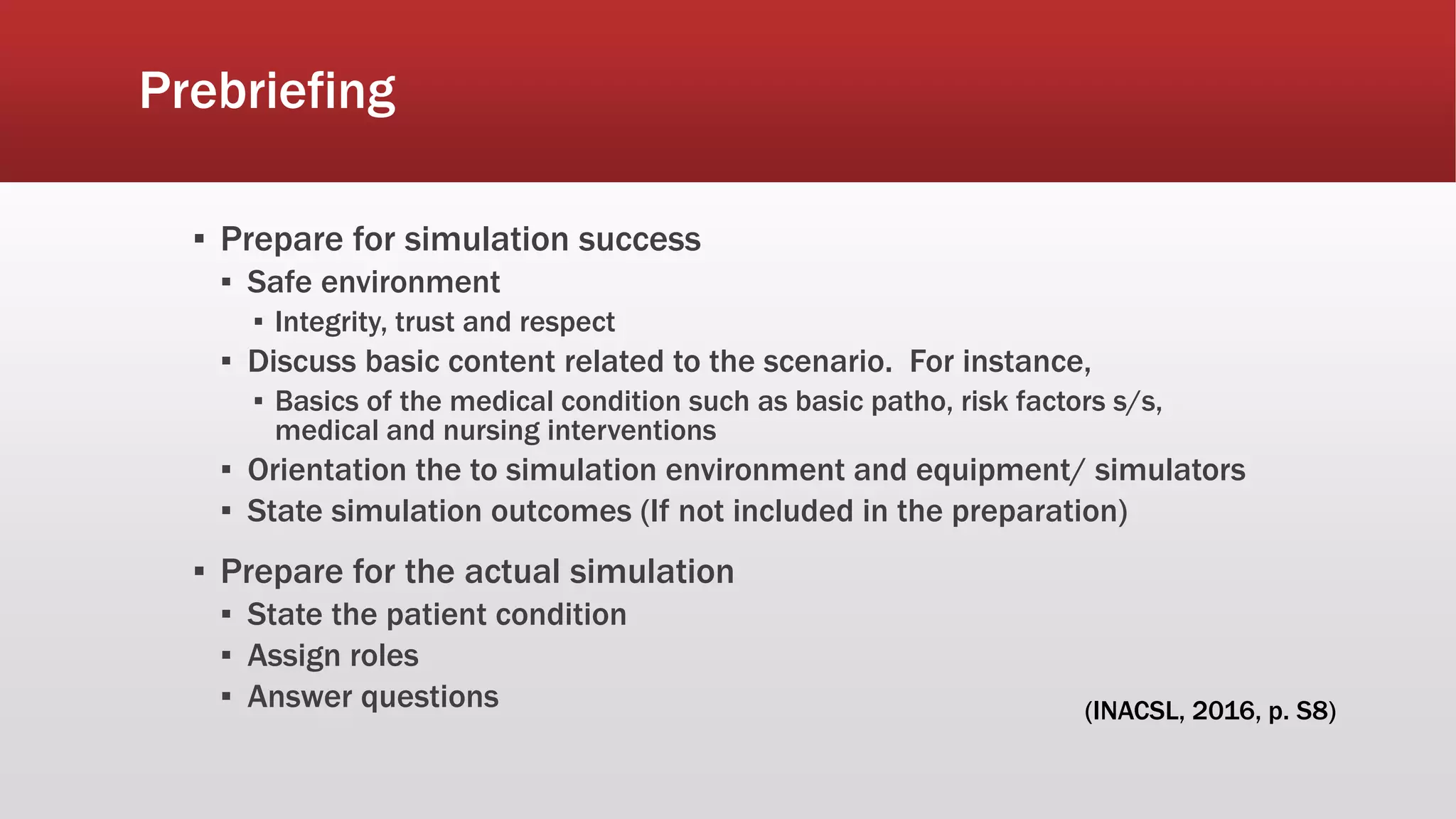
Prebriefing
▪ Prepare for simulation success
▪ Safe environment
▪ Integrity, trust and respect
▪ Discuss basic content related to the scenario. For instance,
▪ Basics of the medical condition such as basic patho, risk factors s/s,
medical and nursing interventions
▪ Orientation the to simulation environment and equipment/ simulators
▪ State simulation outcomes (If not included in the preparation)
▪ Prepare for the actual simulation
▪ State the patient condition
▪ Assign roles
▪ Answer questions (INACSL, 2016, p. S8)
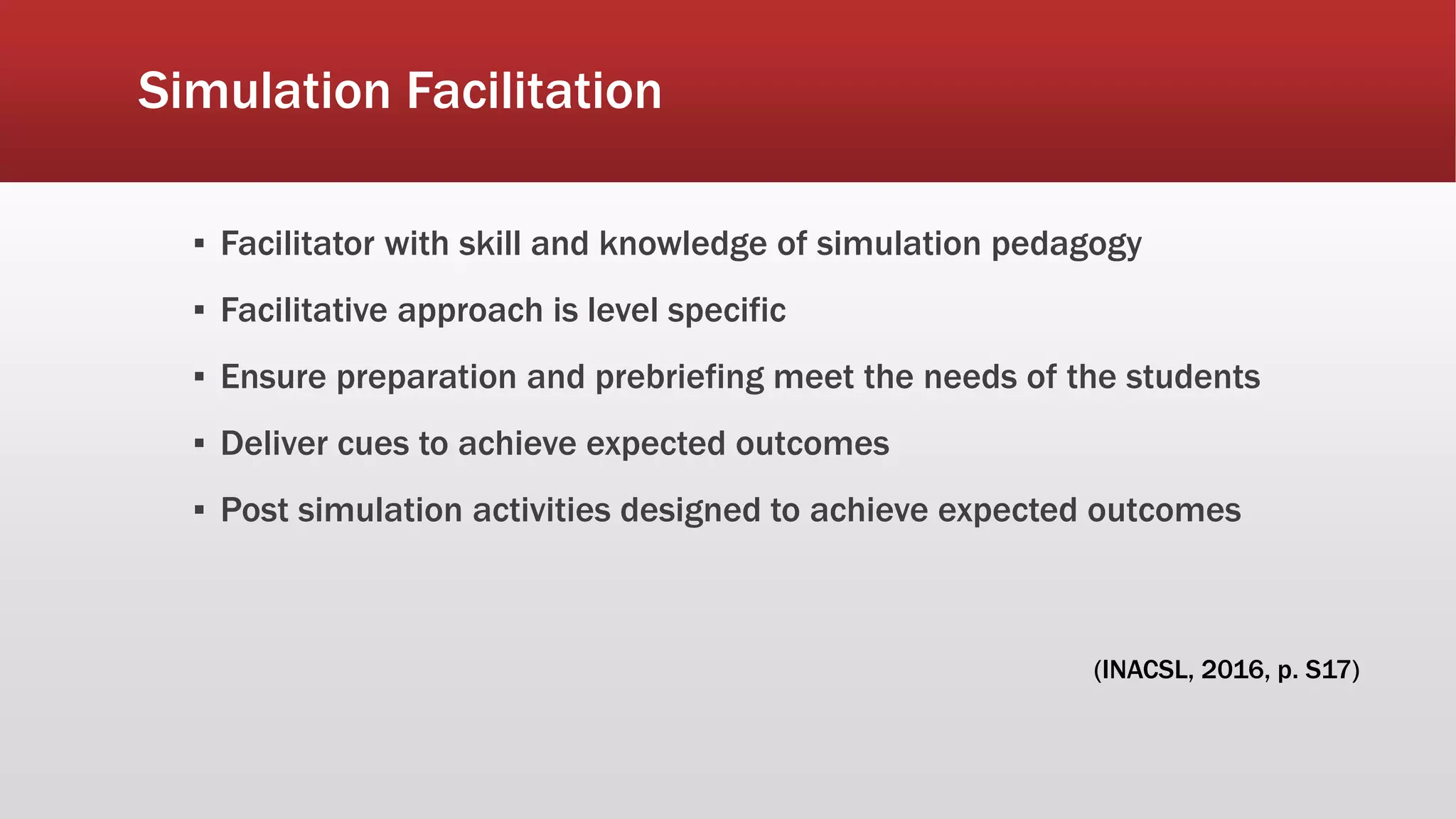
Simulation Facilitation
▪ Facilitator with skill and knowledge of simulation pedagogy
▪ Facilitative approach is level specific
▪ Ensure preparation and prebriefing meet the needs of the students
▪ Deliver cues to achieve expected outcomes
▪ Post simulation activities designed to achieve expected outcomes
(INACSL, 2016, p. S17)
Debriefing
▪ Competent debriefer
▪ Conducive environment
▪ Debriefer must have adequately devoted attention during the
simulation
▪ Debrief is based on a theoretical framework
▪ Debriefing for Meaningful Learning (DML)
▪ Gather/Analyze/Summarize (GAS)
▪ Debrief in conjunction with the objectives and outcomes
(INACSL, 2016, p. S21-22)
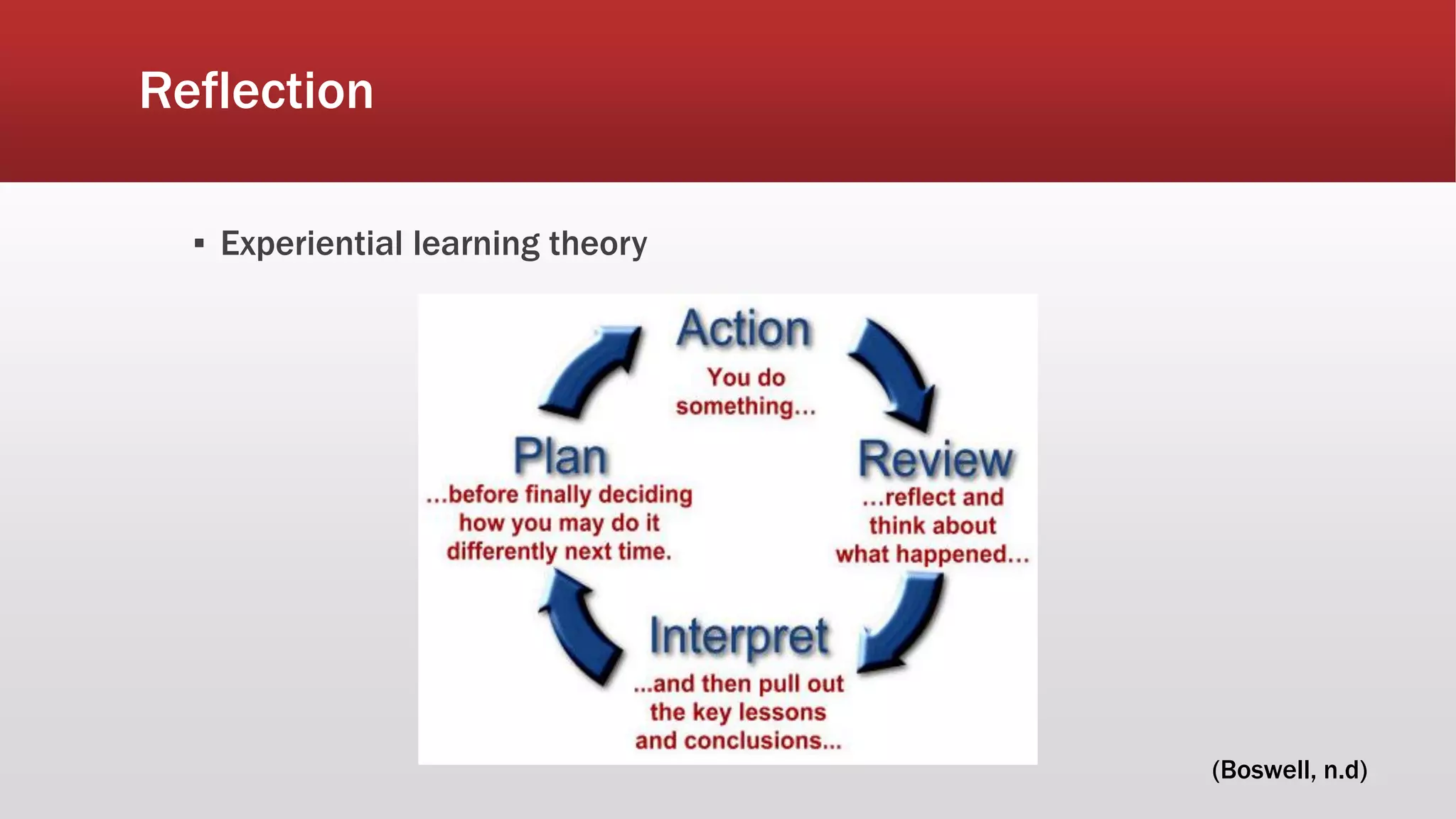
Reflection
▪ Experiential learning theory
(Boswell, n.d)
Simulation Reflection Rubric
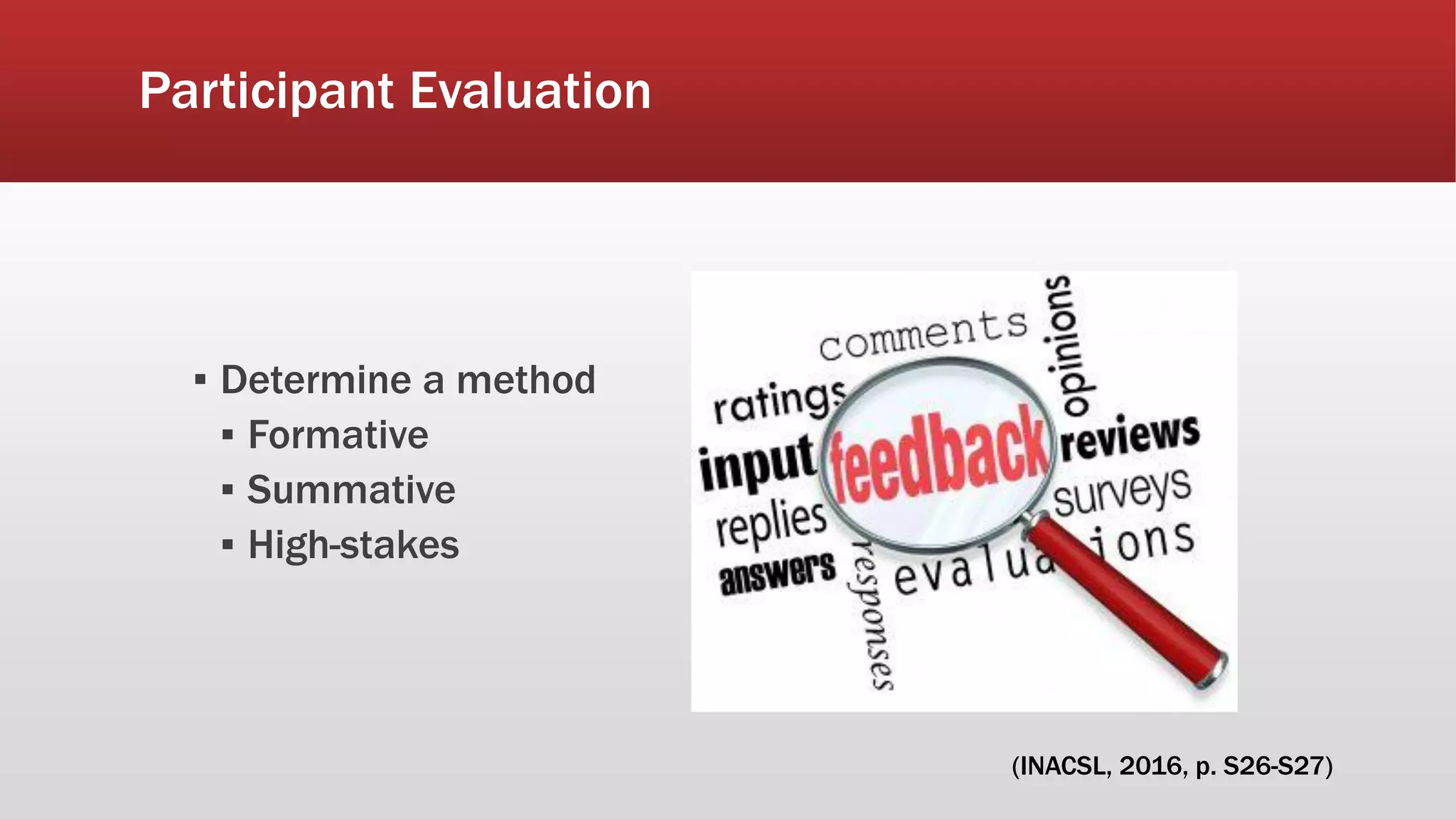
Participant Evaluation
▪ Determine a method
▪ Formative
▪ Summative
▪ High-stakes
(INACSL, 2016, p. S26-S27)
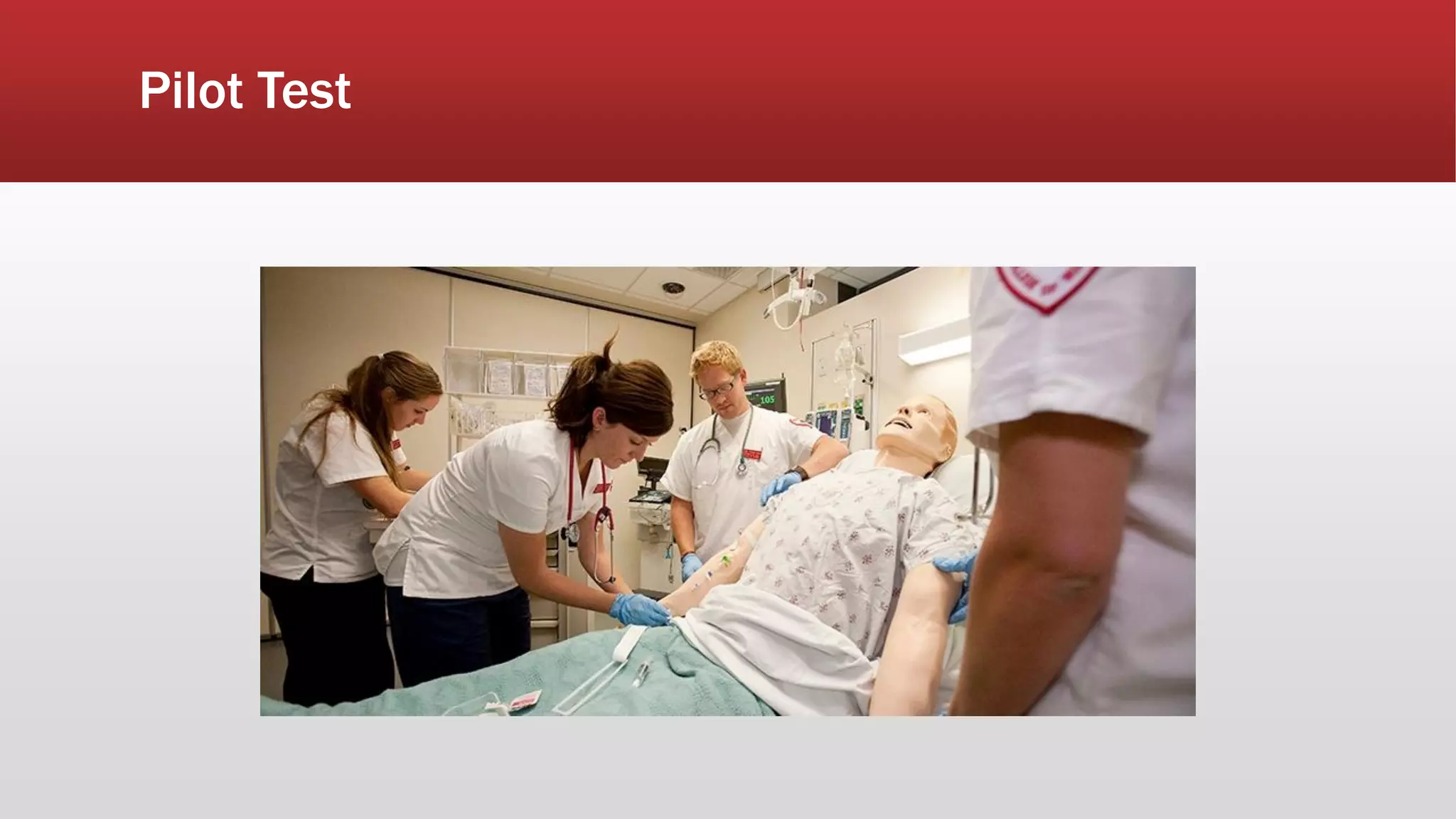
Pilot Test
References
▪ Boswell, S. [Sam]. (n.d.). Action research [Pinterest page]. Retrieved May 12, 2017, from
https://www.pinterest.com/Sboswellhyde/action-research/?lp=true
▪ International Nursing Association for Clinical Simulation and Learning. (2016). INACSL Standards of best practice:
Simulation - Simulation design. Clinical Simulation in Nursing, 12(S), S5-S12.
http://dx.doi.org/10.1016/j.ecns.2016.09.005
▪ International Nursing Association for Clinical Simulation and Learning. (2016). INACSL Standards of best practice:
Simulation debriefing. Clinical Simulation in Nursing, 12(S), S21-S25. http://dx.doi.org/10.1016/j.ecns.2016.09.008
▪ International Nursing Association for Clinical Simulation and Learning. (2016). INACSL Standards of best practice:
Simulation facilitation. Clinical Simulation in Nursing, 12, S16-S20. http://dx.doi.org/10.1016/j.ecns.2016.09.007
▪ International Nursing Association for Clinical Simulation and Learning. (2016). INACSL Standards of best practice:
Simulation outcomes and objectives. Clinical Simulation in Nursing, 12(S), S13-S15.
http://dx.doi.org/10.1016/j.ecns.2016.09.006
▪ International Nursing Association for Clinical Simulation and Learning. (2016). INACSL Standards of best practice:
Simulation participant evaluation. Clinical Simulation in Nursing, 12(S), S26-S29.
http://dx.doi.org/10.1016/j.ecns.2016.09.009
▪ International Nursing Association for Clinical Simulation and Learning. (2016). Standards of best practice: Simulation.
Clinical Simulation in Nursing, 12(S), S48-S50. http://dx.doi.org/10.1016/j.ecns.2016.10.001
Now for our Simulation!!

Bailey presentation 6/1/2017

  • 1.
  • 2.
    Designing a SystematicLearning Experience Utilizing Simulation ▪ Learning outcomes: The learner will: 1. Review tools to design a systematic learning experience utilizing INACLS’s Standards of Best Practice for Simulations. 2. Develop/utilize preparation documents to improve learning through simulation. 3. Discuss the benefits and challenges of pre-briefing a simulation experience. 4. Describe the importance of written reflection following simulation/s.
  • 3.
    INACLS’s Standards ofBest Practice for Simulations
  • 4.
    INACLS’s Standards ofBest Practice for Simulations Outcomes and Objective Debriefing Facilitation Participant evaluation Professional integrity Simulation-enhanced Inter professional Education (Sim-IPE) Simulation glossary Simulation Design (International Nursing Association for Clinical Simulation and Learning [INACSL], 2016, p. S48)
  • 5.
    INACLS’s Standards ofBest Practice for Simulations – Simulation Design Criteria ▪ Needs Assessment ▪ Measureable objectives ▪ Structure the format ▪ Design a scenario or case ▪ Make realistic ▪ Participant-centered ▪ Student preparation ▪ Prebrief ▪ Debrief ▪ Participant evaluation ▪ Pilot test (INACSL, 2016, p. S6)
  • 6.
    Needs Assessment ▪ Whencontemplating developing a new simulation, consider the following: ▪ Why is a new simulation desired/needed? ▪ Course exam results ▪ Clinical performance ▪ Standardized testing results (ATI, Kaplan) ▪ Are there any other simulations in the program that may meet this desire/need? ▪ Is the simulation appropriately placed in the curriculum? ▪ Is the simulation tied to course content? ▪ Does the simulation require revision? ▪ Which course does the simulation best fit and exactly which week in the course ties the simulation to the content?
  • 7.
    Measureable objectives ▪ Createboth broad and specific objectives ▪ The facilitator is responsible for attaining these objectives (INACSL, 2016, p. S14)
  • 8.
    Structure the Format& Design a Scenario or Case & Make Realistic ▪ Determine the appropriate Modality ▪ Classroom ▪ Small groups ▪ Virtual simulation ▪ Involve both simulation staff and course faculty to develop a realistic scenario considering lab resources ▪ Write the simulation including ▪ Supplies, equipment and set-up ▪ Simulation progression/cues ▪ Roles (INACSL, 2016, p. S6-S7)
  • 9.
    Student preparation ▪ Determinethe best method to prepare students for the simulation- based learning experience. ▪ Course readings ▪ Additional readings such as a related article or website ▪ Classroom lecture ▪ Video ▪ Quiz ▪ Paperwork to complete prior to the simulation such as medication templates ▪ Simulation documentation forms ▪ Simulation objectives or learning outcomes
  • 10.
  • 11.
    Prebriefing ▪ What isprebriefing? ▪ If you facilitate, develop or oversee simulations have you been using prebriefing? ▪ My experience with prebriefing….
  • 12.
    Prebriefing ▪ Prepare forsimulation success ▪ Safe environment ▪ Integrity, trust and respect ▪ Discuss basic content related to the scenario. For instance, ▪ Basics of the medical condition such as basic patho, risk factors s/s, medical and nursing interventions ▪ Orientation the to simulation environment and equipment/ simulators ▪ State simulation outcomes (If not included in the preparation) ▪ Prepare for the actual simulation ▪ State the patient condition ▪ Assign roles ▪ Answer questions (INACSL, 2016, p. S8)
  • 13.
    Simulation Facilitation ▪ Facilitatorwith skill and knowledge of simulation pedagogy ▪ Facilitative approach is level specific ▪ Ensure preparation and prebriefing meet the needs of the students ▪ Deliver cues to achieve expected outcomes ▪ Post simulation activities designed to achieve expected outcomes (INACSL, 2016, p. S17)
  • 14.
    Debriefing ▪ Competent debriefer ▪Conducive environment ▪ Debriefer must have adequately devoted attention during the simulation ▪ Debrief is based on a theoretical framework ▪ Debriefing for Meaningful Learning (DML) ▪ Gather/Analyze/Summarize (GAS) ▪ Debrief in conjunction with the objectives and outcomes (INACSL, 2016, p. S21-22)
  • 15.
  • 16.
  • 17.
    Participant Evaluation ▪ Determinea method ▪ Formative ▪ Summative ▪ High-stakes (INACSL, 2016, p. S26-S27)
  • 18.
  • 19.
    References ▪ Boswell, S.[Sam]. (n.d.). Action research [Pinterest page]. Retrieved May 12, 2017, from https://www.pinterest.com/Sboswellhyde/action-research/?lp=true ▪ International Nursing Association for Clinical Simulation and Learning. (2016). INACSL Standards of best practice: Simulation - Simulation design. Clinical Simulation in Nursing, 12(S), S5-S12. http://dx.doi.org/10.1016/j.ecns.2016.09.005 ▪ International Nursing Association for Clinical Simulation and Learning. (2016). INACSL Standards of best practice: Simulation debriefing. Clinical Simulation in Nursing, 12(S), S21-S25. http://dx.doi.org/10.1016/j.ecns.2016.09.008 ▪ International Nursing Association for Clinical Simulation and Learning. (2016). INACSL Standards of best practice: Simulation facilitation. Clinical Simulation in Nursing, 12, S16-S20. http://dx.doi.org/10.1016/j.ecns.2016.09.007 ▪ International Nursing Association for Clinical Simulation and Learning. (2016). INACSL Standards of best practice: Simulation outcomes and objectives. Clinical Simulation in Nursing, 12(S), S13-S15. http://dx.doi.org/10.1016/j.ecns.2016.09.006 ▪ International Nursing Association for Clinical Simulation and Learning. (2016). INACSL Standards of best practice: Simulation participant evaluation. Clinical Simulation in Nursing, 12(S), S26-S29. http://dx.doi.org/10.1016/j.ecns.2016.09.009 ▪ International Nursing Association for Clinical Simulation and Learning. (2016). Standards of best practice: Simulation. Clinical Simulation in Nursing, 12(S), S48-S50. http://dx.doi.org/10.1016/j.ecns.2016.10.001
  • 20.
    Now for ourSimulation!!