MEDICAL INSTRUMENTS
M u 1
LIST
 ENDOTRACHEAL TUBE
 AIR WAY
 AMBU BAG
 FOLEYs CATHETER
 NASOGASTRIC TUBE
 INTRAVENOUS CANNULA
 LUMBER PUNCTURE NEEDLE
 LIVER BIOPSY NEEDLE
 LARYNGOSCOPE
 CHEST TUBE
 BONE MARROW NEEDLE
 ESR TUBE
 OPHTHALMOSCOPE
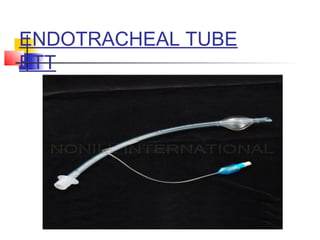
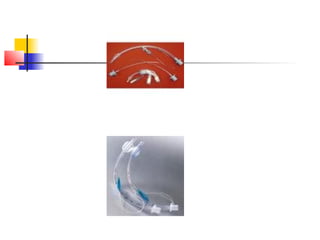
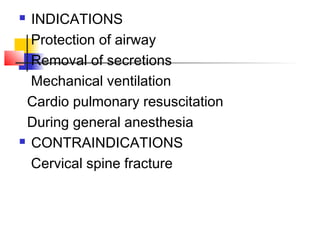
ENDOTRACHEAL TUBE
ETT
 INDICATIONS
Protection of airway
Removal of secretions
Mechanical ventilation
Cardio pulmonary resuscitation
During general anesthesia
 CONTRAINDICATIONS
Cervical spine fracture
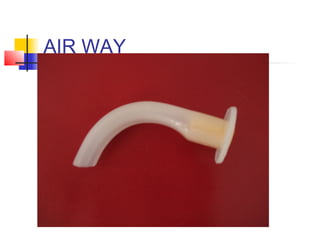
AIR WAY
 FEATURES
It is a curved instrument
The proximal end has a collar
These are available in all sizes to be
used
in infants and children
 INDICATIONS
Use to keep airway patent in
unconscious patients
Helps to prevent backward falling of the
tongue
Helps to prevent tongue bite in patients
with convulsions
Helps removal of secretions from the
mouth
It is used in patients during general
anesthesia
It is used in patients during post
anesthesia recovery period
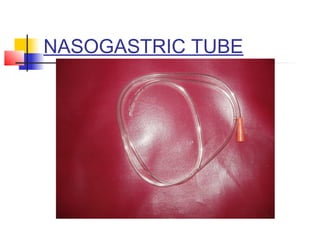
NASOGASTRIC TUBE
 FEATURES
Soft plastic tube
It is available in different diameters
measured
in french unitsa
It has marking at 18,22,26,and 30
inches
There are two to three holes few mm
 INDICATIONS
Diagnostic
Intragastric bleed
Pyloric stenosis
Collection of gastric lavage for AFB
Achlorhydia
Therapeutic
Gastric lavage in cases of poisoning
Decompression in cases of acute
pancreatitis , acute peritonitis , intestinal
obstruction and gastric surgery
Feeding
Unconscious patient
In cases of dysphagia:
stricture esophagus
tumour esophagus
bulbar palsy
 CONTRAINDICATIONS
Corrosive poisoning
 COMPLICATIONS
Stricture esophagus
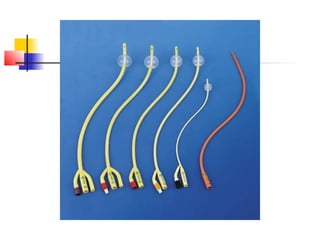
FOLEY CATHETER
FOLEY CATHETER
 FEATURES
Soft tube of latex
Has a rounded tip and two holes
proximal to the tip
The size is measured in french unit
Proximal end may have two or three
channels in two or three way cathter
respectively
INDICATIONS
Acute retention of urine
Chronic retention of urine with overflow
In cases of neurogenic bladder
In surgery involving bladder and prostrate
In all perineal operations
In management of incomplete rupture of
urethra
Intra vesical chemotherapy
To carry out urethrography
To monitor urine output
CONTRAINDICATIONS
Blood at meatus
Acute urethritis
COMPLICATIONS
Blockade
Cathter leak
Bacteriuria
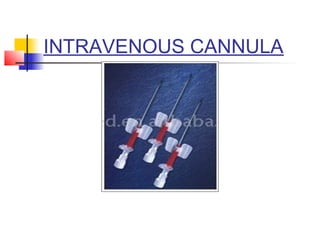
INTRAVENOUS CANNULA
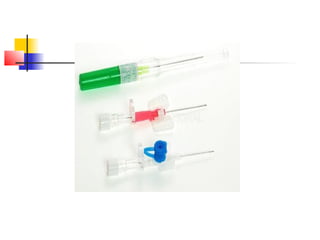
 FEATURES
PARTS
Cannula
Stylet
Wings
Lock
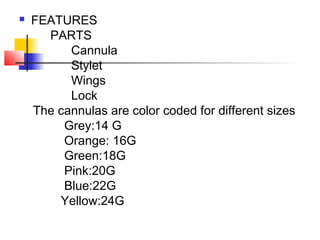
The cannulas are color coded for different sizes
Grey:14 G
Orange: 16G
Green:18G
Pink:20G
Blue:22G
Yellow:24G
 IV cannulas are used to cannulate the veins
for intravenous injections, infusions and
transfusions
 Adequate aseptic measures are taken before
the cannulas are inserted
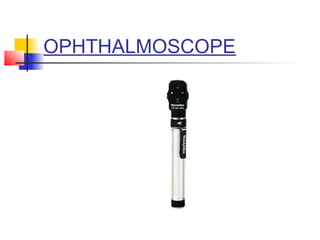
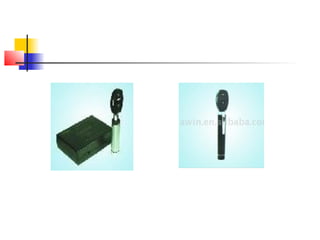
OPHTHALMOSCOPE
 FEATURES
Handle
System of lenses
Illuminating part
It is a self illuminating type of direct
ophthalmoscope
It is used to examine the fundus of the eye
Following structures are seen:
Optic disc
Macula lutea
Retinal vessels
To examine the right eye of the patient
instrument is held in the right hand and the
examiner looks with the right eye keeping
it as close to the patient as possible
Various parts of the ratina can be visualised
by changing the direction of the light beam
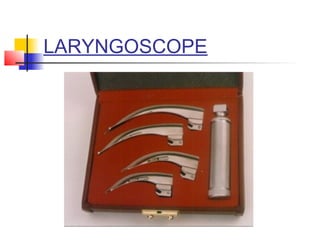
LARYNGOSCOPE
 FEATURES
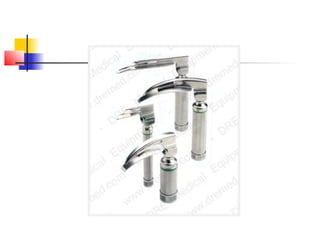
It is a metallic instrument used for visualization
of larynx and vocal cords
PARTS:
Main body handle
Blade
Blades are made of curved steel and have blunt
distal end
 USES:
To perform direct laryngoscopy
To intubate the patient with ETT
To clean the upper respiratory tract for
removal of
blood or secretions
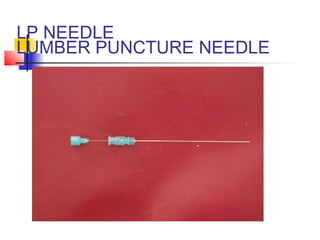
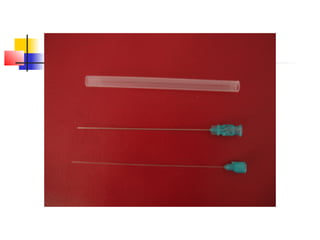
LP NEEDLE
LUMBER PUNCTURE NEEDLE
 INDICATIONS
A. DIAGNOSTIC
Meningitis and its etiology in some cases.
Subarachnoid haemorrhage
Encephalitis
Guillain – Barre Syndrome
Multiple Sclerosis
Neurosyphilis
For Myelography
For Pneumoencephalography
Unexplained Coma
Cases of pyrexia of unknown origin.
B. THERAPEUTIC
Intrathecal administration of drugs:
Methotrexate
Certain immunoglobulins
C. ANESTHESIA
Spinal anesthesia
 CONTRAINDICATIONS
Raised ICP as indicated by papilledema
Suspicion of tumor or mass lesin of brain or
spinal cord
Shock
Local sepsis
Bleeding disorder e.g thrombocytopenia
Gross spinal lesion
 COMPLICATIONS
Herniation of cerebellar tonsils through
foramen magnum
Headache
Hypotension
Chronic adhesive arachdonitis
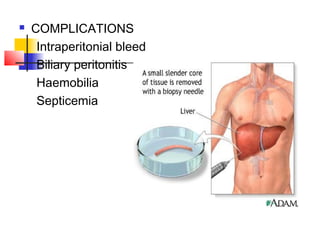
LIVER BIOPSY NEEDLE
 INDICATIONS
Cirrhosis
Chronic active hepatitis
Unexplained hepatomegaly
Infiltrative disorders
Haemochromatosis
 CONTRAINDICATIONS
Gross ascities
Prolonged PT
Thrombocytopenia
Extrahepatic cholestasis
 COMPLICATIONS
Intraperitonial bleed
Biliary peritonitis
Haemobilia
Septicemia
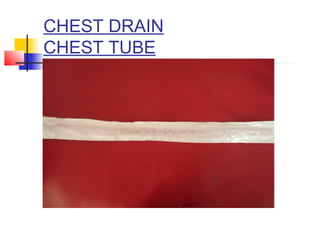
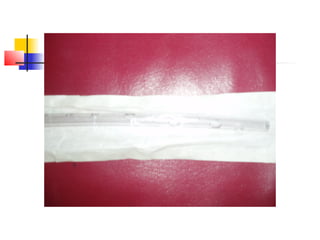
CHEST DRAIN
CHEST TUBE
PARTS
It’s a plastic tube about 30 _ 50 cm long
It is avilable in various diameters measurable in
french unit
Commonly used sizes are 28 to 32 fr
It’s a thick and stiff tube
It has a rounded, blunt end
It has 2_3 holes on the side at distal end
INDICATIONS
To drain intrapleural cavity
Haemothorax
Pneumothorax
Haemopneumothorax
Pyothorax
Pleural effusion
After thoracotomy
After the diaphragm injuries and repair
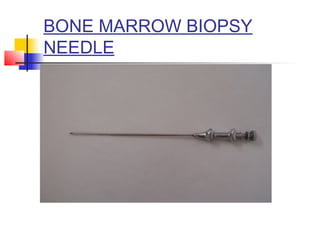
BONE MARROW BIOPSY
NEEDLE
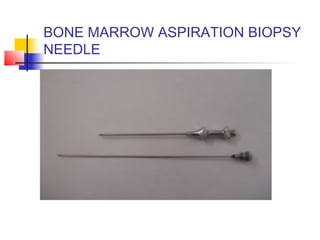
BONE MARROW ASPIRATION BIOPSY
NEEDLE
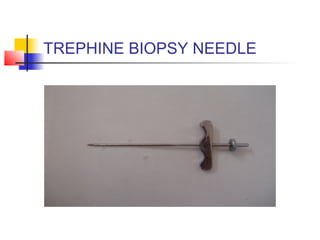
TREPHINE BIOPSY NEEDLE
INDICATIONS
DIAGNOSTIC:
Megaloblastic anemia
Dimorphic anemia
Iron defeciency anemia
Sideroblastic anemia
Pancytopenia
Leukemia
Multiple myeloma
Chronic malaria
P.U.O
PROGNOSTIC:
Aplastic anemia
Agranulocytosis
SITE
Posterior iliac crest
First piece of body of sternum
Lumber spinous process
Medial aspect of the upper end of the
tibia
CONTRAINDICATIONS
Derranged coagulation profile
Local sepsis at site of biopsy
E.S.R TUBE
ERYTHROCYTE
SEDIMENTATION RATE
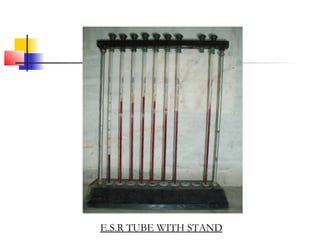
E.S.R TUBE WITH STAND
E.S.R is the time taken by the blood corpuscles to
settle down in a glass tubeof uniform bore when
it is kept undisturbed and uncoagulated
This is due to
The force of gravity
The phenomenon of rouleaux formation
It is graded in millimeters from 0 at the upper end
an d200 at the lower end
Tube is fitted in the stand and left undisturbed for 1
hour
Reading is taken after 1 hour
Normal value :
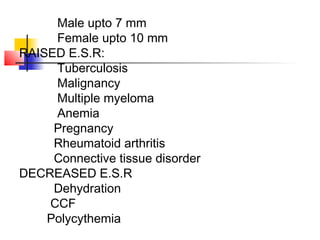
Male upto 7 mm
Female upto 10 mm
RAISED E.S.R:
Tuberculosis
Malignancy
Multiple myeloma
Anemia
Pregnancy
Rheumatoid arthritis
Connective tissue disorder
DECREASED E.S.R
Dehydration
CCF
Polycythemia
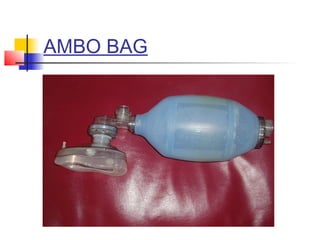
AMBO BAG
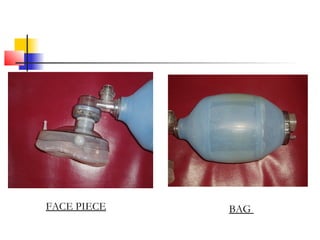
FACE PIECE BAG
Ambu bvag is the most commonly used manual
resuscitation kit and consist of
. A bag
. A valve
. A facepiece
The bag is made up of rubber.When the bag is
squeezed the valve closes and allows the air to
pass to the face piece
The air in the bag is enriched with oxygen via a
tube
When the pressure is released the bag fills
automatically.
THANK YOU

Medical instruments

  • 1.
  • 2.
    LIST  ENDOTRACHEAL TUBE AIR WAY  AMBU BAG  FOLEYs CATHETER  NASOGASTRIC TUBE  INTRAVENOUS CANNULA  LUMBER PUNCTURE NEEDLE  LIVER BIOPSY NEEDLE
  • 3.
     LARYNGOSCOPE  CHESTTUBE  BONE MARROW NEEDLE  ESR TUBE  OPHTHALMOSCOPE
  • 4.
  • 6.
     INDICATIONS Protection ofairway Removal of secretions Mechanical ventilation Cardio pulmonary resuscitation During general anesthesia  CONTRAINDICATIONS Cervical spine fracture
  • 7.
  • 8.
     FEATURES It isa curved instrument The proximal end has a collar These are available in all sizes to be used in infants and children  INDICATIONS Use to keep airway patent in unconscious patients Helps to prevent backward falling of the tongue
  • 9.
    Helps to preventtongue bite in patients with convulsions Helps removal of secretions from the mouth It is used in patients during general anesthesia It is used in patients during post anesthesia recovery period
  • 10.
  • 11.
     FEATURES Soft plastictube It is available in different diameters measured in french unitsa It has marking at 18,22,26,and 30 inches There are two to three holes few mm
  • 12.
     INDICATIONS Diagnostic Intragastric bleed Pyloricstenosis Collection of gastric lavage for AFB Achlorhydia Therapeutic Gastric lavage in cases of poisoning Decompression in cases of acute pancreatitis , acute peritonitis , intestinal obstruction and gastric surgery
  • 13.
    Feeding Unconscious patient In casesof dysphagia: stricture esophagus tumour esophagus bulbar palsy  CONTRAINDICATIONS Corrosive poisoning  COMPLICATIONS Stricture esophagus
  • 14.
  • 16.
    FOLEY CATHETER  FEATURES Softtube of latex Has a rounded tip and two holes proximal to the tip The size is measured in french unit Proximal end may have two or three channels in two or three way cathter respectively
  • 17.
    INDICATIONS Acute retention ofurine Chronic retention of urine with overflow In cases of neurogenic bladder In surgery involving bladder and prostrate In all perineal operations In management of incomplete rupture of urethra Intra vesical chemotherapy To carry out urethrography To monitor urine output
  • 18.
    CONTRAINDICATIONS Blood at meatus Acuteurethritis COMPLICATIONS Blockade Cathter leak Bacteriuria
  • 19.
  • 21.
     FEATURES PARTS Cannula Stylet Wings Lock The cannulasare color coded for different sizes Grey:14 G Orange: 16G Green:18G Pink:20G Blue:22G Yellow:24G
  • 22.
     IV cannulasare used to cannulate the veins for intravenous injections, infusions and transfusions  Adequate aseptic measures are taken before the cannulas are inserted
  • 23.
  • 25.
     FEATURES Handle System oflenses Illuminating part It is a self illuminating type of direct ophthalmoscope It is used to examine the fundus of the eye Following structures are seen: Optic disc Macula lutea Retinal vessels
  • 26.
    To examine theright eye of the patient instrument is held in the right hand and the examiner looks with the right eye keeping it as close to the patient as possible Various parts of the ratina can be visualised by changing the direction of the light beam
  • 27.
  • 29.
     FEATURES It isa metallic instrument used for visualization of larynx and vocal cords PARTS: Main body handle Blade Blades are made of curved steel and have blunt distal end  USES: To perform direct laryngoscopy To intubate the patient with ETT To clean the upper respiratory tract for removal of blood or secretions
  • 30.
  • 32.
     INDICATIONS A. DIAGNOSTIC Meningitisand its etiology in some cases. Subarachnoid haemorrhage Encephalitis Guillain – Barre Syndrome Multiple Sclerosis Neurosyphilis For Myelography For Pneumoencephalography Unexplained Coma Cases of pyrexia of unknown origin.
  • 33.
    B. THERAPEUTIC Intrathecal administrationof drugs: Methotrexate Certain immunoglobulins C. ANESTHESIA Spinal anesthesia  CONTRAINDICATIONS Raised ICP as indicated by papilledema Suspicion of tumor or mass lesin of brain or spinal cord Shock Local sepsis Bleeding disorder e.g thrombocytopenia Gross spinal lesion
  • 34.
     COMPLICATIONS Herniation ofcerebellar tonsils through foramen magnum Headache Hypotension Chronic adhesive arachdonitis
  • 35.
    LIVER BIOPSY NEEDLE INDICATIONS Cirrhosis Chronic active hepatitis Unexplained hepatomegaly Infiltrative disorders Haemochromatosis  CONTRAINDICATIONS Gross ascities Prolonged PT Thrombocytopenia Extrahepatic cholestasis
  • 36.
     COMPLICATIONS Intraperitonial bleed Biliaryperitonitis Haemobilia Septicemia
  • 37.
  • 39.
    PARTS It’s a plastictube about 30 _ 50 cm long It is avilable in various diameters measurable in french unit Commonly used sizes are 28 to 32 fr It’s a thick and stiff tube It has a rounded, blunt end It has 2_3 holes on the side at distal end INDICATIONS To drain intrapleural cavity Haemothorax Pneumothorax
  • 40.
  • 41.
  • 42.
  • 43.
  • 44.
    INDICATIONS DIAGNOSTIC: Megaloblastic anemia Dimorphic anemia Irondefeciency anemia Sideroblastic anemia Pancytopenia Leukemia Multiple myeloma Chronic malaria P.U.O PROGNOSTIC: Aplastic anemia Agranulocytosis
  • 45.
    SITE Posterior iliac crest Firstpiece of body of sternum Lumber spinous process Medial aspect of the upper end of the tibia CONTRAINDICATIONS Derranged coagulation profile Local sepsis at site of biopsy
  • 46.
  • 47.
  • 48.
    E.S.R is thetime taken by the blood corpuscles to settle down in a glass tubeof uniform bore when it is kept undisturbed and uncoagulated This is due to The force of gravity The phenomenon of rouleaux formation It is graded in millimeters from 0 at the upper end an d200 at the lower end Tube is fitted in the stand and left undisturbed for 1 hour Reading is taken after 1 hour Normal value :
  • 49.
    Male upto 7mm Female upto 10 mm RAISED E.S.R: Tuberculosis Malignancy Multiple myeloma Anemia Pregnancy Rheumatoid arthritis Connective tissue disorder DECREASED E.S.R Dehydration CCF Polycythemia
  • 50.
  • 51.
  • 52.
    Ambu bvag isthe most commonly used manual resuscitation kit and consist of . A bag . A valve . A facepiece The bag is made up of rubber.When the bag is squeezed the valve closes and allows the air to pass to the face piece The air in the bag is enriched with oxygen via a tube When the pressure is released the bag fills automatically.
  • 53.