Measles, Mumps and RubellaMay 25, 2011Lauren Gentner
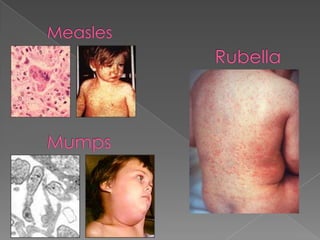
MeaslesRubellaMumps
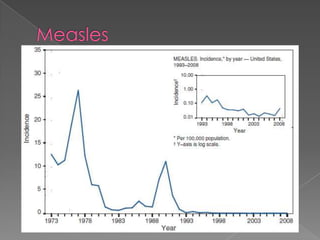
Measles
MeaslesWhat is it?Rash caused by a virusCausesA viral infection spread through contact of droplets from the nose, eye, mouth and throatIncidenceThose who have had vaccinations or have previously contracted the measles are now immune to re-infection
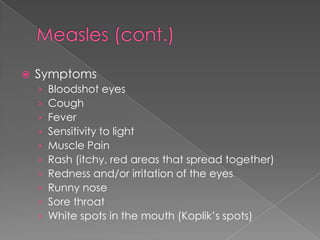
Measles (cont.)SymptomsBloodshot eyesCoughFeverSensitivity to lightMuscle PainRash (itchy, red areas that spread together)Redness and/or irritation of the eyesRunny noseSore throatWhite spots in the mouth (Koplik’s spots)
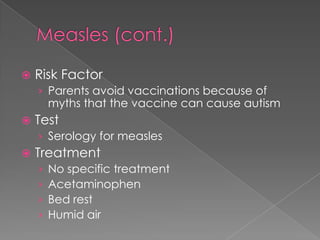
Measles (cont.)Risk FactorParents avoid vaccinations because of myths that the vaccine can cause autismTestSerology for measlesTreatmentNo specific treatmentAcetaminophenBed restHumid air
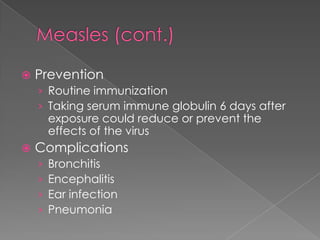
Measles (cont.)PreventionRoutine immunizationTaking serum immune globulin 6 days after exposure could reduce or prevent the effects of the virusComplicationsBronchitisEncephalitisEar infectionPneumonia
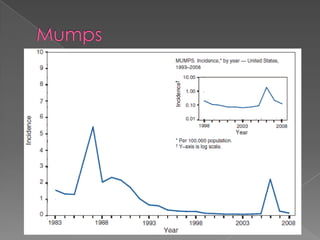
Mumps
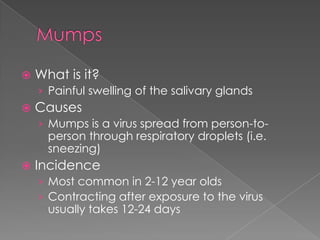
MumpsWhat is it?Painful swelling of the salivary glandsCausesMumps is a virus spread from person-to-person through respiratory droplets (i.e. sneezing)IncidenceMost common in 2-12 year oldsContracting after exposure to the virus usually takes 12-24 days
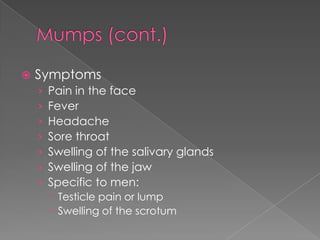
Mumps (cont.)SymptomsPain in the faceFeverHeadacheSore throatSwelling of the salivary glandsSwelling of the jawSpecific to men:Testicle pain or lumpSwelling of the scrotum
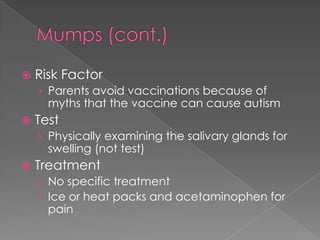
Mumps (cont.)Risk FactorParents avoid vaccinations because of myths that the vaccine can cause autismTestPhysically examining the salivary glands for swelling (not test)TreatmentNo specific treatmentIce or heat packs and acetaminophen for pain
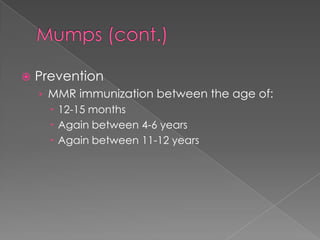
Mumps (cont.)PreventionMMR immunization between the age of:12-15 monthsAgain between 4-6 yearsAgain between 11-12 years
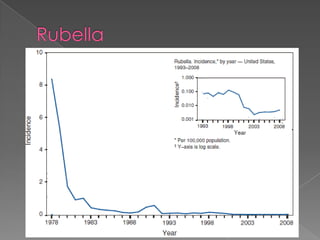
Rubella
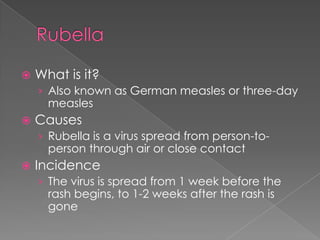
RubellaWhat is it?Also known as German measles or three-day measlesCausesRubella is a virus spread from person-to-person through air or close contactIncidenceThe virus is spread from 1 week before the rash begins, to 1-2 weeks after the rash is gone
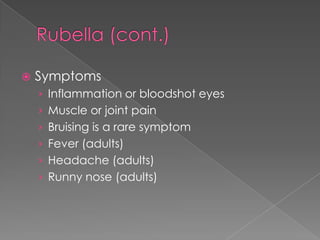
Rubella (cont.)SymptomsInflammation or bloodshot eyesMuscle or joint painBruising is a rare symptomFever (adults)Headache (adults)Runny nose (adults)
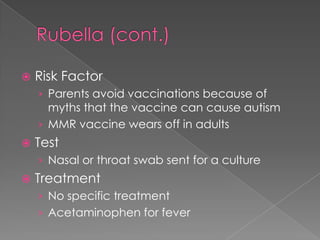
Rubella (cont.)Risk FactorParents avoid vaccinations because of myths that the vaccine can cause autismMMR vaccine wears off in adultsTestNasal or throat swab sent for a cultureTreatmentNo specific treatmentAcetaminophen for fever
Rubella (cont.)PreventionMMR immunization between the age of:12-15 monthsAgain between 4-6 years
Work CitedKaneshiro, Neil K., and David Zieve. "Measles."PubMed Health. A.D.A.M, 26/7/2010. Web. 28 April 2011. <http://ncbi.nlm.nih.gov>.Kaneshiro, Neil K. "Rubella." PubMed Health. A.D.A.M, 24 January 2011. Web. 24 May 2011. <http://www.ncbi.nlm.nih.gov>."Summary of Notifiable Diseases." Center for Disease Control. Center for Disease Control, 24 June 2010. Web. 24 May 2011. <http://www.cdc.gov>.Vorvick, Linda J., and David Zieve. "Mumps." PubMed Health. A.D.A.M, 13/5/2010. Web. 28 April 2011. <http://ncbi.nlm.nih.gov>.

Measles, mumps and rubella

  • 1.
    Measles, Mumps andRubellaMay 25, 2011Lauren Gentner
  • 2.
  • 3.
  • 4.
    MeaslesWhat is it?Rashcaused by a virusCausesA viral infection spread through contact of droplets from the nose, eye, mouth and throatIncidenceThose who have had vaccinations or have previously contracted the measles are now immune to re-infection
  • 5.
    Measles (cont.)SymptomsBloodshot eyesCoughFeverSensitivityto lightMuscle PainRash (itchy, red areas that spread together)Redness and/or irritation of the eyesRunny noseSore throatWhite spots in the mouth (Koplik’s spots)
  • 6.
    Measles (cont.)Risk FactorParentsavoid vaccinations because of myths that the vaccine can cause autismTestSerology for measlesTreatmentNo specific treatmentAcetaminophenBed restHumid air
  • 7.
    Measles (cont.)PreventionRoutine immunizationTakingserum immune globulin 6 days after exposure could reduce or prevent the effects of the virusComplicationsBronchitisEncephalitisEar infectionPneumonia
  • 8.
  • 9.
    MumpsWhat is it?Painfulswelling of the salivary glandsCausesMumps is a virus spread from person-to-person through respiratory droplets (i.e. sneezing)IncidenceMost common in 2-12 year oldsContracting after exposure to the virus usually takes 12-24 days
  • 10.
    Mumps (cont.)SymptomsPain inthe faceFeverHeadacheSore throatSwelling of the salivary glandsSwelling of the jawSpecific to men:Testicle pain or lumpSwelling of the scrotum
  • 11.
    Mumps (cont.)Risk FactorParentsavoid vaccinations because of myths that the vaccine can cause autismTestPhysically examining the salivary glands for swelling (not test)TreatmentNo specific treatmentIce or heat packs and acetaminophen for pain
  • 12.
    Mumps (cont.)PreventionMMR immunizationbetween the age of:12-15 monthsAgain between 4-6 yearsAgain between 11-12 years
  • 13.
  • 14.
    RubellaWhat is it?Alsoknown as German measles or three-day measlesCausesRubella is a virus spread from person-to-person through air or close contactIncidenceThe virus is spread from 1 week before the rash begins, to 1-2 weeks after the rash is gone
  • 15.
    Rubella (cont.)SymptomsInflammation orbloodshot eyesMuscle or joint painBruising is a rare symptomFever (adults)Headache (adults)Runny nose (adults)
  • 16.
    Rubella (cont.)Risk FactorParentsavoid vaccinations because of myths that the vaccine can cause autismMMR vaccine wears off in adultsTestNasal or throat swab sent for a cultureTreatmentNo specific treatmentAcetaminophen for fever
  • 17.
    Rubella (cont.)PreventionMMR immunizationbetween the age of:12-15 monthsAgain between 4-6 years
  • 18.
    Work CitedKaneshiro, NeilK., and David Zieve. "Measles."PubMed Health. A.D.A.M, 26/7/2010. Web. 28 April 2011. <http://ncbi.nlm.nih.gov>.Kaneshiro, Neil K. "Rubella." PubMed Health. A.D.A.M, 24 January 2011. Web. 24 May 2011. <http://www.ncbi.nlm.nih.gov>."Summary of Notifiable Diseases." Center for Disease Control. Center for Disease Control, 24 June 2010. Web. 24 May 2011. <http://www.cdc.gov>.Vorvick, Linda J., and David Zieve. "Mumps." PubMed Health. A.D.A.M, 13/5/2010. Web. 28 April 2011. <http://ncbi.nlm.nih.gov>.