Gracious college of nursing Abhanpur
Raipur
Mastoiditis
PRESENTED BY
Om verma
Assistant professor
INTRODUCTION
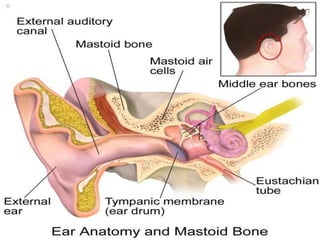
Mastoiditis is a bacterial infection of the mastoid
air cells surrounding the inner and middle ear. The
mastoid bone, which is full of these air cells, is
part of the temporal bone of the skull. The
mastoid air cells are thought to protect the
delicate structures of the ear, regulate ear
pressure and possibly protect the temporal bone
during trauma. When the mastoid cells become
infected or inflamed, often as a result of an
unresolved middle ear infection (otitis media),
mastoiditis can develop.
Mastoiditis is a bacterial infection of the
mastoid air cells surrounding the inner and
middle ear. The mastoid bone.
According to levis
mastoiditis includes all inflammatory
processes of the mastoid air cells of the
temporal bone.
According to luckmans
According to Lippen cott
OTITIS MEDIA
is the result of infection, it can spread
to the mastoid bone, or the bone that
sits behind the ear. This bone consists
of air spaces that help drain the middle
ear. When the mastoid cells become
infected or inflamed, mastoiditis
develops.
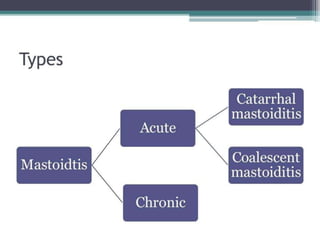
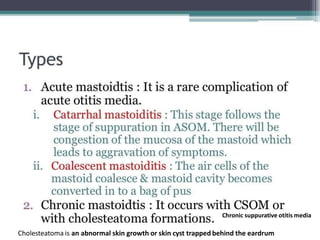
CHRONIC SUPPURATIVE OTITIS MEDIA
(CSOM)
is a common cause of hearing impairment
and disability. chronic suppurative otitis media
(CSOM) is a chronic inflammation of the
middle ear and mastoid cavity. Occasionally it
can lead to fatal intracranial infections
Swelling caused by viruses, bacteria, fungi, the
abscess can disrupt the blood and oxygen
supply to the brain. Lead acute mastoiditis,
CHOLESTEATOM
Mastoiditis can develop if the mastoid cells
become infected or inflamed, often
following a persistent middle ear infection
(otitis media). Cholesteatoma can also
cause mastoiditis. This is an abnormal
collection of skin cells inside the ear which
may prevent the ear draining properly,
leading to infection.
A RECENT MIDDLE EAR INFECTION that was not
treated with antibiotics. A weak immune system.
An abnormal skin growth in the middle ear
known as cholesteatoma.
A SERIOUS BACTERIAL INFECTION that
affects the mastoid bone behind the
ear.
HEREDITARY or genetic factors
Chronic suppurative otitis media
Cholesteatoma is an abnormal skin growth or skin cyst trapped behind the eardrum
Due to etiological factors such as ……..
MANAGEMENT
mastoiditis, initial therapy of
intravenous vancomycin and
ceftriaxone is most appropriate until
results of the culture and sensitivity
studies are available.
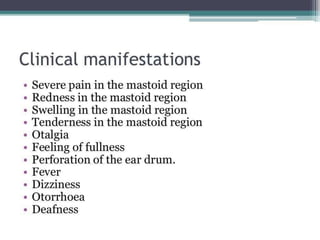
• Facial paralysis
• Nausea, vomiting, vertigo (labyrinthitis)
• Vision changes or headaches (blood clots in
the brain)
mastoiditis
mastoiditis
mastoiditis
mastoiditis

mastoiditis

  • 1.
    Gracious college ofnursing Abhanpur Raipur Mastoiditis PRESENTED BY Om verma Assistant professor
  • 3.
    INTRODUCTION Mastoiditis is abacterial infection of the mastoid air cells surrounding the inner and middle ear. The mastoid bone, which is full of these air cells, is part of the temporal bone of the skull. The mastoid air cells are thought to protect the delicate structures of the ear, regulate ear pressure and possibly protect the temporal bone during trauma. When the mastoid cells become infected or inflamed, often as a result of an unresolved middle ear infection (otitis media), mastoiditis can develop.
  • 4.
    Mastoiditis is abacterial infection of the mastoid air cells surrounding the inner and middle ear. The mastoid bone. According to levis mastoiditis includes all inflammatory processes of the mastoid air cells of the temporal bone. According to luckmans
  • 5.
  • 7.
    OTITIS MEDIA is theresult of infection, it can spread to the mastoid bone, or the bone that sits behind the ear. This bone consists of air spaces that help drain the middle ear. When the mastoid cells become infected or inflamed, mastoiditis develops.
  • 8.
    CHRONIC SUPPURATIVE OTITISMEDIA (CSOM) is a common cause of hearing impairment and disability. chronic suppurative otitis media (CSOM) is a chronic inflammation of the middle ear and mastoid cavity. Occasionally it can lead to fatal intracranial infections Swelling caused by viruses, bacteria, fungi, the abscess can disrupt the blood and oxygen supply to the brain. Lead acute mastoiditis,
  • 9.
    CHOLESTEATOM Mastoiditis can developif the mastoid cells become infected or inflamed, often following a persistent middle ear infection (otitis media). Cholesteatoma can also cause mastoiditis. This is an abnormal collection of skin cells inside the ear which may prevent the ear draining properly, leading to infection.
  • 10.
    A RECENT MIDDLEEAR INFECTION that was not treated with antibiotics. A weak immune system. An abnormal skin growth in the middle ear known as cholesteatoma. A SERIOUS BACTERIAL INFECTION that affects the mastoid bone behind the ear. HEREDITARY or genetic factors
  • 13.
    Chronic suppurative otitismedia Cholesteatoma is an abnormal skin growth or skin cyst trapped behind the eardrum
  • 16.
    Due to etiologicalfactors such as ……..
  • 20.
  • 22.
    mastoiditis, initial therapyof intravenous vancomycin and ceftriaxone is most appropriate until results of the culture and sensitivity studies are available.
  • 26.
    • Facial paralysis •Nausea, vomiting, vertigo (labyrinthitis) • Vision changes or headaches (blood clots in the brain)