OTOSCLEROSIS
Otosclerosis
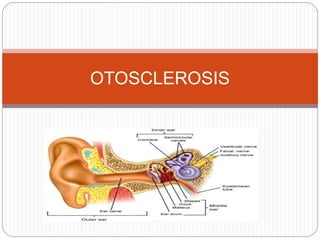
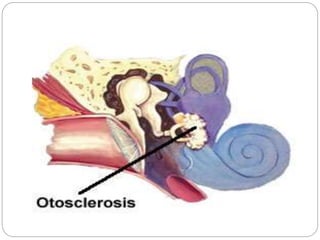
 Otosclerosis or “hardening of the ear” result from
the formation of an abnormal spongy bone , like
bone growth along the stapes in the middle ear.
 With the new bone growth , the stapes become
immobile prevents transmission as sound
vibration into the ear, leading to conductive
hearing loss.
 Otosclerosis usually affect the both ears.
Classification
 There are mainly two types of classification
1. Histological otosclerosis
2. Clinical otosclerosis
1.Histological otosclerosis
This type of otosclerosis does
not produce any symptoms
during life but is revealed only at
postmortem
2.Clinical otosclerosis
 There are three sub types
1. Stapedial otosclerosis
2. Cochlear otosclerosis
3. Mixed otosclerosis
 1.stapedial otosclerosis
 The otosclerosis focus may produce ankylosis of
the membraneous labyrinth
 2.Cochlear otosclerosis
 The otosclerotic process encroaches upon the
membraneous labyrinth producing sensoryneural
deafness.
 3.Mixed otosclerosis
 Otosclerosis causes both fixation of the stapes as
well as in involvement of the labyrinth so that
there are mixed hearing loss.
causes
1. Geneic factors
2. Viral infection
3. Measles
4. Other ear conditions
Clinical Manifestations
 Hearing loss
 Dizziness
 Tinnitus
 Roaring
 Buzzng the ear
 Vertigo
 headache & earache
Diagnostic evaluation
 History
 Physial examination
 Tuning fork test
 Audiometry test
 Tympanocentesis – fluid for middle ear send for
culture
 CT scan – collection of fluidin ear & mastoid region ,
abscess formation
 MRI – evaluation of tumor & soft tissue
 AUDIOGRAPHY – to assess hearing loss
Management
 Otosclerosis may slowly get worse. The condition
may not require treatment until you having severe
hearing problems.
 Medications such as fluoride, calcium, or vitamin
D may help to slow the hearing loss, but the
benefits have not yet been proved.
 No known medical treatment exists for this form
of deafness, but amplification with a hearing aid
may be helpful.
 Administer analgesics such as –
 IBUPROFEN
 OXYCODONE
 ACETAMENOPHEN (PCM)
 Hearing aid may be used to treat the hearing loss
General measures :
 Avoidance of noise full environment
 Side lying position
 Continuous applications of medications
 High protein diet
Surgerical management
stapedectomy.
The removal of portion of the
sclerotic stepes footplate of
stapes or complete removal of the
stapes and the implant with
prosthesis to maintain suitable
conduction.
Stapedotomy
 Modern surgery called stapedotomy
is performed by drilling a small hole
in the stapes footplate with micro
drill or laser, and the insertion of a
piston like prosthesis.
Nursing assessment
 History of onset & progression of symptoms
 Extend of hearing loss via audiotory
 Rinne test – to evaluate loss of air conduction
 Webers test-
Complications
 Complete deafness
 Nerve damage
 Infection, dizziness, pain, or blood clot in the ear
after surgery

Otosclerosis

  • 1.
  • 2.
    Otosclerosis  Otosclerosis or“hardening of the ear” result from the formation of an abnormal spongy bone , like bone growth along the stapes in the middle ear.  With the new bone growth , the stapes become immobile prevents transmission as sound vibration into the ear, leading to conductive hearing loss.  Otosclerosis usually affect the both ears.
  • 4.
    Classification  There aremainly two types of classification 1. Histological otosclerosis 2. Clinical otosclerosis
  • 5.
    1.Histological otosclerosis This typeof otosclerosis does not produce any symptoms during life but is revealed only at postmortem
  • 6.
    2.Clinical otosclerosis  Thereare three sub types 1. Stapedial otosclerosis 2. Cochlear otosclerosis 3. Mixed otosclerosis
  • 7.
     1.stapedial otosclerosis The otosclerosis focus may produce ankylosis of the membraneous labyrinth  2.Cochlear otosclerosis  The otosclerotic process encroaches upon the membraneous labyrinth producing sensoryneural deafness.
  • 8.
     3.Mixed otosclerosis Otosclerosis causes both fixation of the stapes as well as in involvement of the labyrinth so that there are mixed hearing loss.
  • 9.
    causes 1. Geneic factors 2.Viral infection 3. Measles 4. Other ear conditions
  • 10.
    Clinical Manifestations  Hearingloss  Dizziness  Tinnitus  Roaring  Buzzng the ear  Vertigo  headache & earache
  • 11.
    Diagnostic evaluation  History Physial examination  Tuning fork test  Audiometry test  Tympanocentesis – fluid for middle ear send for culture  CT scan – collection of fluidin ear & mastoid region , abscess formation  MRI – evaluation of tumor & soft tissue  AUDIOGRAPHY – to assess hearing loss
  • 12.
    Management  Otosclerosis mayslowly get worse. The condition may not require treatment until you having severe hearing problems.  Medications such as fluoride, calcium, or vitamin D may help to slow the hearing loss, but the benefits have not yet been proved.  No known medical treatment exists for this form of deafness, but amplification with a hearing aid may be helpful.
  • 13.
     Administer analgesicssuch as –  IBUPROFEN  OXYCODONE  ACETAMENOPHEN (PCM)  Hearing aid may be used to treat the hearing loss General measures :  Avoidance of noise full environment  Side lying position  Continuous applications of medications  High protein diet
  • 14.
    Surgerical management stapedectomy. The removalof portion of the sclerotic stepes footplate of stapes or complete removal of the stapes and the implant with prosthesis to maintain suitable conduction.
  • 15.
    Stapedotomy  Modern surgerycalled stapedotomy is performed by drilling a small hole in the stapes footplate with micro drill or laser, and the insertion of a piston like prosthesis.
  • 16.
    Nursing assessment  Historyof onset & progression of symptoms  Extend of hearing loss via audiotory  Rinne test – to evaluate loss of air conduction  Webers test-
  • 17.
    Complications  Complete deafness Nerve damage  Infection, dizziness, pain, or blood clot in the ear after surgery