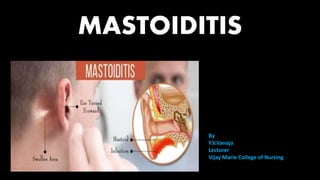
MASTOIDITIS
By
Y.V.Vanaja
Lecturer
Vijay Marie College of Nursing
INTRODUCTION
• The mastoid bone, which is full of these air cells, is part of the
temporal bone of the skull. The mastoid air cells are thought to
protect the delicate structures of the ear, regulate ear pressure and
possibly protect the temporal bone during trauma.
• Mastoiditis is a bacterial infection of the mastoid air cells surrounding
the inner an
• When the mastoid cells become infected or inflamed, often as a
result of an unresolved middle ear infection (otitis media), mastoiditis
can develop.d middle ear.
DEFINITION
• Mastoiditis is an infection of the mastoid air cells caused by untreated
or inadequately treated otitis media “Ignatavicious”
• It is an inflammation of the mastoid process behind the ear and of the
air space connecting it to the cavity of the middle ear.
• Mastoiditis is a bacterial infection of the mastoid air cells surrounding
the inner and middle ear.
https://www.webmd.com/cold-and-flu/ear-infection/mastoiditis-
symptoms-causes-treatments#1
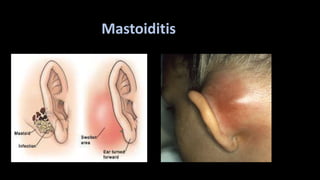
Mastoiditis
CLASSIFICATION
1.Acute mastoiditis: It is a rare complication of acute otitis media.
2.Chronic mastoiditis: It is most commonly associated with CSOM or
with cholesteatoma formations.
CAUSES & RISK FACTORS
1.Infection of the middle ear.
2.Injury of the mastoid bones and cells.
3.Cholesteatoma.
4.Upper respiratory infection.
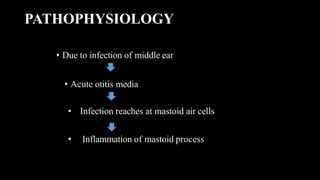
PATHOPHYSIOLOGY
• Due to infection of middle ear
• Acute otitis media
• Infection reaches at mastoid air cells
• Inflammation of mastoid process
SIGNS AND SYMPTOMS
1.Otalgia.
2.Swelling on the mastoid bone.
3.Perforation of the ear drum.
4.Loss of hearing.
5.Severe pain at eating time.
6.Increased cranial pressure.
7.Painless discharge from the affected ear.
8.Otorrhoea(purulent discharge) may be odorless or foul smelling.
9.Nausea, vomiting.
10.The ear is pushed sideways and down
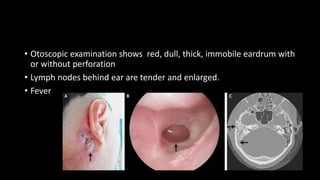
• Otoscopic examination shows red, dull, thick, immobile eardrum with
or without perforation
• Lymph nodes behind ear are tender and enlarged.
• Fever
MASTOIDITIS COMPLICATIONS
• Mastoiditis complications may include:
• Facial paralysis
• Nausea, vomiting, vertigo (labyrinthitis)
• Hearing loss
• Brain abscess or meningitis
• Vision changes or headaches (blood clots in the brain)
DAIGNOSIS
• History collection & physical examination
• otoscope.
• A sample of the infected ear fluid should be collected for culture.
• CT scan
• MRI
• X-ray,
• blood tests
• Audiogram,
• lumbar puncture or “spinal tap.”
MEDICALMANAGEMENT
• Iv antibiotics are used to prevent the spread of infection
• regular ear cleanings by a doctor.
• Ear-irrigation: For removing purulent discharge.
• Analgesics drugs: Aspirin,
• Antiemetics to control nausea and vomiting
SURGICAL MANAGEMENT
1.Mastoidectomy: It is a surgical procedure that removes diseases
mastoid air cells.
2.Myringotomy: It is a surgical procedure in which a tiny incision is
created in the eardrum relieves pressure caused by excessive
buildup of fluid or pus.
3.Tympanoplasty: also called eardrum repair. It is the surgical
reconstruction of the perforated eardrum or the small bones of the
middle ear.
NURSING MANAGEMENT
Assess pain for location, intensity etc.
Administer analgesics as prescribed to relieve pain.
signsAdminister antibiotics as ordered.
Administer antipyretics as prescribed.
Provide plenty of fluids.
Use cool water sponging to reduce body temperature,
Encourage patient and family to use of non verbal communication
such facial expression, pointing, body movement.
NURSING DIAGNOSIS
High risk for infection relate to tissue destruction.
 Acute Pain relate to physical factors or mastoid surgery
Altered auditory sensory perception related to partial/total
perforation of tympanic membrane.
Impaired verbal communication related to hearing deficit.
High risk for trauma realted to balance difficulty
 anxiety related to surgical procedure, potential loss of hearing and
potential loss of facial movement.

Mastoiditis

  • 1.
  • 2.
    INTRODUCTION • The mastoidbone, which is full of these air cells, is part of the temporal bone of the skull. The mastoid air cells are thought to protect the delicate structures of the ear, regulate ear pressure and possibly protect the temporal bone during trauma. • Mastoiditis is a bacterial infection of the mastoid air cells surrounding the inner an • When the mastoid cells become infected or inflamed, often as a result of an unresolved middle ear infection (otitis media), mastoiditis can develop.d middle ear.
  • 3.
    DEFINITION • Mastoiditis isan infection of the mastoid air cells caused by untreated or inadequately treated otitis media “Ignatavicious” • It is an inflammation of the mastoid process behind the ear and of the air space connecting it to the cavity of the middle ear. • Mastoiditis is a bacterial infection of the mastoid air cells surrounding the inner and middle ear. https://www.webmd.com/cold-and-flu/ear-infection/mastoiditis- symptoms-causes-treatments#1
  • 4.
  • 5.
    CLASSIFICATION 1.Acute mastoiditis: Itis a rare complication of acute otitis media. 2.Chronic mastoiditis: It is most commonly associated with CSOM or with cholesteatoma formations.
  • 7.
    CAUSES & RISKFACTORS 1.Infection of the middle ear. 2.Injury of the mastoid bones and cells. 3.Cholesteatoma. 4.Upper respiratory infection.
  • 8.
    PATHOPHYSIOLOGY • Due toinfection of middle ear • Acute otitis media • Infection reaches at mastoid air cells • Inflammation of mastoid process
  • 9.
    SIGNS AND SYMPTOMS 1.Otalgia. 2.Swellingon the mastoid bone. 3.Perforation of the ear drum. 4.Loss of hearing. 5.Severe pain at eating time. 6.Increased cranial pressure. 7.Painless discharge from the affected ear. 8.Otorrhoea(purulent discharge) may be odorless or foul smelling. 9.Nausea, vomiting. 10.The ear is pushed sideways and down
  • 10.
    • Otoscopic examinationshows red, dull, thick, immobile eardrum with or without perforation • Lymph nodes behind ear are tender and enlarged. • Fever
  • 11.
    MASTOIDITIS COMPLICATIONS • Mastoiditiscomplications may include: • Facial paralysis • Nausea, vomiting, vertigo (labyrinthitis) • Hearing loss • Brain abscess or meningitis • Vision changes or headaches (blood clots in the brain)
  • 12.
    DAIGNOSIS • History collection& physical examination • otoscope. • A sample of the infected ear fluid should be collected for culture. • CT scan • MRI • X-ray, • blood tests • Audiogram, • lumbar puncture or “spinal tap.”
  • 13.
    MEDICALMANAGEMENT • Iv antibioticsare used to prevent the spread of infection • regular ear cleanings by a doctor. • Ear-irrigation: For removing purulent discharge. • Analgesics drugs: Aspirin, • Antiemetics to control nausea and vomiting
  • 14.
    SURGICAL MANAGEMENT 1.Mastoidectomy: Itis a surgical procedure that removes diseases mastoid air cells. 2.Myringotomy: It is a surgical procedure in which a tiny incision is created in the eardrum relieves pressure caused by excessive buildup of fluid or pus. 3.Tympanoplasty: also called eardrum repair. It is the surgical reconstruction of the perforated eardrum or the small bones of the middle ear.
  • 16.
    NURSING MANAGEMENT Assess painfor location, intensity etc. Administer analgesics as prescribed to relieve pain. signsAdminister antibiotics as ordered. Administer antipyretics as prescribed. Provide plenty of fluids. Use cool water sponging to reduce body temperature, Encourage patient and family to use of non verbal communication such facial expression, pointing, body movement.
  • 17.
    NURSING DIAGNOSIS High riskfor infection relate to tissue destruction.  Acute Pain relate to physical factors or mastoid surgery Altered auditory sensory perception related to partial/total perforation of tympanic membrane. Impaired verbal communication related to hearing deficit. High risk for trauma realted to balance difficulty  anxiety related to surgical procedure, potential loss of hearing and potential loss of facial movement.