

OTOTOXICITY
DEPARTMENT
OF
MEDICAL SURGICAL NURSING
Learning Objectives
At the end of this lecture, students sholud be able
to:
• define ototoxicity
• list out the causes
• describe the management
Definition
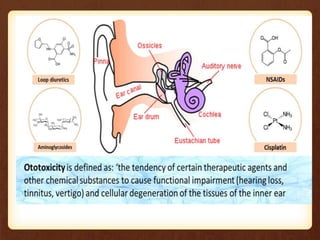
Ototoxicity is term used for ear poisoning and can
affect the hearing due to various chemical changes in
the ear
A variety of medications may have adverse effects on the
cochlea, vestibular apparatus or VIII cranial nerve.
Such as aspirin, quinine cause irreversible hearing loss.
Incidence
• It has been recognized since the 19th century.
• There are many well-known ototoxic drugs used in
clinical situations, and they are prescribed, despite
the risk of hearing disorders, to very serious health
condition
CAUSES
• At high dose of aspirin toxicity also can produce tinnitus.
• IV medication such as aminoglycosides
• Ototoxic drugs include antibiotics such
as gentamicin, streptomycin, tobramycin,
• loop diuretics such as furosemide (lasix) and
• platinum-based chemotherapy agents such
as cisplatin and carboplatin.
• Occupational exposure like painting, printing,
fueling vehicles, pesticide spray, construction, fire
fighting
• destroy the hair cells in the organ of corti.
Sign and symptoms
• Partial or profound hearing loss
• Vertigo
• Tinnitus
• Sensory neural deafness
Assessment and diagnosis
• The diagnosis is based upon the patient’s history,
symptoms, and test results.
• There is no specific test for ototoxicity; this makes a
positive history for ototoxin exposure crucial to the
diagnosis.
TREATMENT
• Note the effects of medication .
• Blood levels of medication should be monitored.
• Audiogram twice in a week during long term IV antibiotic
therapy.
• Treatments focus on reducing the effects of the
damage and rehabilitating function.
• Medical or surgical treatment is usually not
effective. Use of ototoxic drugs should be avoided
whenever possible.
• Specifically, individuals with hearing loss may be
helped with hearing aids; those with profound
bilateral (two-sided) hearing loss have been shown
to benefit from cochlear implants.
• Usual treatment given for sudden sensori- neural
deafness can be advised.
• Withdrawal of ototoxic drug may prevent further
damage in early cases.
• Hearing aids are advised in clients with established
deafness.
• Cochlear implants clients with profound bilateral
sensorineural deafness
Nursing management
• Assessment
• Positive history of used of ototoxic medication
• Occupational exposure of chemicals
• Physical examination/ ear assessment – hearing loss
, tinnitus , vertigo
• Nursing diagnosis
• Impaired hearing activity related to exposure or long
term use of medication
• Anxiety related to hearing loss
• Knowledge deficit related to prognosis
• Intervention
• Assess the patient condition
• Provide comfortable position
• Check for vitals sign
• Monitor use of long term medication
• Provide psychological support
• Reduce or stop use of medication that cause
ototoxicity
• Provide iv fluids as prescribed
• Improve nutritional status
• Provide safe and calm enviroment to patient
• Educate patient regarding use of hearing aids and
disease process
• Evaluation
• Check for the active improvement of hearing activity
of patient
• Regular follow up
Summary
So far we have discussed about definition, etiology, and
managements of ototoxicity.
Bibliography
• Lewis et al, Medical Surgical Nursing, Mosby
Elsevier,7th edition.
• Joyce.M.Black et al, Medical Surgical Nursing,
Saunders publication.
• Brunner and Siddhartha, Medical Surgical Nursing,
Lippincott Williams and Wilkins.
Thank You

Ototoxicity

  • 1.
  • 2.
    Learning Objectives At theend of this lecture, students sholud be able to: • define ototoxicity • list out the causes • describe the management
  • 3.
    Definition Ototoxicity is termused for ear poisoning and can affect the hearing due to various chemical changes in the ear A variety of medications may have adverse effects on the cochlea, vestibular apparatus or VIII cranial nerve. Such as aspirin, quinine cause irreversible hearing loss.
  • 5.
    Incidence • It hasbeen recognized since the 19th century. • There are many well-known ototoxic drugs used in clinical situations, and they are prescribed, despite the risk of hearing disorders, to very serious health condition
  • 6.
    CAUSES • At highdose of aspirin toxicity also can produce tinnitus. • IV medication such as aminoglycosides • Ototoxic drugs include antibiotics such as gentamicin, streptomycin, tobramycin, • loop diuretics such as furosemide (lasix) and • platinum-based chemotherapy agents such as cisplatin and carboplatin.
  • 7.
    • Occupational exposurelike painting, printing, fueling vehicles, pesticide spray, construction, fire fighting • destroy the hair cells in the organ of corti.
  • 8.
    Sign and symptoms •Partial or profound hearing loss • Vertigo • Tinnitus • Sensory neural deafness
  • 9.
    Assessment and diagnosis •The diagnosis is based upon the patient’s history, symptoms, and test results. • There is no specific test for ototoxicity; this makes a positive history for ototoxin exposure crucial to the diagnosis.
  • 10.
    TREATMENT • Note theeffects of medication . • Blood levels of medication should be monitored. • Audiogram twice in a week during long term IV antibiotic therapy.
  • 11.
    • Treatments focuson reducing the effects of the damage and rehabilitating function. • Medical or surgical treatment is usually not effective. Use of ototoxic drugs should be avoided whenever possible. • Specifically, individuals with hearing loss may be helped with hearing aids; those with profound bilateral (two-sided) hearing loss have been shown to benefit from cochlear implants.
  • 12.
    • Usual treatmentgiven for sudden sensori- neural deafness can be advised. • Withdrawal of ototoxic drug may prevent further damage in early cases. • Hearing aids are advised in clients with established deafness. • Cochlear implants clients with profound bilateral sensorineural deafness
  • 13.
    Nursing management • Assessment •Positive history of used of ototoxic medication • Occupational exposure of chemicals • Physical examination/ ear assessment – hearing loss , tinnitus , vertigo • Nursing diagnosis • Impaired hearing activity related to exposure or long term use of medication
  • 14.
    • Anxiety relatedto hearing loss • Knowledge deficit related to prognosis • Intervention • Assess the patient condition • Provide comfortable position • Check for vitals sign • Monitor use of long term medication • Provide psychological support
  • 15.
    • Reduce orstop use of medication that cause ototoxicity • Provide iv fluids as prescribed • Improve nutritional status • Provide safe and calm enviroment to patient • Educate patient regarding use of hearing aids and disease process
  • 16.
    • Evaluation • Checkfor the active improvement of hearing activity of patient • Regular follow up
  • 17.
    Summary So far wehave discussed about definition, etiology, and managements of ototoxicity.
  • 18.
    Bibliography • Lewis etal, Medical Surgical Nursing, Mosby Elsevier,7th edition. • Joyce.M.Black et al, Medical Surgical Nursing, Saunders publication. • Brunner and Siddhartha, Medical Surgical Nursing, Lippincott Williams and Wilkins.
  • 19.