Ear Tumors
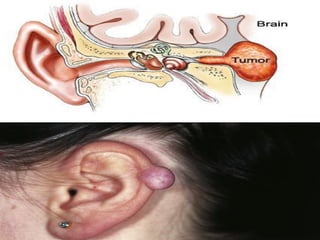
Ear tumors can form on the outer ear
(skin cancer), inner ear (acoustic
neuroma) or middle ear (glomus
tympanicum). Most ear tumors are
benign (not cancerous), but they may
cause hearing loss. Treatments include
surgery, radiosurgery, radiation therapy
and Mohs surgery.
DIFFERENCE BETWEEN AN EAR CYST AND
AN EAR TUMOR
Both cysts and tumors can cause a bump
or lump in the ear.
Cysts are small sacs that often contain
fluid. They may also have solid material.
Most cysts are not cancerous.
Tumors are solid masses of tissue that may
or may not be cancerous.
An ear tumor is a mass or lump of abnormal
cells that forms in the ear. Most ear tumors are
benign or not cancerous. But some ear tumors
are malignant (cancerous).
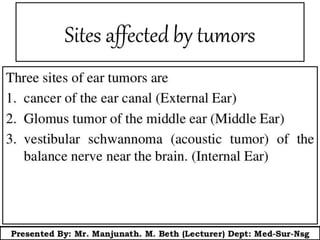
Ear tumors can form in any part of the ear,
including the inner ear, middle ear and outer
ear. They may affect hearing.
According to burnner and sudharth
TYPES OF BENIGN
(NONCANCEROUS) EAR
TUMORS
TYPES OF BENIGN (NONCANCEROUS) EAR
TUMORS
Noncancerous ear tumors can
block ear canal, leading
to earwax buildup. Types of
benign ear tumors include:
INNER EAR
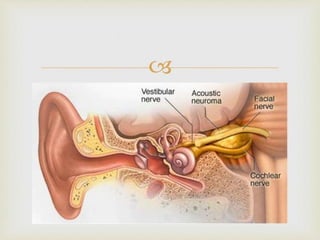
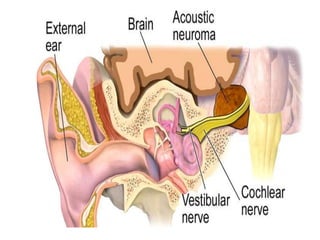
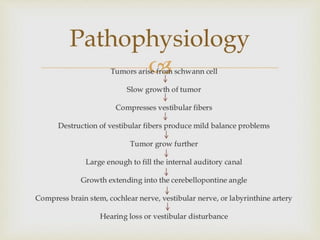
Acoustic neuromas ( inner ear )
(also called
vestibular schwannomas) form on
the vestibular nerve. This nerve in
inner ear connects to brain.
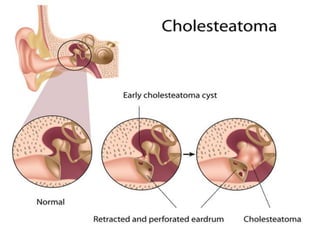
Cholesteatomas are sacs of fluid, air or
skin cells that form behind the eardrum in the
middle ear. They can lead to hearing loss if not
treated.
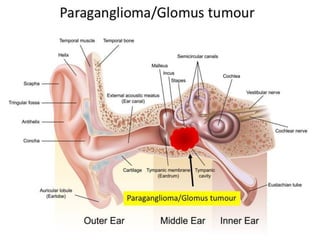
Glomus tympanicum para-
ganglioma
affects the tympanic nerve.
This nerve in the middle ear
connects to the eardrum.
Adenomas
are rare noncancerous
tumors that develop in
the middle ear.
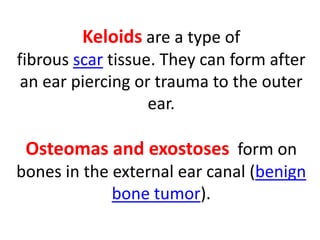
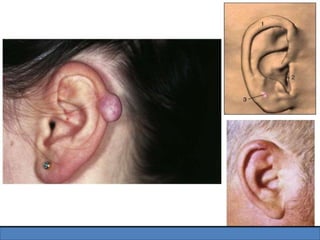
Keloids are a type of
fibrous scar tissue. They can form after
an ear piercing or trauma to the outer
ear.
Osteomas and exostoses form on
bones in the external ear canal (benign
bone tumor).
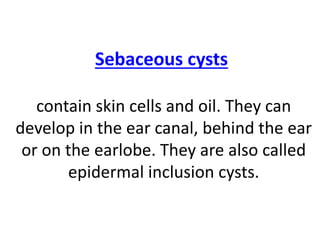
Sebaceous cysts
contain skin cells and oil. They can
develop in the ear canal, behind the ear
or on the earlobe. They are also called
epidermal inclusion cysts.
TYPES OF MALIGNANT
(CANCEROUS) EAR
TUMORS
Cancer can form inside or on the outside of ear.
Ear cancer is rare.
Most cancer that affects the ear is skin cancer.
Skin cancer may first appear on the outer ear.
Skin cancers that affect the ear include:
Basal cell carcinoma.
Melanoma.
Squamous cell carcinoma.
Cancers that directly affect the middle or
inner ear are even more uncommon.
They include:
Ceruminous adenoma forms in
the cells that make earwax. This
cancer doesn’t spread, but it can
destroy parts of the ear canal.
Rhabdo-myo-sarcoma
Is a rare childhood cancer
that affects muscle tissue. It
may develop in the head or
neck, including the middle
ear.
RISK FACTORS FOR EAR TUMORS
People of all ages, including children, can
get ear tumors. Factors that increase the
chances of developing an ear tumor
include:
Chronic ear infections.
Ear piercings.
Prior radiation exposure.
Smoking, including exposure
to secondhand smoke.
Neuro-fibro-matoses
are a group of genetic disorders that cause
tumors to form on nerve tissue. These tumors
can develop anywhere in the nervous system,
including the brain, spinal cord and nerves.
INHERITED CONDITIONS, SUCH
AS NEUROFIBROMATOSIS (NFS).
Signs of an ear tumor include:
Dizziness or balance problems.
Ear bleeding or discharge.
Ear pain.
Headaches.
Hearing loss.
Nonhealing wound or sore.
Skin discoloration, new moles or changes to a mole.
Swollen lymph nodes.
Tinnitus (ringing in the ear).
Weak facial muscles.
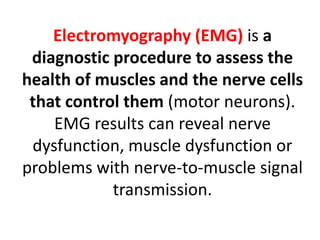
Electromyography (EMG) is a
diagnostic procedure to assess the
health of muscles and the nerve cells
that control them (motor neurons).
EMG results can reveal nerve
dysfunction, muscle dysfunction or
problems with nerve-to-muscle signal
transmission.
External middle inner-ear-tumor-OM VERMA.pdf

External middle inner-ear-tumor-OM VERMA.pdf

  • 3.
    Ear Tumors Ear tumorscan form on the outer ear (skin cancer), inner ear (acoustic neuroma) or middle ear (glomus tympanicum). Most ear tumors are benign (not cancerous), but they may cause hearing loss. Treatments include surgery, radiosurgery, radiation therapy and Mohs surgery.
  • 4.
    DIFFERENCE BETWEEN ANEAR CYST AND AN EAR TUMOR Both cysts and tumors can cause a bump or lump in the ear. Cysts are small sacs that often contain fluid. They may also have solid material. Most cysts are not cancerous. Tumors are solid masses of tissue that may or may not be cancerous.
  • 5.
    An ear tumoris a mass or lump of abnormal cells that forms in the ear. Most ear tumors are benign or not cancerous. But some ear tumors are malignant (cancerous). Ear tumors can form in any part of the ear, including the inner ear, middle ear and outer ear. They may affect hearing. According to burnner and sudharth
  • 8.
  • 9.
    TYPES OF BENIGN(NONCANCEROUS) EAR TUMORS Noncancerous ear tumors can block ear canal, leading to earwax buildup. Types of benign ear tumors include:
  • 10.
  • 11.
    Acoustic neuromas (inner ear ) (also called vestibular schwannomas) form on the vestibular nerve. This nerve in inner ear connects to brain.
  • 17.
    Cholesteatomas are sacsof fluid, air or skin cells that form behind the eardrum in the middle ear. They can lead to hearing loss if not treated.
  • 19.
    Glomus tympanicum para- ganglioma affectsthe tympanic nerve. This nerve in the middle ear connects to the eardrum.
  • 21.
    Adenomas are rare noncancerous tumorsthat develop in the middle ear.
  • 23.
    Keloids are atype of fibrous scar tissue. They can form after an ear piercing or trauma to the outer ear. Osteomas and exostoses form on bones in the external ear canal (benign bone tumor).
  • 24.
    Sebaceous cysts contain skincells and oil. They can develop in the ear canal, behind the ear or on the earlobe. They are also called epidermal inclusion cysts.
  • 26.
  • 27.
    Cancer can forminside or on the outside of ear. Ear cancer is rare. Most cancer that affects the ear is skin cancer. Skin cancer may first appear on the outer ear. Skin cancers that affect the ear include: Basal cell carcinoma. Melanoma. Squamous cell carcinoma.
  • 28.
    Cancers that directlyaffect the middle or inner ear are even more uncommon. They include: Ceruminous adenoma forms in the cells that make earwax. This cancer doesn’t spread, but it can destroy parts of the ear canal.
  • 29.
    Rhabdo-myo-sarcoma Is a rarechildhood cancer that affects muscle tissue. It may develop in the head or neck, including the middle ear.
  • 31.
    RISK FACTORS FOREAR TUMORS People of all ages, including children, can get ear tumors. Factors that increase the chances of developing an ear tumor include: Chronic ear infections. Ear piercings. Prior radiation exposure. Smoking, including exposure to secondhand smoke.
  • 32.
    Neuro-fibro-matoses are a groupof genetic disorders that cause tumors to form on nerve tissue. These tumors can develop anywhere in the nervous system, including the brain, spinal cord and nerves. INHERITED CONDITIONS, SUCH AS NEUROFIBROMATOSIS (NFS).
  • 34.
    Signs of anear tumor include: Dizziness or balance problems. Ear bleeding or discharge. Ear pain. Headaches. Hearing loss. Nonhealing wound or sore. Skin discoloration, new moles or changes to a mole. Swollen lymph nodes. Tinnitus (ringing in the ear). Weak facial muscles.
  • 36.
    Electromyography (EMG) isa diagnostic procedure to assess the health of muscles and the nerve cells that control them (motor neurons). EMG results can reveal nerve dysfunction, muscle dysfunction or problems with nerve-to-muscle signal transmission.