Marker Assisted Selection
Prof. Dina El-Khishin
Agricultural Genetic Engineering Research Institute
(AGERI)
Utilization of Molecular Markers for PGRFA
Characterization and Pre-Breeding for Climate Changes Aug. 31st- Sept. 4th, 2014
Marker-Assisted Selection
A method of selecting desirable individuals
in a breeding scheme based on DNA
molecular marker patterns instead of, or in
addition to, their trait values.
A tool that can help plant breeders select
more efficiently for desirable crop traits.
MAS is not always advantageous, so careful
analysis of the costs and benefits relative
to conventional breeding methods is
necessary.
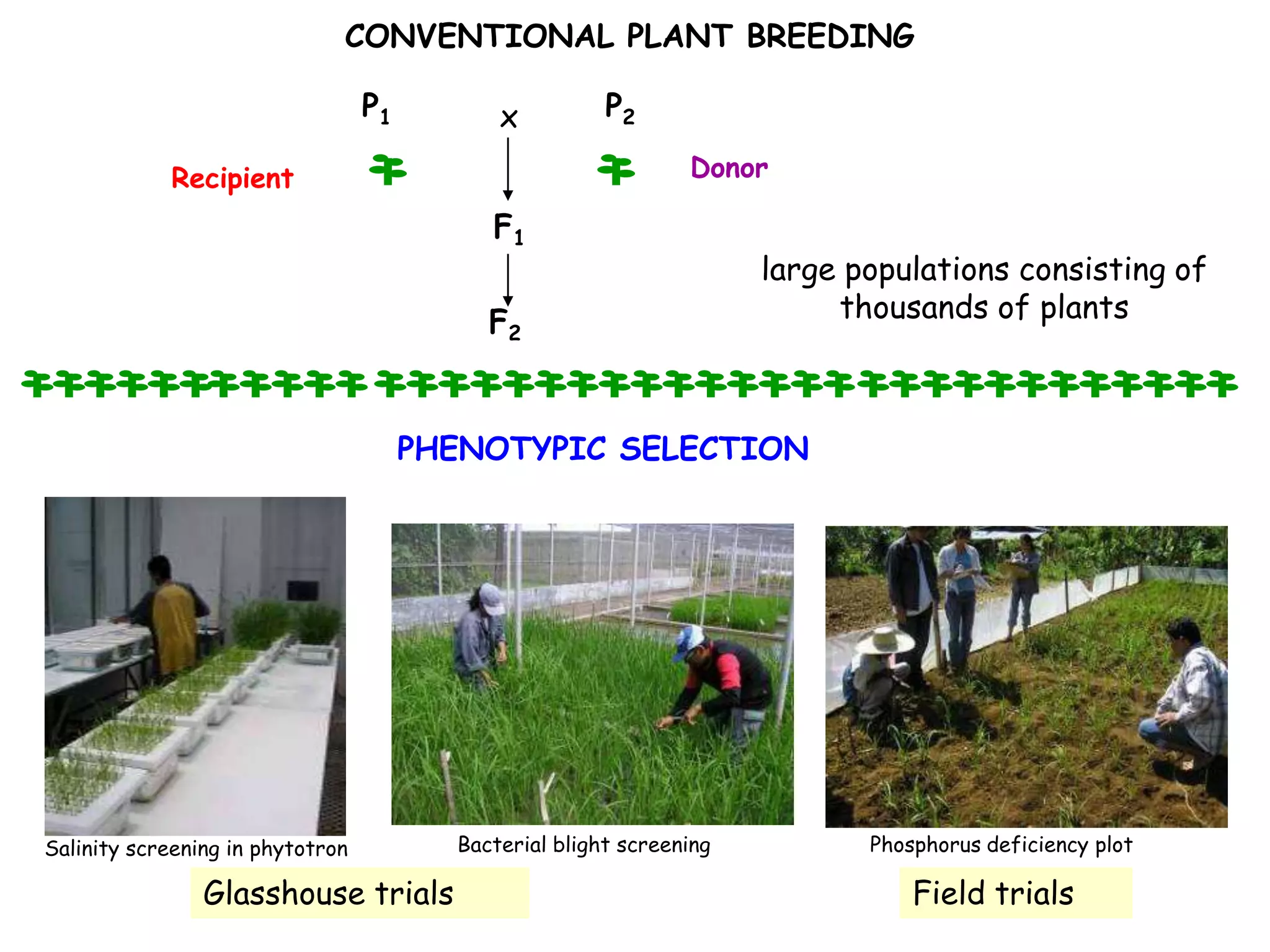
F2
P2
F1
P1 x
large populations consisting of
thousands of plants
PHENOTYPIC SELECTION
Field trialsGlasshouse trials
DonorRecipient
CONVENTIONAL PLANT BREEDING
Salinity screening in phytotron Bacterial blight screening Phosphorus deficiency plot
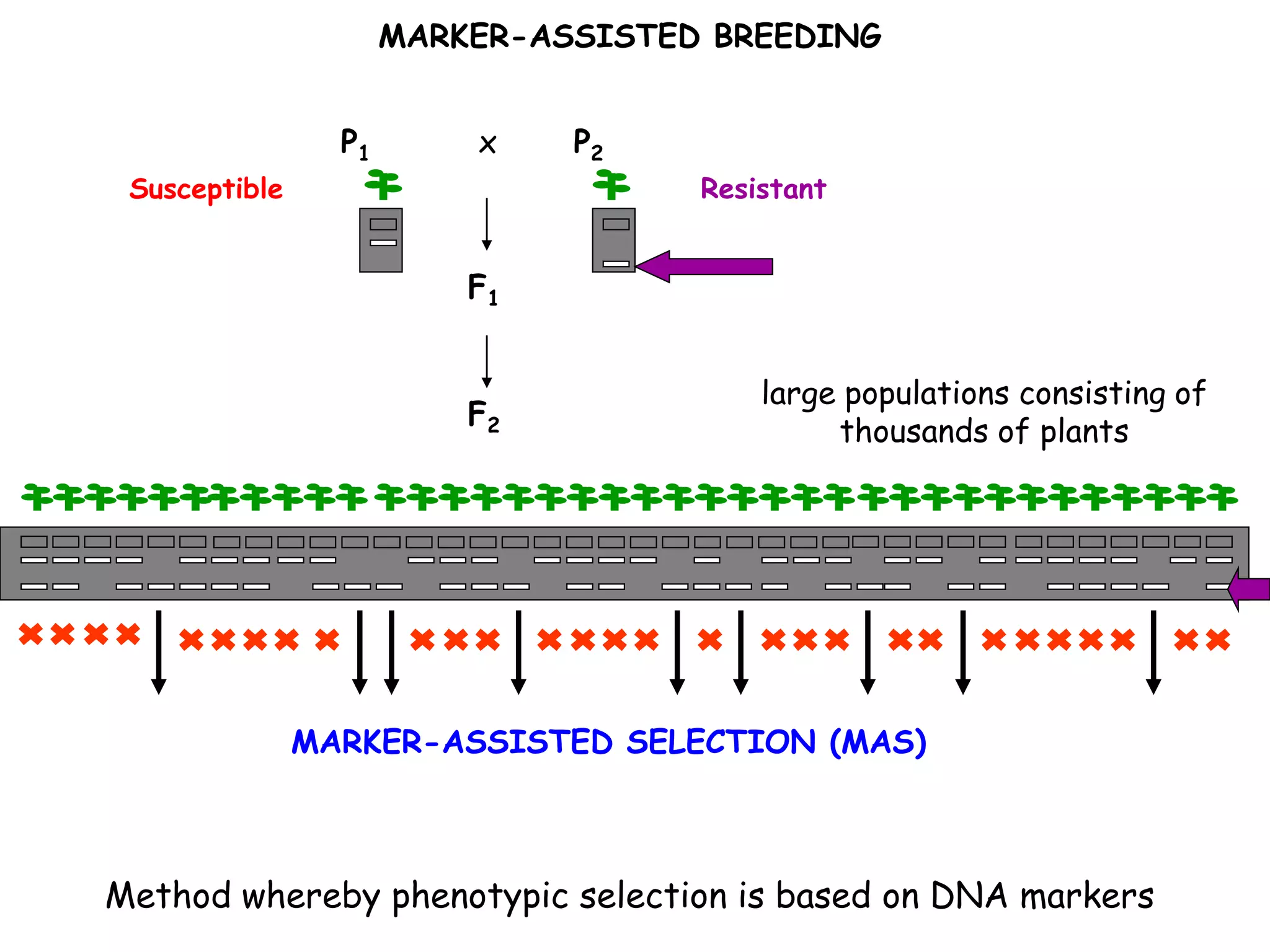
F2
P2
F1
P1 x
large populations consisting of
thousands of plants
ResistantSusceptible
MARKER-ASSISTED SELECTION (MAS)
MARKER-ASSISTED BREEDING
Method whereby phenotypic selection is based on DNA markers
Prerequisites for an efficient marker-assisted
selection program
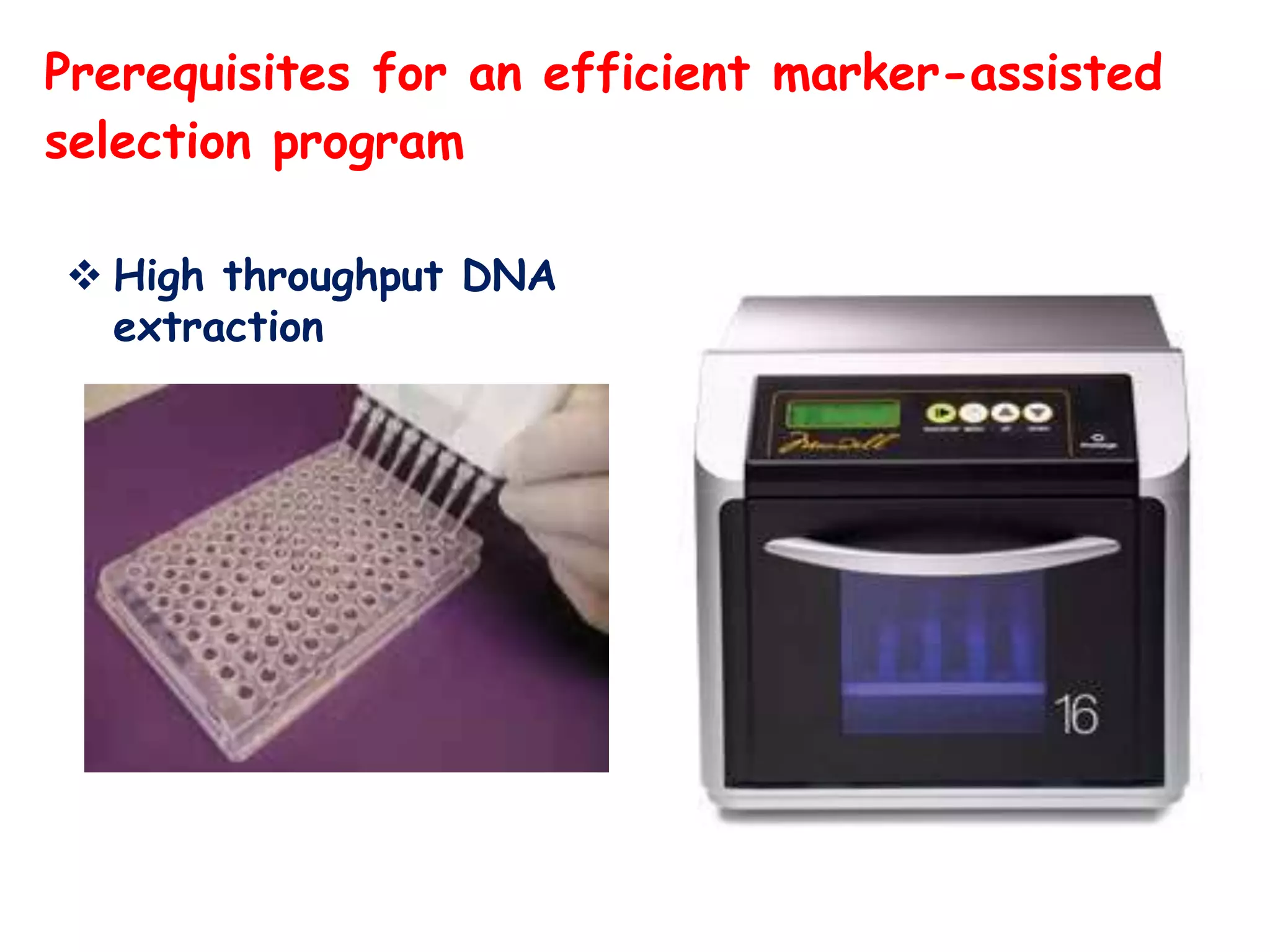
 High throughput DNA
extraction
 Markers
Markers (morphological, protein, cytological) can
also be used in MAS programs.
RFLP, SSR, RAPD, AFLP, SCAR, and SNP
For efficient MAS:
Ease of use
Small amount of DNA required
Low cost
Repeatability of results
High rate of polymorphism
Occurrence throughout the genome
Codominance
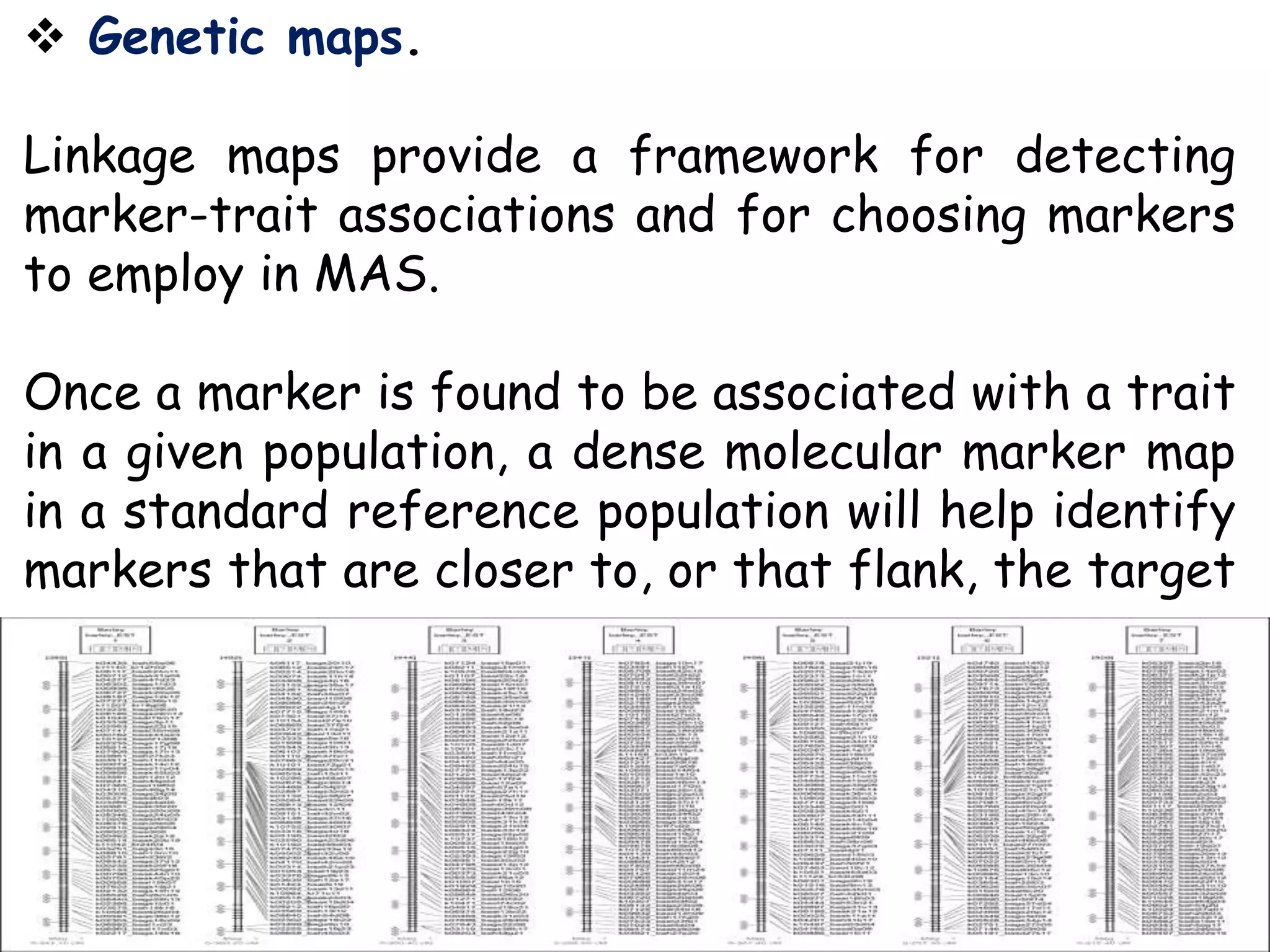
 Genetic maps.
Linkage maps provide a framework for detecting
marker-trait associations and for choosing markers
to employ in MAS.
Once a marker is found to be associated with a trait
in a given population, a dense molecular marker map
in a standard reference population will help identify
markers that are closer to, or that flank, the target
gene.
 Knowledge of associations
between molecular markers and
traits of interest.
The most crucial ingredient for
MAS is knowledge of markers that
are associated with traits
important to a breeding program.
 Data management system
Large numbers of samples are handled
in a MAS program, with each sample
potentially evaluated for multiple
markers.
This situation requires an efficient
system for labeling, storing, retrieving,
and analyzing large data sets, and
producing reports useful to the
breeder.
Potential advantages of MAS
 It can be performed on seedling material
thus reducing the time required before a plant’s
genotype is known.
In contrast, many important plant traits are
observable only when the plant has reached
flowering or harvest maturity.
Knowing a plant’s genotype before flowering can
be particularly useful in order to plan the
appropriate crosses between selected individuals.
 MAS is not affected by environmental
conditions.
Some crop production constraints (such as
disease, insect pests, temperature and moisture
stress) occur sporadically or non-uniformly.
Therefore, evaluating resistance to those
constraints may not be possible in a given year or
location.
MAS offers the chance to determine a plant’s
resistance level independent of environment.
 When recessive alleles determine traits of
interest
they cannot be detected through phenotypic
evaluation of heterozygous plants, because their
presence is masked by the dominant allele.
In a traditional backcross program, plants with
recessive alleles are identified by progeny
evaluation after self-pollination or testcrossing to a
recessive tester.
This time-consuming step can be eliminated in a
MAS program, because recessive alleles are
identified by linked markers.
 when multiple resistance genes are
pyramided together in the same variety
or breeding line,
the presence of each individual gene is
difficult to verify phenotypically.
The presence of one resistance gene may
conceal the effect of additional genes.
This problem can be overcome if markers
are available for each of the resistance
genes.
 Environmental variation in the field reduces
a trait’s heritability , the proportion of
phenotypic variation that is due to genetics.
In a low heritability situation,
progress from phenotypic selection will be slow,
because so much of the variation for the trait is
due to environmental variation, experimental
error, or genotype x environment interaction, and
will not be passed on to the next generation.
If a reliable marker for a trait is available, MAS
can result in greater progress than phenotypic
selection in such a situation.
 MAS may be cheaper and faster than conventional
phenotypic assays, depending on the trait.
e.g., evaluating nematode resistance is usually an
expensive operation because it requires artificial
inoculation of plants with nematode eggs, followed by a
labor-intensive technique to count the number of
nematodes present.
Selecting on the basis of a reliable marker would
probably be cost-effective in this case.
On the other hand, plant height is cheap and easy to
measure, so there may not be an economic advantage in
using markers for that trait.
 A consideration that may affect cost
effectiveness of MAS is that multiple
markers can be evaluated using the same
DNA sample.
Extraction of DNA from plant tissue is one of
the bottlenecks of MAS.
Once DNA is extracted and purified, it may be
used for multiple markers, for the same or
different traits, thus reducing the time and
cost per marker.
Potential drawbacks of MAS
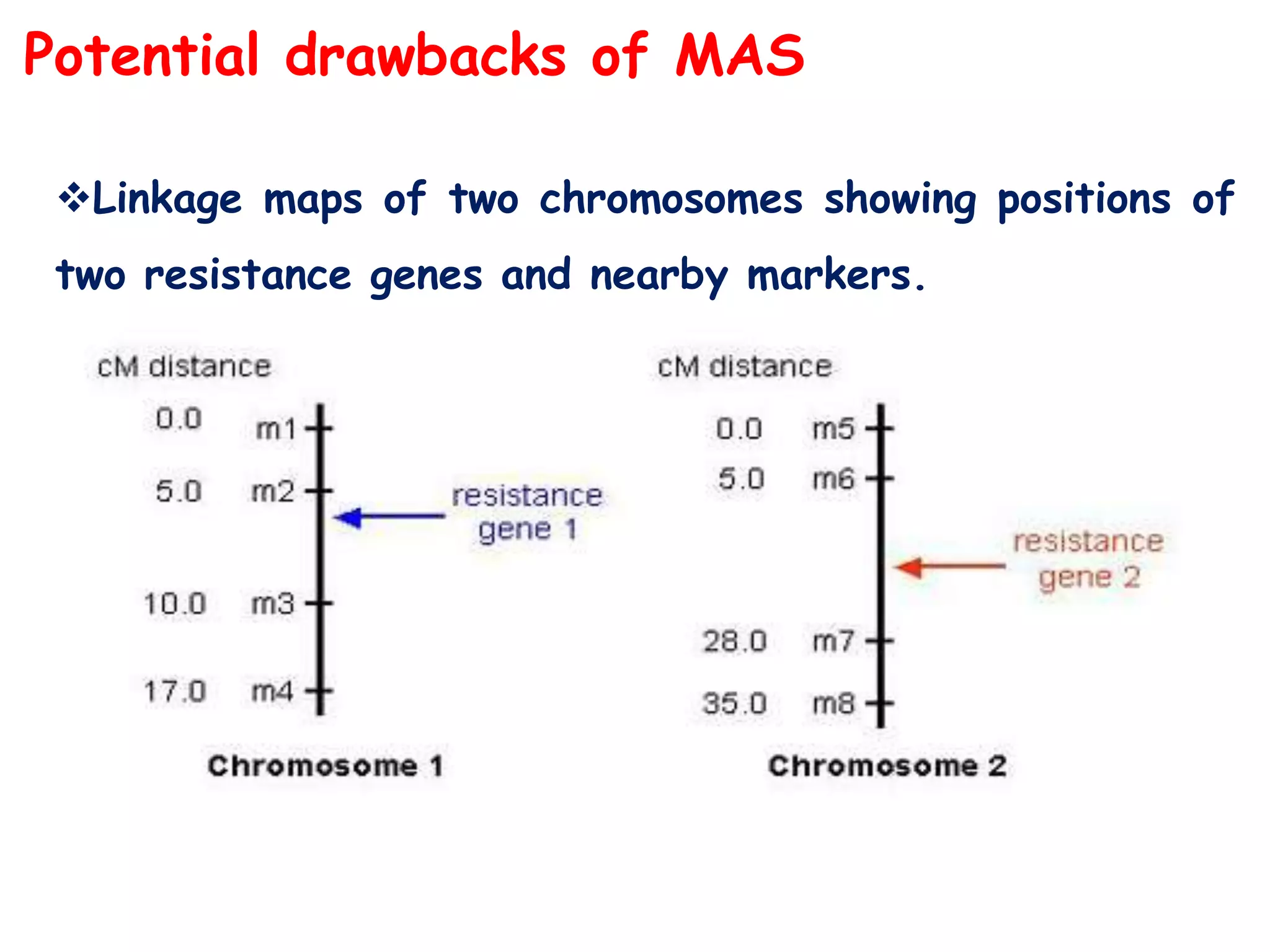
Linkage maps of two chromosomes showing positions of
two resistance genes and nearby markers.
 MAS may be more expensive than conventional
techniques, especially for startup expenses and
labor costs.
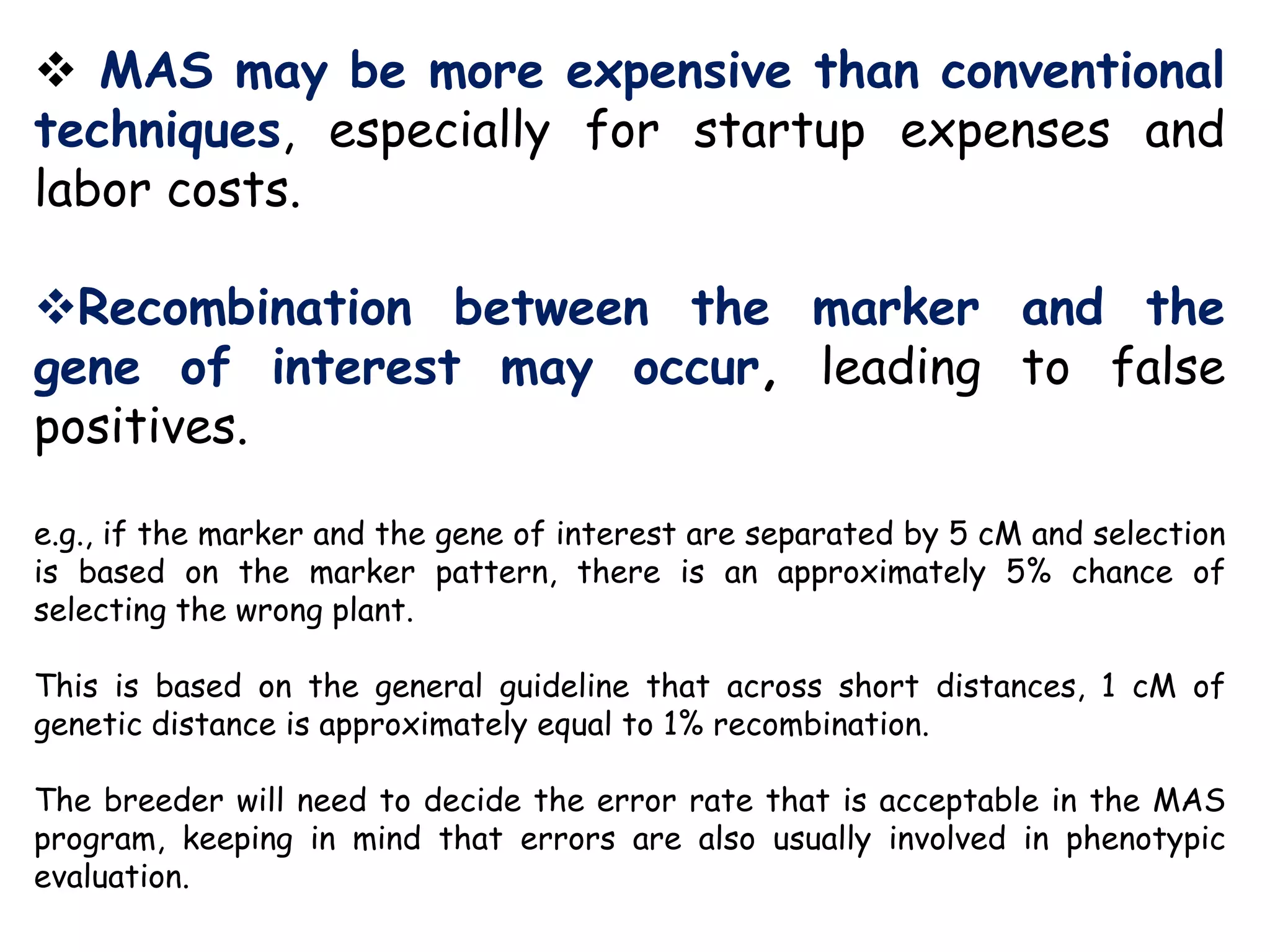
Recombination between the marker and the
gene of interest may occur, leading to false
positives.
e.g., if the marker and the gene of interest are separated by 5 cM and selection
is based on the marker pattern, there is an approximately 5% chance of
selecting the wrong plant.
This is based on the general guideline that across short distances, 1 cM of
genetic distance is approximately equal to 1% recombination.
The breeder will need to decide the error rate that is acceptable in the MAS
program, keeping in mind that errors are also usually involved in phenotypic
evaluation.
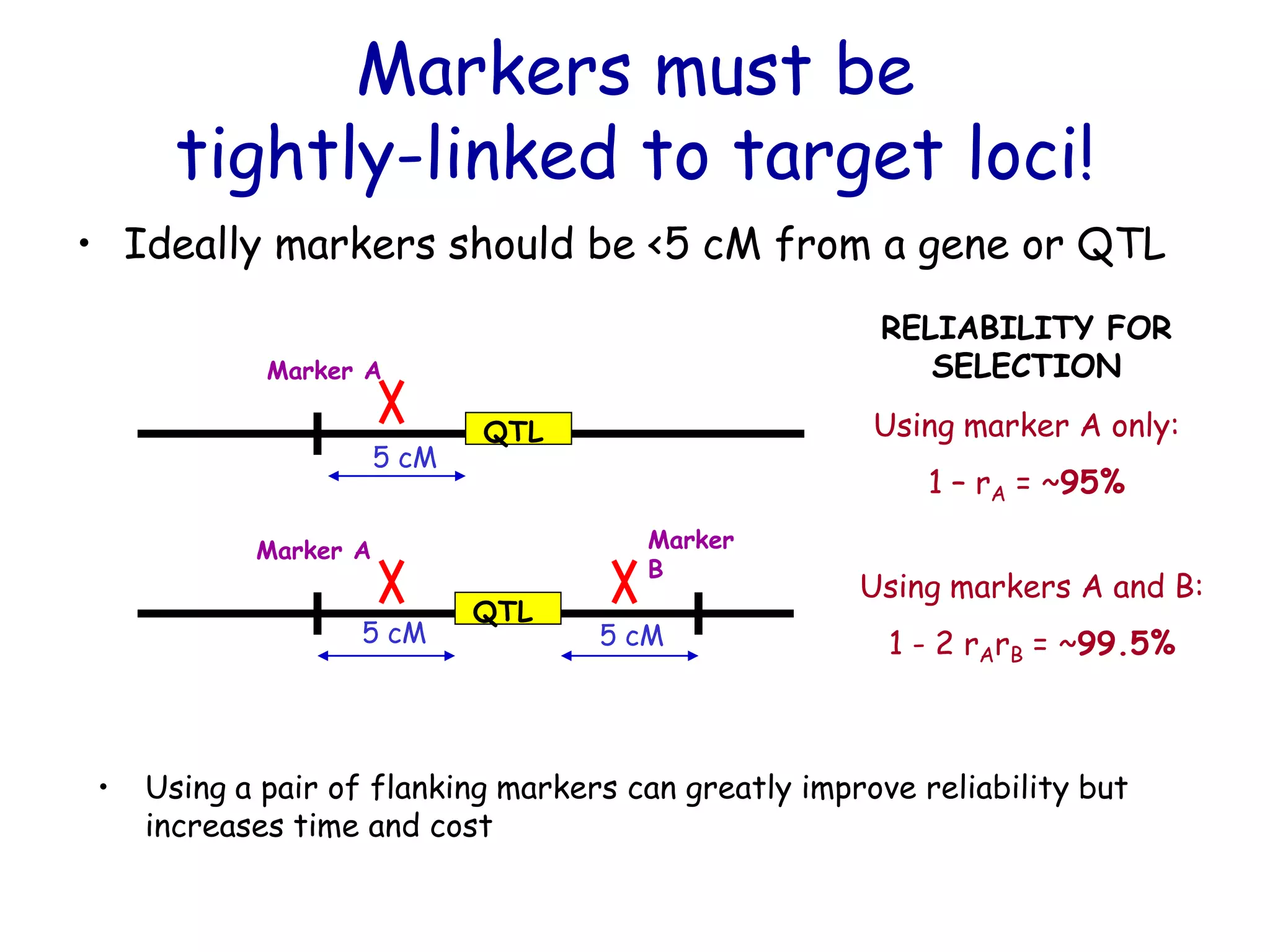
Markers must be
tightly-linked to target loci!
• Ideally markers should be <5 cM from a gene or QTL
• Using a pair of flanking markers can greatly improve reliability but
increases time and cost
Marker A
QTL
5 cM
RELIABILITY FOR
SELECTION
Using marker A only:
1 – rA = ~95%
Marker A
QTL
Marker
B
5 cM 5 cM
Using markers A and B:
1 - 2 rArB = ~99.5%
To avoid this last problem it may
be necessary to use flanking
markers on either side of the locus of
interest to increase the probability
that the desired gene is selected.
 Sometimes markers that were
used to detect a locus must be
converted to 'breeder-friendly'
markers that are more reliable and
easier to use.
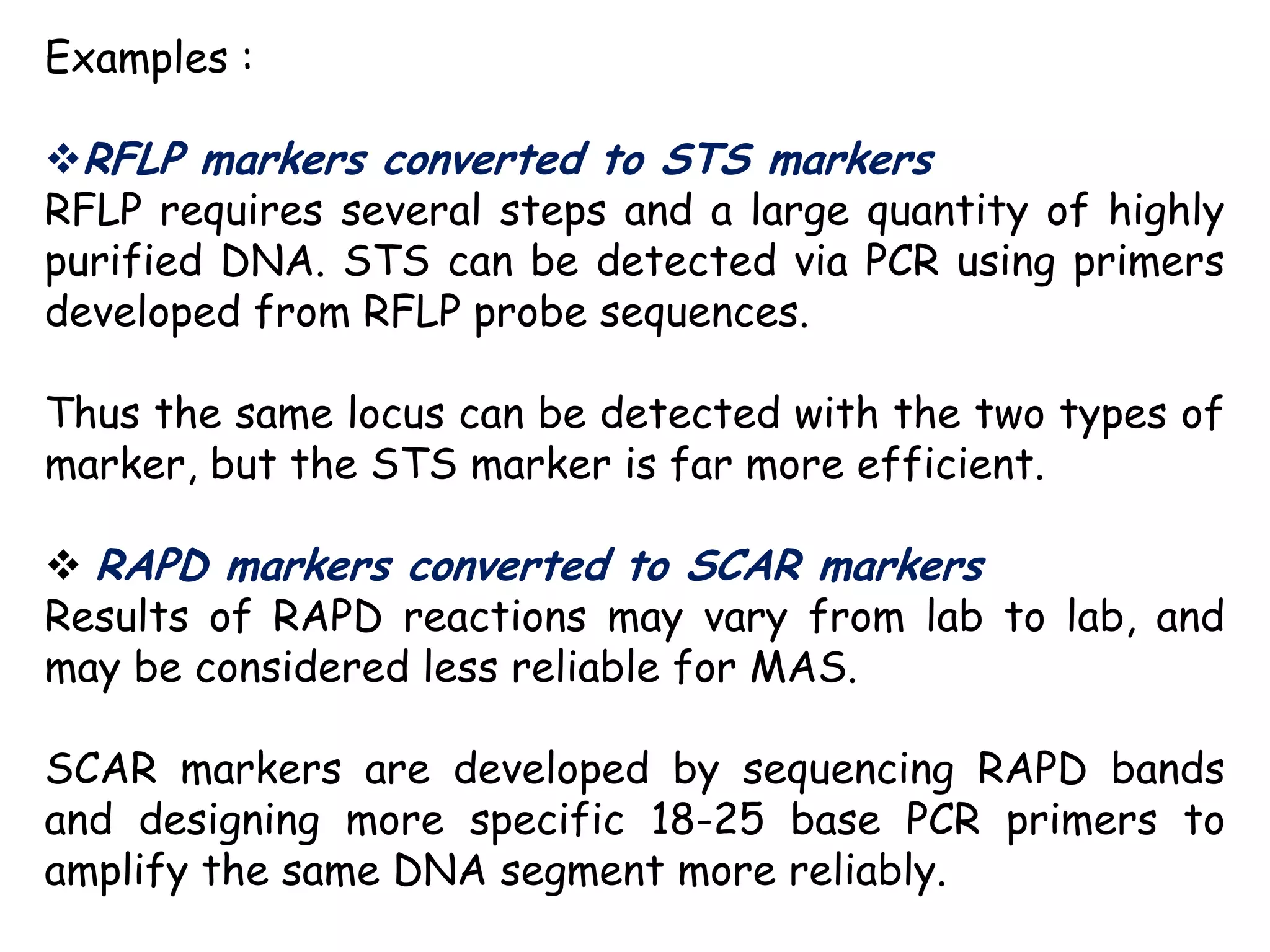
Examples :
RFLP markers converted to STS markers
RFLP requires several steps and a large quantity of highly
purified DNA. STS can be detected via PCR using primers
developed from RFLP probe sequences.
Thus the same locus can be detected with the two types of
marker, but the STS marker is far more efficient.
 RAPD markers converted to SCAR markers
Results of RAPD reactions may vary from lab to lab, and
may be considered less reliable for MAS.
SCAR markers are developed by sequencing RAPD bands
and designing more specific 18-25 base PCR primers to
amplify the same DNA segment more reliably.
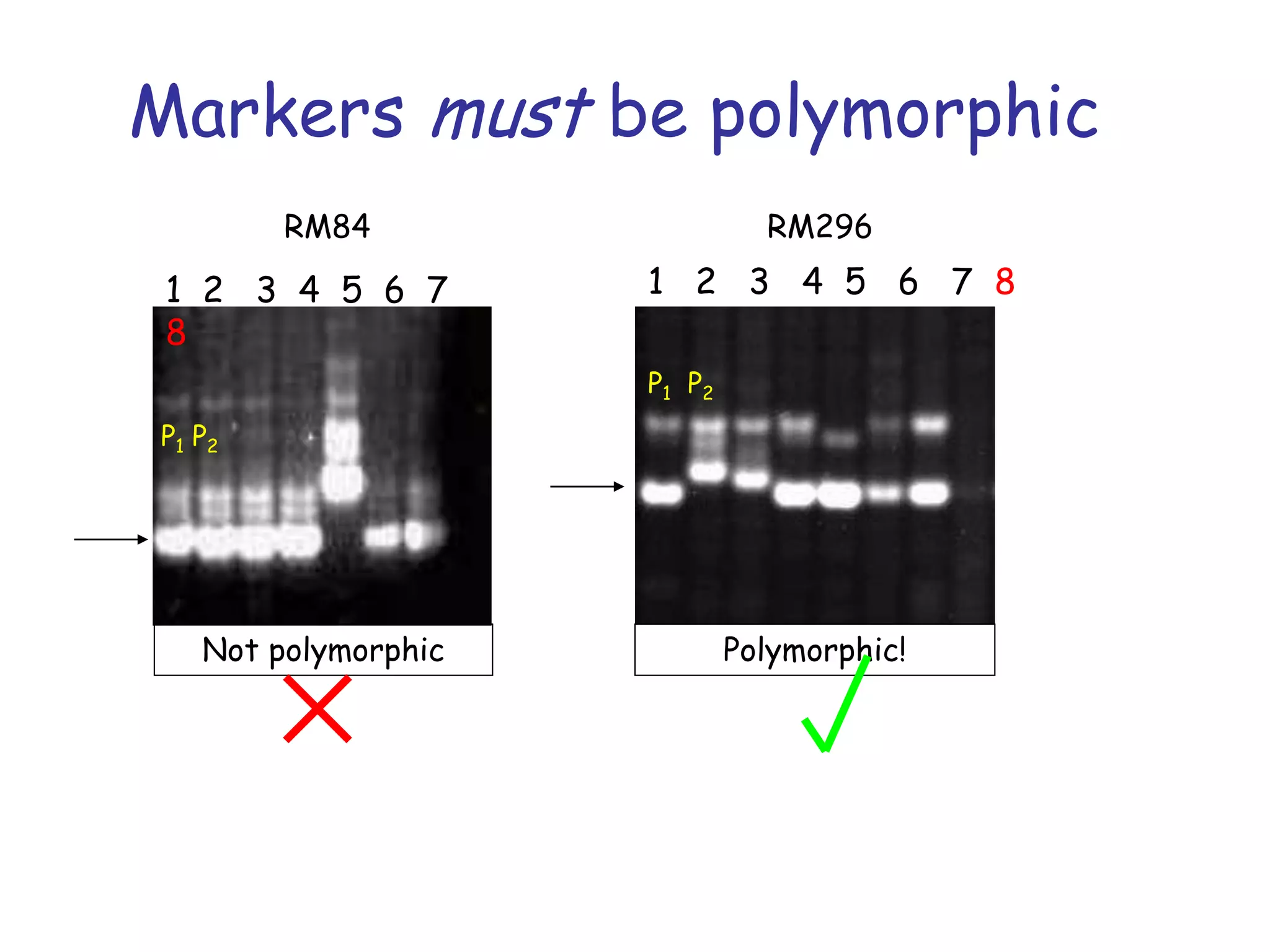
Markers must be polymorphic
1 2 3 4 5 6 7
8
1 2 3 4 5 6 7 8
RM84 RM296
P1 P2
P1 P2
Not polymorphic Polymorphic!
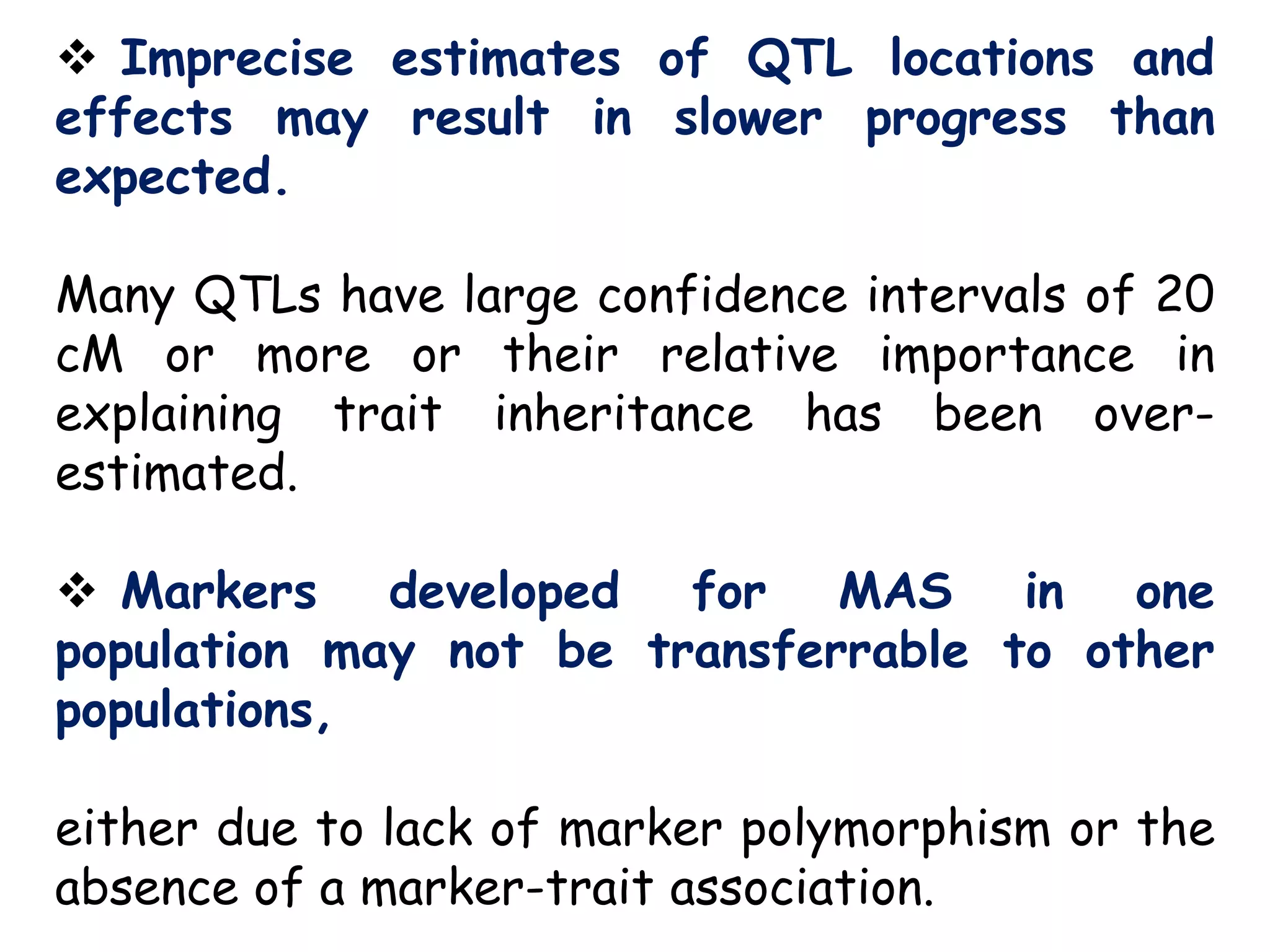
 Imprecise estimates of QTL locations and
effects may result in slower progress than
expected.
Many QTLs have large confidence intervals of 20
cM or more or their relative importance in
explaining trait inheritance has been over-
estimated.
 Markers developed for MAS in one
population may not be transferrable to other
populations,
either due to lack of marker polymorphism or the
absence of a marker-trait association.
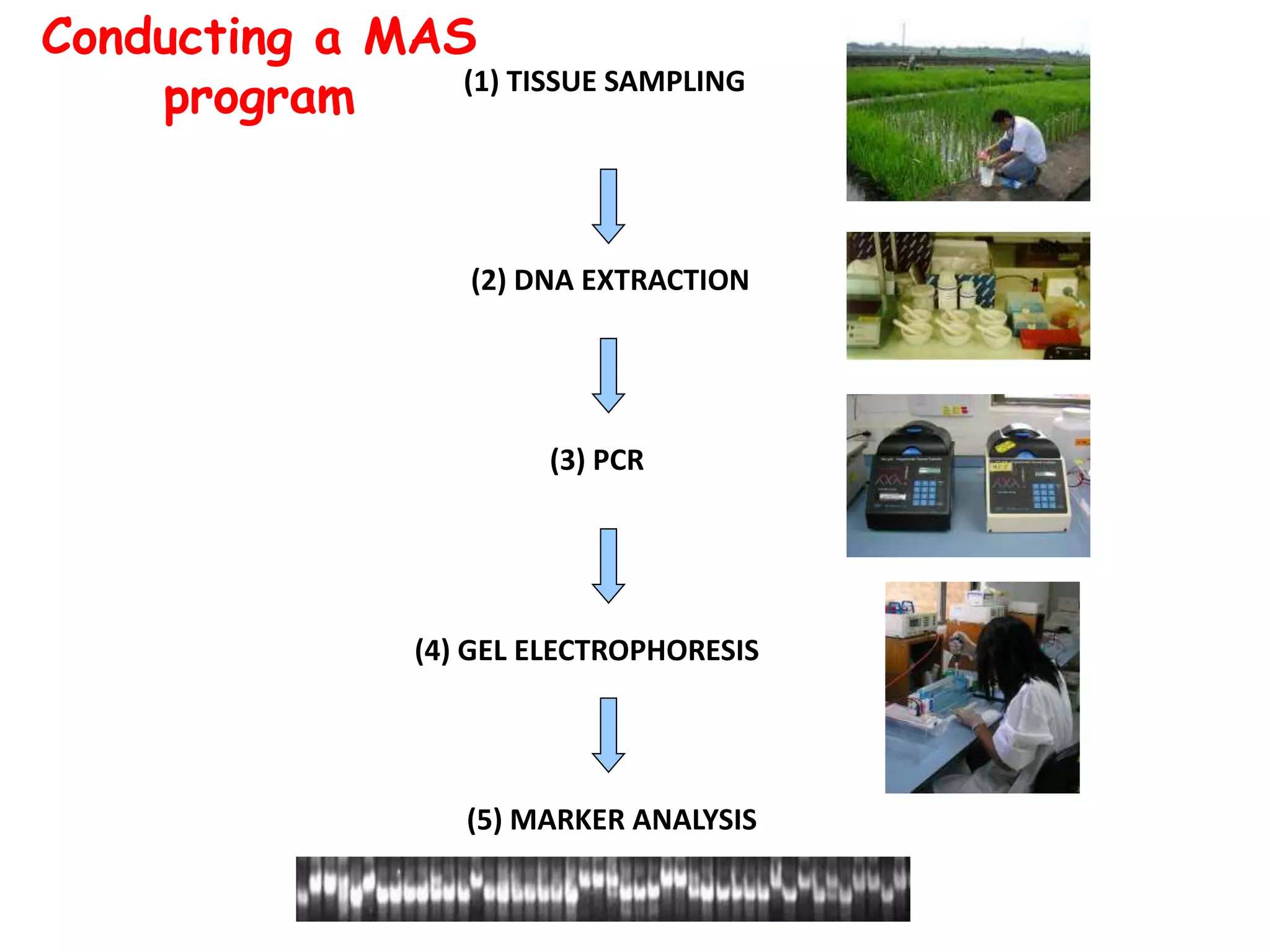
(1) TISSUE SAMPLING
(2) DNA EXTRACTION
(3) PCR
(4) GEL ELECTROPHORESIS
(5) MARKER ANALYSIS
Conducting a MAS
program
MAS BREEDING SCHEMES
1. Marker-assisted backcrossing
2. Pyramiding
3. Early generation selection
4. ‘Combined’ approaches
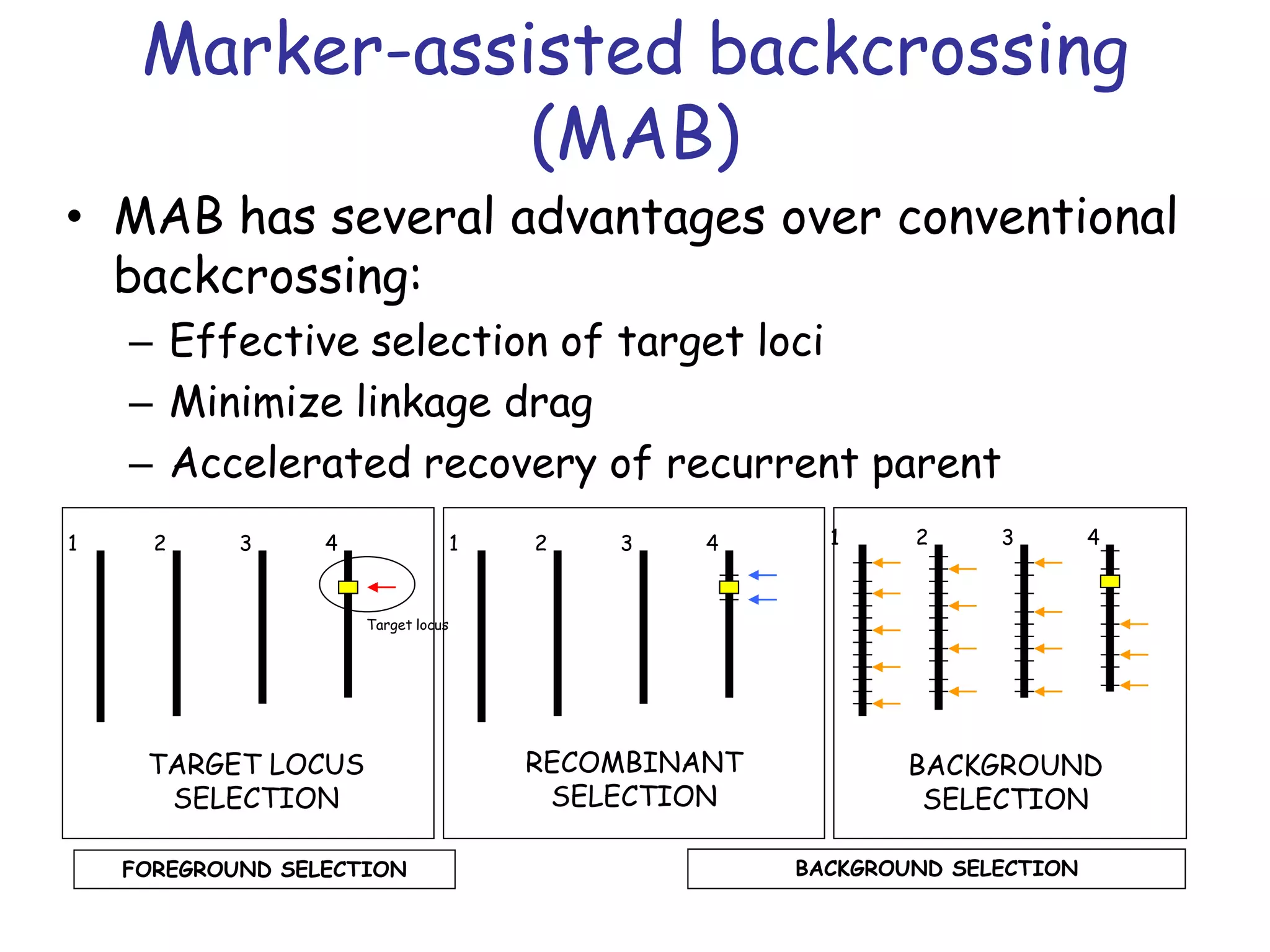
Marker-assisted backcrossing
(MAB)
• MAB has several advantages over conventional
backcrossing:
– Effective selection of target loci
– Minimize linkage drag
– Accelerated recovery of recurrent parent
1 2 3 4
Target locus
1 2 3 4
RECOMBINANT
SELECTION
1 2 3 4
BACKGROUND
SELECTION
TARGET LOCUS
SELECTION
FOREGROUND SELECTION BACKGROUND SELECTION
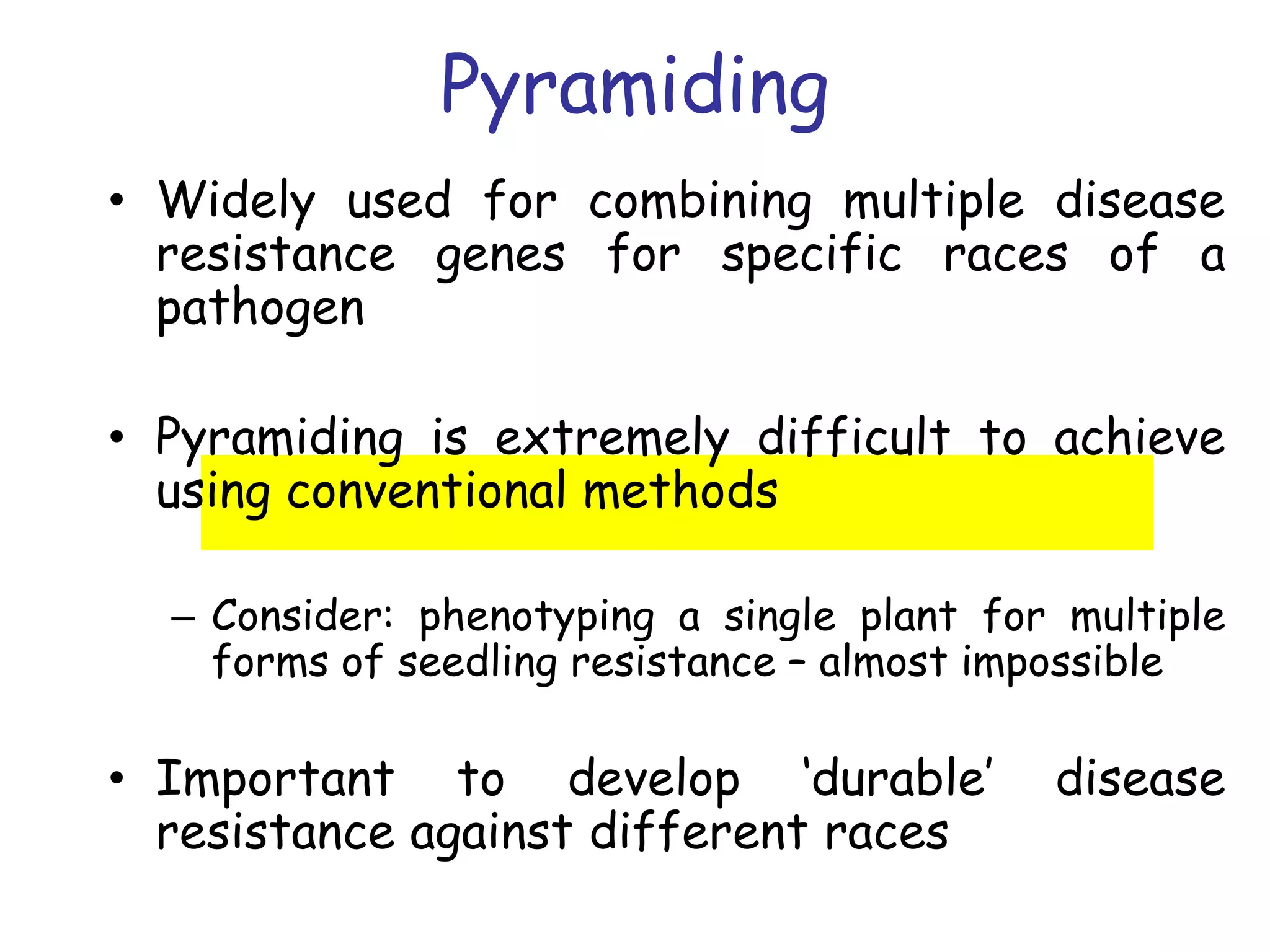
Pyramiding
• Widely used for combining multiple disease
resistance genes for specific races of a
pathogen
• Pyramiding is extremely difficult to achieve
using conventional methods
– Consider: phenotyping a single plant for multiple
forms of seedling resistance – almost impossible
• Important to develop ‘durable’ disease
resistance against different races
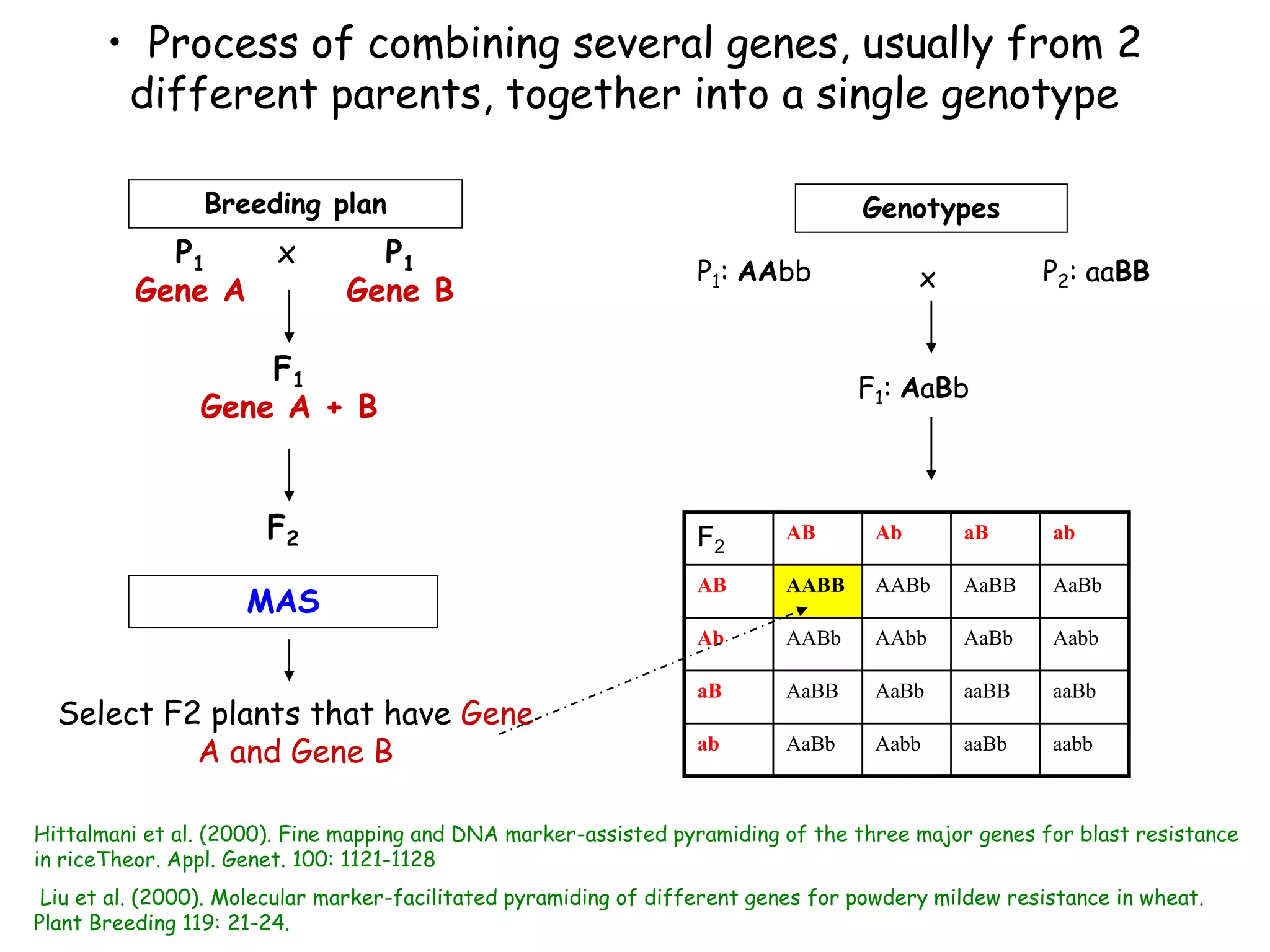
• Process of combining several genes, usually from 2
different parents, together into a single genotype
F2
F1
Gene A + B
P1
Gene A
x P1
Gene B
MAS
Select F2 plants that have Gene
A and Gene B
Genotypes
P1: AAbb P2: aaBB
F1: AaBb
F2
AB Ab aB ab
AB AABB AABb AaBB AaBb
Ab AABb AAbb AaBb Aabb
aB AaBB AaBb aaBB aaBb
ab AaBb Aabb aaBb aabb
x
Breeding plan
Hittalmani et al. (2000). Fine mapping and DNA marker-assisted pyramiding of the three major genes for blast resistance
in riceTheor. Appl. Genet. 100: 1121-1128
Liu et al. (2000). Molecular marker-facilitated pyramiding of different genes for powdery mildew resistance in wheat.
Plant Breeding 119: 21-24.
Early generation MAS
• MAS conducted at F2 or F3 stage
• Plants with desirable genes/QTLs are
selected and alleles can be ‘fixed’ in the
homozygous state
– plants with undesirable gene combinations can
be discarded
• Advantage for later stages of breeding
program because resources can be used
to focus on fewer lines
References:
Ribaut & Betran (1999). Single large-scale marker assisted selection (SLS-MAS). Mol Breeding 5: 21-24.
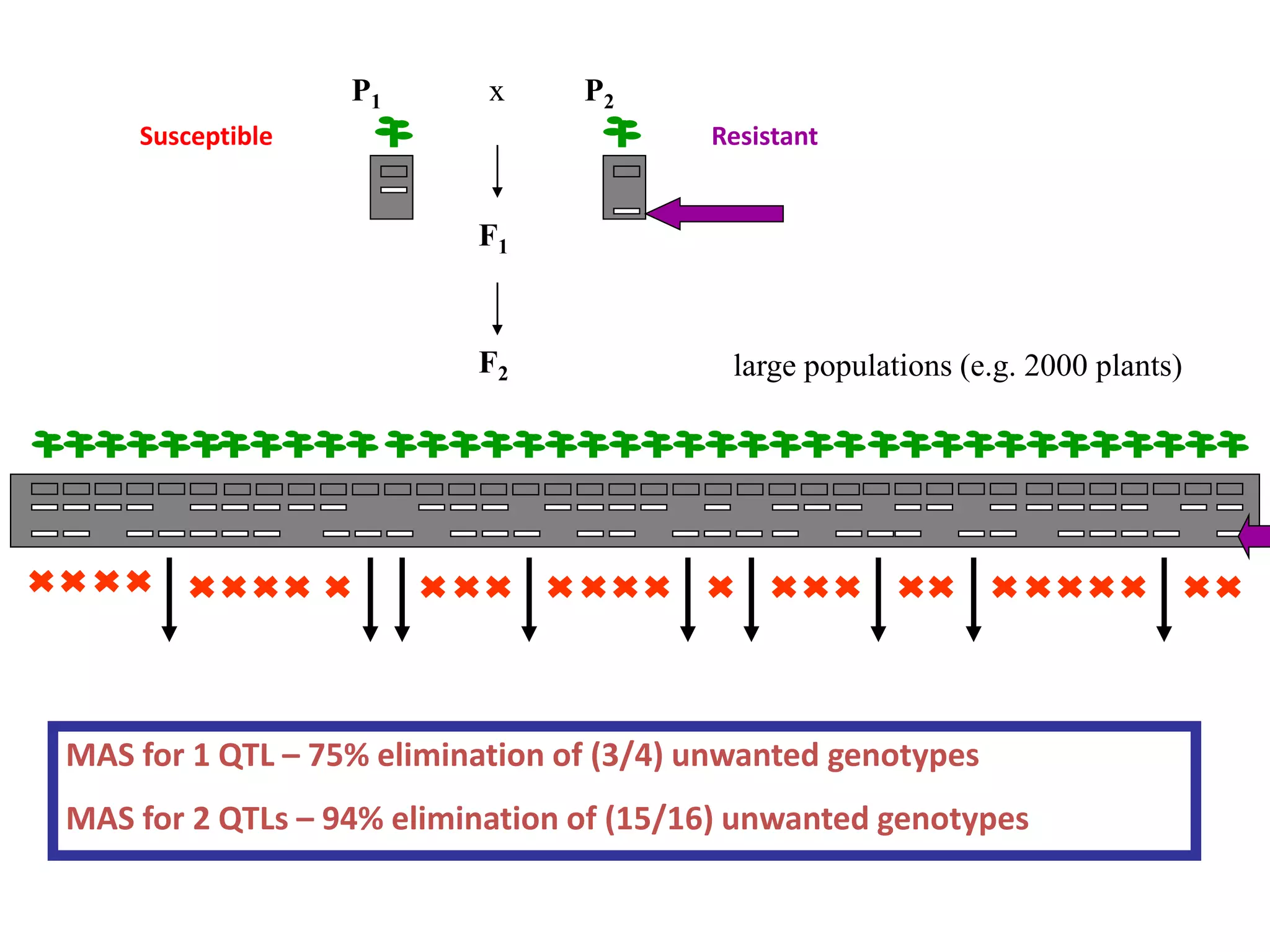
F2
P2
F1
P1 x
large populations (e.g. 2000 plants)
ResistantSusceptible
MAS for 1 QTL – 75% elimination of (3/4) unwanted genotypes
MAS for 2 QTLs – 94% elimination of (15/16) unwanted genotypes
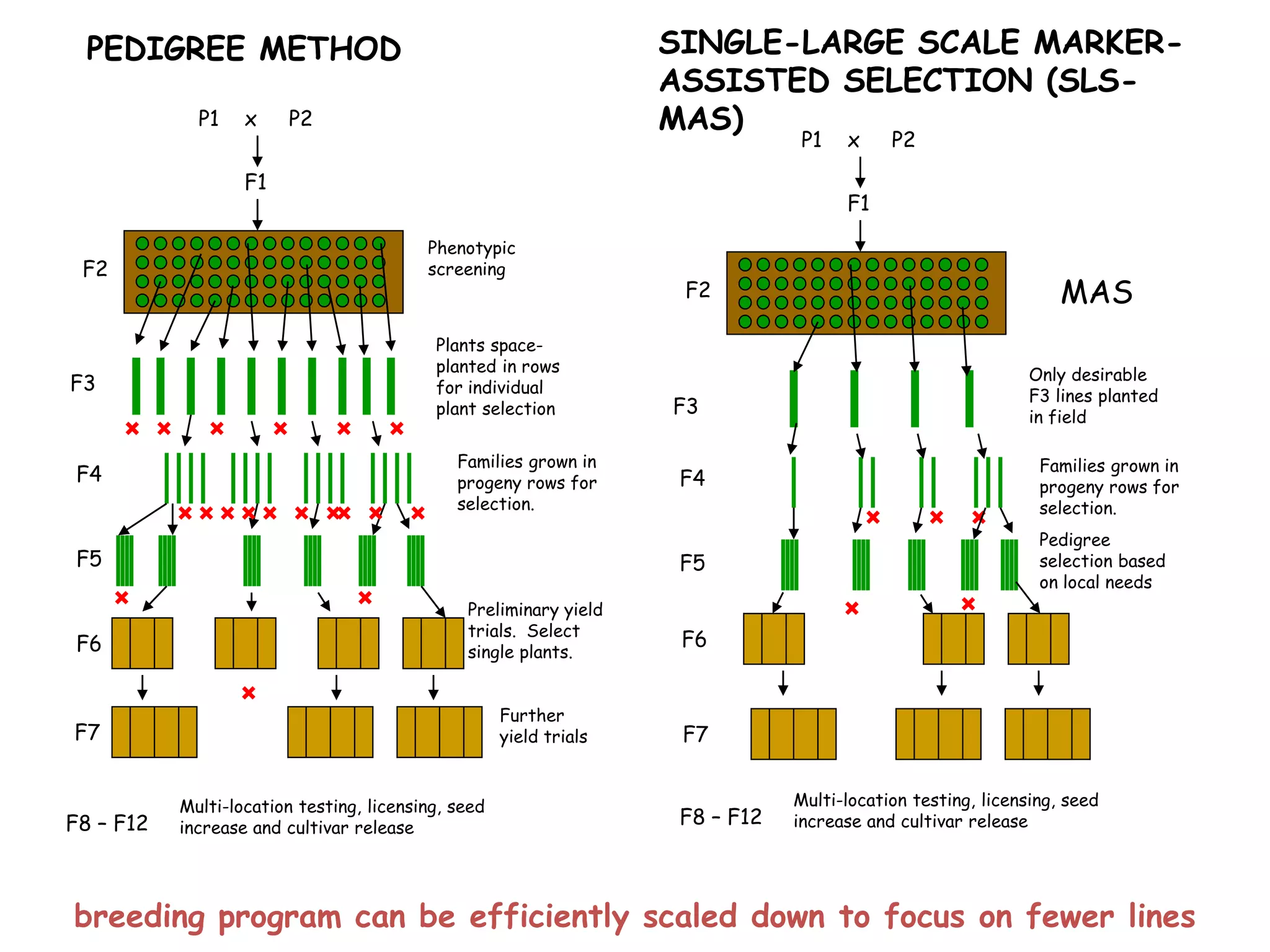
P1 x P2
F1
PEDIGREE METHOD
F2
F3
F4
F5
F6
F7
F8 – F12
Phenotypic
screening
Plants space-
planted in rows
for individual
plant selection
Families grown in
progeny rows for
selection.
Preliminary yield
trials. Select
single plants.
Further
yield trials
Multi-location testing, licensing, seed
increase and cultivar release
P1 x P2
F1
F2
F3
MAS
SINGLE-LARGE SCALE MARKER-
ASSISTED SELECTION (SLS-
MAS)
F4
Families grown in
progeny rows for
selection.
Pedigree
selection based
on local needs
F6
F7
F5
F8 – F12
Multi-location testing, licensing, seed
increase and cultivar release
Only desirable
F3 lines planted
in field
breeding program can be efficiently scaled down to focus on fewer lines
Combined approaches
In some cases, a combination of phenotypic
screening and MAS approach may be useful
1. To maximize genetic gain (when some QTLs
have been unidentified from QTL mapping)
2. Level of recombination between marker and
QTL (in other words marker is not 100%
accurate)
3. To reduce population sizes for traits where
marker genotyping is cheaper or easier
than phenotypic screening
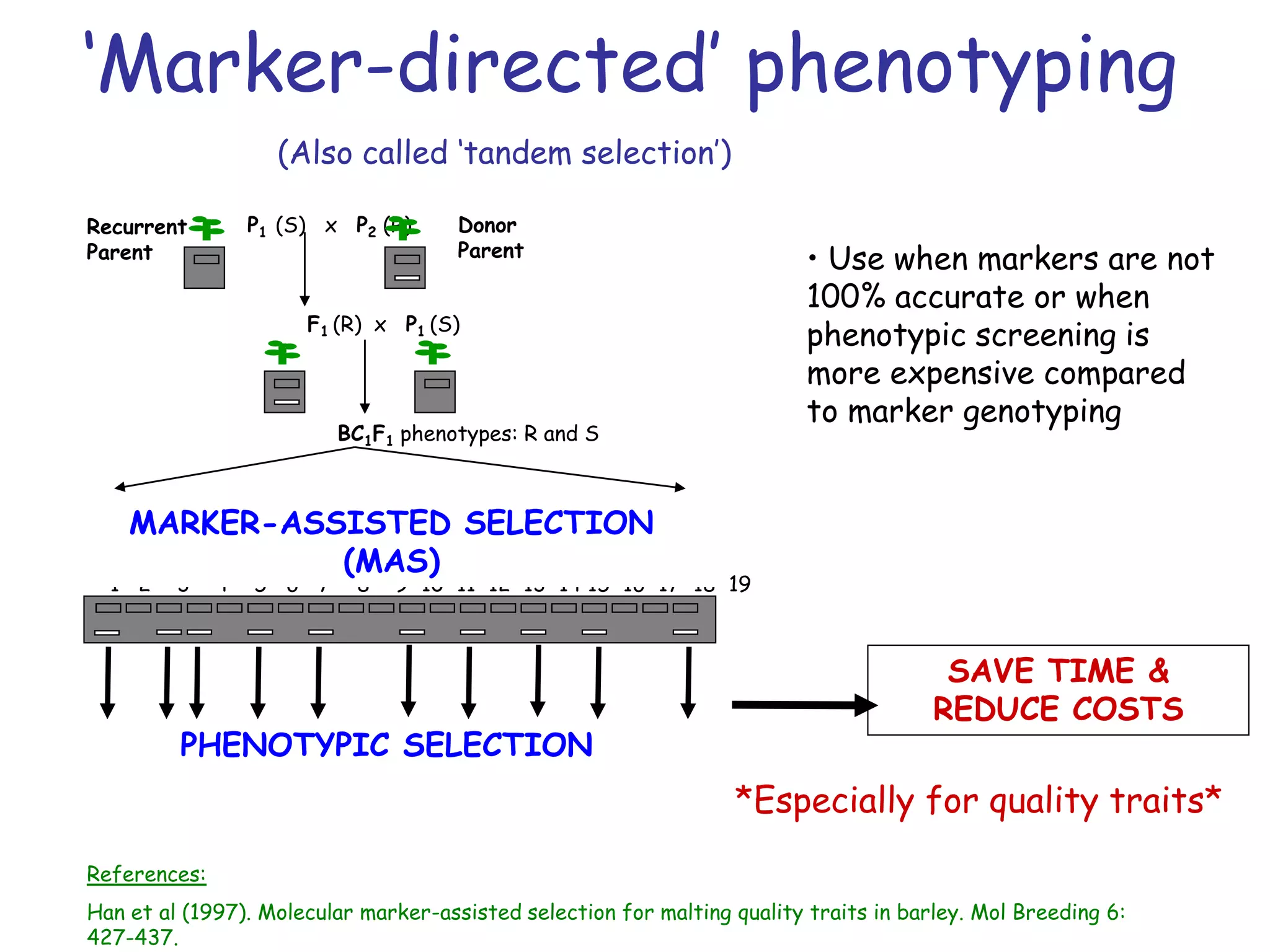
‘Marker-directed’ phenotyping
BC1F1 phenotypes: R and S
P1 (S) x P2 (R)
F1 (R) x P1 (S)
Recurrent
Parent
Donor
Parent
1 2 3 4 5 6 7 8 9 10 11 12 13 14 15 16 17 18 19
20 …
SAVE TIME &
REDUCE COSTS
*Especially for quality traits*
MARKER-ASSISTED SELECTION
(MAS)
PHENOTYPIC SELECTION
(Also called ‘tandem selection’)
• Use when markers are not
100% accurate or when
phenotypic screening is
more expensive compared
to marker genotyping
References:
Han et al (1997). Molecular marker-assisted selection for malting quality traits in barley. Mol Breeding 6:
427-437.
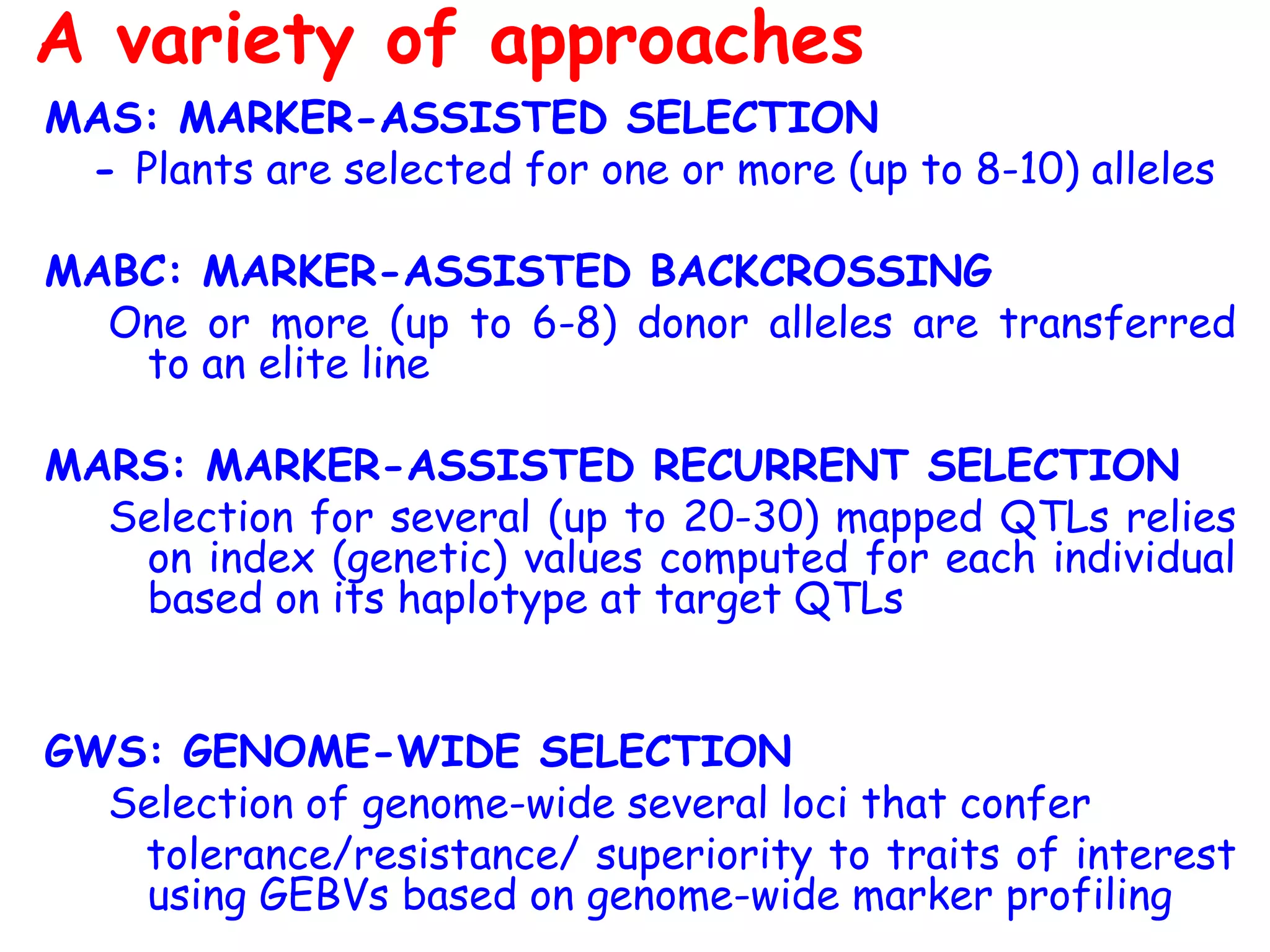
MAS: MARKER-ASSISTED SELECTION
- Plants are selected for one or more (up to 8-10) alleles
MABC: MARKER-ASSISTED BACKCROSSING
One or more (up to 6-8) donor alleles are transferred
to an elite line
MARS: MARKER-ASSISTED RECURRENT SELECTION
Selection for several (up to 20-30) mapped QTLs relies
on index (genetic) values computed for each individual
based on its haplotype at target QTLs
GWS: GENOME-WIDE SELECTION
Selection of genome-wide several loci that confer
tolerance/resistance/ superiority to traits of interest
using GEBVs based on genome-wide marker profiling
A variety of approaches
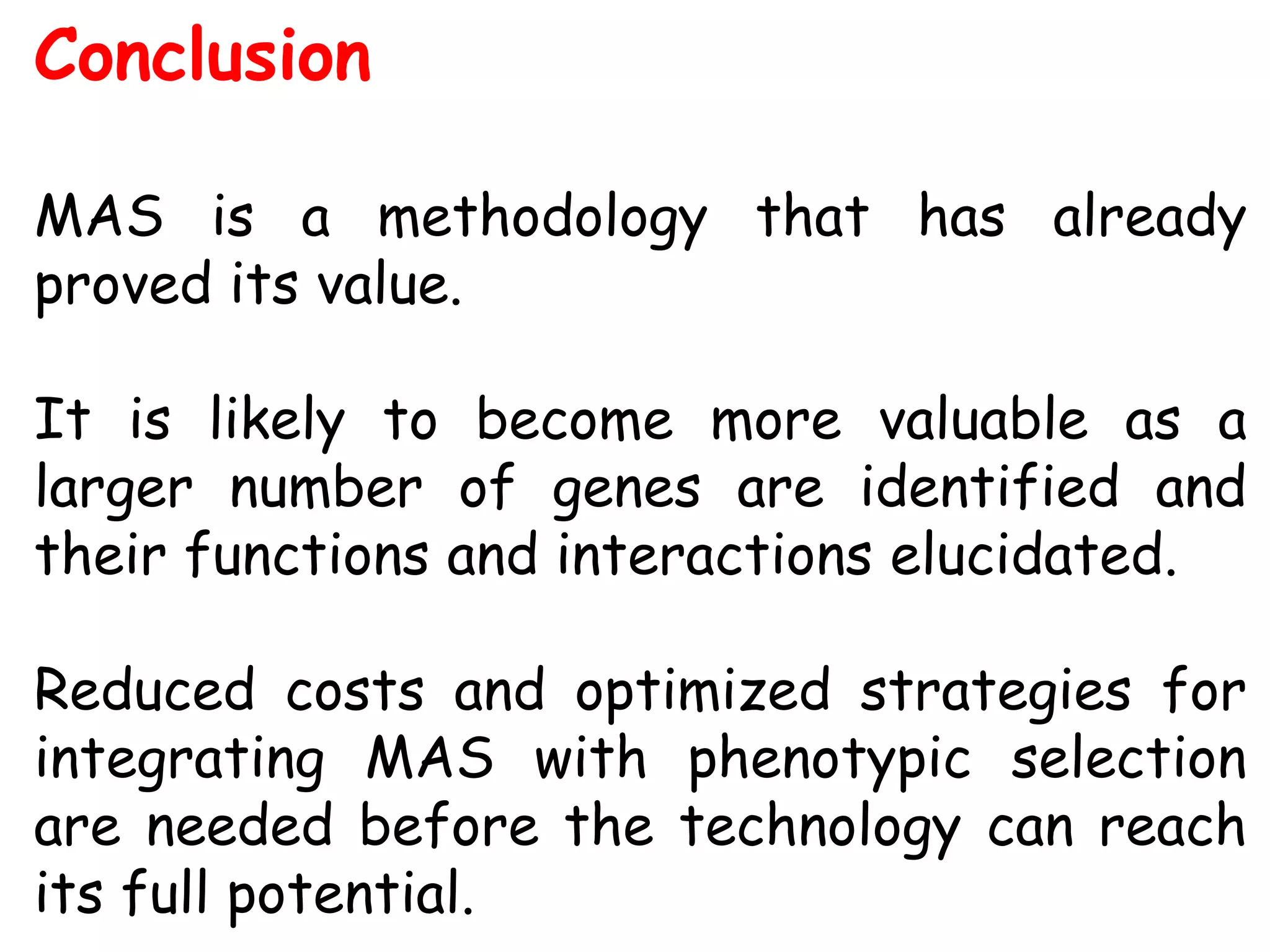
Conclusion
MAS is a methodology that has already
proved its value.
It is likely to become more valuable as a
larger number of genes are identified and
their functions and interactions elucidated.
Reduced costs and optimized strategies for
integrating MAS with phenotypic selection
are needed before the technology can reach
its full potential.
References
•Marker-Assisted Selection - Objectives and Overview
Patrick Byrne
Department of Soil and Crop Sciences at Colorado State University, USA
Kelley Richardson
Department of Crop and Soil Sciences at Oregon State University, USA
•MARKER-ASSISTED BREEDING FOR RICE IMPROVEMENT
Bert Collard & David Mackill
Plant Breeding, Genetics and Biotechnology (PBGB) Division, IRRI
bcycollard@hotmail.com & d.mackill@cgiar.org
•Towards utilization of genome sequence information for pigeonpea
improvement
By ICAR institutes, SAUs and ICRISAT
•MAS Breeding
University of Nebraska
Institute of Agriculture and Natural Resources
This presentation has been compiled from those references
Marker assisted selection

Marker assisted selection

  • 1.
    Marker Assisted Selection Prof.Dina El-Khishin Agricultural Genetic Engineering Research Institute (AGERI) Utilization of Molecular Markers for PGRFA Characterization and Pre-Breeding for Climate Changes Aug. 31st- Sept. 4th, 2014
  • 2.
    Marker-Assisted Selection A methodof selecting desirable individuals in a breeding scheme based on DNA molecular marker patterns instead of, or in addition to, their trait values. A tool that can help plant breeders select more efficiently for desirable crop traits. MAS is not always advantageous, so careful analysis of the costs and benefits relative to conventional breeding methods is necessary.
  • 3.
    F2 P2 F1 P1 x large populationsconsisting of thousands of plants PHENOTYPIC SELECTION Field trialsGlasshouse trials DonorRecipient CONVENTIONAL PLANT BREEDING Salinity screening in phytotron Bacterial blight screening Phosphorus deficiency plot
  • 4.
    F2 P2 F1 P1 x large populationsconsisting of thousands of plants ResistantSusceptible MARKER-ASSISTED SELECTION (MAS) MARKER-ASSISTED BREEDING Method whereby phenotypic selection is based on DNA markers
  • 5.
    Prerequisites for anefficient marker-assisted selection program  High throughput DNA extraction
  • 6.
     Markers Markers (morphological,protein, cytological) can also be used in MAS programs. RFLP, SSR, RAPD, AFLP, SCAR, and SNP For efficient MAS: Ease of use Small amount of DNA required Low cost Repeatability of results High rate of polymorphism Occurrence throughout the genome Codominance
  • 7.
     Genetic maps. Linkagemaps provide a framework for detecting marker-trait associations and for choosing markers to employ in MAS. Once a marker is found to be associated with a trait in a given population, a dense molecular marker map in a standard reference population will help identify markers that are closer to, or that flank, the target gene.
  • 8.
     Knowledge ofassociations between molecular markers and traits of interest. The most crucial ingredient for MAS is knowledge of markers that are associated with traits important to a breeding program.
  • 9.
     Data managementsystem Large numbers of samples are handled in a MAS program, with each sample potentially evaluated for multiple markers. This situation requires an efficient system for labeling, storing, retrieving, and analyzing large data sets, and producing reports useful to the breeder.
  • 10.
    Potential advantages ofMAS  It can be performed on seedling material thus reducing the time required before a plant’s genotype is known. In contrast, many important plant traits are observable only when the plant has reached flowering or harvest maturity. Knowing a plant’s genotype before flowering can be particularly useful in order to plan the appropriate crosses between selected individuals.
  • 11.
     MAS isnot affected by environmental conditions. Some crop production constraints (such as disease, insect pests, temperature and moisture stress) occur sporadically or non-uniformly. Therefore, evaluating resistance to those constraints may not be possible in a given year or location. MAS offers the chance to determine a plant’s resistance level independent of environment.
  • 12.
     When recessivealleles determine traits of interest they cannot be detected through phenotypic evaluation of heterozygous plants, because their presence is masked by the dominant allele. In a traditional backcross program, plants with recessive alleles are identified by progeny evaluation after self-pollination or testcrossing to a recessive tester. This time-consuming step can be eliminated in a MAS program, because recessive alleles are identified by linked markers.
  • 13.
     when multipleresistance genes are pyramided together in the same variety or breeding line, the presence of each individual gene is difficult to verify phenotypically. The presence of one resistance gene may conceal the effect of additional genes. This problem can be overcome if markers are available for each of the resistance genes.
  • 14.
     Environmental variationin the field reduces a trait’s heritability , the proportion of phenotypic variation that is due to genetics. In a low heritability situation, progress from phenotypic selection will be slow, because so much of the variation for the trait is due to environmental variation, experimental error, or genotype x environment interaction, and will not be passed on to the next generation. If a reliable marker for a trait is available, MAS can result in greater progress than phenotypic selection in such a situation.
  • 15.
     MAS maybe cheaper and faster than conventional phenotypic assays, depending on the trait. e.g., evaluating nematode resistance is usually an expensive operation because it requires artificial inoculation of plants with nematode eggs, followed by a labor-intensive technique to count the number of nematodes present. Selecting on the basis of a reliable marker would probably be cost-effective in this case. On the other hand, plant height is cheap and easy to measure, so there may not be an economic advantage in using markers for that trait.
  • 16.
     A considerationthat may affect cost effectiveness of MAS is that multiple markers can be evaluated using the same DNA sample. Extraction of DNA from plant tissue is one of the bottlenecks of MAS. Once DNA is extracted and purified, it may be used for multiple markers, for the same or different traits, thus reducing the time and cost per marker.
  • 17.
    Potential drawbacks ofMAS Linkage maps of two chromosomes showing positions of two resistance genes and nearby markers.
  • 18.
     MAS maybe more expensive than conventional techniques, especially for startup expenses and labor costs. Recombination between the marker and the gene of interest may occur, leading to false positives. e.g., if the marker and the gene of interest are separated by 5 cM and selection is based on the marker pattern, there is an approximately 5% chance of selecting the wrong plant. This is based on the general guideline that across short distances, 1 cM of genetic distance is approximately equal to 1% recombination. The breeder will need to decide the error rate that is acceptable in the MAS program, keeping in mind that errors are also usually involved in phenotypic evaluation.
  • 19.
    Markers must be tightly-linkedto target loci! • Ideally markers should be <5 cM from a gene or QTL • Using a pair of flanking markers can greatly improve reliability but increases time and cost Marker A QTL 5 cM RELIABILITY FOR SELECTION Using marker A only: 1 – rA = ~95% Marker A QTL Marker B 5 cM 5 cM Using markers A and B: 1 - 2 rArB = ~99.5%
  • 20.
    To avoid thislast problem it may be necessary to use flanking markers on either side of the locus of interest to increase the probability that the desired gene is selected.  Sometimes markers that were used to detect a locus must be converted to 'breeder-friendly' markers that are more reliable and easier to use.
  • 21.
    Examples : RFLP markersconverted to STS markers RFLP requires several steps and a large quantity of highly purified DNA. STS can be detected via PCR using primers developed from RFLP probe sequences. Thus the same locus can be detected with the two types of marker, but the STS marker is far more efficient.  RAPD markers converted to SCAR markers Results of RAPD reactions may vary from lab to lab, and may be considered less reliable for MAS. SCAR markers are developed by sequencing RAPD bands and designing more specific 18-25 base PCR primers to amplify the same DNA segment more reliably.
  • 22.
    Markers must bepolymorphic 1 2 3 4 5 6 7 8 1 2 3 4 5 6 7 8 RM84 RM296 P1 P2 P1 P2 Not polymorphic Polymorphic!
  • 23.
     Imprecise estimatesof QTL locations and effects may result in slower progress than expected. Many QTLs have large confidence intervals of 20 cM or more or their relative importance in explaining trait inheritance has been over- estimated.  Markers developed for MAS in one population may not be transferrable to other populations, either due to lack of marker polymorphism or the absence of a marker-trait association.
  • 24.
    (1) TISSUE SAMPLING (2)DNA EXTRACTION (3) PCR (4) GEL ELECTROPHORESIS (5) MARKER ANALYSIS Conducting a MAS program
  • 25.
    MAS BREEDING SCHEMES 1.Marker-assisted backcrossing 2. Pyramiding 3. Early generation selection 4. ‘Combined’ approaches
  • 26.
    Marker-assisted backcrossing (MAB) • MABhas several advantages over conventional backcrossing: – Effective selection of target loci – Minimize linkage drag – Accelerated recovery of recurrent parent 1 2 3 4 Target locus 1 2 3 4 RECOMBINANT SELECTION 1 2 3 4 BACKGROUND SELECTION TARGET LOCUS SELECTION FOREGROUND SELECTION BACKGROUND SELECTION
  • 27.
    Pyramiding • Widely usedfor combining multiple disease resistance genes for specific races of a pathogen • Pyramiding is extremely difficult to achieve using conventional methods – Consider: phenotyping a single plant for multiple forms of seedling resistance – almost impossible • Important to develop ‘durable’ disease resistance against different races
  • 28.
    • Process ofcombining several genes, usually from 2 different parents, together into a single genotype F2 F1 Gene A + B P1 Gene A x P1 Gene B MAS Select F2 plants that have Gene A and Gene B Genotypes P1: AAbb P2: aaBB F1: AaBb F2 AB Ab aB ab AB AABB AABb AaBB AaBb Ab AABb AAbb AaBb Aabb aB AaBB AaBb aaBB aaBb ab AaBb Aabb aaBb aabb x Breeding plan Hittalmani et al. (2000). Fine mapping and DNA marker-assisted pyramiding of the three major genes for blast resistance in riceTheor. Appl. Genet. 100: 1121-1128 Liu et al. (2000). Molecular marker-facilitated pyramiding of different genes for powdery mildew resistance in wheat. Plant Breeding 119: 21-24.
  • 29.
    Early generation MAS •MAS conducted at F2 or F3 stage • Plants with desirable genes/QTLs are selected and alleles can be ‘fixed’ in the homozygous state – plants with undesirable gene combinations can be discarded • Advantage for later stages of breeding program because resources can be used to focus on fewer lines References: Ribaut & Betran (1999). Single large-scale marker assisted selection (SLS-MAS). Mol Breeding 5: 21-24.
  • 30.
    F2 P2 F1 P1 x large populations(e.g. 2000 plants) ResistantSusceptible MAS for 1 QTL – 75% elimination of (3/4) unwanted genotypes MAS for 2 QTLs – 94% elimination of (15/16) unwanted genotypes
  • 31.
    P1 x P2 F1 PEDIGREEMETHOD F2 F3 F4 F5 F6 F7 F8 – F12 Phenotypic screening Plants space- planted in rows for individual plant selection Families grown in progeny rows for selection. Preliminary yield trials. Select single plants. Further yield trials Multi-location testing, licensing, seed increase and cultivar release P1 x P2 F1 F2 F3 MAS SINGLE-LARGE SCALE MARKER- ASSISTED SELECTION (SLS- MAS) F4 Families grown in progeny rows for selection. Pedigree selection based on local needs F6 F7 F5 F8 – F12 Multi-location testing, licensing, seed increase and cultivar release Only desirable F3 lines planted in field breeding program can be efficiently scaled down to focus on fewer lines
  • 32.
    Combined approaches In somecases, a combination of phenotypic screening and MAS approach may be useful 1. To maximize genetic gain (when some QTLs have been unidentified from QTL mapping) 2. Level of recombination between marker and QTL (in other words marker is not 100% accurate) 3. To reduce population sizes for traits where marker genotyping is cheaper or easier than phenotypic screening
  • 33.
    ‘Marker-directed’ phenotyping BC1F1 phenotypes:R and S P1 (S) x P2 (R) F1 (R) x P1 (S) Recurrent Parent Donor Parent 1 2 3 4 5 6 7 8 9 10 11 12 13 14 15 16 17 18 19 20 … SAVE TIME & REDUCE COSTS *Especially for quality traits* MARKER-ASSISTED SELECTION (MAS) PHENOTYPIC SELECTION (Also called ‘tandem selection’) • Use when markers are not 100% accurate or when phenotypic screening is more expensive compared to marker genotyping References: Han et al (1997). Molecular marker-assisted selection for malting quality traits in barley. Mol Breeding 6: 427-437.
  • 34.
    MAS: MARKER-ASSISTED SELECTION -Plants are selected for one or more (up to 8-10) alleles MABC: MARKER-ASSISTED BACKCROSSING One or more (up to 6-8) donor alleles are transferred to an elite line MARS: MARKER-ASSISTED RECURRENT SELECTION Selection for several (up to 20-30) mapped QTLs relies on index (genetic) values computed for each individual based on its haplotype at target QTLs GWS: GENOME-WIDE SELECTION Selection of genome-wide several loci that confer tolerance/resistance/ superiority to traits of interest using GEBVs based on genome-wide marker profiling A variety of approaches
  • 35.
    Conclusion MAS is amethodology that has already proved its value. It is likely to become more valuable as a larger number of genes are identified and their functions and interactions elucidated. Reduced costs and optimized strategies for integrating MAS with phenotypic selection are needed before the technology can reach its full potential.
  • 36.
    References •Marker-Assisted Selection -Objectives and Overview Patrick Byrne Department of Soil and Crop Sciences at Colorado State University, USA Kelley Richardson Department of Crop and Soil Sciences at Oregon State University, USA •MARKER-ASSISTED BREEDING FOR RICE IMPROVEMENT Bert Collard & David Mackill Plant Breeding, Genetics and Biotechnology (PBGB) Division, IRRI bcycollard@hotmail.com & d.mackill@cgiar.org •Towards utilization of genome sequence information for pigeonpea improvement By ICAR institutes, SAUs and ICRISAT •MAS Breeding University of Nebraska Institute of Agriculture and Natural Resources This presentation has been compiled from those references