WELCOME
8/7/2019 MBB-692 1
MBB- 692 (Doctoral Seminar II)
Molecular markers for Crop
Improvement
Submitted by -
B. Rachana
RAD/18-18
PhD 1st year
(GPBR)8/7/2019 MBB-692 2
Outline of seminar
• What is a marker?
• How are the
markers classified ?
• Available markers?
• Where to use them?
• What next?
8/7/2019 MBB-692 3
What is a Genetic Marker?
• Characters which can be easily identified are referred to
as marker characters.
• A trait that is polymorphic, easily and reliably
identified, and readily followed in segregating
generations and indicates the genotype of the
individuals that exhibit the trait is called a genetic
marker.
• These are character whose pattern of inheritance can be
followed at morphological, biochemical and molecular
levels.
8/7/2019 MBB-692 4
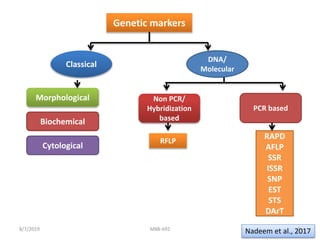
Genetic markers
Classical
DNA/
Molecular
Morphological
Biochemical
Cytological
Non PCR/
Hybridization
based
PCR based
RFLP
RAPD
AFLP
SSR
ISSR
SNP
EST
STS
DArT
Nadeem et al., 20178/7/2019 MBB-692 5
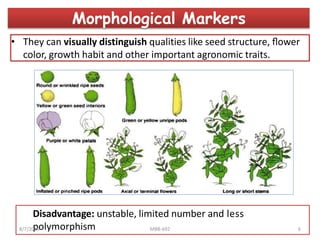
Morphological Markers
• They can visually distinguish qualities like seed structure, flower
color, growth habit and other important agronomic traits.
Disadvantage: unstable, limited number and less
polymorphism8/7/2019 MBB-692 6
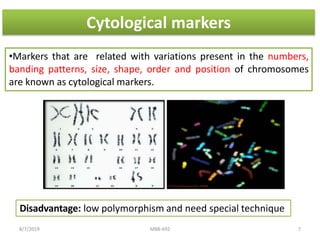
Cytological markers
•Markers that are related with variations present in the numbers,
banding patterns, size, shape, order and position of chromosomes
are known as cytological markers.
Disadvantage: low polymorphism and need special technique
8/7/2019 MBB-692 7
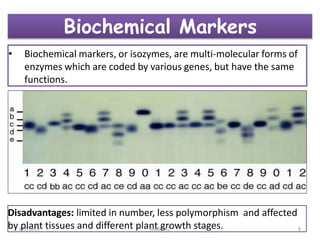
Biochemical Markers
• Biochemical markers, or isozymes, are multi-molecular forms of
enzymes which are coded by various genes, but have the same
functions.
Disadvantages: limited in number, less polymorphism and affected
by plant tissues and different plant growth stages.8/7/2019 MBB-692 8
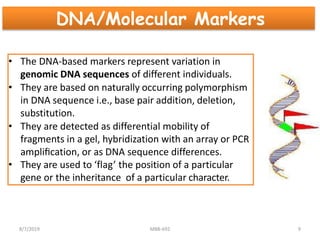
DNA/Molecular Markers
• The DNA-based markers represent variation in
genomic DNA sequences of different individuals.
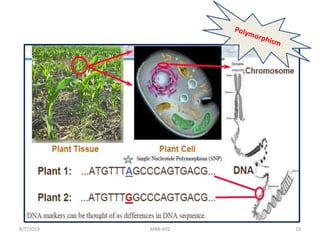
• They are based on naturally occurring polymorphism
in DNA sequence i.e., base pair addition, deletion,
substitution.
• They are detected as differential mobility of
fragments in a gel, hybridization with an array or PCR
amplification, or as DNA sequence differences.
• They are used to ‘flag’ the position of a particular
gene or the inheritance of a particular character.
8/7/2019 MBB-692 9
8/7/2019 MBB-692 10
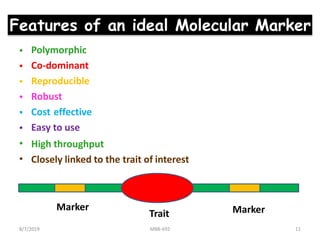
Features of an ideal Molecular Marker
•
•
•
•
•
•
•
•
Polymorphic
Co-dominant
Reproducible
Robust
Cost effective
Easy to use
High throughput
Closely linked to the trait of interest
Marker
Trait Marker
8/7/2019 MBB-692 11
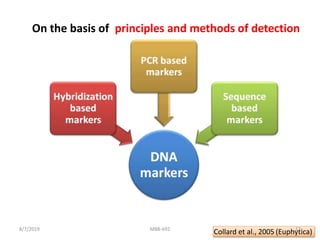
On the basis of principles and methods of detection
Collard et al., 2005 (Euphytica)8/7/2019 MBB-692 12
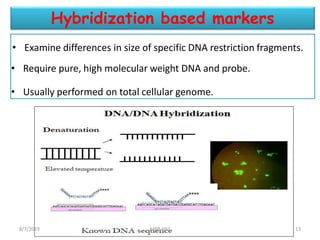
• Examine differences in size of specific DNA restriction fragments.
• Require pure, high molecular weight DNA and probe.
• Usually performed on total cellular genome.
Hybridization based markers
8/7/2019 MBB-692 13
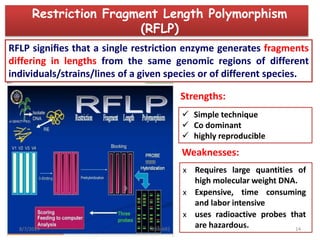
Restriction Fragment Length Polymorphism
(RFLP)
RFLP signifies that a single restriction enzyme generates fragments
differing in lengths from the same genomic regions of different
individuals/strains/lines of a given species or of different species.
Strengths:
 Simple technique
 Co dominant
 highly reproducible
Weaknesses:
x Requires large quantities of
high molecular weight DNA.
x Expensive, time consuming
and labor intensive
x uses radioactive probes that
are hazardous.8/7/2019 MBB-692 14
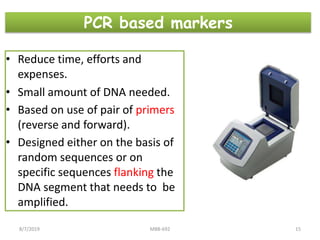
• Reduce time, efforts and
expenses.
• Small amount of DNA needed.
• Based on use of pair of primers
(reverse and forward).
• Designed either on the basis of
random sequences or on
specific sequences flanking the
DNA segment that needs to be
amplified.
PCR based markers
8/7/2019 MBB-692 15
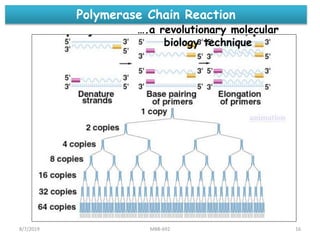
Polymerase Chain Reaction
….a revolutionary molecular
biology technique
8/7/2019 MBB-692 16
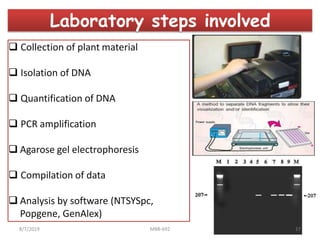
 Collection of plant material
 Isolation of DNA
 Quantification of DNA
 PCR amplification
 Agarose gel electrophoresis
 Compilation of data
 Analysis by software (NTSYSpc,
Popgene, GenAlex)
Laboratory steps involved
8/7/2019 MBB-692 17
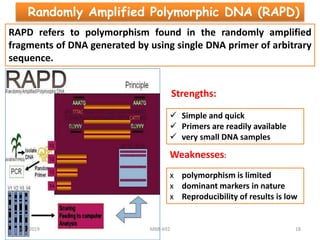
Randomly Amplified Polymorphic DNA (RAPD)
RAPD refers to polymorphism found in the randomly amplified
fragments of DNA generated by using single DNA primer of arbitrary
sequence.
Strengths:
 Simple and quick
 Primers are readily available
 very small DNA samples
Weaknesses:
x polymorphism is limited
x dominant markers in nature
x Reproducibility of results is low
8/7/2019 MBB-692 18
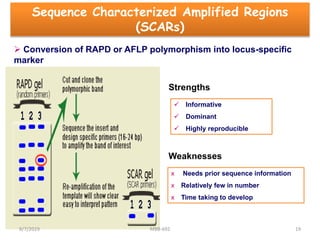
Sequence Characterized Amplified Regions
(SCARs)
 Conversion of RAPD or AFLP polymorphism into locus-specific
marker
Strengths
 Informative
 Dominant
 Highly reproducible
Weaknesses
x Needs prior sequence information
x Relatively few in number
x Time taking to develop
8/7/2019 MBB-692 19
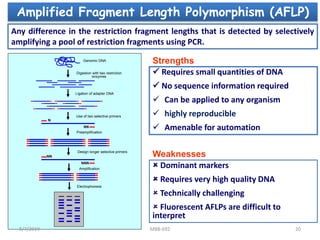
Amplified Fragment Length Polymorphism (AFLP)
Any difference in the restriction fragment lengths that is detected by selectively
amplifying a pool of restriction fragments using PCR.
Strengths
 Requires small quantities of DNA
 No sequence information required
 Can be applied to any organism
 highly reproducible
 Amenable for automation
Weaknesses
 Dominant markers
 Requires very high quality DNA
 Technically challenging
 Fluorescent AFLPs are difficult to
interpret
Genomic DNA
Digestion with two restriction
enzymes
Ligation of adapter DNA
Use of two selective primers
Preamplification
Design longer selective primers
Amplification
Electrophoresis
N
NN
NN
NNN
8/7/2019 MBB-692 20
Sequence Tagged Sites (STS)
STS are short DNA sequence, generally between 100-500bp in
length, that is easily recognizable and occurs only once in the
genome being studied.
Unique domains of the genome
Detects variation that are due to insertions / deletions
Strengths
 Informative
 Co dominant
 Highly reproducible
 Target specific genes
Weakness
x Needs prior sequence
information
x Time taking to develop
x Relatively few in number
8/7/2019 MBB-692 21
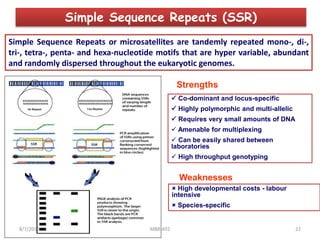
Simple Sequence Repeats (SSR)
Simple Sequence Repeats or microsatellites are tandemly repeated mono-, di-,
tri-, tetra-, penta- and hexa-nucleotide motifs that are hyper variable, abundant
and randomly dispersed throughout the eukaryotic genomes.
Strengths
 Co-dominant and locus-specific
 Highly polymorphic and multi-allelic
 Requires very small amounts of DNA
 Amenable for multiplexing
 Can be easily shared between
laboratories
 High throughput genotyping
Weaknesses
 High developmental costs - labour
intensive
 Species-specific
8/7/2019 MBB-692 22
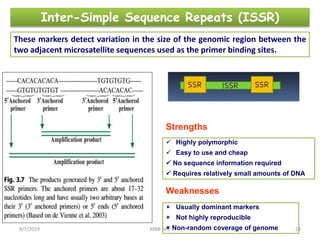
Inter-Simple Sequence Repeats (ISSR)
These markers detect variation in the size of the genomic region between the
two adjacent microsatellite sequences used as the primer binding sites.
Strengths
 Highly polymorphic
 Easy to use and cheap
 No sequence information required
 Requires relatively small amounts of DNA
Weaknesses
 Usually dominant markers
 Not highly reproducible
 Non-random coverage of genome8/7/2019 MBB-692 23
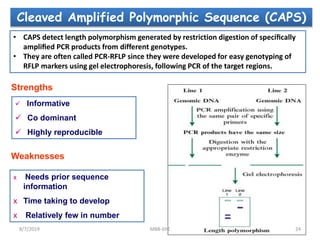
Cleaved Amplified Polymorphic Sequence (CAPS)
Strengths
 Informative
 Co dominant
 Highly reproducible
Weaknesses
x Needs prior sequence
information
x Time taking to develop
x Relatively few in number
• CAPS detect length polymorphism generated by restriction digestion of specifically
amplified PCR products from different genotypes.
• They are often called PCR-RFLP since they were developed for easy genotyping of
RFLP markers using gel electrophoresis, following PCR of the target regions.
8/7/2019 MBB-692 24
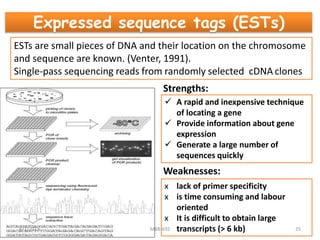
Expressed sequence tags (ESTs)
ESTs are small pieces of DNA and their location on the chromosome
and sequence are known. (Venter, 1991).
Single-pass sequencing reads from randomly selected cDNA clones
Strengths:
 A rapid and inexpensive technique
of locating a gene
 Provide information about gene
expression
 Generate a large number of
sequences quickly
Weaknesses:
x lack of primer specificity
x is time consuming and labour
oriented
x It is difficult to obtain large
transcripts (> 6 kb)8/7/2019 MBB-692 25
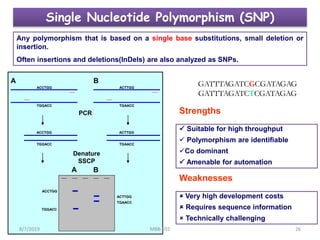
Single Nucleotide Polymorphism (SNP)
Any polymorphism that is based on a single base substitutions, small deletion or
insertion.
Often insertions and deletions(InDels) are also analyzed as SNPs.
Strengths
 Suitable for high throughput
 Polymorphism are identifiable
Co dominant
 Amenable for automation
Weaknesses
 Very high development costs
 Requires sequence information
 Technically challenging
TGGACC
ACCTGG ACTTGG
TGAACC
ACCTGG
TGGACC
ACTTGG
TGAACC
PCR
Denature
SSCP
A B
ACCTGG
TGGACC
ACTTGG
TGAACC
A B
GATTTAGATCGCGATAGAG
GATTTAGATCTCGATAGAG
8/7/2019 MBB-692 26
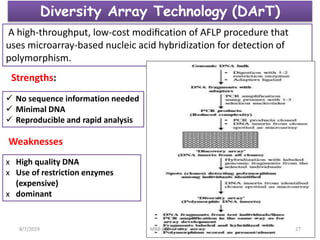
Diversity Array Technology (DArT)
A high-throughput, low-cost modification of AFLP procedure that
uses microarray-based nucleic acid hybridization for detection of
polymorphism.
Strengths:
 No sequence information needed
 Minimal DNA
 Reproducible and rapid analysis
Weaknesses
x High quality DNA
x Use of restriction enzymes
(expensive)
x dominant
8/7/2019 MBB-692 27
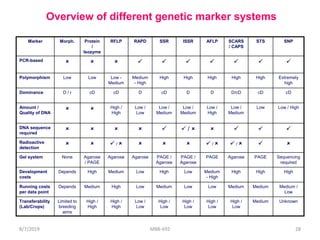
Marker Morph. Protein
/
Isozyme
RFLP RAPD SSR ISSR AFLP SCARS
/ CAPS
STS SNP
PCR-based          
Polymorphism Low Low Low -
Medium
Medium
- High
High High High High High Extremely
high
Dominance D / r cD cD D cD D D D/cD cD cD
Amount /
Quality of DNA
  High /
High
Low /
Low
Low /
Medium
Low /
Medium
Low /
High
Low /
Medium
Low Low / High
DNA sequence
required
      /     
Radioactive
detection
   /      /   /   
Gel system None Agarose
/ PAGE
Agarose Agarose PAGE /
Agarose
PAGE /
Agarose
PAGE Agarose PAGE Sequencing
required
Development
costs
Depends High Medium Low High Low Medium
- High
High High High
Running costs
per data point
Depends Medium High Low Medium Low Low Medium Medium Medium /
Low
Transferability
(Lab/Crops)
Limited to
breeding
aims
High /
High
High /
High
Low /
Low
High /
Low
High /
Low
High /
Low
High /
Low
Medium Unknown
Overview of different genetic marker systems
8/7/2019 MBB-692 28
Applications of Molecular
Markers
8/7/2019 MBB-692 29
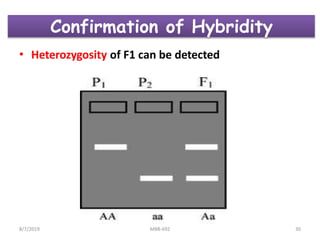
Confirmation of Hybridity
• Heterozygosity of F1 can be detected
8/7/2019 MBB-692 30
• Initially, evolutionary studies were totally
dependent on the geographical and
morphological changes among the organisms.
• Advancements in the techniques of molecular
biology offer extended information about the
phylogeny and evolution, molecular markers are
being used on a large scale nowadays.
Phylogenetic and evolutionary studies
8/7/2019 MBB-692 31
• This research was carried out to study the genetic diversity
among the 50 aromatic rice accessions using the 32 simple
sequence repeat (SSR) markers.
• The objectives of this research were to quantify the genetic
divergence of aromatic rice accessions using SSR markers and
to identify the potential accessions for introgression into the
existing rice breeding program.
8/7/2019 MBB-692 32
8/7/2019 MBB-692 33
8/7/2019 MBB-692 34
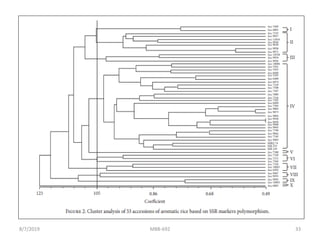
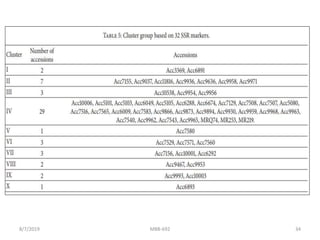
• The dendrogram based on UPGMA and Nei’s genetic distance
classified the 53 rice accessions into 10 clusters.
• Analysis of molecular variance (AMOVA) revealed that 89% of
the total variation observed in this germplasm came from
within the populations, while 11% of the variation emanated
among the populations.
• Using all these criteria and indices, seven accessions
(Acc9993, Acc6288, Acc6893, Acc7580, Acc6009, Acc9956,
and Acc11816) from three populations have been identified
and selected for further evaluation before introgression into
the existing breeding program and for future aromatic rice
varietal development.
8/7/2019 MBB-692 35
Heterosis Breeding
• Group of related or unrelated genotypes from the same
or different populations, which display a similar
combining ability and heterotic response when crossed
with genotypes from other genetically distinct
germplasm groups.
• Heterotic groups can be identified for the large number
of parental inbred lines by clustering germplasm based
on genetic similarities using molecular markers
(Melchinger, 1999).
8/7/2019 MBB-692 36
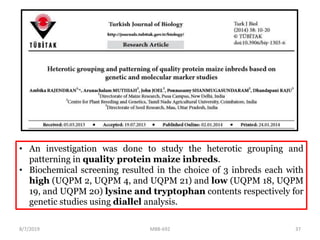
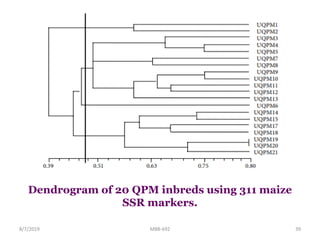
• An investigation was done to study the heterotic grouping and
patterning in quality protein maize inbreds.
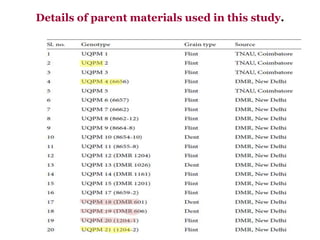
• Biochemical screening resulted in the choice of 3 inbreds each with
high (UQPM 2, UQPM 4, and UQPM 21) and low (UQPM 18, UQPM
19, and UQPM 20) lysine and tryptophan contents respectively for
genetic studies using diallel analysis.
8/7/2019 MBB-692 37
Details of parent materials used in this study.
Dendrogram of 20 QPM inbreds using 311 maize
SSR markers.
8/7/2019 MBB-692 39
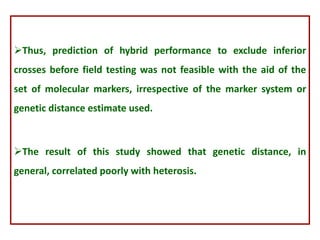
Thus, prediction of hybrid performance to exclude inferior
crosses before field testing was not feasible with the aid of the
set of molecular markers, irrespective of the marker system or
genetic distance estimate used.
The result of this study showed that genetic distance, in
general, correlated poorly with heterosis.
• Varietal identification has attained critical importance worldwide
especially in the context of plant variety protection.
• The genetic purity of the rice hybrids is assessed by the Grow-
Out Test (GOT) which becomes time consuming and expensive,
requiring large areas of land and skilled personnel.
• Among the various markers available the co-dominant markers
can differentiate between the homozygous and heterozygous
genotypes. Therefore, it has been applied widely in the
identification, registration of plant variety and in monitoring the
seed purity and the authenticity with high accuracy, high
reliability and low cost.
Varietal identification
8/7/2019 MBB-692 41
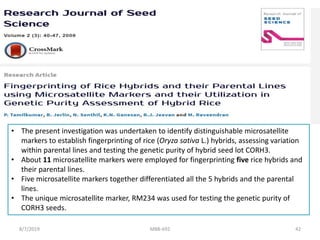
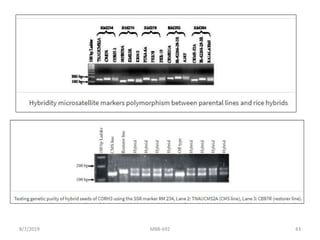
• The present investigation was undertaken to identify distinguishable microsatellite
markers to establish fingerprinting of rice (Oryza sativa L.) hybrids, assessing variation
within parental lines and testing the genetic purity of hybrid seed lot CORH3.
• About 11 microsatellite markers were employed for fingerprinting five rice hybrids and
their parental lines.
• Five microsatellite markers together differentiated all the 5 hybrids and the parental
lines.
• The unique microsatellite marker, RM234 was used for testing the genetic purity of
CORH3 seeds.
8/7/2019 MBB-692 42
8/7/2019 MBB-692 43
Genetic mapping
• Genetic mapping employs methods for
identification of the locus of a gene as well as
for determination of the distance between two
genes.
• The principle of genetic mapping is
chromosomal recombination during meiosis
which results in the segregation of genes.
• Markers present close to the gene of interest on
the same chromosome are known as linked
markers.
8/7/2019 MBB-692 44
8/7/2019 MBB-692 45
The fundamental advantages of
MAS compared to conventional
phenotypic selection are:
1) Simpler compared to phenotypic
screening
2) Selection may be carried out at
seedling stage
3) Single plants may be selected
with high reliability.
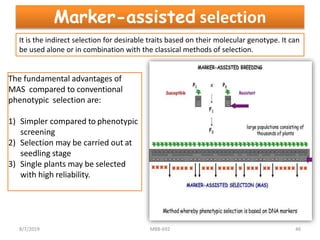
Marker-assisted selection
It is the indirect selection for desirable traits based on their molecular genotype. It can
be used alone or in combination with the classical methods of selection.
8/7/2019 MBB-692 46
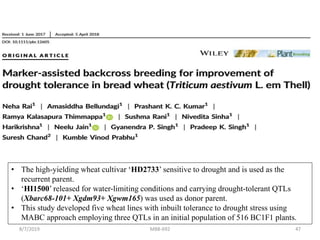
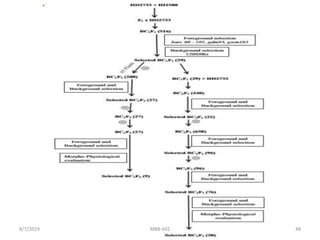
• The high-yielding wheat cultivar ‘HD2733’ sensitive to drought and is used as the
recurrent parent.
• ‘HI1500’ released for water-limiting conditions and carrying drought-tolerant QTLs
(Xbarc68-101+ Xgdm93+ Xgwm165) was used as donor parent.
• This study developed five wheat lines with inbuilt tolerance to drought stress using
MABC approach employing three QTLs in an initial population of 516 BC1F1 plants.
8/7/2019 MBB-692 47
8/7/2019 MBB-692 48
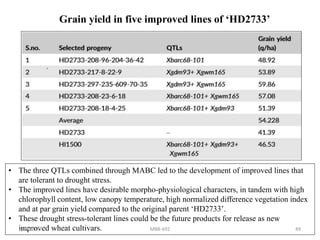
Grain yield in five improved lines of ‘HD2733’
• The three QTLs combined through MABC led to the development of improved lines that
are tolerant to drought stress.
• The improved lines have desirable morpho-physiological characters, in tandem with high
chlorophyll content, low canopy temperature, high normalized difference vegetation index
and at par grain yield compared to the original parent ‘HD2733’.
• These drought stress-tolerant lines could be the future products for release as new
improved wheat cultivars.8/7/2019 MBB-692 49
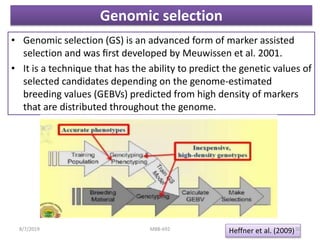
Genomic selection
• Genomic selection (GS) is an advanced form of marker assisted
selection and was first developed by Meuwissen et al. 2001.
• It is a technique that has the ability to predict the genetic values of
selected candidates depending on the genome-estimated
breeding values (GEBVs) predicted from high density of markers
that are distributed throughout the genome.
Heffner et al. (2009)8/7/2019 MBB-692 50
8/7/2019 MBB-692 51
FUTURE THRUST
• With the highly advanced molecular
genetic techniques, we are still not
achieving our goals due to inaccurate
phenotyping.
• High-throughput phenotyping
techniques solve these problems.
• There is a need to make the molecular
marker technology more precise,
productive and cost effective in order
to investigate the underlying biology of
various traits of interest.
8/7/2019 MBB-692 52
538/7/2019 MBB-692
8/7/2019 54MBB-692

Molecular Markers

  • 1.
  • 2.
    MBB- 692 (DoctoralSeminar II) Molecular markers for Crop Improvement Submitted by - B. Rachana RAD/18-18 PhD 1st year (GPBR)8/7/2019 MBB-692 2
  • 3.
    Outline of seminar •What is a marker? • How are the markers classified ? • Available markers? • Where to use them? • What next? 8/7/2019 MBB-692 3
  • 4.
    What is aGenetic Marker? • Characters which can be easily identified are referred to as marker characters. • A trait that is polymorphic, easily and reliably identified, and readily followed in segregating generations and indicates the genotype of the individuals that exhibit the trait is called a genetic marker. • These are character whose pattern of inheritance can be followed at morphological, biochemical and molecular levels. 8/7/2019 MBB-692 4
  • 5.
    Genetic markers Classical DNA/ Molecular Morphological Biochemical Cytological Non PCR/ Hybridization based PCRbased RFLP RAPD AFLP SSR ISSR SNP EST STS DArT Nadeem et al., 20178/7/2019 MBB-692 5
  • 6.
    Morphological Markers • Theycan visually distinguish qualities like seed structure, flower color, growth habit and other important agronomic traits. Disadvantage: unstable, limited number and less polymorphism8/7/2019 MBB-692 6
  • 7.
    Cytological markers •Markers thatare related with variations present in the numbers, banding patterns, size, shape, order and position of chromosomes are known as cytological markers. Disadvantage: low polymorphism and need special technique 8/7/2019 MBB-692 7
  • 8.
    Biochemical Markers • Biochemicalmarkers, or isozymes, are multi-molecular forms of enzymes which are coded by various genes, but have the same functions. Disadvantages: limited in number, less polymorphism and affected by plant tissues and different plant growth stages.8/7/2019 MBB-692 8
  • 9.
    DNA/Molecular Markers • TheDNA-based markers represent variation in genomic DNA sequences of different individuals. • They are based on naturally occurring polymorphism in DNA sequence i.e., base pair addition, deletion, substitution. • They are detected as differential mobility of fragments in a gel, hybridization with an array or PCR amplification, or as DNA sequence differences. • They are used to ‘flag’ the position of a particular gene or the inheritance of a particular character. 8/7/2019 MBB-692 9
  • 10.
  • 11.
    Features of anideal Molecular Marker • • • • • • • • Polymorphic Co-dominant Reproducible Robust Cost effective Easy to use High throughput Closely linked to the trait of interest Marker Trait Marker 8/7/2019 MBB-692 11
  • 12.
    On the basisof principles and methods of detection Collard et al., 2005 (Euphytica)8/7/2019 MBB-692 12
  • 13.
    • Examine differencesin size of specific DNA restriction fragments. • Require pure, high molecular weight DNA and probe. • Usually performed on total cellular genome. Hybridization based markers 8/7/2019 MBB-692 13
  • 14.
    Restriction Fragment LengthPolymorphism (RFLP) RFLP signifies that a single restriction enzyme generates fragments differing in lengths from the same genomic regions of different individuals/strains/lines of a given species or of different species. Strengths:  Simple technique  Co dominant  highly reproducible Weaknesses: x Requires large quantities of high molecular weight DNA. x Expensive, time consuming and labor intensive x uses radioactive probes that are hazardous.8/7/2019 MBB-692 14
  • 15.
    • Reduce time,efforts and expenses. • Small amount of DNA needed. • Based on use of pair of primers (reverse and forward). • Designed either on the basis of random sequences or on specific sequences flanking the DNA segment that needs to be amplified. PCR based markers 8/7/2019 MBB-692 15
  • 16.
    Polymerase Chain Reaction ….arevolutionary molecular biology technique 8/7/2019 MBB-692 16
  • 17.
     Collection ofplant material  Isolation of DNA  Quantification of DNA  PCR amplification  Agarose gel electrophoresis  Compilation of data  Analysis by software (NTSYSpc, Popgene, GenAlex) Laboratory steps involved 8/7/2019 MBB-692 17
  • 18.
    Randomly Amplified PolymorphicDNA (RAPD) RAPD refers to polymorphism found in the randomly amplified fragments of DNA generated by using single DNA primer of arbitrary sequence. Strengths:  Simple and quick  Primers are readily available  very small DNA samples Weaknesses: x polymorphism is limited x dominant markers in nature x Reproducibility of results is low 8/7/2019 MBB-692 18
  • 19.
    Sequence Characterized AmplifiedRegions (SCARs)  Conversion of RAPD or AFLP polymorphism into locus-specific marker Strengths  Informative  Dominant  Highly reproducible Weaknesses x Needs prior sequence information x Relatively few in number x Time taking to develop 8/7/2019 MBB-692 19
  • 20.
    Amplified Fragment LengthPolymorphism (AFLP) Any difference in the restriction fragment lengths that is detected by selectively amplifying a pool of restriction fragments using PCR. Strengths  Requires small quantities of DNA  No sequence information required  Can be applied to any organism  highly reproducible  Amenable for automation Weaknesses  Dominant markers  Requires very high quality DNA  Technically challenging  Fluorescent AFLPs are difficult to interpret Genomic DNA Digestion with two restriction enzymes Ligation of adapter DNA Use of two selective primers Preamplification Design longer selective primers Amplification Electrophoresis N NN NN NNN 8/7/2019 MBB-692 20
  • 21.
    Sequence Tagged Sites(STS) STS are short DNA sequence, generally between 100-500bp in length, that is easily recognizable and occurs only once in the genome being studied. Unique domains of the genome Detects variation that are due to insertions / deletions Strengths  Informative  Co dominant  Highly reproducible  Target specific genes Weakness x Needs prior sequence information x Time taking to develop x Relatively few in number 8/7/2019 MBB-692 21
  • 22.
    Simple Sequence Repeats(SSR) Simple Sequence Repeats or microsatellites are tandemly repeated mono-, di-, tri-, tetra-, penta- and hexa-nucleotide motifs that are hyper variable, abundant and randomly dispersed throughout the eukaryotic genomes. Strengths  Co-dominant and locus-specific  Highly polymorphic and multi-allelic  Requires very small amounts of DNA  Amenable for multiplexing  Can be easily shared between laboratories  High throughput genotyping Weaknesses  High developmental costs - labour intensive  Species-specific 8/7/2019 MBB-692 22
  • 23.
    Inter-Simple Sequence Repeats(ISSR) These markers detect variation in the size of the genomic region between the two adjacent microsatellite sequences used as the primer binding sites. Strengths  Highly polymorphic  Easy to use and cheap  No sequence information required  Requires relatively small amounts of DNA Weaknesses  Usually dominant markers  Not highly reproducible  Non-random coverage of genome8/7/2019 MBB-692 23
  • 24.
    Cleaved Amplified PolymorphicSequence (CAPS) Strengths  Informative  Co dominant  Highly reproducible Weaknesses x Needs prior sequence information x Time taking to develop x Relatively few in number • CAPS detect length polymorphism generated by restriction digestion of specifically amplified PCR products from different genotypes. • They are often called PCR-RFLP since they were developed for easy genotyping of RFLP markers using gel electrophoresis, following PCR of the target regions. 8/7/2019 MBB-692 24
  • 25.
    Expressed sequence tags(ESTs) ESTs are small pieces of DNA and their location on the chromosome and sequence are known. (Venter, 1991). Single-pass sequencing reads from randomly selected cDNA clones Strengths:  A rapid and inexpensive technique of locating a gene  Provide information about gene expression  Generate a large number of sequences quickly Weaknesses: x lack of primer specificity x is time consuming and labour oriented x It is difficult to obtain large transcripts (> 6 kb)8/7/2019 MBB-692 25
  • 26.
    Single Nucleotide Polymorphism(SNP) Any polymorphism that is based on a single base substitutions, small deletion or insertion. Often insertions and deletions(InDels) are also analyzed as SNPs. Strengths  Suitable for high throughput  Polymorphism are identifiable Co dominant  Amenable for automation Weaknesses  Very high development costs  Requires sequence information  Technically challenging TGGACC ACCTGG ACTTGG TGAACC ACCTGG TGGACC ACTTGG TGAACC PCR Denature SSCP A B ACCTGG TGGACC ACTTGG TGAACC A B GATTTAGATCGCGATAGAG GATTTAGATCTCGATAGAG 8/7/2019 MBB-692 26
  • 27.
    Diversity Array Technology(DArT) A high-throughput, low-cost modification of AFLP procedure that uses microarray-based nucleic acid hybridization for detection of polymorphism. Strengths:  No sequence information needed  Minimal DNA  Reproducible and rapid analysis Weaknesses x High quality DNA x Use of restriction enzymes (expensive) x dominant 8/7/2019 MBB-692 27
  • 28.
    Marker Morph. Protein / Isozyme RFLPRAPD SSR ISSR AFLP SCARS / CAPS STS SNP PCR-based           Polymorphism Low Low Low - Medium Medium - High High High High High High Extremely high Dominance D / r cD cD D cD D D D/cD cD cD Amount / Quality of DNA   High / High Low / Low Low / Medium Low / Medium Low / High Low / Medium Low Low / High DNA sequence required       /      Radioactive detection    /      /   /    Gel system None Agarose / PAGE Agarose Agarose PAGE / Agarose PAGE / Agarose PAGE Agarose PAGE Sequencing required Development costs Depends High Medium Low High Low Medium - High High High High Running costs per data point Depends Medium High Low Medium Low Low Medium Medium Medium / Low Transferability (Lab/Crops) Limited to breeding aims High / High High / High Low / Low High / Low High / Low High / Low High / Low Medium Unknown Overview of different genetic marker systems 8/7/2019 MBB-692 28
  • 29.
  • 30.
    Confirmation of Hybridity •Heterozygosity of F1 can be detected 8/7/2019 MBB-692 30
  • 31.
    • Initially, evolutionarystudies were totally dependent on the geographical and morphological changes among the organisms. • Advancements in the techniques of molecular biology offer extended information about the phylogeny and evolution, molecular markers are being used on a large scale nowadays. Phylogenetic and evolutionary studies 8/7/2019 MBB-692 31
  • 32.
    • This researchwas carried out to study the genetic diversity among the 50 aromatic rice accessions using the 32 simple sequence repeat (SSR) markers. • The objectives of this research were to quantify the genetic divergence of aromatic rice accessions using SSR markers and to identify the potential accessions for introgression into the existing rice breeding program. 8/7/2019 MBB-692 32
  • 33.
  • 34.
  • 35.
    • The dendrogrambased on UPGMA and Nei’s genetic distance classified the 53 rice accessions into 10 clusters. • Analysis of molecular variance (AMOVA) revealed that 89% of the total variation observed in this germplasm came from within the populations, while 11% of the variation emanated among the populations. • Using all these criteria and indices, seven accessions (Acc9993, Acc6288, Acc6893, Acc7580, Acc6009, Acc9956, and Acc11816) from three populations have been identified and selected for further evaluation before introgression into the existing breeding program and for future aromatic rice varietal development. 8/7/2019 MBB-692 35
  • 36.
    Heterosis Breeding • Groupof related or unrelated genotypes from the same or different populations, which display a similar combining ability and heterotic response when crossed with genotypes from other genetically distinct germplasm groups. • Heterotic groups can be identified for the large number of parental inbred lines by clustering germplasm based on genetic similarities using molecular markers (Melchinger, 1999). 8/7/2019 MBB-692 36
  • 37.
    • An investigationwas done to study the heterotic grouping and patterning in quality protein maize inbreds. • Biochemical screening resulted in the choice of 3 inbreds each with high (UQPM 2, UQPM 4, and UQPM 21) and low (UQPM 18, UQPM 19, and UQPM 20) lysine and tryptophan contents respectively for genetic studies using diallel analysis. 8/7/2019 MBB-692 37
  • 38.
    Details of parentmaterials used in this study.
  • 39.
    Dendrogram of 20QPM inbreds using 311 maize SSR markers. 8/7/2019 MBB-692 39
  • 40.
    Thus, prediction ofhybrid performance to exclude inferior crosses before field testing was not feasible with the aid of the set of molecular markers, irrespective of the marker system or genetic distance estimate used. The result of this study showed that genetic distance, in general, correlated poorly with heterosis.
  • 41.
    • Varietal identificationhas attained critical importance worldwide especially in the context of plant variety protection. • The genetic purity of the rice hybrids is assessed by the Grow- Out Test (GOT) which becomes time consuming and expensive, requiring large areas of land and skilled personnel. • Among the various markers available the co-dominant markers can differentiate between the homozygous and heterozygous genotypes. Therefore, it has been applied widely in the identification, registration of plant variety and in monitoring the seed purity and the authenticity with high accuracy, high reliability and low cost. Varietal identification 8/7/2019 MBB-692 41
  • 42.
    • The presentinvestigation was undertaken to identify distinguishable microsatellite markers to establish fingerprinting of rice (Oryza sativa L.) hybrids, assessing variation within parental lines and testing the genetic purity of hybrid seed lot CORH3. • About 11 microsatellite markers were employed for fingerprinting five rice hybrids and their parental lines. • Five microsatellite markers together differentiated all the 5 hybrids and the parental lines. • The unique microsatellite marker, RM234 was used for testing the genetic purity of CORH3 seeds. 8/7/2019 MBB-692 42
  • 43.
  • 44.
    Genetic mapping • Geneticmapping employs methods for identification of the locus of a gene as well as for determination of the distance between two genes. • The principle of genetic mapping is chromosomal recombination during meiosis which results in the segregation of genes. • Markers present close to the gene of interest on the same chromosome are known as linked markers. 8/7/2019 MBB-692 44
  • 45.
  • 46.
    The fundamental advantagesof MAS compared to conventional phenotypic selection are: 1) Simpler compared to phenotypic screening 2) Selection may be carried out at seedling stage 3) Single plants may be selected with high reliability. Marker-assisted selection It is the indirect selection for desirable traits based on their molecular genotype. It can be used alone or in combination with the classical methods of selection. 8/7/2019 MBB-692 46
  • 47.
    • The high-yieldingwheat cultivar ‘HD2733’ sensitive to drought and is used as the recurrent parent. • ‘HI1500’ released for water-limiting conditions and carrying drought-tolerant QTLs (Xbarc68-101+ Xgdm93+ Xgwm165) was used as donor parent. • This study developed five wheat lines with inbuilt tolerance to drought stress using MABC approach employing three QTLs in an initial population of 516 BC1F1 plants. 8/7/2019 MBB-692 47
  • 48.
  • 49.
    Grain yield infive improved lines of ‘HD2733’ • The three QTLs combined through MABC led to the development of improved lines that are tolerant to drought stress. • The improved lines have desirable morpho-physiological characters, in tandem with high chlorophyll content, low canopy temperature, high normalized difference vegetation index and at par grain yield compared to the original parent ‘HD2733’. • These drought stress-tolerant lines could be the future products for release as new improved wheat cultivars.8/7/2019 MBB-692 49
  • 50.
    Genomic selection • Genomicselection (GS) is an advanced form of marker assisted selection and was first developed by Meuwissen et al. 2001. • It is a technique that has the ability to predict the genetic values of selected candidates depending on the genome-estimated breeding values (GEBVs) predicted from high density of markers that are distributed throughout the genome. Heffner et al. (2009)8/7/2019 MBB-692 50
  • 51.
  • 52.
    FUTURE THRUST • Withthe highly advanced molecular genetic techniques, we are still not achieving our goals due to inaccurate phenotyping. • High-throughput phenotyping techniques solve these problems. • There is a need to make the molecular marker technology more precise, productive and cost effective in order to investigate the underlying biology of various traits of interest. 8/7/2019 MBB-692 52
  • 53.
  • 54.