BIOTECHNOLOGY FOR CROP IMPROVEMENT
GP 509
SUBMITTED TO:
Dr.D.SHIVANI
PROFESSOR
DEPT. OF GENETICS AND PLANT BREEDING
SUBMITTED BY:
K.BHARGAVA REDDY
RAM/18-56
MSC(AG)1ST YEAR
Marker assisted selection
CONTENTS:
What is MAS??
Marker and types
Prerequisites for marker assisted breeding
Features of MAS
General Steps in MAS
Applications
Merits and demerits
WHAT IS M.A.S.?
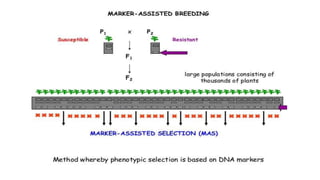
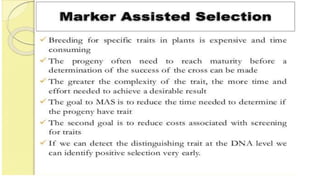
“Marker assisted selection or Marker aided selection (MAS) is
an indirect selection process where a trait of interest is selected
based on a marker (morphological, biochemical or DNA/RNA
variation) linked to a trait of interest (e.g. productivity, disease
resistance, abiotic stress tolerance, and quality), rather than on
the trait itself.”
TYPES OF MARKERS
Morphological Markers:- these are related to size, shape, color
and surface of various plant parts
Cytological Markers:- such markers are related to variations in
chromosomes morphology
Biochemical Markers:- such markers are related to variations in
protein and amino acid banding patterns.
DNA markers:- they are related to variation in DNA fragments
generated by restriction end nuclease enzyme
DNA MARKERS IN CROP
IMPROVEMENT
Germplasm characterization
Varietal identification
Tracing genetic origin of crop plants
 Gene tagging
Genome mapping
MAS
MOLECULAR BREEDING
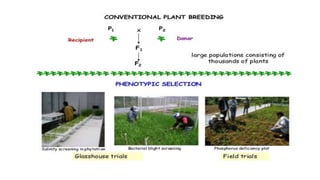
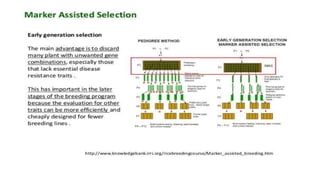
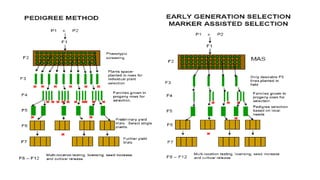
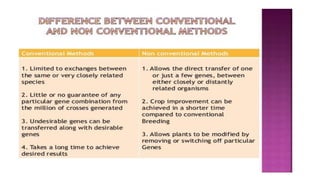
Conventional plant breeding is primarily based on
phenotypic selection of superior individuals among segregating
progenies resulting from hybridization.
studies have been made in crop improvement through
phenotypic selections for agronomically important traits,
considerable difficulties are often encountered during this
process, primarily due to G×E interactions.
MOLECULAR BREEDING helps to encounter this problems.
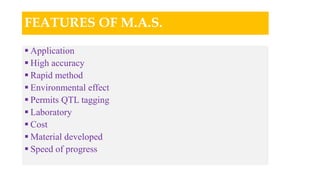
FEATURES OF M.A.S.
 Application
 High accuracy
 Rapid method
 Environmental effect
 Permits QTL tagging
 Laboratory
 Cost
 Material developed
 Speed of progress
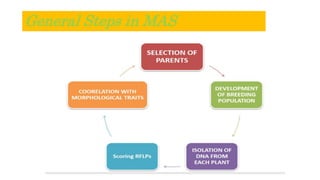
General Steps in MAS
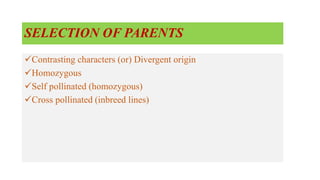
SELECTION OF PARENTS
Contrasting characters (or) Divergent origin
Homozygous
Self pollinated (homozygous)
Cross pollinated (inbreed lines)
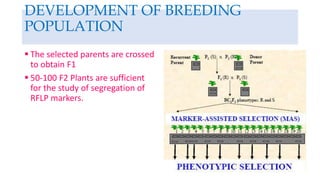
DEVELOPMENT OF BREEDING
POPULATION
 The selected parents are crossed
to obtain F1
 50-100 F2 Plants are sufficient
for the study of segregation of
RFLP markers.
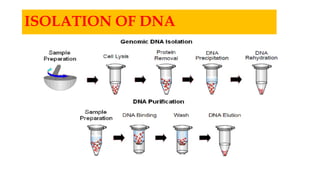
ISOLATION OF DNA
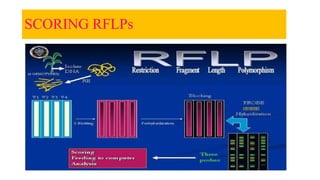
SCORING RFLPs
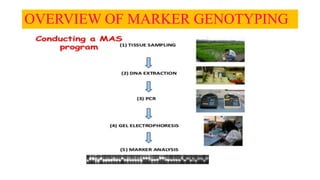
OVERVIEW OF MARKER GENOTYPING
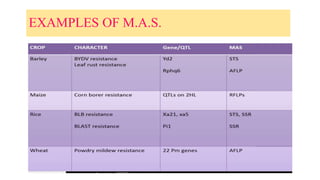
EXAMPLES OF M.A.S.
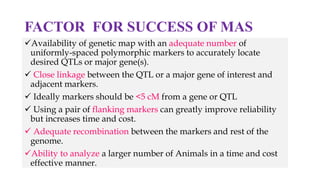
FACTOR FOR SUCCESS OF MAS
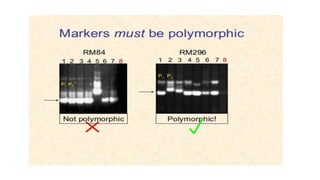
Availability of genetic map with an adequate number of
uniformly-spaced polymorphic markers to accurately locate
desired QTLs or major gene(s).
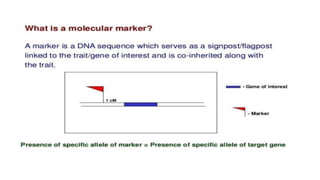
 Close linkage between the QTL or a major gene of interest and
adjacent markers.
 Ideally markers should be <5 cM from a gene or QTL
 Using a pair of flanking markers can greatly improve reliability
but increases time and cost.
 Adequate recombination between the markers and rest of the
genome.
Ability to analyze a larger number of Animals in a time and cost
effective manner.
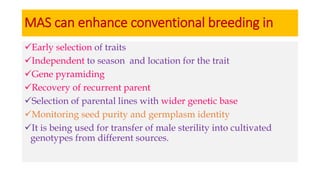
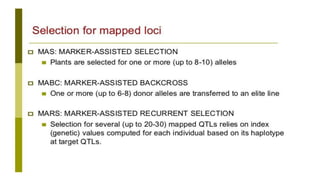
MAS can enhance conventional breeding in
Early selection of traits
Independent to season and location for the trait
Gene pyramiding
Recovery of recurrent parent
Selection of parental lines with wider genetic base
Monitoring seed purity and germplasm identity
It is being used for transfer of male sterility into cultivated
genotypes from different sources.
APPLICATIONS:
• Rapid method of transferring resistance to biotic and abiotic stresses
in crop plants
• Useful in gene pyramiding
• Transfer of male sterility and photoperiod insensitivity
• Improvement of quality characters (Eg. Protein quality in maize)
• Successfully used for transferring desirable transgene from one
cultivar to another (Eg. Bt gene)
• Effective in introgression of desirable genes from wild into
cultivated genotypes
• Effective in genetic improvement of plant and animals
• Genetic improvement of tree species (20 years)
• Wide application for genetic improvement of oligogenic traits as
compared to polygenic traits
LIMITATIONS
Costly method
Well trained man power requirement
Detection of various linked marker are difficult to detect
,laborious ang time consuming task
Involves use of radioactive isotopes
Less efficient than phenotypic selection in long term
More difficult for QTL
marker assisted selection

marker assisted selection

  • 1.
    BIOTECHNOLOGY FOR CROPIMPROVEMENT GP 509 SUBMITTED TO: Dr.D.SHIVANI PROFESSOR DEPT. OF GENETICS AND PLANT BREEDING SUBMITTED BY: K.BHARGAVA REDDY RAM/18-56 MSC(AG)1ST YEAR
  • 2.
    Marker assisted selection CONTENTS: Whatis MAS?? Marker and types Prerequisites for marker assisted breeding Features of MAS General Steps in MAS Applications Merits and demerits
  • 3.
    WHAT IS M.A.S.? “Markerassisted selection or Marker aided selection (MAS) is an indirect selection process where a trait of interest is selected based on a marker (morphological, biochemical or DNA/RNA variation) linked to a trait of interest (e.g. productivity, disease resistance, abiotic stress tolerance, and quality), rather than on the trait itself.”
  • 5.
    TYPES OF MARKERS MorphologicalMarkers:- these are related to size, shape, color and surface of various plant parts Cytological Markers:- such markers are related to variations in chromosomes morphology Biochemical Markers:- such markers are related to variations in protein and amino acid banding patterns. DNA markers:- they are related to variation in DNA fragments generated by restriction end nuclease enzyme
  • 7.
    DNA MARKERS INCROP IMPROVEMENT Germplasm characterization Varietal identification Tracing genetic origin of crop plants  Gene tagging Genome mapping MAS
  • 8.
    MOLECULAR BREEDING Conventional plantbreeding is primarily based on phenotypic selection of superior individuals among segregating progenies resulting from hybridization. studies have been made in crop improvement through phenotypic selections for agronomically important traits, considerable difficulties are often encountered during this process, primarily due to G×E interactions. MOLECULAR BREEDING helps to encounter this problems.
  • 13.
    FEATURES OF M.A.S. Application  High accuracy  Rapid method  Environmental effect  Permits QTL tagging  Laboratory  Cost  Material developed  Speed of progress
  • 15.
  • 16.
    SELECTION OF PARENTS Contrastingcharacters (or) Divergent origin Homozygous Self pollinated (homozygous) Cross pollinated (inbreed lines)
  • 17.
    DEVELOPMENT OF BREEDING POPULATION The selected parents are crossed to obtain F1  50-100 F2 Plants are sufficient for the study of segregation of RFLP markers.
  • 18.
  • 19.
  • 20.
  • 21.
  • 23.
    FACTOR FOR SUCCESSOF MAS Availability of genetic map with an adequate number of uniformly-spaced polymorphic markers to accurately locate desired QTLs or major gene(s).  Close linkage between the QTL or a major gene of interest and adjacent markers.  Ideally markers should be <5 cM from a gene or QTL  Using a pair of flanking markers can greatly improve reliability but increases time and cost.  Adequate recombination between the markers and rest of the genome. Ability to analyze a larger number of Animals in a time and cost effective manner.
  • 24.
    MAS can enhanceconventional breeding in Early selection of traits Independent to season and location for the trait Gene pyramiding Recovery of recurrent parent Selection of parental lines with wider genetic base Monitoring seed purity and germplasm identity It is being used for transfer of male sterility into cultivated genotypes from different sources.
  • 29.
    APPLICATIONS: • Rapid methodof transferring resistance to biotic and abiotic stresses in crop plants • Useful in gene pyramiding • Transfer of male sterility and photoperiod insensitivity • Improvement of quality characters (Eg. Protein quality in maize) • Successfully used for transferring desirable transgene from one cultivar to another (Eg. Bt gene) • Effective in introgression of desirable genes from wild into cultivated genotypes • Effective in genetic improvement of plant and animals • Genetic improvement of tree species (20 years) • Wide application for genetic improvement of oligogenic traits as compared to polygenic traits
  • 31.
    LIMITATIONS Costly method Well trainedman power requirement Detection of various linked marker are difficult to detect ,laborious ang time consuming task Involves use of radioactive isotopes Less efficient than phenotypic selection in long term More difficult for QTL