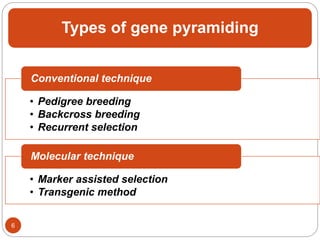
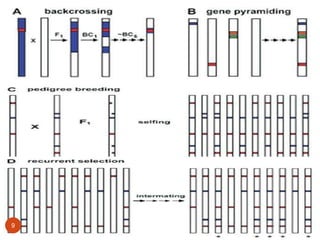
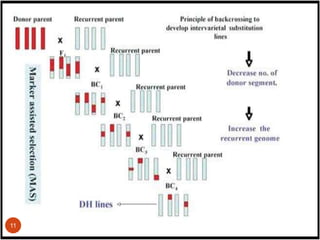
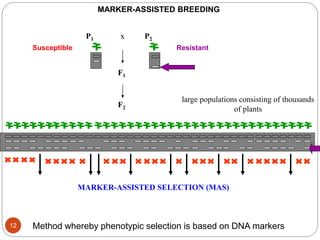
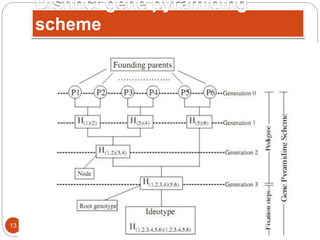
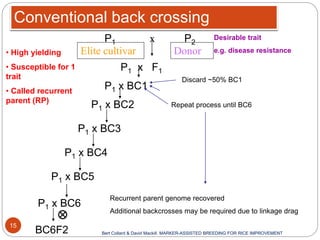
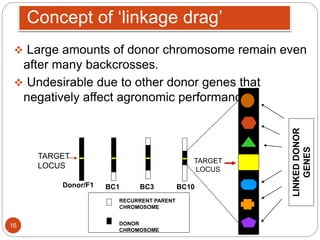
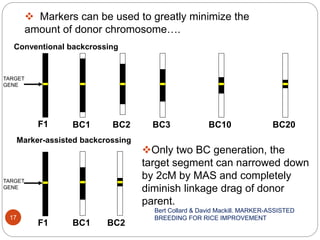
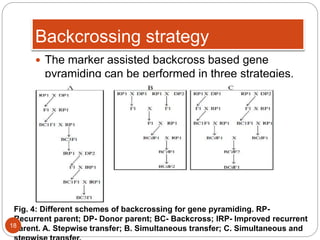
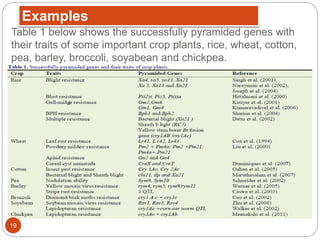
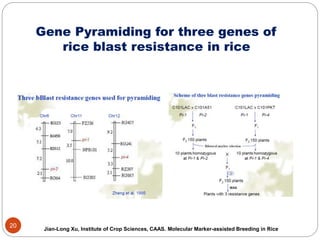
This document discusses gene pyramiding as a tool for developing durable resistance in crops. It defines gene pyramiding as combining two or more genes from multiple parents to develop elite lines with simultaneous expression of multiple genes. The objectives of gene pyramiding are to enhance traits, meet deficits in elite cultivars, and increase durability. Types of gene pyramiding include conventional pedigree breeding and backcrossing as well as molecular marker-assisted selection and transgenic methods. Gene pyramiding provides advantages like wider disease resistance and improved elite cultivars, while limitations include difficulty achieving multiple gene incorporation. Examples and applications in rice, wheat and other crops are also provided.