Work Related Skills Unit 2
Risk Assessment and analysis
Hamilton VCAL, 2020
Friday 28th August
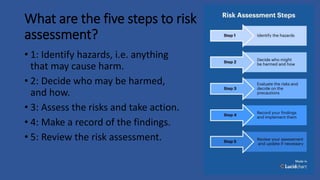
What are the five steps to risk
assessment?
• 1: Identify hazards, i.e. anything
that may cause harm.
• 2: Decide who may be harmed,
and how.
• 3: Assess the risks and take action.
• 4: Make a record of the findings.
• 5: Review the risk assessment.
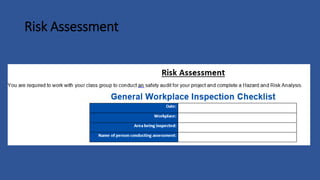
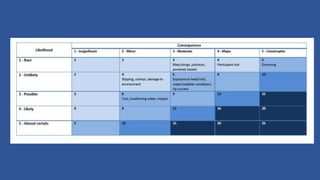
Risk Assessment
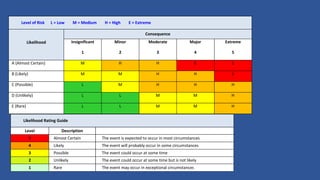
Level of Risk L = Low M = Medium H = High E = Extreme
Likelihood
Consequence
Insignificant
1
Minor
2
Moderate
3
Major
4
Extreme
5
A (Almost Certain) M H H E E
B (Likely) M M H H E
C (Possible) L M H H H
D (Unlikely) L L M M H
E (Rare) L L M M H
Likelihood Rating Guide
Level Description
5 Almost Certain The event is expected to occur in most circumstances
4 Likely The event will probably occur in some circumstances
3 Possible The event could occur at some time
2 Unlikely The event could occur at some time but is not likely
1 Rare The event may occur in exceptional circumstances
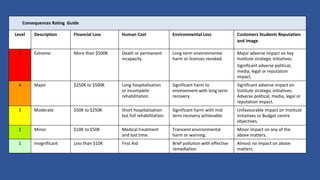
Consequences Rating Guide
Level Description Financial Loss Human Cost Environmental Loss Customers Students Reputation
and Image
5 Extreme More than $500K Death or permanent
incapacity.
Long term environmental
harm or licences revoked.
Major adverse impact on key
Institute strategic initiatives.
Significant adverse political,
media, legal or reputation
impact.
4 Major $250K to $500K Long hospitalisation
or incomplete
rehabilitation.
Significant harm to
environment with long term
recovery.
Significant adverse impact on
Institute strategic initiatives.
Adverse political, media, legal or
reputation impact.
3 Moderate $50K to $250K Short hospitalisation
but full rehabilitation.
Significant harm with mid
term recovery achievable.
Unfavourable impact on Institute
initiatives or Budget centre
objectives.
2 Minor $10K to $50K Medical treatment
and lost time.
Transient environmental
harm or warning.
Minor impact on any of the
above matters.
1 Insignificant Less than $10K First Aid Brief pollution with effective
remediation
Almost no impact on above
matters.
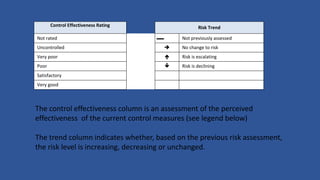
Control Effectiveness Rating Risk Trend
Not rated Not previously assessed
Uncontrolled  No change to risk
Very poor  Risk is escalating
Poor  Risk is declining
Satisfactory
Very good
The control effectiveness column is an assessment of the perceived
effectiveness of the current control measures (see legend below)
The trend column indicates whether, based on the previous risk assessment,
the risk level is increasing, decreasing or unchanged.
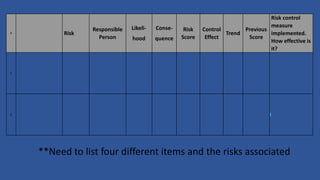
# Risk
Responsible
Person
Likeli-
hood
Conse-
quence
Risk
Score
Control
Effect
Trend
Previous
Score
Risk control
measure
implemented.
How effective is
it?
1
2
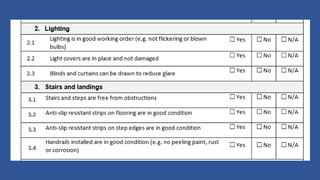
**Need to list four different items and the risks associated
VCAL WRS2 - Risk assessment and analysis

VCAL WRS2 - Risk assessment and analysis

  • 1.
    Work Related SkillsUnit 2 Risk Assessment and analysis Hamilton VCAL, 2020 Friday 28th August
  • 2.
    What are thefive steps to risk assessment? • 1: Identify hazards, i.e. anything that may cause harm. • 2: Decide who may be harmed, and how. • 3: Assess the risks and take action. • 4: Make a record of the findings. • 5: Review the risk assessment.
  • 3.
  • 6.
    Level of RiskL = Low M = Medium H = High E = Extreme Likelihood Consequence Insignificant 1 Minor 2 Moderate 3 Major 4 Extreme 5 A (Almost Certain) M H H E E B (Likely) M M H H E C (Possible) L M H H H D (Unlikely) L L M M H E (Rare) L L M M H Likelihood Rating Guide Level Description 5 Almost Certain The event is expected to occur in most circumstances 4 Likely The event will probably occur in some circumstances 3 Possible The event could occur at some time 2 Unlikely The event could occur at some time but is not likely 1 Rare The event may occur in exceptional circumstances
  • 7.
    Consequences Rating Guide LevelDescription Financial Loss Human Cost Environmental Loss Customers Students Reputation and Image 5 Extreme More than $500K Death or permanent incapacity. Long term environmental harm or licences revoked. Major adverse impact on key Institute strategic initiatives. Significant adverse political, media, legal or reputation impact. 4 Major $250K to $500K Long hospitalisation or incomplete rehabilitation. Significant harm to environment with long term recovery. Significant adverse impact on Institute strategic initiatives. Adverse political, media, legal or reputation impact. 3 Moderate $50K to $250K Short hospitalisation but full rehabilitation. Significant harm with mid term recovery achievable. Unfavourable impact on Institute initiatives or Budget centre objectives. 2 Minor $10K to $50K Medical treatment and lost time. Transient environmental harm or warning. Minor impact on any of the above matters. 1 Insignificant Less than $10K First Aid Brief pollution with effective remediation Almost no impact on above matters.
  • 8.
    Control Effectiveness RatingRisk Trend Not rated Not previously assessed Uncontrolled  No change to risk Very poor  Risk is escalating Poor  Risk is declining Satisfactory Very good The control effectiveness column is an assessment of the perceived effectiveness of the current control measures (see legend below) The trend column indicates whether, based on the previous risk assessment, the risk level is increasing, decreasing or unchanged.
  • 9.