DREAMS

By Ahmed Khamis & Rokaia Ahmed.
CONTENTS:
• What is a dream?
• The sleep cycle.
• Facts about dreams.

• Types of dreams.
• The Importance of Dreaming.
WHAT IS A DREAM ?

• Sequence of images, ideas, emotions, and sensations that
occur involuntarily in the mind during certain stages of sleep.
THE SLEEP CYCLE
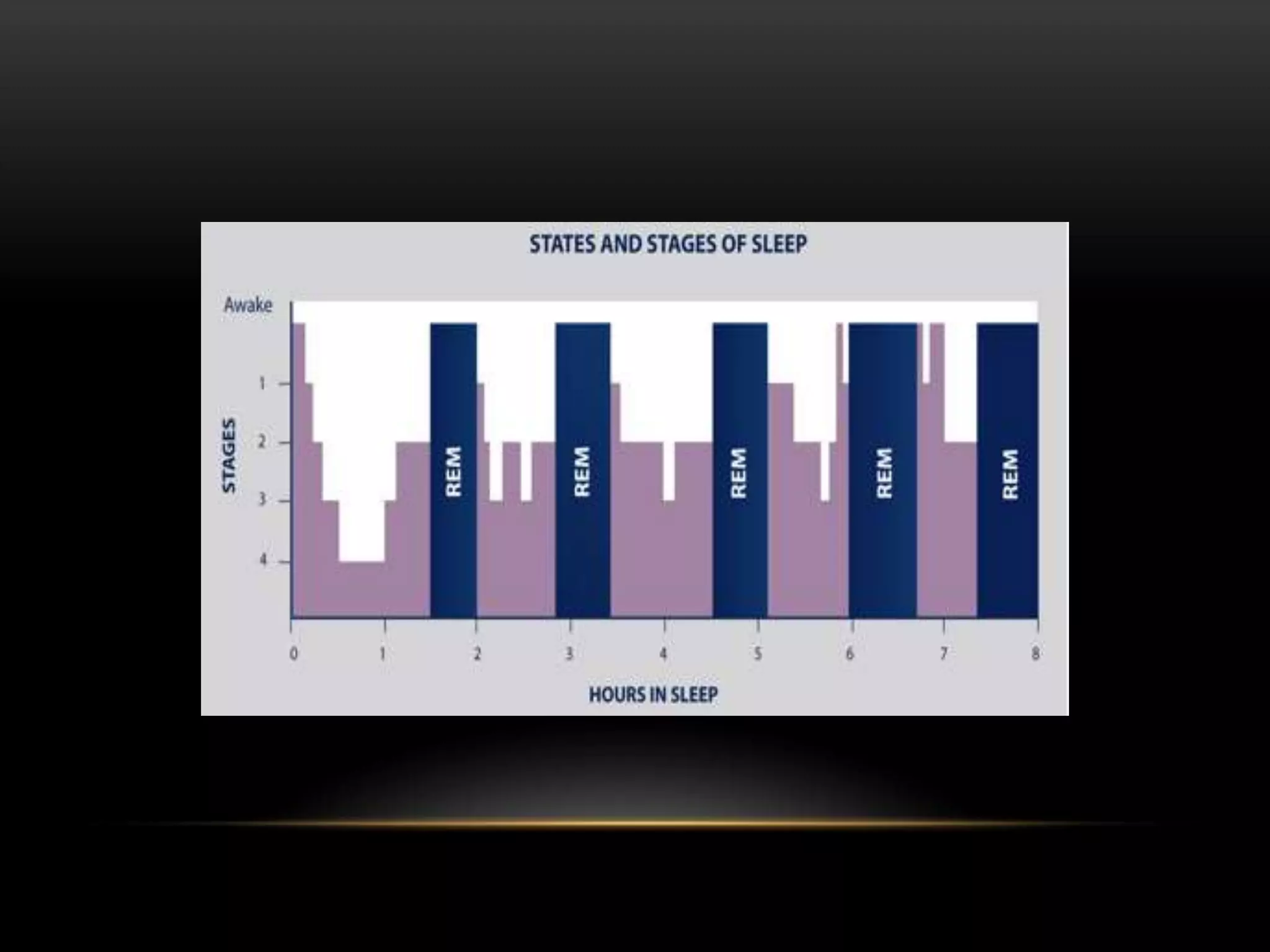
• The sleep cycle comprises of four stages and lasts for about 90120 minutes.
• Stage 1:
From 5 to 10 minutes, the body and muscles start to relax.

• Stage 2:
Your brain activity, heart rate and breathing start to slow down.
you're beginning to reach a state of total relaxation .
• Stage 3:
You get deeper into sleep.

• Stage 4:
Stage of sleep when you dream. It is also referred to as "active
sleep" or REM sleep.
The sleep cycle repeats itself on an average of 3 to 5 times per
night, may repeat as many as 7 times.
This is how a person dreams several times in one night.
FACTS ABOUT DREAMS…
• When you dream, your body faces some changes. Your adrenaline
rises, your blood pressure increases, and your heart beats faster.
• During a typical lifetime, people spend an average of six years
dreaming.
• 12% of people only dream in black and white.
• Sleep might be disturbed during the night but the mind interprets
the disturbance and makes it a part of a dream.

• Five minutes after the end of the dream, 50% of the content is
forgotten, after ten minutes 90% is forgotten.

• Animals also Dream.
TYPES OF DREAMS
• Daydreams.
• Lucid dreams.
• Nightmares.

• Recurring dreams.
• Epic dreams.
DAYDREAMS
• Day dreaming occurs when you are
half awake, and it is the imagining
or remembering of images or
experiences in the past or future.
LUCID DREAMS
• Lucid dreams occur when you
realize you are dreaming. the
dreamer can reassure him/herself
that it is only a dream and that he
or she will soon awaken
NIGHTMARES
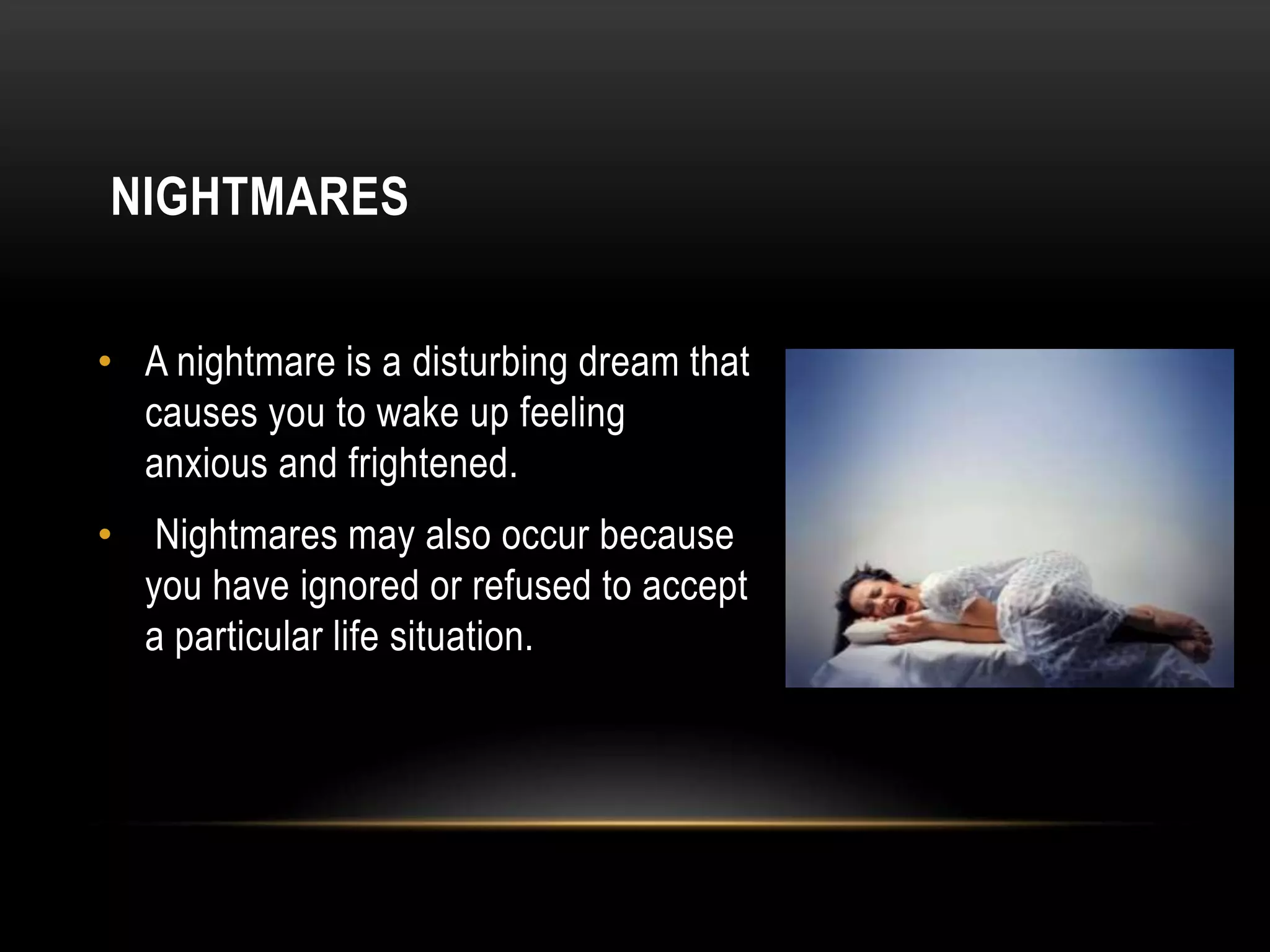
• A nightmare is a disturbing dream that
causes you to wake up feeling
anxious and frightened.

•

Nightmares may also occur because
you have ignored or refused to accept
a particular life situation.
RECURRING DREAMS
• Recurring dreams repeat
themselves with little variation in
story or theme. These dreams
may be positive, but most often
they are nightmarish in content.
EPIC DREAMS
• They are so memorable and vivid,
that we simply cannot ignore them.
It’s details remain in your memory for
years, as if you’ve dreamt it last
night
THE IMPORTANCE OF DREAMING !!
REFERENCES:
• http://en.wikipedia.org/wiki/Dream

• http://io9.com/10-theories-that-explain-why-we-dream-897195110
• http://www.better-sleep-better-life.com/five-stages-of-sleep.html
• http://www.easynight.org/types-of-dreams/facts-about-dreams.htm

• http://psychology.about.com/od/statesofconsciousness/tp/facts-abo
ut-dreams.htm
• http://www.world-of-lucid-dreaming.com/types-of-dreams.html
Dreams

Dreams

  • 1.
    DREAMS By Ahmed Khamis& Rokaia Ahmed.
  • 2.
    CONTENTS: • What isa dream? • The sleep cycle. • Facts about dreams. • Types of dreams. • The Importance of Dreaming.
  • 3.
    WHAT IS ADREAM ? • Sequence of images, ideas, emotions, and sensations that occur involuntarily in the mind during certain stages of sleep.
  • 4.
    THE SLEEP CYCLE •The sleep cycle comprises of four stages and lasts for about 90120 minutes.
  • 5.
    • Stage 1: From5 to 10 minutes, the body and muscles start to relax. • Stage 2: Your brain activity, heart rate and breathing start to slow down. you're beginning to reach a state of total relaxation .
  • 6.
    • Stage 3: Youget deeper into sleep. • Stage 4: Stage of sleep when you dream. It is also referred to as "active sleep" or REM sleep.
  • 7.
    The sleep cyclerepeats itself on an average of 3 to 5 times per night, may repeat as many as 7 times. This is how a person dreams several times in one night.
  • 9.
  • 10.
    • When youdream, your body faces some changes. Your adrenaline rises, your blood pressure increases, and your heart beats faster. • During a typical lifetime, people spend an average of six years dreaming. • 12% of people only dream in black and white.
  • 11.
    • Sleep mightbe disturbed during the night but the mind interprets the disturbance and makes it a part of a dream. • Five minutes after the end of the dream, 50% of the content is forgotten, after ten minutes 90% is forgotten. • Animals also Dream.
  • 12.
    TYPES OF DREAMS •Daydreams. • Lucid dreams. • Nightmares. • Recurring dreams. • Epic dreams.
  • 13.
    DAYDREAMS • Day dreamingoccurs when you are half awake, and it is the imagining or remembering of images or experiences in the past or future.
  • 14.
    LUCID DREAMS • Luciddreams occur when you realize you are dreaming. the dreamer can reassure him/herself that it is only a dream and that he or she will soon awaken
  • 15.
    NIGHTMARES • A nightmareis a disturbing dream that causes you to wake up feeling anxious and frightened. • Nightmares may also occur because you have ignored or refused to accept a particular life situation.
  • 16.
    RECURRING DREAMS • Recurringdreams repeat themselves with little variation in story or theme. These dreams may be positive, but most often they are nightmarish in content.
  • 17.
    EPIC DREAMS • Theyare so memorable and vivid, that we simply cannot ignore them. It’s details remain in your memory for years, as if you’ve dreamt it last night
  • 18.
    THE IMPORTANCE OFDREAMING !!
  • 19.
    REFERENCES: • http://en.wikipedia.org/wiki/Dream • http://io9.com/10-theories-that-explain-why-we-dream-897195110 •http://www.better-sleep-better-life.com/five-stages-of-sleep.html • http://www.easynight.org/types-of-dreams/facts-about-dreams.htm • http://psychology.about.com/od/statesofconsciousness/tp/facts-abo ut-dreams.htm • http://www.world-of-lucid-dreaming.com/types-of-dreams.html