Sensation & Perception
         unit
         m12-17
m12 - Introduction to
     Sensation
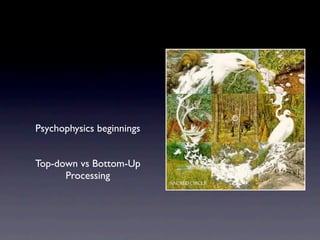
Psychophysics beginnings


Top-down vs Bottom-Up
      Processing
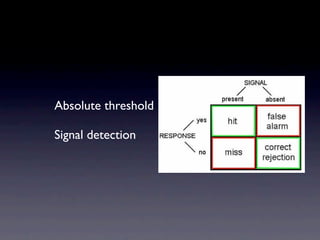
Absolute threshold

Signal detection
Absolute threshold

Signal detection
Stairway to Heaven


“Yes there are two paths that you can go by,
but in the long run there’s still time to
change the road you’re on”
Stairway to Heaven


“Yes there are two paths that you can go by,
but in the long run there’s still time to
change the road you’re on”
Stairway to Heaven


“Oh here’s to my sweet Satan. The one whose
little path would make me sad, whose power is
Satan.”
Stairway to Heaven


“Oh here’s to my sweet Satan. The one whose
little path would make me sad, whose power is
Satan.”
Another One Bites the
        Dust

 “Another one bites the dust
 Another one bites the dust
 Another one bites the dust”
Another One Bites the
        Dust

 “Another one bites the dust
 Another one bites the dust
 Another one bites the dust”
Another One Bites the
        Dust

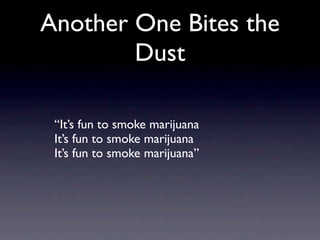
 “It’s fun to smoke marijuana
 It’s fun to smoke marijuana
 It’s fun to smoke marijuana”
Another One Bites the
        Dust

 “It’s fun to smoke marijuana
 It’s fun to smoke marijuana
 It’s fun to smoke marijuana”
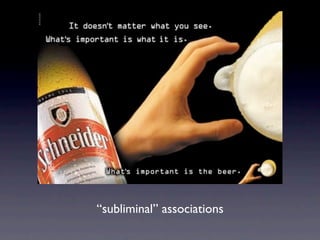
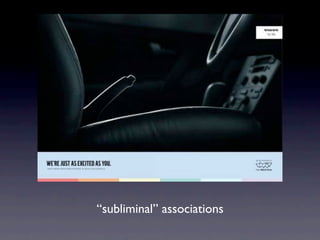
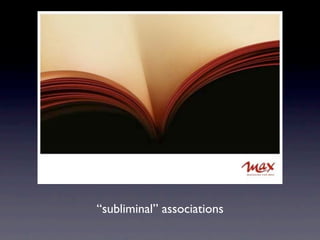
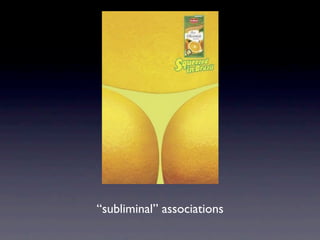
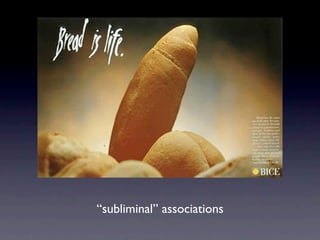
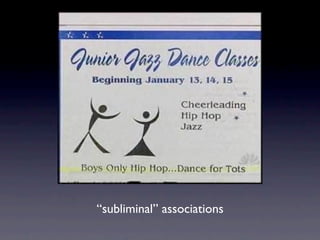
“subliminal” associations
Difference threshold (Just noticeable
difference)

Weber’s Law

    Light must differ by 8%

    Weight by 2%

    Tone by 0.3%
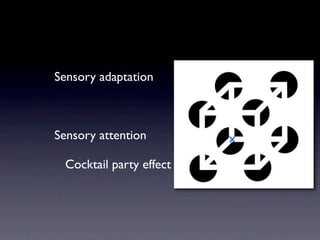
Sensory adaptation


Sensory attention        x

 Cocktail party effect
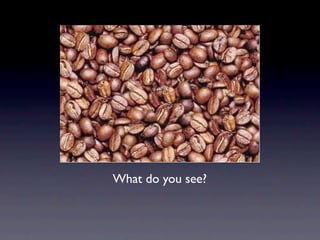
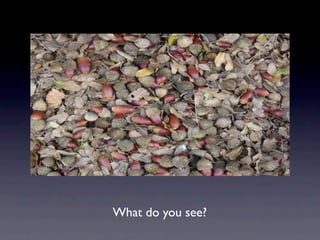
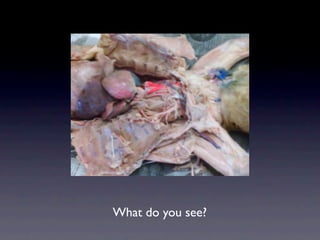
What do you see?
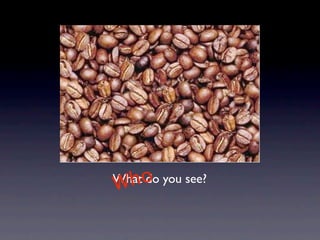
Whato you see?
  h do
W
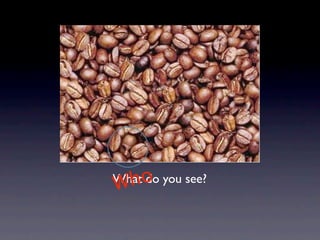
Whato you see?
  h do
W
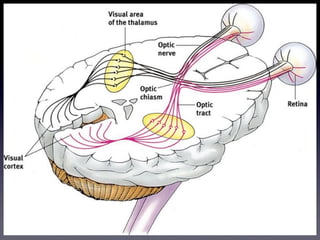
m13 - Vision
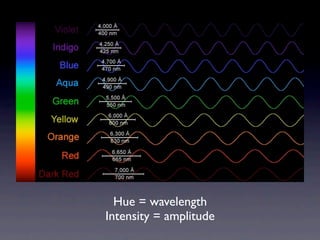
Hue = wavelength
Intensity = amplitude
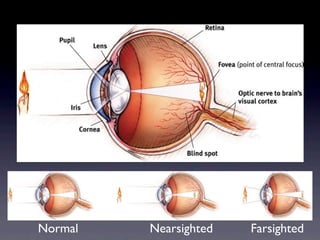
Normal   Nearsighted   Farsighted
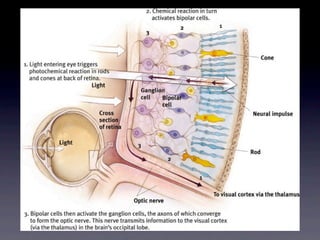
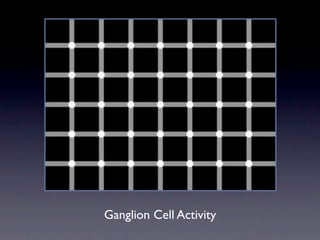
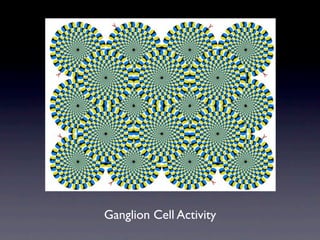
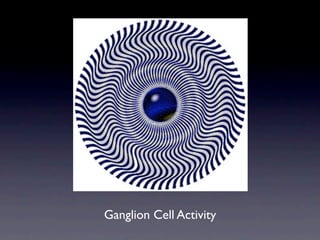
Ganglion Cell Activity
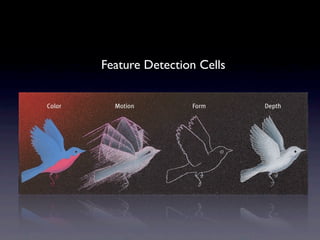
Feature Detection Cells
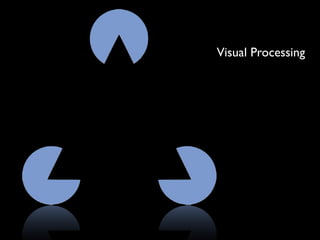
Visual Processing
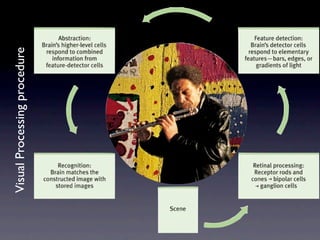
Visual Processing procedure
What do you see?
What do you see?
What do you see?
What do you see?
What do you see?
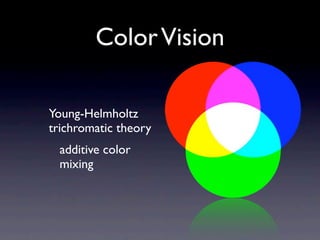
Color Vision

Young-Helmholtz
trichromatic theory
  additive color
  mixing
Color Vision


Opponent-Process Theory
 after-image effects . . .
Color processing seems to occur in two
stages:

 Retinal cones respond like Young-
 Helmholtz trichromatic theory

 Signal processed via opponent-process in
 the central nervous system
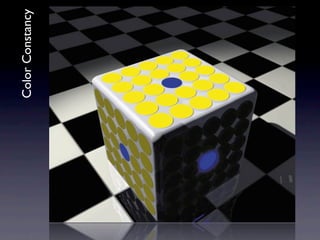
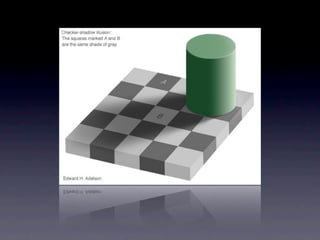
Color Constancy
m14 - Hearing
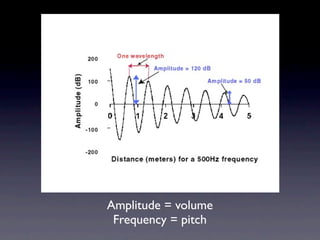
Amplitude = volume
 Frequency = pitch
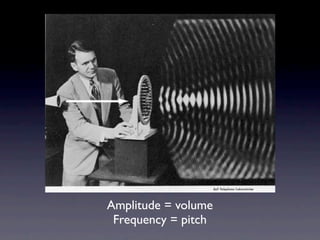
Amplitude = volume
 Frequency = pitch
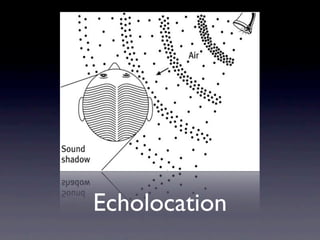
Echolocation
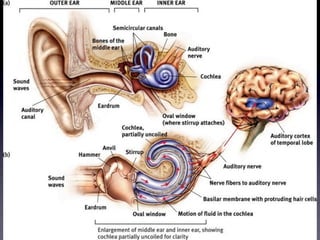
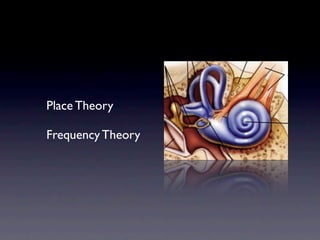
Place Theory

Frequency Theory
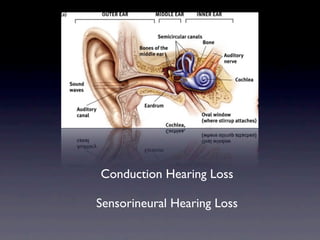
Conduction Hearing Loss

Sensorineural Hearing Loss
m15 - Other Senses
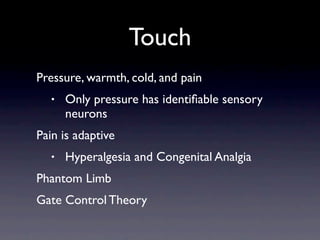
Touch
Pressure, warmth, cold, and pain
   •   Only pressure has identifiable sensory
       neurons
Pain is adaptive
   •   Hyperalgesia and Congenital Analgia
Phantom Limb
Gate Control Theory
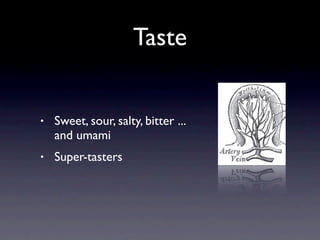
Taste


•   Sweet, sour, salty, bitter ...
    and umami
•   Super-tasters
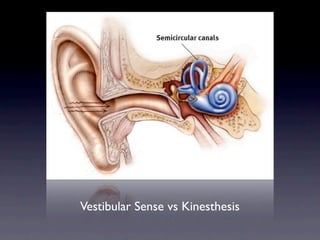
Vestibular Sense vs Kinesthesis

Sensation Slides

Editor's Notes

  • #5 Subliminal stimulation exists/ persuasion does not
  • #44 Tinnitus