Peroxisomes
A Biodiction (A Unit of Dr. Divya Sharma) Page 1
Peroxisomes
Discovered by De Duve and his colleagues, Peroxisomes are simple membrane bound vesicles
with a diameter of 0.1 to 1.0 micrometers, which contain a dense, crystalline core of oxidative
enzymes.
 Found in both animal and plant cells.
 Unlike lysosomes, peroxisomes and not derived from E.R. and therefore are not a part of the
endomembrane system.
 Peroxisomes are found ubiquitously in eukaryotic cells and are especially prominent in
Mammalian Liver and Kidney cells, in algae and photosynthetic cells of plants species that
store fats in their seeds.
 The role of peroxisomes is not as well understood in animals as they are in plant cells.
 Peroxisomes are a membrane bound cellular organelle that contains mostly enzymes. And
perform many important functions, including lipid metabolism and chemical detoxification.
Peroxisomes Definition
 Peroxisomes are small, membrane-enclosed cellular organelles containing oxidative enzymes
that are involved in a variety of metabolic reactions, including several aspects of energy
metabolism.
 They are considered as an important type of micro-body found in both plants and animal
cells.
 They were identified as organelles by Belgian cytologist Christian de Duve in 1967 after
already been described.
 First peroxisomes to be discovered were isolated from leaf homogenate of spinach.
 They are most abundantly found in detoxifying organs such as the liver and kidney cells.
However, they can be induced to proliferate in response to metabolic needs.
 Peroxisomes are multifunctional organelles containing more than 5 enzymes involved in
diverse activities.
 These organelles were so named because they are the site of synthesis and degradation of
hydrogen peroxide, a highly reactive and toxic oxidizing agent.
Structure of Peroxisomes
 They are membrane-bound spherical bodies of 0.2 to 1.5 μm in diameter found in all
eukaryotic organisms including both plants and animal cells.
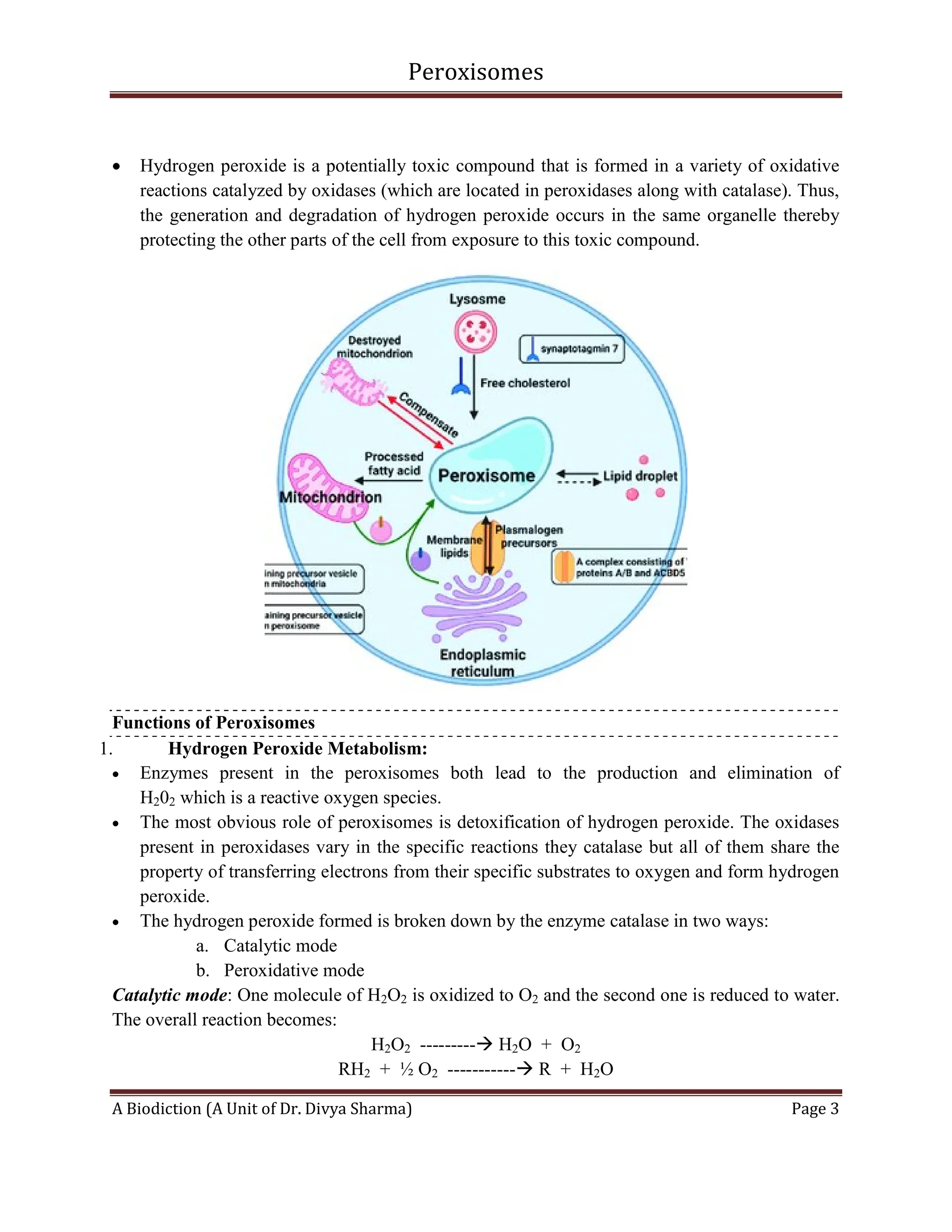
 They are found floating freely in the cytoplasm in close association of ER, mitochondria or
chloroplast within the cell.
 They are among the simplest of eukaryotic organelles.
Peroxisomes
A Biodiction (A Unit of Dr. Divya Sharma) Page 2
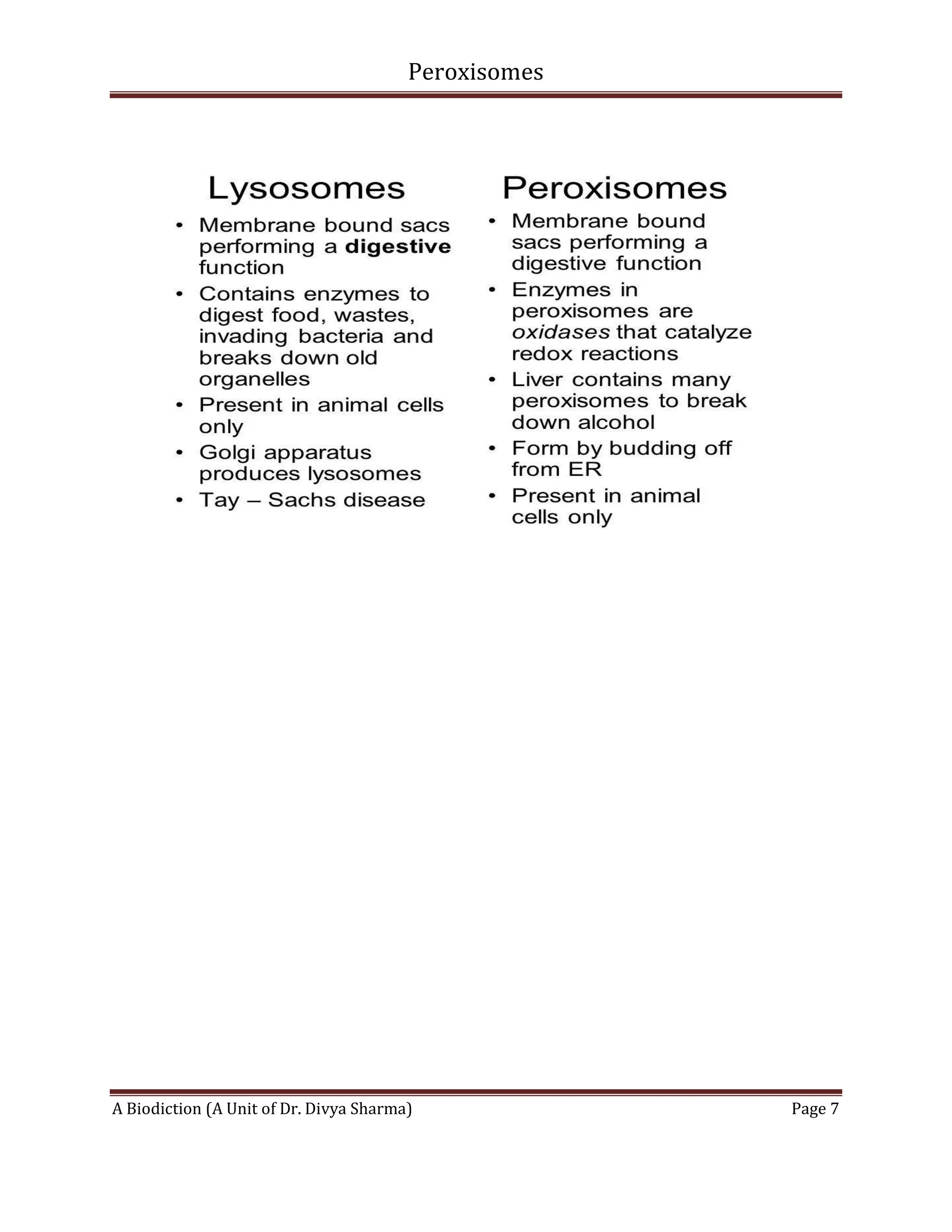
 They exist either in the form of a network of interconnected tubules called peroxisome
reticulum or as individual micro-peroxisomes.
 They are variable in size and shape according to the cell and usually circular in cross-section.
 They range from 0.2 -1.5 μm in diameter.
 A lipid bilayer membrane surrounds which regulate what enters and exits the peroxisomes.
 It consists of a single limiting membrane of lipid and protein molecules enclosing the
granular dense matrix.
 The matrix consists of fibrils or a crystalloid structure containing enzymes.
Peroxisomal Enzymes
 Approximately 60 known enzymes are present in the matrix of peroxisomes.
 They are responsible to carry out oxidation reactions leading to the production of hydrogen
peroxide.
 The main groups of enzymes include:
1. Urate oxidase
2. D-amino acid oxidase
3. Catalase
4. Glycolate oxidase
5. Luciferase
Regardless, where they occur, peroxisomes are characterized by the presence of catalase, an
enzyme that plays a vital role in the breakdown of hydrogen per oxide.
Peroxisomes
A Biodiction (A Unit of Dr. Divya Sharma) Page 3
 Hydrogen peroxide is a potentially toxic compound that is formed in a variety of oxidative
reactions catalyzed by oxidases (which are located in peroxidases along with catalase). Thus,
the generation and degradation of hydrogen peroxide occurs in the same organelle thereby
protecting the other parts of the cell from exposure to this toxic compound.
Functions of Peroxisomes
1. Hydrogen Peroxide Metabolism:
 Enzymes present in the peroxisomes both lead to the production and elimination of
H202 which is a reactive oxygen species.
 The most obvious role of peroxisomes is detoxification of hydrogen peroxide. The oxidases
present in peroxidases vary in the specific reactions they catalase but all of them share the
property of transferring electrons from their specific substrates to oxygen and form hydrogen
peroxide.
 The hydrogen peroxide formed is broken down by the enzyme catalase in two ways:
a. Catalytic mode
b. Peroxidative mode
Catalytic mode: One molecule of H2O2 is oxidized to O2 and the second one is reduced to water.
The overall reaction becomes:
H2O2 --------- H2O + O2
RH2 + ½ O2 ----------- R + H2O
Peroxisomes
A Biodiction (A Unit of Dr. Divya Sharma) Page 4
Peroxidative mode: One molecule of H2O2 is reduced to water using electrons derived from an
organic donor. The overall reaction becomes:
R`H2 + RH2 ----------- R + R` + 2H2O
Catalase is the most abundant protein (representing up to 15% of protein content of the
organelle), thus every molecule of hydrogen peroxide will be promptly degraded.
2. Detoxification of toxic compounds
 In its peroxidative mode catalase can use as its electron donor a variety of substances
including methanol, ethanol, formic acid, formaldehyde, nitrites and phenols. Since, all these
compounds are harmful to the cells; their detoxification by catalase is of vital importance.
 Prominent peroxisomes of liver and kidney are thought to be important in such detoxification
reactions.
3. Fatty acid oxidation:
 Oxidation of fatty acids, in many animal cells, occurs in both peroxisomes and mitochondria,
but in yeasts and plants, only limited to peroxisomes.
 Oxidation is accompanied by the production of H202 which is decomposed
by catalase enzyme. This provides a major source of metabolic energy.
 Peroxisomes in many animals’ cells have enzymes necessary to oxidize fatty acid. This
process called Beta-oxidation also occurs in mitochondria.
 About 25-50% fatty acid oxidation in animal tissues occur in peroxisomes and the rest in
mitochondria.
 Peroxisomal Beta-oxidation is especially important in the catabolism of fatty acids with
especially long carbon chains.
3. Lipid biosynthesis
 Synthesis of cholesterol and dolichol occurs in both ER and peroxisomes. Bile acid synthesis
takes place from cholesterol in the liver.
 Peroxisomes contain enzymes to synthesize plasmalogens, a family of phospholipids which
are important membrane components of tissues of the heart and brain.
4. Photorespiration
 Peroxisomes in leaves particularly in the green ones carry out the photorespiration process
along with chloroplasts.
 This spatial proximity reflects the mutual involvement of these three organelles in
photorespiration, a light dependent process that occurs only in photosynthetic tissue.
Peroxisomes
A Biodiction (A Unit of Dr. Divya Sharma) Page 5
 Photorespiration involves the uptake of oxygen and release of carbon dioxide thereby
decreasing the net amount of carbon converted into organic form by photosynthetic tissue.
Several of the key enzymes of photorespiration are localized to leaf peroxisomes.
5. Degradation of purines
 Carry out the catabolism of purines, polyamines and amino acids especially by uric acid
oxidase.
6. Metabolism of nitrogen containing compounds
 Peroxisomes of most animals except primates contain an enzyme called urate oxidase (also
called uricase) needed to oxidize urate, a purine formed during the catabolism of nucleic
acids and some proteins.
Urate + Oxygen -------- Allantoin + H2O2
For this oxygen is required and hydrogen peroxide is formed (metabolized by catalase) and
allantoin is further metabolized and excreted as allantoic acid.
 Other peroxisomal enzymes like aminotransferases (which catalyze the transfer of amino
acids to alpha-keto acids) help in the synthesis and degradation of amino acids by moving
amino group from one molecule from another.
7. Breakdown of unusual substances
 Some of the substances for peroxisomal oxidases are rare compounds for which the cell has
no other degradative pathways such as D-Amino acids which are not recognized by enzymes
which degrade L-Amino acids.
 Some fungi are capable of metabolizing alkenes, short term hydrocarbon compounds found
in oil and other petroleum products.
 These fungi may be useful for cleaning up oil spills that would otherwise contaminate the
environments.
8. Bioluminescence
 Luciferase enzyme found in the peroxisomes of fireflies help in bioluminescence and thus
aids the flies in finding a mate or its meal.
9. Germination of seeds
 Peroxisomes in seeds responsible for the conversion of stored fatty acids to carbohydrates,
critical to providing energy and raw materials for the growth of germinating plants.
 Distinct type of plant peroxisomes occurs transiently in seedlings of plant species that store
carbon and energy reserves in the seeds as fats, mainly triglycerides.
Peroxisomes
A Biodiction (A Unit of Dr. Divya Sharma) Page 6
 In these species, stored triglycerides are metabolized and converted to sucrose during post
germinative development by a sequence of events which included Beta-oxidation of fatty
acids as well as glycosylate cycle.
 All the enzymes needed for these processes are localized to specialized peroxisomes called
Glyoxysomes.
 Glyoxysomes are found only in tissues in which fat is stored I cotyledons or endosperm.
They are present for a relatively short period of time (a week) required for the seedling to
deplete its supply of stored fats.
 Glyoxysomes have been reported to appear again in senescent tissues of some plant species
to degrade lipids derived from the membranes of senescent cells.
Biogenesis of Peroxisomes
 Like any other organelle, peroxisomes biogenesis occurs by the division of preexisting
peroxisomes.
 Proteins destined for peroxisomes are synthesized not on membrane bound ribosomes (RER)
bit on the ribosomes of the cytosol and then enter pre-existing peroxisomes as full length
polypeptides.
 A process mediated by specific membrane proteins. This mode of protein import is known as
Post translational protein import.
Key points
 Lipid metabolism and chemical detoxification are important functions of peroxisomes.
 Responsible for oxidation reactions that break down fatty acids and amino acids.
 Peroxisomes oversee reactions that neutralize free radicals, which cause cellular damage and
cell death.
 Peroxisomes chemically neutralize poisons through a process that produces large amounts of
toxic H2O2, which is then converted into water and oxygen.
 The liver is the organ primarily responsible for detoxifying the blood before it travels
throughout the body; as a result, liver cell contain large amounts of peroxisomes.
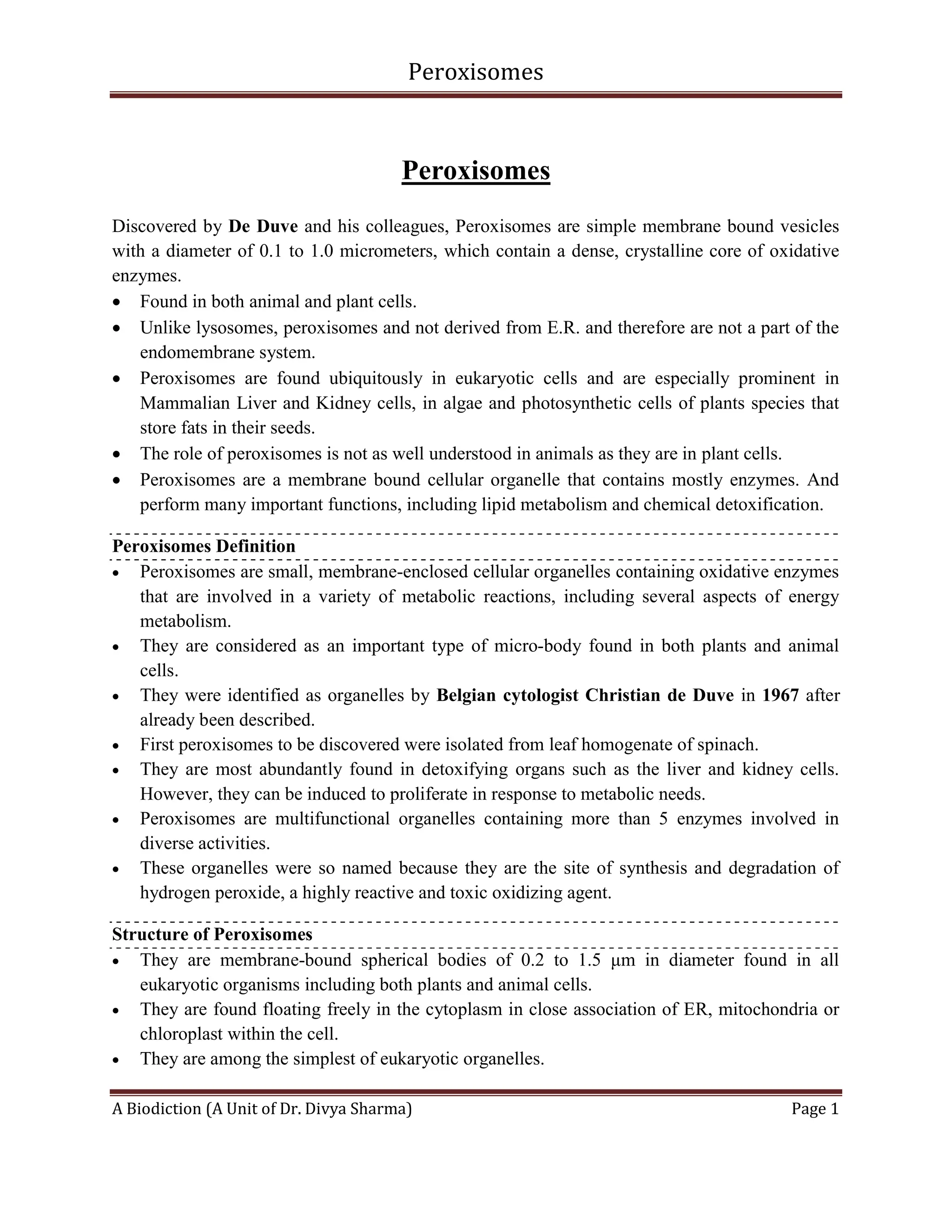
Differentiate between Lysosomes and Peroxisomes
Peroxisomes
A Biodiction (A Unit of Dr. Divya Sharma) Page 7

Peroxisomes : Structure, Function and Biogenesis

  • 1.
    Peroxisomes A Biodiction (AUnit of Dr. Divya Sharma) Page 1 Peroxisomes Discovered by De Duve and his colleagues, Peroxisomes are simple membrane bound vesicles with a diameter of 0.1 to 1.0 micrometers, which contain a dense, crystalline core of oxidative enzymes.  Found in both animal and plant cells.  Unlike lysosomes, peroxisomes and not derived from E.R. and therefore are not a part of the endomembrane system.  Peroxisomes are found ubiquitously in eukaryotic cells and are especially prominent in Mammalian Liver and Kidney cells, in algae and photosynthetic cells of plants species that store fats in their seeds.  The role of peroxisomes is not as well understood in animals as they are in plant cells.  Peroxisomes are a membrane bound cellular organelle that contains mostly enzymes. And perform many important functions, including lipid metabolism and chemical detoxification. Peroxisomes Definition  Peroxisomes are small, membrane-enclosed cellular organelles containing oxidative enzymes that are involved in a variety of metabolic reactions, including several aspects of energy metabolism.  They are considered as an important type of micro-body found in both plants and animal cells.  They were identified as organelles by Belgian cytologist Christian de Duve in 1967 after already been described.  First peroxisomes to be discovered were isolated from leaf homogenate of spinach.  They are most abundantly found in detoxifying organs such as the liver and kidney cells. However, they can be induced to proliferate in response to metabolic needs.  Peroxisomes are multifunctional organelles containing more than 5 enzymes involved in diverse activities.  These organelles were so named because they are the site of synthesis and degradation of hydrogen peroxide, a highly reactive and toxic oxidizing agent. Structure of Peroxisomes  They are membrane-bound spherical bodies of 0.2 to 1.5 μm in diameter found in all eukaryotic organisms including both plants and animal cells.  They are found floating freely in the cytoplasm in close association of ER, mitochondria or chloroplast within the cell.  They are among the simplest of eukaryotic organelles.
  • 2.
    Peroxisomes A Biodiction (AUnit of Dr. Divya Sharma) Page 2  They exist either in the form of a network of interconnected tubules called peroxisome reticulum or as individual micro-peroxisomes.  They are variable in size and shape according to the cell and usually circular in cross-section.  They range from 0.2 -1.5 μm in diameter.  A lipid bilayer membrane surrounds which regulate what enters and exits the peroxisomes.  It consists of a single limiting membrane of lipid and protein molecules enclosing the granular dense matrix.  The matrix consists of fibrils or a crystalloid structure containing enzymes. Peroxisomal Enzymes  Approximately 60 known enzymes are present in the matrix of peroxisomes.  They are responsible to carry out oxidation reactions leading to the production of hydrogen peroxide.  The main groups of enzymes include: 1. Urate oxidase 2. D-amino acid oxidase 3. Catalase 4. Glycolate oxidase 5. Luciferase Regardless, where they occur, peroxisomes are characterized by the presence of catalase, an enzyme that plays a vital role in the breakdown of hydrogen per oxide.
  • 3.
    Peroxisomes A Biodiction (AUnit of Dr. Divya Sharma) Page 3  Hydrogen peroxide is a potentially toxic compound that is formed in a variety of oxidative reactions catalyzed by oxidases (which are located in peroxidases along with catalase). Thus, the generation and degradation of hydrogen peroxide occurs in the same organelle thereby protecting the other parts of the cell from exposure to this toxic compound. Functions of Peroxisomes 1. Hydrogen Peroxide Metabolism:  Enzymes present in the peroxisomes both lead to the production and elimination of H202 which is a reactive oxygen species.  The most obvious role of peroxisomes is detoxification of hydrogen peroxide. The oxidases present in peroxidases vary in the specific reactions they catalase but all of them share the property of transferring electrons from their specific substrates to oxygen and form hydrogen peroxide.  The hydrogen peroxide formed is broken down by the enzyme catalase in two ways: a. Catalytic mode b. Peroxidative mode Catalytic mode: One molecule of H2O2 is oxidized to O2 and the second one is reduced to water. The overall reaction becomes: H2O2 --------- H2O + O2 RH2 + ½ O2 ----------- R + H2O
  • 4.
    Peroxisomes A Biodiction (AUnit of Dr. Divya Sharma) Page 4 Peroxidative mode: One molecule of H2O2 is reduced to water using electrons derived from an organic donor. The overall reaction becomes: R`H2 + RH2 ----------- R + R` + 2H2O Catalase is the most abundant protein (representing up to 15% of protein content of the organelle), thus every molecule of hydrogen peroxide will be promptly degraded. 2. Detoxification of toxic compounds  In its peroxidative mode catalase can use as its electron donor a variety of substances including methanol, ethanol, formic acid, formaldehyde, nitrites and phenols. Since, all these compounds are harmful to the cells; their detoxification by catalase is of vital importance.  Prominent peroxisomes of liver and kidney are thought to be important in such detoxification reactions. 3. Fatty acid oxidation:  Oxidation of fatty acids, in many animal cells, occurs in both peroxisomes and mitochondria, but in yeasts and plants, only limited to peroxisomes.  Oxidation is accompanied by the production of H202 which is decomposed by catalase enzyme. This provides a major source of metabolic energy.  Peroxisomes in many animals’ cells have enzymes necessary to oxidize fatty acid. This process called Beta-oxidation also occurs in mitochondria.  About 25-50% fatty acid oxidation in animal tissues occur in peroxisomes and the rest in mitochondria.  Peroxisomal Beta-oxidation is especially important in the catabolism of fatty acids with especially long carbon chains. 3. Lipid biosynthesis  Synthesis of cholesterol and dolichol occurs in both ER and peroxisomes. Bile acid synthesis takes place from cholesterol in the liver.  Peroxisomes contain enzymes to synthesize plasmalogens, a family of phospholipids which are important membrane components of tissues of the heart and brain. 4. Photorespiration  Peroxisomes in leaves particularly in the green ones carry out the photorespiration process along with chloroplasts.  This spatial proximity reflects the mutual involvement of these three organelles in photorespiration, a light dependent process that occurs only in photosynthetic tissue.
  • 5.
    Peroxisomes A Biodiction (AUnit of Dr. Divya Sharma) Page 5  Photorespiration involves the uptake of oxygen and release of carbon dioxide thereby decreasing the net amount of carbon converted into organic form by photosynthetic tissue. Several of the key enzymes of photorespiration are localized to leaf peroxisomes. 5. Degradation of purines  Carry out the catabolism of purines, polyamines and amino acids especially by uric acid oxidase. 6. Metabolism of nitrogen containing compounds  Peroxisomes of most animals except primates contain an enzyme called urate oxidase (also called uricase) needed to oxidize urate, a purine formed during the catabolism of nucleic acids and some proteins. Urate + Oxygen -------- Allantoin + H2O2 For this oxygen is required and hydrogen peroxide is formed (metabolized by catalase) and allantoin is further metabolized and excreted as allantoic acid.  Other peroxisomal enzymes like aminotransferases (which catalyze the transfer of amino acids to alpha-keto acids) help in the synthesis and degradation of amino acids by moving amino group from one molecule from another. 7. Breakdown of unusual substances  Some of the substances for peroxisomal oxidases are rare compounds for which the cell has no other degradative pathways such as D-Amino acids which are not recognized by enzymes which degrade L-Amino acids.  Some fungi are capable of metabolizing alkenes, short term hydrocarbon compounds found in oil and other petroleum products.  These fungi may be useful for cleaning up oil spills that would otherwise contaminate the environments. 8. Bioluminescence  Luciferase enzyme found in the peroxisomes of fireflies help in bioluminescence and thus aids the flies in finding a mate or its meal. 9. Germination of seeds  Peroxisomes in seeds responsible for the conversion of stored fatty acids to carbohydrates, critical to providing energy and raw materials for the growth of germinating plants.  Distinct type of plant peroxisomes occurs transiently in seedlings of plant species that store carbon and energy reserves in the seeds as fats, mainly triglycerides.
  • 6.
    Peroxisomes A Biodiction (AUnit of Dr. Divya Sharma) Page 6  In these species, stored triglycerides are metabolized and converted to sucrose during post germinative development by a sequence of events which included Beta-oxidation of fatty acids as well as glycosylate cycle.  All the enzymes needed for these processes are localized to specialized peroxisomes called Glyoxysomes.  Glyoxysomes are found only in tissues in which fat is stored I cotyledons or endosperm. They are present for a relatively short period of time (a week) required for the seedling to deplete its supply of stored fats.  Glyoxysomes have been reported to appear again in senescent tissues of some plant species to degrade lipids derived from the membranes of senescent cells. Biogenesis of Peroxisomes  Like any other organelle, peroxisomes biogenesis occurs by the division of preexisting peroxisomes.  Proteins destined for peroxisomes are synthesized not on membrane bound ribosomes (RER) bit on the ribosomes of the cytosol and then enter pre-existing peroxisomes as full length polypeptides.  A process mediated by specific membrane proteins. This mode of protein import is known as Post translational protein import. Key points  Lipid metabolism and chemical detoxification are important functions of peroxisomes.  Responsible for oxidation reactions that break down fatty acids and amino acids.  Peroxisomes oversee reactions that neutralize free radicals, which cause cellular damage and cell death.  Peroxisomes chemically neutralize poisons through a process that produces large amounts of toxic H2O2, which is then converted into water and oxygen.  The liver is the organ primarily responsible for detoxifying the blood before it travels throughout the body; as a result, liver cell contain large amounts of peroxisomes. Differentiate between Lysosomes and Peroxisomes
  • 7.
    Peroxisomes A Biodiction (AUnit of Dr. Divya Sharma) Page 7