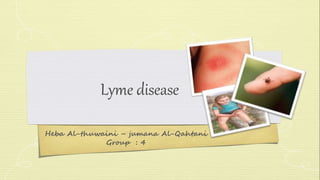
Lyme disease 
Heba Al-thuwaini – jumana Al-Qahtani 
Group : 4
Learning objectives 
• Definition 
• Causes and risk factors 
• Sighs and symptoms 
• Pathophysiology 
• Diagnosis 
• Treatment 
• Complication 
• prevention
Case summary 
For several weeks a 41 year old male has felt as if he is slightly drunk all the time. He 
can’t walk properly anymore and feels as if he is in daze. At first he thought it might be 
exhaustion but as it is not improving he wants to know what is wrong and what the 
prognosis is .
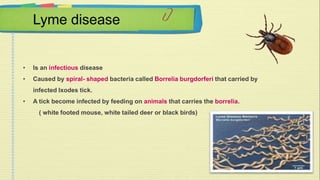
Lyme disease 
• Is an infectious disease 
• Caused by spiral- shaped bacteria called Borrelia burgdorferi that carried by 
infected Ixodes tick. 
• A tick become infected by feeding on animals that carries the borrelia. 
( white footed mouse, white tailed deer or black birds)
Epidemiology 
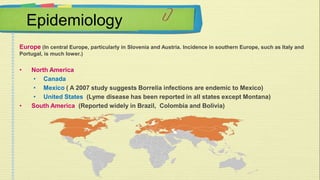
Europe (In central Europe, particularly in Slovenia and Austria. Incidence in southern Europe, such as Italy and 
Portugal, is much lower.) 
• North America 
• Canada 
• Mexico ( A 2007 study suggests Borrelia infections are endemic to Mexico) 
• United States (Lyme disease has been reported in all states except Montana) 
• South America (Reported widely in Brazil, Colombia and Bolivia)
Epidemiology 
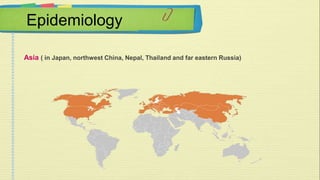
Asia ( in Japan, northwest China, Nepal, Thailand and far eastern Russia)
Risk factors 
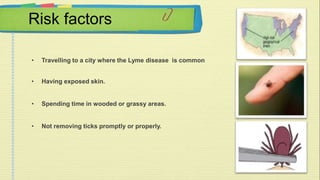
• Travelling to a city where the Lyme disease is common 
• Having exposed skin. 
• Spending time in wooded or grassy areas. 
• Not removing ticks promptly or properly.
Signs And Symptoms 
The clinical manifestation depends on the stage of disease: 
1- Early Localized : 
• Onset: within one month after bite 
• Presentation: 
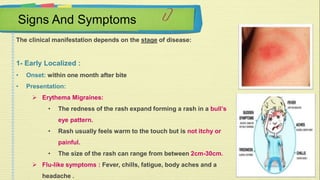
 Erythema Migraines: 
• The redness of the rash expand forming a rash in a bull’s 
eye pattern. 
• Rash usually feels warm to the touch but is not itchy or 
painful. 
• The size of the rash can range from between 2cm-30cm. 
 Flu-like symptoms : Fever, chills, fatigue, body aches and a 
headache .
Signs And Symptoms 
2- Early disseminated stage : 
• Onset : Within one to 4 months after the onset of local infection. 
• Presentation: 
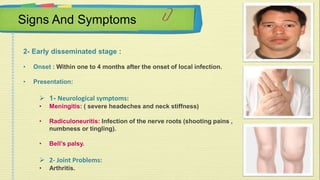
 1- Neurological symptoms: 
• Meningitis: ( severe headeches and neck stiffness) 
• Radiculoneuritis: Infection of the nerve roots (shooting pains , 
numbness or tingling). 
• Bell’s palsy. 
 2- Joint Problems: 
• Arthritis.
Signs And Symptoms 
2- Early disseminated stage : 
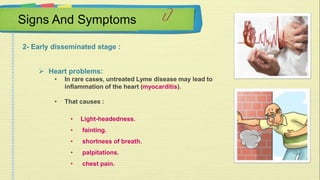
 Heart problems: 
• In rare cases, untreated Lyme disease may lead to 
inflammation of the heart (myocarditis). 
• That causes : 
• Light-headedness. 
• fainting. 
• shortness of breath. 
• palpitations. 
• chest pain.
Signs And Symptoms 
3- late persistent stage: 
• Onset: More Than 4 Months. 
• Presentation: 
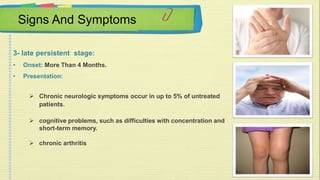
 Chronic neurologic symptoms occur in up to 5% of untreated 
patients. 
 cognitive problems, such as difficulties with concentration and 
short-term memory. 
 chronic arthritis
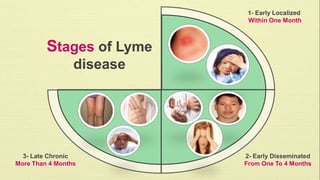
Stages of Lyme 
disease 
1- Early Localized 
Within One Month 
2- Early Disseminated 
From One To 4 Months 
3- Late Chronic 
More Than 4 Months
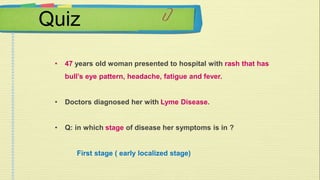
Quiz 
• 47 years old woman presented to hospital with rash that has 
bull’s eye pattern, headache, fatigue and fever. 
• Doctors diagnosed her with Lyme Disease. 
• Q: in which stage of disease her symptoms is in ? 
First stage ( early localized stage)
Pathophysiology
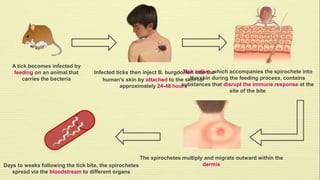
A tick becomes infected by 
feeding on an animal that 
carries the bacteria 
Tick saliva, which accompanies the spirochete into 
Infected ticks then inject B. burgdorferi into the 
human’s skin by attached to the skin for 
approximately 24-48 hours 
the skin during the feeding process, contains 
substances that disrupt the immune response at the 
site of the bite 
The spirochetes multiply and migrate outward within the 
Days to weeks following the tick bite, the spirochetes dermis 
spread via the bloodstream to different organs
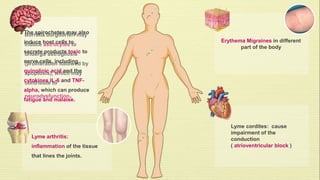
Erythema Migraines in different 
part of the body 
The spirochetes may also 
induce host cells to 
secrete products toxic to 
nerve cells, including 
quinolinic acid and the 
cytokines IL-6 and TNF-alpha, 
Borrelia burgdorferi may 
induce astrocytes to 
undergo astrogliosis 
(proliferation followed by 
apoptosis), which may 
contribute to 
neurodysfunction. 
Lyme cordites: cause 
impairment of the 
conduction 
( atrioventricular block ) 
which can produce 
fatigue and malaise. 
Lyme arthritis: 
inflammation of the tissue 
that lines the joints.
Diagnosis 
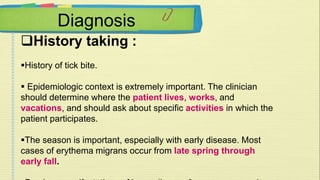
History taking : 
History of tick bite. 
 Epidemiologic context is extremely important. The clinician 
should determine where the patient lives, works, and 
vacations, and should ask about specific activities in which the 
patient participates. 
The season is important, especially with early disease. Most 
cases of erythema migrans occur from late spring through 
early fall. 
Previous manifestations of Lyme disease from many years in
Physical Examination 
1- Dermatological Finding 
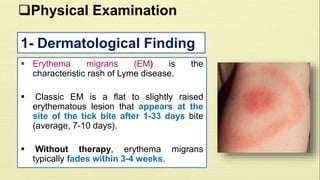
 Erythema migrans (EM) is the 
characteristic rash of Lyme disease. 
 Classic EM is a flat to slightly raised 
erythematous lesion that appears at the 
site of the tick bite after 1-33 days bite 
(average, 7-10 days). 
 Without therapy, erythema migrans 
typically fades within 3-4 weeks.
2-Borrelial lymphocytoma 
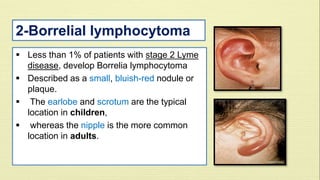
 Less than 1% of patients with stage 2 Lyme 
disease, develop Borrelia lymphocytoma 
 Described as a small, bluish-red nodule or 
plaque. 
 The earlobe and scrotum are the typical 
location in children, 
 whereas the nipple is the more common 
location in adults.
3- Musculoskeletal findings 
 Muscle tenderness can result from myositis. 
Tenderness of tendons and periarticular 
structures may be present. 
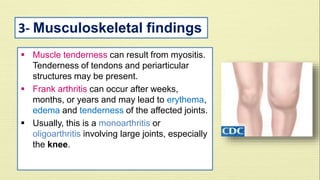
 Frank arthritis can occur after weeks, 
months, or years and may lead to erythema, 
edema and tenderness of the affected joints. 
 Usually, this is a monoarthritis or 
oligoarthritis involving large joints, especially 
the knee.
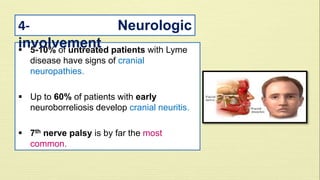
4- Neurologic 
involvement 
 5-10% of untreated patients with Lyme 
disease have signs of cranial 
neuropathies. 
 Up to 60% of patients with early 
neuroborreliosis develop cranial neuritis. 
 7th nerve palsy is by far the most 
common.
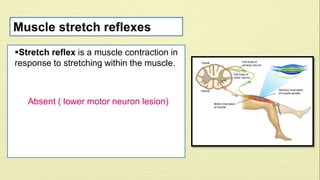
Muscle stretch reflexes 
Stretch reflex is a muscle contraction in 
response to stretching within the muscle. 
Absent ( lower motor neuron lesion)
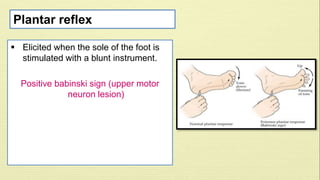
Plantar reflex 
 Elicited when the sole of the foot is 
stimulated with a blunt instrument. 
Positive babinski sign (upper motor 
neuron lesion)
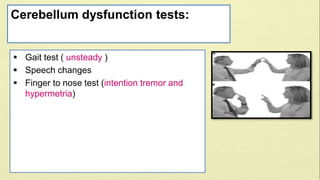
Cerebellum dysfunction tests: 
 Gait test ( unsteady ) 
 Speech changes 
 Finger to nose test (intention tremor and 
hypermetria)
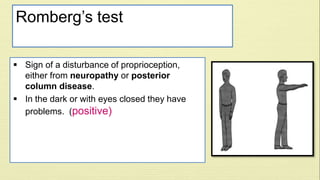
Romberg’s test 
 Sign of a disturbance of proprioception, 
either from neuropathy or posterior 
column disease. 
 In the dark or with eyes closed they have 
problems. (positive)
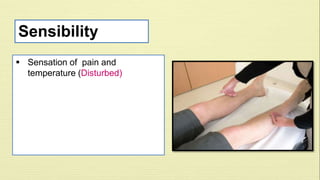
Sensibility 
 Sensation of pain and 
temperature (Disturbed)
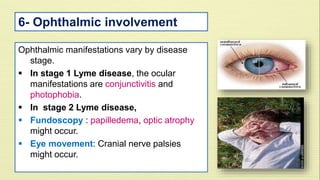
6- Ophthalmic involvement 
Ophthalmic manifestations vary by disease 
stage. 
 In stage 1 Lyme disease, the ocular 
manifestations are conjunctivitis and 
photophobia. 
 In stage 2 Lyme disease, 
 Fundoscopy : papilledema, optic atrophy 
might occur. 
 Eye movement: Cranial nerve palsies 
might occur.
Laboratory Tests 
To identify antibodies to help confirm the 
diagnosis. 
These tests are most reliable a few weeks after 
an infection, after your body has time to develop 
antibodies. 
Investigation
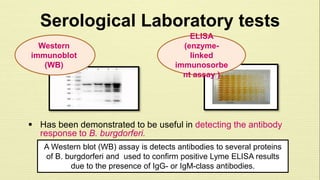
Serological Laboratory tests 
ELISA 
(enzyme-linked 
immunosorbe 
nt assay ) 
Western 
immunoblot 
 Has been demonstrated to be useful in detecting the antibody 
response to B. burgdorferi. 
A Western blot (WB) assay is detects antibodies to several proteins 
of B. burgdorferi and used to confirm positive Lyme ELISA results 
due to the presence of IgG- or IgM-class antibodies. 
(WB)
Cont. 
If the sensitive screening test results 
were : 
Negative results Positive results 
Should be supplemented by re-testing 
the corresponding serum 
samples on a standardized 
Western Blot test to confirm 
the result . 
No antibody to B. 
burgdorferi detected. 
This result does not 
exclude the possibility of B. 
burgdorferi infection 
 A second sample should 
be drawn 2 – 4 weeks later 
and re-tested.
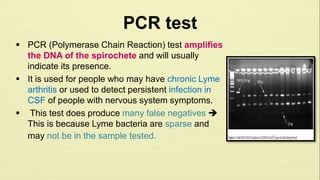
PCR test 
 PCR (Polymerase Chain Reaction) test amplifies 
the DNA of the spirochete and will usually 
indicate its presence. 
 It is used for people who may have chronic Lyme 
arthritis or used to detect persistent infection in 
CSF of people with nervous system symptoms. 
 This test does produce many false negatives  
This is because Lyme bacteria are sparse and 
may not be in the sample tested.
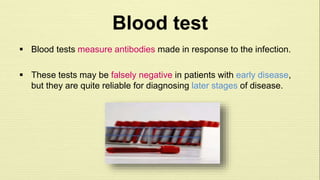
Blood test 
 Blood tests measure antibodies made in response to the infection. 
 These tests may be falsely negative in patients with early disease, 
but they are quite reliable for diagnosing later stages of disease.
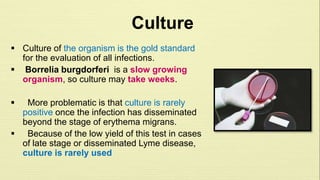
Culture 
 Culture of the organism is the gold standard 
for the evaluation of all infections. 
 Borrelia burgdorferi is a slow growing 
organism, so culture may take weeks. 
 More problematic is that culture is rarely 
positive once the infection has disseminated 
beyond the stage of erythema migrans. 
 Because of the low yield of this test in cases 
of late stage or disseminated Lyme disease, 
culture is rarely used
What are other lab tests that may be 
done when the infection has spread 
???
Spinal Fluid analysis 
 Patients with neurologic symptoms suggestive 
of central nervous system involvement should 
have a lumbar puncture. 
 When the CSF is examined, the fluid is sent for 
routine studies such as cell count, and protein 
and glucose levels. 
 In addition, the CSF should be sent for Borrelia 
burgdorferi (Bb) PCR assay and intrathecal 
index (The index refers to the ratio of Bb 
antibodies in the CSF ) 
 When the index is positive, that indicates that 
there is a production of antibodies against Bb in 
the CSF – a finding strongly suggestive of 
central nervous system invasion by the 
agent of Lyme disease.
Imaging
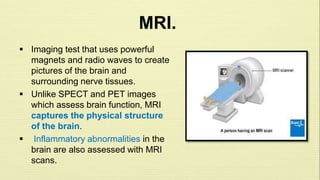
MRI. 
 Imaging test that uses powerful 
magnets and radio waves to create 
pictures of the brain and 
surrounding nerve tissues. 
 Unlike SPECT and PET images 
which assess brain function, MRI 
captures the physical structure 
of the brain. 
 Inflammatory abnormalities in the 
brain are also assessed with MRI 
scans.
Complications 
Stage 3 or late disseminated Lyme disease can cause: 
long-term joint inflammation (Lyme arthritis) and heart rhythm 
problems. 
Brain and nervous system problems might include: 
Decreased 
concentration 
 Memory 
disorders 
Numbness 
Sleep 
disorders 
Vision 
problems
Treatment : 
Antibiotics are the primary treatment for Lyme disease, and 
almost all patients recover after antibiotic treatment. 
The recommended treatment for Lyme disease varies 
depending upon the stage of disease and the types of 
symptoms. 
The rate of recovery may also vary depending upon the 
specific symptoms and recovery may take weeks to months 
after finishing antibiotic treatment.
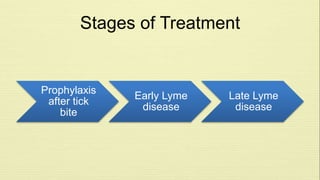
Stages of Treatment 
Prophylaxis 
after tick 
bite 
Early Lyme 
disease 
Late Lyme 
disease
Prophylactic after Tick bite 
 Routine use of antimicrobial prophylaxis or serologic testing is not 
recommended. 
 A single dose of doxycycline may be offered to adult patients 
(200 mg dose) and to children ⩾8 years of age (4 mg/kg up to a 
maximum dose of 200 mg) only considered if: 
 Identifiable tick 
 Treatment can be started 72 hours after tick removal 
 Doxycycline is not contraindicated
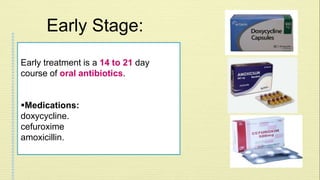
Early Stage: 
Early treatment is a 14 to 21 day 
course of oral antibiotics. 
Medications: 
doxycycline. 
cefuroxime 
amoxicillin.
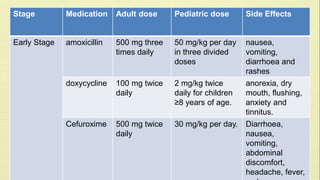
+Stage Medication Adult dose Pediatric dose Side Effects 
nausea, 
vomiting, 
diarrhoea and 
rashes 
50 mg/kg per day 
in three divided 
doses 
500 mg three 
times daily 
Early Stage amoxicillin 
anorexia, dry 
mouth, flushing, 
anxiety and 
tinnitus. 
2 mg/kg twice 
daily for children 
≥8 years of age. 
100 mg twice 
daily 
doxycycline 
Diarrhoea, 
nausea, 
vomiting, 
abdominal 
discomfort, 
headache, fever, 
rashes 
500 mg twice 30 mg/kg per day. 
daily 
Cefuroxime
Late Stage: 
Intravenous antibiotics for a period 
of 10 to 28 days.
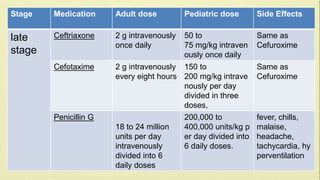
Stage Medication Adult dose Pediatric dose Side Effects 
Same as 
Cefuroxime 
50 to 
75 mg/kg intraven 
ously once daily 
2 g intravenously 
once daily 
late Ceftriaxone 
stage 
Same as 
Cefuroxime 
150 to 
200 mg/kg intrave 
nously per day 
divided in three 
doses, 
2 g intravenously 
every eight hours 
Cefotaxime 
fever, chills, 
malaise, 
headache, 
tachycardia, hy 
perventilation 
200,000 to 
400,000 units/kg p 
er day divided into 
6 daily doses. 
18 to 24 million 
units per day 
intravenously 
divided into 6 
daily doses 
Penicillin G
Prognosis 
If diagnosed in the early stages 
Lyme disease usually recover rapidly and completely with antibiotics. 
If diagnosed in the late stages 
Approximately 10-20% of who were diagnosed later, may have 
persistent or recurrent symptoms and are considered to have Post-treatment 
Lyme disease syndrome (PTLDS). The cause of this 
syndrome is unknown.
Prevention 
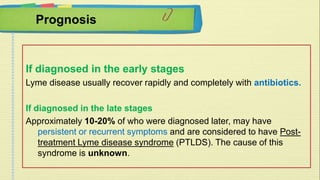
Avoid areas where deer 
ticks live, especially 
wooded, bushy areas with 
long grass 
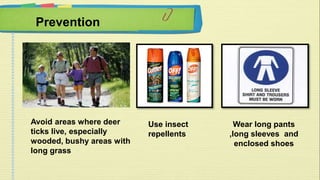
Use insect 
repellents 
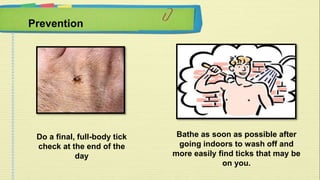
Wear long pants 
,long sleeves and 
enclosed shoes
Prevention 
Bathe as soon as possible after 
going indoors to wash off and 
more easily find ticks that may be 
on you. 
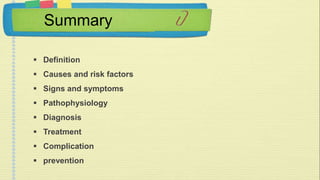
Do a final, full-body tick 
check at the end of the 
day
Summary 
 Definition 
 Causes and risk factors 
 Signs and symptoms 
 Pathophysiology 
 Diagnosis 
 Treatment 
 Complication 
 prevention
Reference 
http://www.nlm.nih.gov/medlineplus/ency/article/001319.htm 
http://www.mayoclinic.org/diseases-conditions/lyme-disease/basics/definition/con- 
20019701 
http://www.lymedisease.org/lyme101/lyme_disease/lyme_disease.html 
http://www.medicinenet.com/lyme_disease/article.htm 
http://www.mayoclinic.org/diseases-conditions/lyme-disease/basics/risk-factors/con- 
20019701 
http://ldnr.us/lyme_disease_pathophysiology.html 
http://www.merckmanuals.com/professional/infectious_diseases/spirochetes/lyme_dis 
ease.html
http://emedicine.medscape.com/article/330178-clinical 
http://www.uptodate.com/contents/treatment-of-lyme-disease 
http://www.uptodate.com/contents/evaluation-of-a-tick-bite-for-possible-lyme-disease? 
source=see_link&anchor=H7#H7 
http://www.uptodate.com/contents/lyme-disease-treatment-beyond-the-basics 
http://www.lymedisease.org/lyme101/lyme_disease/lyme_treatment.html 
http://cid.oxfordjournals.org/content/43/9/1089.full 
http://ldnr.us/lyme_disease_pathophysiology.html
Any QUISTIONS !!
Lyme disease

Lyme disease

  • 1.
    Lyme disease HebaAl-thuwaini – jumana Al-Qahtani Group : 4
  • 2.
    Learning objectives •Definition • Causes and risk factors • Sighs and symptoms • Pathophysiology • Diagnosis • Treatment • Complication • prevention
  • 3.
    Case summary Forseveral weeks a 41 year old male has felt as if he is slightly drunk all the time. He can’t walk properly anymore and feels as if he is in daze. At first he thought it might be exhaustion but as it is not improving he wants to know what is wrong and what the prognosis is .
  • 4.
    Lyme disease •Is an infectious disease • Caused by spiral- shaped bacteria called Borrelia burgdorferi that carried by infected Ixodes tick. • A tick become infected by feeding on animals that carries the borrelia. ( white footed mouse, white tailed deer or black birds)
  • 5.
    Epidemiology Europe (Incentral Europe, particularly in Slovenia and Austria. Incidence in southern Europe, such as Italy and Portugal, is much lower.) • North America • Canada • Mexico ( A 2007 study suggests Borrelia infections are endemic to Mexico) • United States (Lyme disease has been reported in all states except Montana) • South America (Reported widely in Brazil, Colombia and Bolivia)
  • 6.
    Epidemiology Asia (in Japan, northwest China, Nepal, Thailand and far eastern Russia)
  • 7.
    Risk factors •Travelling to a city where the Lyme disease is common • Having exposed skin. • Spending time in wooded or grassy areas. • Not removing ticks promptly or properly.
  • 8.
    Signs And Symptoms The clinical manifestation depends on the stage of disease: 1- Early Localized : • Onset: within one month after bite • Presentation:  Erythema Migraines: • The redness of the rash expand forming a rash in a bull’s eye pattern. • Rash usually feels warm to the touch but is not itchy or painful. • The size of the rash can range from between 2cm-30cm.  Flu-like symptoms : Fever, chills, fatigue, body aches and a headache .
  • 9.
    Signs And Symptoms 2- Early disseminated stage : • Onset : Within one to 4 months after the onset of local infection. • Presentation:  1- Neurological symptoms: • Meningitis: ( severe headeches and neck stiffness) • Radiculoneuritis: Infection of the nerve roots (shooting pains , numbness or tingling). • Bell’s palsy.  2- Joint Problems: • Arthritis.
  • 10.
    Signs And Symptoms 2- Early disseminated stage :  Heart problems: • In rare cases, untreated Lyme disease may lead to inflammation of the heart (myocarditis). • That causes : • Light-headedness. • fainting. • shortness of breath. • palpitations. • chest pain.
  • 11.
    Signs And Symptoms 3- late persistent stage: • Onset: More Than 4 Months. • Presentation:  Chronic neurologic symptoms occur in up to 5% of untreated patients.  cognitive problems, such as difficulties with concentration and short-term memory.  chronic arthritis
  • 12.
    Stages of Lyme disease 1- Early Localized Within One Month 2- Early Disseminated From One To 4 Months 3- Late Chronic More Than 4 Months
  • 13.
    Quiz • 47years old woman presented to hospital with rash that has bull’s eye pattern, headache, fatigue and fever. • Doctors diagnosed her with Lyme Disease. • Q: in which stage of disease her symptoms is in ? First stage ( early localized stage)
  • 14.
  • 15.
    A tick becomesinfected by feeding on an animal that carries the bacteria Tick saliva, which accompanies the spirochete into Infected ticks then inject B. burgdorferi into the human’s skin by attached to the skin for approximately 24-48 hours the skin during the feeding process, contains substances that disrupt the immune response at the site of the bite The spirochetes multiply and migrate outward within the Days to weeks following the tick bite, the spirochetes dermis spread via the bloodstream to different organs
  • 16.
    Erythema Migraines indifferent part of the body The spirochetes may also induce host cells to secrete products toxic to nerve cells, including quinolinic acid and the cytokines IL-6 and TNF-alpha, Borrelia burgdorferi may induce astrocytes to undergo astrogliosis (proliferation followed by apoptosis), which may contribute to neurodysfunction. Lyme cordites: cause impairment of the conduction ( atrioventricular block ) which can produce fatigue and malaise. Lyme arthritis: inflammation of the tissue that lines the joints.
  • 17.
    Diagnosis History taking: History of tick bite.  Epidemiologic context is extremely important. The clinician should determine where the patient lives, works, and vacations, and should ask about specific activities in which the patient participates. The season is important, especially with early disease. Most cases of erythema migrans occur from late spring through early fall. Previous manifestations of Lyme disease from many years in
  • 18.
    Physical Examination 1-Dermatological Finding  Erythema migrans (EM) is the characteristic rash of Lyme disease.  Classic EM is a flat to slightly raised erythematous lesion that appears at the site of the tick bite after 1-33 days bite (average, 7-10 days).  Without therapy, erythema migrans typically fades within 3-4 weeks.
  • 19.
    2-Borrelial lymphocytoma Less than 1% of patients with stage 2 Lyme disease, develop Borrelia lymphocytoma  Described as a small, bluish-red nodule or plaque.  The earlobe and scrotum are the typical location in children,  whereas the nipple is the more common location in adults.
  • 20.
    3- Musculoskeletal findings  Muscle tenderness can result from myositis. Tenderness of tendons and periarticular structures may be present.  Frank arthritis can occur after weeks, months, or years and may lead to erythema, edema and tenderness of the affected joints.  Usually, this is a monoarthritis or oligoarthritis involving large joints, especially the knee.
  • 21.
    4- Neurologic involvement  5-10% of untreated patients with Lyme disease have signs of cranial neuropathies.  Up to 60% of patients with early neuroborreliosis develop cranial neuritis.  7th nerve palsy is by far the most common.
  • 22.
    Muscle stretch reflexes Stretch reflex is a muscle contraction in response to stretching within the muscle. Absent ( lower motor neuron lesion)
  • 23.
    Plantar reflex Elicited when the sole of the foot is stimulated with a blunt instrument. Positive babinski sign (upper motor neuron lesion)
  • 24.
    Cerebellum dysfunction tests:  Gait test ( unsteady )  Speech changes  Finger to nose test (intention tremor and hypermetria)
  • 25.
    Romberg’s test Sign of a disturbance of proprioception, either from neuropathy or posterior column disease.  In the dark or with eyes closed they have problems. (positive)
  • 26.
    Sensibility  Sensationof pain and temperature (Disturbed)
  • 27.
    6- Ophthalmic involvement Ophthalmic manifestations vary by disease stage.  In stage 1 Lyme disease, the ocular manifestations are conjunctivitis and photophobia.  In stage 2 Lyme disease,  Fundoscopy : papilledema, optic atrophy might occur.  Eye movement: Cranial nerve palsies might occur.
  • 28.
    Laboratory Tests Toidentify antibodies to help confirm the diagnosis. These tests are most reliable a few weeks after an infection, after your body has time to develop antibodies. Investigation
  • 29.
    Serological Laboratory tests ELISA (enzyme-linked immunosorbe nt assay ) Western immunoblot  Has been demonstrated to be useful in detecting the antibody response to B. burgdorferi. A Western blot (WB) assay is detects antibodies to several proteins of B. burgdorferi and used to confirm positive Lyme ELISA results due to the presence of IgG- or IgM-class antibodies. (WB)
  • 30.
    Cont. If thesensitive screening test results were : Negative results Positive results Should be supplemented by re-testing the corresponding serum samples on a standardized Western Blot test to confirm the result . No antibody to B. burgdorferi detected. This result does not exclude the possibility of B. burgdorferi infection  A second sample should be drawn 2 – 4 weeks later and re-tested.
  • 31.
    PCR test PCR (Polymerase Chain Reaction) test amplifies the DNA of the spirochete and will usually indicate its presence.  It is used for people who may have chronic Lyme arthritis or used to detect persistent infection in CSF of people with nervous system symptoms.  This test does produce many false negatives  This is because Lyme bacteria are sparse and may not be in the sample tested.
  • 32.
    Blood test Blood tests measure antibodies made in response to the infection.  These tests may be falsely negative in patients with early disease, but they are quite reliable for diagnosing later stages of disease.
  • 33.
    Culture  Cultureof the organism is the gold standard for the evaluation of all infections.  Borrelia burgdorferi is a slow growing organism, so culture may take weeks.  More problematic is that culture is rarely positive once the infection has disseminated beyond the stage of erythema migrans.  Because of the low yield of this test in cases of late stage or disseminated Lyme disease, culture is rarely used
  • 34.
    What are otherlab tests that may be done when the infection has spread ???
  • 35.
    Spinal Fluid analysis  Patients with neurologic symptoms suggestive of central nervous system involvement should have a lumbar puncture.  When the CSF is examined, the fluid is sent for routine studies such as cell count, and protein and glucose levels.  In addition, the CSF should be sent for Borrelia burgdorferi (Bb) PCR assay and intrathecal index (The index refers to the ratio of Bb antibodies in the CSF )  When the index is positive, that indicates that there is a production of antibodies against Bb in the CSF – a finding strongly suggestive of central nervous system invasion by the agent of Lyme disease.
  • 36.
  • 37.
    MRI.  Imagingtest that uses powerful magnets and radio waves to create pictures of the brain and surrounding nerve tissues.  Unlike SPECT and PET images which assess brain function, MRI captures the physical structure of the brain.  Inflammatory abnormalities in the brain are also assessed with MRI scans.
  • 38.
    Complications Stage 3or late disseminated Lyme disease can cause: long-term joint inflammation (Lyme arthritis) and heart rhythm problems. Brain and nervous system problems might include: Decreased concentration  Memory disorders Numbness Sleep disorders Vision problems
  • 39.
    Treatment : Antibioticsare the primary treatment for Lyme disease, and almost all patients recover after antibiotic treatment. The recommended treatment for Lyme disease varies depending upon the stage of disease and the types of symptoms. The rate of recovery may also vary depending upon the specific symptoms and recovery may take weeks to months after finishing antibiotic treatment.
  • 40.
    Stages of Treatment Prophylaxis after tick bite Early Lyme disease Late Lyme disease
  • 41.
    Prophylactic after Tickbite  Routine use of antimicrobial prophylaxis or serologic testing is not recommended.  A single dose of doxycycline may be offered to adult patients (200 mg dose) and to children ⩾8 years of age (4 mg/kg up to a maximum dose of 200 mg) only considered if:  Identifiable tick  Treatment can be started 72 hours after tick removal  Doxycycline is not contraindicated
  • 42.
    Early Stage: Earlytreatment is a 14 to 21 day course of oral antibiotics. Medications: doxycycline. cefuroxime amoxicillin.
  • 43.
    +Stage Medication Adultdose Pediatric dose Side Effects nausea, vomiting, diarrhoea and rashes 50 mg/kg per day in three divided doses 500 mg three times daily Early Stage amoxicillin anorexia, dry mouth, flushing, anxiety and tinnitus. 2 mg/kg twice daily for children ≥8 years of age. 100 mg twice daily doxycycline Diarrhoea, nausea, vomiting, abdominal discomfort, headache, fever, rashes 500 mg twice 30 mg/kg per day. daily Cefuroxime

  • 44.
    Late Stage: Intravenousantibiotics for a period of 10 to 28 days.
  • 45.
    Stage Medication Adultdose Pediatric dose Side Effects Same as Cefuroxime 50 to 75 mg/kg intraven ously once daily 2 g intravenously once daily late Ceftriaxone stage Same as Cefuroxime 150 to 200 mg/kg intrave nously per day divided in three doses, 2 g intravenously every eight hours Cefotaxime fever, chills, malaise, headache, tachycardia, hy perventilation 200,000 to 400,000 units/kg p er day divided into 6 daily doses. 18 to 24 million units per day intravenously divided into 6 daily doses Penicillin G
  • 46.
    Prognosis If diagnosedin the early stages Lyme disease usually recover rapidly and completely with antibiotics. If diagnosed in the late stages Approximately 10-20% of who were diagnosed later, may have persistent or recurrent symptoms and are considered to have Post-treatment Lyme disease syndrome (PTLDS). The cause of this syndrome is unknown.
  • 47.
    Prevention Avoid areaswhere deer ticks live, especially wooded, bushy areas with long grass Use insect repellents Wear long pants ,long sleeves and enclosed shoes
  • 48.
    Prevention Bathe assoon as possible after going indoors to wash off and more easily find ticks that may be on you. Do a final, full-body tick check at the end of the day
  • 49.
    Summary  Definition  Causes and risk factors  Signs and symptoms  Pathophysiology  Diagnosis  Treatment  Complication  prevention
  • 50.
    Reference http://www.nlm.nih.gov/medlineplus/ency/article/001319.htm http://www.mayoclinic.org/diseases-conditions/lyme-disease/basics/definition/con- 20019701 http://www.lymedisease.org/lyme101/lyme_disease/lyme_disease.html http://www.medicinenet.com/lyme_disease/article.htm http://www.mayoclinic.org/diseases-conditions/lyme-disease/basics/risk-factors/con- 20019701 http://ldnr.us/lyme_disease_pathophysiology.html http://www.merckmanuals.com/professional/infectious_diseases/spirochetes/lyme_dis ease.html
  • 51.
    http://emedicine.medscape.com/article/330178-clinical http://www.uptodate.com/contents/treatment-of-lyme-disease http://www.uptodate.com/contents/evaluation-of-a-tick-bite-for-possible-lyme-disease? source=see_link&anchor=H7#H7 http://www.uptodate.com/contents/lyme-disease-treatment-beyond-the-basics http://www.lymedisease.org/lyme101/lyme_disease/lyme_treatment.html http://cid.oxfordjournals.org/content/43/9/1089.full http://ldnr.us/lyme_disease_pathophysiology.html
  • 52.

Editor's Notes

  • #6 Lyme disease had been described on 6 continents and in at least 20 countries.
  • #9  Classically, the innermost portion remains dark red and becomes indurated; the outer edge remains red; and the portion in between clears – giving the appearance of a bullseye. These signs and symptoms may occur within a month after you've been infected
  • #10 Untreated, the infection may spread from the site of the bite to other parts of the body, producing an array of specific symptoms that may come and go, including:
  • #11 Untreated, the infection may spread from the site of the bite to other parts of the body, producing an array of specific symptoms that may come and go, including:
  • #12 After several months, untreated or inadequately treated patients may go on to develop severe and chronic symptoms affecting many organs of the body including the brain, nerves, eyes, joints and heart.
  • #22 Bilateral facial palsy can be seen in 35% of patients and is a unique characteristic that is useful for distinguishing it from idiopathic Bell palsy and other disorders
  • #23  strong contraction indicates a 'brisk' reflex, and a weak or absent reflex is known as 'diminished'. Brisk or absent reflexes are used as clues to the location of neurological disease. Typically brisk reflexes are found in lesions of upper motor neurones, and absent or reduced reflexes are found in lower motor neurone lesions.
  • #25 Nose-finger test : Coordination of arms and hands Hypermetria: visual information has been translated into spatial information, the cerebellum must use this information to perform the motor task
  • #26 Nose-finger test : Coordination of arms and hands Hypermetria: visual information has been translated into spatial information, the cerebellum must use this information to perform the motor task
  • #28 Fundoscopy: papilledema, optic atrophy, optic or retrobulbar neuritis might occur in stage 2 Lyme disease Eye movement: Cranial nerve palsies might occur in stage 2 Lyme disease Other: Regional lymphadenopathy on palpation
  • #30 serological laboratory tests most widely available and employed are the Western blot and ELISA. Official recommendations from the Second National Conference on Serologic Diagnosis of Lyme Disease are that clinicians use a two-step procedure when ordering antibody tests for Lyme disease-first, a sensitive screening test, either an enzyme-linked immunosorbent assay (ELISA) or an immunofluorescent assay (IFA) and, if that result is positive or equivocal, followed by a Western immunoblot to confirm the result (9). If the result of the ELISA or of the IFA is negative, an immunoblot is not necessary.
  • #32 If you have neurological symptoms or swollen joints your doctor may, in addition, recommend a PCR (Polymerase Chain Reaction) test via a spinal tap or withdrawal of synovial fluid from an affected joint. This test amplifies the DNA of the spirochete and will usually indicate its presence. A positive result indicates the presence of DNA from Borrelia burgdorferi, the agent of Lyme disease. A negative result indicates the absence of detectable DNA from Borrelia burgdorferi in the specimen. Due to the diagnostic sensitivity limitations of the PCR assay, a negative result does not rule-out Lyme disease Note : The IgM antibodies may remain after the initial infection, and IgG antibodies may remain for years.
  • #33 diagnosis of early LD should be made on the basis of symptoms and evidence of a tick bite, not blood tests, which can often give false results if performed in the first month after initial infection (later on, the tests are more reliable).
  • #34 Culture of the organism is the gold standard for the evaluation of all infections. Borrelia burgdorferi is a slow growing organism, so culture may take weeks.   More problematic is that culture is rarely positive once the infection has disseminated beyond the stage of erythema migrans.   Studies indicate that certain high volume blood collection methods may yield positive culture results at the time of the erythema migrans, but this is not necessary in most cases as the Erythema migrans rash itself is sufficient to make the diagnosis of Lyme disease and initiate treament.   Because of the low yield of this test in cases of late stage or disseminated Lyme disease, culture is rarely used.
  • #36  It is believed that the index may remain positive long after the initial infection has been treated due to immunologic memory.
  • #38 MRI for abnormalities in brain structure
  • #46 The Jarisch-Herxheimer reaction is a systemic reaction