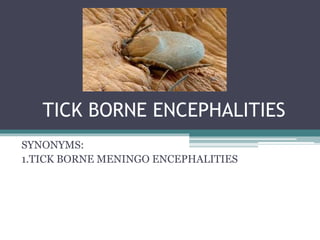
TICK BORNE ENCEPHALITIES
SYNONYMS:
1.TICK BORNE MENINGO ENCEPHALITIES
INFECTIOUS AGENT
• Tick-borne encephalitis, or TBE, is a human
viral infectious disease involving the central
nervous system.
• TBE is caused by the tick-borne encephalitis
virus (TBEV), a member of the family
Flaviviridae (single-stranded RNA virus), and
was initially isolated in 1937.
Family Flaviviridae also includes
• Omsk hemorrhagic fever virus in Siberia,
• Kyasanur Forest disease virus in India
• Alkhurma virus in Saudi Arabia.
• Louping ill virus (United Kingdom) it causes
disease primarily in
• In the USA and Russia, another tick-borne
flavivirus, Powassan virus, is responsible of
encephalitis in human.
• Yellow fever, dengue fever, West Nile encephalitis,
Japanese encephalitis and Powassan fever.
TBEV has 3 subtypes:
1. European or Western tick-borne encephalitis
virus
2. Siberian tick-borne encephalitis virus
3. Far Eastern Tick-borne encephalitis virus
(formerly known as Russian Spring Summer
encephalitis virus, RSSEV)
 European TBE is mainly transmitted by Ixodes
ricinus,
 Siberian and Far Eastern viruses are
transmitted mainly by I. persulcatus.
EPIDEMIOLOGY
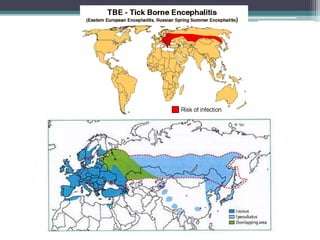
• TBE is endemic in focal areas of Europe and Asia
(from eastern France to northern Japan and
from northern Russia to Albania).
• From 1990 through 2009, an average of 8,500
cases per year (range, 5,352–12,733 cases) were
reported from 19 European countries,
• Russia has the largest number of reported TBE
cases, and western Siberia has the highest
incidence of TBE in the world.
• Most cases occur from April through November
• incidence and severity of disease are highest in
people aged ≥50 years
Transmission
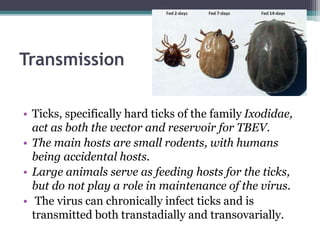
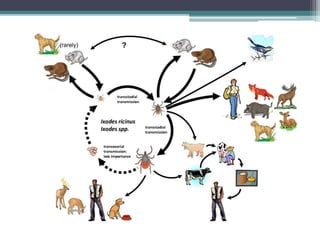
• Ticks, specifically hard ticks of the family Ixodidae,
act as both the vector and reservoir for TBEV.
• The main hosts are small rodents, with humans
being accidental hosts.
• Large animals serve as feeding hosts for the ticks,
but do not play a role in maintenance of the virus.
• The virus can chronically infect ticks and is
transmitted both transtadially and transovarially.
• TBE cases occur in humans most frequently in rural
areas and during the highest period of tick activity
(between April and November).
• Infection also may follow consumption of raw milk
from infected goats, sheep, or cows.
• Laboratory infections were common before the use
of vaccines and availability of biosafety precautions to
prevent exposure to infectious aerosols.
• Person-to-person transmission has not been reported
with the exception of vertical transmission, from an
infected mother to fetus.
• people with recreational or occupational exposure
to rural or outdoor settings (e.g., hunters, campers,
forest workers, farmers)
• Tourism expands, travel to areas of endemicity
broadens the definition of who is at risk for TBE
infection.
Signs and Symptoms
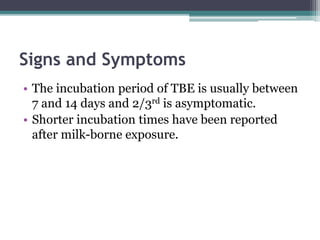
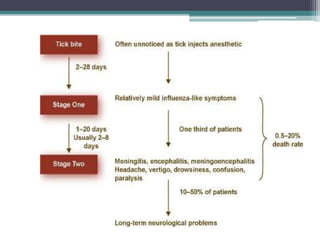
• The incubation period of TBE is usually between
7 and 14 days and 2/3rd is asymptomatic.
• Shorter incubation times have been reported
after milk-borne exposure.
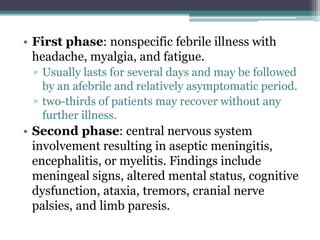
• First phase: nonspecific febrile illness with
headache, myalgia, and fatigue.
▫ Usually lasts for several days and may be followed
by an afebrile and relatively asymptomatic period.
▫ two-thirds of patients may recover without any
further illness.
• Second phase: central nervous system
involvement resulting in aseptic meningitis,
encephalitis, or myelitis. Findings include
meningeal signs, altered mental status, cognitive
dysfunction, ataxia, tremors, cranial nerve
palsies, and limb paresis.
• Disease severity increases with age.
• European subtype is associated with milder
disease, a case-fatality ratio of <2%, and
neurologic sequelae in up to 30% of patients.
• Far Eastern subtype is often associated with a
more severe disease course, including a case-
fatality ratio of 20%–40% and higher rates of
severe neurologic sequelae.
• Siberian subtype is more frequently associated
with chronic or progressive disease and has a
case-fatality ratio of 2%–3%.
DIAGNOSIS
• first phase low white blood cell count
(leukopenia), low platelet count
(thrombocytopenia). Liver enzymes in the serum
may also be mildly elevated.
• second phase onset of neurologic disease increase
in the number of white blood cells in the blood and
the cerebrospinal fluid (CSF)
• Virus isolation from the blood during the first phase
of the disease and CSF from second phase.
• Moderate pleocytosis and increased cerebrospinal
fluid albumin
Laboratory diagnosis
• Serology is typically used for laboratory
diagnosis. IgM-capture ELISA performed on
serum or cerebrospinal fluid
• virus isolation or RT-PCR
• MRI images reveal abnormalities in 15-20% of
patients
• EEG will be abnormal in 75% of all patients
TREATMENT
• There is no specific antiviral treatment for TBE
• therapy consists of supportive care and
management of complications.
• Intubation and corticosteroids are generally
used
• CNS depressants, analgesics.
PREVENTION
• Travelers should avoid consuming unpasteurized
dairy products
• using insect repellents and protective clothing to
prevent tick bites.
• The chemical DEET (diethyltoluamide) is often used
in insect repellents
• Wear light-coloured clothes so ticks are easier to
spot and brush off
• Clothing and camping gear can be impregnated with
compounds containing permethrin, which have an
acaricidal and repellent effect
Vaccine
• No TBE vaccines are licensed or available in the
United States.
• Two inactivated cell culture-derived TBE
vaccines are available in Europe, in adult and
pediatric formulation
• Two other inactivated TBE vaccines are available
in Russia
tick borne encephalitis

tick borne encephalitis

  • 1.
    TICK BORNE ENCEPHALITIES SYNONYMS: 1.TICKBORNE MENINGO ENCEPHALITIES
  • 2.
    INFECTIOUS AGENT • Tick-borneencephalitis, or TBE, is a human viral infectious disease involving the central nervous system. • TBE is caused by the tick-borne encephalitis virus (TBEV), a member of the family Flaviviridae (single-stranded RNA virus), and was initially isolated in 1937.
  • 3.
    Family Flaviviridae alsoincludes • Omsk hemorrhagic fever virus in Siberia, • Kyasanur Forest disease virus in India • Alkhurma virus in Saudi Arabia. • Louping ill virus (United Kingdom) it causes disease primarily in • In the USA and Russia, another tick-borne flavivirus, Powassan virus, is responsible of encephalitis in human. • Yellow fever, dengue fever, West Nile encephalitis, Japanese encephalitis and Powassan fever.
  • 4.
    TBEV has 3subtypes: 1. European or Western tick-borne encephalitis virus 2. Siberian tick-borne encephalitis virus 3. Far Eastern Tick-borne encephalitis virus (formerly known as Russian Spring Summer encephalitis virus, RSSEV)  European TBE is mainly transmitted by Ixodes ricinus,  Siberian and Far Eastern viruses are transmitted mainly by I. persulcatus.
  • 5.
    EPIDEMIOLOGY • TBE isendemic in focal areas of Europe and Asia (from eastern France to northern Japan and from northern Russia to Albania). • From 1990 through 2009, an average of 8,500 cases per year (range, 5,352–12,733 cases) were reported from 19 European countries, • Russia has the largest number of reported TBE cases, and western Siberia has the highest incidence of TBE in the world. • Most cases occur from April through November • incidence and severity of disease are highest in people aged ≥50 years
  • 7.
    Transmission • Ticks, specificallyhard ticks of the family Ixodidae, act as both the vector and reservoir for TBEV. • The main hosts are small rodents, with humans being accidental hosts. • Large animals serve as feeding hosts for the ticks, but do not play a role in maintenance of the virus. • The virus can chronically infect ticks and is transmitted both transtadially and transovarially.
  • 8.
    • TBE casesoccur in humans most frequently in rural areas and during the highest period of tick activity (between April and November). • Infection also may follow consumption of raw milk from infected goats, sheep, or cows. • Laboratory infections were common before the use of vaccines and availability of biosafety precautions to prevent exposure to infectious aerosols. • Person-to-person transmission has not been reported with the exception of vertical transmission, from an infected mother to fetus. • people with recreational or occupational exposure to rural or outdoor settings (e.g., hunters, campers, forest workers, farmers) • Tourism expands, travel to areas of endemicity broadens the definition of who is at risk for TBE infection.
  • 10.
    Signs and Symptoms •The incubation period of TBE is usually between 7 and 14 days and 2/3rd is asymptomatic. • Shorter incubation times have been reported after milk-borne exposure.
  • 11.
    • First phase:nonspecific febrile illness with headache, myalgia, and fatigue. ▫ Usually lasts for several days and may be followed by an afebrile and relatively asymptomatic period. ▫ two-thirds of patients may recover without any further illness. • Second phase: central nervous system involvement resulting in aseptic meningitis, encephalitis, or myelitis. Findings include meningeal signs, altered mental status, cognitive dysfunction, ataxia, tremors, cranial nerve palsies, and limb paresis.
  • 13.
    • Disease severityincreases with age. • European subtype is associated with milder disease, a case-fatality ratio of <2%, and neurologic sequelae in up to 30% of patients. • Far Eastern subtype is often associated with a more severe disease course, including a case- fatality ratio of 20%–40% and higher rates of severe neurologic sequelae. • Siberian subtype is more frequently associated with chronic or progressive disease and has a case-fatality ratio of 2%–3%.
  • 14.
    DIAGNOSIS • first phaselow white blood cell count (leukopenia), low platelet count (thrombocytopenia). Liver enzymes in the serum may also be mildly elevated. • second phase onset of neurologic disease increase in the number of white blood cells in the blood and the cerebrospinal fluid (CSF) • Virus isolation from the blood during the first phase of the disease and CSF from second phase. • Moderate pleocytosis and increased cerebrospinal fluid albumin
  • 15.
    Laboratory diagnosis • Serologyis typically used for laboratory diagnosis. IgM-capture ELISA performed on serum or cerebrospinal fluid • virus isolation or RT-PCR • MRI images reveal abnormalities in 15-20% of patients • EEG will be abnormal in 75% of all patients
  • 16.
    TREATMENT • There isno specific antiviral treatment for TBE • therapy consists of supportive care and management of complications. • Intubation and corticosteroids are generally used • CNS depressants, analgesics.
  • 17.
    PREVENTION • Travelers shouldavoid consuming unpasteurized dairy products • using insect repellents and protective clothing to prevent tick bites. • The chemical DEET (diethyltoluamide) is often used in insect repellents • Wear light-coloured clothes so ticks are easier to spot and brush off • Clothing and camping gear can be impregnated with compounds containing permethrin, which have an acaricidal and repellent effect
  • 18.
    Vaccine • No TBEvaccines are licensed or available in the United States. • Two inactivated cell culture-derived TBE vaccines are available in Europe, in adult and pediatric formulation • Two other inactivated TBE vaccines are available in Russia