SURESH KUMAR
GROUP: 02
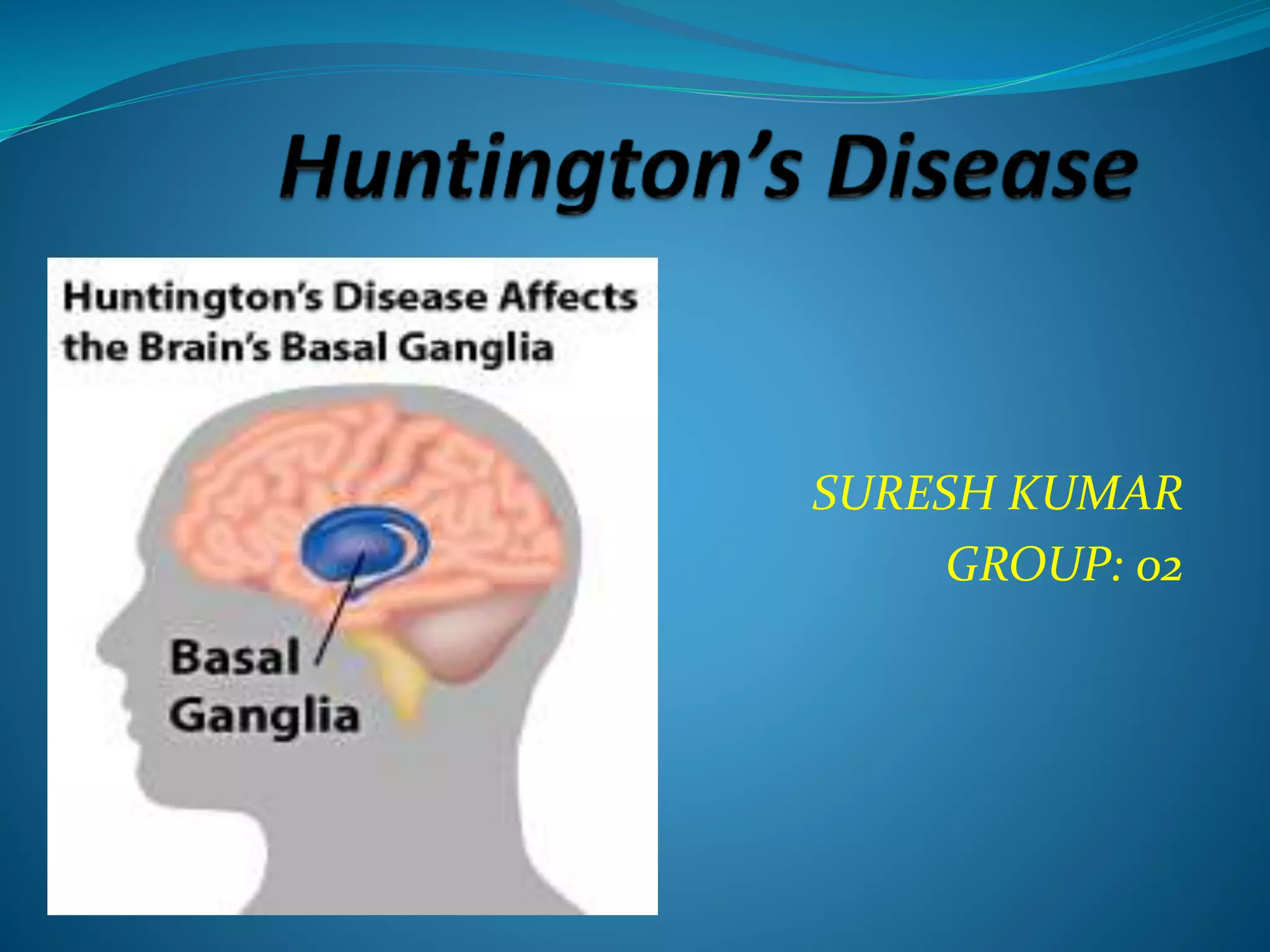
Huntington’s Disease
 Huntington's disease is an Neurodegenerative disorder that
causes the progressive breakdown of nerve cells in the brain
especially damage in BASAL GANGLIA
 It affects 1/10,000 people in USA
 Huntington's disease has a broad impact on a person's
functional abilities and usually results in movement,
thinking (cognitive) and psychiatric disorders.
 Most people with Huntington's disease develop signs and
symptoms in their 30s or 40s, but the onset of disease may
be earlier or later in life.
 When disease onset begins before age 20, the condition is
called juvenile Huntington's disease.
 Huntington's disease usually causes
 movement,
 cognitive and
 psychiatric disorders with a wide spectrum of signs and
symptoms.
 Which symptoms appear first varies greatly among affected
people. During the course of the disease, some disorders
appear to be more dominant or have a greater effect on
functional ability.
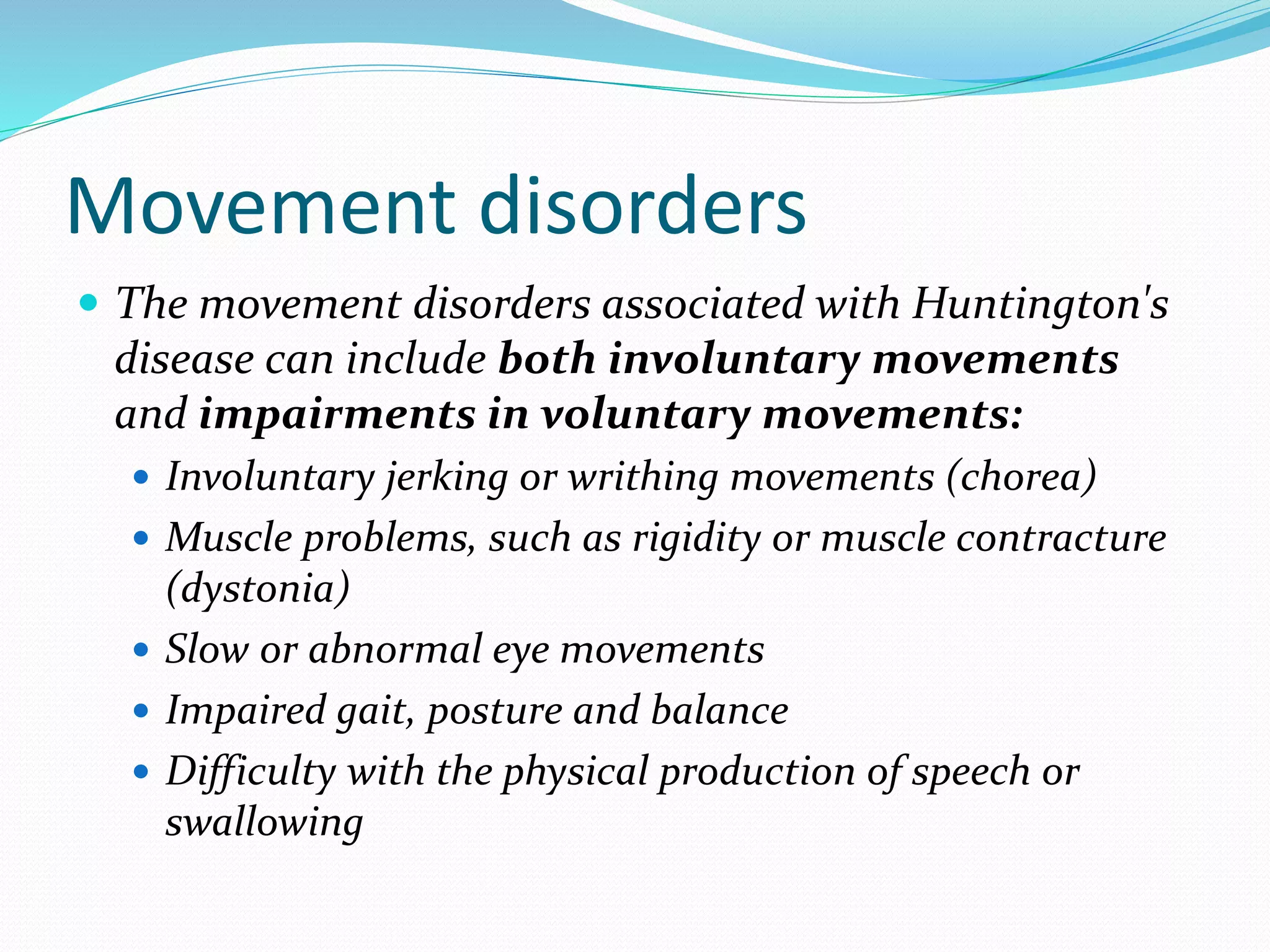
Movement disorders
 The movement disorders associated with Huntington's
disease can include both involuntary movements
and impairments in voluntary movements:
 Involuntary jerking or writhing movements (chorea)
 Muscle problems, such as rigidity or muscle contracture
(dystonia)
 Slow or abnormal eye movements
 Impaired gait, posture and balance
 Difficulty with the physical production of speech or
swallowing
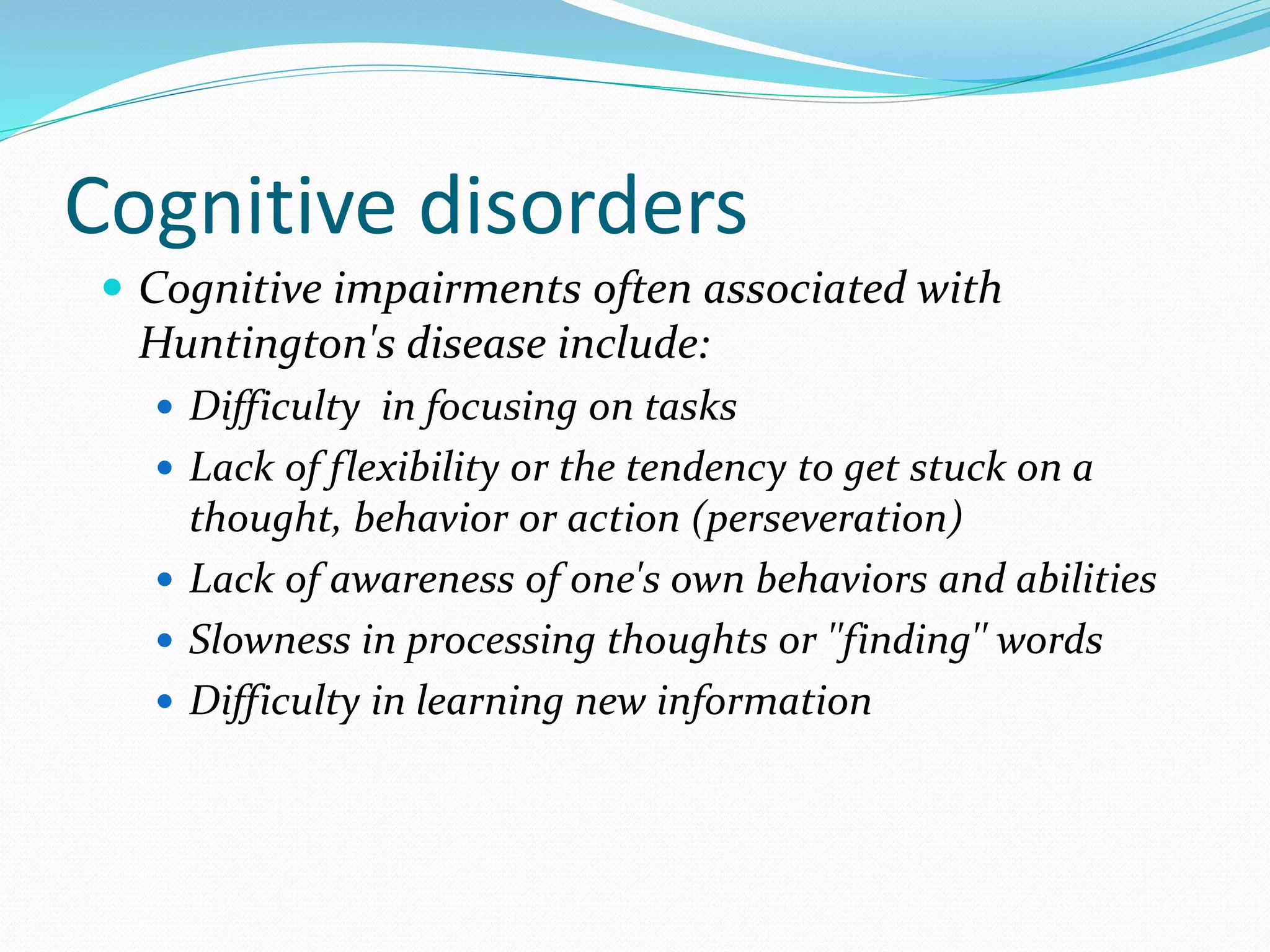
Cognitive disorders
 Cognitive impairments often associated with
Huntington's disease include:
 Difficulty in focusing on tasks
 Lack of flexibility or the tendency to get stuck on a
thought, behavior or action (perseveration)
 Lack of awareness of one's own behaviors and abilities
 Slowness in processing thoughts or ''finding'' words
 Difficulty in learning new information
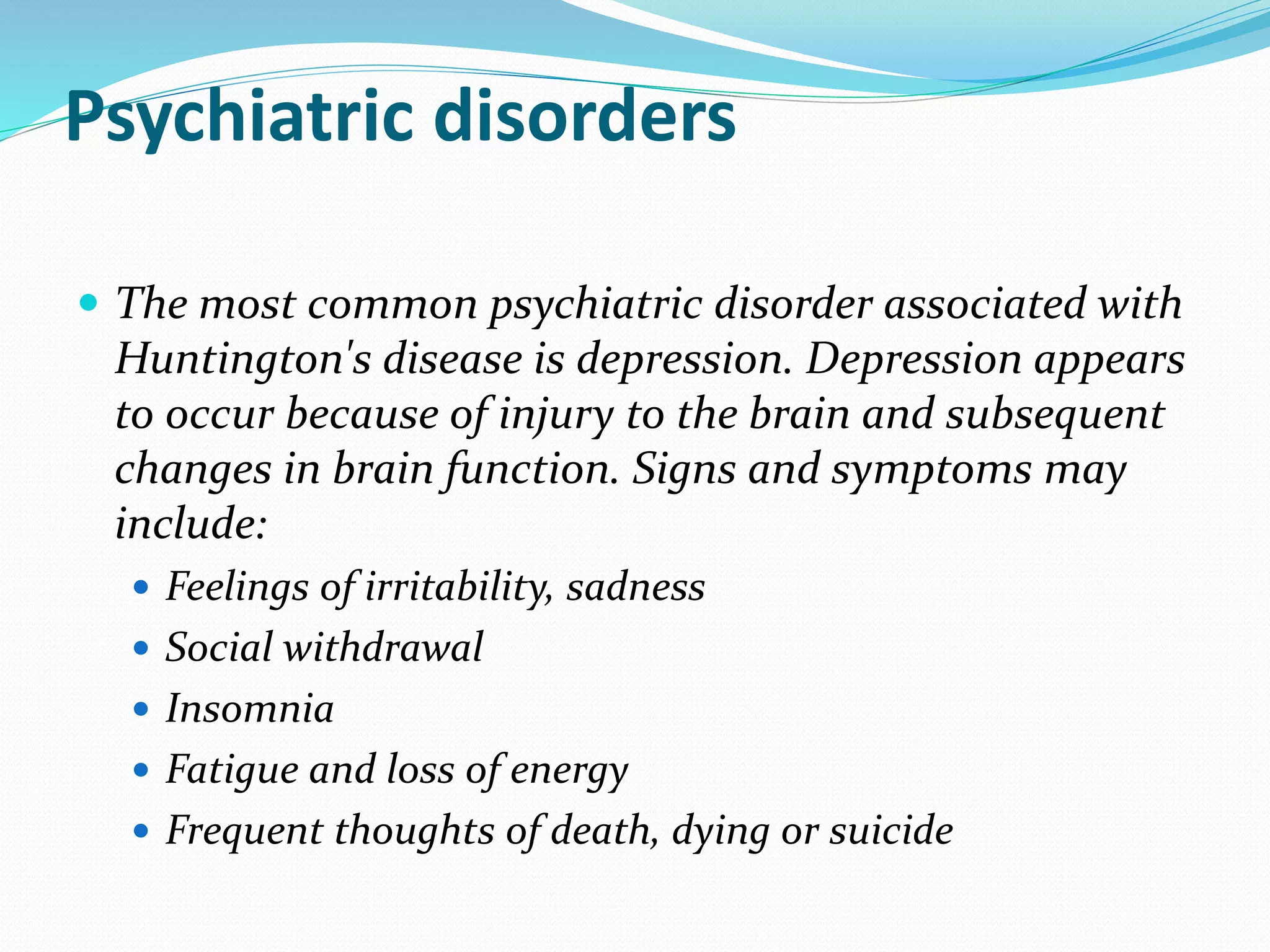
Psychiatric disorders
 The most common psychiatric disorder associated with
Huntington's disease is depression. Depression appears
to occur because of injury to the brain and subsequent
changes in brain function. Signs and symptoms may
include:
 Feelings of irritability, sadness
 Social withdrawal
 Insomnia
 Fatigue and loss of energy
 Frequent thoughts of death, dying or suicide
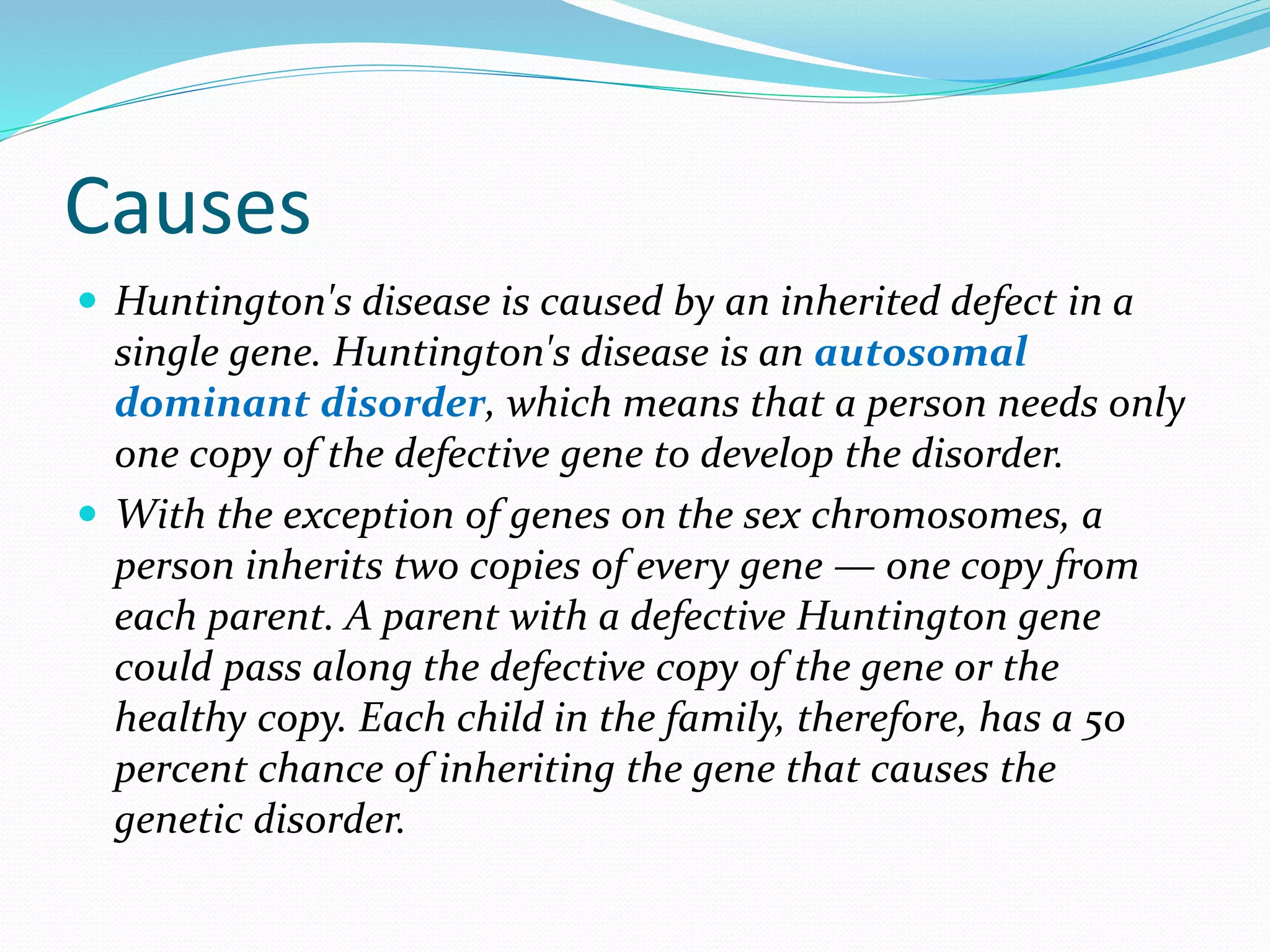
Causes
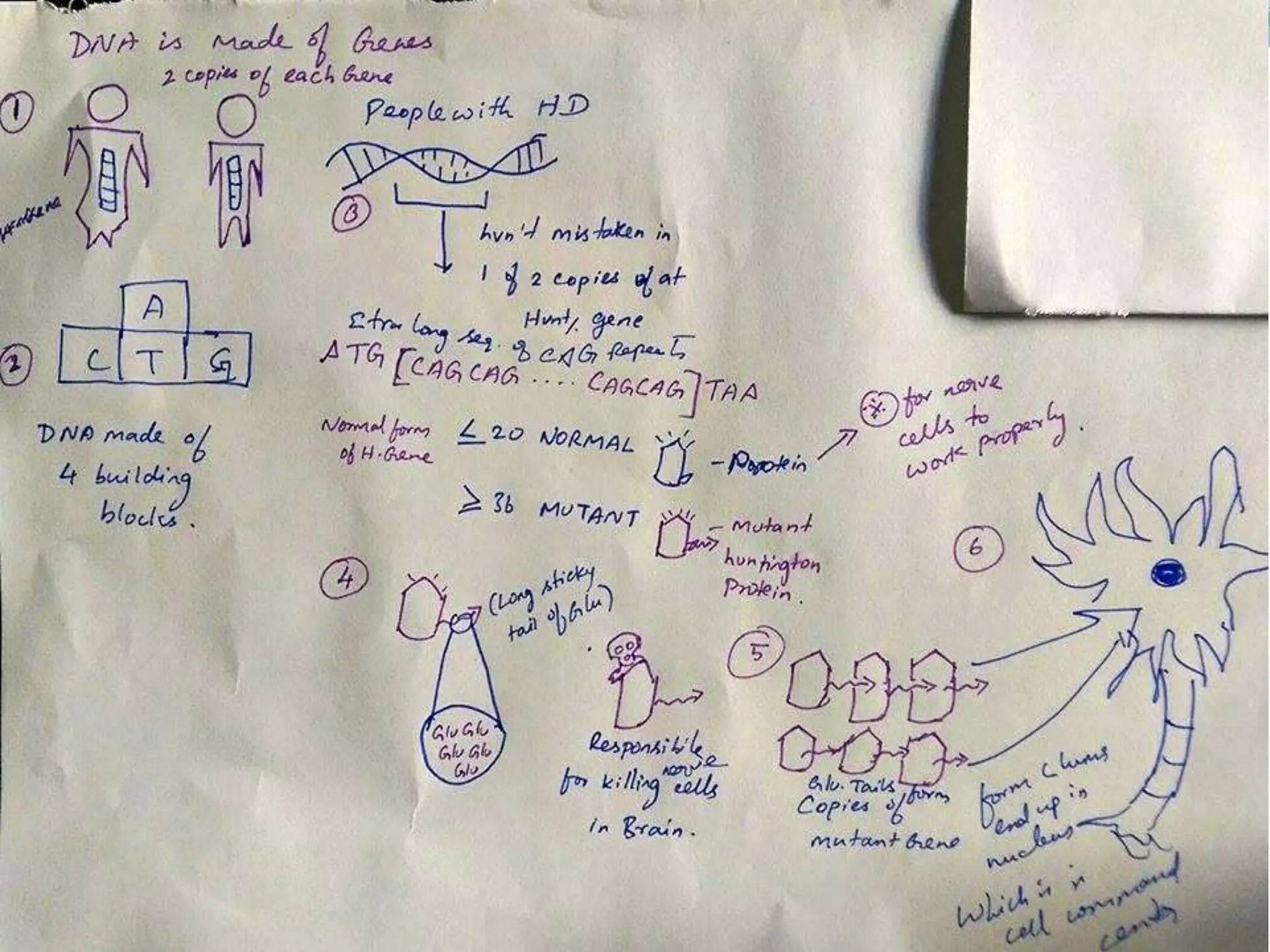
 Huntington's disease is caused by an inherited defect in a
single gene. Huntington's disease is an autosomal
dominant disorder, which means that a person needs only
one copy of the defective gene to develop the disorder.
 With the exception of genes on the sex chromosomes, a
person inherits two copies of every gene — one copy from
each parent. A parent with a defective Huntington gene
could pass along the defective copy of the gene or the
healthy copy. Each child in the family, therefore, has a 50
percent chance of inheriting the gene that causes the
genetic disorder.
Complications
 The clinical depression associated with Huntington's
disease may increase the risk of suicide.
 Lack of physical activity, dietary problems, and eating and
swallowing problems can cause constipation,
incontinence, and weight loss
 Psychiatric and cognitive problems can lead to social
isolation and deep depression
 The patient is usually bedridden in the final stages.
 Common causes of death include:
 Pneumonia or other infections
 Injuries related to falls
 Complications related to the inability to swallow
Tests and diagnosis
 A diagnosis of Huntington's disease is based on
1) general physical exam
2) a review of your family medical history
3) neurological and psychiatric examinations.
Neurological examination
 Motor symptoms
 Reflexes
 Muscle strength
 Muscle tone
 Coordination
 Balance
 Sensory symptoms
 Sense of touch
 Vision and eye movement
 Hearing
 Psychiatric symptoms
 Mental status
 Mood
 Neuropsychological testing
 The neurologist may also perform standardized tests to
assess:
 Memory
 Reasoning
 Mental ability
 Language function
 Spatial reasoning
 Psychiatric evaluation
Patient will be referred to a psychiatrist for an
examination to judge a number of factors that could
contribute to diagnosis, including:
 Emotional state
 Patterns of behaviors
 Quality of judgment
 Coping skills
 Signs of disordered thinking
 Evidence of substance abuse
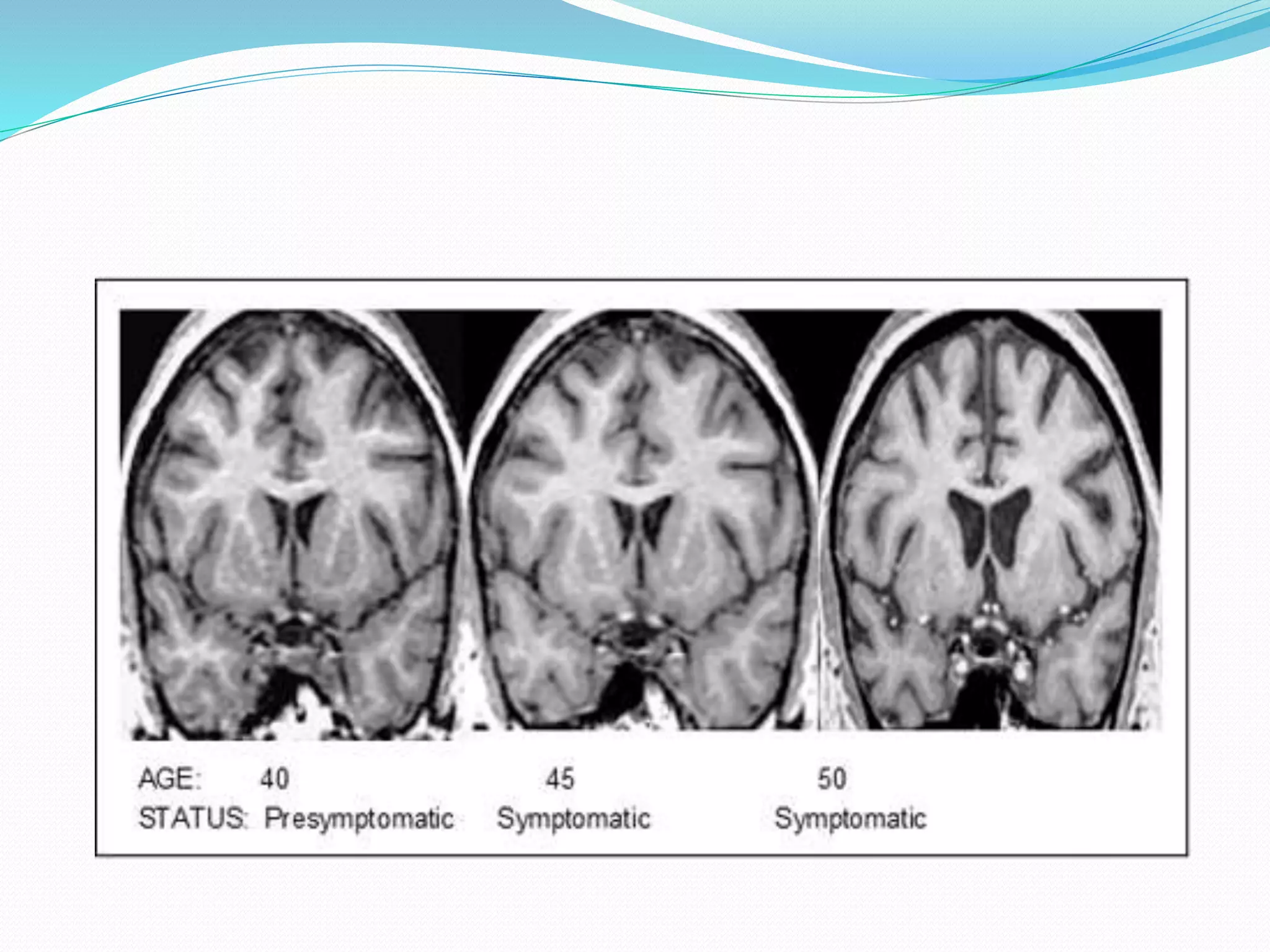
Brain imaging and function
 Brain-imaging tests is used for assessing the
structure or function of the brain. The imaging
technologies may include MRI, which can produce
detailed cross-sectional and 3-D images of the brain,
or CT scan, which produces cross-sectional images.
 These images may reveal structural changes at
particular sites in the brain affected by Huntington's
disease, although these changes may not be
apparent early in the course of the disease.
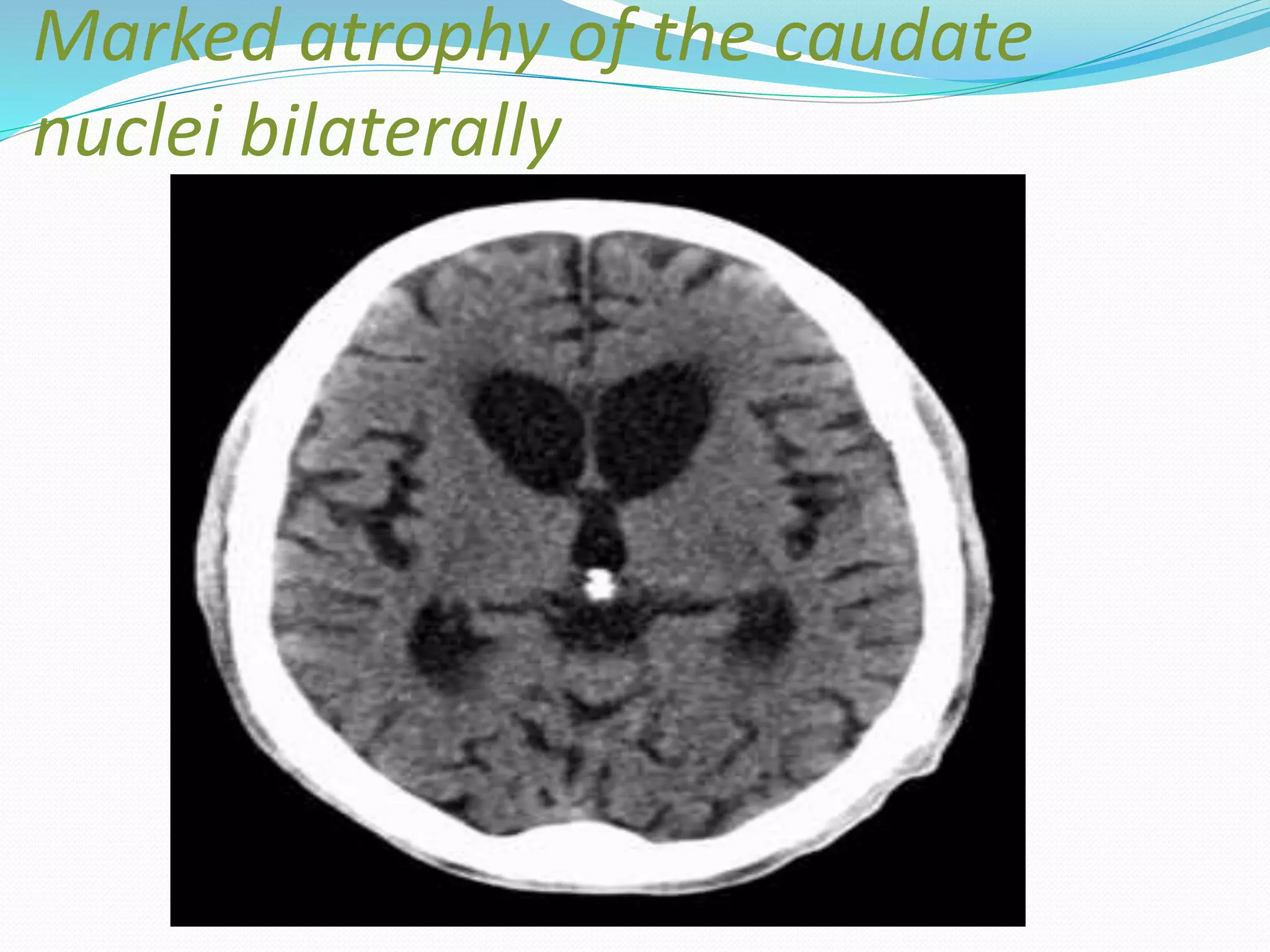
Marked atrophy of the caudate
nuclei bilaterally
Treatments and drugs
 No treatments can alter the course of Huntington's disease.
 Collaborative goals focus on:
 - Reducing symptoms
 - Preventing complications
 - Providing support and assistance to the patient and
significant others
 drugs to treat some symptoms may result in side effects
that worsen other symptoms.
MEDICATIONS
 Medications for movement disorders
 Drugs to treat movement disorders include the following:
 Tetrabenazine (Xenazine) is used to suppress the
involuntary jerking and writhing movements (chorea)
associated with Huntington's disease.
 Antipsychotic drugs, such as haloperidol (Haldol) and
chlorpromazine, have a effect of suppressing movements
(treat’s chorea)
 Other medications that may help suppress chorea include
amantadine, levetiracetam (Keppra) and clonazepam
(Klonopin).
Psychotherapy
 A psychotherapist — a psychiatrist, psychologist or clinical
social worker — can provide talk therapy to help a person
manage behavioral problems, develop coping strategies,
manage expectations during progression of the disease and
facilitate effective communication among family members.
Speech therapy
 Huntington's disease can significantly impair control of
muscles of the mouth and throat that are essential for speech,
eating and swallowing. A speech therapist can help improve
your ability to speak clearly or teach you to use communication
devices — such as a board covered with pictures of everyday
items and activities. Speech therapists can also address
difficulties with muscles used in eating and swallowing.
Occupational therapy
 Handrails at home
 Assistive devices for activities such as bathing and dressing
 Eating and drinking utensils adapted for people with limited
fine motor skills
OTHER CARESEating and nutrition
Factors regarding eating and nutrition include the following:
 People with Huntington's disease often have
difficulty maintaining a healthy body weight. To get
adequate nutrition, more than three meals a day may be
necessary.
 Difficulty with chewing, swallowing and fine motor
skills can limit the amount of food you eat and
increase the risk of choking.
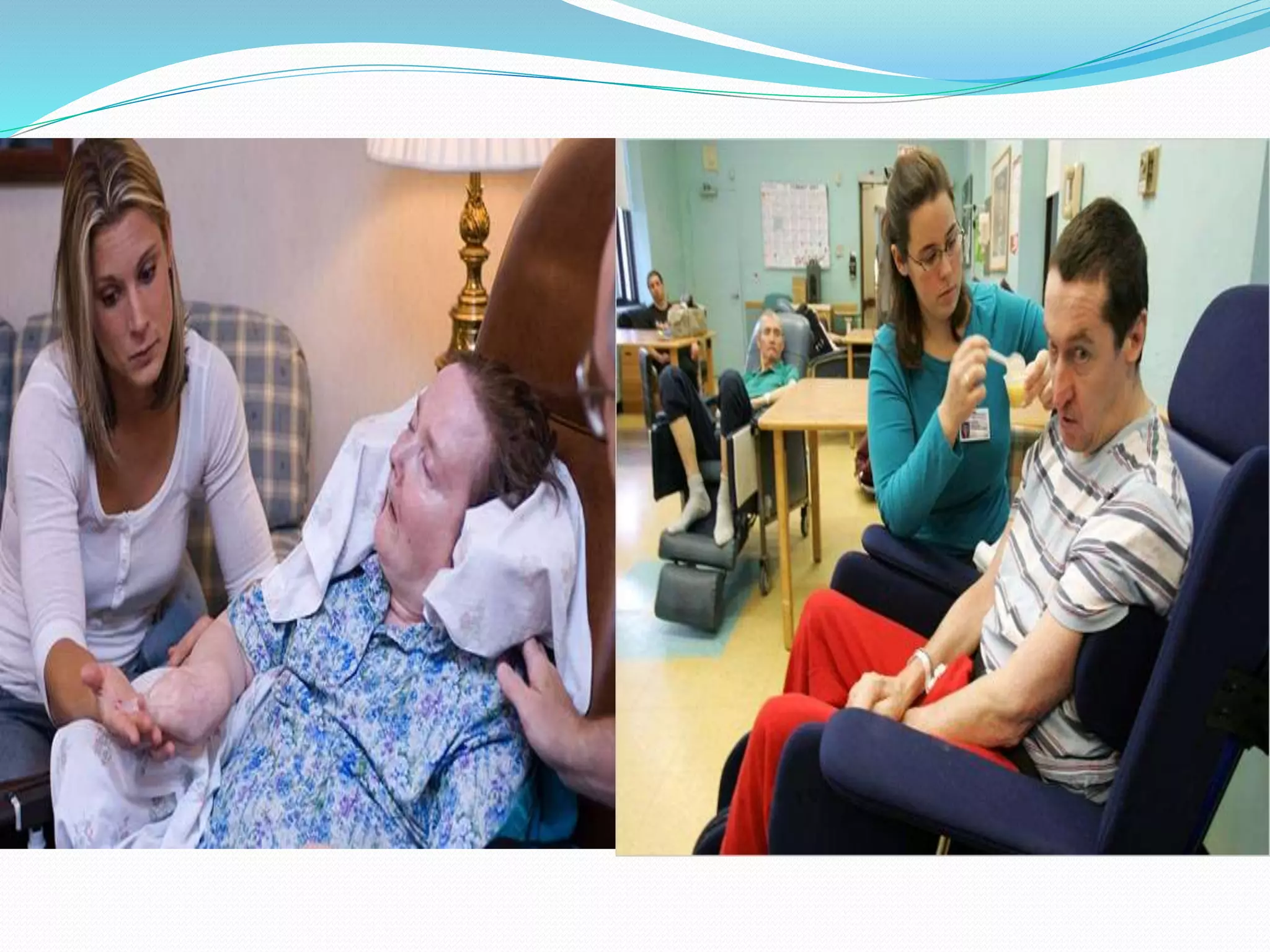
 Eventually, a person with Huntington's disease will need
assistance with eating and drinking.
Huntington

Huntington

  • 1.
  • 2.
    Huntington’s Disease  Huntington'sdisease is an Neurodegenerative disorder that causes the progressive breakdown of nerve cells in the brain especially damage in BASAL GANGLIA  It affects 1/10,000 people in USA  Huntington's disease has a broad impact on a person's functional abilities and usually results in movement, thinking (cognitive) and psychiatric disorders.  Most people with Huntington's disease develop signs and symptoms in their 30s or 40s, but the onset of disease may be earlier or later in life.  When disease onset begins before age 20, the condition is called juvenile Huntington's disease.
  • 4.
     Huntington's diseaseusually causes  movement,  cognitive and  psychiatric disorders with a wide spectrum of signs and symptoms.  Which symptoms appear first varies greatly among affected people. During the course of the disease, some disorders appear to be more dominant or have a greater effect on functional ability.
  • 5.
    Movement disorders  Themovement disorders associated with Huntington's disease can include both involuntary movements and impairments in voluntary movements:  Involuntary jerking or writhing movements (chorea)  Muscle problems, such as rigidity or muscle contracture (dystonia)  Slow or abnormal eye movements  Impaired gait, posture and balance  Difficulty with the physical production of speech or swallowing
  • 6.
    Cognitive disorders  Cognitiveimpairments often associated with Huntington's disease include:  Difficulty in focusing on tasks  Lack of flexibility or the tendency to get stuck on a thought, behavior or action (perseveration)  Lack of awareness of one's own behaviors and abilities  Slowness in processing thoughts or ''finding'' words  Difficulty in learning new information
  • 7.
    Psychiatric disorders  Themost common psychiatric disorder associated with Huntington's disease is depression. Depression appears to occur because of injury to the brain and subsequent changes in brain function. Signs and symptoms may include:  Feelings of irritability, sadness  Social withdrawal  Insomnia  Fatigue and loss of energy  Frequent thoughts of death, dying or suicide
  • 8.
    Causes  Huntington's diseaseis caused by an inherited defect in a single gene. Huntington's disease is an autosomal dominant disorder, which means that a person needs only one copy of the defective gene to develop the disorder.  With the exception of genes on the sex chromosomes, a person inherits two copies of every gene — one copy from each parent. A parent with a defective Huntington gene could pass along the defective copy of the gene or the healthy copy. Each child in the family, therefore, has a 50 percent chance of inheriting the gene that causes the genetic disorder.
  • 9.
    Complications  The clinicaldepression associated with Huntington's disease may increase the risk of suicide.  Lack of physical activity, dietary problems, and eating and swallowing problems can cause constipation, incontinence, and weight loss  Psychiatric and cognitive problems can lead to social isolation and deep depression  The patient is usually bedridden in the final stages.  Common causes of death include:  Pneumonia or other infections  Injuries related to falls  Complications related to the inability to swallow
  • 10.
    Tests and diagnosis A diagnosis of Huntington's disease is based on 1) general physical exam 2) a review of your family medical history 3) neurological and psychiatric examinations.
  • 11.
    Neurological examination  Motorsymptoms  Reflexes  Muscle strength  Muscle tone  Coordination  Balance  Sensory symptoms  Sense of touch  Vision and eye movement  Hearing  Psychiatric symptoms  Mental status  Mood
  • 12.
     Neuropsychological testing The neurologist may also perform standardized tests to assess:  Memory  Reasoning  Mental ability  Language function  Spatial reasoning
  • 13.
     Psychiatric evaluation Patientwill be referred to a psychiatrist for an examination to judge a number of factors that could contribute to diagnosis, including:  Emotional state  Patterns of behaviors  Quality of judgment  Coping skills  Signs of disordered thinking  Evidence of substance abuse
  • 14.
    Brain imaging andfunction  Brain-imaging tests is used for assessing the structure or function of the brain. The imaging technologies may include MRI, which can produce detailed cross-sectional and 3-D images of the brain, or CT scan, which produces cross-sectional images.  These images may reveal structural changes at particular sites in the brain affected by Huntington's disease, although these changes may not be apparent early in the course of the disease.
  • 16.
    Marked atrophy ofthe caudate nuclei bilaterally
  • 17.
    Treatments and drugs No treatments can alter the course of Huntington's disease.  Collaborative goals focus on:  - Reducing symptoms  - Preventing complications  - Providing support and assistance to the patient and significant others  drugs to treat some symptoms may result in side effects that worsen other symptoms.
  • 18.
    MEDICATIONS  Medications formovement disorders  Drugs to treat movement disorders include the following:  Tetrabenazine (Xenazine) is used to suppress the involuntary jerking and writhing movements (chorea) associated with Huntington's disease.  Antipsychotic drugs, such as haloperidol (Haldol) and chlorpromazine, have a effect of suppressing movements (treat’s chorea)  Other medications that may help suppress chorea include amantadine, levetiracetam (Keppra) and clonazepam (Klonopin).
  • 19.
    Psychotherapy  A psychotherapist— a psychiatrist, psychologist or clinical social worker — can provide talk therapy to help a person manage behavioral problems, develop coping strategies, manage expectations during progression of the disease and facilitate effective communication among family members. Speech therapy  Huntington's disease can significantly impair control of muscles of the mouth and throat that are essential for speech, eating and swallowing. A speech therapist can help improve your ability to speak clearly or teach you to use communication devices — such as a board covered with pictures of everyday items and activities. Speech therapists can also address difficulties with muscles used in eating and swallowing. Occupational therapy  Handrails at home  Assistive devices for activities such as bathing and dressing  Eating and drinking utensils adapted for people with limited fine motor skills
  • 21.
    OTHER CARESEating andnutrition Factors regarding eating and nutrition include the following:  People with Huntington's disease often have difficulty maintaining a healthy body weight. To get adequate nutrition, more than three meals a day may be necessary.  Difficulty with chewing, swallowing and fine motor skills can limit the amount of food you eat and increase the risk of choking.  Eventually, a person with Huntington's disease will need assistance with eating and drinking.