CHAGAS DISEASE -
AMERICAN TRYPANOSOMIASIS
GROUP 88
1. ВОНГ Ю СИНГ
2. ЧОУ МИЕН ЧИН
3. ТАН ЙИ ДЖИНГ
4. ЖАЯТЕСВАРАН ВИЖАЯКУМАР
5. СВИИ ДЖИАН ЛИК
6. КО МИНГ ЯО
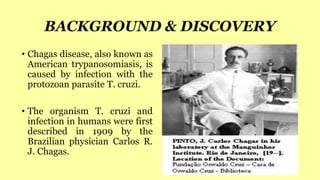
• Chagas disease, also known as
American trypanosomiasis, is
caused by infection with the
protozoan parasite T. cruzi.
• The organism T. cruzi and
infection in humans were first
described in 1909 by the
Brazilian physician Carlos R.
J. Chagas.
BACKGROUND & DISCOVERY
WHY DIDN'T HE WIN THE NOBLE PRIZE?
It has been accepted that the reason why the prize was not
awarded to this brilliant scientist may have been the strong
opposition that he faced in Brazil, from some physicians and
researchers of that time. They went as far as questioning the
existence of Chagas disease, thereby possibly influencing the
decision of the Nobel Committee not to award the prize to
him. Analysis of the database of the Nobel prize archives, with
the revelation of the names of nominators, nominees and
prize winners spanning the years 1901-1951, brought
information not only about what was considered to be a
scientific achievement at that time, but also about who the
important scientists were and what the relationships between
them were. The connections of the members of the Nobel
Committee with the international scientific community,
almost exclusively centered in European and North American
scientists, also influenced their choices.
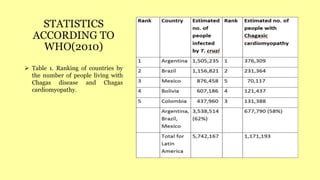
STATISTICS
ACCORDING TO
WHO(2010)
 Table 1. Ranking of countries by
the number of people living with
Chagas disease and Chagas
cardiomyopathy.
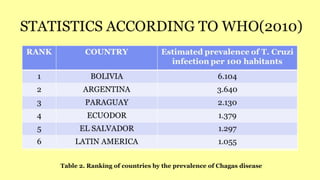
STATISTICS ACCORDING TO WHO(2010)
Table 2. Ranking of countries by the prevalence of Chagas disease
STATISTIC ACCORDING TO CDC (2013)
Chagas disease in the United States
The impact of Chagas disease, once thought
to be limited to Latin America (where an
estimated 8 million people are infected), has
moved to the United States, through
immigration of persons from Chagas–
endemic areas of Mexico, Central America,
and South America. The estimated number
of infected persons living in the United
States is 300,000 or more, based on
estimated disease rates by country of origin.
Blood screening for Chagas disease
National screening of the blood supply was
instituted in early 2007. More than 500
donors with T. cruzi infection were
identified within the first 18 months of
testing.
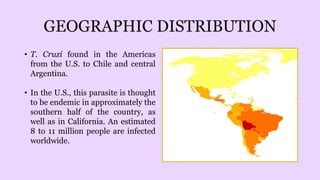
GEOGRAPHIC DISTRIBUTION
• T. Cruzi found in the Americas
from the U.S. to Chile and central
Argentina.
• In the U.S., this parasite is thought
to be endemic in approximately the
southern half of the country, as
well as in California. An estimated
8 to 11 million people are infected
worldwide.
Transmission
 Consumption of food contaminated with T. Cruzi
through, for example, contact with infected triatomine
bug faeces or urine
 Blood transfusion from infected donors
 Passage from an infected mother to her newborn
during pregnancy or childbirth
 Organ transplants using organs from infected donors
 Laboratory accidents.
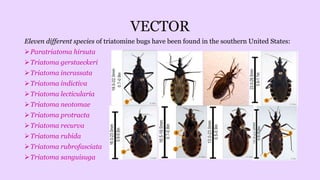
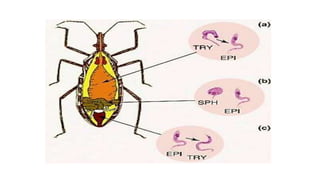
VECTOR
Eleven different species of triatomine bugs have been found in the southern United States:
Paratriatoma hirsuta
Triatoma gerstaeckeri
Triatoma incrassata
Triatoma indictiva
Triatoma lecticularia
Triatoma neotomae
Triatoma protracta
Triatoma recurva
Triatoma rubida
Triatoma rubrofasciata
Triatoma sanguisuga
CARRIERS (OR RESERVOIRS)
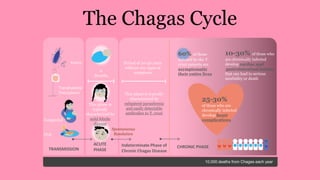
The Chagas Cycle
TRANSMISSION
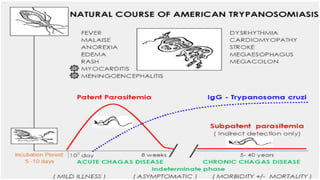
ACUTE
PHASE
CHRONIC PHASEIndeterminate Phase of
Chronic Chagas Disease
2
Months
Period of 20-30 years
without any signs or
symptoms
25-30%
of those who are
chronically infected
develop heart
complications
10-30% of those who
are chronically infected
develop cardiac and
gastrointestinal lesions
that can lead to serious
morbidity or death
60% of those
infected by the T.
cruzi parasite are
asymptomatic
their entire lives
Vector
Transfusions/
Transplants
Congenital
Oral
10,000 deaths from Chagas each year
This phase is typically
characterized by
subpatent parasitemia
and easily detectable
antibodies to T. cruzi
Spontaneous
Resolution
This phase is
typically
characterized by
mild febrile
disease
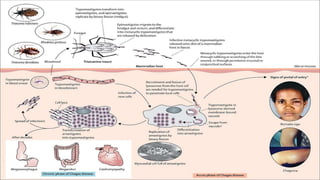
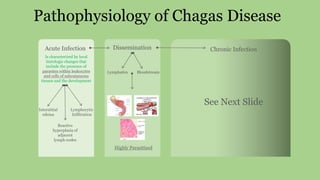
Pathophysiology of Chagas Disease
Acute Infection Chronic InfectionDissemination
Is characterized by local
histologic changes that
include the presence of
parasites within leukocytes
and cells of subcutaneous
tissues and the development
Interstitial
edema
Reactive
hyperplasia of
adjacent
lymph nodes
Lymphocytic
Infiltration
Lymphatics Bloodstream
Highly Parasitized
See Next Slide
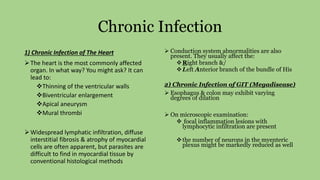
Chronic Infection
1) Chronic Infection of The Heart
The heart is the most commonly affected
organ. In what way? You might ask? It can
lead to:
Thinning of the ventricular walls
Biventricular enlargement
Apical aneurysm
Mural thrombi
Widespread lymphatic infiltration, diffuse
interstitial fibrosis & atrophy of myocardial
cells are often apparent, but parasites are
difficult to find in myocardial tissue by
conventional histological methods
 Conduction system abnormalities are also
present. They usually affect the:
Right branch &/
Left Anterior branch of the bundle of His
2) Chronic Infection of GIT (Megadisease)
 Esophagus & colon may exhibit varying
degrees of dilation
 On microscopic examination:
 focal inflammation lesions with
lymphocytic infiltration are present
the number of neurons in the myenteric
plexus might be markedly reduced as well
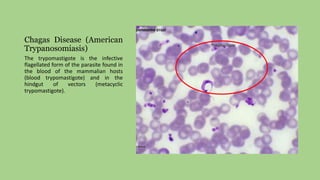
Chagas Disease (American
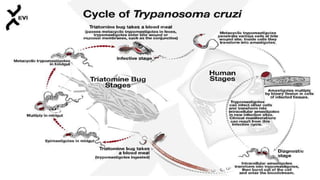
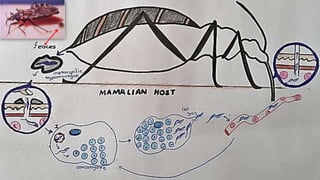
Trypanosomiasis)
The trypomastigote is the infective
flagellated form of the parasite found in
the blood of the mammalian hosts
(blood trypomastigote) and in the
hindgut of vectors (metacyclic
trypomastigote).
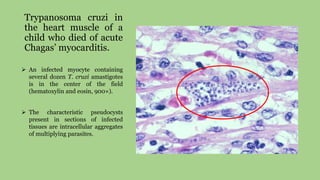
Trypanosoma cruzi in
the heart muscle of a
child who died of acute
Chagas’ myocarditis.
 An infected myocyte containing
several dozen T. cruzi amastigotes
is in the center of the field
(hematoxylin and eosin, 900×).
 The characteristic pseudocysts
present in sections of infected
tissues are intracellular aggregates
of multiplying parasites.
The Takeaway
The pathogenesis of cardiac and gastrointestinal lesions of
chronic Chagas disease has been a focus of debate for decades.
During the last 20 years, however, convincing evidence has
shown that the low levels of parasites in chronically affected
tissue, detectable with molecular methods, provokes a chronic
inflammatory response - rather than an autoimmune
response- as the basis for the pathology in patients with Chronic
T. cruzi infection.
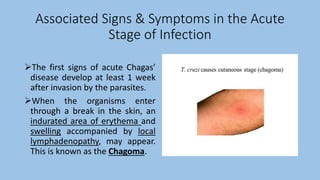
Associated Signs & Symptoms in the Acute
Stage of Infection
The first signs of acute Chagas’
disease develop at least 1 week
after invasion by the parasites.
When the organisms enter
through a break in the skin, an
indurated area of erythema and
swelling accompanied by local
lymphadenopathy, may appear.
This is known as the Chagoma.
Associated Signs & Symptoms in the Acute
Stage of Infection
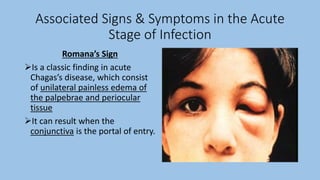
Romana’s Sign
Is a classic finding in acute
Chagas’s disease, which consist
of unilateral painless edema of
the palpebrae and periocular
tissue
It can result when the
conjunctiva is the portal of entry.
Associated Signs & Symptoms in the Acute
Stage of Infection
These initial local signs may be
followed by:
Malaise
Fever
Anorexia
Edema of the face and lower
extremities
Generalized lymphadenopathy and
hepatosplenomegaly may develop.
Severe myocarditis develops rarely;
most deaths in acute Chagas
disease are due to heart failure.
Neurological signs are not
common, but meningoencephalitis
occurs occasionally, especially in
children under 2 years old.
Remember! Usually within 4-8
weeks, acute signs and symptoms
resolve spontaneously in virtually
all patients, who then enter the
asymptomatic or indeterminate
phase of chronic T. cruzi infection.
Associated Signs & Symptoms in the
Indeterminate Stage of Infection
Asymptomatic
Associated Signs & Symptoms in the Chronic
Stage of Infection
Symptomatic chronic Chagas
disease becomes apparent years
or even decades after the initial
infection.
The heart is commonly involved,
and the symptoms are caused
by:
Rhythm disturbances
Segmental or dilated
cardiomyopathy
Thromboembolism
Right bundle branch block is a
common ECG abnormality, but
other types of:
Intraventricular and
atrioventricular blocks
Premature ventricular
contractions
Tachy- and Brady- arrhythmias
occur frequently.
Associated Signs & Symptoms in the Chronic
Stage of Infection
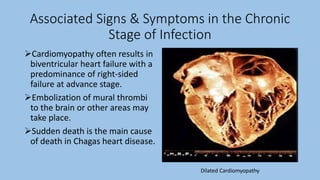
Cardiomyopathy often results in
biventricular heart failure with a
predominance of right-sided
failure at advance stage.
Embolization of mural thrombi
to the brain or other areas may
take place.
Sudden death is the main cause
of death in Chagas heart disease.
Dilated Cardiomyopathy
Associated Signs & Symptoms in the Chronic
Stage of Infection
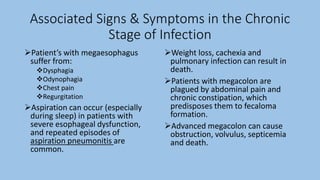
Patient’s with megaesophagus
suffer from:
Dysphagia
Odynophagia
Chest pain
Regurgitation
Aspiration can occur (especially
during sleep) in patients with
severe esophageal dysfunction,
and repeated episodes of
aspiration pneumonitis are
common.
Weight loss, cachexia and
pulmonary infection can result in
death.
Patients with megacolon are
plagued by abdominal pain and
chronic constipation, which
predisposes them to fecaloma
formation.
Advanced megacolon can cause
obstruction, volvulus, septicemia
and death.
Associated Signs & Symptoms in the Chronic
Stage of Infection
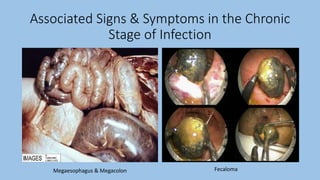
Megaesophagus & Megacolon Fecaloma
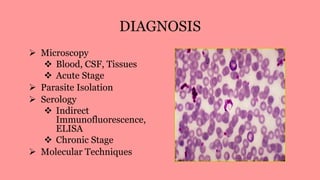
DIAGNOSIS
 Microscopy
 Blood, CSF, Tissues
 Acute Stage
 Parasite Isolation
 Serology
 Indirect
Immunofluorescence,
ELISA
 Chronic Stage
 Molecular Techniques
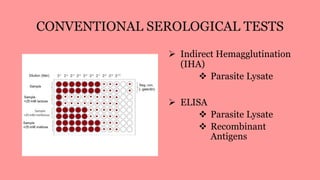
CONVENTIONAL SEROLOGICAL TESTS
 Indirect Hemagglutination
(IHA)
 Parasite Lysate
 ELISA
 Parasite Lysate
 Recombinant
Antigens
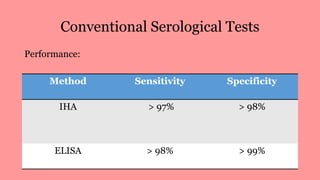
Conventional Serological Tests
Performance:
Method Sensitivity Specificity
IHA > 97% > 98%
ELISA > 98% > 99%
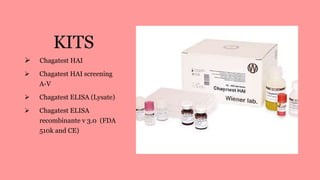
KITS
 Chagatest HAI
 Chagatest HAI screening
A-V
 Chagatest ELISA (Lysate)
 Chagatest ELISA
recombinante v 3.0 (FDA
510k and CE)
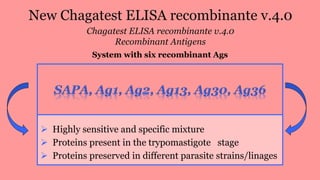
New Chagatest ELISA recombinante v.4.0
Chagatest ELISA recombinante v.4.0
Recombinant Antigens
System with six recombinant Ags
 Highly sensitive and specific mixture
 Proteins present in the trypomastigote stage
 Proteins preserved in different parasite strains/linages
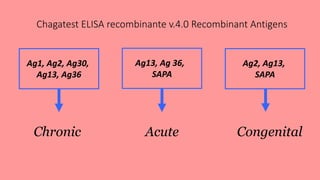
Chagatest ELISA recombinante v.4.0 Recombinant Antigens
Ag1, Ag2, Ag30,
Ag13, Ag36
Ag2, Ag13,
SAPA
Ag13, Ag 36,
SAPA
Chronic CongenitalAcute
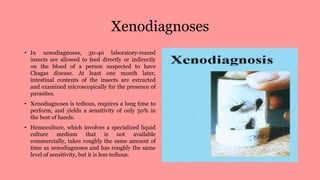
Xenodiagnoses
• In xenodiagnoses, 30-40 laboratory-reared
insects are allowed to feed directly or indirectly
on the blood of a person suspected to have
Chagas disease. At least one month later,
intestinal contents of the insects are extracted
and examined microscopically for the presence of
parasites.
• Xenodiagnoses is tedious, requires a long time to
perform, and yields a sensitivity of only 50% in
the best of hands.
• Hemoculture, which involves a specialized liquid
culture medium that is not available
commercially, takes roughly the same amount of
time as xenodiagnoses and has roughly the same
level of sensitivity, but it is less tedious.
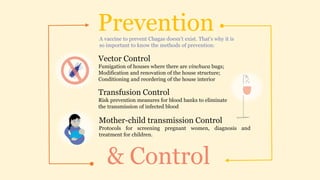
Prevention
& Control
A vaccine to prevent Chagas doesn’t exist. That’s why it is
so important to know the methods of prevention:
Vector Control
Fumigation of houses where there are vinchuca bugs;
Modification and renovation of the house structure;
Conditioning and reordering of the house interior
Transfusion Control
Risk prevention measures for blood banks to eliminate
the transmission of infected blood
Mother-child transmission Control
Protocols for screening pregnant women, diagnosis and
treatment for children.
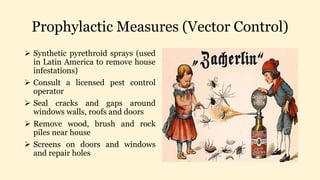
Prophylactic Measures (Vector Control)
 Synthetic pyrethroid sprays (used
in Latin America to remove house
infestations)
 Consult a licensed pest control
operator
 Seal cracks and gaps around
windows walls, roofs and doors
 Remove wood, brush and rock
piles near house
 Screens on doors and windows
and repair holes
Treating Chagas Disease (Acute Phase)
 All patients with acute Chagas disease, including those with
congenital infection and those with reactivation of chronic
infections due to immunosuppression, should be treated with
either benznidazole or nifurtimox
 Requires early detection and speedy treatment. However, early
detection is difficult as the individual may be asymptomatic
and parasitological screening tests have a high rate of false
negatives with respect to T. cruzi
 If disease progresses to a chronic phase: it is no longer curable
(will require management of symptoms
Indeterminate Phase Chagas Treatment
All children and adolescents through age 18 years
with chronic T cruzi infection should receive either
benznidazole or nifurtimox.
The probability of parasitological cure with full
courses of either drug in adults with long-
standing T. cruzi infection, most of whom were
infected while quite young, is less than 10%
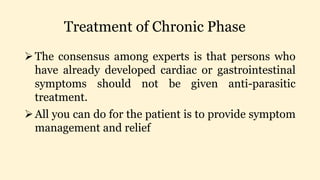
Treatment of Chronic Phase
The consensus among experts is that persons who
have already developed cardiac or gastrointestinal
symptoms should not be given anti-parasitic
treatment.
All you can do for the patient is to provide symptom
management and relief
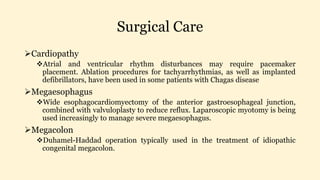
Surgical Care
Cardiopathy
Atrial and ventricular rhythm disturbances may require pacemaker
placement. Ablation procedures for tachyarrhythmias, as well as implanted
defibrillators, have been used in some patients with Chagas disease
Megaesophagus
Wide esophagocardiomyectomy of the anterior gastroesophageal junction,
combined with valvuloplasty to reduce reflux. Laparoscopic myotomy is being
used increasingly to manage severe megaesophagus.
Megacolon
Duhamel-Haddad operation typically used in the treatment of idiopathic
congenital megacolon.
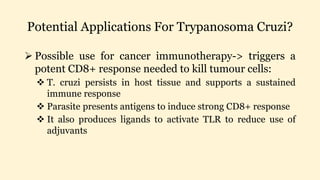
Potential Applications For Trypanosoma Cruzi?
 Possible use for cancer immunotherapy-> triggers a
potent CD8+ response needed to kill tumour cells:
 T. cruzi persists in host tissue and supports a sustained
immune response
 Parasite presents antigens to induce strong CD8+ response
 It also produces ligands to activate TLR to reduce use of
adjuvants

Chagas Disease (American Trypanosomiasis)

  • 1.
    CHAGAS DISEASE - AMERICANTRYPANOSOMIASIS GROUP 88 1. ВОНГ Ю СИНГ 2. ЧОУ МИЕН ЧИН 3. ТАН ЙИ ДЖИНГ 4. ЖАЯТЕСВАРАН ВИЖАЯКУМАР 5. СВИИ ДЖИАН ЛИК 6. КО МИНГ ЯО
  • 2.
    • Chagas disease,also known as American trypanosomiasis, is caused by infection with the protozoan parasite T. cruzi. • The organism T. cruzi and infection in humans were first described in 1909 by the Brazilian physician Carlos R. J. Chagas. BACKGROUND & DISCOVERY
  • 3.
    WHY DIDN'T HEWIN THE NOBLE PRIZE? It has been accepted that the reason why the prize was not awarded to this brilliant scientist may have been the strong opposition that he faced in Brazil, from some physicians and researchers of that time. They went as far as questioning the existence of Chagas disease, thereby possibly influencing the decision of the Nobel Committee not to award the prize to him. Analysis of the database of the Nobel prize archives, with the revelation of the names of nominators, nominees and prize winners spanning the years 1901-1951, brought information not only about what was considered to be a scientific achievement at that time, but also about who the important scientists were and what the relationships between them were. The connections of the members of the Nobel Committee with the international scientific community, almost exclusively centered in European and North American scientists, also influenced their choices.
  • 4.
    STATISTICS ACCORDING TO WHO(2010)  Table1. Ranking of countries by the number of people living with Chagas disease and Chagas cardiomyopathy.
  • 5.
    STATISTICS ACCORDING TOWHO(2010) Table 2. Ranking of countries by the prevalence of Chagas disease
  • 6.
    STATISTIC ACCORDING TOCDC (2013) Chagas disease in the United States The impact of Chagas disease, once thought to be limited to Latin America (where an estimated 8 million people are infected), has moved to the United States, through immigration of persons from Chagas– endemic areas of Mexico, Central America, and South America. The estimated number of infected persons living in the United States is 300,000 or more, based on estimated disease rates by country of origin. Blood screening for Chagas disease National screening of the blood supply was instituted in early 2007. More than 500 donors with T. cruzi infection were identified within the first 18 months of testing.
  • 7.
    GEOGRAPHIC DISTRIBUTION • T.Cruzi found in the Americas from the U.S. to Chile and central Argentina. • In the U.S., this parasite is thought to be endemic in approximately the southern half of the country, as well as in California. An estimated 8 to 11 million people are infected worldwide.
  • 8.
    Transmission  Consumption offood contaminated with T. Cruzi through, for example, contact with infected triatomine bug faeces or urine  Blood transfusion from infected donors  Passage from an infected mother to her newborn during pregnancy or childbirth  Organ transplants using organs from infected donors  Laboratory accidents.
  • 9.
    VECTOR Eleven different speciesof triatomine bugs have been found in the southern United States: Paratriatoma hirsuta Triatoma gerstaeckeri Triatoma incrassata Triatoma indictiva Triatoma lecticularia Triatoma neotomae Triatoma protracta Triatoma recurva Triatoma rubida Triatoma rubrofasciata Triatoma sanguisuga
  • 10.
  • 16.
    The Chagas Cycle TRANSMISSION ACUTE PHASE CHRONICPHASEIndeterminate Phase of Chronic Chagas Disease 2 Months Period of 20-30 years without any signs or symptoms 25-30% of those who are chronically infected develop heart complications 10-30% of those who are chronically infected develop cardiac and gastrointestinal lesions that can lead to serious morbidity or death 60% of those infected by the T. cruzi parasite are asymptomatic their entire lives Vector Transfusions/ Transplants Congenital Oral 10,000 deaths from Chagas each year This phase is typically characterized by subpatent parasitemia and easily detectable antibodies to T. cruzi Spontaneous Resolution This phase is typically characterized by mild febrile disease
  • 17.
    Pathophysiology of ChagasDisease Acute Infection Chronic InfectionDissemination Is characterized by local histologic changes that include the presence of parasites within leukocytes and cells of subcutaneous tissues and the development Interstitial edema Reactive hyperplasia of adjacent lymph nodes Lymphocytic Infiltration Lymphatics Bloodstream Highly Parasitized See Next Slide
  • 18.
    Chronic Infection 1) ChronicInfection of The Heart The heart is the most commonly affected organ. In what way? You might ask? It can lead to: Thinning of the ventricular walls Biventricular enlargement Apical aneurysm Mural thrombi Widespread lymphatic infiltration, diffuse interstitial fibrosis & atrophy of myocardial cells are often apparent, but parasites are difficult to find in myocardial tissue by conventional histological methods  Conduction system abnormalities are also present. They usually affect the: Right branch &/ Left Anterior branch of the bundle of His 2) Chronic Infection of GIT (Megadisease)  Esophagus & colon may exhibit varying degrees of dilation  On microscopic examination:  focal inflammation lesions with lymphocytic infiltration are present the number of neurons in the myenteric plexus might be markedly reduced as well
  • 19.
    Chagas Disease (American Trypanosomiasis) Thetrypomastigote is the infective flagellated form of the parasite found in the blood of the mammalian hosts (blood trypomastigote) and in the hindgut of vectors (metacyclic trypomastigote).
  • 20.
    Trypanosoma cruzi in theheart muscle of a child who died of acute Chagas’ myocarditis.  An infected myocyte containing several dozen T. cruzi amastigotes is in the center of the field (hematoxylin and eosin, 900×).  The characteristic pseudocysts present in sections of infected tissues are intracellular aggregates of multiplying parasites.
  • 21.
    The Takeaway The pathogenesisof cardiac and gastrointestinal lesions of chronic Chagas disease has been a focus of debate for decades. During the last 20 years, however, convincing evidence has shown that the low levels of parasites in chronically affected tissue, detectable with molecular methods, provokes a chronic inflammatory response - rather than an autoimmune response- as the basis for the pathology in patients with Chronic T. cruzi infection.
  • 22.
    Associated Signs &Symptoms in the Acute Stage of Infection The first signs of acute Chagas’ disease develop at least 1 week after invasion by the parasites. When the organisms enter through a break in the skin, an indurated area of erythema and swelling accompanied by local lymphadenopathy, may appear. This is known as the Chagoma.
  • 23.
    Associated Signs &Symptoms in the Acute Stage of Infection Romana’s Sign Is a classic finding in acute Chagas’s disease, which consist of unilateral painless edema of the palpebrae and periocular tissue It can result when the conjunctiva is the portal of entry.
  • 24.
    Associated Signs &Symptoms in the Acute Stage of Infection These initial local signs may be followed by: Malaise Fever Anorexia Edema of the face and lower extremities Generalized lymphadenopathy and hepatosplenomegaly may develop. Severe myocarditis develops rarely; most deaths in acute Chagas disease are due to heart failure. Neurological signs are not common, but meningoencephalitis occurs occasionally, especially in children under 2 years old. Remember! Usually within 4-8 weeks, acute signs and symptoms resolve spontaneously in virtually all patients, who then enter the asymptomatic or indeterminate phase of chronic T. cruzi infection.
  • 25.
    Associated Signs &Symptoms in the Indeterminate Stage of Infection Asymptomatic
  • 26.
    Associated Signs &Symptoms in the Chronic Stage of Infection Symptomatic chronic Chagas disease becomes apparent years or even decades after the initial infection. The heart is commonly involved, and the symptoms are caused by: Rhythm disturbances Segmental or dilated cardiomyopathy Thromboembolism Right bundle branch block is a common ECG abnormality, but other types of: Intraventricular and atrioventricular blocks Premature ventricular contractions Tachy- and Brady- arrhythmias occur frequently.
  • 27.
    Associated Signs &Symptoms in the Chronic Stage of Infection Cardiomyopathy often results in biventricular heart failure with a predominance of right-sided failure at advance stage. Embolization of mural thrombi to the brain or other areas may take place. Sudden death is the main cause of death in Chagas heart disease. Dilated Cardiomyopathy
  • 28.
    Associated Signs &Symptoms in the Chronic Stage of Infection Patient’s with megaesophagus suffer from: Dysphagia Odynophagia Chest pain Regurgitation Aspiration can occur (especially during sleep) in patients with severe esophageal dysfunction, and repeated episodes of aspiration pneumonitis are common. Weight loss, cachexia and pulmonary infection can result in death. Patients with megacolon are plagued by abdominal pain and chronic constipation, which predisposes them to fecaloma formation. Advanced megacolon can cause obstruction, volvulus, septicemia and death.
  • 29.
    Associated Signs &Symptoms in the Chronic Stage of Infection Megaesophagus & Megacolon Fecaloma
  • 31.
    DIAGNOSIS  Microscopy  Blood,CSF, Tissues  Acute Stage  Parasite Isolation  Serology  Indirect Immunofluorescence, ELISA  Chronic Stage  Molecular Techniques
  • 32.
    CONVENTIONAL SEROLOGICAL TESTS Indirect Hemagglutination (IHA)  Parasite Lysate  ELISA  Parasite Lysate  Recombinant Antigens
  • 33.
    Conventional Serological Tests Performance: MethodSensitivity Specificity IHA > 97% > 98% ELISA > 98% > 99%
  • 34.
    KITS  Chagatest HAI Chagatest HAI screening A-V  Chagatest ELISA (Lysate)  Chagatest ELISA recombinante v 3.0 (FDA 510k and CE)
  • 35.
    New Chagatest ELISArecombinante v.4.0 Chagatest ELISA recombinante v.4.0 Recombinant Antigens System with six recombinant Ags  Highly sensitive and specific mixture  Proteins present in the trypomastigote stage  Proteins preserved in different parasite strains/linages
  • 36.
    Chagatest ELISA recombinantev.4.0 Recombinant Antigens Ag1, Ag2, Ag30, Ag13, Ag36 Ag2, Ag13, SAPA Ag13, Ag 36, SAPA Chronic CongenitalAcute
  • 37.
    Xenodiagnoses • In xenodiagnoses,30-40 laboratory-reared insects are allowed to feed directly or indirectly on the blood of a person suspected to have Chagas disease. At least one month later, intestinal contents of the insects are extracted and examined microscopically for the presence of parasites. • Xenodiagnoses is tedious, requires a long time to perform, and yields a sensitivity of only 50% in the best of hands. • Hemoculture, which involves a specialized liquid culture medium that is not available commercially, takes roughly the same amount of time as xenodiagnoses and has roughly the same level of sensitivity, but it is less tedious.
  • 38.
    Prevention & Control A vaccineto prevent Chagas doesn’t exist. That’s why it is so important to know the methods of prevention: Vector Control Fumigation of houses where there are vinchuca bugs; Modification and renovation of the house structure; Conditioning and reordering of the house interior Transfusion Control Risk prevention measures for blood banks to eliminate the transmission of infected blood Mother-child transmission Control Protocols for screening pregnant women, diagnosis and treatment for children.
  • 39.
    Prophylactic Measures (VectorControl)  Synthetic pyrethroid sprays (used in Latin America to remove house infestations)  Consult a licensed pest control operator  Seal cracks and gaps around windows walls, roofs and doors  Remove wood, brush and rock piles near house  Screens on doors and windows and repair holes
  • 40.
    Treating Chagas Disease(Acute Phase)  All patients with acute Chagas disease, including those with congenital infection and those with reactivation of chronic infections due to immunosuppression, should be treated with either benznidazole or nifurtimox  Requires early detection and speedy treatment. However, early detection is difficult as the individual may be asymptomatic and parasitological screening tests have a high rate of false negatives with respect to T. cruzi  If disease progresses to a chronic phase: it is no longer curable (will require management of symptoms
  • 41.
    Indeterminate Phase ChagasTreatment All children and adolescents through age 18 years with chronic T cruzi infection should receive either benznidazole or nifurtimox. The probability of parasitological cure with full courses of either drug in adults with long- standing T. cruzi infection, most of whom were infected while quite young, is less than 10%
  • 42.
    Treatment of ChronicPhase The consensus among experts is that persons who have already developed cardiac or gastrointestinal symptoms should not be given anti-parasitic treatment. All you can do for the patient is to provide symptom management and relief
  • 43.
    Surgical Care Cardiopathy Atrial andventricular rhythm disturbances may require pacemaker placement. Ablation procedures for tachyarrhythmias, as well as implanted defibrillators, have been used in some patients with Chagas disease Megaesophagus Wide esophagocardiomyectomy of the anterior gastroesophageal junction, combined with valvuloplasty to reduce reflux. Laparoscopic myotomy is being used increasingly to manage severe megaesophagus. Megacolon Duhamel-Haddad operation typically used in the treatment of idiopathic congenital megacolon.
  • 44.
    Potential Applications ForTrypanosoma Cruzi?  Possible use for cancer immunotherapy-> triggers a potent CD8+ response needed to kill tumour cells:  T. cruzi persists in host tissue and supports a sustained immune response  Parasite presents antigens to induce strong CD8+ response  It also produces ligands to activate TLR to reduce use of adjuvants