Tourette
Syndrome
New Help and Hope
Tourette Syndrome
What is Tourette Syndrome
What are the signs and symptoms of
TS
How is TS diagnosed
Is TS inherited
How do doctors treat TS
How do you deal with TS personally
Strategies for teachers
Don’t Swear By It!
 People who have heard of Tourette
Syndrome usually think of the person who is
swearing or using inappropriate expressions.
 Sometimes the term Tourette’s is used as a
“joke” for people who swear frequently but
actually that’s one of the less common
symptoms.
 More common is how many people have TS
What is TS
 TS is short for Tourette Syndrome, named after
a French neurologist, Gilles de la Tourette who
discovered the condition in 1885.
 TS is a neurological disorder, or “Tic” disorder,
where a person has both a motor and a
vocal tic.
 Tics are uncontrollable, sudden, repetitive
movements or sounds that involve a certain
number of muscle groups or body parts.
What are the Signs and
Symptoms
 “Mrs. Brown, Mary keep blinking her eyes, shaking her
head and making funny noises. She says she can’t help
it. Why doesn’t she stop?” “ Mary has TS.”
 Tics are classified as either simple or complex. Simple-
are sudden, repetitive and brief. Complex - are distinct,
coordinated patterns of movement.
 Simple tics might include eye blinking, throat-clearing,
barking, grunting, head jerking, sticking out tongue,
stuttering, arm or leg movements, etc.
 Complex tics might include jumping, smelling or
touching objects, using swear words or gestures,
repeating other’s words, touching the nose, touching
other people or self, self harming behavior, anger, etc.
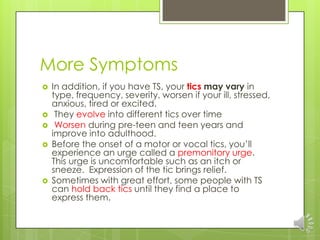
More Symptoms
 In addition, if you have TS, your tics may vary in
type, frequency, severity, worsen if your ill, stressed,
anxious, tired or excited.
 They evolve into different tics over time
 Worsen during pre-teen and teen years and
improve into adulthood.
 Before the onset of a motor or vocal tics, you’ll
experience an urge called a premonitory urge.
This urge is uncomfortable such as an itch or
sneeze. Expression of the tic brings relief.
 Sometimes with great effort, some people with TS
can hold back tics until they find a place to
express them.
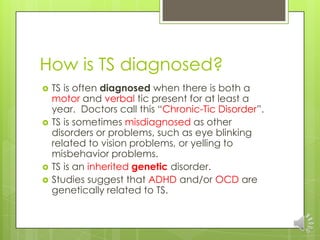
How is TS diagnosed?
 TS is often diagnosed when there is both a
motor and verbal tic present for at least a
year. Doctors call this “Chronic-Tic Disorder”.
 TS is sometimes misdiagnosed as other
disorders or problems, such as eye blinking
related to vision problems, or yelling to
misbehavior problems.
 TS is an inherited genetic disorder.
 Studies suggest that ADHD and/or OCD are
genetically related to TS.
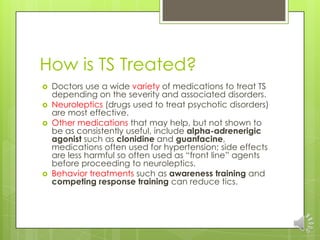
How is TS Treated?
 Doctors use a wide variety of medications to treat TS
depending on the severity and associated disorders.
 Neuroleptics (drugs used to treat psychotic disorders)
are most effective.
 Other medications that may help, but not shown to
be as consistently useful, include alpha-adrenerigic
agonist such as clonidine and guanfacine,
medications often used for hypertension; side effects
are less harmful so often used as “front line” agents
before proceeding to neuroleptics.
 Behavior treatments such as awareness training and
competing response training can reduce tics.
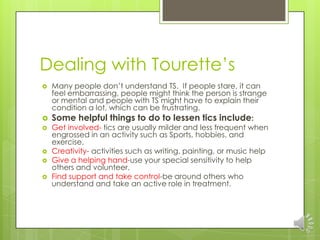
Dealing with Tourette’s
 Many people don’t understand TS. If people stare, it can
feel embarrassing, people might think the person is strange
or mental and people with TS might have to explain their
condition a lot, which can be frustrating.
 Some helpful things to do to lessen tics include:
 Get involved- tics are usually milder and less frequent when
engrossed in an activity such as Sports, hobbies, and
exercise.
 Creativity- activities such as writing, painting, or music help
 Give a helping hand-use your special sensitivity to help
others and volunteer.
 Find support and take control-be around others who
understand and take an active role in treatment.
Everybody Needs To Get On
Board
 It is critical that everyone including cafeteria
workers, teachers, bus drivers, substitutes,
crossing guards, coaches, guidance
counselors, janitors, along with parents learn
about and understand TS.
 Training is critical for everyone in the school
setting and can be accomplished through an
in-service workshops conducted by a
volunteer from the local chapter of TSA or the
use of the TSA curriculum guide for educators.
TS in the Classroom
Guidelines for Educators
 Look at the whole child – not the disorder.
Most children with TS are very intelligent and
want to be accepted and understood.
 Don’t react with anger! Noises and
movement can be annoying but be
understanding.
 Be an adult role model. Show and teach the
kids in the classroom acceptance of the
disorder
 Use caution in interpreting standardized test
 Use parents as a resource and an ally
Making Accommodations
 Preferential seating
 Open and less restrictive classroom-
allowing movement about the class
 Testing in a separate location with time
limits waived or extended
 The use of a computer/word processor
 Frequent breaks out of the classroom to
allow for release of tics
Accommodations
 Assignments broken into more manageable
pieces.
 The use of daily assignment sheet verified by the
teacher
 Provide a refuge for times when symptoms
intensify and need to be released somewhere
private
 Avoid abrupt transitions
 Keep stress at a minimum
 Help with social isolation – don’t allow situations
that emphasize the problem, like “picking
partners”
Conclusion
 Tourette Syndrome has gain a lot of
attention in recent years.
 Growing number of people are being
diagnose with TS
 People with TS can have a rich and long
productive life
 TS awareness and training can make a
world of difference in the life of a child
References
 Harry, S. Abram, MD. (1995-2013). “Tourette
Syndrome”. Retrieved from
http://kidshealth.org/teen/diseases_conditions/br
ain_nervous/tourette.html
 Suzanne, Bronheim, PH.D. (2003). “An Educator’s
Guide to Tourette Syndrome”. Retrieved from
http://Tsa-usa.org/for-teens-and-younger-online-
store
 Ellen, Meyers, M.Ed. (2005). “The School
Administrator: Ten Things to Know about Tourette
Syndrome”. Retrieved from http://Tsa-usa.org/for-
teens-and-younger-online-store
References
 Mayo Clinic, (2012, August 10). “Tourette
Syndrome”. Retrieved from
http://www.mayoclinic.com/health/tourette-
syndrome/DS00541/DSECTION=symptoms
 Eleanor Pearl, (2007). “Matthew And The
Tics”. Retrieved from http://tsa-
usa.org/aPeople/Youth/matthew_tics.html
 Judy, Wertheim, MS, Spec. Ed., (2003).
“Tourette Syndrome in The Classroom.”
Retrieved from http://tsa-usa.org/for-teens-
and-younger-online-store

Tourette syndrome

  • 1.
  • 2.
    Tourette Syndrome What isTourette Syndrome What are the signs and symptoms of TS How is TS diagnosed Is TS inherited How do doctors treat TS How do you deal with TS personally Strategies for teachers
  • 3.
    Don’t Swear ByIt!  People who have heard of Tourette Syndrome usually think of the person who is swearing or using inappropriate expressions.  Sometimes the term Tourette’s is used as a “joke” for people who swear frequently but actually that’s one of the less common symptoms.  More common is how many people have TS
  • 4.
    What is TS TS is short for Tourette Syndrome, named after a French neurologist, Gilles de la Tourette who discovered the condition in 1885.  TS is a neurological disorder, or “Tic” disorder, where a person has both a motor and a vocal tic.  Tics are uncontrollable, sudden, repetitive movements or sounds that involve a certain number of muscle groups or body parts.
  • 5.
    What are theSigns and Symptoms  “Mrs. Brown, Mary keep blinking her eyes, shaking her head and making funny noises. She says she can’t help it. Why doesn’t she stop?” “ Mary has TS.”  Tics are classified as either simple or complex. Simple- are sudden, repetitive and brief. Complex - are distinct, coordinated patterns of movement.  Simple tics might include eye blinking, throat-clearing, barking, grunting, head jerking, sticking out tongue, stuttering, arm or leg movements, etc.  Complex tics might include jumping, smelling or touching objects, using swear words or gestures, repeating other’s words, touching the nose, touching other people or self, self harming behavior, anger, etc.
  • 6.
    More Symptoms  Inaddition, if you have TS, your tics may vary in type, frequency, severity, worsen if your ill, stressed, anxious, tired or excited.  They evolve into different tics over time  Worsen during pre-teen and teen years and improve into adulthood.  Before the onset of a motor or vocal tics, you’ll experience an urge called a premonitory urge. This urge is uncomfortable such as an itch or sneeze. Expression of the tic brings relief.  Sometimes with great effort, some people with TS can hold back tics until they find a place to express them.
  • 7.
    How is TSdiagnosed?  TS is often diagnosed when there is both a motor and verbal tic present for at least a year. Doctors call this “Chronic-Tic Disorder”.  TS is sometimes misdiagnosed as other disorders or problems, such as eye blinking related to vision problems, or yelling to misbehavior problems.  TS is an inherited genetic disorder.  Studies suggest that ADHD and/or OCD are genetically related to TS.
  • 8.
    How is TSTreated?  Doctors use a wide variety of medications to treat TS depending on the severity and associated disorders.  Neuroleptics (drugs used to treat psychotic disorders) are most effective.  Other medications that may help, but not shown to be as consistently useful, include alpha-adrenerigic agonist such as clonidine and guanfacine, medications often used for hypertension; side effects are less harmful so often used as “front line” agents before proceeding to neuroleptics.  Behavior treatments such as awareness training and competing response training can reduce tics.
  • 9.
    Dealing with Tourette’s Many people don’t understand TS. If people stare, it can feel embarrassing, people might think the person is strange or mental and people with TS might have to explain their condition a lot, which can be frustrating.  Some helpful things to do to lessen tics include:  Get involved- tics are usually milder and less frequent when engrossed in an activity such as Sports, hobbies, and exercise.  Creativity- activities such as writing, painting, or music help  Give a helping hand-use your special sensitivity to help others and volunteer.  Find support and take control-be around others who understand and take an active role in treatment.
  • 10.
    Everybody Needs ToGet On Board  It is critical that everyone including cafeteria workers, teachers, bus drivers, substitutes, crossing guards, coaches, guidance counselors, janitors, along with parents learn about and understand TS.  Training is critical for everyone in the school setting and can be accomplished through an in-service workshops conducted by a volunteer from the local chapter of TSA or the use of the TSA curriculum guide for educators.
  • 11.
    TS in theClassroom Guidelines for Educators  Look at the whole child – not the disorder. Most children with TS are very intelligent and want to be accepted and understood.  Don’t react with anger! Noises and movement can be annoying but be understanding.  Be an adult role model. Show and teach the kids in the classroom acceptance of the disorder  Use caution in interpreting standardized test  Use parents as a resource and an ally
  • 12.
    Making Accommodations  Preferentialseating  Open and less restrictive classroom- allowing movement about the class  Testing in a separate location with time limits waived or extended  The use of a computer/word processor  Frequent breaks out of the classroom to allow for release of tics
  • 13.
    Accommodations  Assignments brokeninto more manageable pieces.  The use of daily assignment sheet verified by the teacher  Provide a refuge for times when symptoms intensify and need to be released somewhere private  Avoid abrupt transitions  Keep stress at a minimum  Help with social isolation – don’t allow situations that emphasize the problem, like “picking partners”
  • 14.
    Conclusion  Tourette Syndromehas gain a lot of attention in recent years.  Growing number of people are being diagnose with TS  People with TS can have a rich and long productive life  TS awareness and training can make a world of difference in the life of a child
  • 15.
    References  Harry, S.Abram, MD. (1995-2013). “Tourette Syndrome”. Retrieved from http://kidshealth.org/teen/diseases_conditions/br ain_nervous/tourette.html  Suzanne, Bronheim, PH.D. (2003). “An Educator’s Guide to Tourette Syndrome”. Retrieved from http://Tsa-usa.org/for-teens-and-younger-online- store  Ellen, Meyers, M.Ed. (2005). “The School Administrator: Ten Things to Know about Tourette Syndrome”. Retrieved from http://Tsa-usa.org/for- teens-and-younger-online-store
  • 16.
    References  Mayo Clinic,(2012, August 10). “Tourette Syndrome”. Retrieved from http://www.mayoclinic.com/health/tourette- syndrome/DS00541/DSECTION=symptoms  Eleanor Pearl, (2007). “Matthew And The Tics”. Retrieved from http://tsa- usa.org/aPeople/Youth/matthew_tics.html  Judy, Wertheim, MS, Spec. Ed., (2003). “Tourette Syndrome in The Classroom.” Retrieved from http://tsa-usa.org/for-teens- and-younger-online-store