Downloaded 164 times
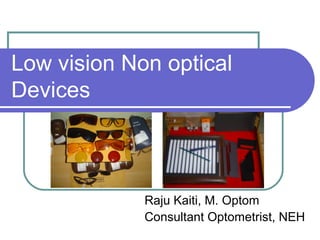



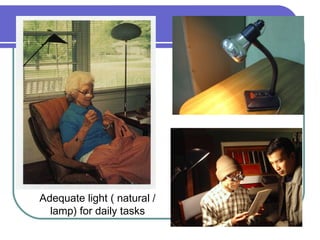



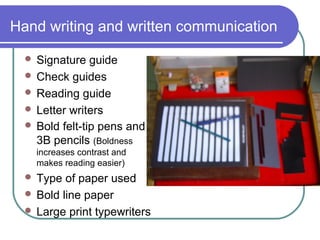


Non-optical devices play an important role in helping people with low vision. They improve functional vision and are cheaper than optical devices. Examples include devices that increase illumination, contrast, size of text, and assist with tasks like reading, writing, medication management, and mobility. Training in techniques like eccentric viewing and scanning can also help low vision patients make better use of their remaining vision.


